
Aquatic Ecosystems Chapter 3 Freshwater Ecosystems Ponds Lakes
- Slides: 25
Aquatic Ecosystems Chapter 3
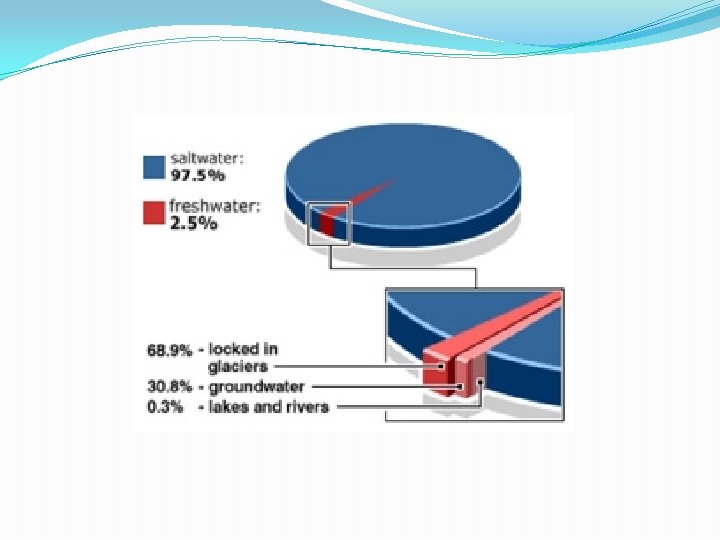
Freshwater Ecosystems �Ponds, Lakes, Streams, Rivers, and Wetlands �Plants and animals living here adapted to low salt concentrations and are unable to survive in areas of high salt concentrations �Only 2. 5% of the water on Earth is freshwater
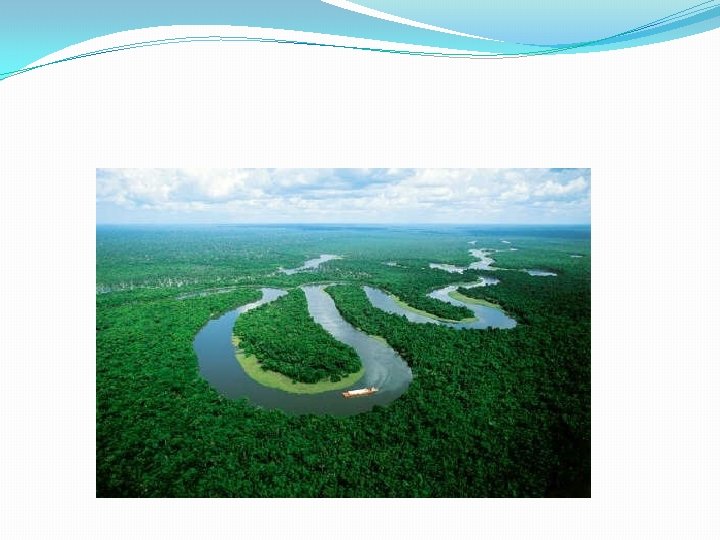
Rivers and Streams �Water flows in one direction �Begins at a source called a headwater and flows to be a bigger body of water �Can start from underground springs or from snowmelt �The slope of the landscape determines the direction & speed of the water flow
Rivers and Streams Fast-Moving Rivers and Slow-Moving Rivers and Streams �Not much organic material or �More organic material or sediment accumulates sediment can accumulate here �Few species living here �Insect larvae are the primary food for organisms living here �American eel, brown bullhead catfish, and trout live here �Crabs and worms are sometimes found here
Lakes and Ponds �An inland body of standing water �Can be as small as a few square meters to as big as thousands of square meters �Some ponds can be filled with water for only a few months out of the year �In the winter the water is the same temperature throughout usually �In the summer the water on the top of the lake or pond is warmer and colder on bottom
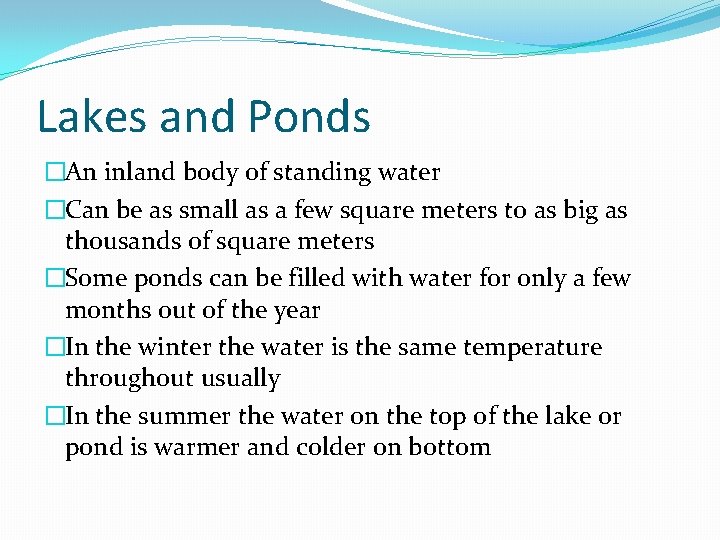
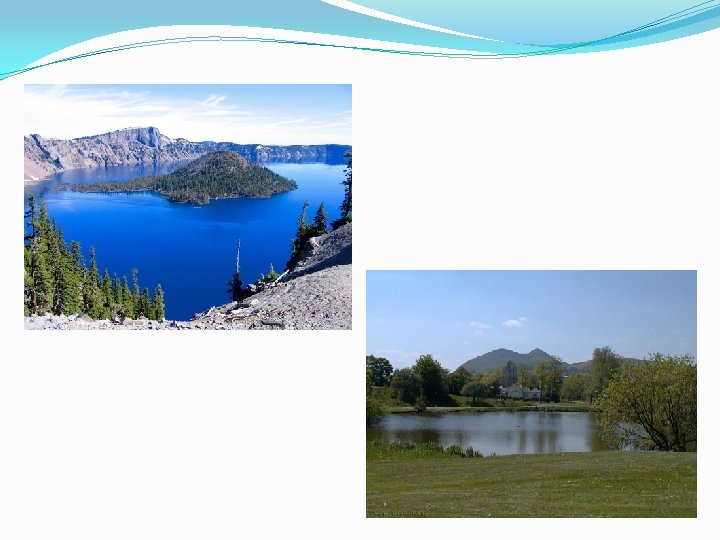
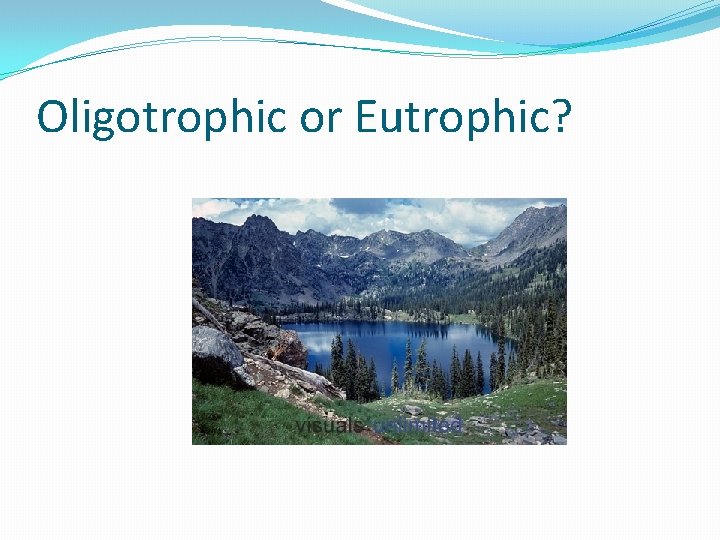
Lakes and Ponds �Oligotrophic lakes: Nutrient-poor lakes, found high in the mountains. �Few plants and animal species are found here �Eutrophic lakes: Nutrient-rich lakes, usually found at lower altitudes �Many plant and animal species are present as a result of organic matter and many nutrients
Oligotrophic or Eutrophic?
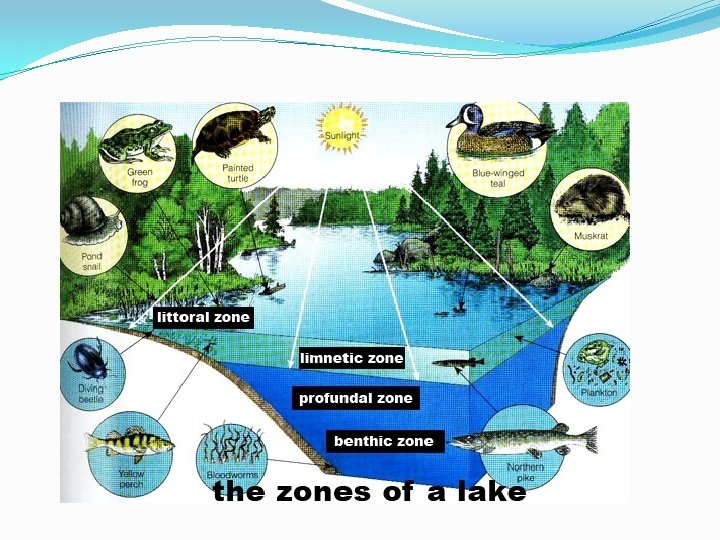
Lakes and Ponds �Lakes and ponds are divided into three zones based on how much sunlight penetrates the water. � 1. Littoral Zone � The area closest to the shore � Water is shallow, and sunlight reaches the bottom � 2. Limnetic Zone � The open water area that is well lit and dominated by plankton � Many species of freshwater fish live here because food (like plankton) is readily available. � 3. Profundal Zone � The deepest area of a large lake � Colder and lower in oxygen than the other two zones � Little light penetrates here � Not many species of animals live here
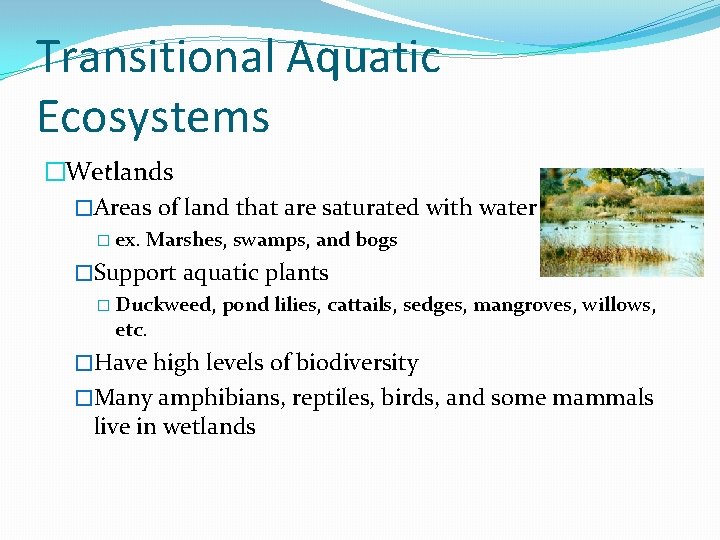
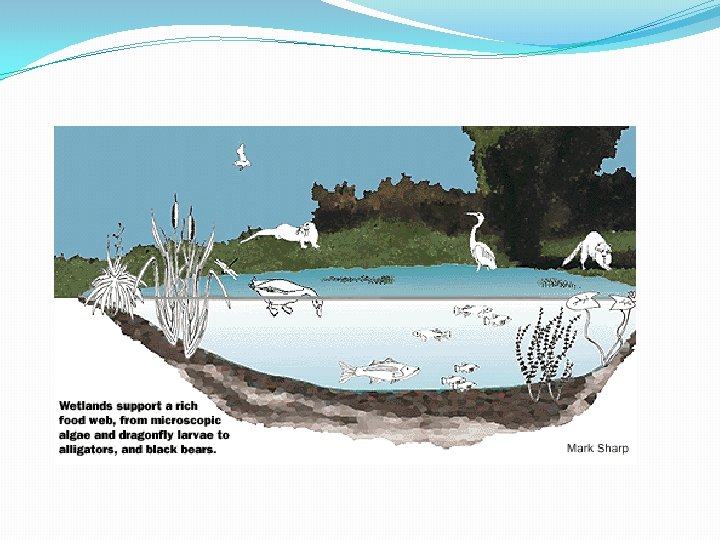
Transitional Aquatic Ecosystems �Wetlands �Areas of land that are saturated with water � ex. Marshes, swamps, and bogs �Support aquatic plants � Duckweed, pond lilies, cattails, sedges, mangroves, willows, etc. �Have high levels of biodiversity �Many amphibians, reptiles, birds, and some mammals live in wetlands
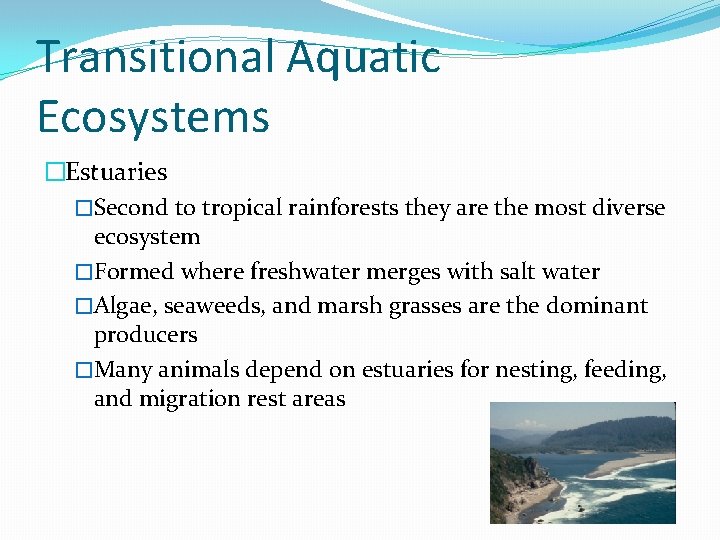
Transitional Aquatic Ecosystems �Estuaries �Second to tropical rainforests they are the most diverse ecosystem �Formed where freshwater merges with salt water �Algae, seaweeds, and marsh grasses are the dominant producers �Many animals depend on estuaries for nesting, feeding, and migration rest areas
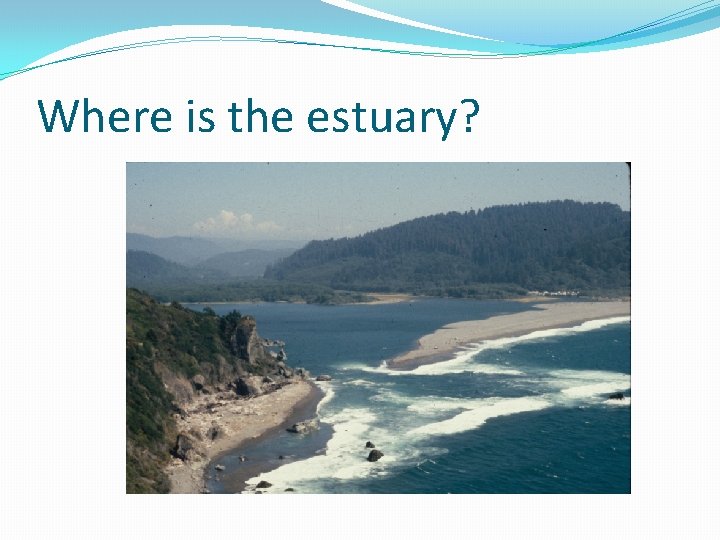
Where is the estuary?
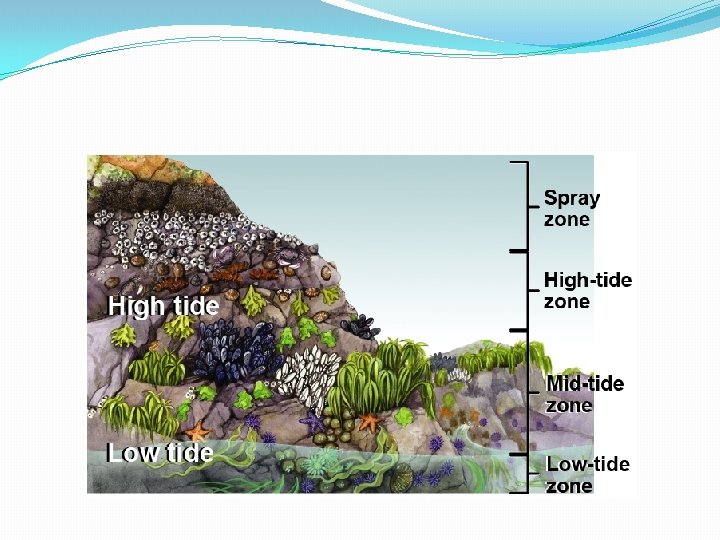
Marine Ecosystems �Intertidal Zones � a narrow band where the ocean meets land � Organisms in this zone are adapted to the constant changes that happen daily as the tides change � Divided into 4 zones : � 1. Spray zone � � 2. High-tide zone � � Dry most of the time Underwater only during high tides; receives more water than the spray zone so more plants can live here 3. Mid-tide zone Undergoes severe disruption twice a day (high-tide and low-tide) � Organisms here must be adapted to long periods of air and water � � 4. Low-tide zone Covered with water unless the tide is unusually low � The most populated area in the intertidal zone �
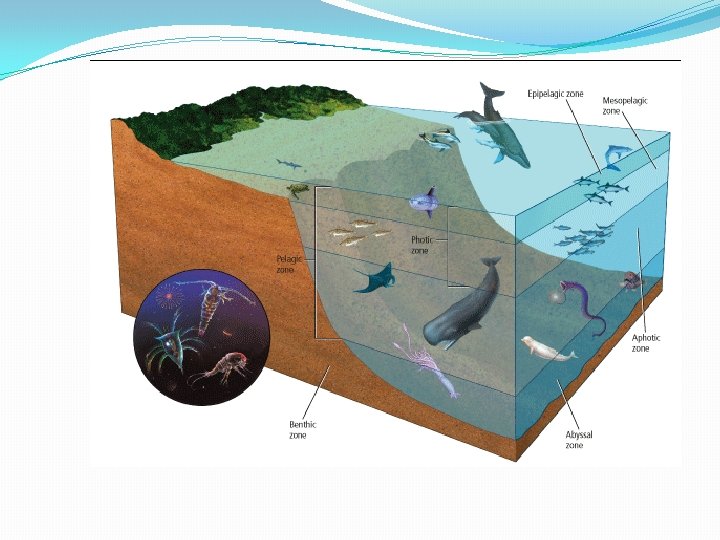
Open Ocean Ecosystems �Divided into 3 zones: 1. Pelagic Zone 2. Abyssal Zone 3. Benthic Zone
The Pelagic Zone �The Pelagic Zone is divided into smaller zones: �Photic zone (or euphotic zone)is the area to about 200 m of the pelagic zone � Shallow enough that sunlight can penetrate � Plants: seaweeds and plankton � Animals: fish, sea turtles, jellyfish, whales, dophins �Aphotic Zone is below the photic zone � Sunlight cannot penetrate here � Remains in constant darkness and is generally cold � Organisms that depend on light energy can not live here
The Benthic Zone �Area along the ocean floor that consists of sand, silt, and dead organisms �In shallow benthic zones sunlight can penetrate to the bottom of the ocean floor �Many species of fish, octopus, and squid live in the benthic zone
The Abyssal Zone �Deepest region of the ocean �Very cold water �Most organisms here rely on food materials that drift from the zones above �Hydrothermal vents (near the intersection of two plates) can spew large amounts of hot water into this zone
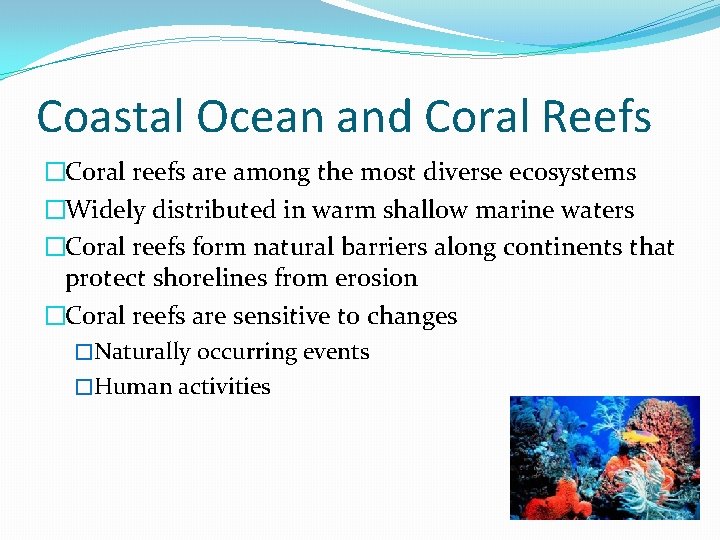
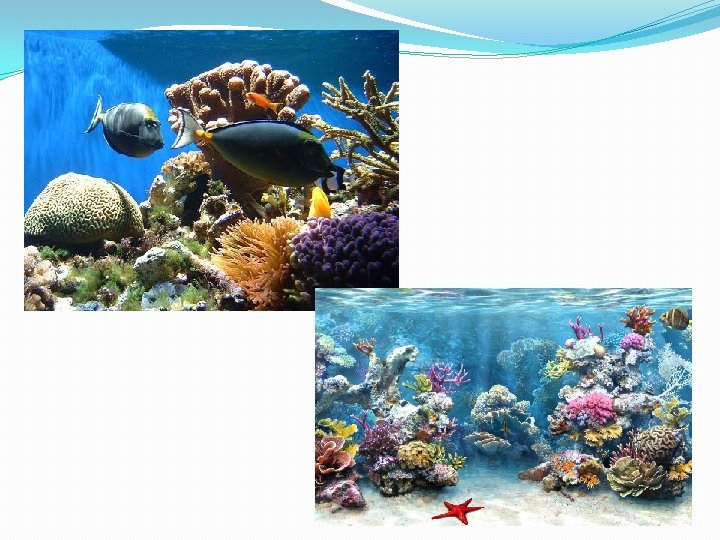
Coastal Ocean and Coral Reefs �Coral reefs are among the most diverse ecosystems �Widely distributed in warm shallow marine waters �Coral reefs form natural barriers along continents that protect shorelines from erosion �Coral reefs are sensitive to changes �Naturally occurring events �Human activities