
Aquatic Ecosystems Biomes 3 3 State Standard SB
Aquatic Ecosystems & Biomes (3. 3) State Standard SB 4 A. Investigate the relationships among organisms, populations, communities, ecosystems, and biomes.

Chapter 3 Communities, Biomes, and Ecosystems 3. 3 Aquatic Ecosystems FRESHWATER ECOSYSTEMS 1 § Include ponds, lakes, streams, rivers, & wetlands. § Only about 2. 5 percent of the water on Earth is freshwater.
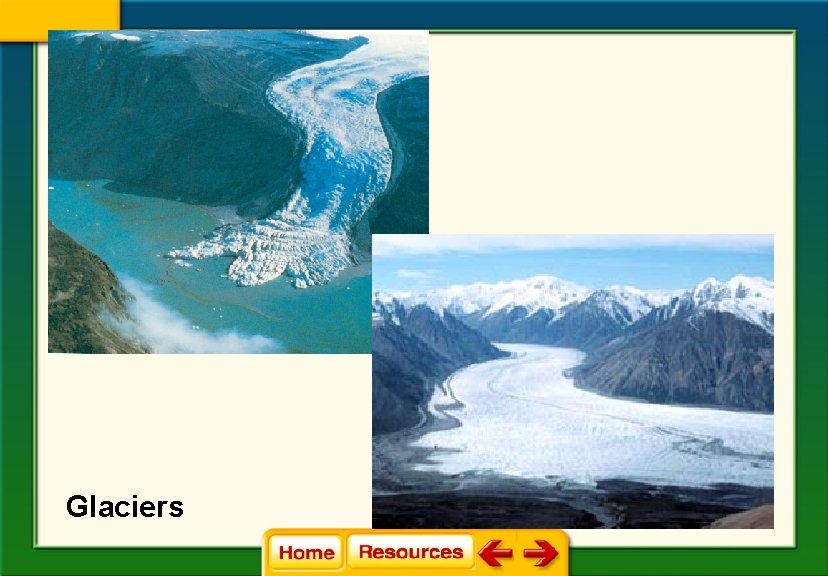
Glaciers
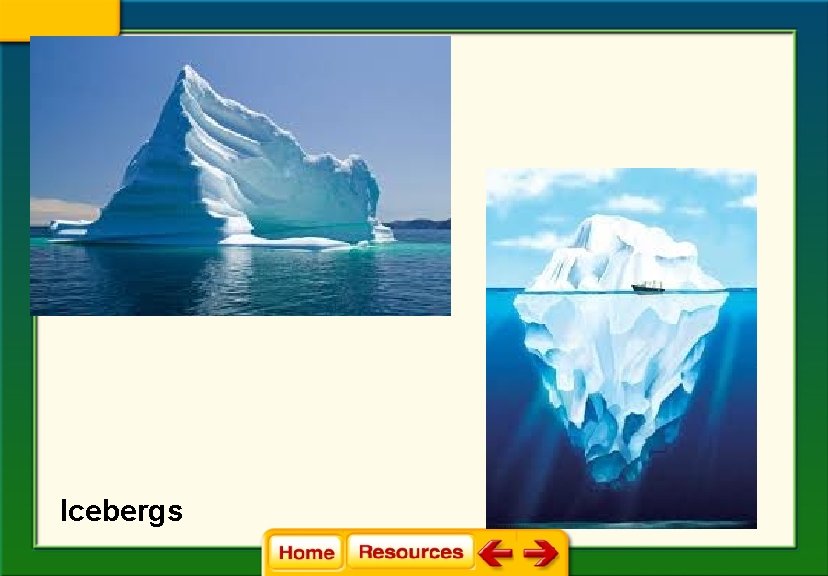
Icebergs
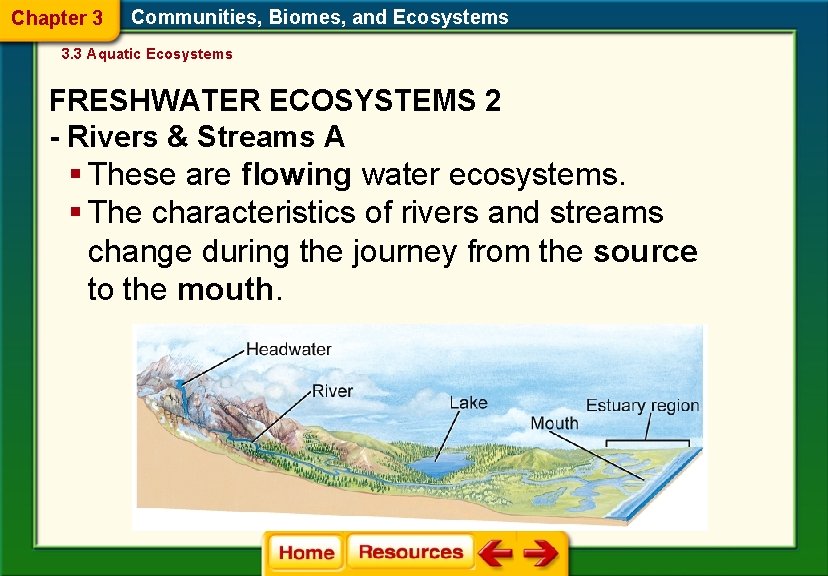
Chapter 3 Communities, Biomes, and Ecosystems 3. 3 Aquatic Ecosystems FRESHWATER ECOSYSTEMS 2 - Rivers & Streams A § These are flowing water ecosystems. § The characteristics of rivers and streams change during the journey from the source to the mouth.
Chapter 3 Communities, Biomes, and Ecosystems 3. 3 Aquatic Ecosystems FRESHWATER ECOSYSTEMS 3 -Rivers & Streams B § Fast-moving rivers and streams prevent much accumulation of organic materials and sediment. § Usually, there are fewer species living in the rapid waters. § In slow-moving water, insect larvae are the primary food source for many fish, including American eel, brown bullhead catfish, and trout.
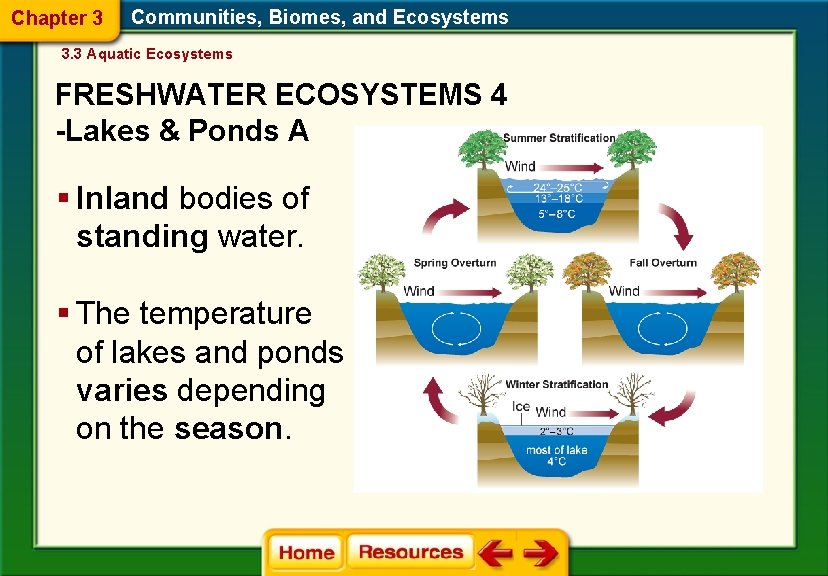
Chapter 3 Communities, Biomes, and Ecosystems 3. 3 Aquatic Ecosystems FRESHWATER ECOSYSTEMS 4 -Lakes & Ponds A § Inland bodies of standing water. § The temperature of lakes and ponds varies depending on the season.
3. 3 Aquatic Ecosystems FRESHWATER ECOSYSTEMS 5 -Lakes & Ponds B 2 Types of Lakes: Oligotrophic (nutrient-poor) -found in high altitudes, few plant/animal species due to little organic matter & nutrients. Eutrophic (nutrient-rich) -found at lower altitudes, many plant/animal species due to much organic matter & nutrients.
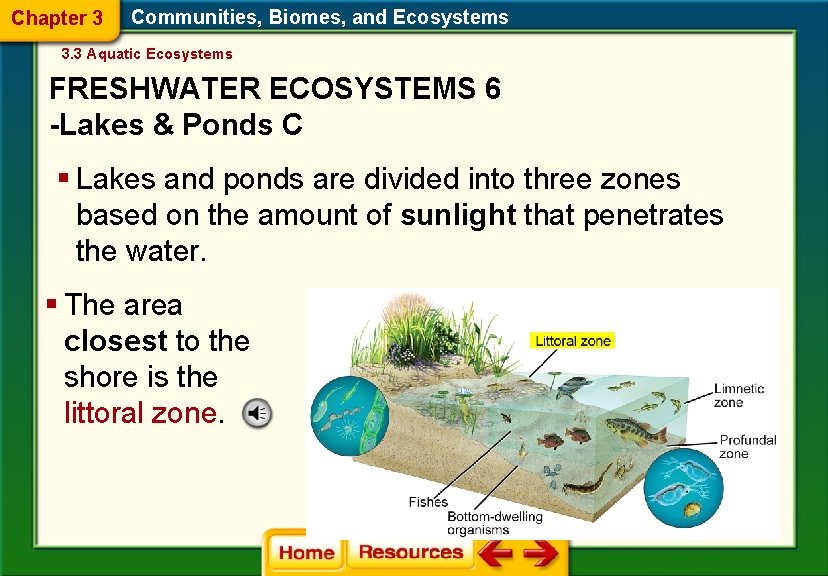
Chapter 3 Communities, Biomes, and Ecosystems 3. 3 Aquatic Ecosystems FRESHWATER ECOSYSTEMS 6 -Lakes & Ponds C § Lakes and ponds are divided into three zones based on the amount of sunlight that penetrates the water. § The area closest to the shore is the littoral zone.
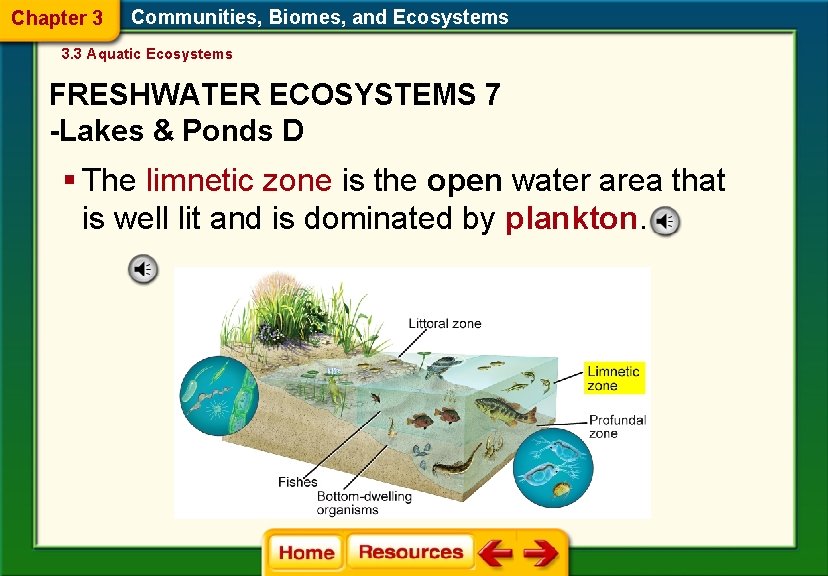
Chapter 3 Communities, Biomes, and Ecosystems 3. 3 Aquatic Ecosystems FRESHWATER ECOSYSTEMS 7 -Lakes & Ponds D § The limnetic zone is the open water area that is well lit and is dominated by plankton.
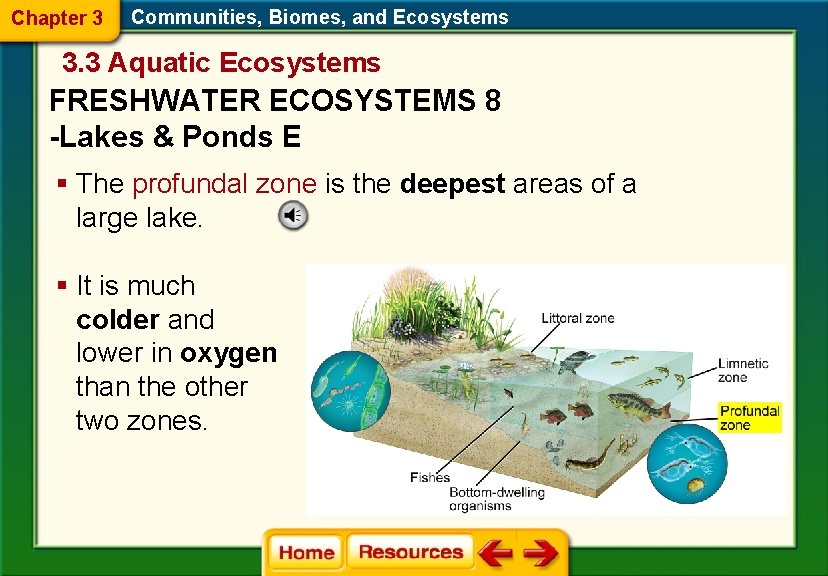
Chapter 3 Communities, Biomes, and Ecosystems 3. 3 Aquatic Ecosystems FRESHWATER ECOSYSTEMS 8 -Lakes & Ponds E § The profundal zone is the deepest areas of a large lake. § It is much colder and lower in oxygen than the other two zones.
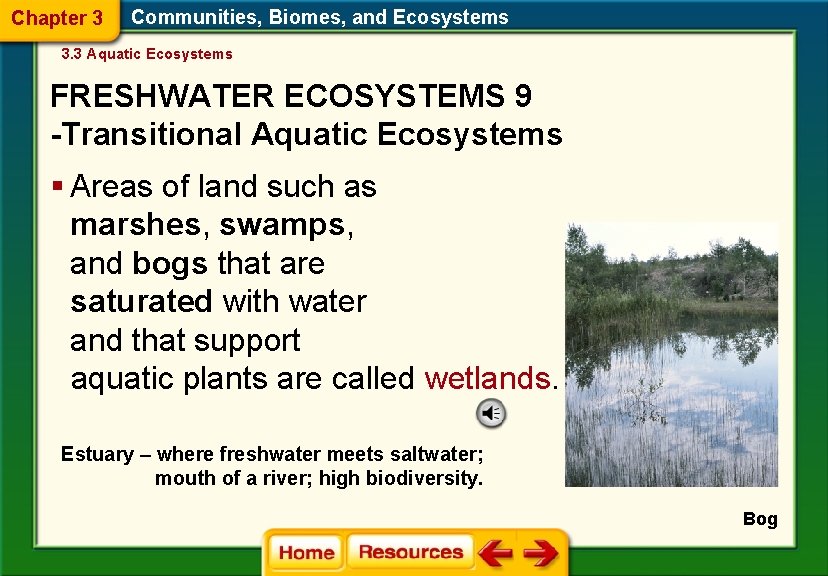
Chapter 3 Communities, Biomes, and Ecosystems 3. 3 Aquatic Ecosystems FRESHWATER ECOSYSTEMS 9 -Transitional Aquatic Ecosystems § Areas of land such as marshes, swamps, and bogs that are saturated with water and that support aquatic plants are called wetlands. Estuary – where freshwater meets saltwater; mouth of a river; high biodiversity. Bog
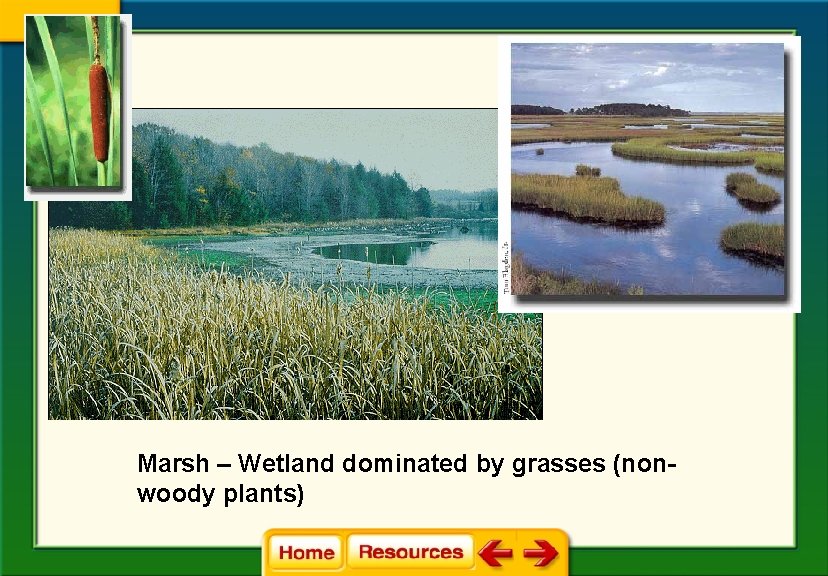
Marsh – Wetland dominated by grasses (nonwoody plants)
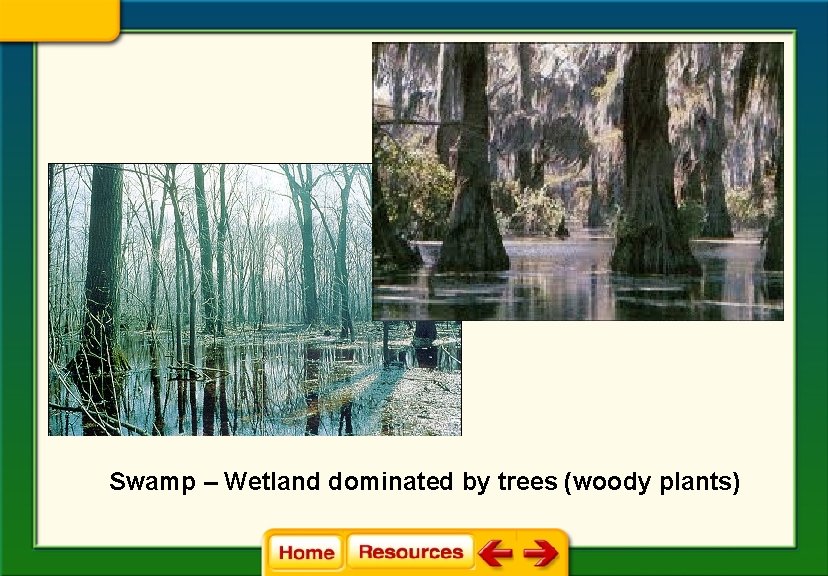
Swamp – Wetland dominated by trees (woody plants)

Bog – Wetland dominated by bog mosses
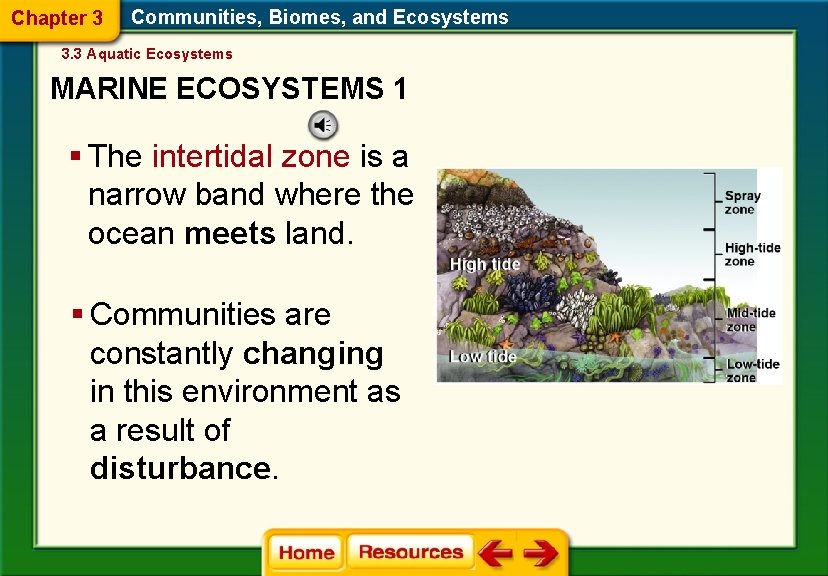
Chapter 3 Communities, Biomes, and Ecosystems 3. 3 Aquatic Ecosystems MARINE ECOSYSTEMS 1 § The intertidal zone is a narrow band where the ocean meets land. § Communities are constantly changing in this environment as a result of disturbance.
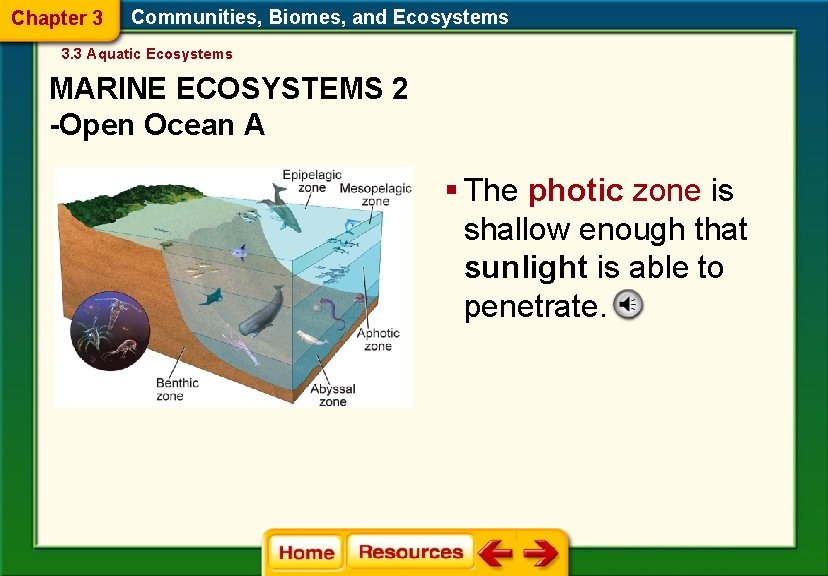
Chapter 3 Communities, Biomes, and Ecosystems 3. 3 Aquatic Ecosystems MARINE ECOSYSTEMS 2 -Open Ocean A § The photic zone is shallow enough that sunlight is able to penetrate.
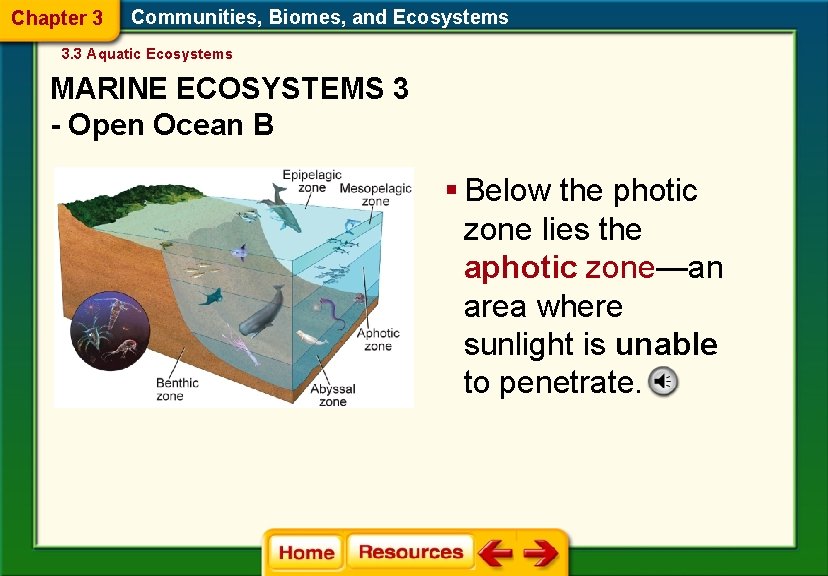
Chapter 3 Communities, Biomes, and Ecosystems 3. 3 Aquatic Ecosystems MARINE ECOSYSTEMS 3 - Open Ocean B § Below the photic zone lies the aphotic zone—an area where sunlight is unable to penetrate.
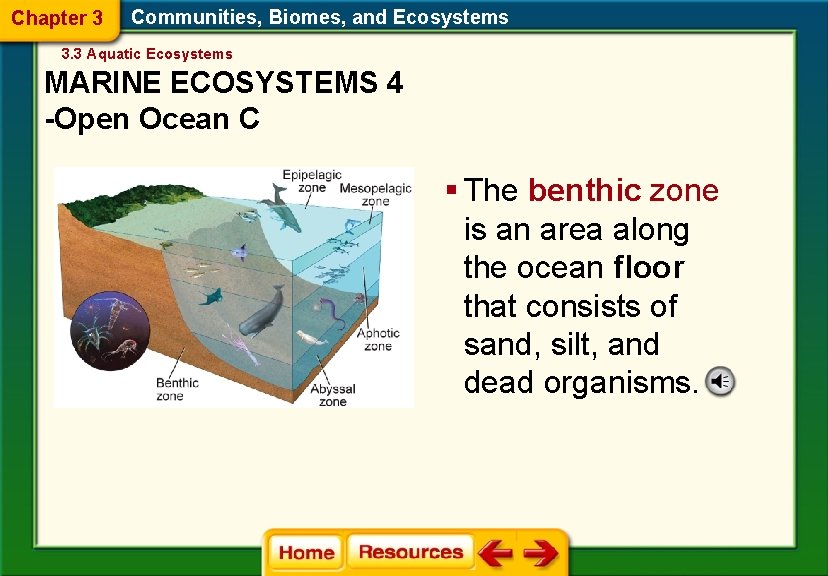
Chapter 3 Communities, Biomes, and Ecosystems 3. 3 Aquatic Ecosystems MARINE ECOSYSTEMS 4 -Open Ocean C § The benthic zone is an area along the ocean floor that consists of sand, silt, and dead organisms.
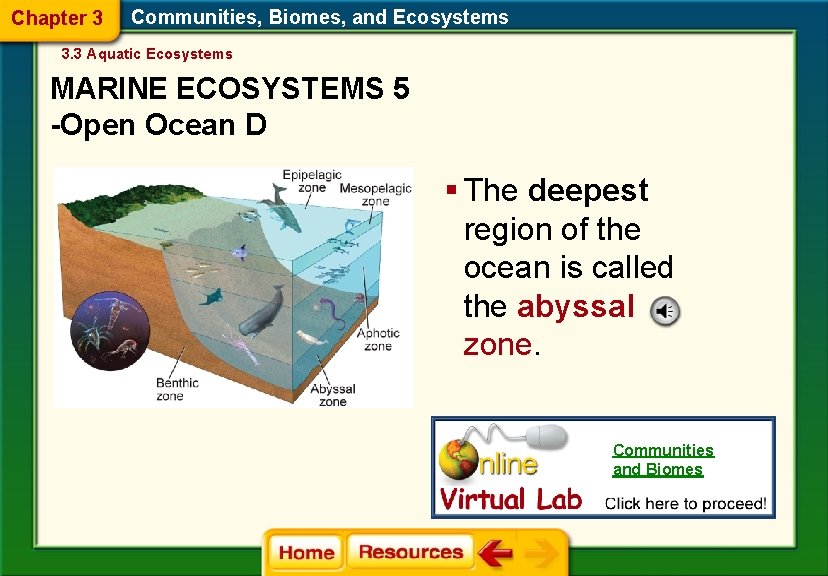
Chapter 3 Communities, Biomes, and Ecosystems 3. 3 Aquatic Ecosystems MARINE ECOSYSTEMS 5 -Open Ocean D § The deepest region of the ocean is called the abyssal zone. Communities and Biomes
- Slides: 20