
Aquatic Biomes Freshwater Biomes Lakes Bodies of water
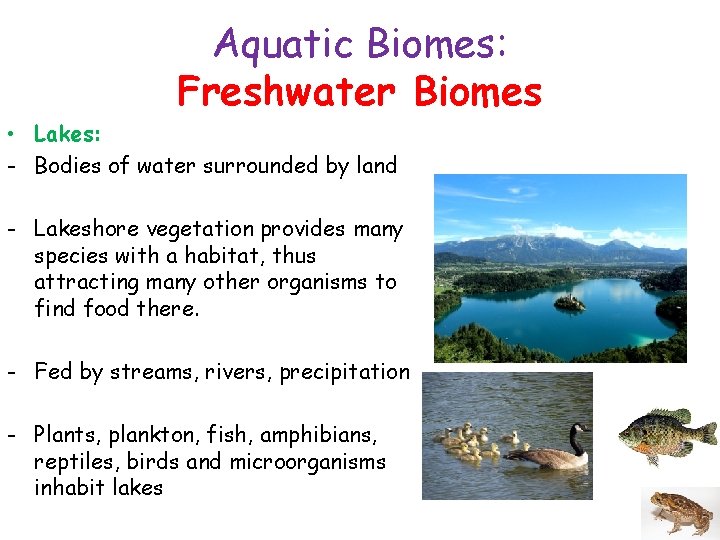
Aquatic Biomes: Freshwater Biomes • Lakes: - Bodies of water surrounded by land - Lakeshore vegetation provides many species with a habitat, thus attracting many other organisms to find food there. - Fed by streams, rivers, precipitation - Plants, plankton, fish, amphibians, reptiles, birds and microorganisms inhabit lakes

Aquatic Biomes: Freshwater Biomes • Rivers - Are drainage channels for surface water. Rivers bring water into lakes or other rivers and finally into the ocean. - Plants living in rivers must adapt to the current and highly oxygenated water
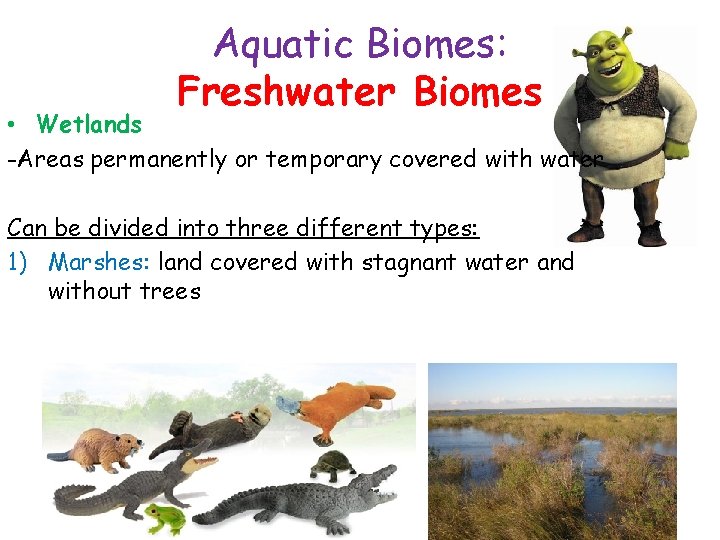
Aquatic Biomes: Freshwater Biomes • Wetlands -Areas permanently or temporary covered with water Can be divided into three different types: 1) Marshes: land covered with stagnant water and without trees

Wetlands 2) Swamps: land covered with stagnant/slow-moving water in which trees and shrubs can grow 3) Peat Bogs: poorly drained soil carpeted with moss
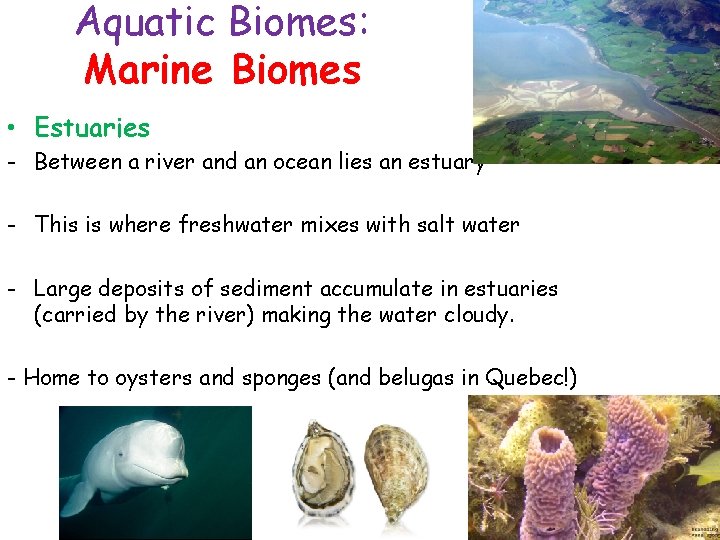
Aquatic Biomes: Marine Biomes • Estuaries - Between a river and an ocean lies an estuary - This is where freshwater mixes with salt water - Large deposits of sediment accumulate in estuaries (carried by the river) making the water cloudy. - Home to oysters and sponges (and belugas in Quebec!)
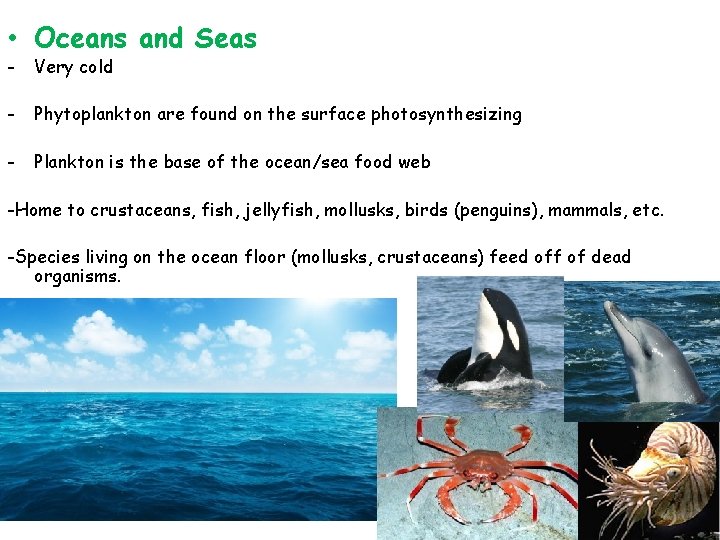
• Oceans and Seas - Very cold - Phytoplankton are found on the surface photosynthesizing - Plankton is the base of the ocean/sea food web -Home to crustaceans, fish, jellyfish, mollusks, birds (penguins), mammals, etc. -Species living on the ocean floor (mollusks, crustaceans) feed off of dead organisms.
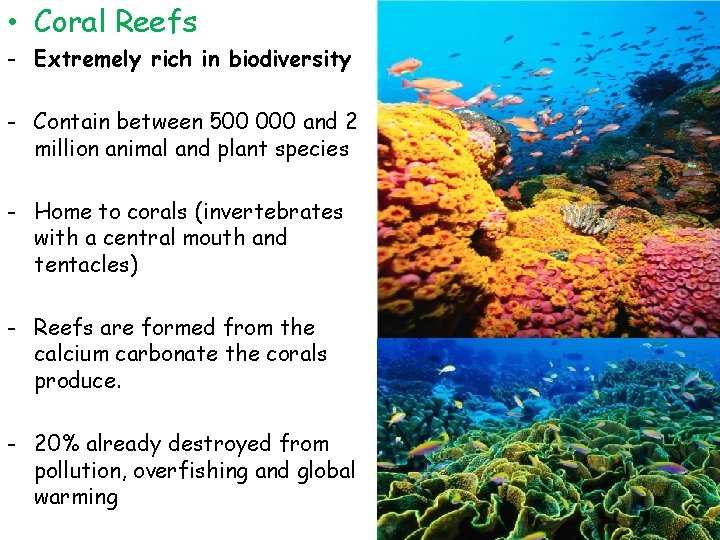
• Coral Reefs - Extremely rich in biodiversity - Contain between 500 000 and 2 million animal and plant species - Home to corals (invertebrates with a central mouth and tentacles) - Reefs are formed from the calcium carbonate the corals produce. - 20% already destroyed from pollution, overfishing and global warming
- Slides: 7