
Aquatic Biome Stratification MP 2 1 and 2
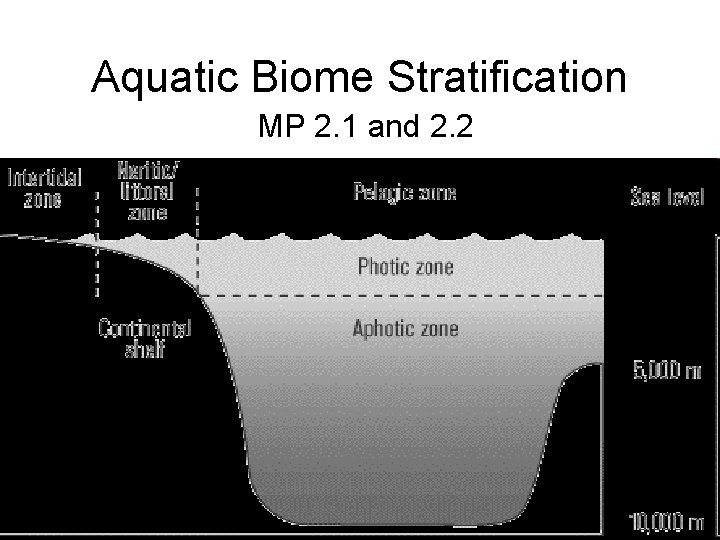
Aquatic Biome Stratification MP 2. 1 and 2. 2
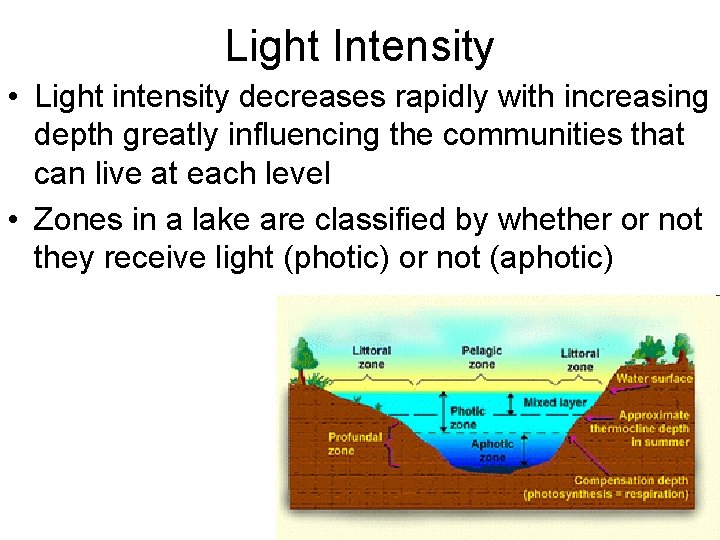
Light Intensity • Light intensity decreases rapidly with increasing depth greatly influencing the communities that can live at each level • Zones in a lake are classified by whether or not they receive light (photic) or not (aphotic)
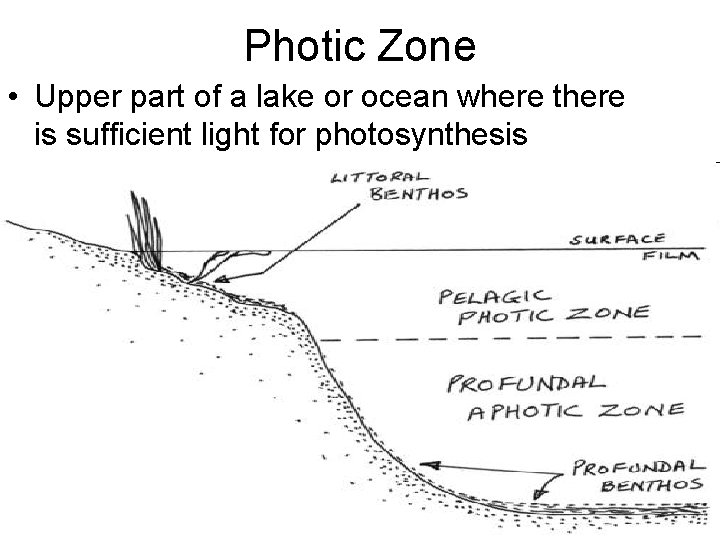
Photic Zone • Upper part of a lake or ocean where there is sufficient light for photosynthesis
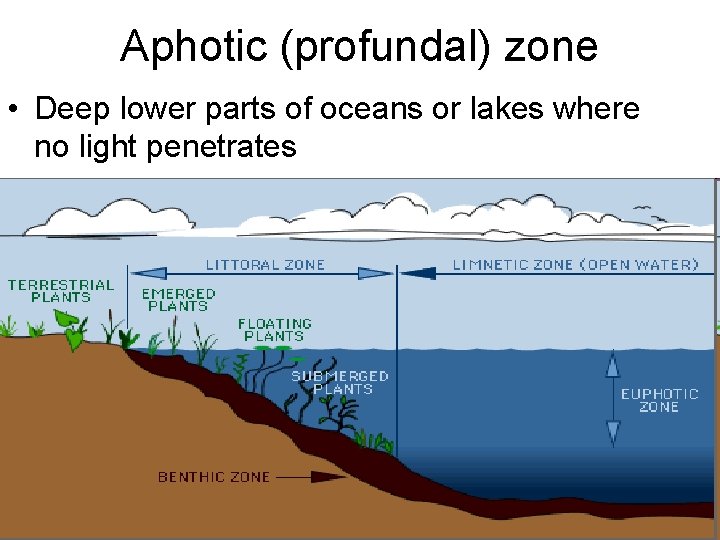
Aphotic (profundal) zone • Deep lower parts of oceans or lakes where no light penetrates
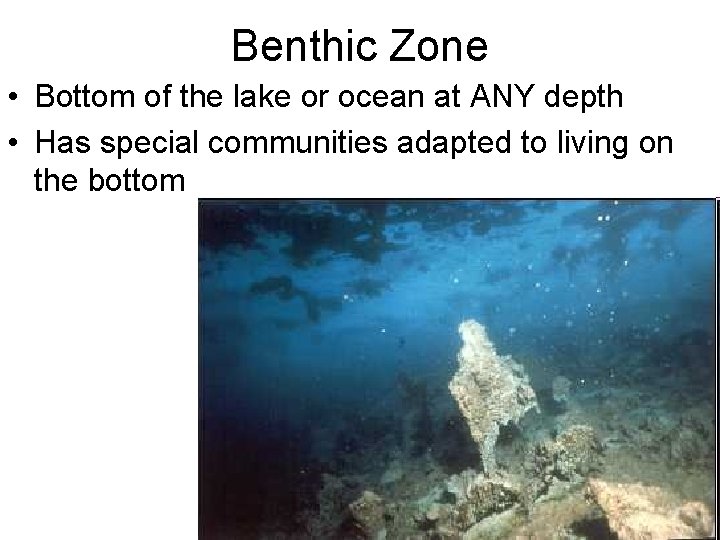
Benthic Zone • Bottom of the lake or ocean at ANY depth • Has special communities adapted to living on the bottom
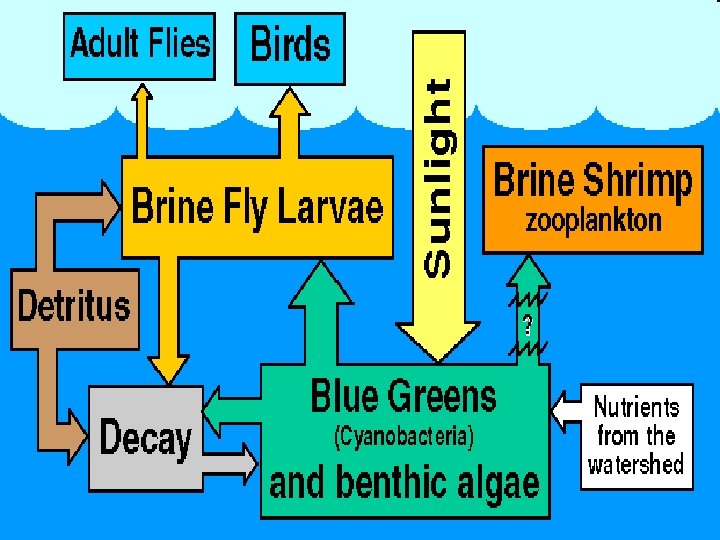
Detritus • The poop and bodies of decaying organisms (detritus) fall like snow to the benthos (bottom) by gravity. • Benthic bacteria convert the detritus into nitrates that algae use as nutrients for photosynthesis. • Currents bring these nutrients to the surface where photosynthesis can take place (eutrophication)
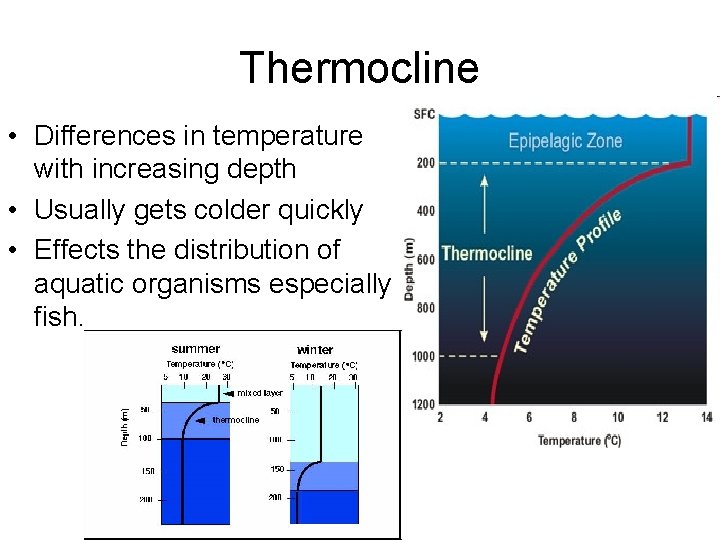
Thermocline • Differences in temperature with increasing depth • Usually gets colder quickly • Effects the distribution of aquatic organisms especially fish.
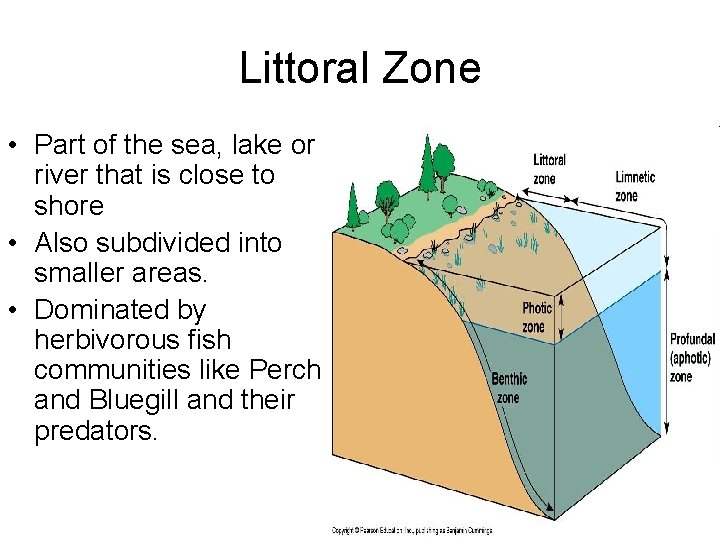
Littoral Zone • Part of the sea, lake or river that is close to shore • Also subdivided into smaller areas. • Dominated by herbivorous fish communities like Perch and Bluegill and their predators.
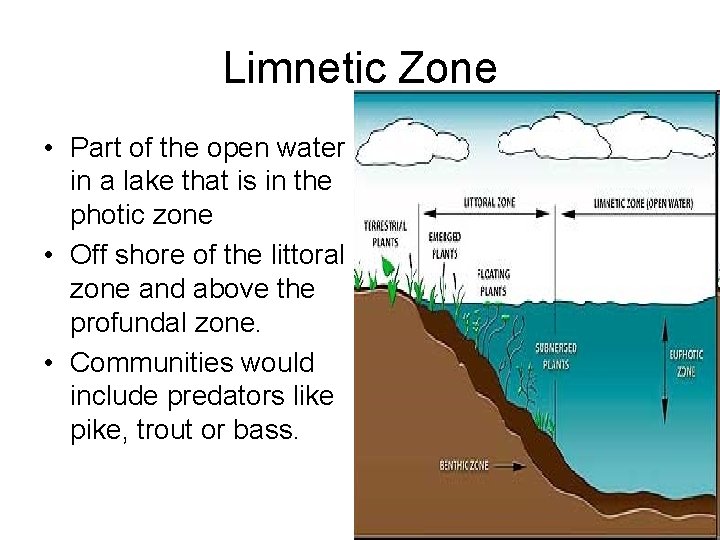
Limnetic Zone • Part of the open water in a lake that is in the photic zone • Off shore of the littoral zone and above the profundal zone. • Communities would include predators like pike, trout or bass.
- Slides: 10