
AQUARIUM LIGHTING AND RESOURCE MONITOR A L A
- Slides: 55
AQUARIUM LIGHTING AND RESOURCE MONITOR A. L. A. R. M. Group 18 Kameron Lewis EE Jeff Masson Cp. E Britt Phillips Cp. E Loren Robinson EE Sponsored by: Progress Energy
Motivation � � � Salt water aquariums are one of the most popular hobbies world wide A large portion of these aquariums use antiquated and inefficient lighting systems Many systems have little to no automatic water quality monitoring Poor water quality and temperature change are the main cause of fish deaths Potential for power saving by utilizing controlled lighting schedules and power monitoring
Goals � Provide a higher quality and more stable environment for aquarium inhabitants � Allow user to control and monitor their aquarium remotely � Conserve power through alternate energy sources and controllability � Alert user of hazardous conditions to allow prompt response
Functional Requirements Easy to operate � Monitor the p. H, temperature, and any water leaks � Control and monitor power consumption of power heads, pumps, heater, and 2 auxiliary components � Control and provide suitable lighting system � User interface with front panel and website �
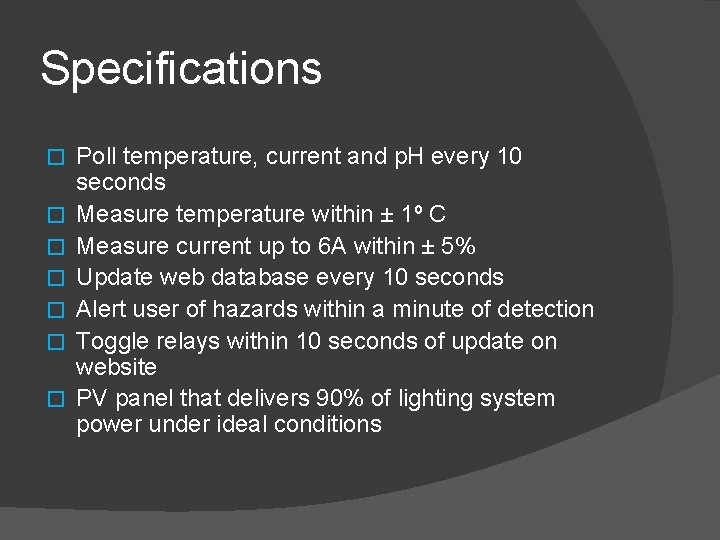
Specifications � � � � Poll temperature, current and p. H every 10 seconds Measure temperature within ± 1º C Measure current up to 6 A within ± 5% Update web database every 10 seconds Alert user of hazards within a minute of detection Toggle relays within 10 seconds of update on website PV panel that delivers 90% of lighting system power under ideal conditions
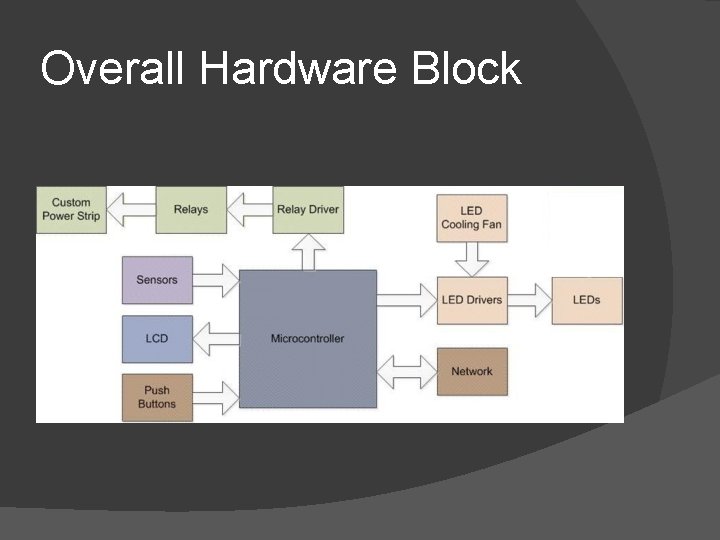
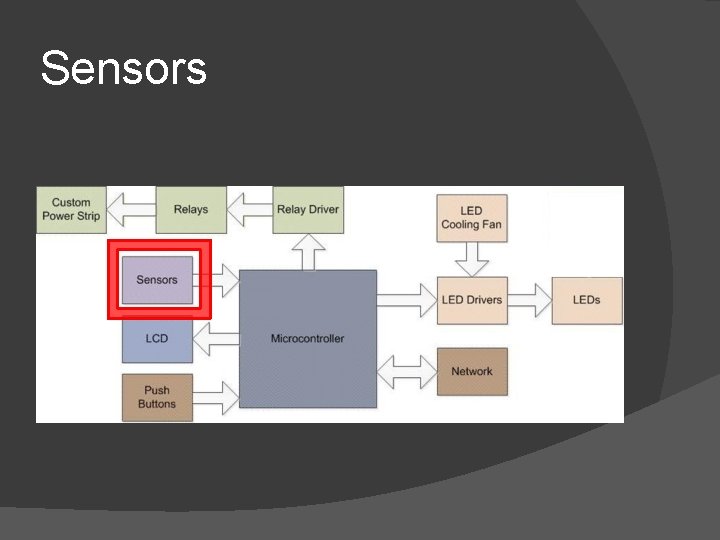
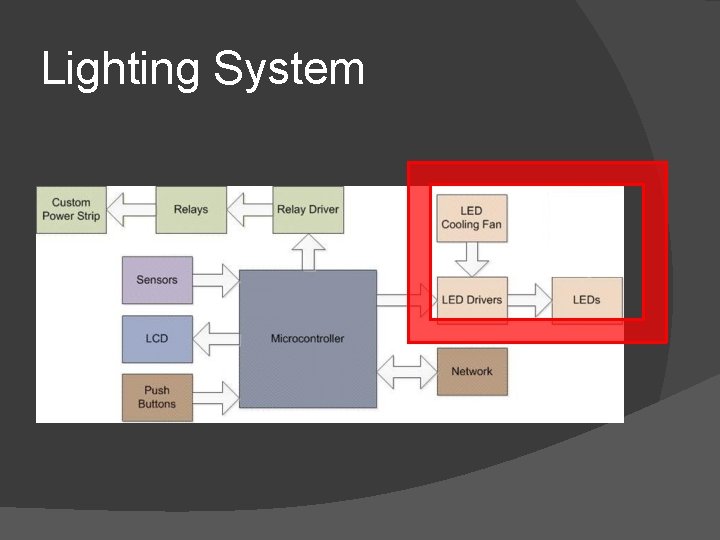
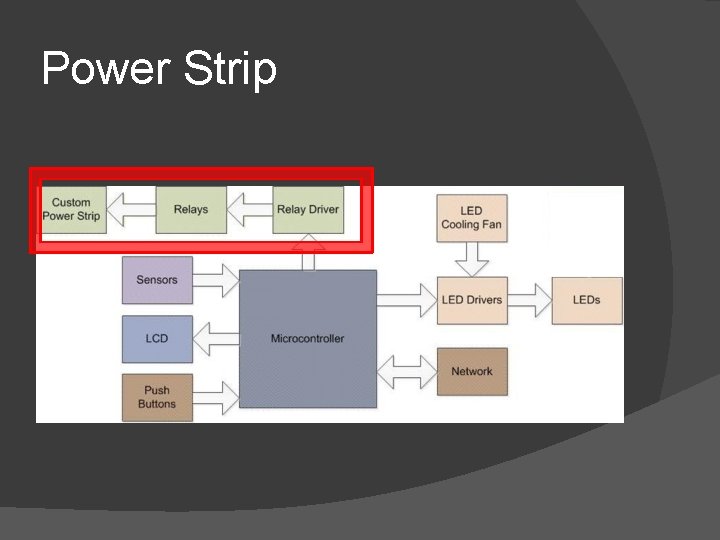
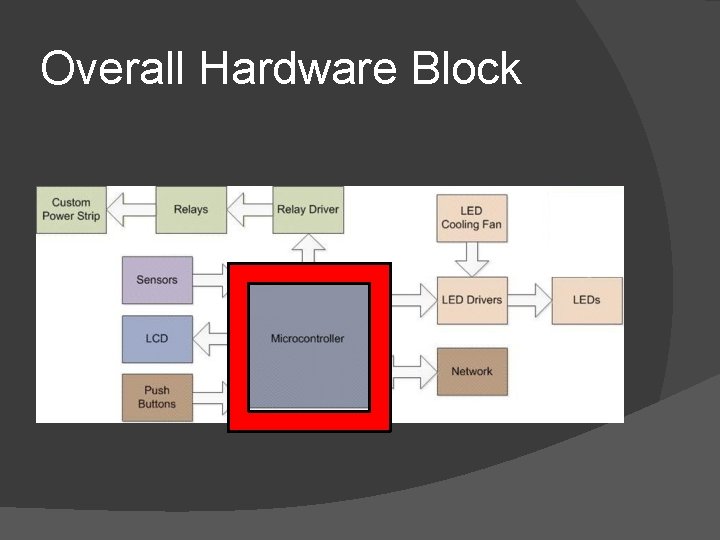
Overall Hardware Block
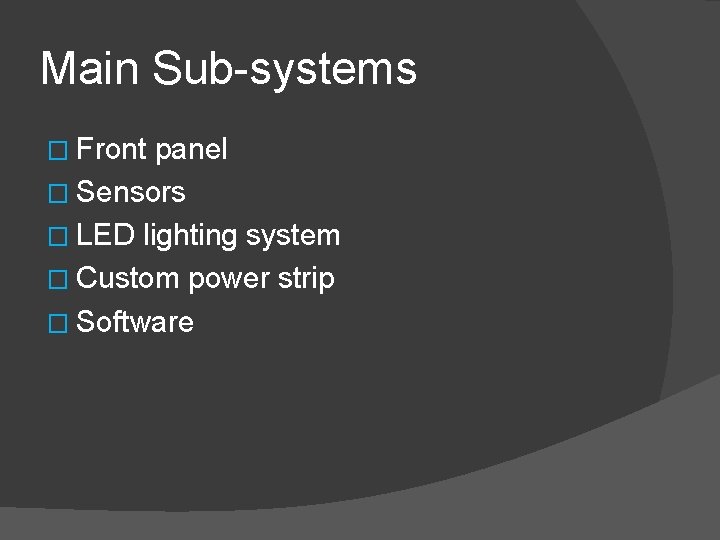
Main Sub-systems � Front panel � Sensors � LED lighting system � Custom power strip � Software
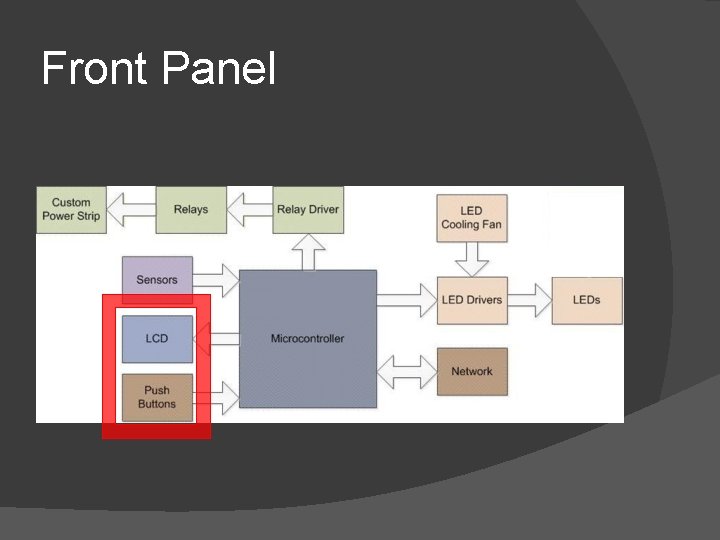
Front Panel
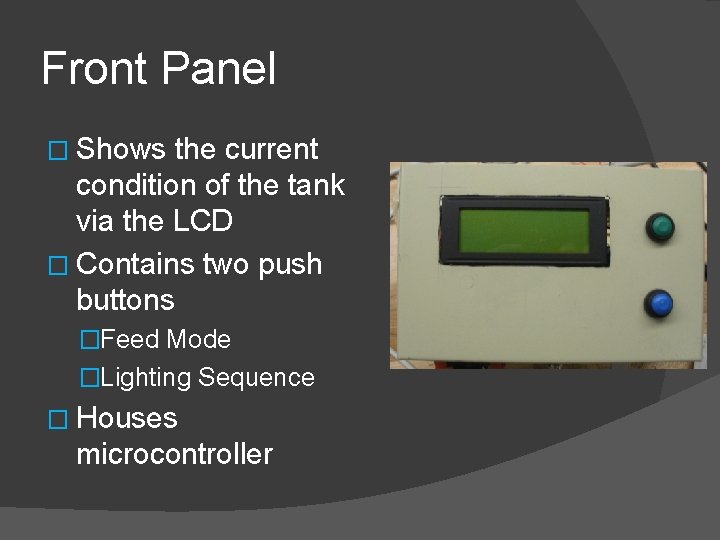
Front Panel � Shows the current condition of the tank via the LCD � Contains two push buttons �Feed Mode �Lighting Sequence � Houses microcontroller
Front Panel: LCD � Character display � Large enough to display water temp, p. H, alerts, time and date � Low power consumption � Interfaces with microcontroller through 6 pins
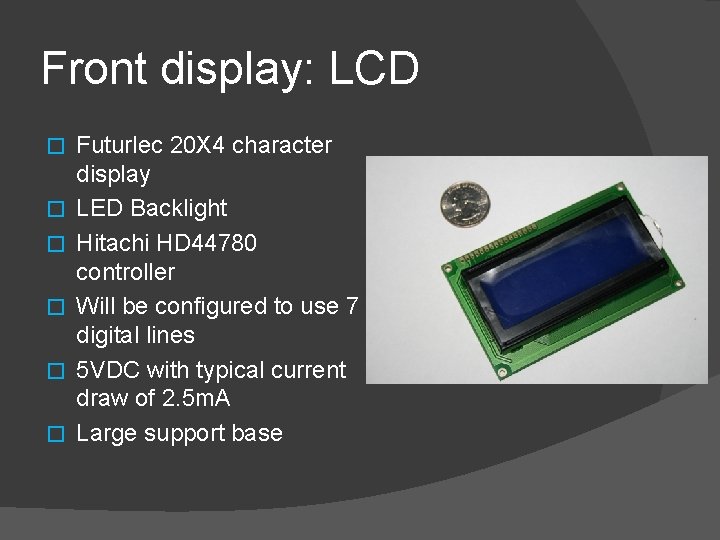
Front display: LCD � � � Futurlec 20 X 4 character display LED Backlight Hitachi HD 44780 controller Will be configured to use 7 digital lines 5 VDC with typical current draw of 2. 5 m. A Large support base
Front Panel: Push Buttons � 2 push buttons �Feed Mode ○ Turn off pumps and power heads for 5 minutes �Lighting Sequence ○ 4 modes �On- Both (100%) �Dim- Both (50%) �Off- Both(0%) �Auto- Predefined Lighting Schedule
Sensors
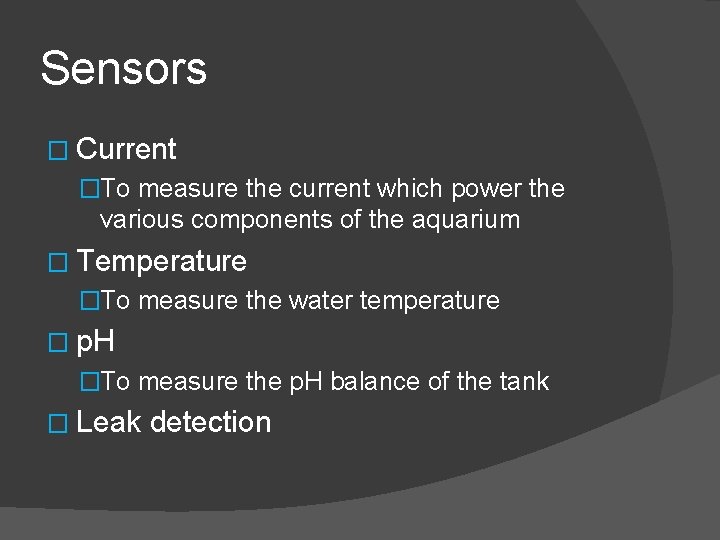
Sensors � Current �To measure the current which power the various components of the aquarium � Temperature �To measure the water temperature � p. H �To measure the p. H balance of the tank � Leak detection
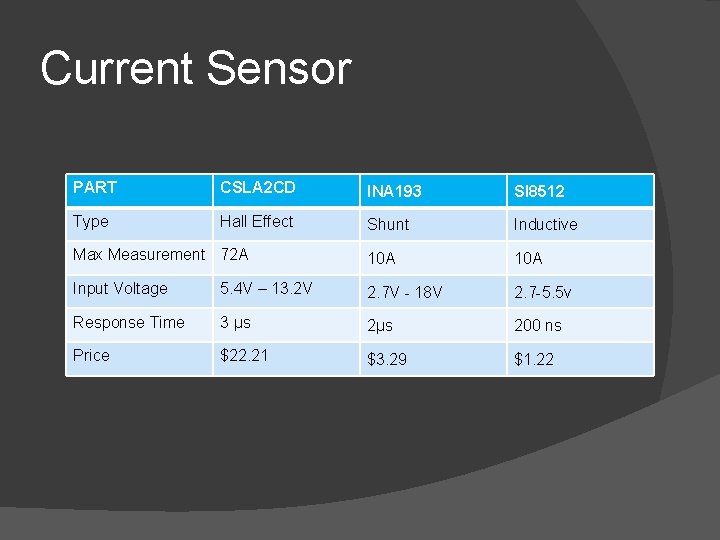
Current Sensor PART CSLA 2 CD INA 193 SI 8512 Type Hall Effect Shunt Inductive Max Measurement 72 A 10 A Input Voltage 5. 4 V – 13. 2 V 2. 7 V - 18 V 2. 7 -5. 5 v Response Time 3 μs 200 ns Price $22. 21 $3. 29 $1. 22
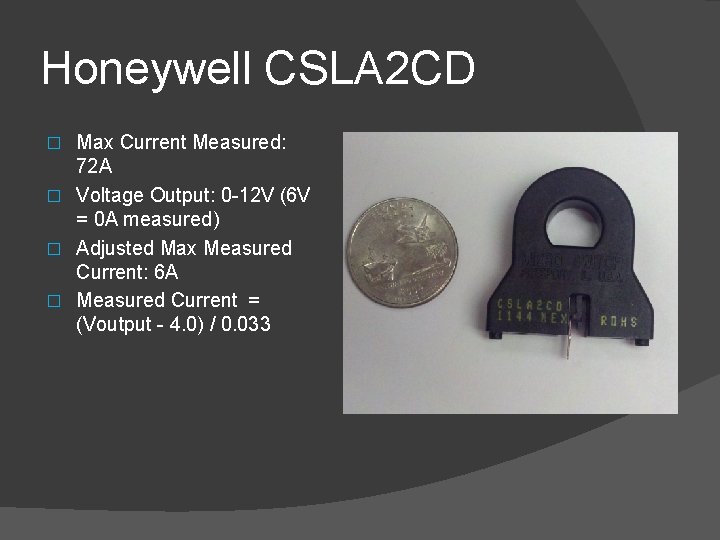
Honeywell CSLA 2 CD Max Current Measured: 72 A � Voltage Output: 0 -12 V (6 V = 0 A measured) � Adjusted Max Measured Current: 6 A � Measured Current = (Voutput - 4. 0) / 0. 033 �
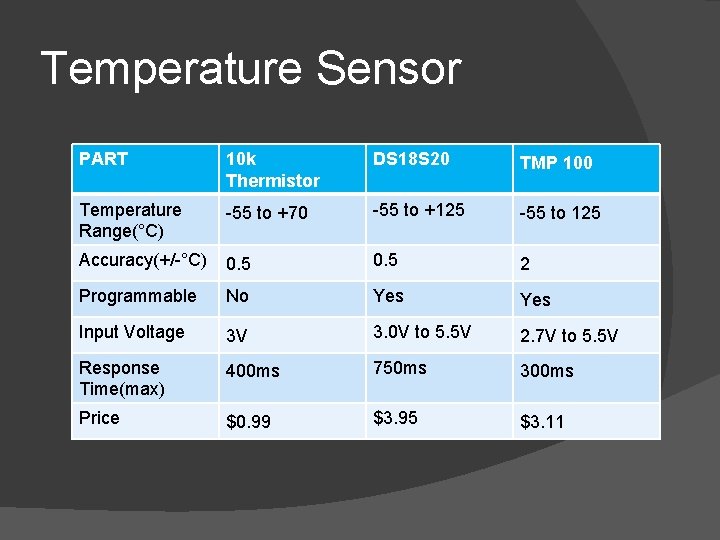
Temperature Sensor PART 10 k Thermistor DS 18 S 20 TMP 100 Temperature Range(°C) -55 to +70 -55 to +125 -55 to 125 Accuracy(+/-°C) 0. 5 2 Programmable No Yes Input Voltage 3 V 3. 0 V to 5. 5 V 2. 7 V to 5. 5 V Response Time(max) 400 ms 750 ms 300 ms Price $0. 99 $3. 95 $3. 11
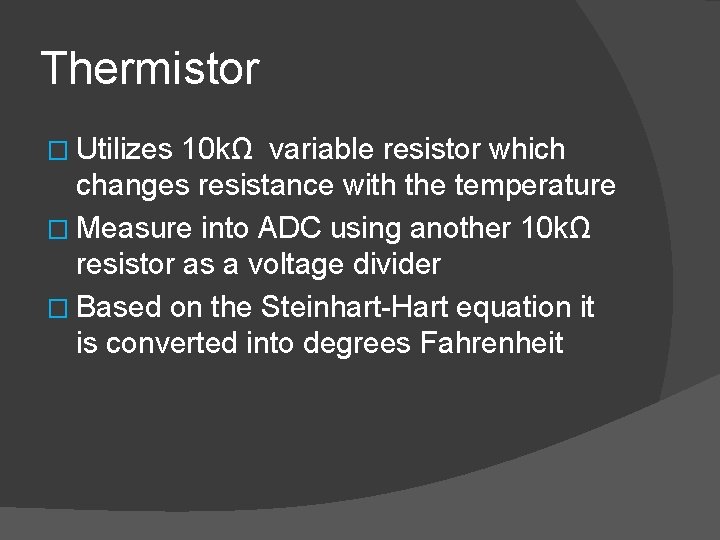
Thermistor � Utilizes 10 kΩ variable resistor which changes resistance with the temperature � Measure into ADC using another 10 kΩ resistor as a voltage divider � Based on the Steinhart-Hart equation it is converted into degrees Fahrenheit
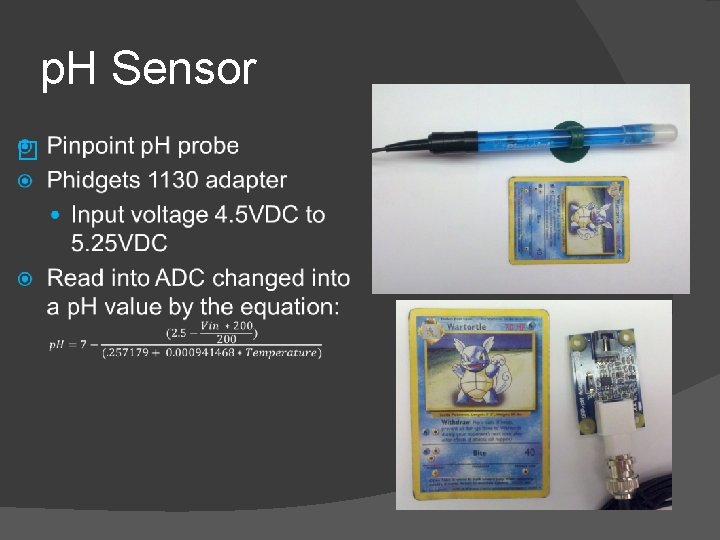
p. H Sensor �
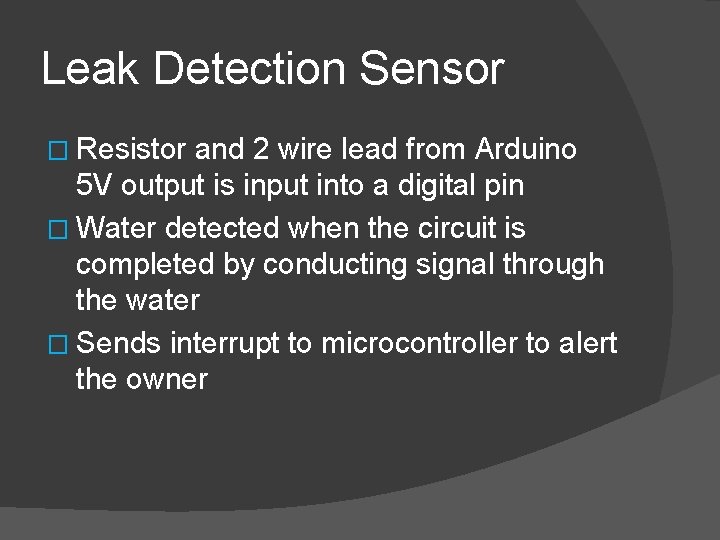
Leak Detection Sensor � Resistor and 2 wire lead from Arduino 5 V output is input into a digital pin � Water detected when the circuit is completed by conducting signal through the water � Sends interrupt to microcontroller to alert the owner
Lighting System
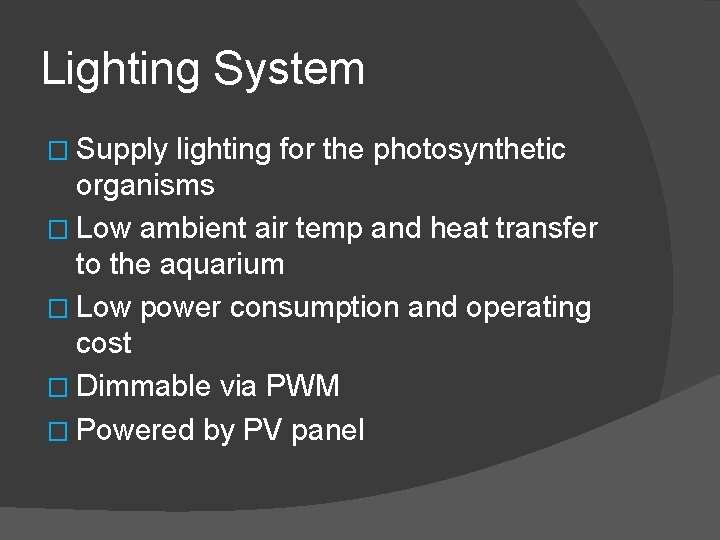
Lighting System � Supply lighting for the photosynthetic organisms � Low ambient air temp and heat transfer to the aquarium � Low power consumption and operating cost � Dimmable via PWM � Powered by PV panel
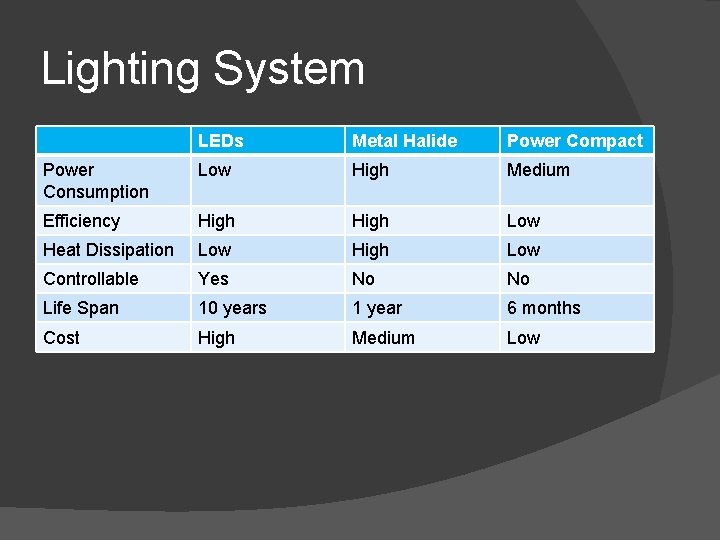
Lighting System LEDs Metal Halide Power Compact Power Consumption Low High Medium Efficiency High Low Heat Dissipation Low High Low Controllable Yes No No Life Span 10 years 1 year 6 months Cost High Medium Low
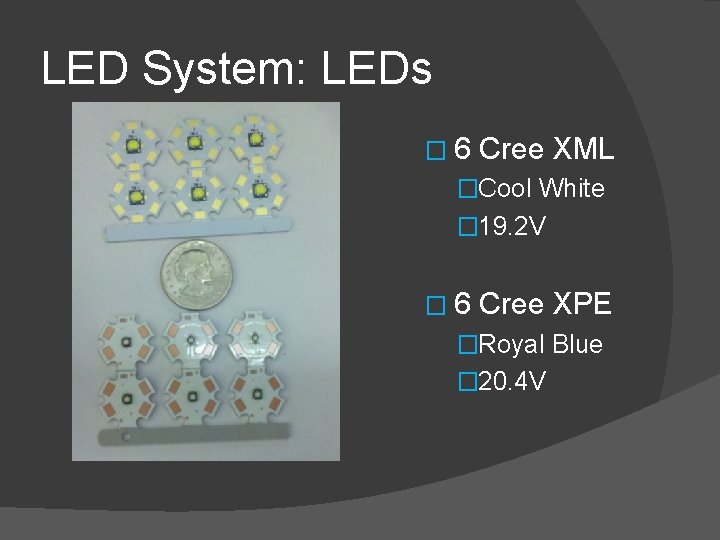
LED System: LEDs � 6 Cree XML �Cool White � 19. 2 V � 6 Cree XPE �Royal Blue � 20. 4 V
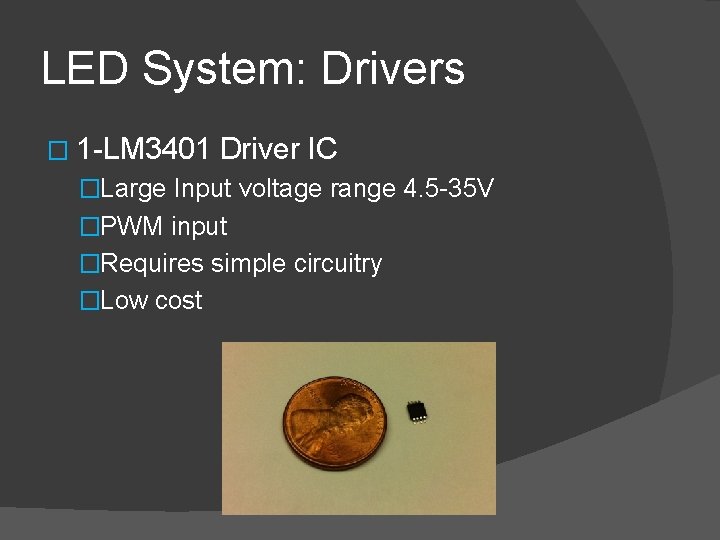
LED System: Drivers � 1 -LM 3401 Driver IC �Large Input voltage range 4. 5 -35 V �PWM input �Requires simple circuitry �Low cost
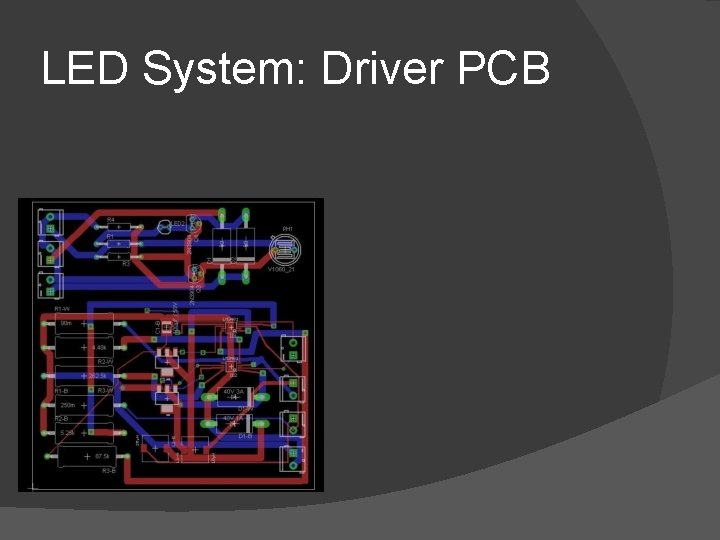
LED System: Driver PCB
Power Strip
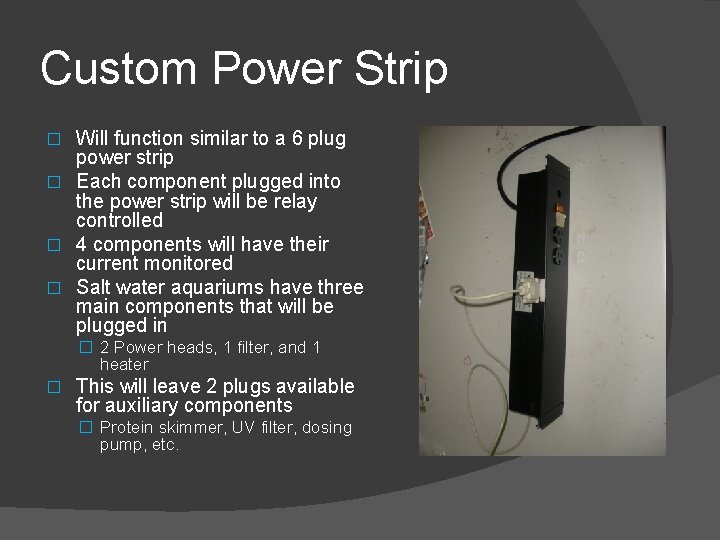
Custom Power Strip Will function similar to a 6 plug power strip � Each component plugged into the power strip will be relay controlled � 4 components will have their current monitored � Salt water aquariums have three main components that will be plugged in � � 2 Power heads, 1 filter, and 1 heater � This will leave 2 plugs available for auxiliary components � Protein skimmer, UV filter, dosing pump, etc.
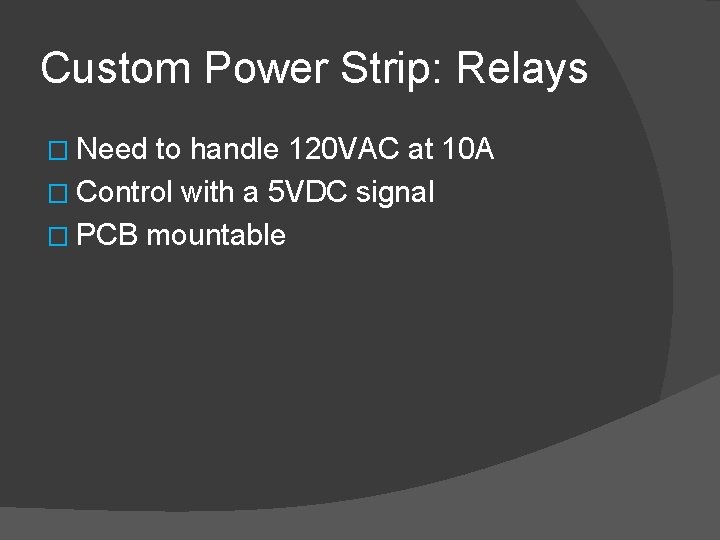
Custom Power Strip: Relays � Need to handle 120 VAC at 10 A � Control with a 5 VDC signal � PCB mountable
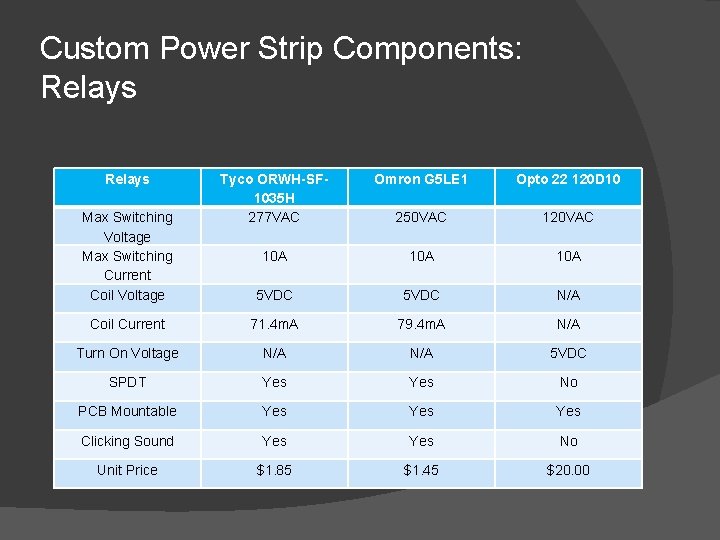
Custom Power Strip Components: Relays Tyco ORWH-SF 1035 H 277 VAC Omron G 5 LE 1 Opto 22 120 D 10 250 VAC 120 VAC 10 A 10 A 5 VDC N/A Coil Current 71. 4 m. A 79. 4 m. A N/A Turn On Voltage N/A 5 VDC SPDT Yes No PCB Mountable Yes Yes Clicking Sound Yes No Unit Price $1. 85 $1. 45 $20. 00 Max Switching Voltage Max Switching Current Coil Voltage
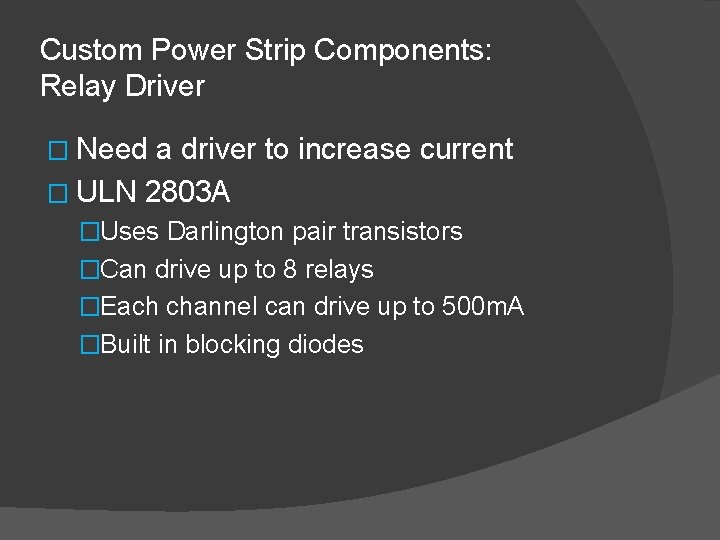
Custom Power Strip Components: Relay Driver � Need a driver to increase current � ULN 2803 A �Uses Darlington pair transistors �Can drive up to 8 relays �Each channel can drive up to 500 m. A �Built in blocking diodes
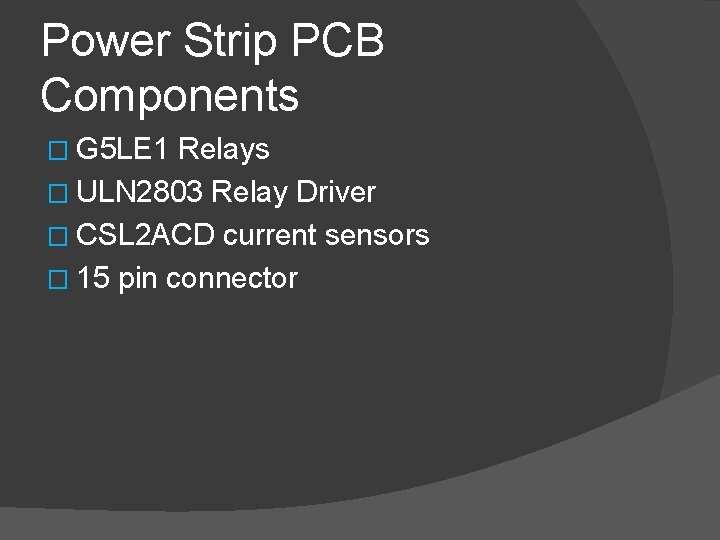
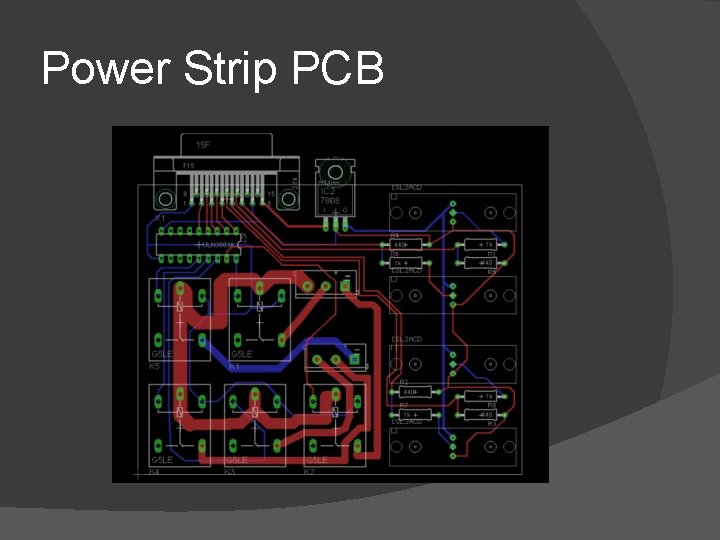
Power Strip PCB Components � G 5 LE 1 Relays � ULN 2803 Relay Driver � CSL 2 ACD current sensors � 15 pin connector
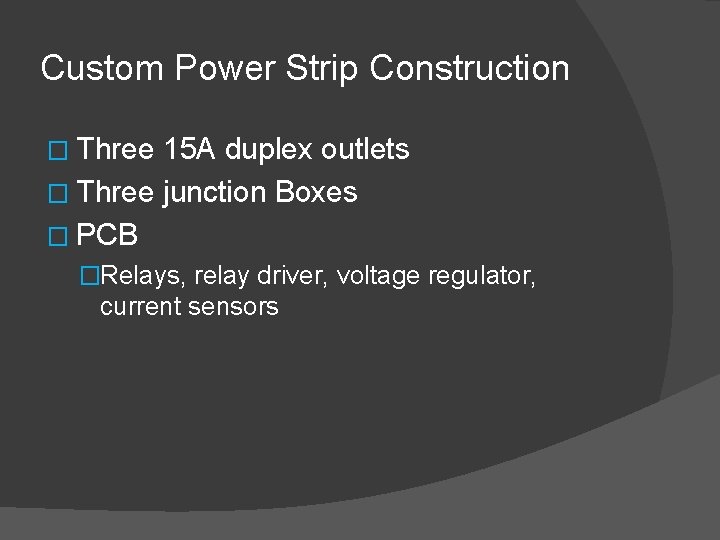
Custom Power Strip Construction � Three 15 A duplex outlets � Three junction Boxes � PCB �Relays, relay driver, voltage regulator, current sensors
Power Strip PCB
Overall Hardware Block
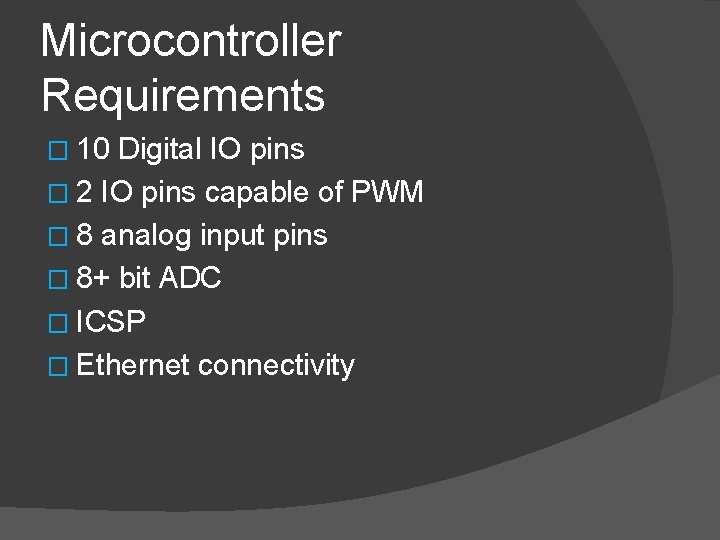
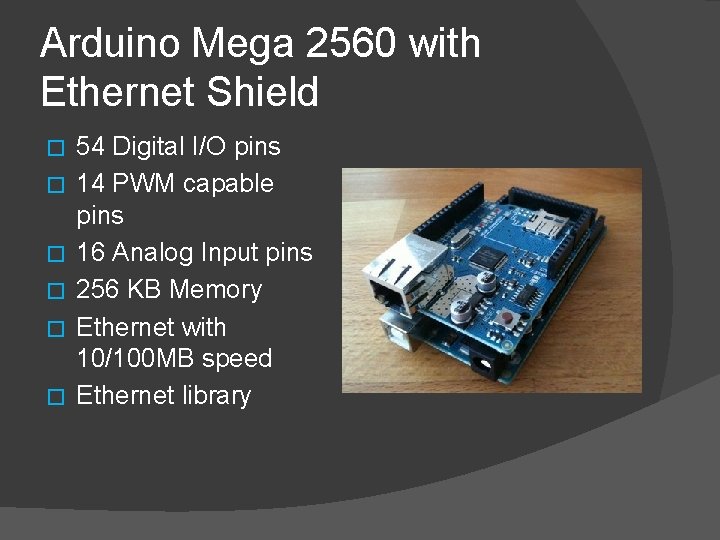
Microcontroller Requirements � 10 Digital IO pins � 2 IO pins capable of PWM � 8 analog input pins � 8+ bit ADC � ICSP � Ethernet connectivity
Arduino Mega 2560 with Ethernet Shield � � � 54 Digital I/O pins 14 PWM capable pins 16 Analog Input pins 256 KB Memory Ethernet with 10/100 MB speed Ethernet library
Software: Microcontroller � Sensor Input/database output � Control lighting system through custom lighting schedule � Web server polling � Interrupts
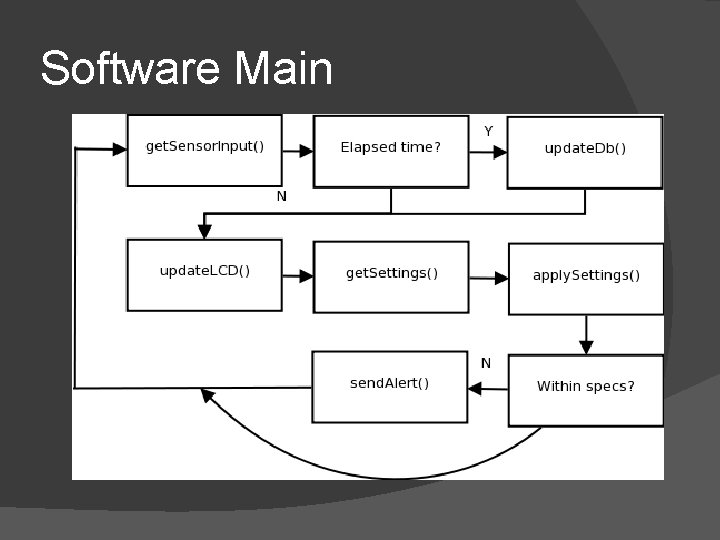
Software: Microcontroller � Programmed in Arduino language � One continuous main loop will run the main system � Interrupts will be used for physical interface
Software Main
Software Interrupts � Leak detection – will alert user via text message if a water leak is detected around the perimeter of the aquarium � Feed Mode- Will turn off the pumps and filters for 5 minutes when the front button is pressed � Lighting Mode- Will allow user to change the state of the lighting system to 4 preset modes.
Website Database � � � My. SQL database- open source, community support, easy interface with php. Database contains 3 Tables – Users, Data, Settings Users contains information about the user and their login information Data contains data points for all of the sensor updates Settings contains the current state of the relays and lighting system for each user
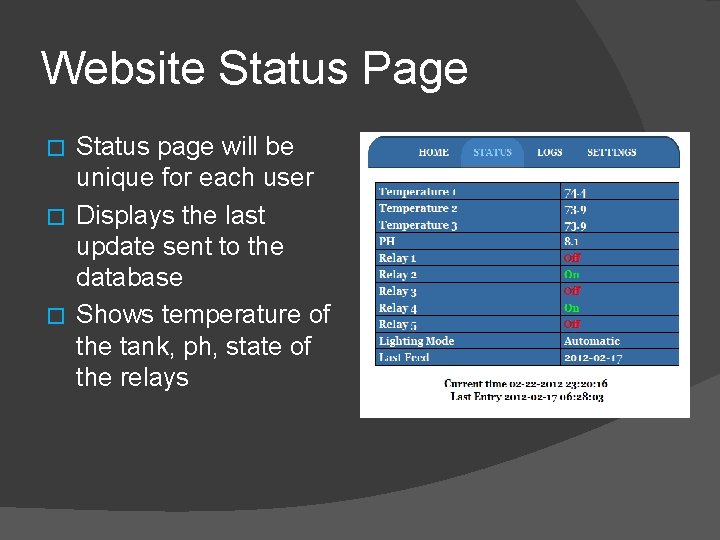
Website Status Page Status page will be unique for each user � Displays the last update sent to the database � Shows temperature of the tank, ph, state of the relays �
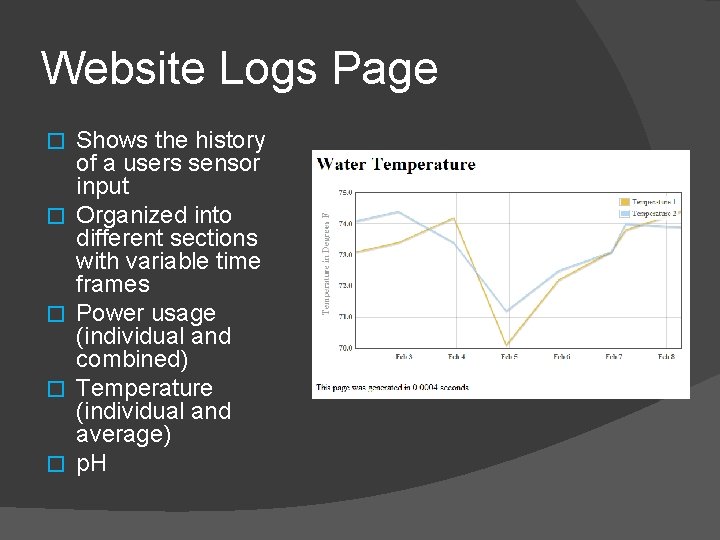
Website Logs Page � � � Shows the history of a users sensor input Organized into different sections with variable time frames Power usage (individual and combined) Temperature (individual and average) p. H
Website Settings � Settings inputs for: � Desired Temperature Range � Desired p. H range � Custom lighting schedule � Owners email � Submitting settings updates the Settings table in the database
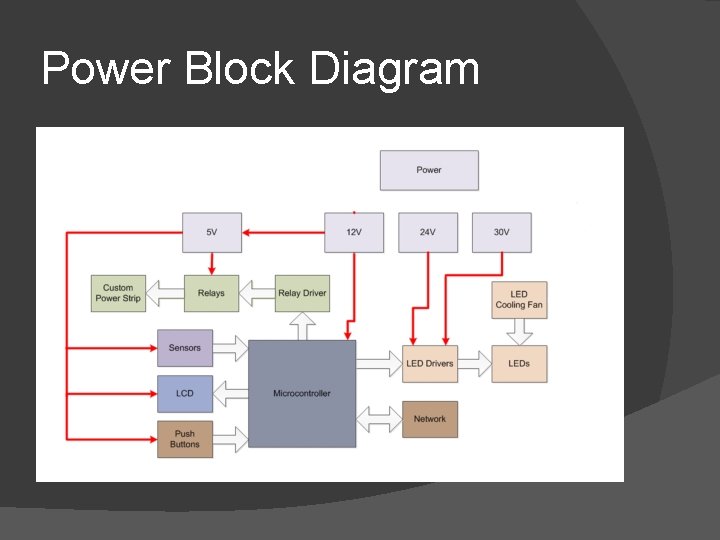
Power � 2 separate power systems �LEDs ○ Powered using PV panel and supplementary power supply �Other components such as the microcontroller, sensors, display ○ Powered using separate power supply
Power Block Diagram
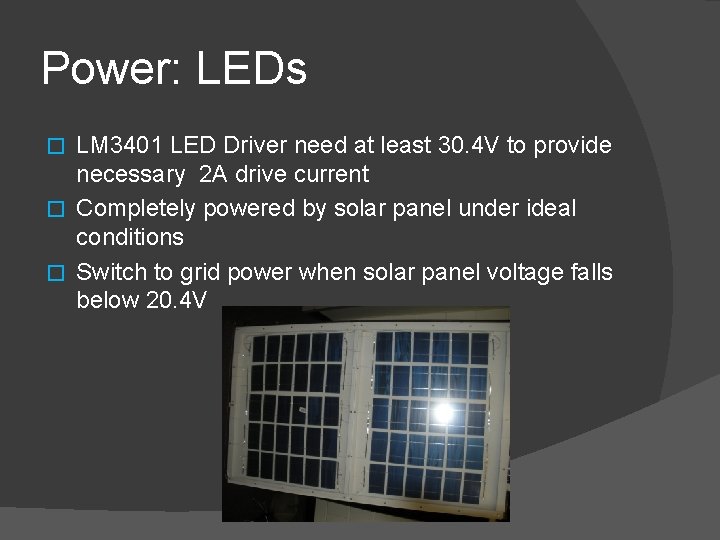
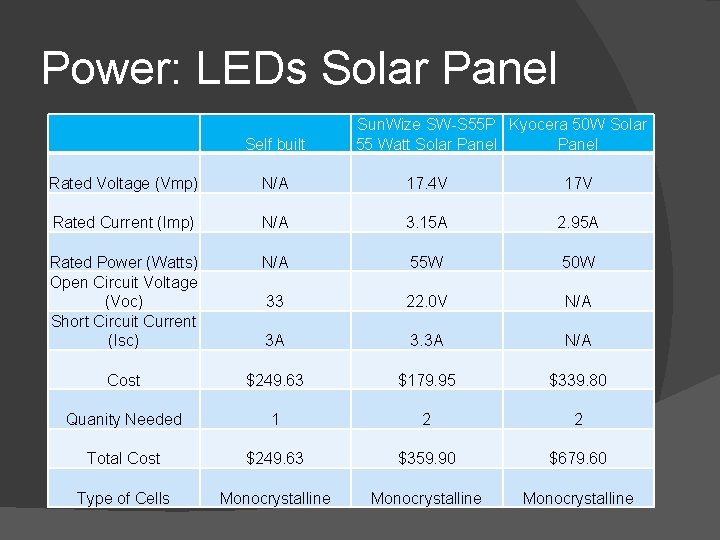
Power: LEDs LM 3401 LED Driver need at least 30. 4 V to provide necessary 2 A drive current � Completely powered by solar panel under ideal conditions � Switch to grid power when solar panel voltage falls below 20. 4 V �
Power: LEDs Solar Panel Self built Sun. Wize SW-S 55 P Kyocera 50 W Solar 55 Watt Solar Panel Rated Voltage (Vmp) N/A 17. 4 V 17 V Rated Current (Imp) N/A 3. 15 A 2. 95 A Rated Power (Watts) Open Circuit Voltage (Voc) Short Circuit Current (Isc) N/A 55 W 50 W 33 22. 0 V N/A 3 A 3. 3 A N/A Cost $249. 63 $179. 95 $339. 80 Quanity Needed 1 2 2 Total Cost $249. 63 $359. 90 $679. 60 Type of Cells Monocrystalline
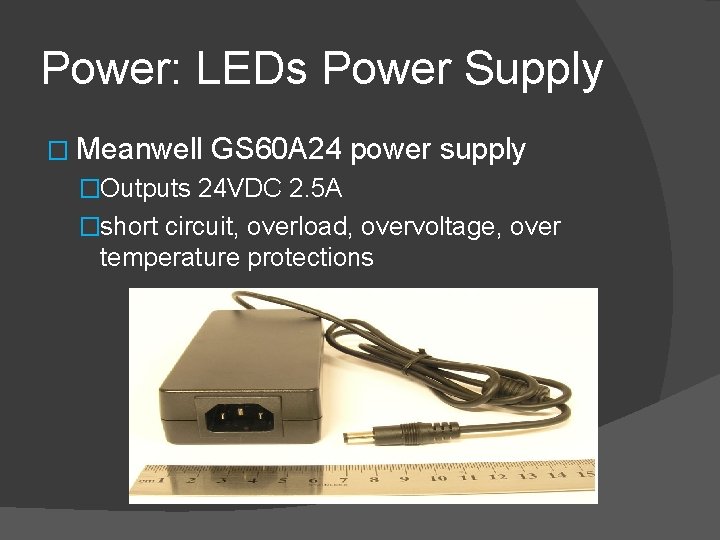
Power: LEDs Power Supply � Meanwell GS 60 A 24 power supply �Outputs 24 VDC 2. 5 A �short circuit, overload, overvoltage, over temperature protections
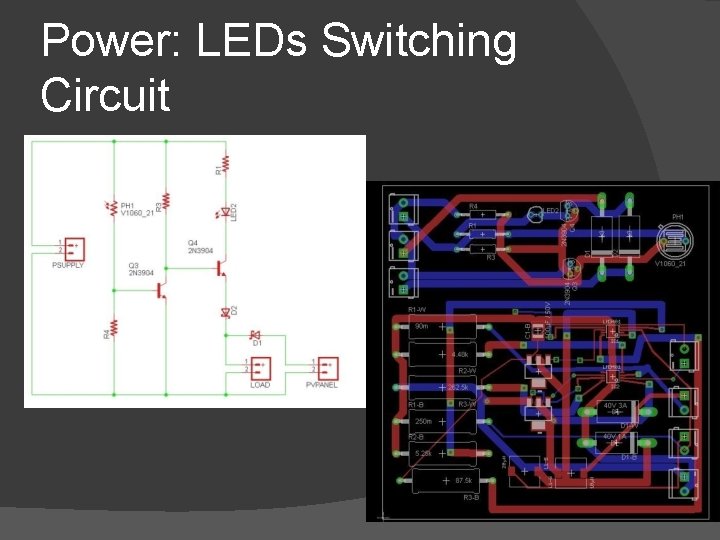
Power: LEDs Switching Circuit
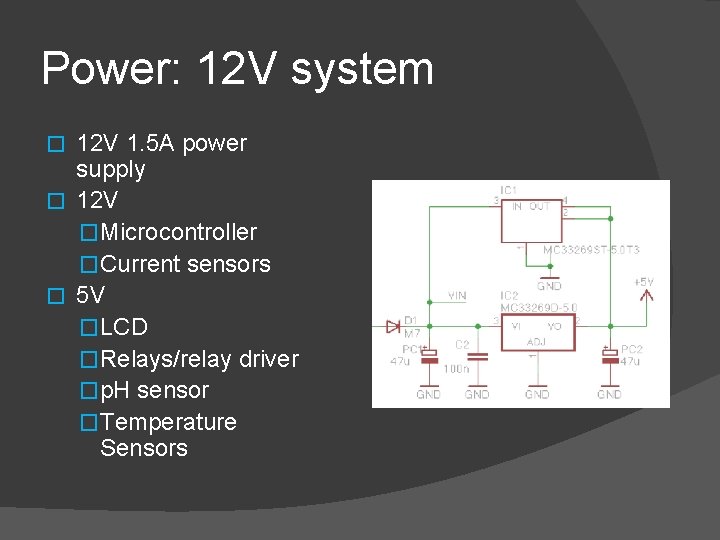
Power: 12 V system 12 V 1. 5 A power supply � 12 V �Microcontroller �Current sensors � 5 V �LCD �Relays/relay driver �p. H sensor �Temperature Sensors �
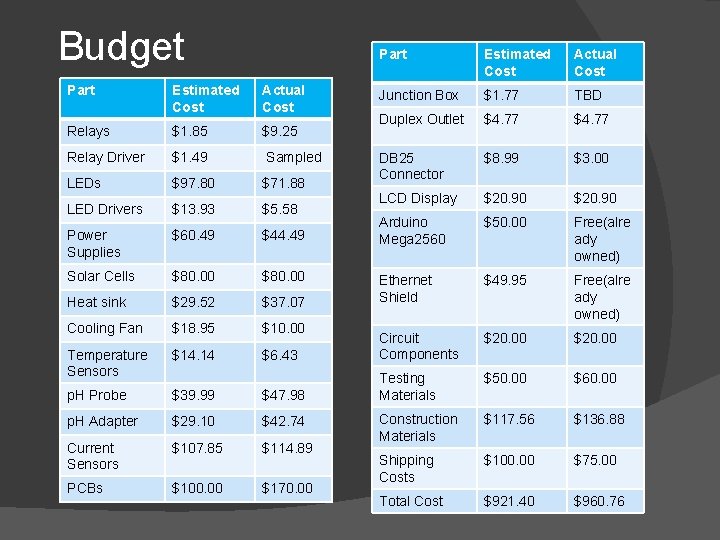
Budget Part Estimated Cost Actual Cost Junction Box $1. 77 TBD Duplex Outlet $4. 77 DB 25 Connector $8. 99 $3. 00 LCD Display $20. 90 Arduino Mega 2560 $50. 00 Free(alre ady owned) Ethernet Shield $49. 95 Free(alre ady owned) $20. 00 Part Estimated Cost Actual Cost Relays $1. 85 $9. 25 Relay Driver $1. 49 Sampled LEDs $97. 80 $71. 88 LED Drivers $13. 93 $5. 58 Power Supplies $60. 49 $44. 49 Solar Cells $80. 00 Heat sink $29. 52 $37. 07 Cooling Fan $18. 95 $10. 00 Temperature Sensors $14. 14 $6. 43 Circuit Components $50. 00 $60. 00 p. H Probe $39. 99 $47. 98 Testing Materials p. H Adapter $29. 10 $42. 74 $117. 56 $136. 88 Current Sensors $107. 85 $114. 89 Construction Materials $100. 00 $75. 00 PCBs $100. 00 $170. 00 Shipping Costs Total Cost $921. 40 $960. 76
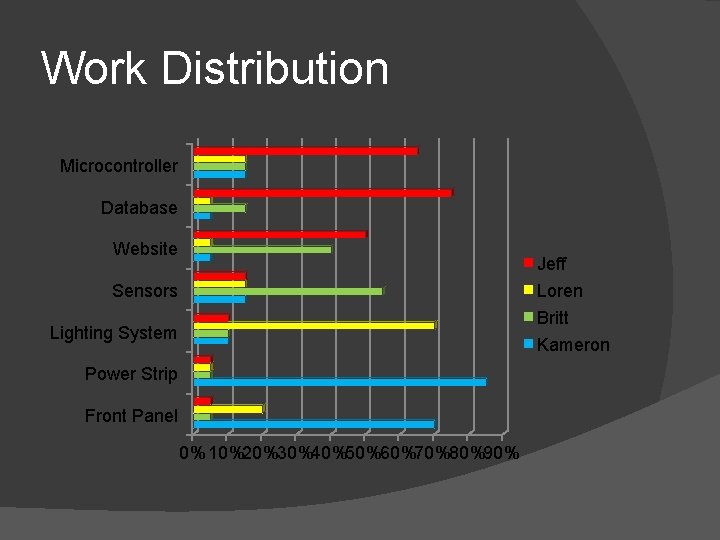
Work Distribution Microcontroller Database Website Jeff Loren Britt Kameron Sensors Lighting System Power Strip Front Panel 0% 10%20%30%40%50%60%70%80%90%
Questions? ? ?