
AQD 131 Aqeedah Curriculum Lecture No 1 Introduction
- Slides: 15
ﺃﻜﺎﺩﻳﻤﻴﺔ آﻴﺎﺕ ﻟﻠﻌﻠﻮﻡ ﺍﻹﺳﻼﻣﻴﺔ AQD 131 – Aqeedah Curriculum – Lecture No. 1 Introduction to Aqeedah Establishing the Existence of God Fatima Sallam 27 -09 -2020 www. ayaatacademy. ca ﺃﻜﺎﺩﻳﻤﻴﺔ آﻴﺎﺕ ﻟﻠﻌﻠﻮﻡ ﺍﻹﺳﻼﻣﻴﺔ 1
Agenda ﺃﻜﺎﺩﻳﻤﻴﺔ آﻴﺎﺕ ﻟﻠﻌﻠﻮﻡ ﺍﻹﺳﻼﻣﻴﺔ • The ten principles of the science of Aqeedah. • Establishing the existence to Allah (SWT). 27 -09 -2020 www. ayaatacademy. ca ﺃﻜﺎﺩﻳﻤﻴﺔ آﻴﺎﺕ ﻟﻠﻌﻠﻮﻡ ﺍﻹﺳﻼﻣﻴﺔ 2
The Ten Principles of Sciences ﺃﻜﺎﺩﻳﻤﻴﺔ آﻴﺎﺕ ﻟﻠﻌﻠﻮﻡ ﺍﻹﺳﻼﻣﻴﺔ Verily, the principles for every science (or: art) are ten, The definition, the subject, then its fruit. The relationship (to other sciences) and its virtue and the founder (or erector), The name and the sources and the ruling for learning it Issues (or: questions) and some satisfy themselves with a part (or something) of it, And the one who knows them all acquires excellence (honor) 27 -09 -2020 www. ayaatacademy. ca ﺃﻜﺎﺩﻳﻤﻴﺔ آﻴﺎﺕ ﻟﻠﻌﻠﻮﻡ ﺍﻹﺳﻼﻣﻴﺔ 3
The Ten Principles of the Science of Aqeedah ﺃﻜﺎﺩﻳﻤﻴﺔ آﻴﺎﺕ ﻟﻠﻌﻠﻮﻡ ﺍﻹﺳﻼﻣﻴﺔ • 1. The Definition: • Linguistically: Aqeedah comes from ‘aqad which means tying. Aqeedah (technically) is the things which people’s hearts affirm, believe in, and accept as true. • 2. The Subject: • Different subjects relevant to the belief of a servant. 27 -09 -2020 www. ayaatacademy. ca ﺃﻜﺎﺩﻳﻤﻴﺔ آﻴﺎﺕ ﻟﻠﻌﻠﻮﻡ ﺍﻹﺳﻼﻣﻴﺔ 4
The Ten Principles of the Science of Aqeedah ﺃﻜﺎﺩﻳﻤﻴﺔ آﻴﺎﺕ ﻟﻠﻌﻠﻮﻡ ﺍﻹﺳﻼﻣﻴﺔ • 3. The Fruit: • Acquaintance of Allah, and thus worshipping him as He deserves. • 4. The Relationship: • It is from the Islamic subjects (‘ulum Shar’iyyah); it is the greatest of them and the foundation of the Deen. • 5. The Virtue: • The greatest of all sciences. 27 -09 -2020 www. ayaatacademy. ca ﺃﻜﺎﺩﻳﻤﻴﺔ آﻴﺎﺕ ﻟﻠﻌﻠﻮﻡ ﺍﻹﺳﻼﻣﻴﺔ 5
The Ten Principles of the Science of Aqeedah ﺃﻜﺎﺩﻳﻤﻴﺔ آﻴﺎﺕ ﻟﻠﻌﻠﻮﻡ ﺍﻹﺳﻼﻣﻴﺔ • 6. The Founder: • Basically Allah (SWT), but in terms of compilation and writing its principles: Abu Ja’far At- Tahawy, Abu Al-Hasan Al-Ash’ariy , and Abu Mansour Al-Maturidy. • 7. The Name: • ‘ilm-ul-aqeedah (the science of the creed), ‘ilm-ul-kalam (science of discourse), ‘ilm-ul-Tawheed (monotheism), and other names. 27 -09 -2020 www. ayaatacademy. ca ﺃﻜﺎﺩﻳﻤﻴﺔ آﻴﺎﺕ ﻟﻠﻌﻠﻮﻡ ﺍﻹﺳﻼﻣﻴﺔ 6
The Ten Principles of the Science of Aqeedah ﺃﻜﺎﺩﻳﻤﻴﺔ آﻴﺎﺕ ﻟﻠﻌﻠﻮﻡ ﺍﻹﺳﻼﻣﻴﺔ • 8. The Sources: • The book of Allah (the Holy Quran) and the Sunnah (the prophetic traditions). • 9. The Ruling: • Fard ‘ayn (individual duty) for the matters that ensure the correctness of the creed; and Fard Kifayah (collective duty) for what is beyond that. 27 -09 -2020 www. ayaatacademy. ca ﺃﻜﺎﺩﻳﻤﻴﺔ آﻴﺎﺕ ﻟﻠﻌﻠﻮﻡ ﺍﻹﺳﻼﻣﻴﺔ 7
The Ten Principles of the Science of Aqeedah ﺃﻜﺎﺩﻳﻤﻴﺔ آﻴﺎﺕ ﻟﻠﻌﻠﻮﻡ ﺍﻹﺳﻼﻣﻴﺔ • 10. The Issues: • Tawheed, belief in angels, prophets, divine books, hereafter, Allah’s decree (or: predestination), and other issues. 27 -09 -2020 www. ayaatacademy. ca ﺃﻜﺎﺩﻳﻤﻴﺔ آﻴﺎﺕ ﻟﻠﻌﻠﻮﻡ ﺍﻹﺳﻼﻣﻴﺔ 8
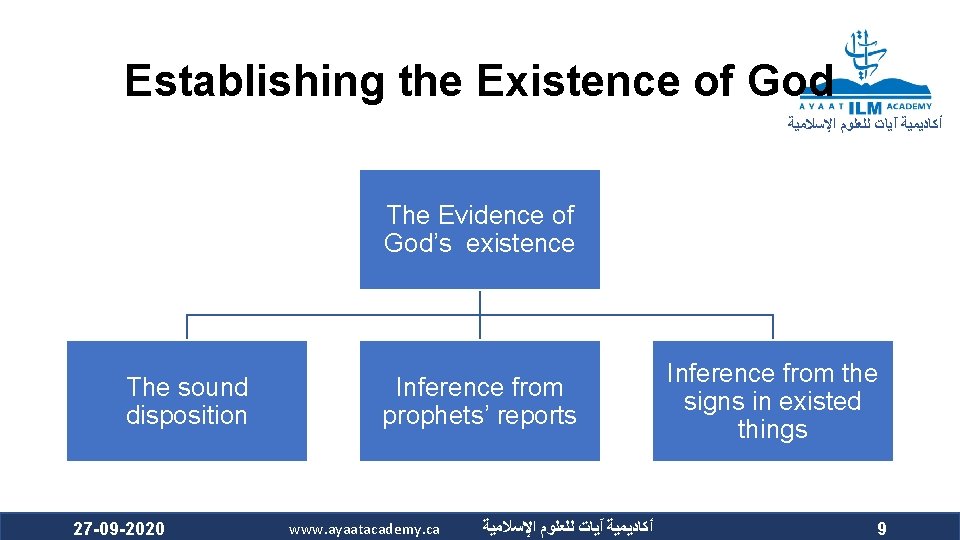
Establishing the Existence of God ﺃﻜﺎﺩﻳﻤﻴﺔ آﻴﺎﺕ ﻟﻠﻌﻠﻮﻡ ﺍﻹﺳﻼﻣﻴﺔ The Evidence of God’s existence The sound disposition 27 -09 -2020 Inference from prophets’ reports www. ayaatacademy. ca ﺃﻜﺎﺩﻳﻤﻴﺔ آﻴﺎﺕ ﻟﻠﻌﻠﻮﻡ ﺍﻹﺳﻼﻣﻴﺔ Inference from the signs in existed things 9
Inference from the signs that He has placed in the things that exist ﺃﻜﺎﺩﻳﻤﻴﺔ آﻴﺎﺕ ﻟﻠﻌﻠﻮﻡ ﺍﻹﺳﻼﻣﻴﺔ • This means that a man should see and contemplate on everything that surrounds him, such as: earth, heavens, sun, moon, animals, plants, and other creations. And he needs to ponder on himself. • It is logical that everything that is made indicates that there is a maker, and every creation has a creator. • The Quran is full of verses that invite people to ponder over all the existing things. 27 -09 -2020 www. ayaatacademy. ca ﺃﻜﺎﺩﻳﻤﻴﺔ آﻴﺎﺕ ﻟﻠﻌﻠﻮﻡ ﺍﻹﺳﻼﻣﻴﺔ 10
Read these verses and contemplate on them: ﺃﻜﺎﺩﻳﻤﻴﺔ آﻴﺎﺕ ﻟﻠﻌﻠﻮﻡ ﺍﻹﺳﻼﻣﻴﺔ • “Then do they not look at the camels - how they are created; And at the sky - how it is raised; And at the mountains - how they are erected; And at the earth - how it is spread out. ” • “Indeed, in the creation of the heavens and the earth and the alternation of the night and the day are signs for those of understanding. ” 27 -09 -2020 www. ayaatacademy. ca ﺃﻜﺎﺩﻳﻤﻴﺔ آﻴﺎﺕ ﻟﻠﻌﻠﻮﻡ ﺍﻹﺳﻼﻣﻴﺔ 11
Read these verses and contemplate on them: ﺃﻜﺎﺩﻳﻤﻴﺔ آﻴﺎﺕ ﻟﻠﻌﻠﻮﻡ ﺍﻹﺳﻼﻣﻴﺔ • “And within the land are neighboring plots and gardens of grapevines and crops and palm trees, [growing] several from a root or otherwise, watered with one water; but We make some of them exceed others in [quality of] fruit. Indeed, in that are signs for a people who reason. ” • “And in yourselves. Then will you not see? ” • “We will show them Our signs in the horizons and within themselves until it becomes clear to them that it is the truth. ” 27 -09 -2020 www. ayaatacademy. ca ﺃﻜﺎﺩﻳﻤﻴﺔ آﻴﺎﺕ ﻟﻠﻌﻠﻮﻡ ﺍﻹﺳﻼﻣﻴﺔ 12
Three questions and their answers ﺃﻜﺎﺩﻳﻤﻴﺔ آﻴﺎﺕ ﻟﻠﻌﻠﻮﻡ ﺍﻹﺳﻼﻣﻴﺔ What is the evidence that this creator is Allah, the Almighty? • If the living rational human beings are incapable, even if they all work together, in creating even a small fly, then it is rather more impossible for the other creations to do so. 27 -09 -2020 What is the evidence that these existing things haven’t created themselves instead of relying on an external creator? What is the evidence that these existing things were created after having been non-existent? • “Or were they created by nothing, or were they the creators [of themselves]? • The limited capability of the creation. • There is someone who gave preference to existence over its existence. • The attributes of the created things are changing and dependent on other creations. • Every created being knows that intrinsically; he was non-existent and came to existence. www. ayaatacademy. ca ﺃﻜﺎﺩﻳﻤﻴﺔ آﻴﺎﺕ ﻟﻠﻌﻠﻮﻡ ﺍﻹﺳﻼﻣﻴﺔ 13
Inference from the prophets’ reports ﺃﻜﺎﺩﻳﻤﻴﺔ آﻴﺎﺕ ﻟﻠﻌﻠﻮﻡ ﺍﻹﺳﻼﻣﻴﺔ • God, the Almighty, sent prophets to mankind with miracles which indicate their truth and the genuinity of their call to God. • Some people believed in Allah based on this way only, such as the magicians of the Pharaoh. 27 -09 -2020 www. ayaatacademy. ca ﺃﻜﺎﺩﻳﻤﻴﺔ آﻴﺎﺕ ﻟﻠﻌﻠﻮﻡ ﺍﻹﺳﻼﻣﻴﺔ 14
The sound disposition ﺃﻜﺎﺩﻳﻤﻴﺔ آﻴﺎﺕ ﻟﻠﻌﻠﻮﻡ ﺍﻹﺳﻼﻣﻴﺔ • It means the disposition with which Allah created people in terms of their readiness to recognize the truth, accept it, reject falsehood, and distinguish between right and wrong. • Ibn Juzayy mentioned here the ‘sound’ disposition, because the disposition gets clouded based on the environment one lives and raises in. • A sound disposition indicates and guides its owner to the existence of God. 27 -09 -2020 www. ayaatacademy. ca ﺃﻜﺎﺩﻳﻤﻴﺔ آﻴﺎﺕ ﻟﻠﻌﻠﻮﻡ ﺍﻹﺳﻼﻣﻴﺔ 15