
AQA Module C 2 Reversible Reactions The Haber
AQA Module C 2 Reversible Reactions & The Haber Process
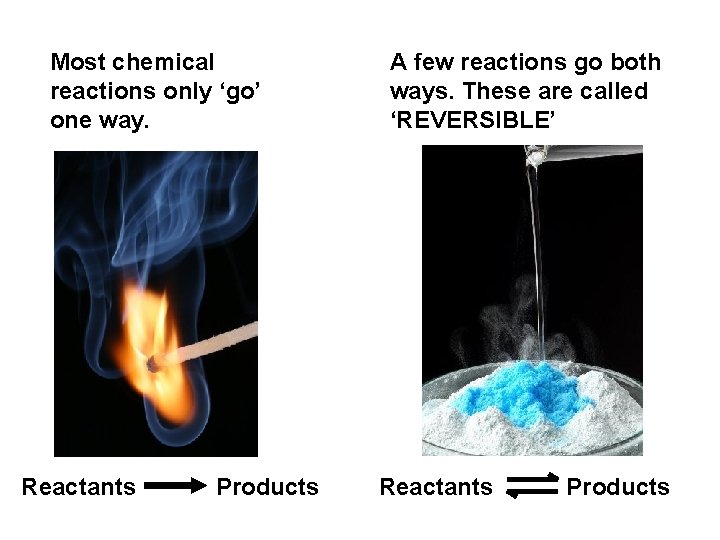
Most chemical reactions only ‘go’ one way. Reactants Products A few reactions go both ways. These are called ‘REVERSIBLE’ Reactants Products
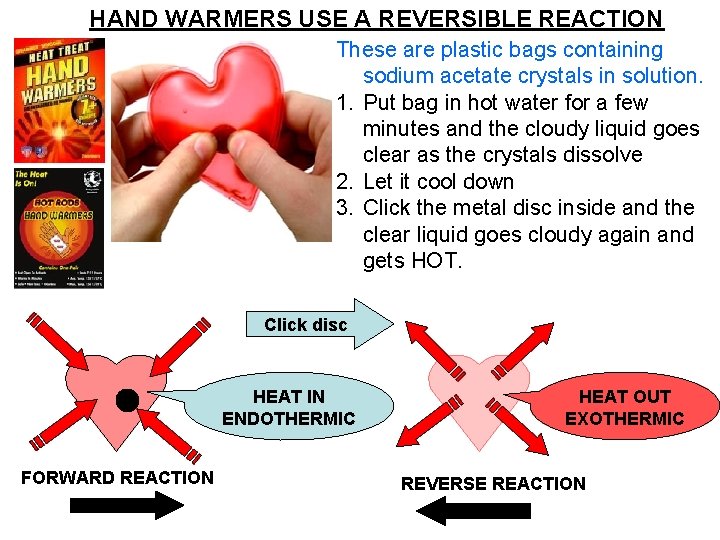
HAND WARMERS USE A REVERSIBLE REACTION These are plastic bags containing sodium acetate crystals in solution. 1. Put bag in hot water for a few minutes and the cloudy liquid goes clear as the crystals dissolve 2. Let it cool down 3. Click the metal disc inside and the clear liquid goes cloudy again and gets HOT. Click disc HEAT IN ENDOTHERMIC FORWARD REACTION HEAT OUT EXOTHERMIC REVERSE REACTION
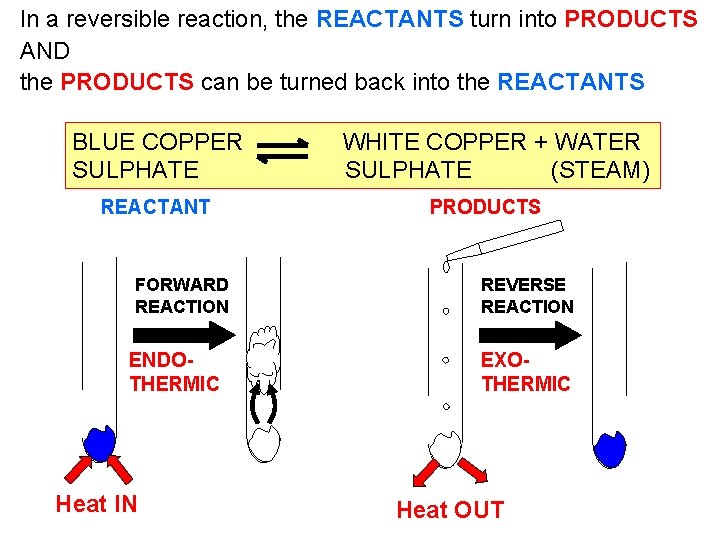
In a reversible reaction, the REACTANTS turn into PRODUCTS AND the PRODUCTS can be turned back into the REACTANTS BLUE COPPER SULPHATE REACTANT FORWARD REACTION ENDOTHERMIC Heat IN WHITE COPPER + WATER SULPHATE (STEAM) PRODUCTS REVERSE REACTION EXOTHERMIC Heat OUT
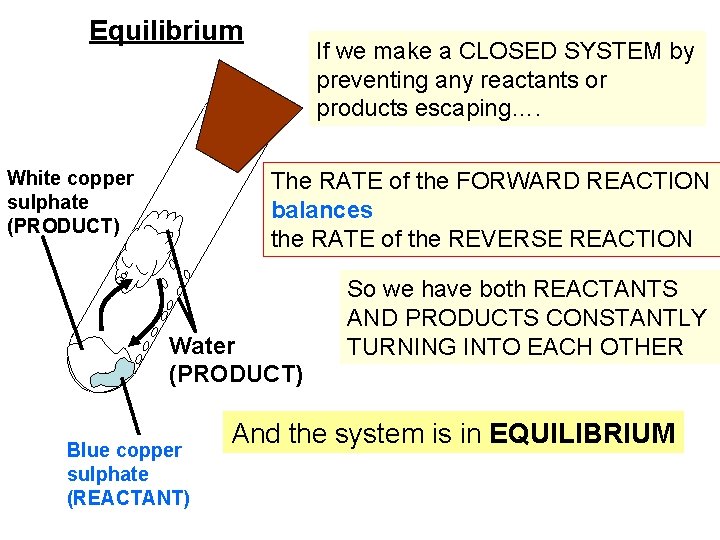
Equilibrium White copper sulphate (PRODUCT) If we make a CLOSED SYSTEM by preventing any reactants or products escaping…. The RATE of the FORWARD REACTION balances the RATE of the REVERSE REACTION Water (PRODUCT) Blue copper sulphate (REACTANT) So we have both REACTANTS AND PRODUCTS CONSTANTLY TURNING INTO EACH OTHER And the system is in EQUILIBRIUM
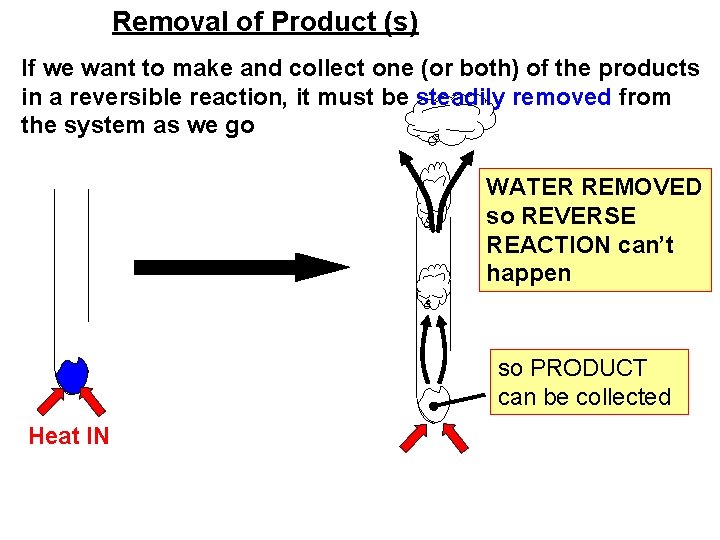
Removal of Product (s) If we want to make and collect one (or both) of the products in a reversible reaction, it must be steadily removed from the system as we go WATER REMOVED so REVERSE REACTION can’t happen so PRODUCT can be collected Heat IN

The HABER PROCESS for producing AMMONIA The production of ammonia is a very important process as it is used to make fertilizers to grow more food crops. H N H H Ammonia is made from: • nitrogen, which is removed from the air N N • hydrogen, made from methane (natural gas) H H The Haber Process is a reversible reaction where both reactants and the product are GASES.
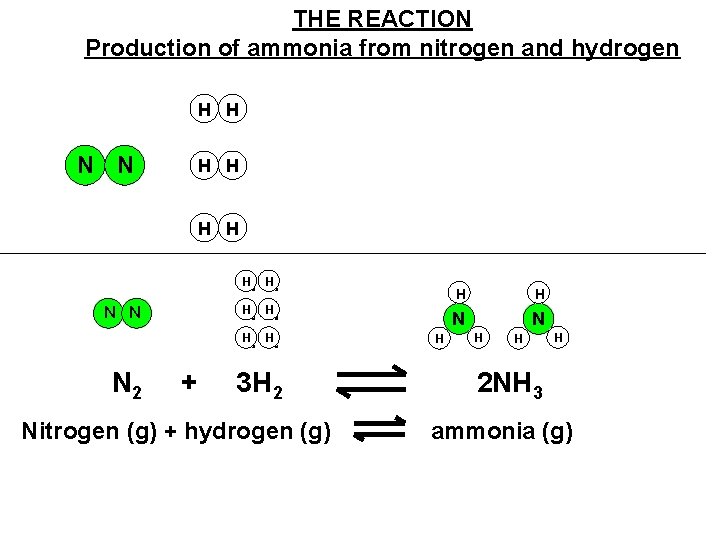
THE REACTION Production of ammonia from nitrogen and hydrogen H H N N H H H HH N N H H HH N 2 + 3 H 2 Nitrogen (g) + hydrogen (g) H H H N N H H H 2 NH 3 ammonia (g)
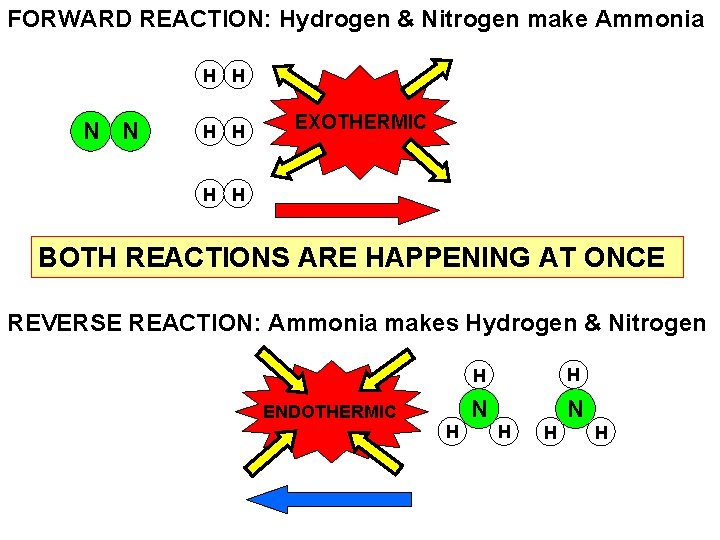
FORWARD REACTION: Hydrogen & Nitrogen make Ammonia H H N N H H EXOTHERMIC H H BOTH REACTIONS ARE HAPPENING AT ONCE REVERSE REACTION: Ammonia makes Hydrogen & Nitrogen ENDOTHERMIC H H H N N H H H
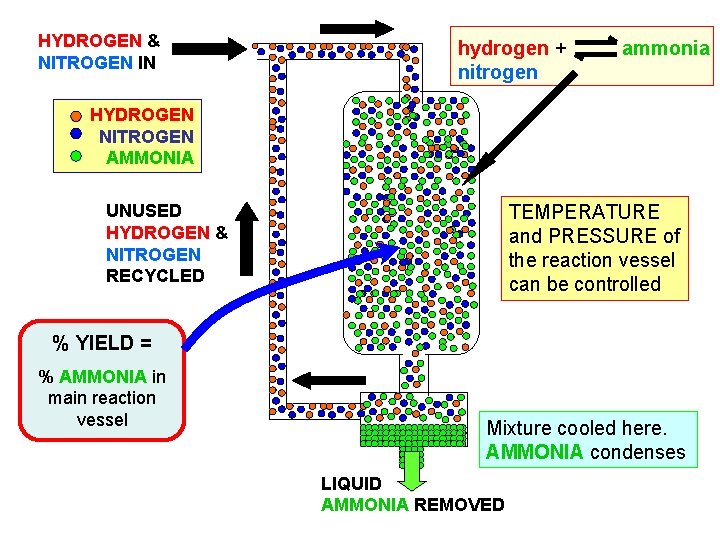
HYDROGEN & NITROGEN IN hydrogen + nitrogen ammonia HYDROGEN NITROGEN AMMONIA UNUSED HYDROGEN & NITROGEN RECYCLED TEMPERATURE and PRESSURE of the reaction vessel can be controlled % YIELD = % AMMONIA in main reaction vessel Mixture cooled here. AMMONIA condenses LIQUID AMMONIA REMOVED
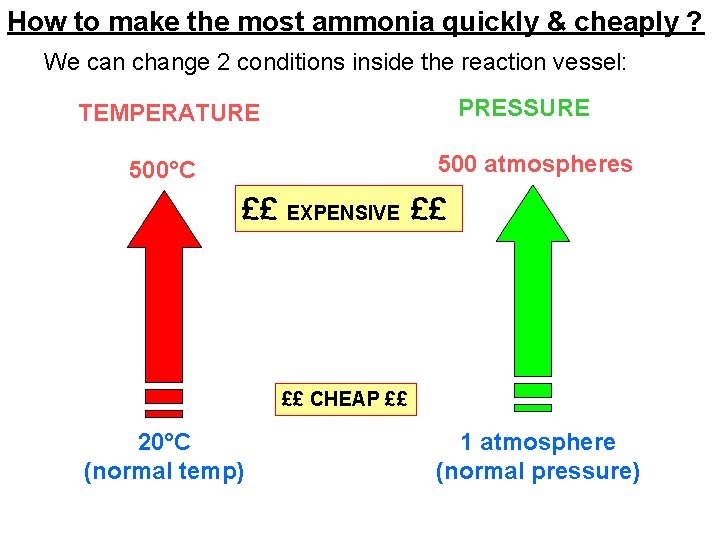
How to make the most ammonia quickly & cheaply ? We can change 2 conditions inside the reaction vessel: PRESSURE TEMPERATURE 500 atmospheres 500°C ££ EXPENSIVE ££ ££ CHEAP ££ 20°C (normal temp) 1 atmosphere (normal pressure)
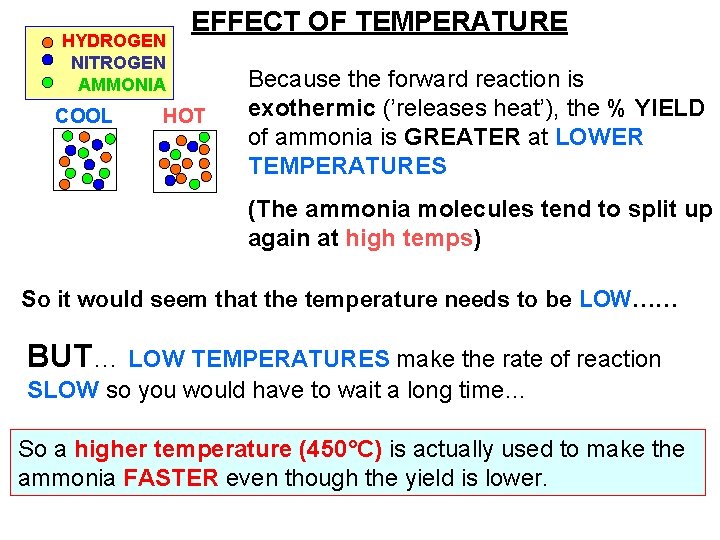
HYDROGEN NITROGEN AMMONIA COOL EFFECT OF TEMPERATURE HOT Because the forward reaction is exothermic (’releases heat’), the % YIELD of ammonia is GREATER at LOWER TEMPERATURES (The ammonia molecules tend to split up again at high temps) So it would seem that the temperature needs to be LOW…… BUT… LOW TEMPERATURES make the rate of reaction SLOW so you would have to wait a long time… So a higher temperature (450°C) is actually used to make the ammonia FASTER even though the yield is lower.
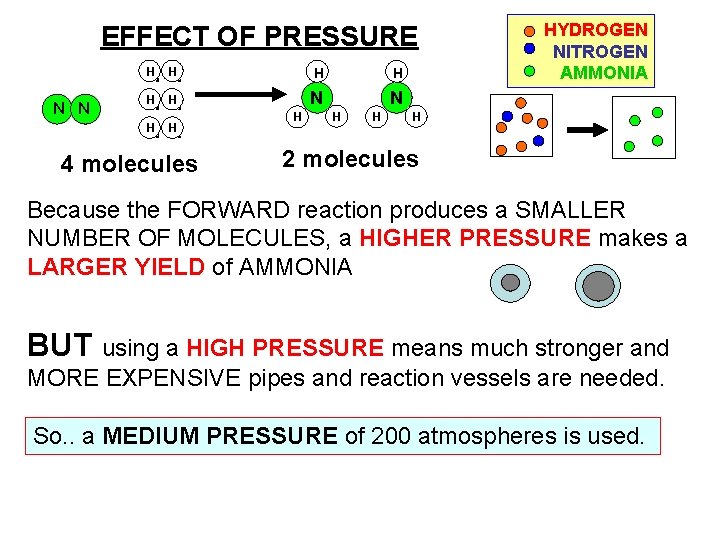
EFFECT OF PRESSURE N N H H HH N N H H HH 4 molecules H HYDROGEN NITROGEN AMMONIA H 2 molecules Because the FORWARD reaction produces a SMALLER NUMBER OF MOLECULES, a HIGHER PRESSURE makes a LARGER YIELD of AMMONIA BUT using a HIGH PRESSURE means much stronger and MORE EXPENSIVE pipes and reaction vessels are needed. So. . a MEDIUM PRESSURE of 200 atmospheres is used.
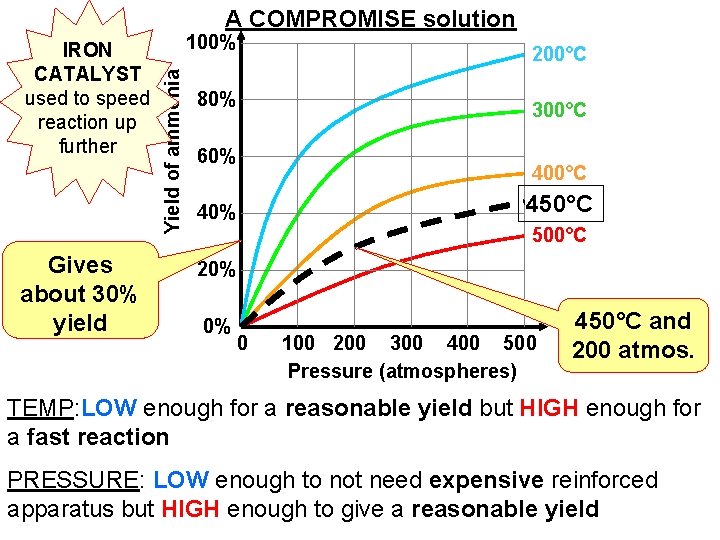
A COMPROMISE solution Gives about 30% yield 100% Yield of ammonia IRON CATALYST used to speed reaction up further 80% 60% 40% 200°C 300°C 450°C 500°C 20% 0% 0 100 200 300 400 500 Pressure (atmospheres) 450°C and 200 atmos. TEMP: LOW enough for a reasonable yield but HIGH enough for a fast reaction PRESSURE: LOW enough to not need expensive reinforced apparatus but HIGH enough to give a reasonable yield
- Slides: 14