
AQA GCSE PRODUCT DESIGN REVISION GUIDE SECTION B
AQA GCSE PRODUCT DESIGN REVISION GUIDE: SECTION B- Q 4 MANUFACTURING What’s in • Hints and tips for revision of section B • Exam paper content • Revision topics • Key words
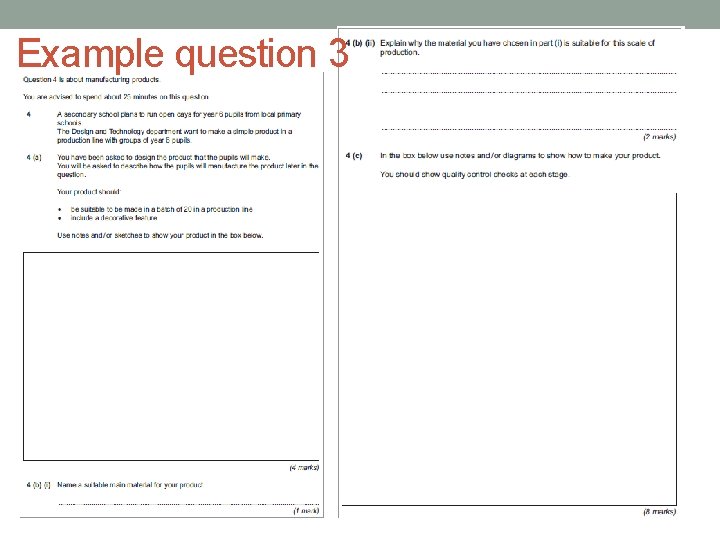
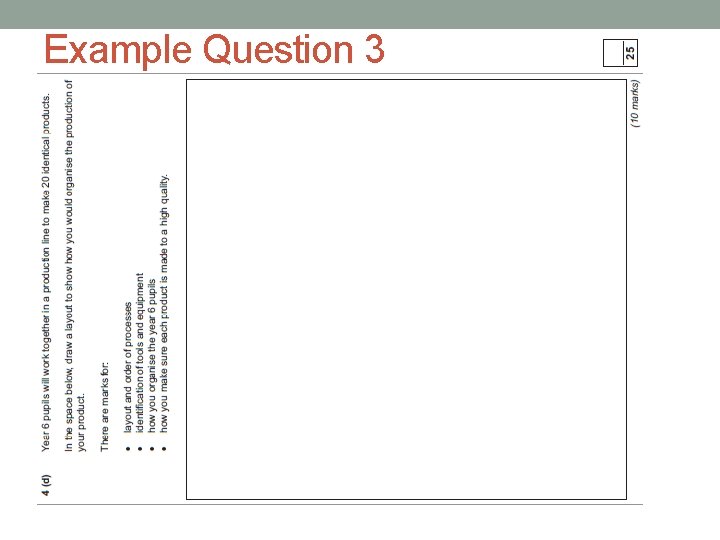
What is manufacturing part of the exam? There is always some part of your exam that ask’s you questions about how to manufacture a product, either in the classroom or in a workshop. You will usually be asked to design something simple, eg a key ring and asked to make it in multiple numbers. Many students make simple mistakes with this question which are • ALWAYS DESIGN SOMETHING SIMPLE THAT CAN EASILY BE MADE THE SAME OVER AND OVER AGAIN. • THINK ABOUT HOW YOU WOULD SET UP THE WORKSHOP.
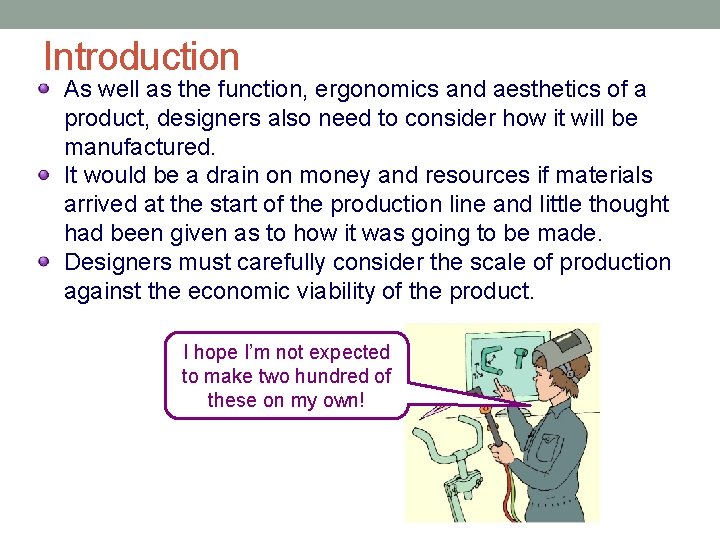
Introduction As well as the function, ergonomics and aesthetics of a product, designers also need to consider how it will be manufactured. It would be a drain on money and resources if materials arrived at the start of the production line and little thought had been given as to how it was going to be made. Designers must carefully consider the scale of production against the economic viability of the product. I hope I’m not expected to make two hundred of these on my own!
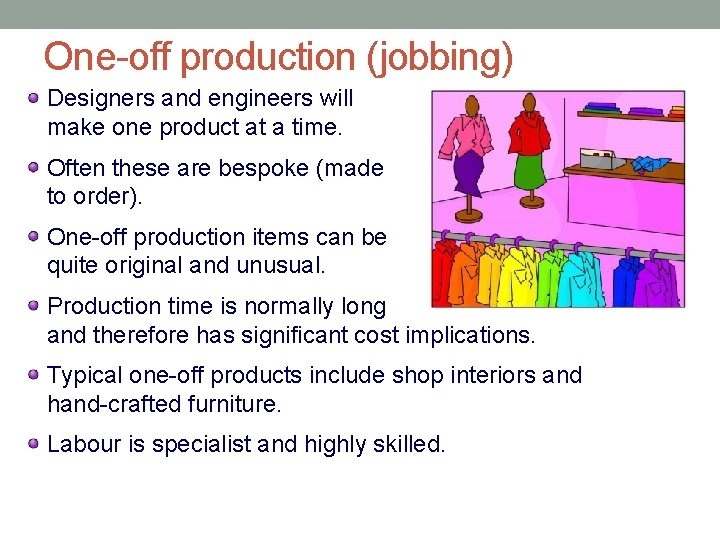
One-off production (jobbing) Designers and engineers will make one product at a time. Often these are bespoke (made to order). One-off production items can be quite original and unusual. Production time is normally long and therefore has significant cost implications. Typical one-off products include shop interiors and hand-crafted furniture. Labour is specialist and highly skilled.
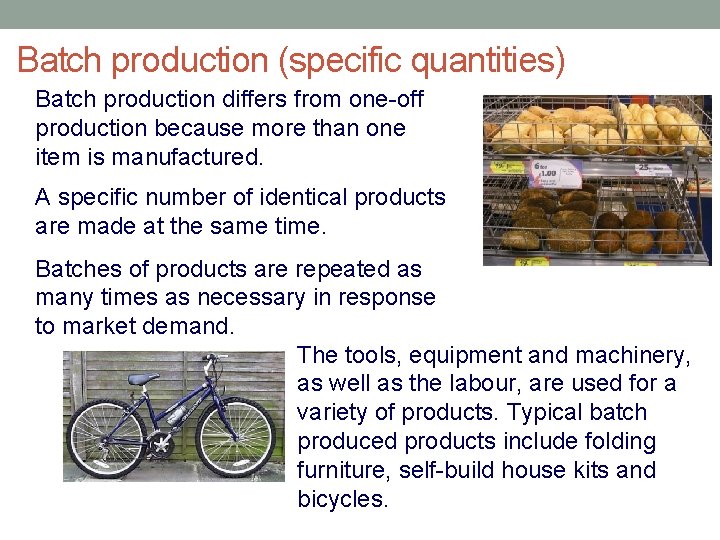
Batch production (specific quantities) Batch production differs from one-off production because more than one item is manufactured. A specific number of identical products are made at the same time. Batches of products are repeated as many times as necessary in response to market demand. The tools, equipment and machinery, as well as the labour, are used for a variety of products. Typical batch produced products include folding furniture, self-build house kits and bicycles.
Mass production (volume production) In mass production much of the work is automated and requires little human interaction. The product is made on a production line and passes through the various stages of manufacturing and assembly. Huge volumes of the product are made using extremely specialist equipment. Often only one product can be made using this arrangement. Each manufacturing task is broken down into simple jobs and the factory floor is arranged around the flow of the product. A large, unskilled workforce is needed as tasks are repetitive and straightforward to learn. Typical mass produced products include many electrical items and cars.
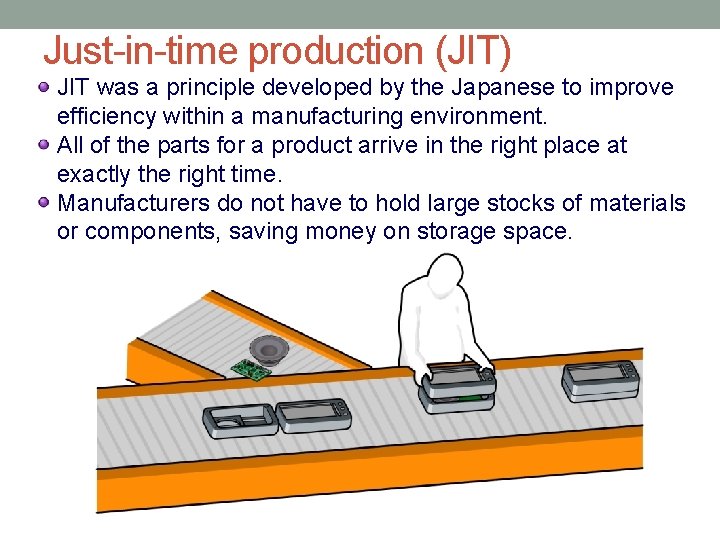
Just-in-time production (JIT) JIT was a principle developed by the Japanese to improve efficiency within a manufacturing environment. All of the parts for a product arrive in the right place at exactly the right time. Manufacturers do not have to hold large stocks of materials or components, saving money on storage space.
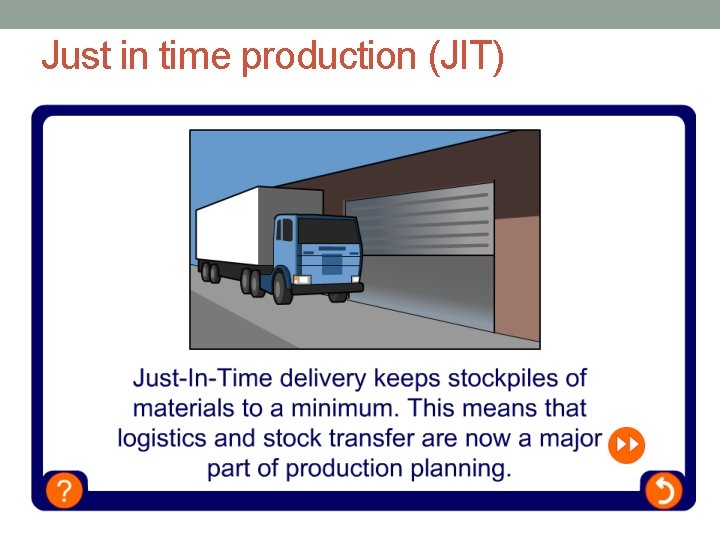
Just in time production (JIT)
Quality assurance and control Quality assurance (QA) and quality control (QC) are vital in today’s manufacturing market. Consumers are protected by legislation and laws which hold manufacturers accountable to high levels of safe manufacturing. QA: A system of planned procedures designed to ensure that the product and organization meet strict quality standards. QC: Techniques and physical checks used to assess the quality of the product against international standards and within specific tolerances. What implications do QA and QC have for product designers?
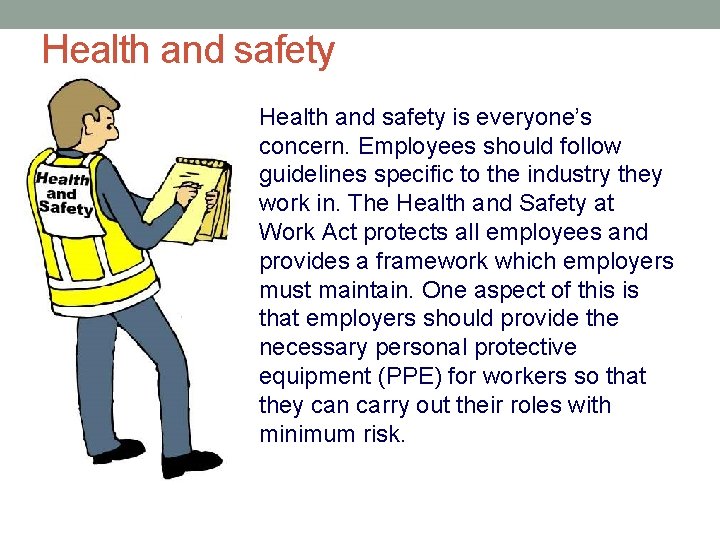
Health and safety is everyone’s concern. Employees should follow guidelines specific to the industry they work in. The Health and Safety at Work Act protects all employees and provides a framework which employers must maintain. One aspect of this is that employers should provide the necessary personal protective equipment (PPE) for workers so that they can carry out their roles with minimum risk.
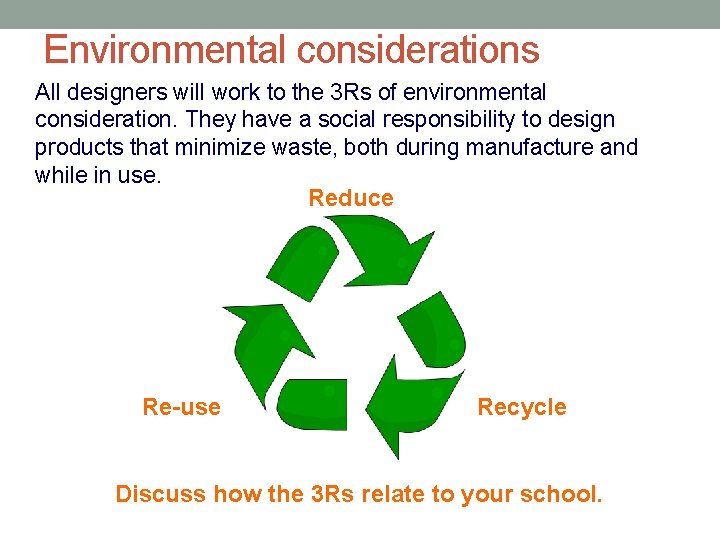
Environmental considerations All designers will work to the 3 Rs of environmental consideration. They have a social responsibility to design products that minimize waste, both during manufacture and while in use. Reduce Re-use Recycle Discuss how the 3 Rs relate to your school.
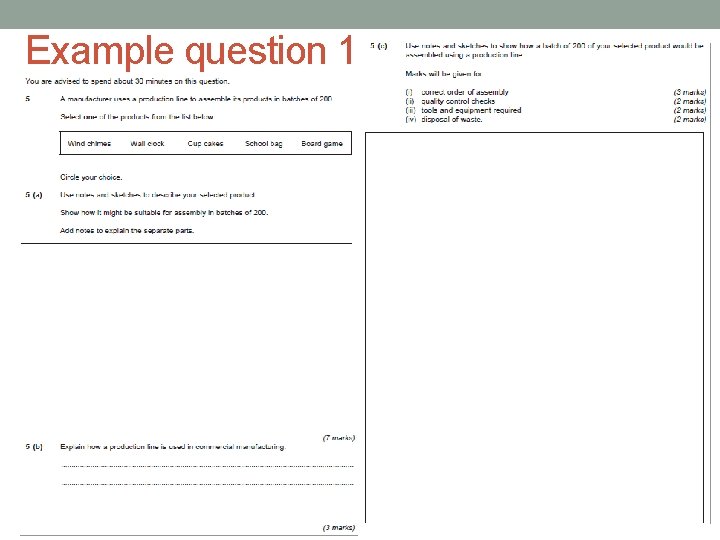
Example question 1
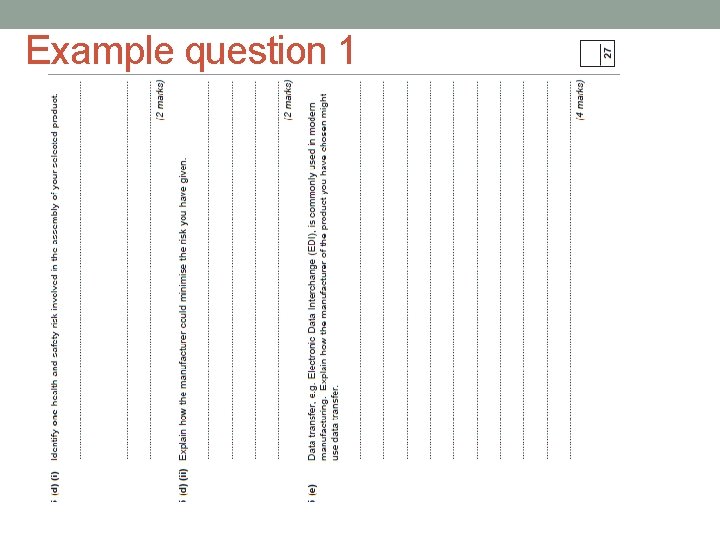
Example question 1
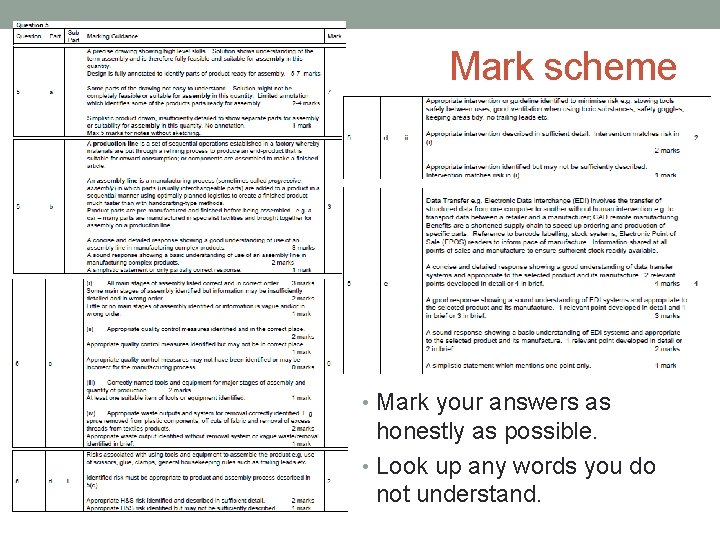
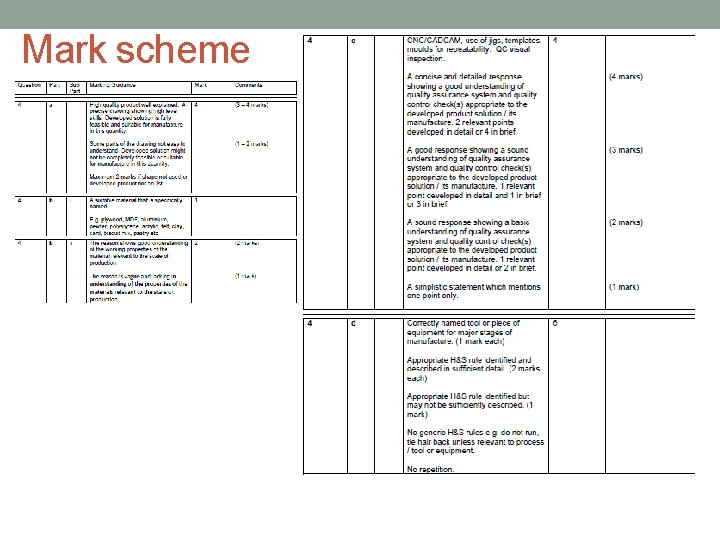
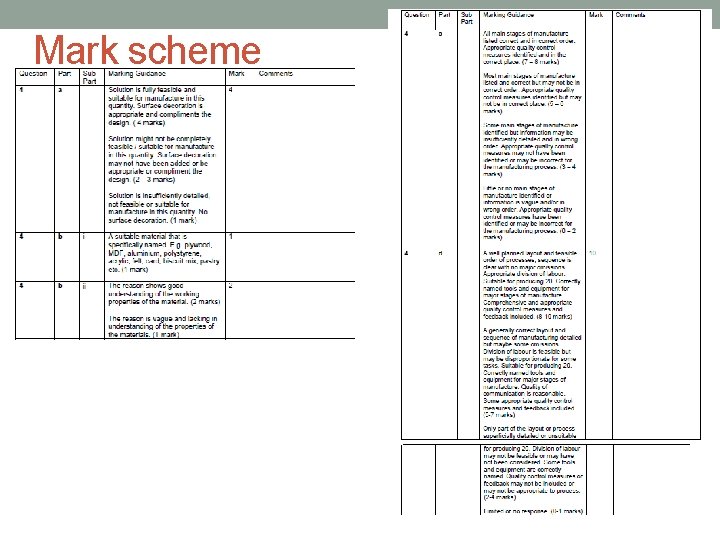
Mark scheme • Mark your answers as honestly as possible. • Look up any words you do not understand.
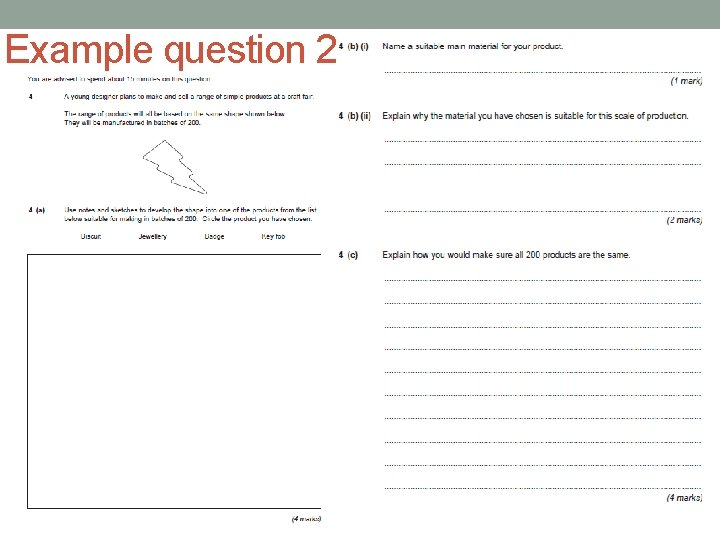
Example question 2
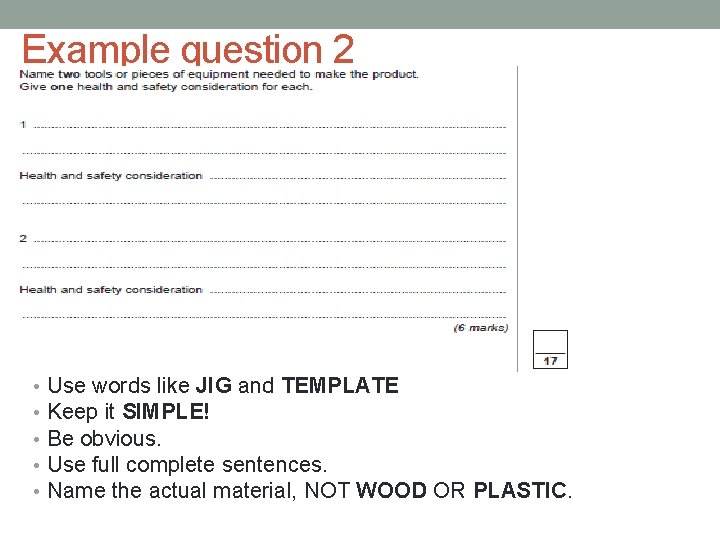
Example question 2 • • • Use words like JIG and TEMPLATE Keep it SIMPLE! Be obvious. Use full complete sentences. Name the actual material, NOT WOOD OR PLASTIC.
Mark scheme
Example question 3
Example Question 3
Mark scheme
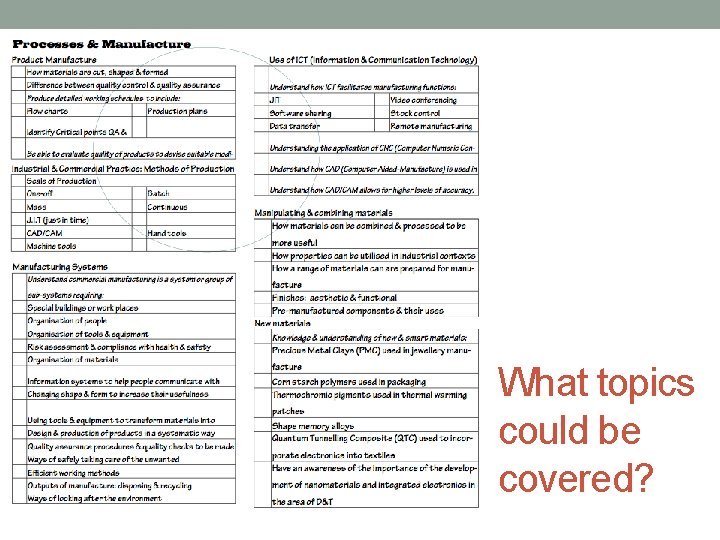
What topics could be covered?
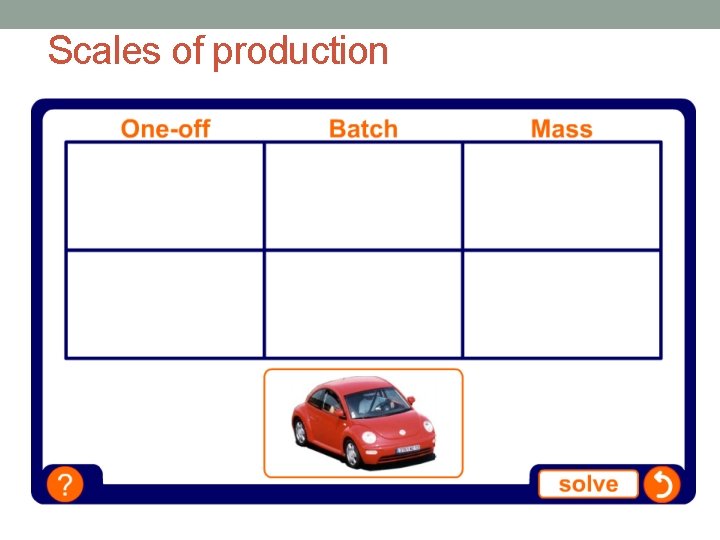
Scales of production
- Slides: 22