
AQA GCSE Art and Design Fine Art 8202
- Slides: 8
AQA GCSE Art and Design Fine Art 8202! Natural Forms Lesson 15 & 16: Composing a final design Starter: choose your favourite initial design. Learning Objective (target): to compose a final design and annotate Learning Outcome: to choose a final design and annotate your idea
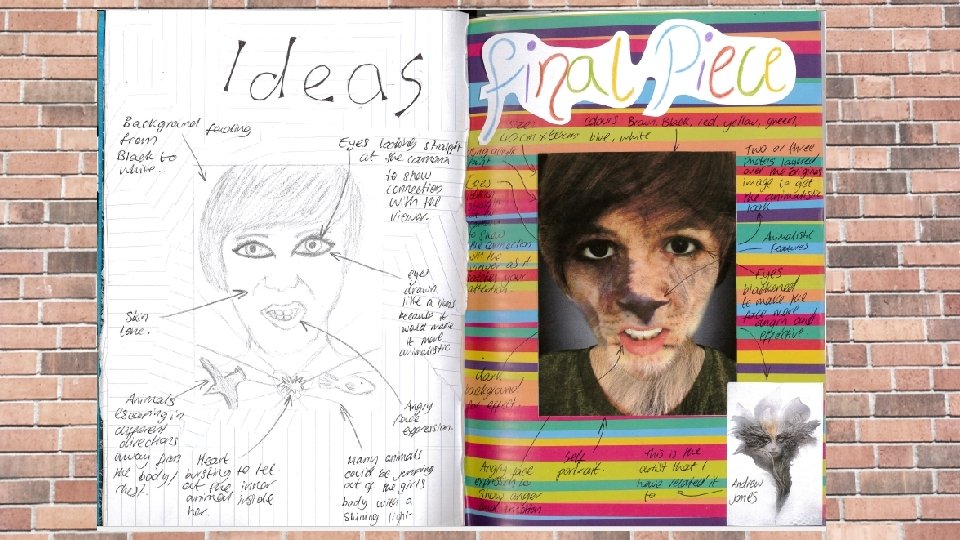
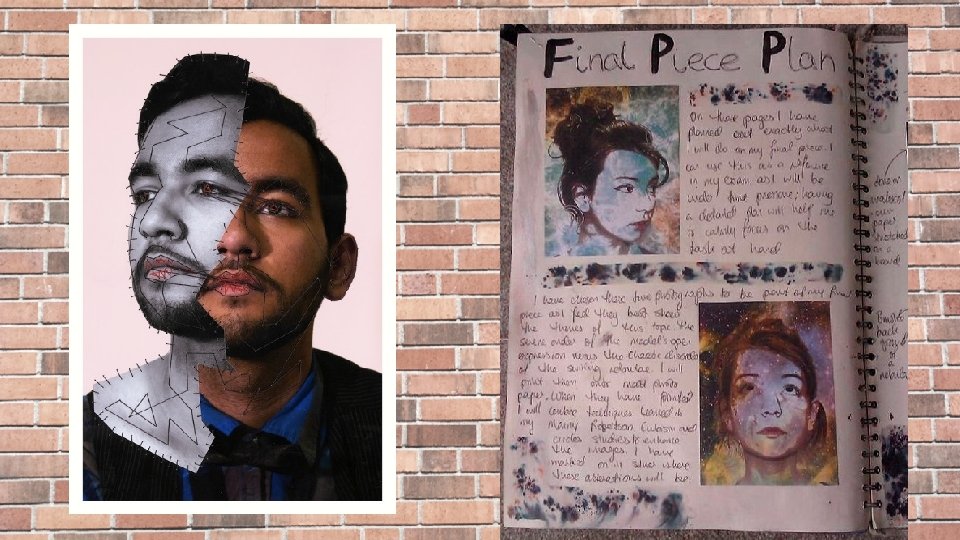
LO (target): to compose a final design and annotate • Task 1: what is a final design? A final design is a rough sketch or collage of your idea for a final piece. This does not have to be perfect but you need to annotate your ideas so you know what you are completing for the exam. • Task 2: what do I need to think about and annotate? • • What the overall piece will look like How you are going to make this piece What materials do you need? What size is the final piece going to be? How are you going to present this? Mounted? On a canvas? A series of photos? In what order do you need to complete your work? How does it link to your design brief and experiments/artists you have looked at throughout your book?
Learning Outcomes: • 1 -3: all students will attempt to explore ideas and experiment with appropriate media, materials, techniques and processes to refine their initial design ideas and attempt to create a final design. • 4 -6: Most students will thoughtfully refine and explore ideas and experiment with appropriate media, materials, techniques and processes from their initial design ideas to create a final design. • 7 -9: Some students will exceptionally refine and explore ideas with discrimination and purposefully experiment with appropriate media, materials, techniques and processes from their initial design ideas to create a final design.
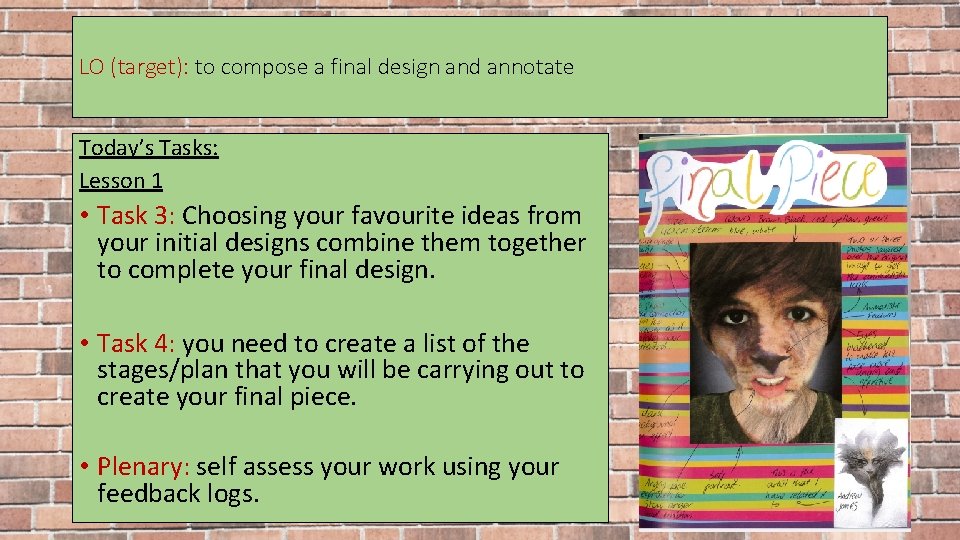
LO (target): to compose a final design and annotate Today’s Tasks: Lesson 1 • Task 3: Choosing your favourite ideas from your initial designs combine them together to complete your final design. • Task 4: you need to create a list of the stages/plan that you will be carrying out to create your final piece. • Plenary: self assess your work using your feedback logs.
LO (target): to compose a final design and annotate • Evaluating your designs • When you're evaluating your designs, you should consider: • What was theme for the project and how does it relate? • What artists, art movements or cultures have you looked at to help and inspire you? You could add • What materials, tools and techniques would you use? • Is there anything you could adapt/change?
LO(target): to compose a final design and annotate Using the correct vocabulary You must use the correct vocabulary when annotating your work to show that you are developing your knowledge, understanding and skills. Key terms are: Subject - what is shown in the artwork, such as a portrait or a still life Composition - how the elements of the work are arranged, ie whether they're close together or far apart Foreground and background - elements that appear to be in front or behind other aspects of the artwork Line - can vary in width, length, curvature, colour or direction Shape - describes the two-dimensional outline Form - describes a three-dimensional object Texture - the way surfaces look and feel, ie rough, smooth, soft, etc Tone - shading, from dark to light