
AQA AS Business UNIT 1 REVISION A Viable
AQA AS Business UNIT 1 REVISION
A Viable Business Idea
Some Important Concepts ENTERPRISE RISK RETURN OPPORTUNITY COST Can you define them? (one sentence for each one)
More on Risk Imagine you decide to invest your life savings of £ 30, 000 in setting up a new Subway franchise outlet Identify 3 risks you are taking
More on Opportunity Cost Whenever a decision is made in business , there is always an alternative that was not chosen This alternative is called the opportunity cost
Why this is important All businesses have SCARCE RESOURCES Particularly new or small ones!
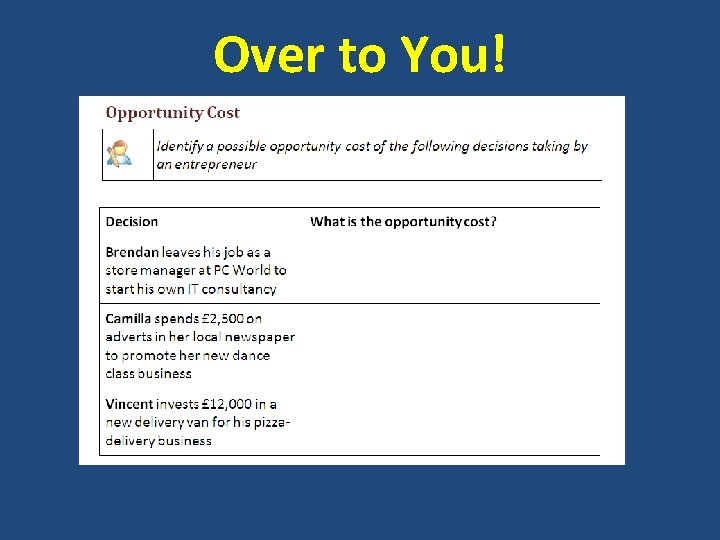
Over to You!
Session 2 Crunching the Numbers
What You Need to Calculate • • • Revenues (sales) Costs – fixed and variable Profit Contribution & Break-even Cash flow forecasts Market share, size & growth (later)
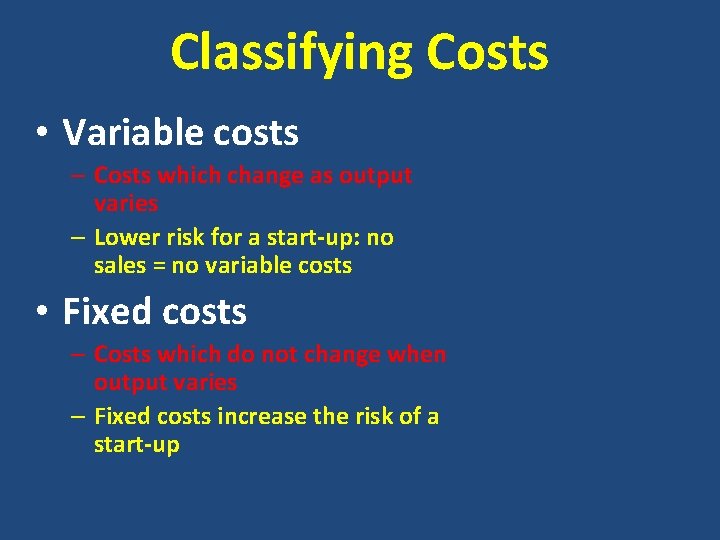
Classifying Costs • Variable costs – Costs which change as output varies – Lower risk for a start-up: no sales = no variable costs • Fixed costs – Costs which do not change when output varies – Fixed costs increase the risk of a start-up
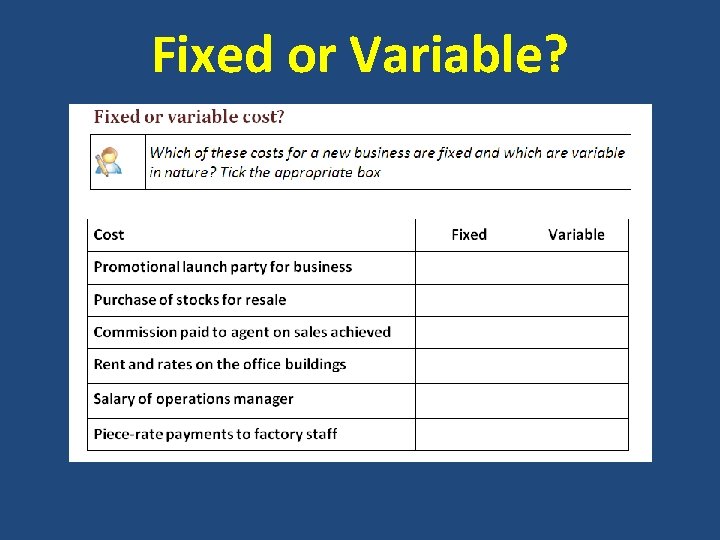
Fixed or Variable?
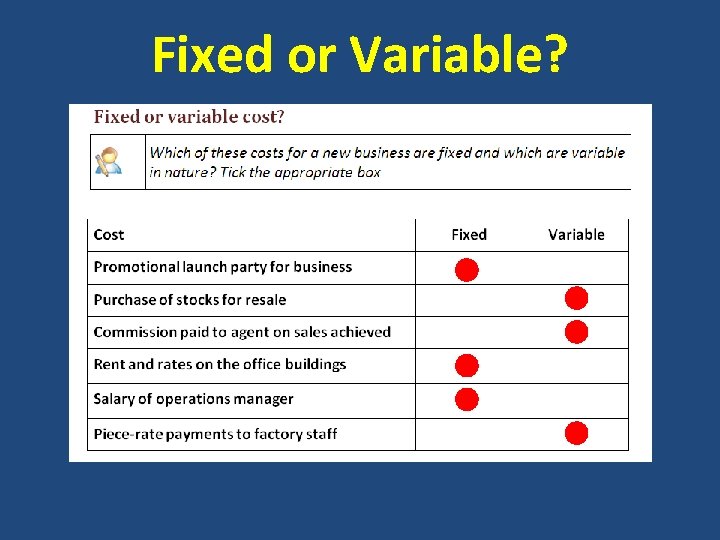
Fixed or Variable?
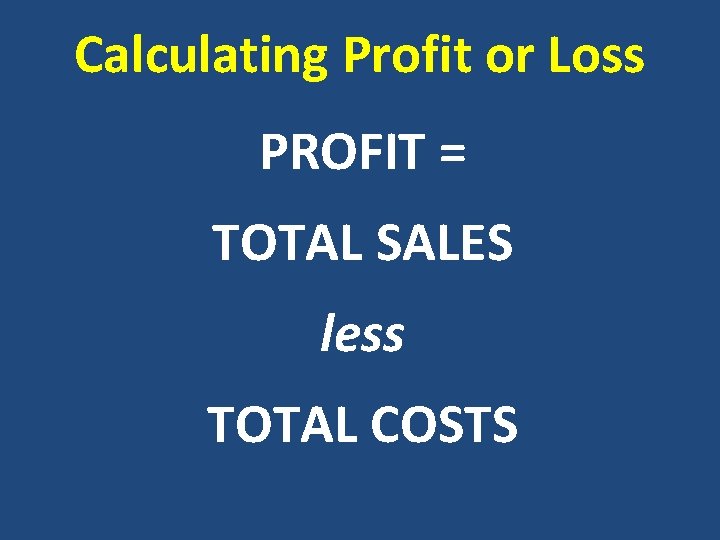
Calculating Profit or Loss PROFIT = TOTAL SALES less TOTAL COSTS
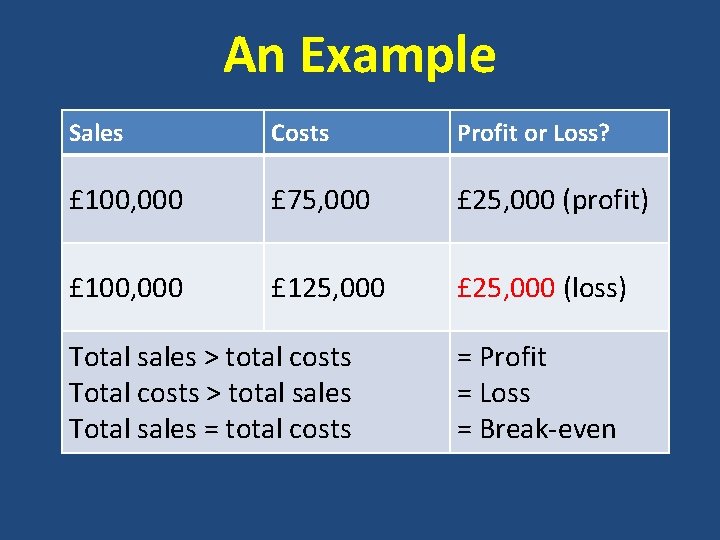
An Example Sales Costs Profit or Loss? £ 100, 000 £ 75, 000 £ 25, 000 (profit) £ 100, 000 £ 125, 000 £ 25, 000 (loss) Total sales > total costs Total costs > total sales Total sales = total costs = Profit = Loss = Break-even
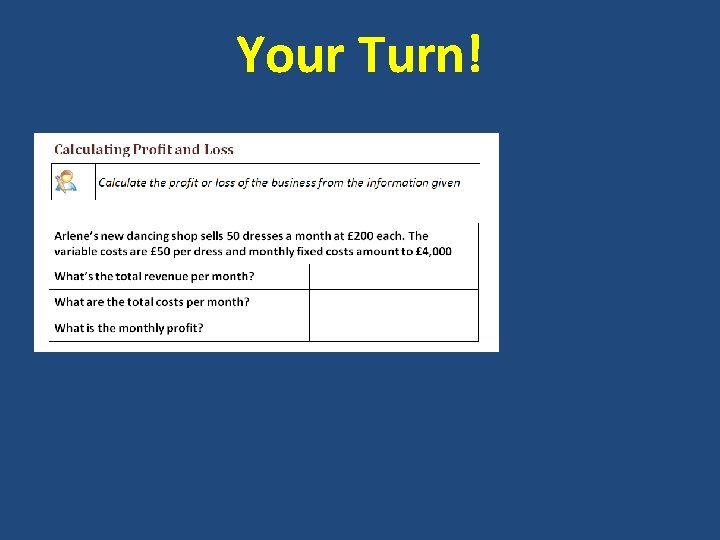
Your Turn!
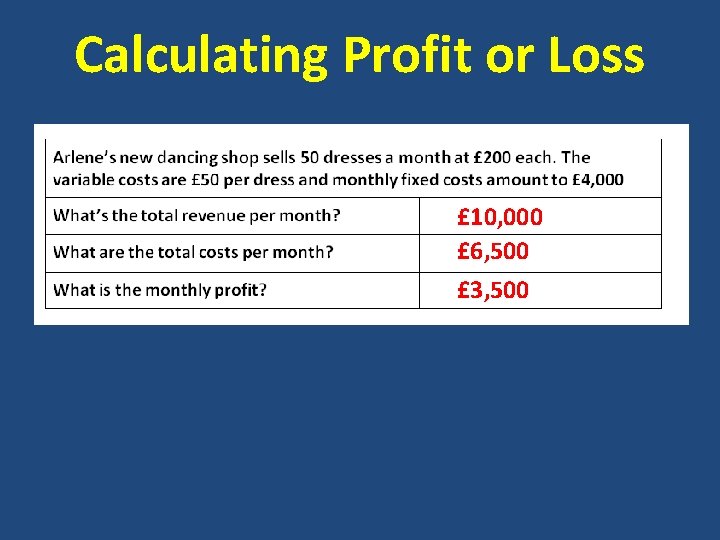
Calculating Profit or Loss £ 10, 000 £ 6, 500 £ 3, 500
Contribution • Contribution looks at the profit made on individual products • It is used in calculating how many items need to be sold to cover all the business' total costs (variable + fixed) • Contribution is the difference between sales and variable costs
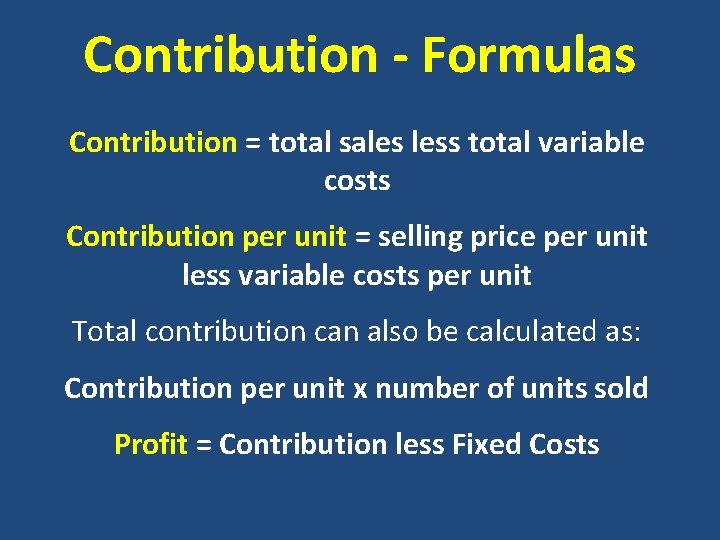
Contribution - Formulas Contribution = total sales less total variable costs Contribution per unit = selling price per unit less variable costs per unit Total contribution can also be calculated as: Contribution per unit x number of units sold Profit = Contribution less Fixed Costs
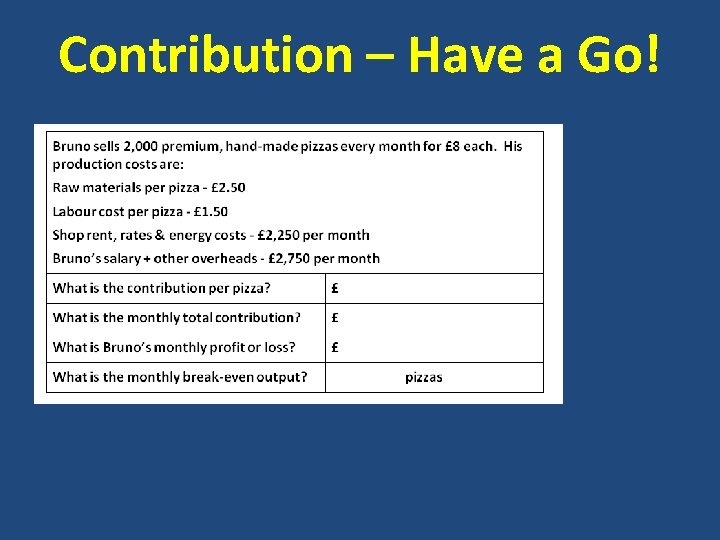
Contribution – Have a Go!
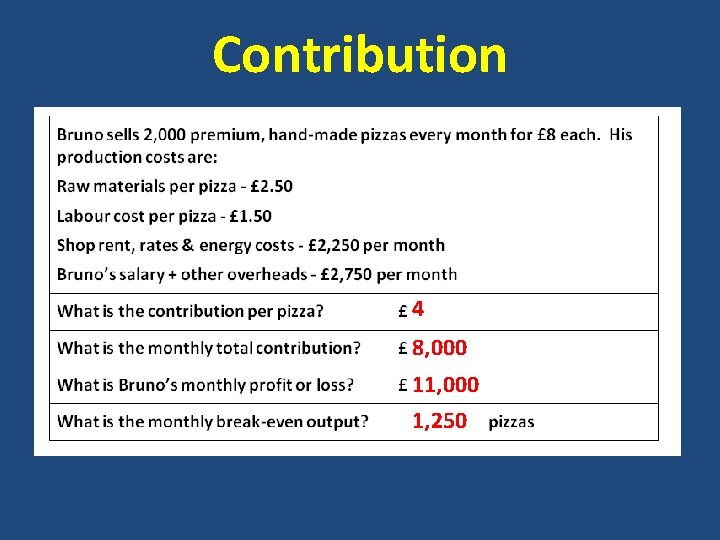
Contribution 4 8, 000 11, 000 1, 250
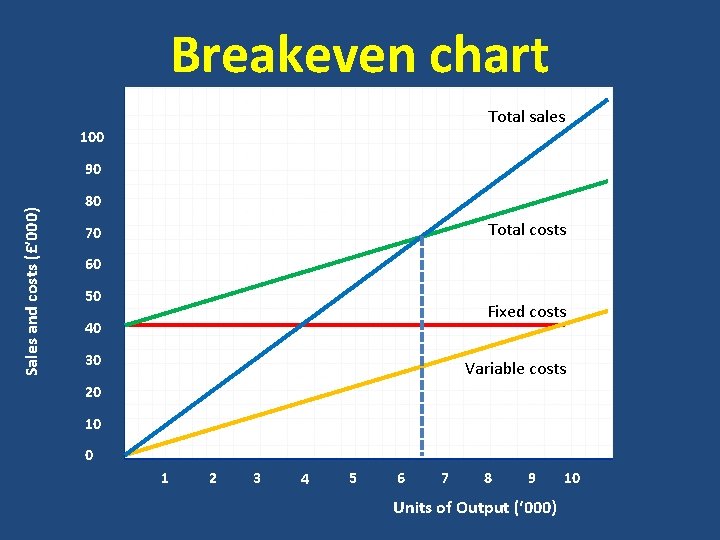
Breakeven chart Total sales 100 Sales and costs (£’ 000) 90 80 Total costs 70 60 50 Fixed costs 40 30 Variable costs 20 10 0 1 2 3 4 5 6 7 8 9 Units of Output (‘ 000) 10
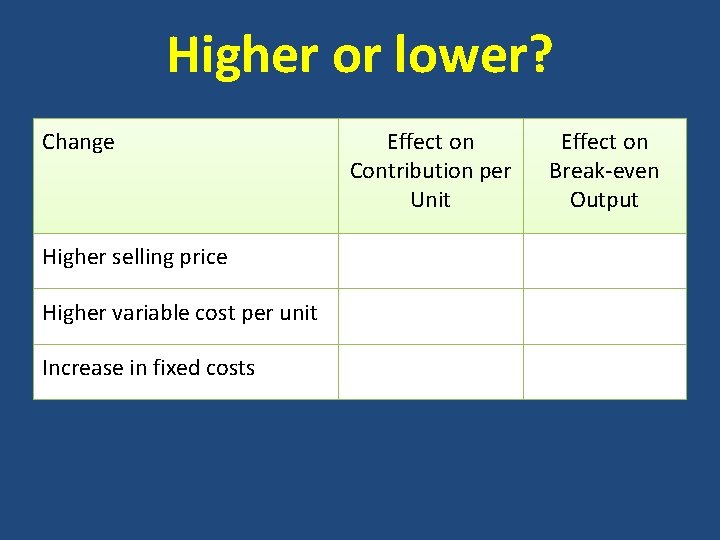
Higher or lower? Change Higher selling price Higher variable cost per unit Increase in fixed costs Effect on Contribution per Unit Effect on Break-even Output
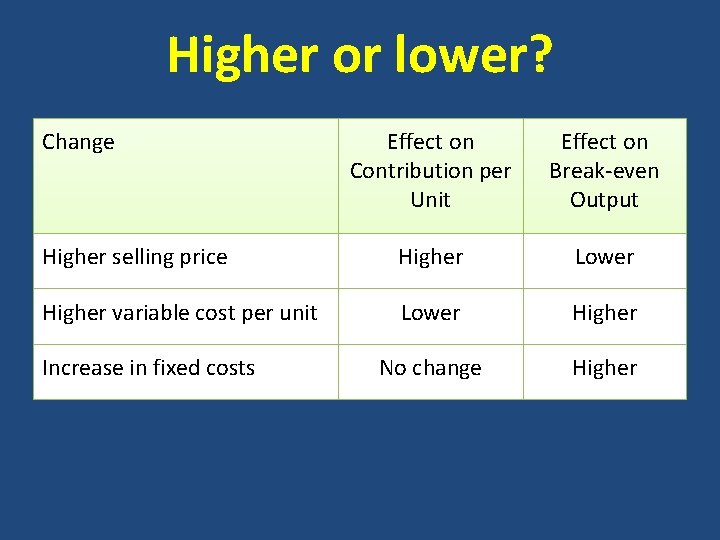
Higher or lower? Change Effect on Contribution per Unit Effect on Break-even Output Higher selling price Higher Lower Higher variable cost per unit Lower Higher No change Higher Increase in fixed costs
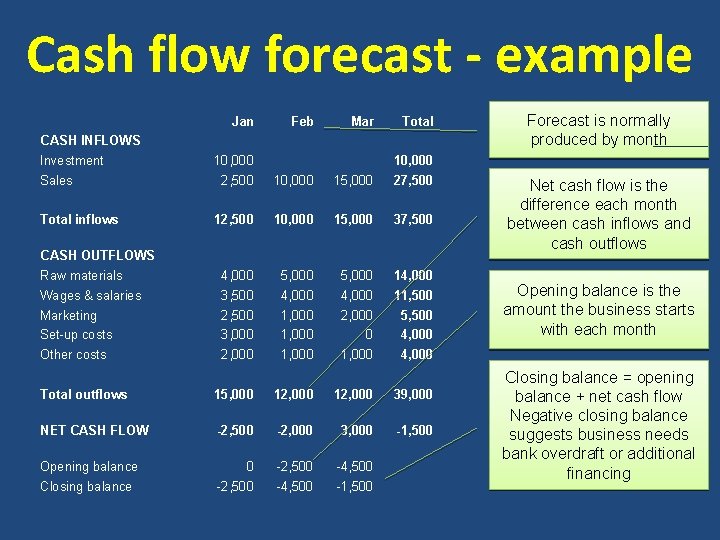
Cash flow forecast - example Jan Feb Mar Total CASH INFLOWS Investment Sales 10, 000 2, 500 10, 000 15, 000 27, 500 12, 500 10, 000 15, 000 37, 500 Raw materials 4, 000 5, 000 14, 000 Wages & salaries 3, 500 4, 000 11, 500 Marketing 2, 500 1, 000 2, 000 5, 500 Set-up costs 3, 000 1, 000 0 4, 000 Other costs 2, 000 1, 000 4, 000 Total inflows CASH OUTFLOWS Total outflows 15, 000 12, 000 39, 000 NET CASH FLOW -2, 500 -2, 000 3, 000 -1, 500 0 -2, 500 -4, 500 -1, 500 Opening balance Closing balance Forecast is normally produced by month Net cash flow is the difference each month between cash inflows and cash outflows Opening balance is the amount the business starts with each month Closing balance = opening balance + net cash flow Negative closing balance suggests business needs bank overdraft or additional financing
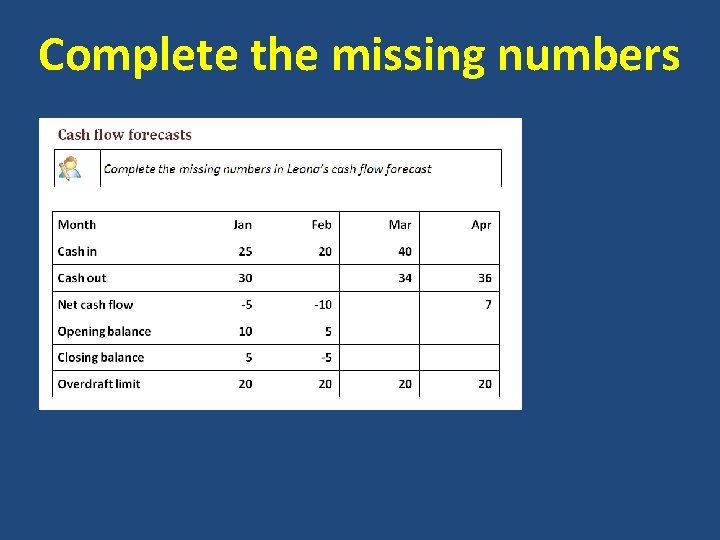
Complete the missing numbers
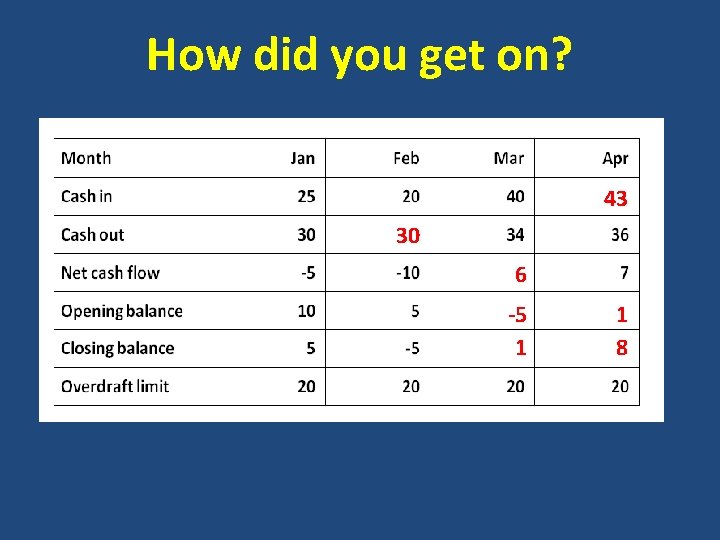
How did you get on? 43 30 6 -5 1 1 8
Session 3 Financing the Start-up
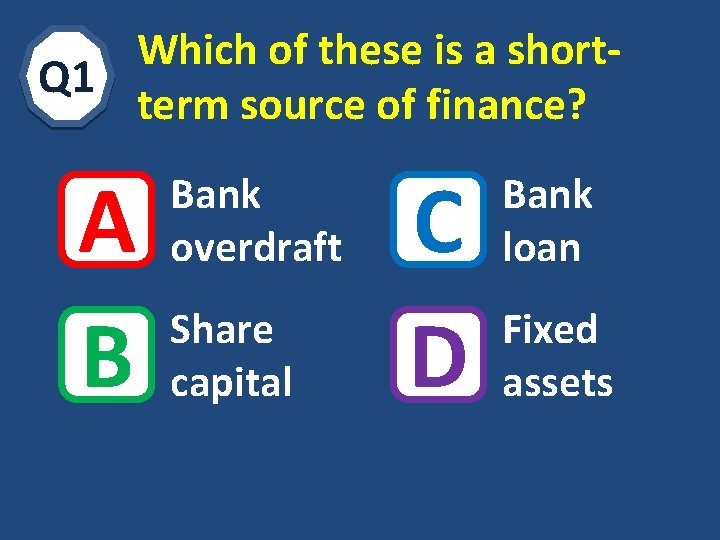
Which of these is a short. Q 1 term source of finance? A B Bank overdraft Share capital C D Bank loan Fixed assets
A bank loan will NOT usually Q 2 involve which of the following? A B Repayments of the loan over its term Payment of dividends out of profits C D Interest on the outstanding amount Security provided to the bank
Q 3 A B The typical investment by a business angel into a startup is. . . £ 5 k to £ 10 k Anything above £ 1 m C D £ 500 k to £ 3. 5 m £ 10 k to £ 750 k
Q 4 A B A startup needs finance to buy fixed assets such as computers. What is this known as? Capital expenditure Revenue expenditure C D Working capital Start-up losses
A startup will need to Q 5 finance. . . A B Cash sales to customers Interest on cash held at the bank C D Dividends paid to the bank Pre-trading losses
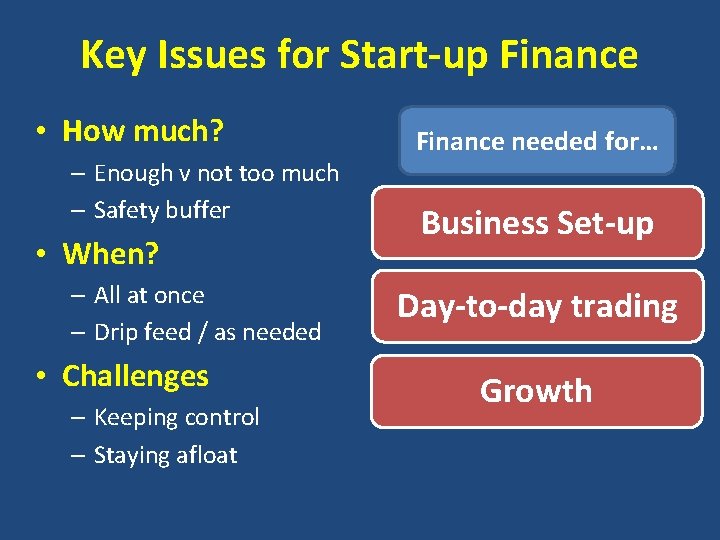
Key Issues for Start-up Finance • How much? – Enough v not too much – Safety buffer • When? – All at once – Drip feed / as needed • Challenges – Keeping control – Staying afloat Finance needed for… Business Set-up Day-to-day trading Growth
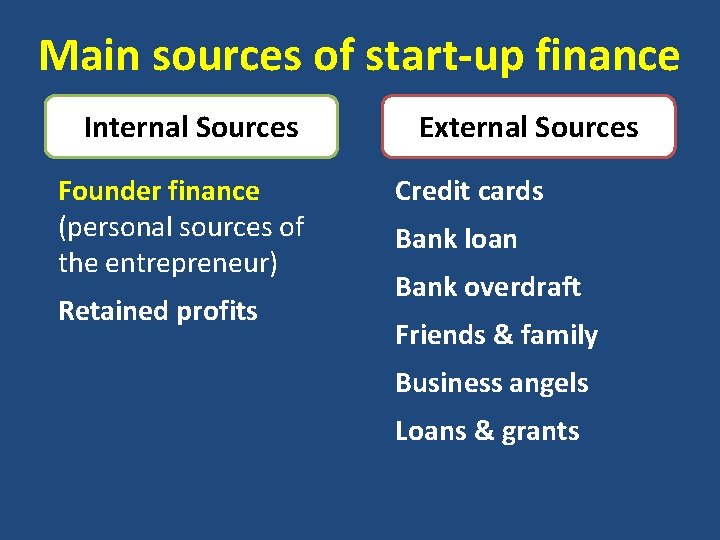
Main sources of start-up finance Internal Sources Founder finance (personal sources of the entrepreneur) Retained profits External Sources Credit cards Bank loan Bank overdraft Friends & family Business angels Loans & grants
+ Don’t forget “Sweat” Start-up entrepreneurs usually save cash and costs by working long hours for nothing
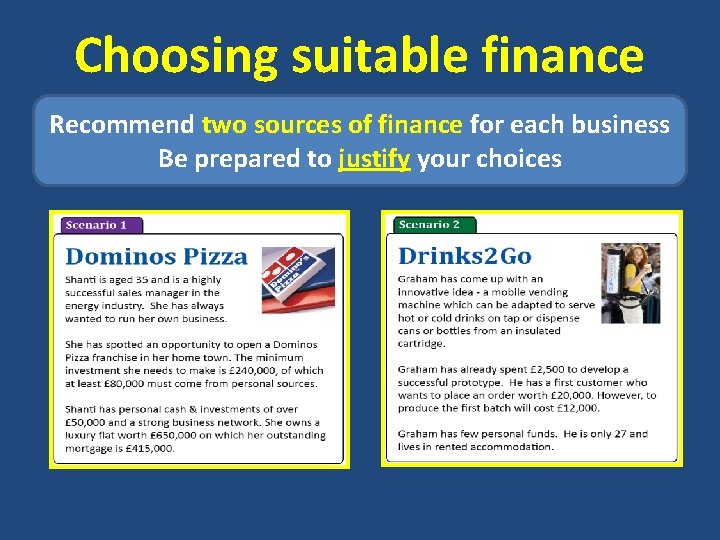
Choosing suitable finance Recommend two sources of finance for each business Be prepared to justify your choices
Session 5 Why Start-ups Fail
Motives for being an entrepreneur • Financial – Capital gains – Making a living • Personal – Proving people wrong – Gaining control – Building something • Social – Giving something back
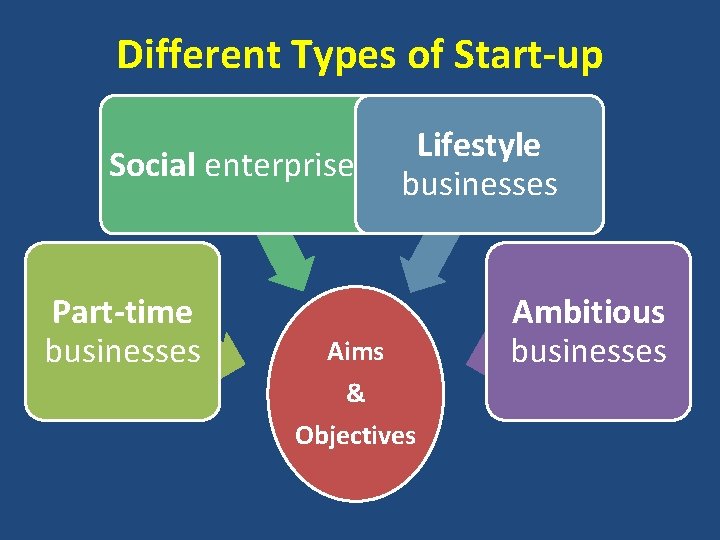
Different Types of Start-up Lifestyle Social enterprises businesses Part-time businesses Aims & Objectives Ambitious businesses
- Slides: 39