
APUSH REVIEW VIDEO 4 INTERACTIONS BETWEEN NATIVES AND
APUSH REVIEW: VIDEO #4: INTERACTIONS BETWEEN NATIVES AND EUROPEANS (KEY CONCEPT 1. 2, II, A-C) EVERYTHING YOU NEED TO KNOW ABOUT INTERACTIONS BETWEEN NATIVES AND EUROPEANS TO SUCCEED IN APUSH
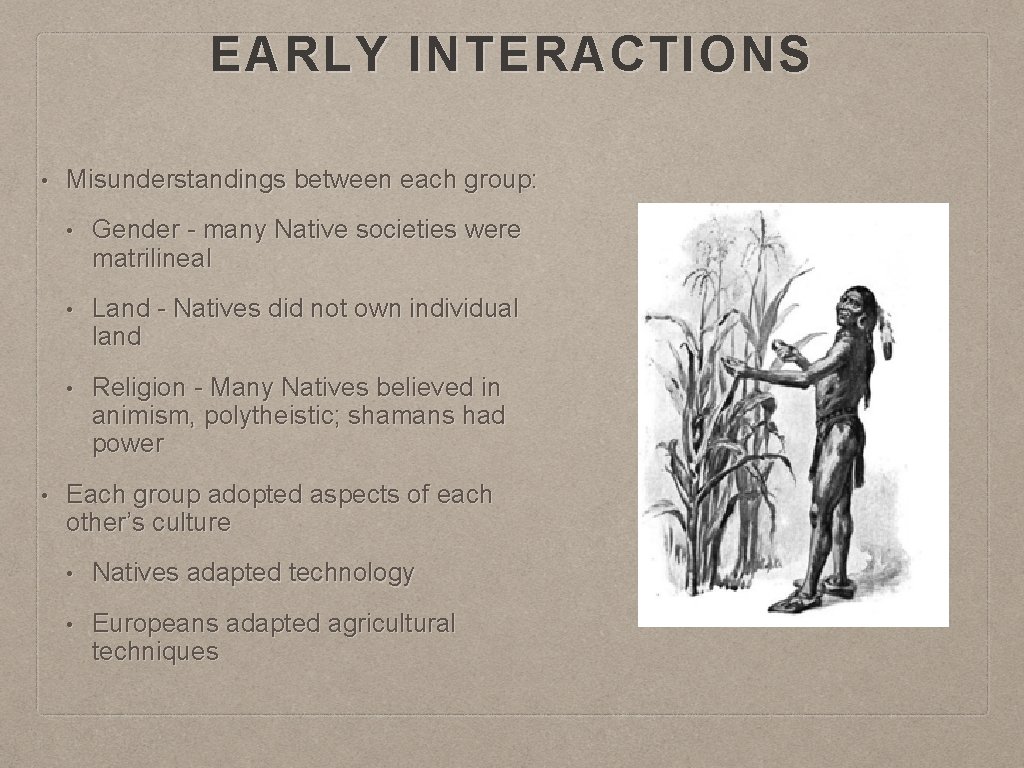
EARLY INTERACTIONS • • Misunderstandings between each group: • Gender - many Native societies were matrilineal • Land - Natives did not own individual land • Religion - Many Natives believed in animism, polytheistic; shamans had power Each group adopted aspects of each other’s culture • Natives adapted technology • Europeans adapted agricultural techniques
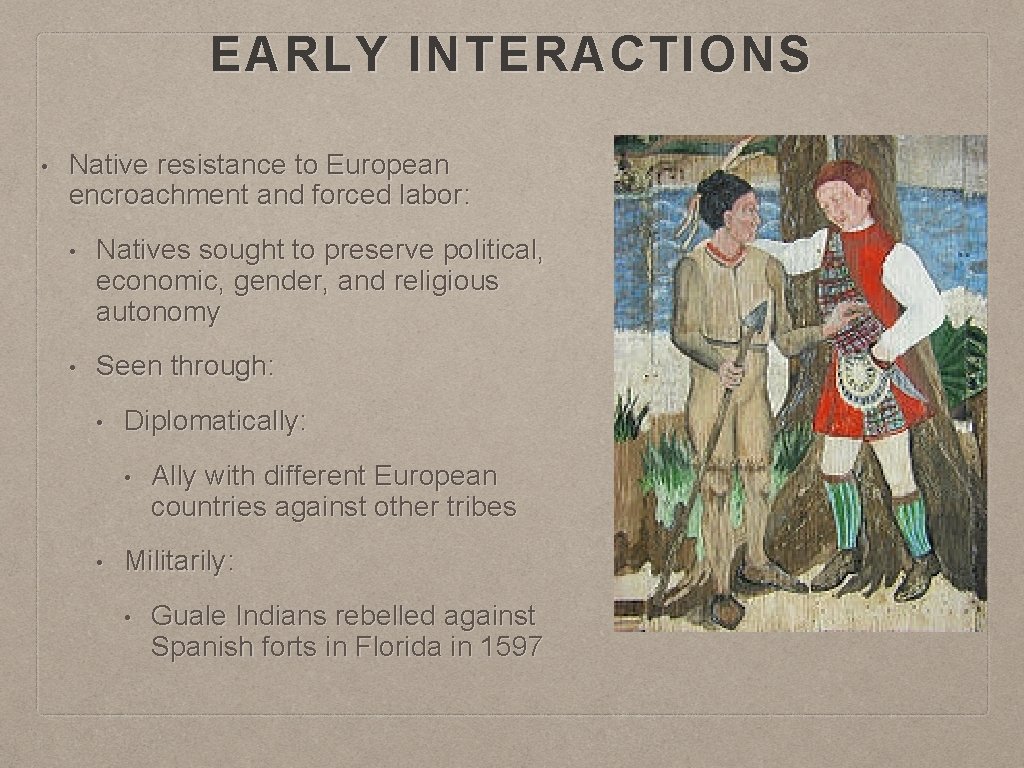
EARLY INTERACTIONS • Native resistance to European encroachment and forced labor: • Natives sought to preserve political, economic, gender, and religious autonomy • Seen through: • Diplomatically: • • Ally with different European countries against other tribes Militarily: • Guale Indians rebelled against Spanish forts in Florida in 1597
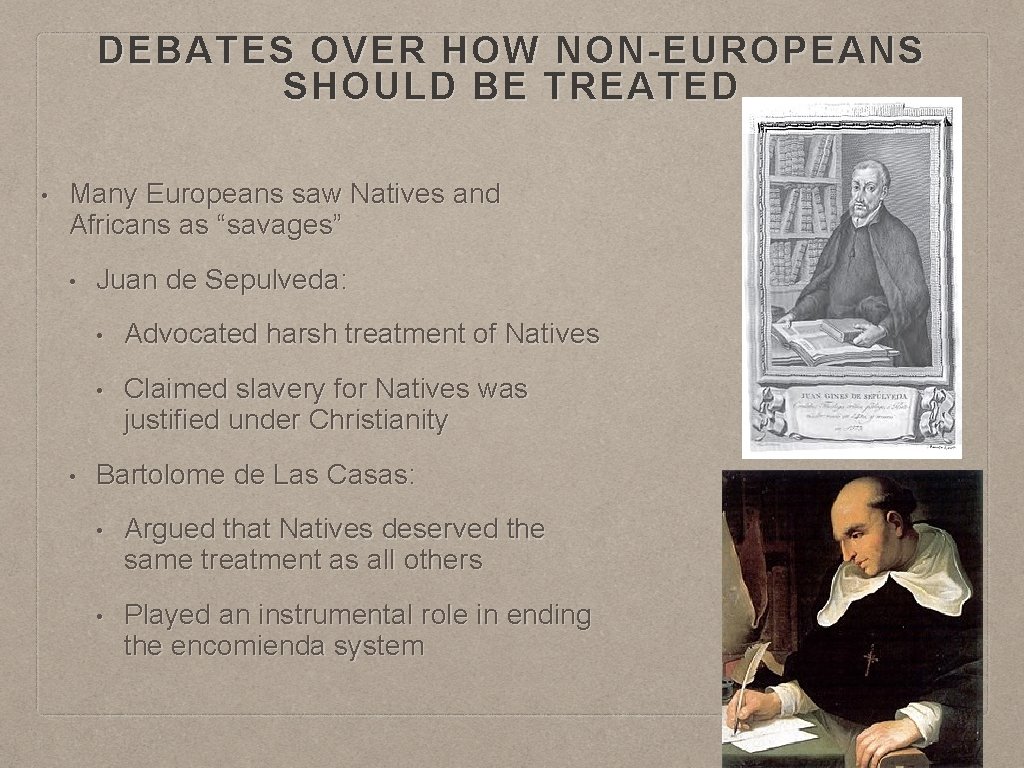
DEBATES OVER HOW NON-EUROPEANS SHOULD BE TREATED • Many Europeans saw Natives and Africans as “savages” • • Juan de Sepulveda: • Advocated harsh treatment of Natives • Claimed slavery for Natives was justified under Christianity Bartolome de Las Casas: • Argued that Natives deserved the same treatment as all others • Played an instrumental role in ending the encomienda system
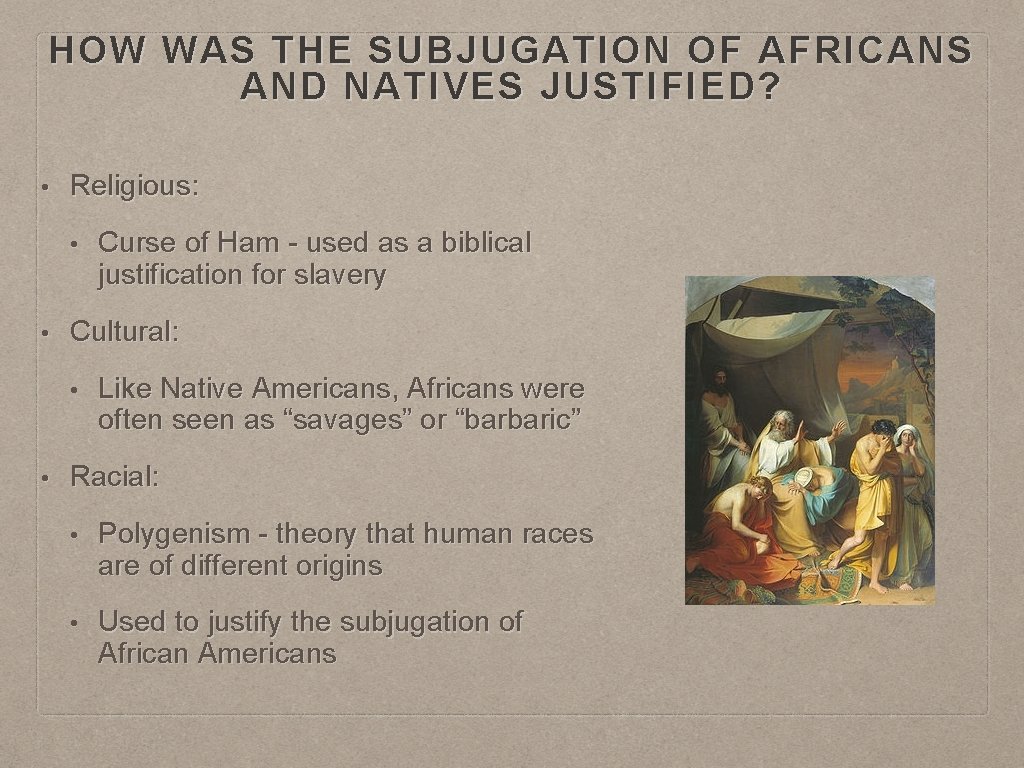
HOW WAS THE SUBJUGATION OF AFRICANS AND NATIVES JUSTIFIED? • Religious: • • Cultural: • • Curse of Ham - used as a biblical justification for slavery Like Native Americans, Africans were often seen as “savages” or “barbaric” Racial: • Polygenism - theory that human races are of different origins • Used to justify the subjugation of African Americans
QUICK RECAP • How did Europeans and Natives differ in their views over: • Land • Religion • Gender • How did Natives seek to preserve their autonomy? • What were reasons used to justify the subjugation of Africans and Natives?
SEE YOU BACK HERE FOR VIDEO #5: EUROPEAN EXPLORATION • Thanks for watching • Best of luck on your tests!
- Slides: 7