
APUSH REVIEW SPANISH ENGLISH FRENCH AND DUTCH COLONIZATION


- Slides: 14
APUSH REVIEW: SPANISH, ENGLISH, FRENCH, AND DUTCH COLONIZATION Everything You Need To Know About European Colonization To Succeed In APUSH
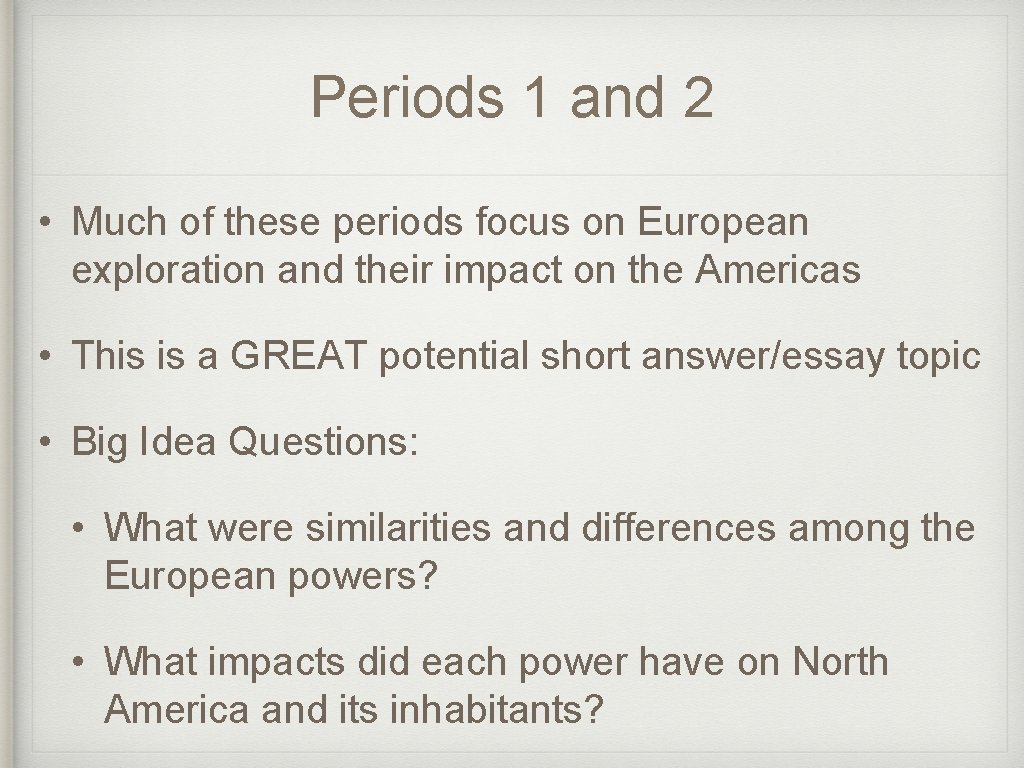
Periods 1 and 2 • Much of these periods focus on European exploration and their impact on the Americas • This is a GREAT potential short answer/essay topic • Big Idea Questions: • What were similarities and differences among the European powers? • What impacts did each power have on North America and its inhabitants?
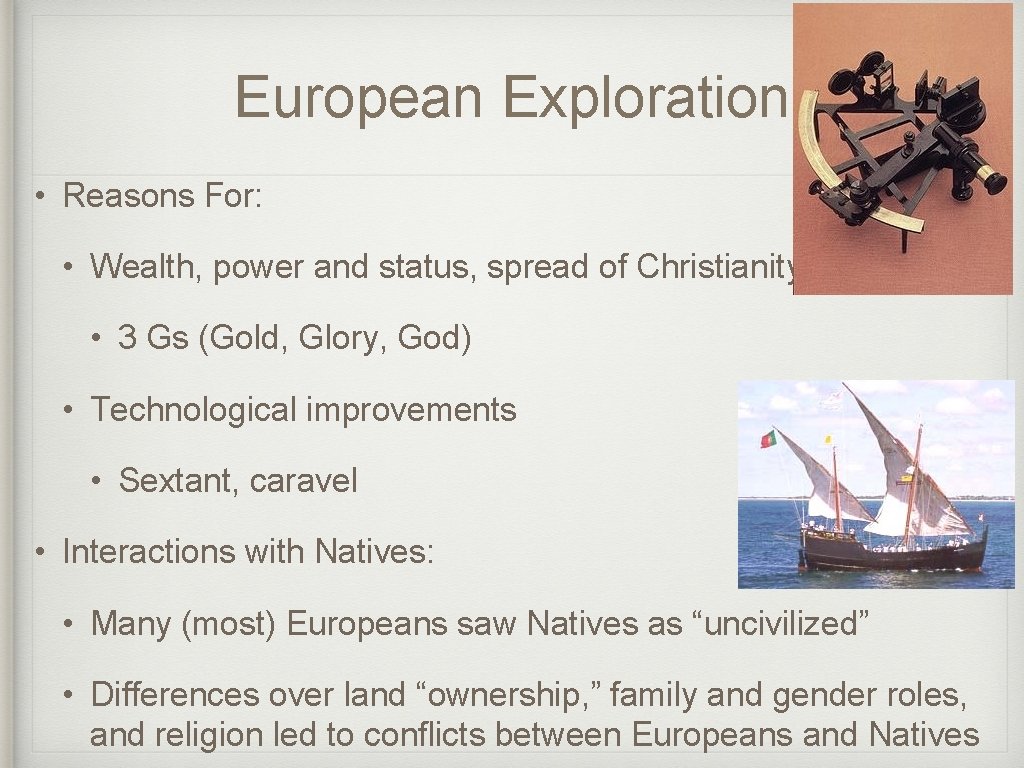
European Exploration • Reasons For: • Wealth, power and status, spread of Christianity • 3 Gs (Gold, Glory, God) • Technological improvements • Sextant, caravel • Interactions with Natives: • Many (most) Europeans saw Natives as “uncivilized” • Differences over land “ownership, ” family and gender roles, and religion led to conflicts between Europeans and Natives
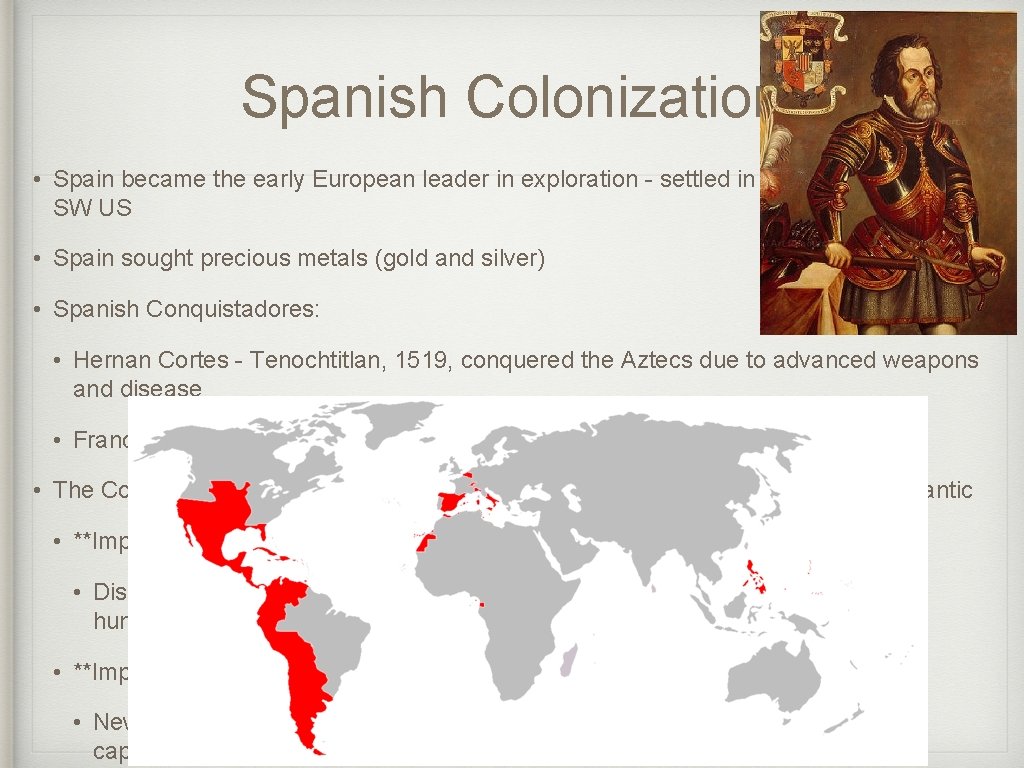
Spanish Colonization • Spain became the early European leader in exploration - settled in South America and SW US • Spain sought precious metals (gold and silver) • Spanish Conquistadores: • Hernan Cortes - Tenochtitlan, 1519, conquered the Aztecs due to advanced weapons and disease • Francisco Pizarro - conquered the Incas in Peru • The Columbian Exchange - transfer of goods, people, and diseases across the Atlantic • **Impacts on the Americas**? • Disease decreased Native populations drastically; livestock and guns altered hunting and warfare • **Impact on Europe**? • New crops (potatoes, maize) increased the population; increased wealth led to capitalism and decline of feudalism
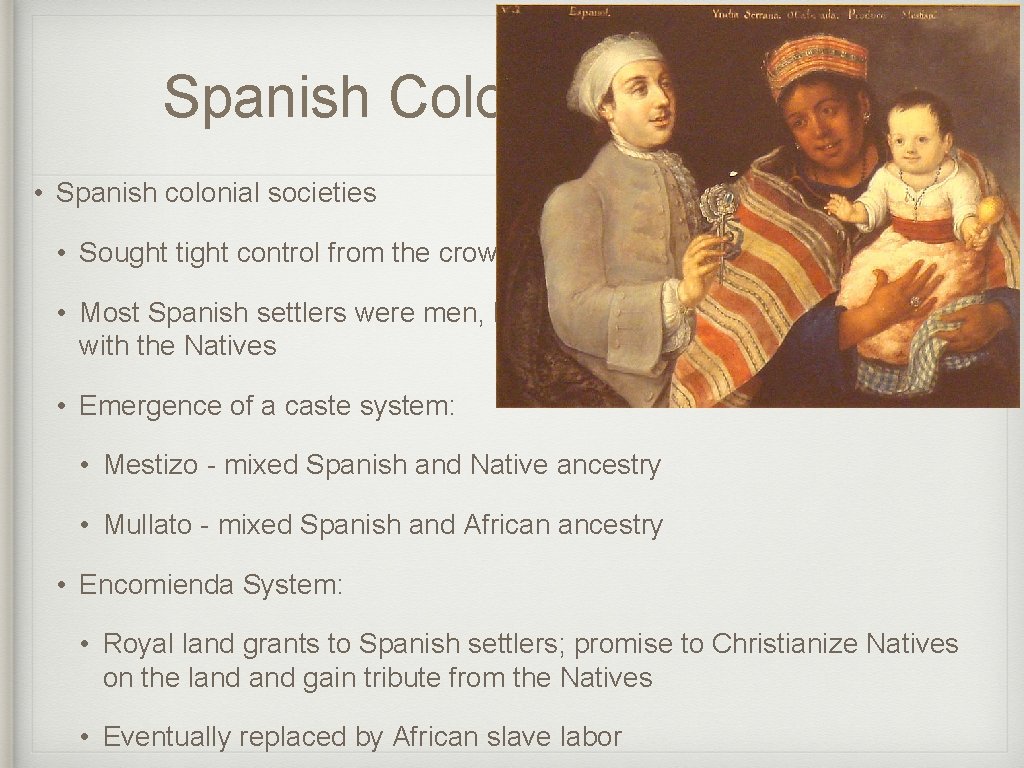
Spanish Colonization Cont. • Spanish colonial societies • Sought tight control from the crown and wanted to convert many Natives • Most Spanish settlers were men, leading to racially mixed populations with the Natives • Emergence of a caste system: • Mestizo - mixed Spanish and Native ancestry • Mullato - mixed Spanish and African ancestry • Encomienda System: • Royal land grants to Spanish settlers; promise to Christianize Natives on the land gain tribute from the Natives • Eventually replaced by African slave labor
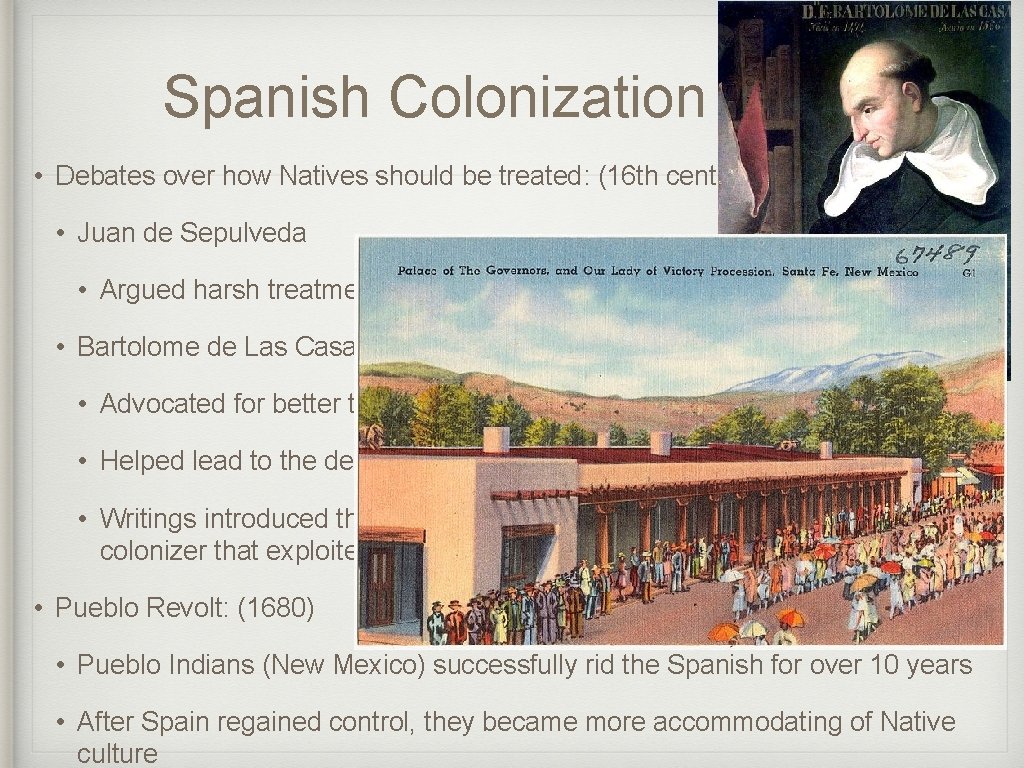
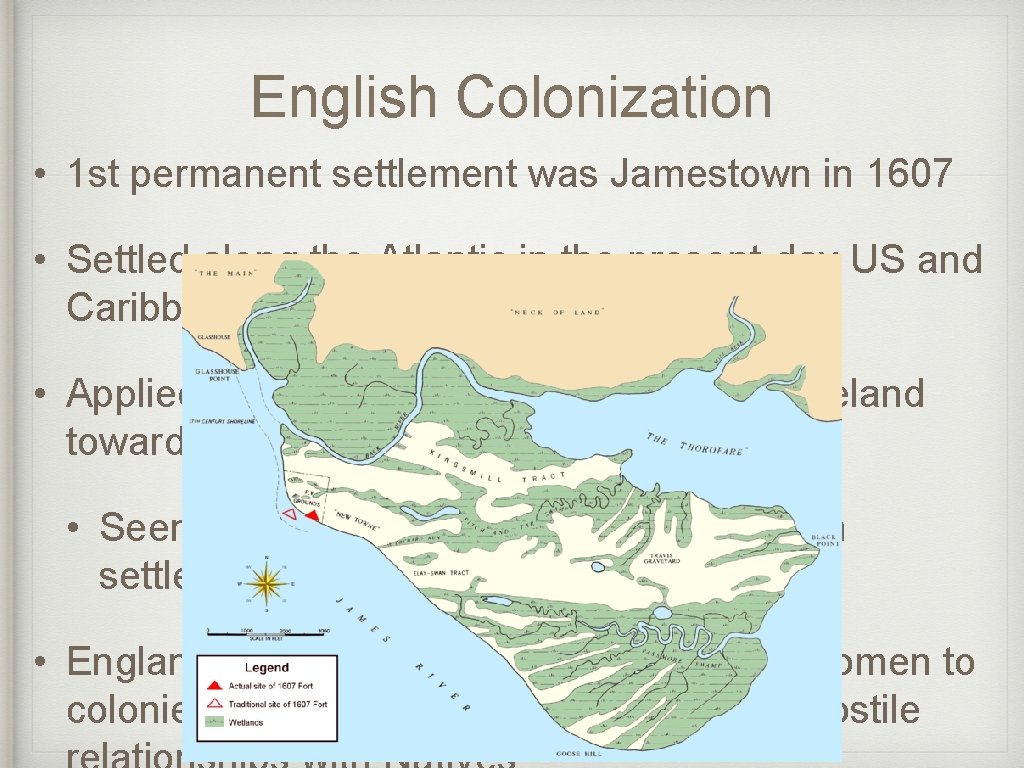
Spanish Colonization Cont. • Debates over how Natives should be treated: (16 th century) • Juan de Sepulveda • Argued harsh treatment of Natives was justified • Bartolome de Las Casas • Advocated for better treatment of Natives • Helped lead to the decline of the Encomienda System • Writings introduced the idea of the “Black Legend” - Spain was a brutal colonizer that exploited Natives • Pueblo Revolt: (1680) • Pueblo Indians (New Mexico) successfully rid the Spanish for over 10 years • After Spain regained control, they became more accommodating of Native culture
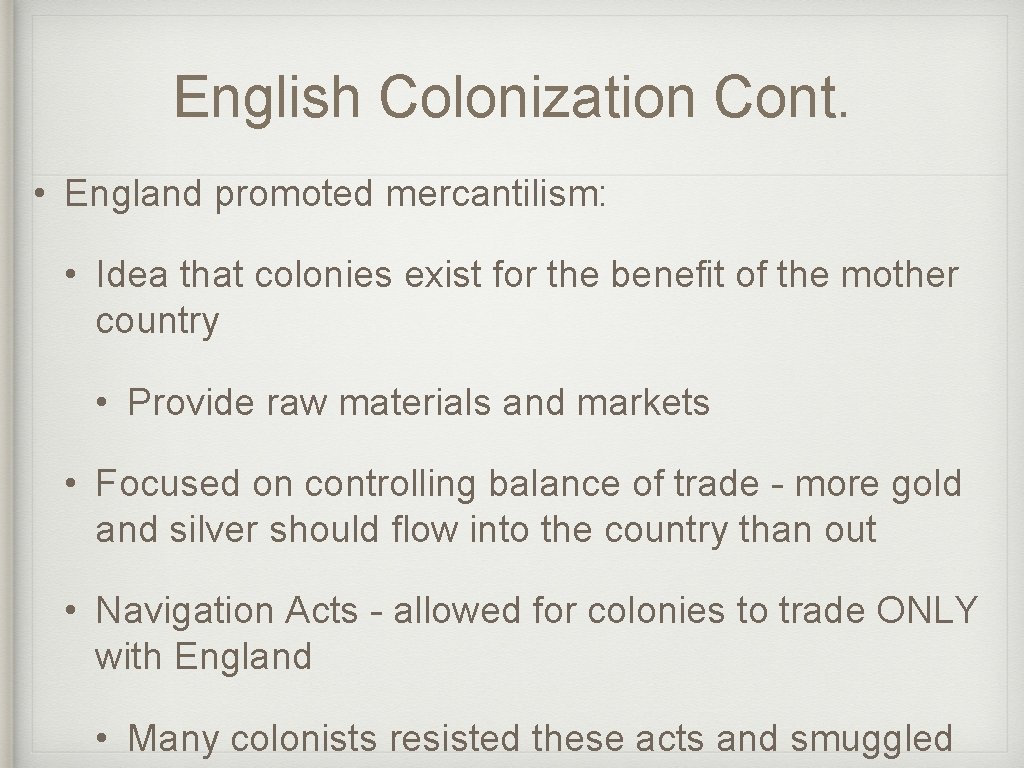
English Colonization • 1 st permanent settlement was Jamestown in 1607 • Settled along the Atlantic in the present-day US and Caribbean • Applied many of the same tactics used in Ireland towards the Natives • Seen as “savages, ” excluded from English settlements • England sent large amounts of men AND women to colonies, focused on agriculture, and had hostile
English Colonization Cont. • New England Colonies (Massachusetts, Rhode Island): • Puritans - community of like-minded believers (“City upon a hill”), focused on agriculture and commerce • Those that were not “like-minded believers” were outcasts - Roger Williams, Anne Hutchinson • Middle Colonies (Pennsylvania, New York): • Most diverse religiously, ethnically, and demographically of English colonies • Many immigrants from Europe, religiously tolerant, Pennsylvania - William Penn’s “Holy Experiment” • Southern Colonies: • Chesapeake (Maryland Virginia) and North Carolina - focused on tobacco, initially used indentured servants, later African slavery (post Bacon’s Rebellion) • South Carolina and the West Indies - focused on rice and sugar, slaves made up most of the population • Colonies had some form of representative assembly
English Colonization Cont. • England promoted mercantilism: • Idea that colonies exist for the benefit of the mother country • Provide raw materials and markets • Focused on controlling balance of trade - more gold and silver should flow into the country than out • Navigation Acts - allowed for colonies to trade ONLY with England • Many colonists resisted these acts and smuggled
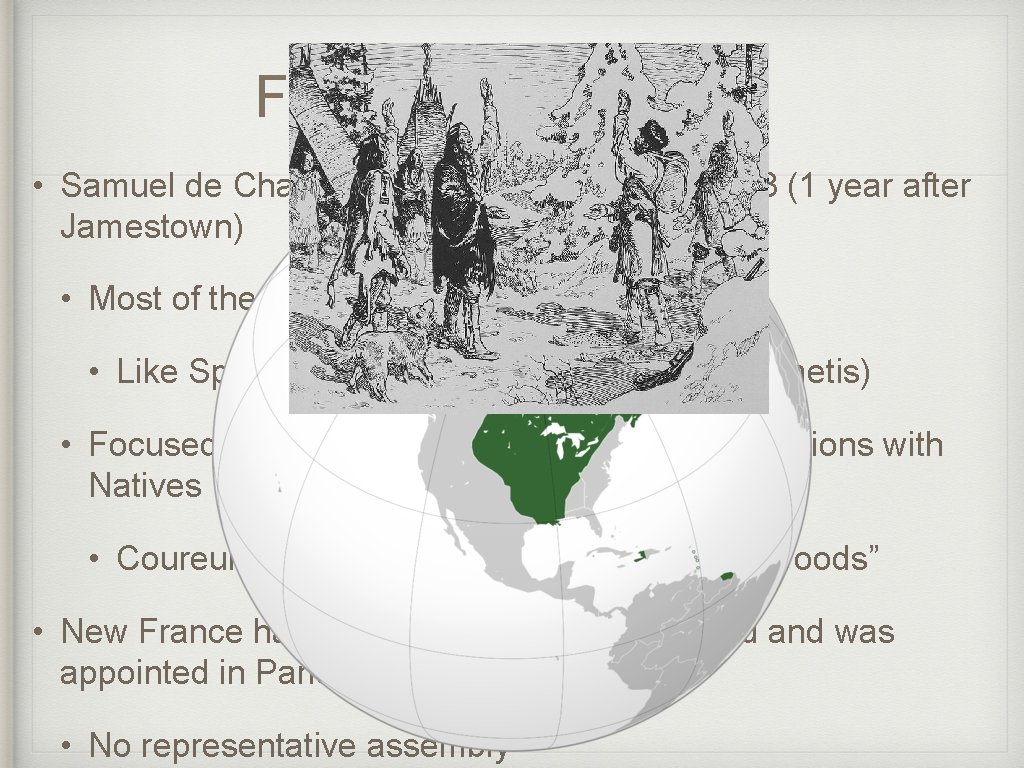
French Colonization • Samuel de Champlain founded Quebec in 1608 (1 year after Jamestown) • Most of the colonists were men • Like Spain, France accepted intermarriage (metis) • Focused on fur trade with Natives - friendly relations with Natives • Coureurs des bois - French “runners of the woods” • New France had a governor-general that ruled and was appointed in Paris • No representative assembly
French Colonization • Relations with Natives: • Did not take a substantial amount of Native land (like English) • Did not force them into slavery (like Spanish) • Christian Indians were allowed to have a lot of autonomy (independence) • Many Natives were killed by diseases
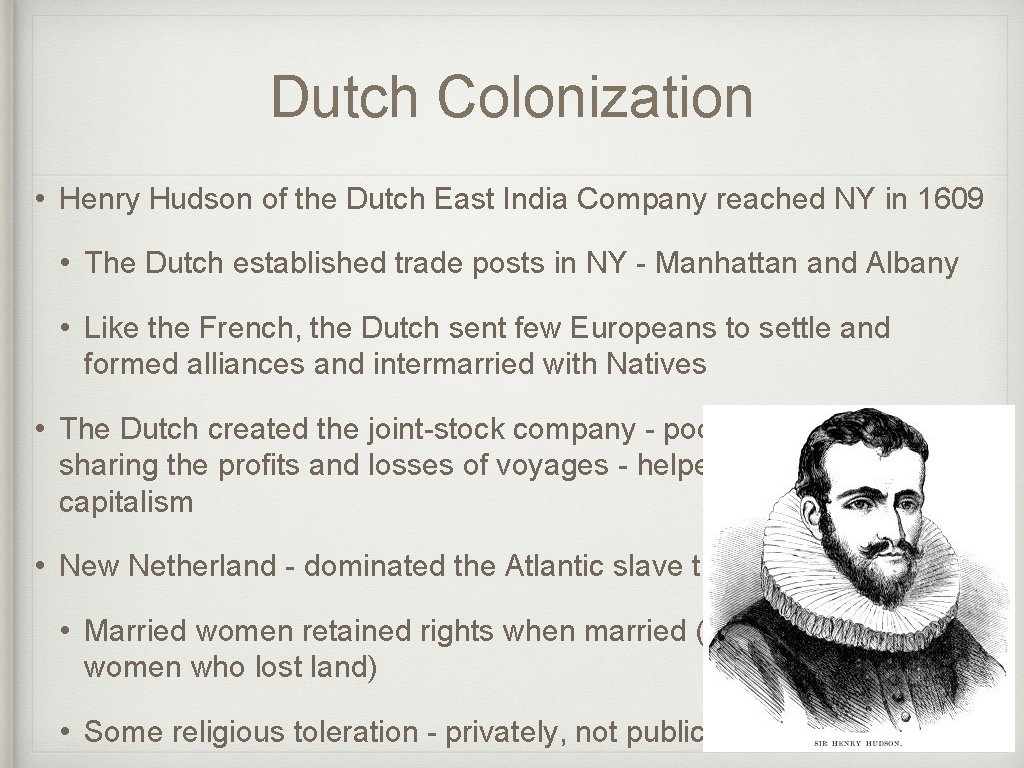
Dutch Colonization • Henry Hudson of the Dutch East India Company reached NY in 1609 • The Dutch established trade posts in NY - Manhattan and Albany • Like the French, the Dutch sent few Europeans to settle and formed alliances and intermarried with Natives • The Dutch created the joint-stock company - pooling $ together and sharing the profits and losses of voyages - helped lead to modern capitalism • New Netherland - dominated the Atlantic slave trade • Married women retained rights when married (unlike English women who lost land) • Some religious toleration - privately, not publicly
Test Tips • Multiple-Choice and Short Answer: • Reasons for European exploration (3 Gs, technological improvements) • Characteristics of European colonies (know the characteristics of British colonies - New England, Middle, Southern) • Impacts of contact on Natives AND Europeans (Columbian Exchange) • Essays: • Comparing and contrasting characteristics/goals • British - large numbers of men AND women, agriculture, and hostile relations with Natives • French - sent fewer Europeans, focused on trade alliances with Natives • Synthesis Point: • Creating political, social, economic categories if NOT prompted to do so • Connecting AND EXPLAINING (2 -3 sentences) to another time period • The arguments used by Europeans to justify colonization included spreading Christianity. This is a similar argument that was used by some Americans that sought to spread Christianity in Asia in the late 19 th, early 20 th centuries after the US acquired land in the Spanish-American War.
That’s It! • Thanks for watching • Please subscribe and share • Check out my Key Concept Period videos and others in the description • Best of luck in May!