
APUSH Locke and Jefferson John Lockes Second Treatise
- Slides: 46
APUSH
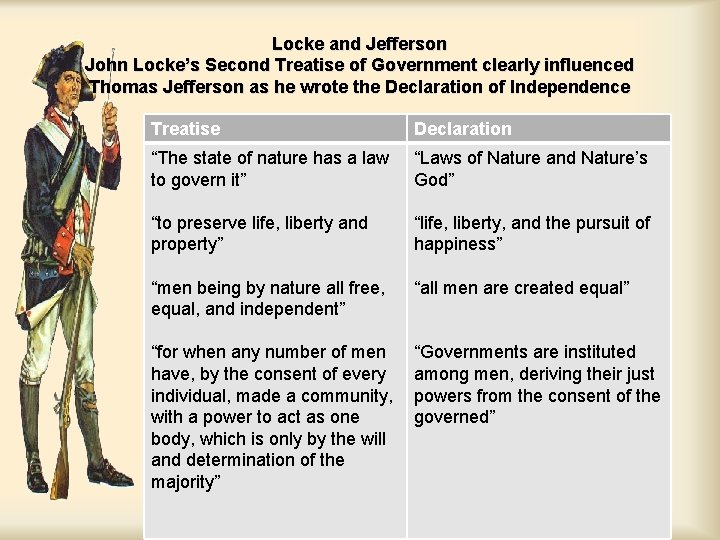
Locke and Jefferson John Locke’s Second Treatise of Government clearly influenced Thomas Jefferson as he wrote the Declaration of Independence Treatise Declaration “The state of nature has a law to govern it” “Laws of Nature and Nature’s God” “to preserve life, liberty and property” “life, liberty, and the pursuit of happiness” “men being by nature all free, equal, and independent” “all men are created equal” “for when any number of men have, by the consent of every individual, made a community, with a power to act as one body, which is only by the will and determination of the majority” “Governments are instituted among men, deriving their just powers from the consent of the governed”
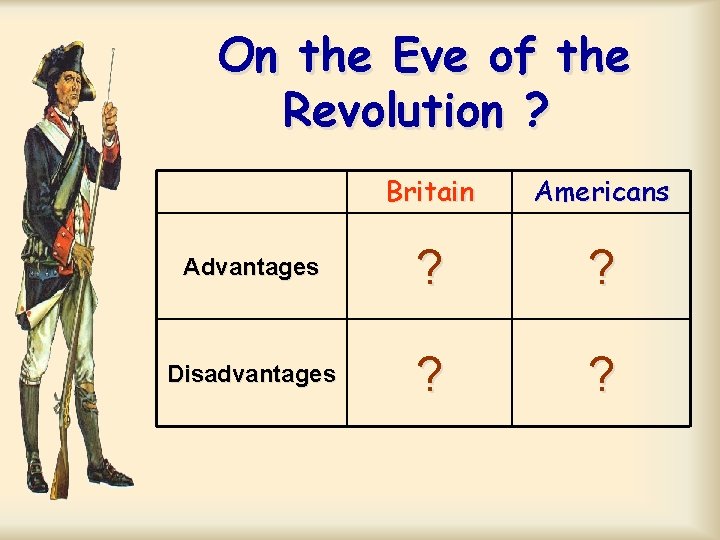
On the Eve of the Revolution ? Britain Americans Advantages ? ? Disadvantages ? ?
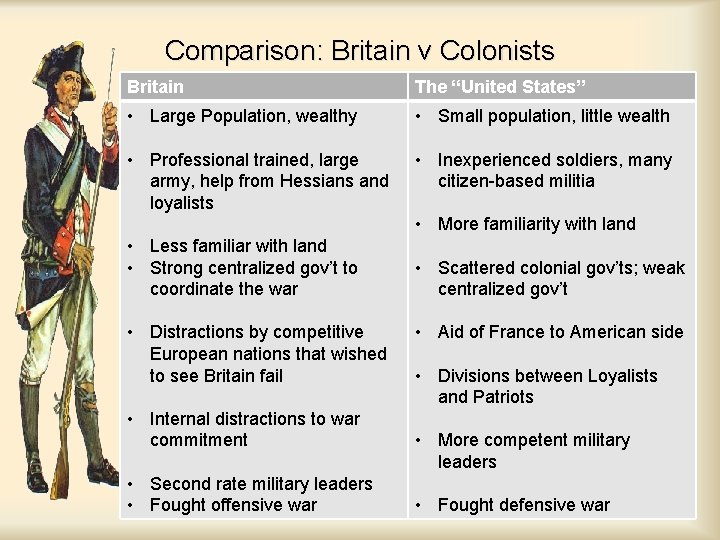
Comparison: Britain v Colonists Britain The “United States” • Large Population, wealthy • Small population, little wealth • Professional trained, large army, help from Hessians and loyalists • Inexperienced soldiers, many citizen-based militia • More familiarity with land • Less familiar with land • Strong centralized gov’t to coordinate the war • Distractions by competitive European nations that wished to see Britain fail • Internal distractions to war commitment • Second rate military leaders • Fought offensive war • Scattered colonial gov’ts; weak centralized gov’t • Aid of France to American side • Divisions between Loyalists and Patriots • More competent military leaders • Fought defensive war
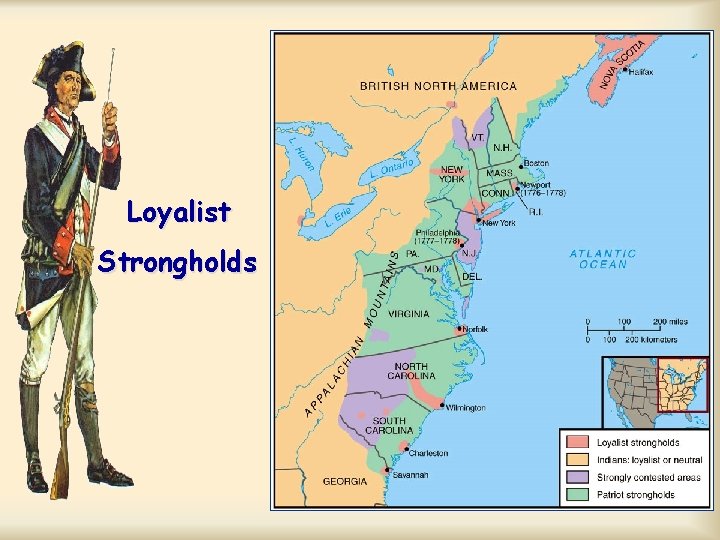
Loyalist Strongholds
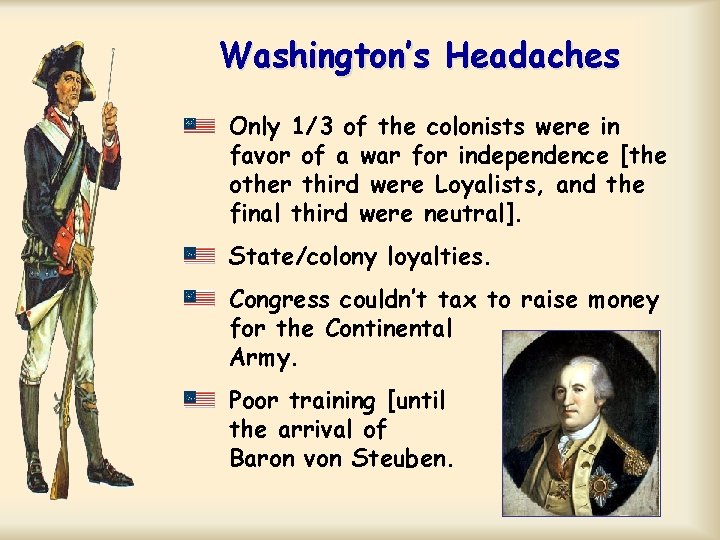
Washington’s Headaches Only 1/3 of the colonists were in favor of a war for independence [the other third were Loyalists, and the final third were neutral]. State/colony loyalties. Congress couldn’t tax to raise money for the Continental Army. Poor training [until the arrival of Baron von Steuben.
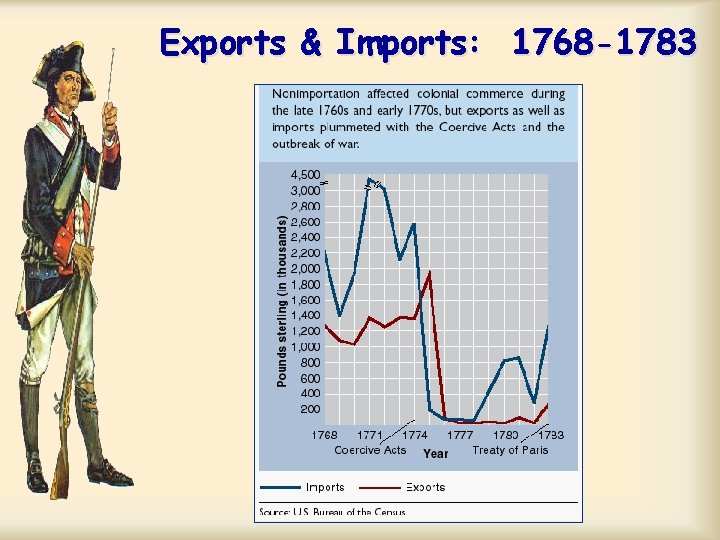
Exports & Imports: 1768 -1783
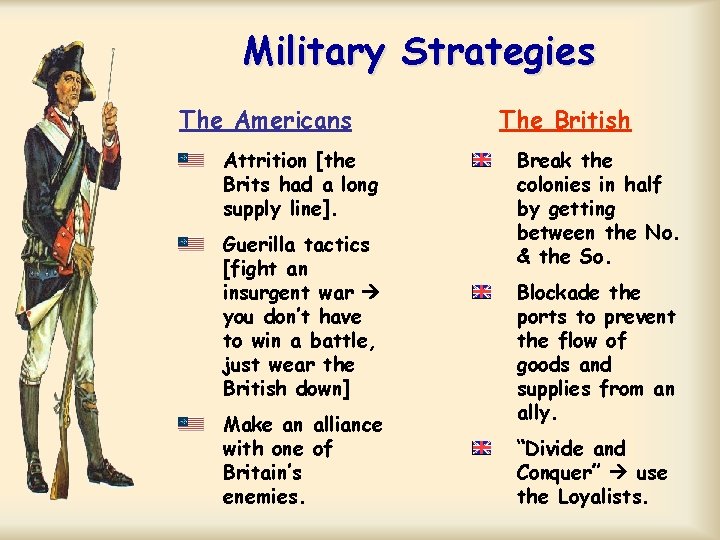
Military Strategies The Americans Attrition [the Brits had a long supply line]. Guerilla tactics [fight an insurgent war you don’t have to win a battle, just wear the British down] Make an alliance with one of Britain’s enemies. The British Break the colonies in half by getting between the No. & the So. Blockade the ports to prevent the flow of goods and supplies from an ally. “Divide and Conquer” use the Loyalists.
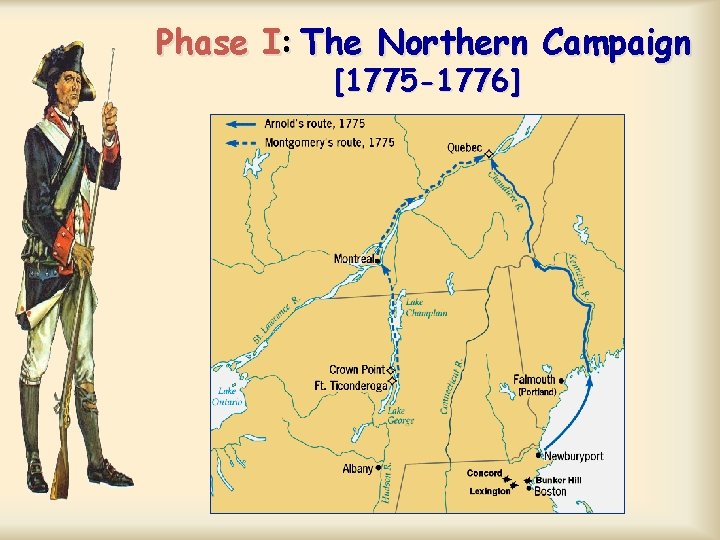
Phase I: The Northern Campaign [1775 -1776]
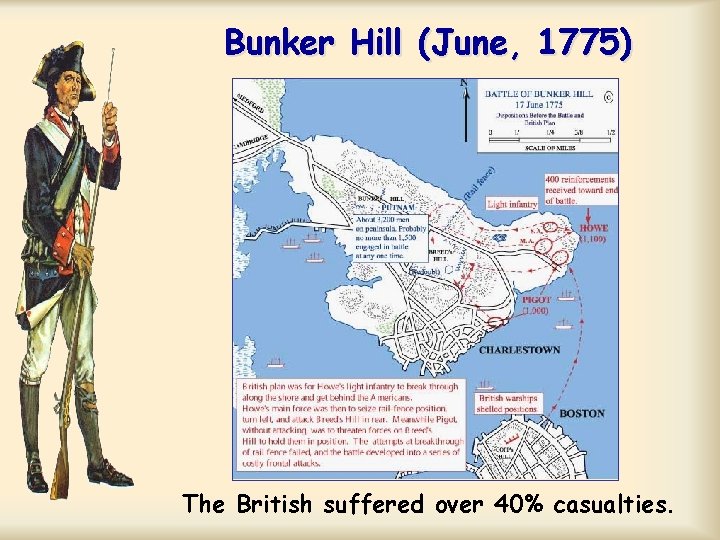
Bunker Hill (June, 1775) The British suffered over 40% casualties.
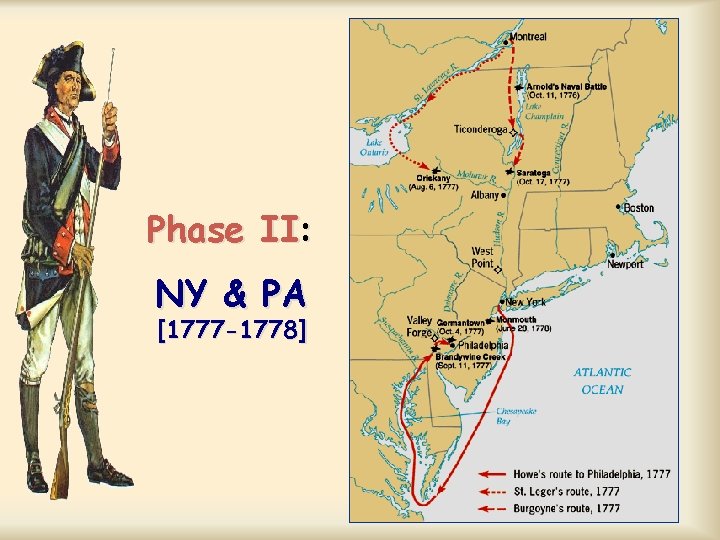
Phase II: NY & PA [1777 -1778]
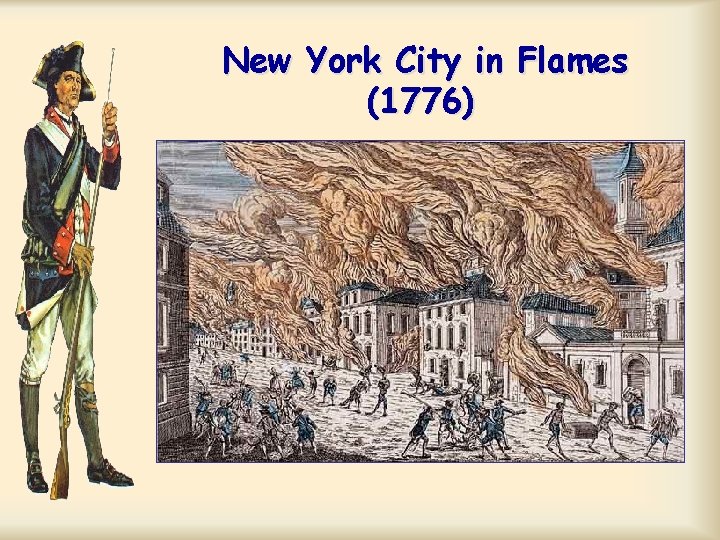
New York City in Flames (1776)
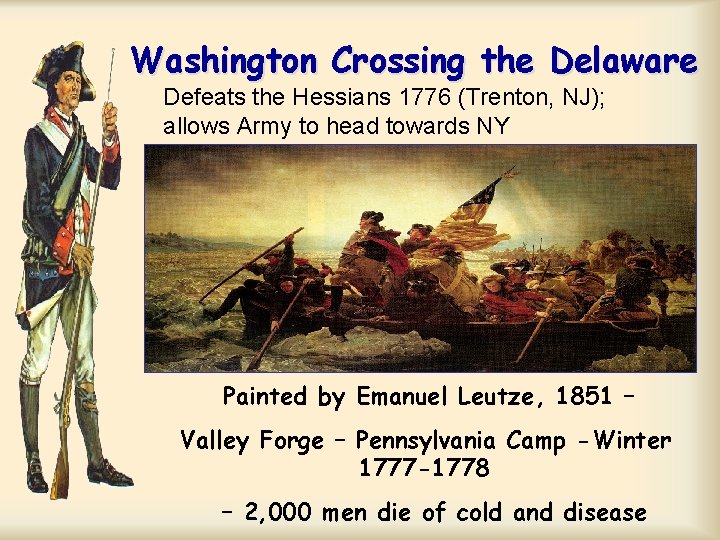
Washington Crossing the Delaware Defeats the Hessians 1776 (Trenton, NJ); allows Army to head towards NY Painted by Emanuel Leutze, 1851 – Valley Forge – Pennsylvania Camp -Winter 1777 -1778 – 2, 000 men die of cold and disease
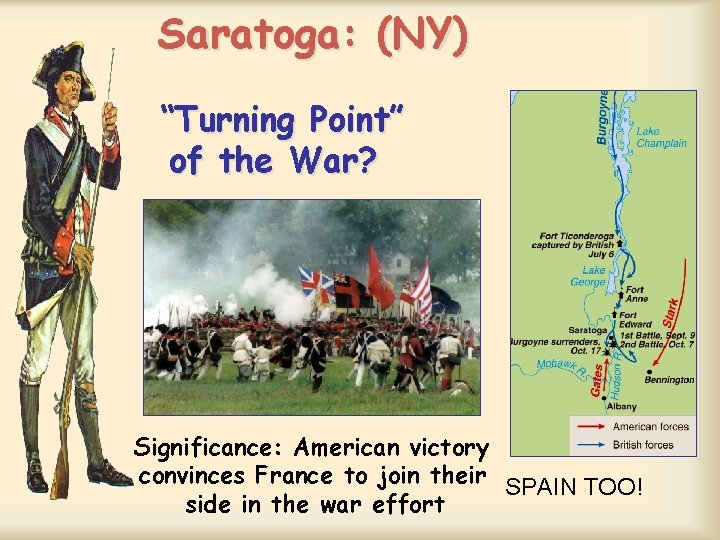
Saratoga: (NY) “Turning Point” of the War? Significance: American victory convinces France to join their SPAIN TOO! side in the war effort
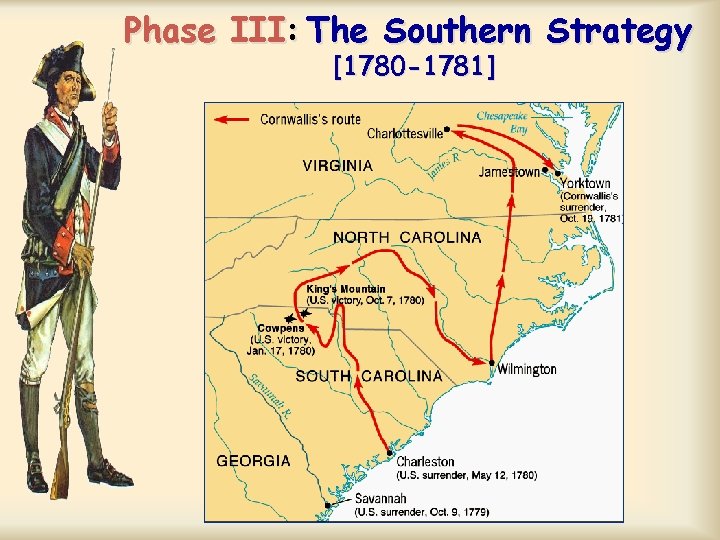
Phase III: The Southern Strategy [1780 -1781]
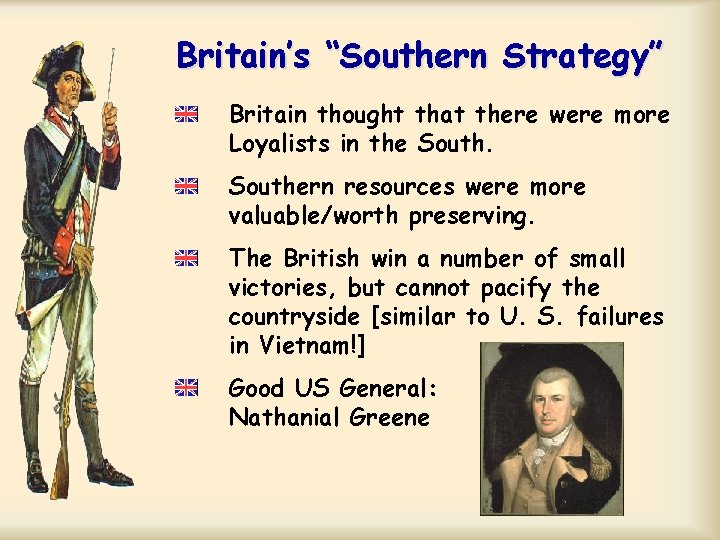
Britain’s “Southern Strategy” Britain thought that there were more Loyalists in the Southern resources were more valuable/worth preserving. The British win a number of small victories, but cannot pacify the countryside [similar to U. S. failures in Vietnam!] Good US General: Nathanial Greene
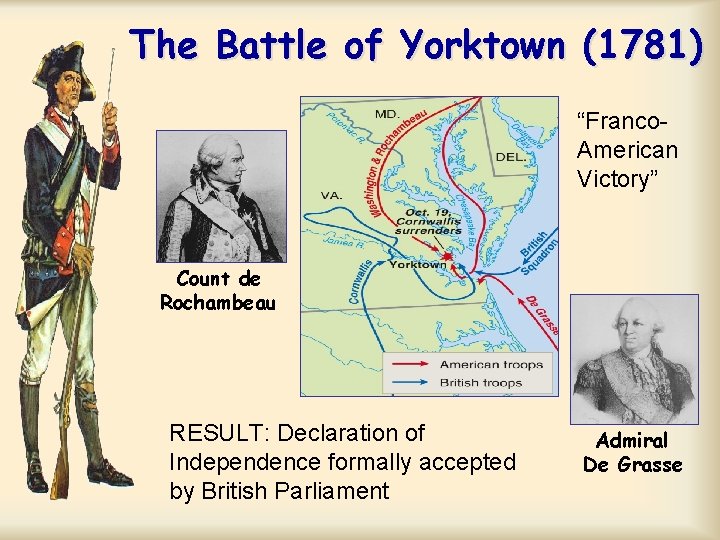
The Battle of Yorktown (1781) “Franco. American Victory” Count de Rochambeau RESULT: Declaration of Independence formally accepted by British Parliament Admiral De Grasse
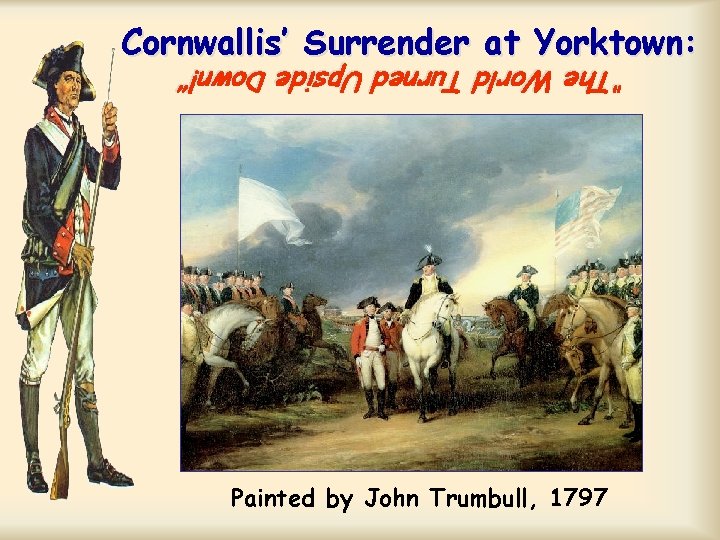
Cornwallis’ Surrender at Yorktown: “The World Turned Upside Down!” Painted by John Trumbull, 1797
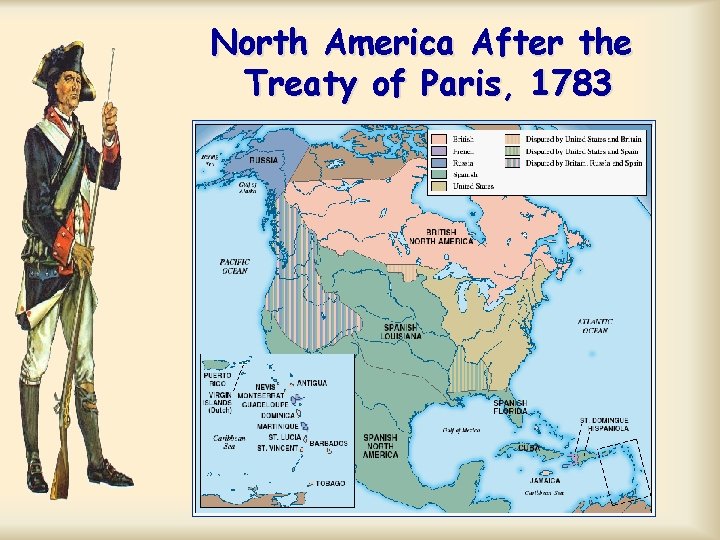
North America After the Treaty of Paris, 1783
Treaty of Paris - 1783 • Took two years to negotiate after Yorktown; signed Sept. 1783 • Ben Franklin, John Adams, and John Jay represent America • War very unpopular in Britain continues fight with France and Spain in West Indies (want quick negotiation with US) • US and Britain negotiated in secret
Treaty of Paris - 1783 • Americans gain independence • Britain ceded so much land to America it ignored Indian territorial rights promised from French and Indian War • Sets US/Canda boundary today • America made out best in the end • New idea of “Republicanism” sets in
Republicanism • “The real revolution was the radical change in the principles, opinions, and sentiments, and affections of the people. ” – John Adams • Republicanism – a gov’t based on elected assemblies with no king or established nobility • Based on Equality and Liberty
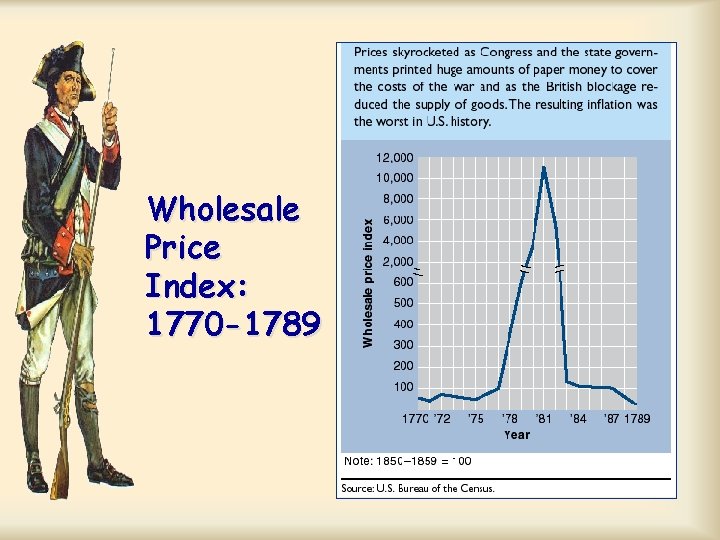
Wholesale Price Index: 1770 -1789
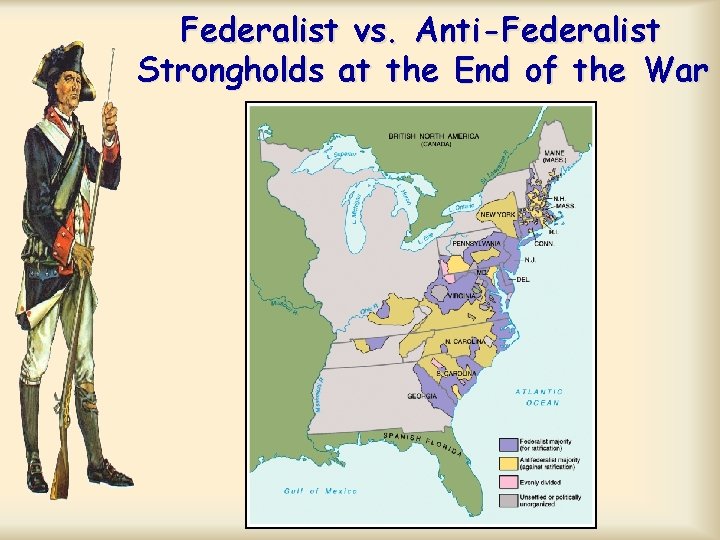
Federalist vs. Anti-Federalist Strongholds at the End of the War
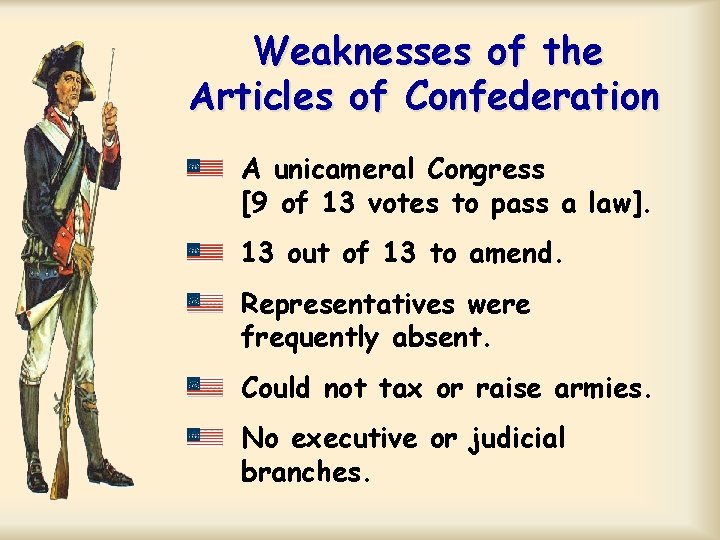
Weaknesses of the Articles of Confederation A unicameral Congress [9 of 13 votes to pass a law]. 13 out of 13 to amend. Representatives were frequently absent. Could not tax or raise armies. No executive or judicial branches.
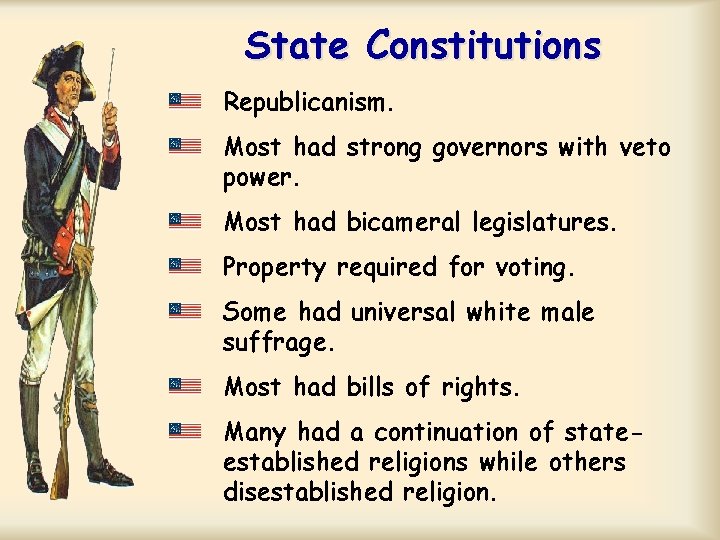
State Constitutions Republicanism. Most had strong governors with veto power. Most had bicameral legislatures. Property required for voting. Some had universal white male suffrage. Most had bills of rights. Many had a continuation of stateestablished religions while others disestablished religion.
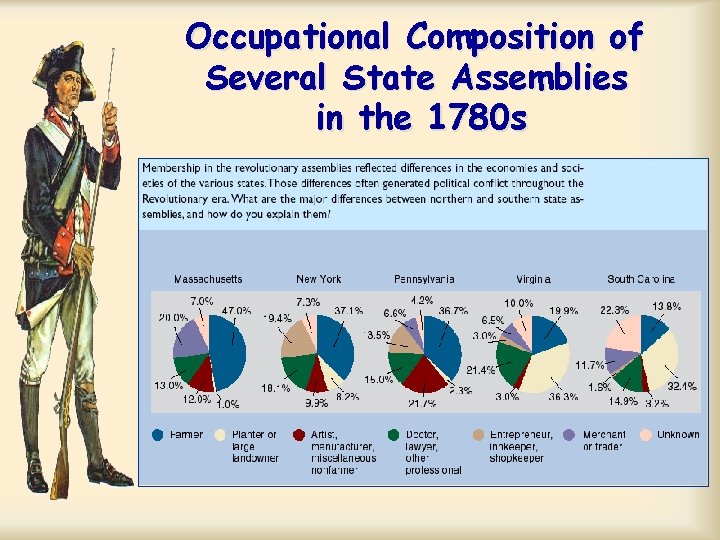
Occupational Composition of Several State Assemblies in the 1780 s
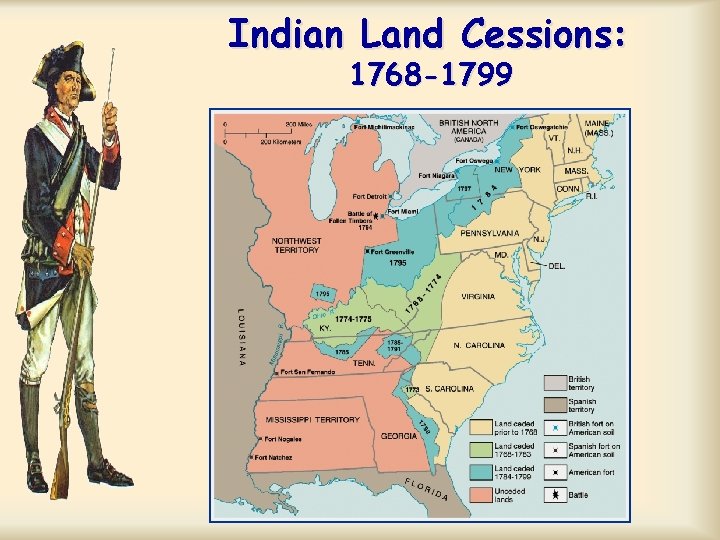
Indian Land Cessions: 1768 -1799
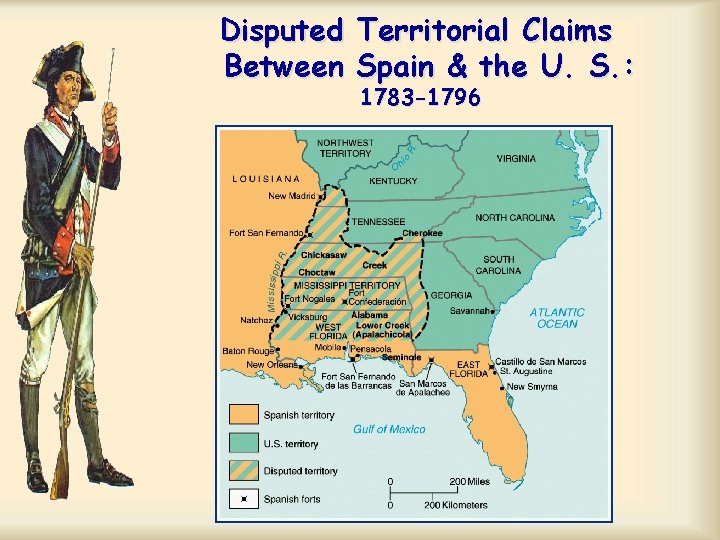
Disputed Territorial Claims Between Spain & the U. S. : 1783 -1796
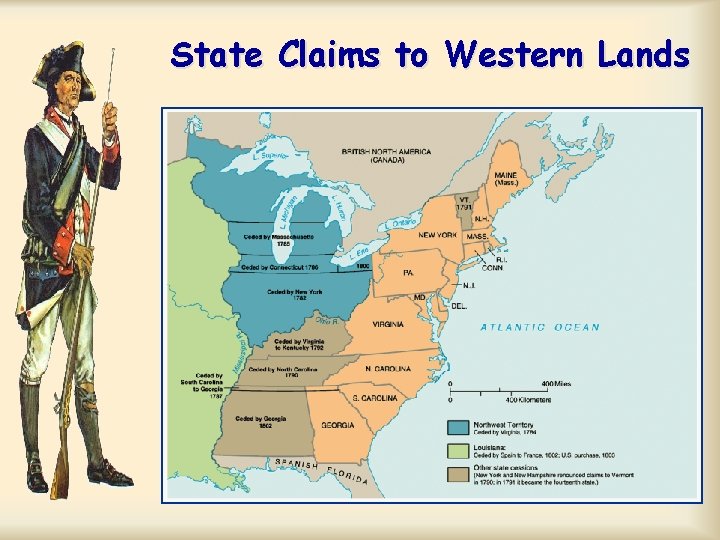
State Claims to Western Lands
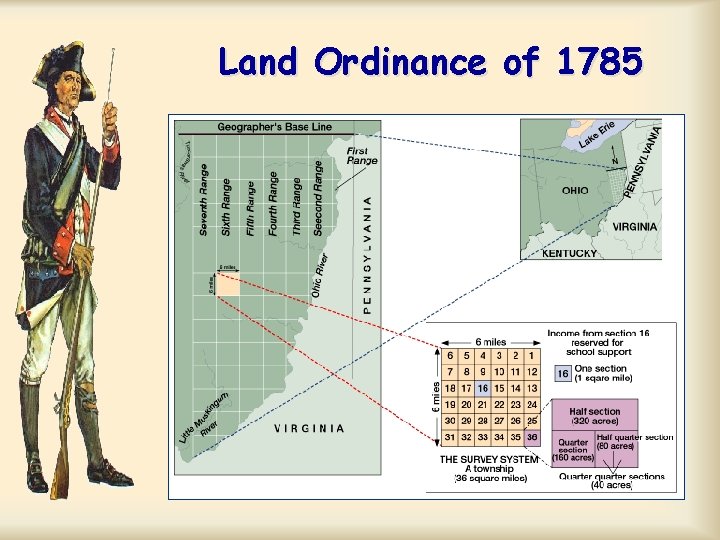
Land Ordinance of 1785
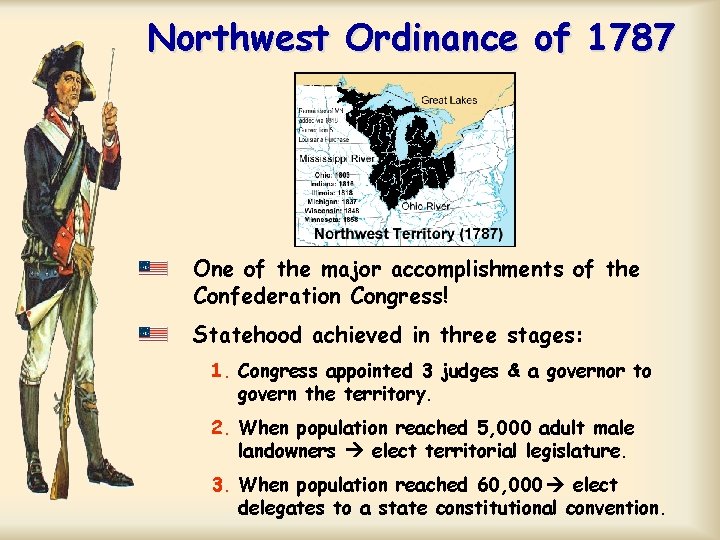
Northwest Ordinance of 1787 One of the major accomplishments of the Confederation Congress! Statehood achieved in three stages: 1. Congress appointed 3 judges & a governor to govern the territory. 2. When population reached 5, 000 adult male landowners elect territorial legislature. 3. When population reached 60, 000 elect delegates to a state constitutional convention.
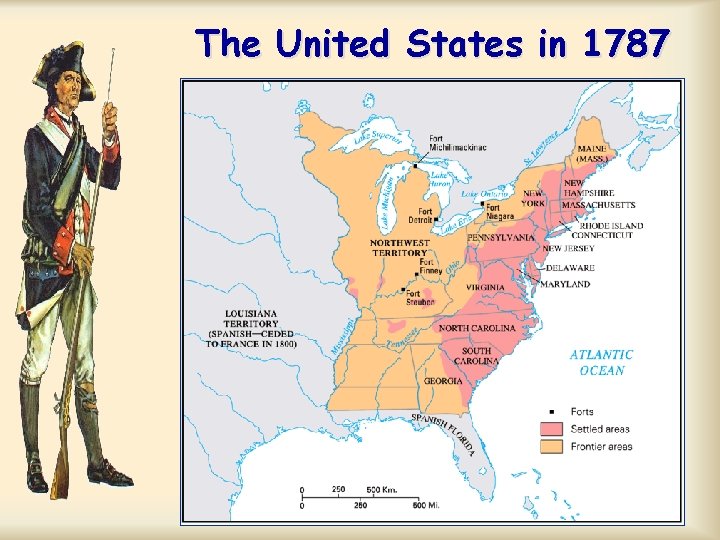
The United States in 1787
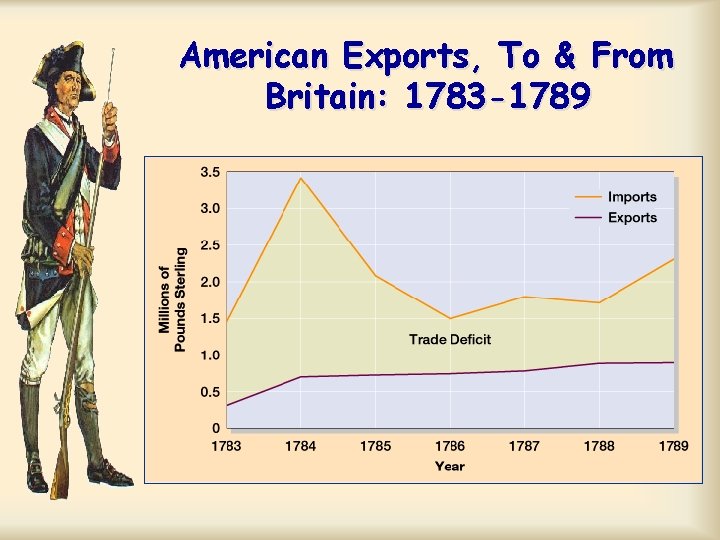
American Exports, To & From Britain: 1783 -1789
Annapolis Convention (1786) 12 representatives from 5 states [NY, NJ, PA, DE, VA] GOAL address barriers that limited trade and commerce between the states. Not enough states were represented to make any real progress. Sent a report to the Congress to call a meeting of all the states to meet in Philadelphia to examine areas broader than just trade and commerce.
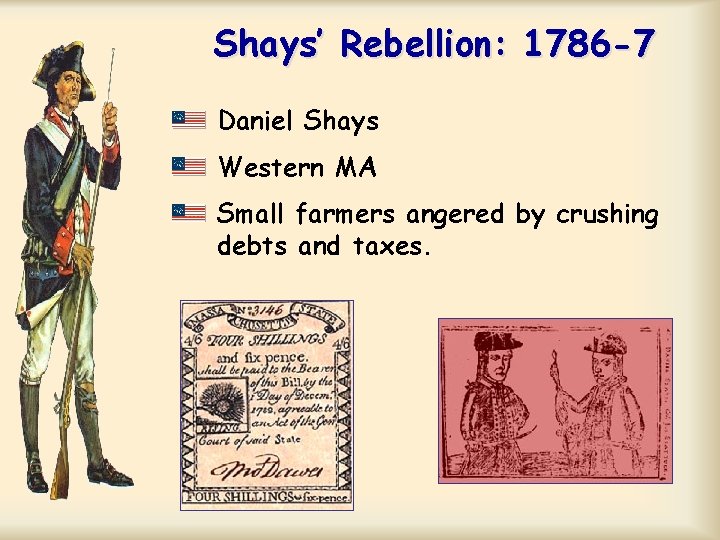
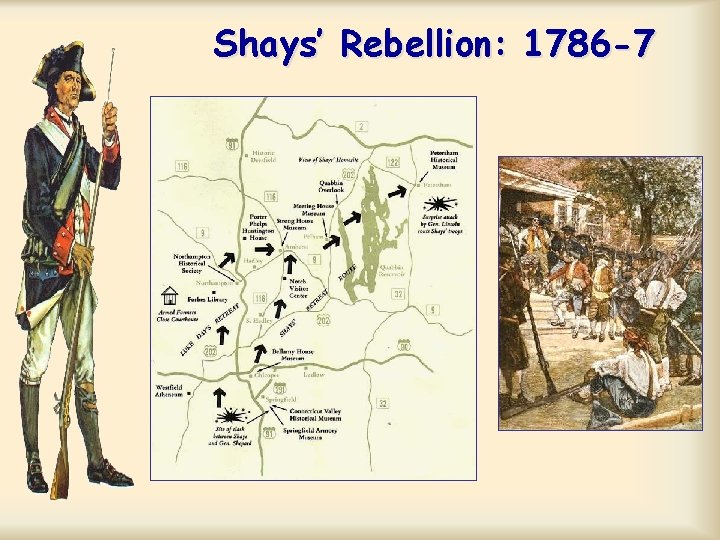
Shays’ Rebellion: 1786 -7 Daniel Shays Western MA Small farmers angered by crushing debts and taxes.
Shays’ Rebellion: 1786 -7
Shays’ Rebellion: 1786 -7 There could be no stronger evidence of the want of energy in our governments than these disorders. -- George Washington
PP 200 -211 Readings – Write questions and answers on a separate sheet • 1. Per your reading, what were some significant powers of the Articles of Confederation? • 2. Why did Maryland PA originally refuse to sign the AOC? • 3. What was the main financial issue by 1780? What did Robert Morris try to do? • 4. Why were the Land Ordinances of the 1780 s so significant to the future of America? • 5. Although Shay’s Rebellion failed, how did the Patriot Families view America leadership? How did the British view America as a result of this rebellion? • 6. What dominated the postwar political agenda by 1787? • 7. What were some of the major points of interest at the Constitutional Convention when the debate of slavery took place? (Use examples)
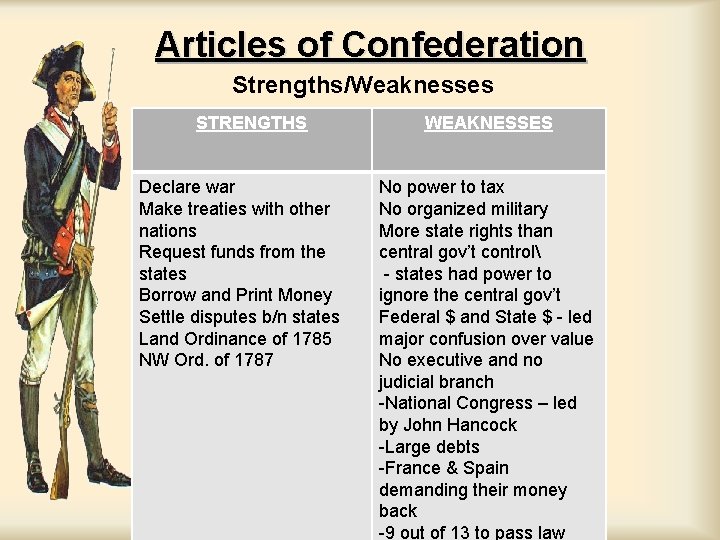
Articles of Confederation Strengths/Weaknesses STRENGTHS Declare war Make treaties with other nations Request funds from the states Borrow and Print Money Settle disputes b/n states Land Ordinance of 1785 NW Ord. of 1787 WEAKNESSES No power to tax No organized military More state rights than central gov’t control - states had power to ignore the central gov’t Federal $ and State $ - led major confusion over value No executive and no judicial branch -National Congress – led by John Hancock -Large debts -France & Spain demanding their money back -9 out of 13 to pass law
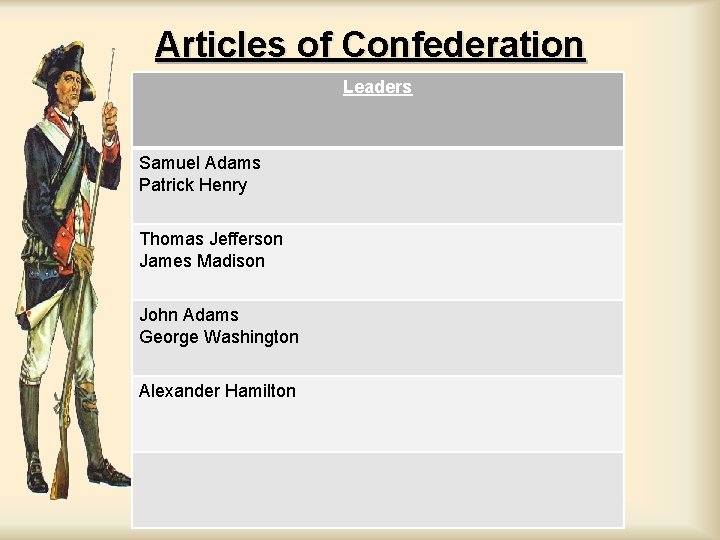
Articles of Confederation Leaders Samuel Adams Patrick Henry Thomas Jefferson James Madison John Adams George Washington Alexander Hamilton
Short Answer – Class/Home • 1. To what extent was the American Revolution a movement for the colonists’ civil rights? Provide examples. • 2. “The Articles of Confederation could have worked if given enough time. ” – Assess the validity of this quote with respect to the economic and political conditions of the 1780 s.
Articles of Confederation https: //www. youtube. com/watch? v=Es Slp. ZX 8 DOQ