
APUSH Lecture 2 A covers Ch 5 Ms
![The Americans Attrition [the Brits had a long supply line]. Guerilla tactics [fight an](https://slidetodoc.com/presentation_image_h2/0ffb594982a777eb9a475670dc66628e/image-14.jpg "The Americans Attrition [the Brits had a long supply line]. Guerilla tactics [fight an")
![Phase I: New England [1775 -1776] • Apr. 1775 Bunker Hill – British suffer](https://slidetodoc.com/presentation_image_h2/0ffb594982a777eb9a475670dc66628e/image-15.jpg "Phase I: New England [1775 -1776] • Apr. 1775 Bunker Hill – British suffer")
![Phase II : NY & PA [1776 -1778] • More traditional fighting – Br.](https://slidetodoc.com/presentation_image_h2/0ffb594982a777eb9a475670dc66628e/image-17.jpg "Phase II : NY & PA [1776 -1778] • More traditional fighting – Br.")
![Phase III : The Southern Strategy [1780 -1781] Britain thought there were more Loyalists](https://slidetodoc.com/presentation_image_h2/0ffb594982a777eb9a475670dc66628e/image-22.jpg "Phase III : The Southern Strategy [1780 -1781] Britain thought there were more Loyalists")
- Slides: 38
APUSH Lecture 2 A (covers Ch. 5) Ms. Kray Some slides taken from Susan Pojer
v. Analyze the goals and influence of the Declaration of Independence v. Analyze the impact of the revolution on women, African. Americans, and Native. Americans
• In 1775 the colonies were neither prepared for nor united behind fighting a war with Britain • Key Questions: – Should we demand independence? – If yes, how will we structure our new nation? • Wanted to be a new type of nation, dedicated to enlightened ideals (role model) • U. S. attempt to live up to those ideals = on going trend in U. S. History
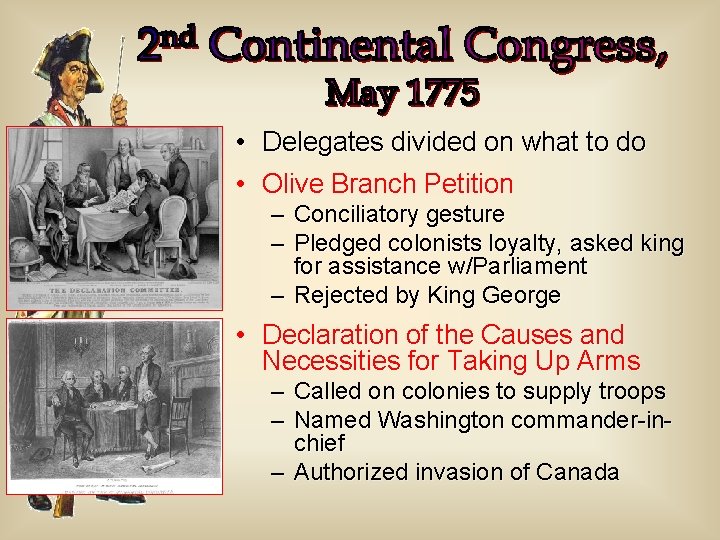
• Delegates divided on what to do • Olive Branch Petition – Conciliatory gesture – Pledged colonists loyalty, asked king for assistance w/Parliament – Rejected by King George • Declaration of the Causes and Necessities for Taking Up Arms – Called on colonies to supply troops – Named Washington commander-inchief – Authorized invasion of Canada
• July 4, 1776: colonies declare independence • Why the shift? – Costs of the war too high to justify anything else – British hired foreign mercenaries – Colonists felt British were forcing them to declare independence • Declaratory Act 1775: colonies in rebellion, closed off trade, no concessions • Naval blockade
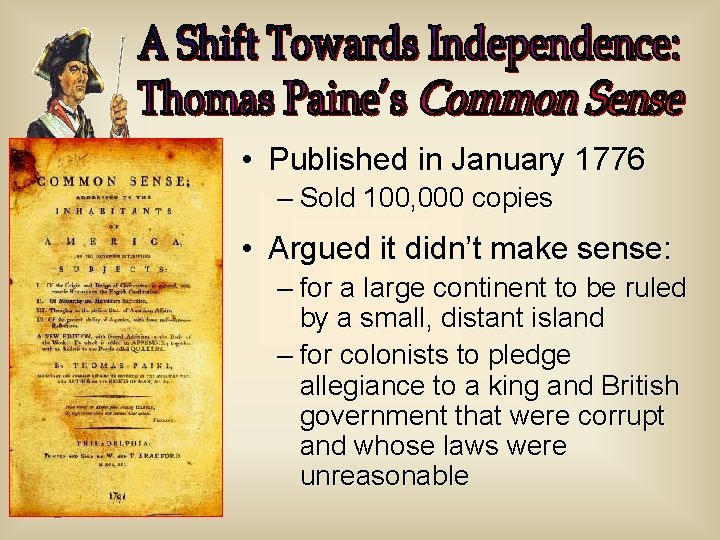
• Published in January 1776 – Sold 100, 000 copies • Argued it didn’t make sense: – for a large continent to be ruled by a small, distant island – for colonists to pledge allegiance to a king and British government that were corrupt and whose laws were unreasonable
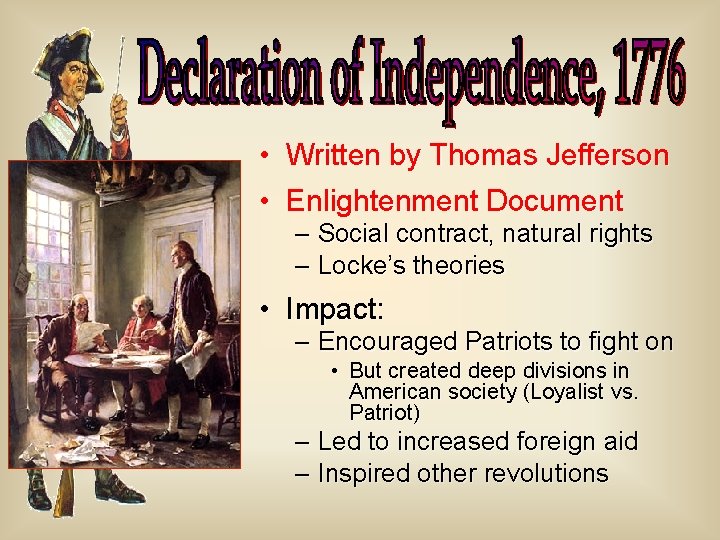
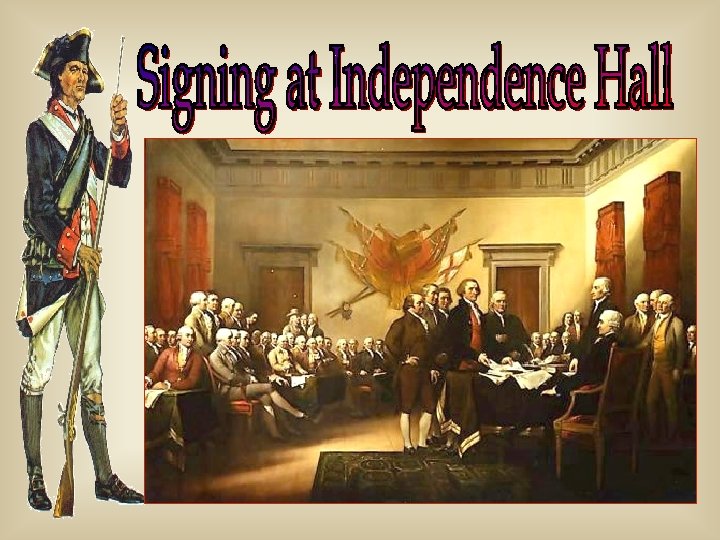
• Written by Thomas Jefferson • Enlightenment Document – Social contract, natural rights – Locke’s theories • Impact: – Encouraged Patriots to fight on • But created deep divisions in American society (Loyalist vs. Patriot) – Led to increased foreign aid – Inspired other revolutions
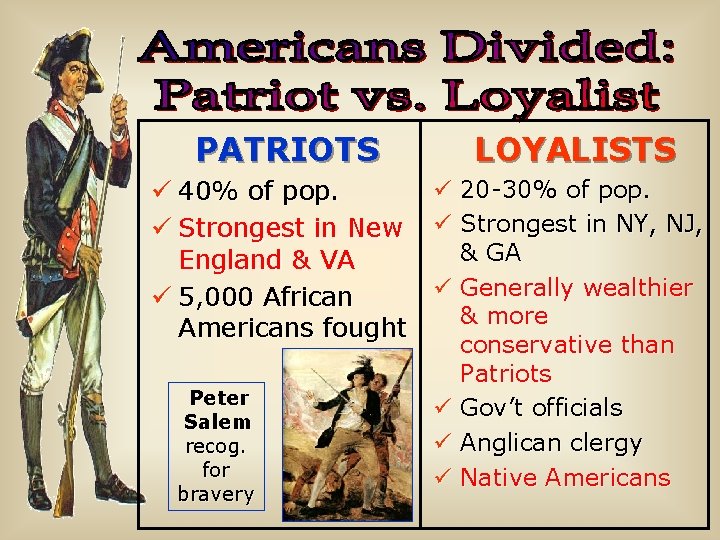
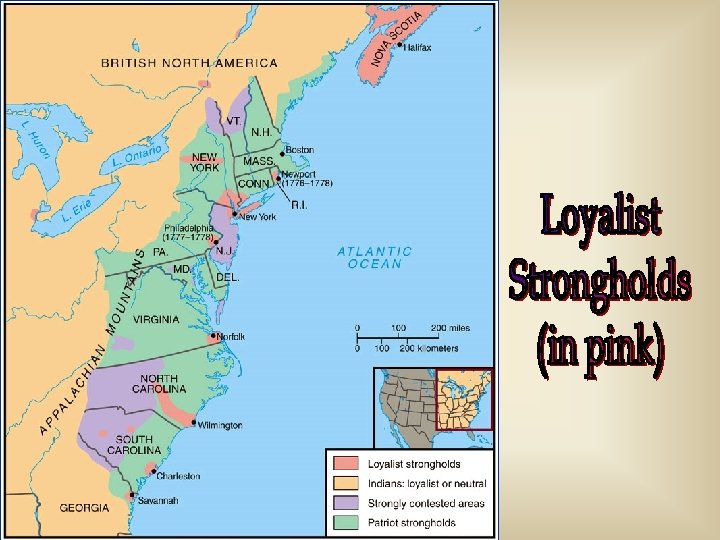
PATRIOTS ü 40% of pop. ü Strongest in New England & VA ü 5, 000 African Americans fought Peter Salem recog. for bravery LOYALISTS ü 20 -30% of pop. ü Strongest in NY, NJ, & GA ü Generally wealthier & more conservative than Patriots ü Gov’t officials ü Anglican clergy ü Native Americans
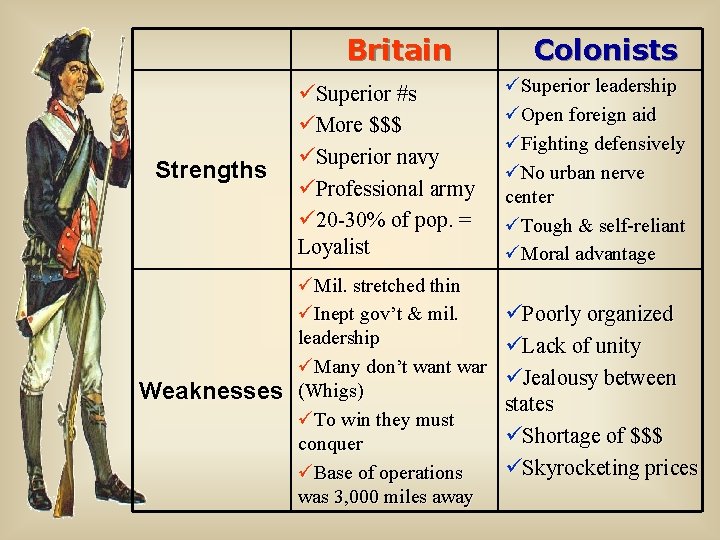
Britain Strengths üSuperior #s üMore $$$ üSuperior navy üProfessional army ü 20 -30% of pop. = Loyalist üMil. stretched thin üInept gov’t & mil. leadership üMany don’t want war Weaknesses (Whigs) üTo win they must conquer üBase of operations was 3, 000 miles away Colonists üSuperior leadership üOpen foreign aid üFighting defensively üNo urban nerve center üTough & self-reliant üMoral advantage üPoorly organized üLack of unity üJealousy between states üShortage of $$$ üSkyrocketing prices
The Americans Attrition [the Brits had a long supply line]. Guerilla tactics [fight an insurgent war you don’t have to win a battle, just wear the British down] Make an alliance with one of Britain’s enemies. The British Break the colonies in half by getting between the No. & the So. Blockade the ports to prevent the flow of goods and supplies from an ally. “Divide and Conquer” use the Loyalists.
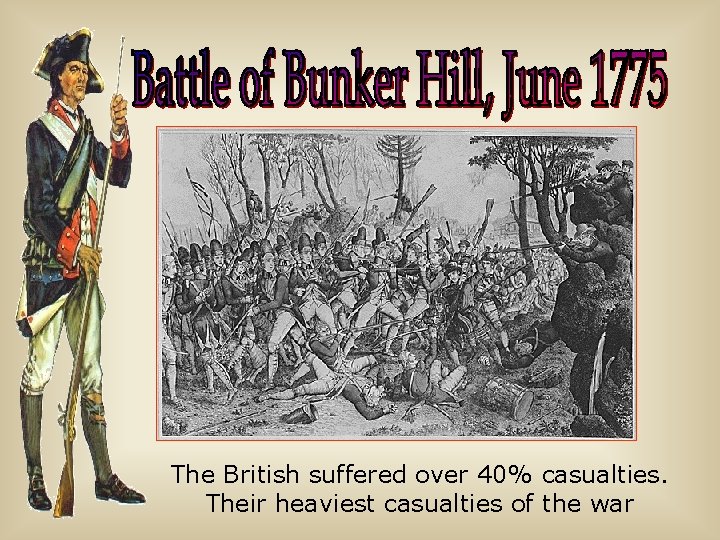
Phase I: New England [1775 -1776] • Apr. 1775 Bunker Hill – British suffer heaviest casualties of the war • Mar. 1776 British leave Boston for Nova Scotia • Failed American invasion of Canada
The British suffered over 40% casualties. Their heaviest casualties of the war
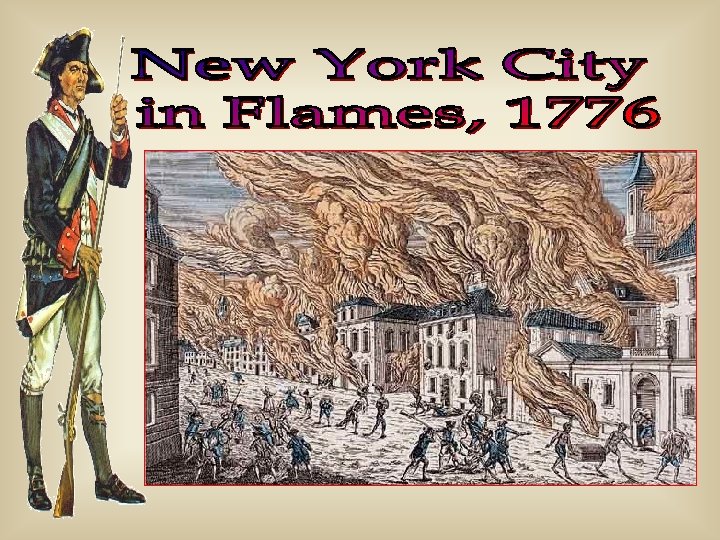
Phase II : NY & PA [1776 -1778] • More traditional fighting – Br. goal = cut U. S. in two – Not a good time for U. S. army • 1776 Br. Gen. Howe takes NY • By 1777 Br. take Philly too • Washington’s army plagued by shortages – Valley Forge
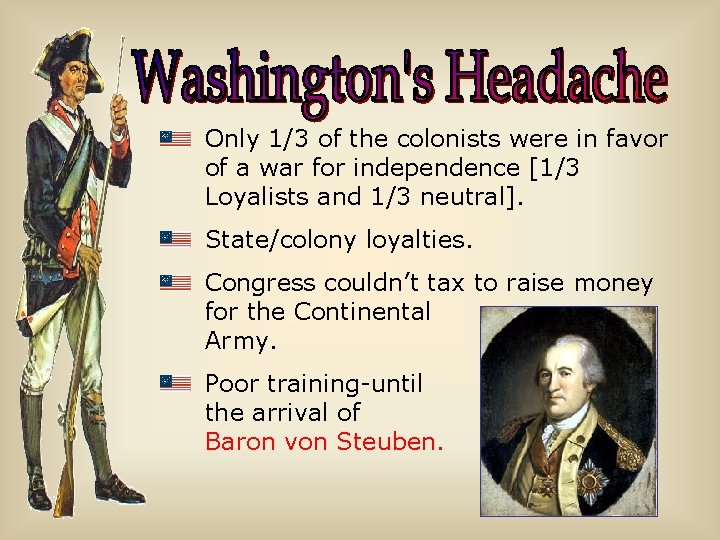
Only 1/3 of the colonists were in favor of a war for independence [1/3 Loyalists and 1/3 neutral]. State/colony loyalties. Congress couldn’t tax to raise money for the Continental Army. Poor training-until the arrival of Baron von Steuben.
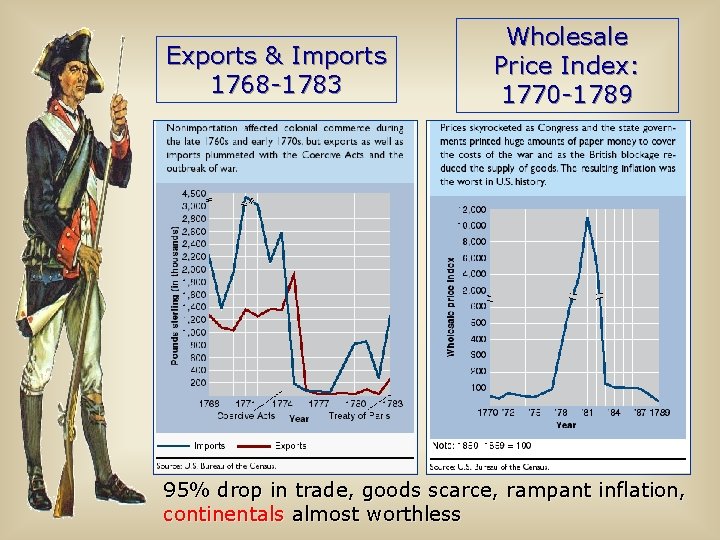
Exports & Imports 1768 -1783 Wholesale Price Index: 1770 -1789 95% drop in trade, goods scarce, rampant inflation, continentals almost worthless
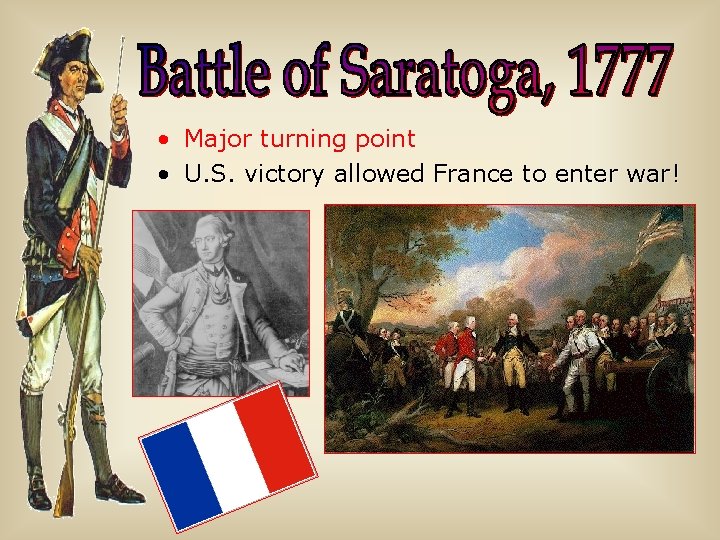
• Major turning point • U. S. victory allowed France to enter war!
Phase III : The Southern Strategy [1780 -1781] Britain thought there were more Loyalists in the Southern resources more valuable/worth preserving. The British win a # small victories, but can’t pacify the countryside American Gen. Nathanael Greene keeps up the pressure
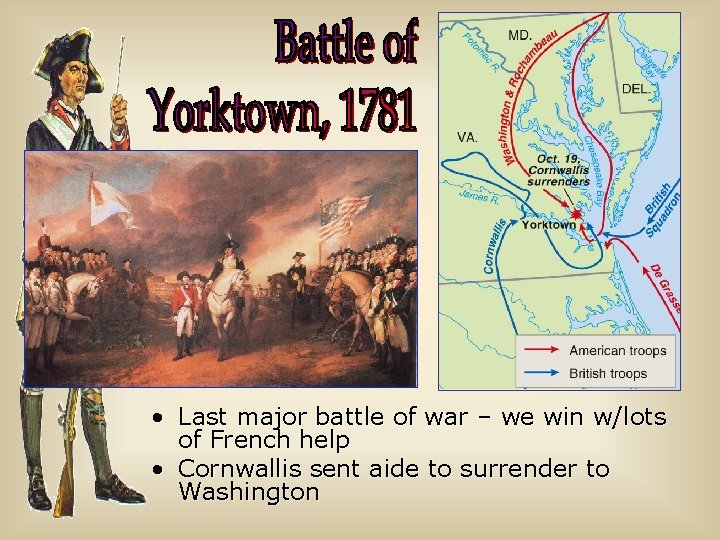
• Last major battle of war – we win w/lots of French help • Cornwallis sent aide to surrender to Washington
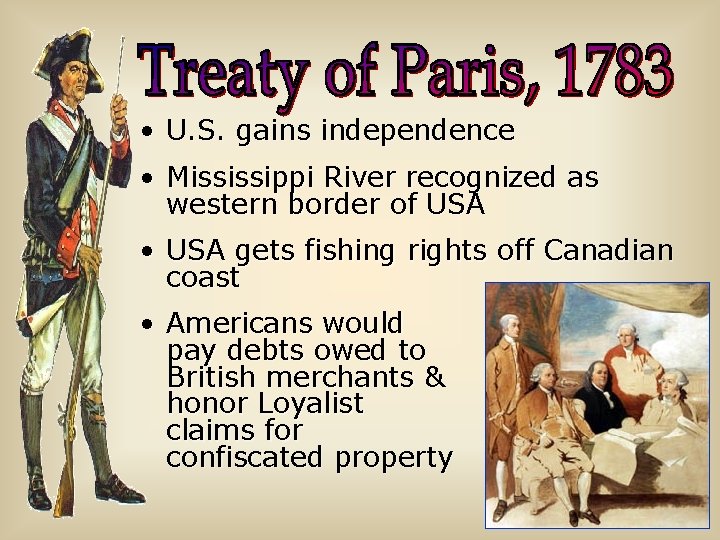
• U. S. gains independence • Mississippi River recognized as western border of USA • USA gets fishing rights off Canadian coast • Americans would pay debts owed to British merchants & honor Loyalist claims for confiscated property
American Revolution was a political and social revolution
• Approx. 20 -30% of the population were Loyalist • 100, 000 fled the country by end of war, why? – Hounded by Patriots in their community, harassed by legislative and judicial actions – Left behind estates & important positions • Their flight created new opportunities for Patriots to acquire land influence – led to significant social change
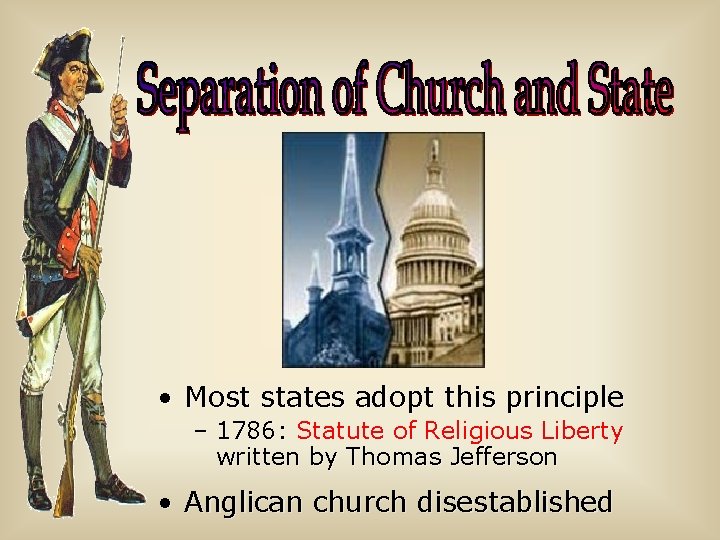
• Most states adopt this principle – 1786: Statute of Religious Liberty written by Thomas Jefferson • Anglican church disestablished
• Revolutionary War meant an increased exposure to the concept of liberty but seldom the reality • In the North – Revolutionary sentiments + evangelical fervor = growing anti-slavery sentiment – Most northern states passed laws ending slavery • Continental Congress voted to abolish importation of slaves and most states went along
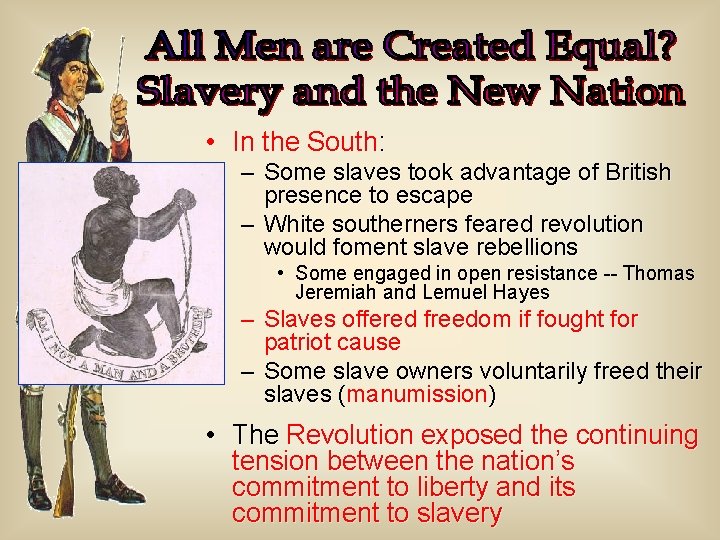
• In the South: – Some slaves took advantage of British presence to escape – White southerners feared revolution would foment slave rebellions • Some engaged in open resistance -- Thomas Jeremiah and Lemuel Hayes – Slaves offered freedom if fought for patriot cause – Some slave owners voluntarily freed their slaves (manumission) • The Revolution exposed the continuing tension between the nation’s commitment to liberty and its commitment to slavery
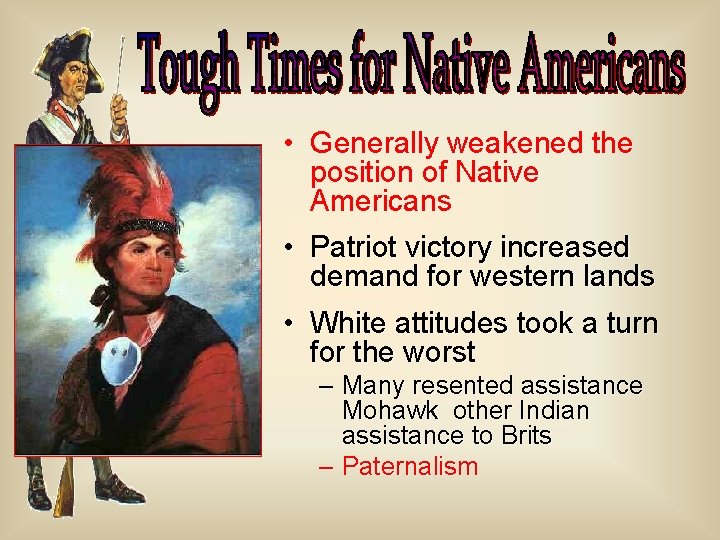
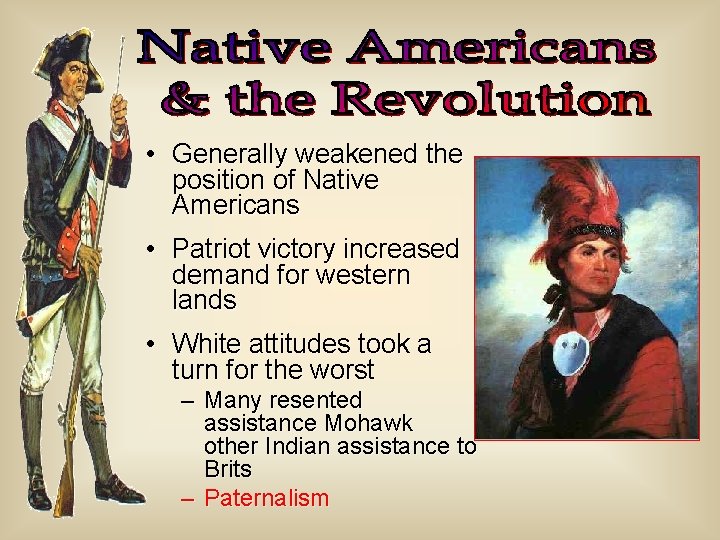
• Generally weakened the position of Native Americans • Patriot victory increased demand for western lands • White attitudes took a turn for the worst – Many resented assistance Mohawk other Indian assistance to Brits – Paternalism
• Generally weakened the position of Native Americans • Patriot victory increased demand for western lands • White attitudes took a turn for the worst – Many resented assistance Mohawk other Indian assistance to Brits – Paternalism
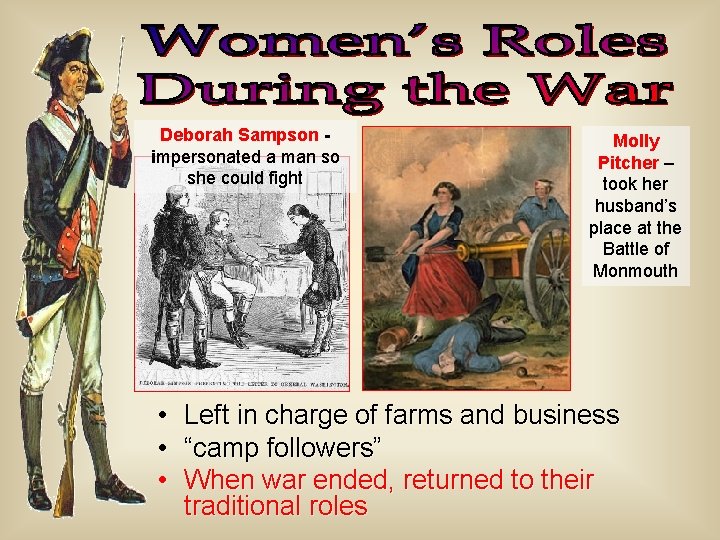
Deborah Sampson impersonated a man so she could fight Molly Pitcher – took her husband’s place at the Battle of Monmouth • Left in charge of farms and business • “camp followers” • When war ended, returned to their traditional roles
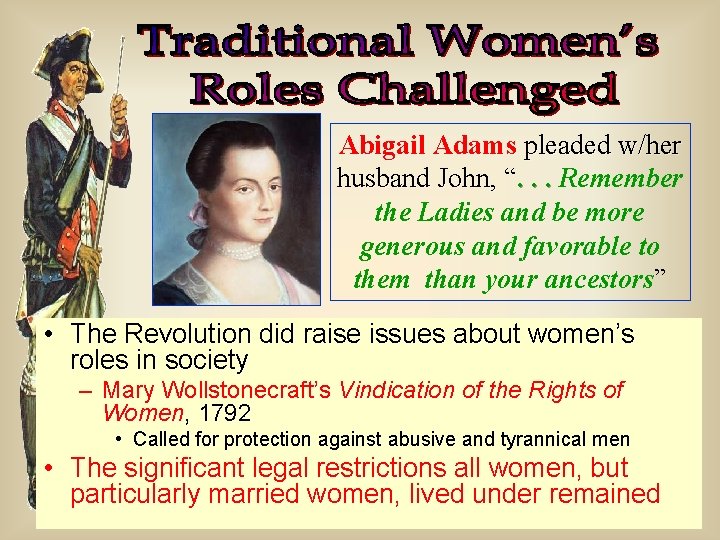
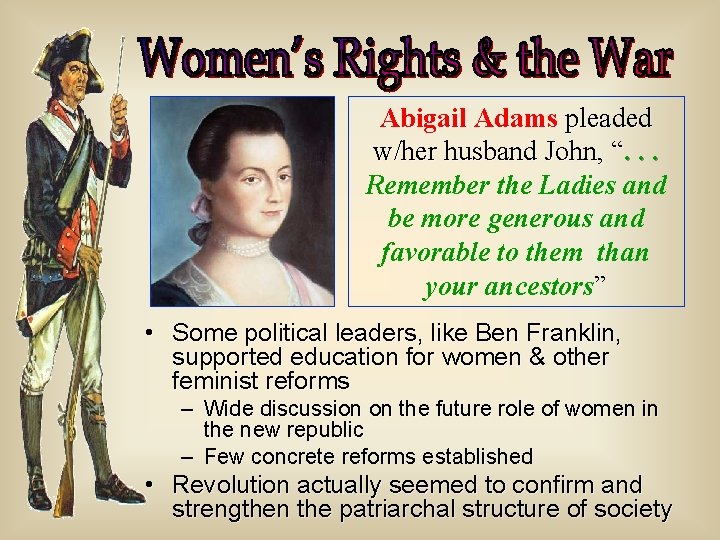
Abigail Adams pleaded w/her husband John, “. . . Remember the Ladies and be more generous and favorable to them than your ancestors” • The Revolution did raise issues about women’s roles in society – Mary Wollstonecraft’s Vindication of the Rights of Women, 1792 • Called for protection against abusive and tyrannical men • The significant legal restrictions all women, but particularly married women, lived under remained
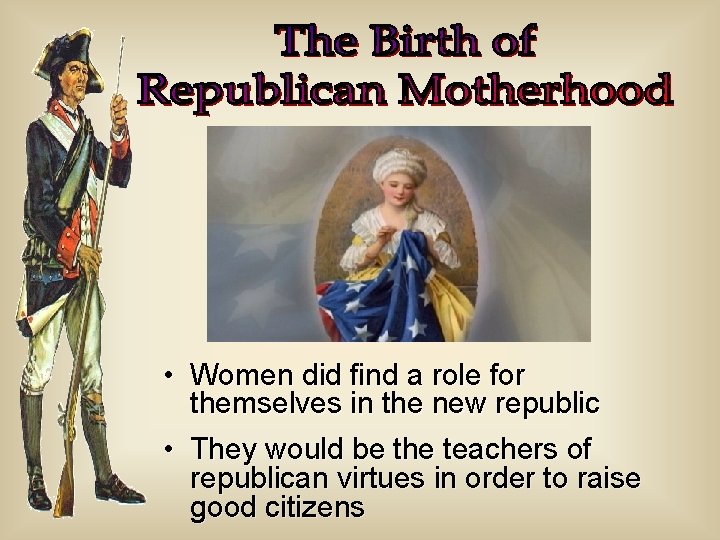
• Women did find a role for themselves in the new republic • They would be the teachers of republican virtues in order to raise good citizens
Abigail Adams pleaded w/her husband John, “. . . Remember the Ladies and be more generous and favorable to them than your ancestors” • Some political leaders, like Ben Franklin, supported education for women & other feminist reforms – Wide discussion on the future role of women in the new republic – Few concrete reforms established • Revolution actually seemed to confirm and strengthen the patriarchal structure of society
v. Analyze the goals and influence of the Declaration of Independence v. Analyze the impact of the revolution on women, African. Americans, and Native. Americans