
APUSH Chapter 18 THE AGE OF THE CITY



- Slides: 52
APUSH: Chapter 18 THE AGE OF THE CITY pp. 487 - 494 pp. 494 - 500 pp. 500 - 508 pp. 508 - 511
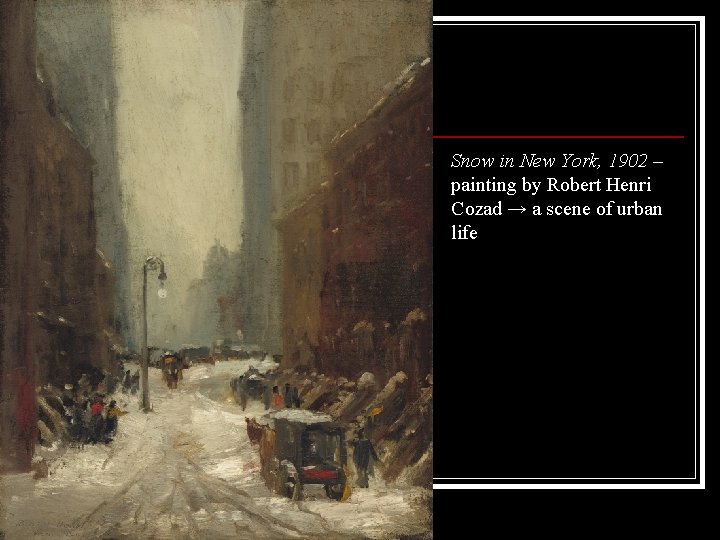
Snow in New York, 1902 – painting by Robert Henri Cozad → a scene of urban life
The Urbanization of America Great migration from rural to urban is a central response to industrialization and the factory system Urbanization in America → alluring and jarring
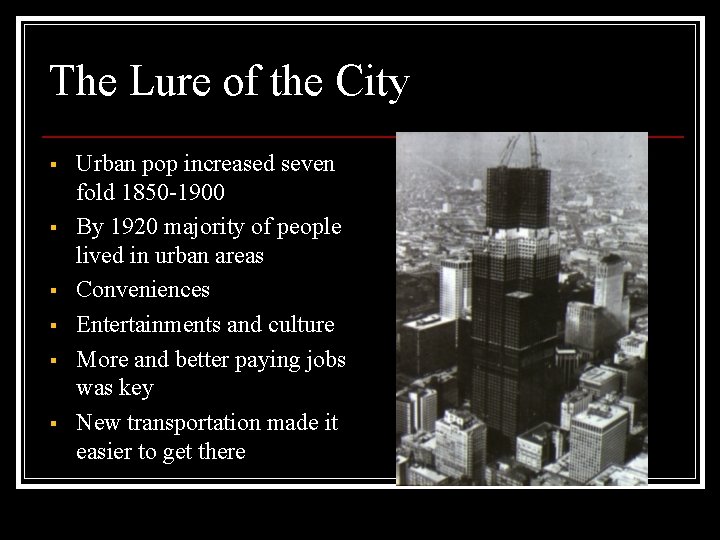
The Lure of the City § § § Urban pop increased seven fold 1850 -1900 By 1920 majority of people lived in urban areas Conveniences Entertainments and culture More and better paying jobs was key New transportation made it easier to get there
Migrations § § Geographic mobility Young rural women Southern blacks → escape rural poverty, debt, violence and oppression in the South Establishment of African American communities in cities § Greatest urban growth came from new immigrants from abroad § New Immigrants after 1880 → Eastern and Southern European Ø Orthodox, Jewish, or Catholic Ø Illiterate Ø Used to City Life
The Ethnic City § § § By 1890 the majority pop in some cities was foreign-born immigrants and children New York → more Irish than Dublin → more Germans than Hamburg Chicago → more Poles than Warsaw § § § Diversity of the immigrant populations → no single group or country dominated People banded together w/their own people → immigrant ghettos → native newspapers, theaters, food, worship Cultural cohesiveness
Assimilation § § § Ethnic ties v. desire for assimilation Dream of becoming true “Americans” → break w/the old ways Changing gender roles → traditional female subordination v. work and relationships outside the family Americans encouraged immigrants to assimilate → English taught at school, req’d on the job, consumption of American goods
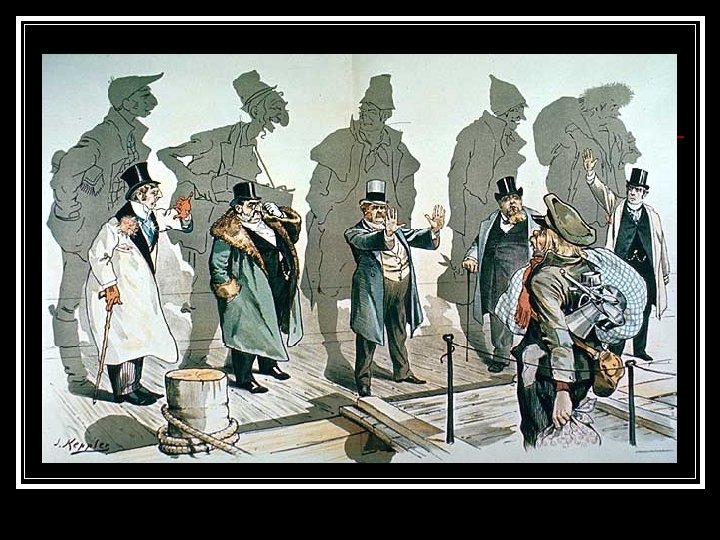
Nativism Mafia, anarchists, socialists § § § Fear and resentment of foreigners → nativism Disorder, corruption, work for low wages, scabs or strike breakers American Protective Association → rabid xenophobia Immigration Restriction League → screening of immigrants Chinese Exclusion Act 1882 Support for immigration came from those who wanted cheap labor
§ § Great contrasts in the cities → wealth and poverty → attractions and problems Rapid growth of cities led to → misgovernment, poverty, congestion, filth, epidemics, and fires The Urban Landscape ü Building and planning could not match the pace of growth
The Creation of Public Space § § Cities had grown up haphazardly In mid century → the creation of public spaces and public services Great urban parks → antidote to congestion Frederick Law Olmstead and Calvert Vaux → design NYC’s Central Park § § § Public buildings → libraries, art galleries, museums, theaters, concert halls → the Metropolitan Museum of Art in NYC Wealthy patronage and philanthropy Chicago’s “Great White City” Impose order and symmetry →“City Beautiful Movement” → Daniel Burnham Creation of whole new neighborhoods → Boston’s “Back Bay”
Housing the Well-to-Do Fashionable districts: § NYC → 5 th Avenue § Boston → Back Bay and Beacon Hill § Philly → Society Hill § San Fran → Nob Hill § New suburbs → linked to downtowns by trains and improved roads § Affluent surburbs → lawns, trees, manorial homes → opportunity to own land
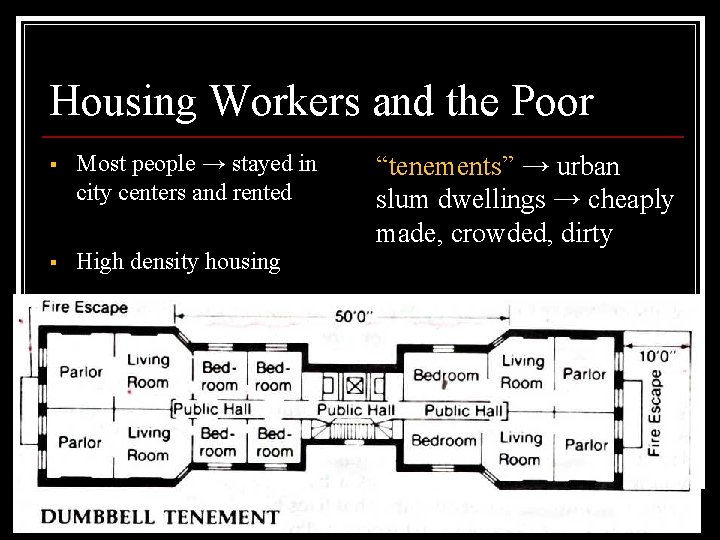
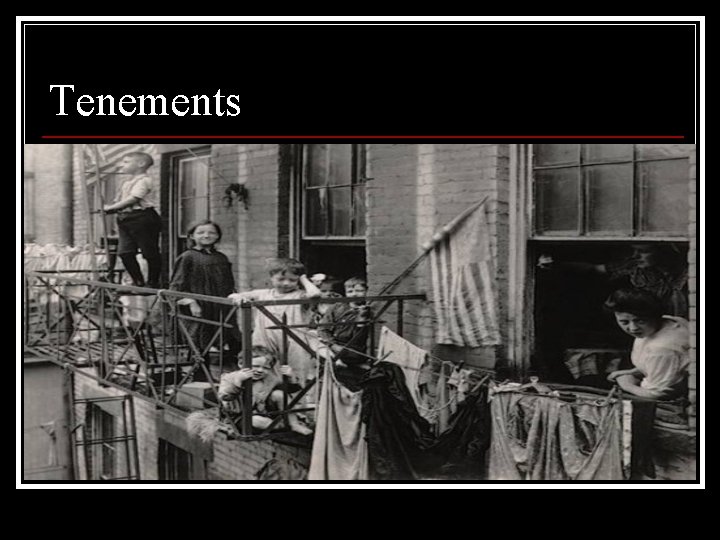
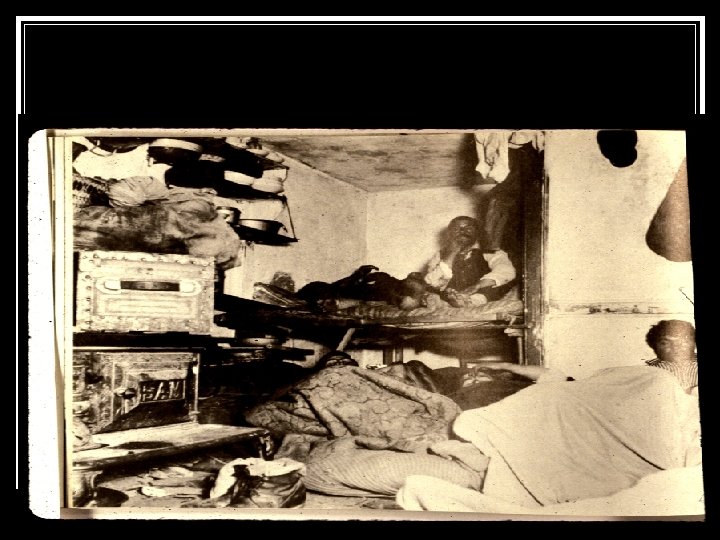
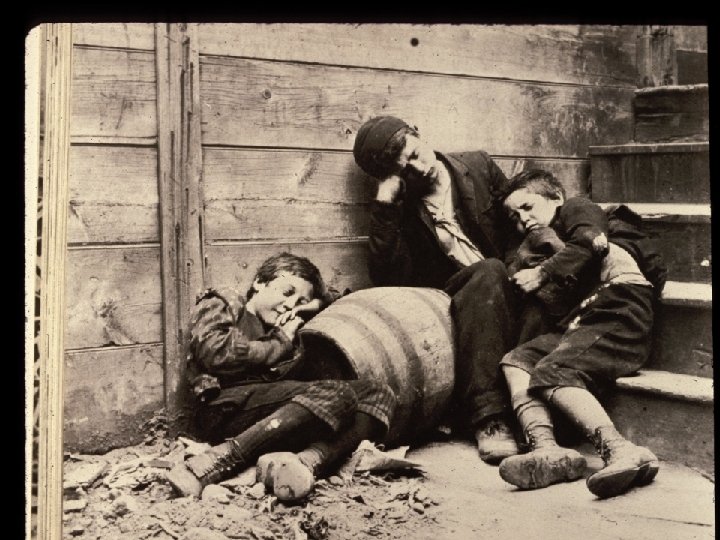
Housing Workers and the Poor § Most people → stayed in city centers and rented § High density housing “tenements” → urban slum dwellings → cheaply made, crowded, dirty
Tenements
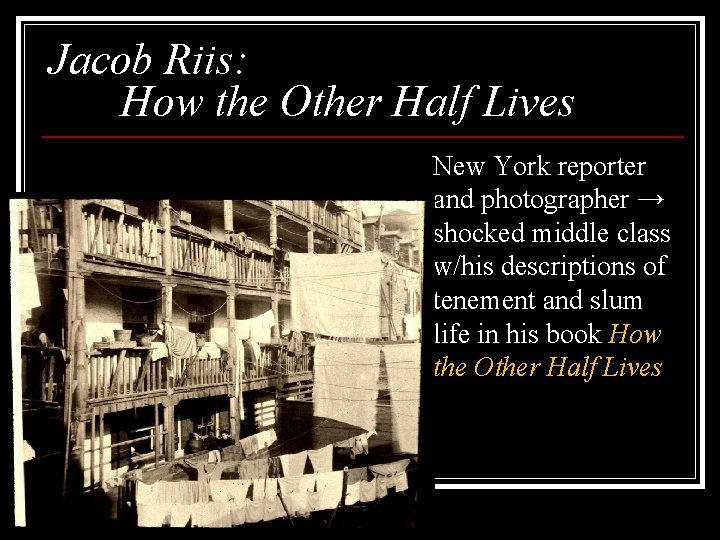
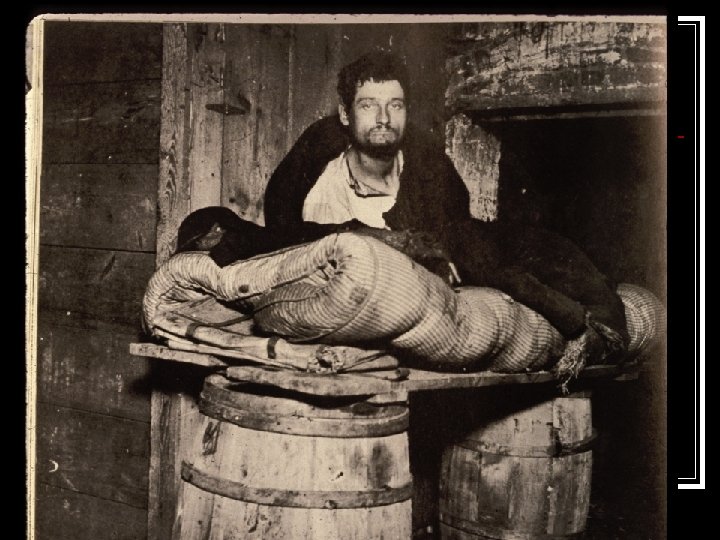
Jacob Riis: How the Other Half Lives New York reporter and photographer → shocked middle class w/his descriptions of tenement and slum life in his book How the Other Half Lives
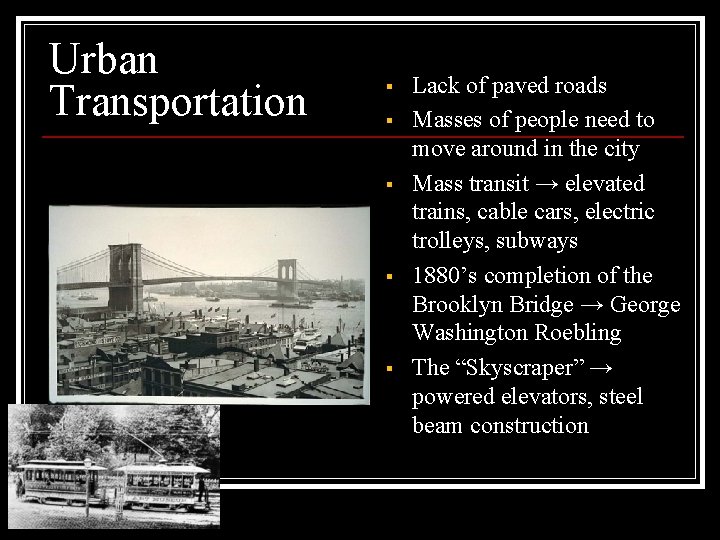
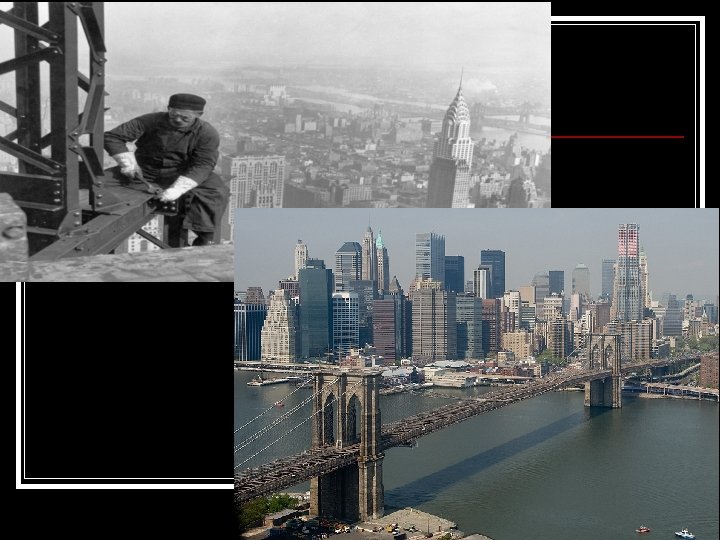
Urban Transportation § § § Lack of paved roads Masses of people need to move around in the city Mass transit → elevated trains, cable cars, electric trolleys, subways 1880’s completion of the Brooklyn Bridge → George Washington Roebling The “Skyscraper” → powered elevators, steel beam construction
Strains of Urban Life Congestion + absence of adequate public services = ü crime ü Fire ü Disease ü Indigence ü pollution
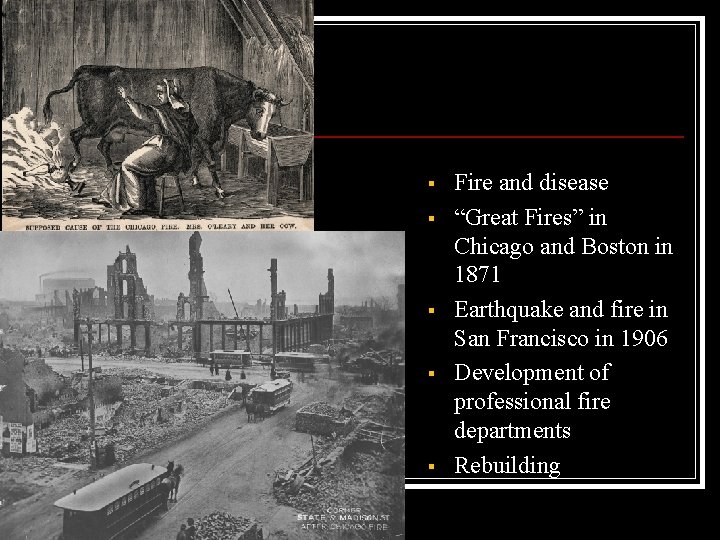
§ § § Fire and disease “Great Fires” in Chicago and Boston in 1871 Earthquake and fire in San Francisco in 1906 Development of professional fire departments Rebuilding
Environmental Degradation § § Improper disposal of human and industrial waste Water pollution Animals in the city Air pollution → burning of soft coal § Early 20 th century brings sewers and piped water § 1912 the Public Health Service is created → first example of the fed govt taking responsibility for protection of public health
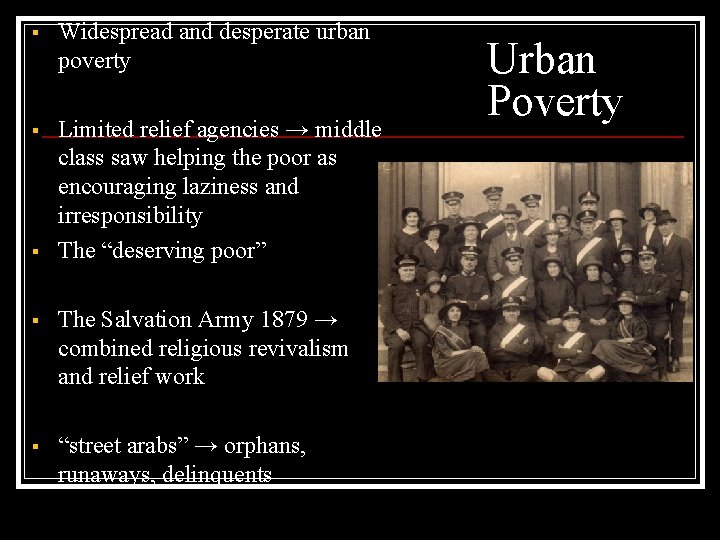
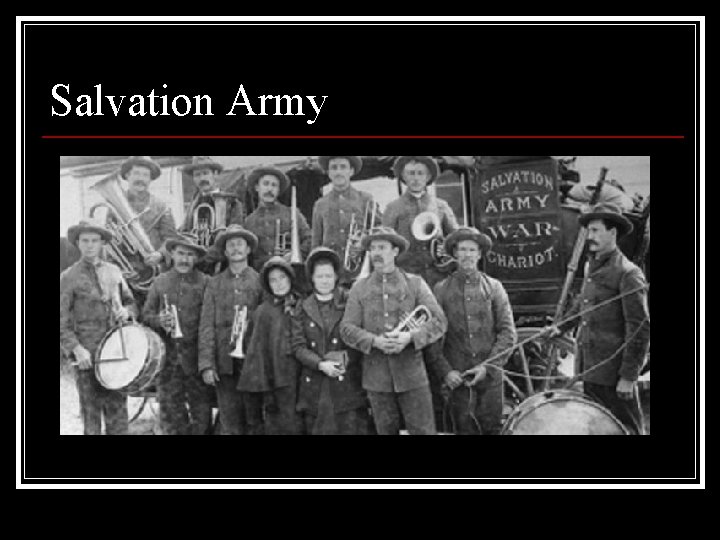
§ Widespread and desperate urban poverty § Limited relief agencies → middle class saw helping the poor as encouraging laziness and irresponsibility The “deserving poor” § § The Salvation Army 1879 → combined religious revivalism and relief work § “street arabs” → orphans, runaways, delinquents Urban Poverty
Salvation Army
Crime and Violence § § § Rising crime rates in the cities → development of larger and more professional police forces District attorneys and public prosecutors Police corruption and brutality Racial and economic discrimination in enforcement of laws National guard units
The Machine and the Boss § § § For many residents of the inner cities the political machine was main source of assistance Urban bosses → function was to win votes for his organization Boss Rule § Machines bribed voters with groceries, bags of coal, intervention w/legal authorities, patronage jobs in city govt or construction jobs
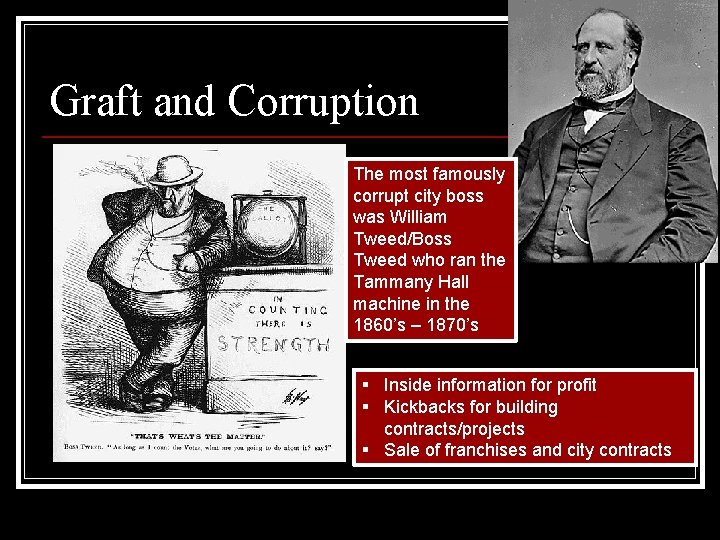
Graft and Corruption The most famously corrupt city boss was William Tweed/Boss Tweed who ran the Tammany Hall machine in the 1860’s – 1870’s § Inside information for profit § Kickbacks for building contracts/projects § Sale of franchises and city contracts
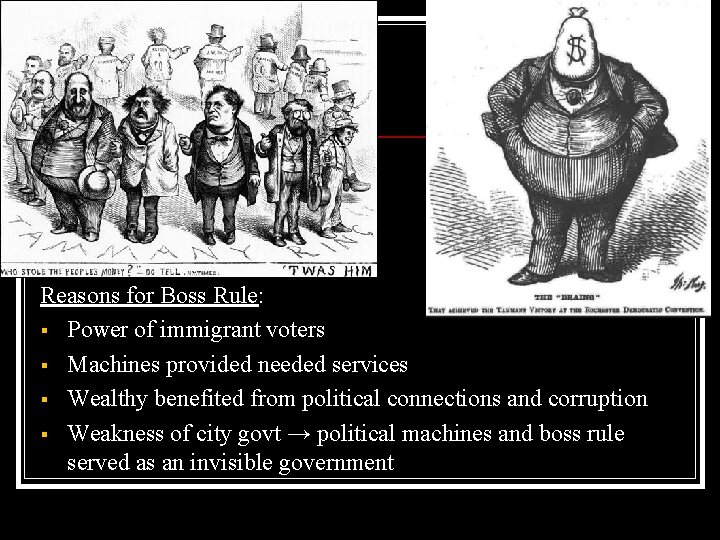
Reasons for Boss Rule: § Power of immigrant voters § Machines provided needed services § Wealthy benefited from political connections and corruption § Weakness of city govt → political machines and boss rule served as an invisible government
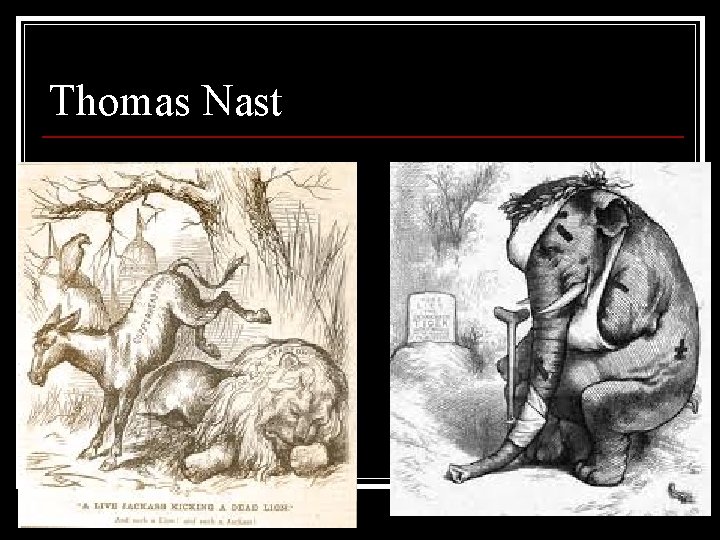
Thomas Nast
The Rise of Mass Consumption § Late 19 th century → rise of a new urban, middle class culture § § § Patterns of Income and Consumption → rising incomes → rising consumer demand consumption New merchandising techniques Ready made clothes, canned food, refrigerated transportation Chain Stores and Mail. Order Houses and catalogs Department stores in big cities → Marshall Field in Chicago, Macy’s in NYC → vast variety under one roof → shopping as a glamorous activity → lower prices
Women as Consumers § Mass consumption affected women → shopping, dressing, cooking § New employment for women in stores § National Consumers League → mobilize the power of women as consumers
Leisure in the Consumer Society § More interest in leisure → more time available for leisure § § § Decline of working hours § Clear distinctions between work and leisure § § § Redefining Leisure → time amusing yourself was not a bad thing Entertainment meant “going out” → amusement parks, dance halls, vaudeville, concerts, public parks Movie palaces sports → playing and spectating Drinking → bars, pubs, saloons
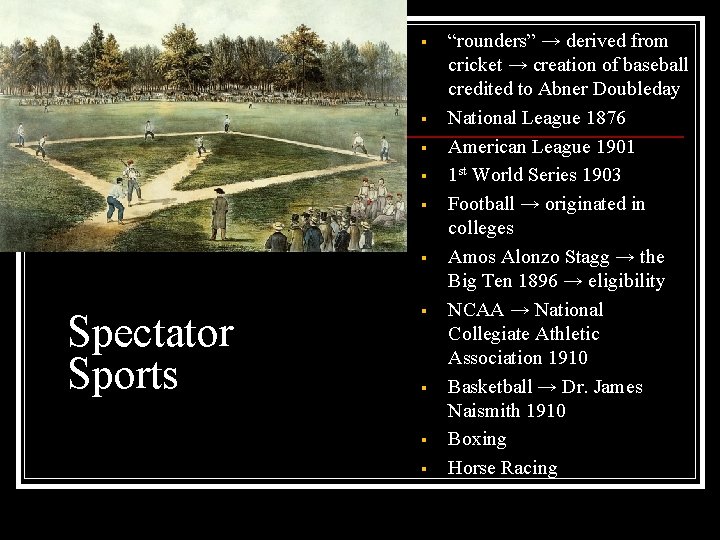
§ § § Spectator Sports § § “rounders” → derived from cricket → creation of baseball credited to Abner Doubleday National League 1876 American League 1901 1 st World Series 1903 Football → originated in colleges Amos Alonzo Stagg → the Big Ten 1896 → eligibility NCAA → National Collegiate Athletic Association 1910 Basketball → Dr. James Naismith 1910 Boxing Horse Racing
The Growth of College Football
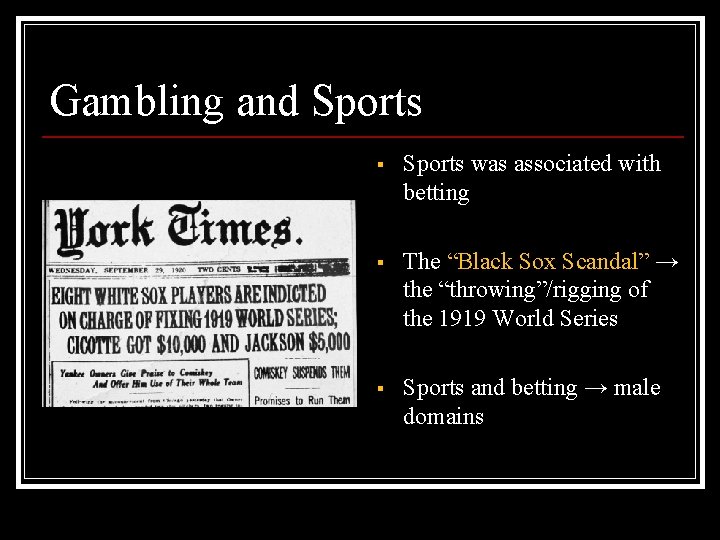
Gambling and Sports § Sports was associated with betting § The “Black Sox Scandal” → the “throwing”/rigging of the 1919 World Series § Sports and betting → male domains
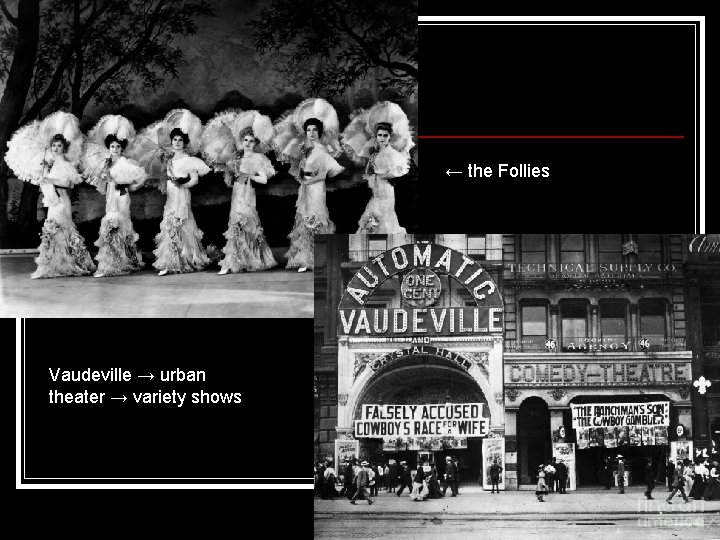
Music and Theater § § Ethnic communities maintained their own theaters → The Yiddish theater built on the experiences of American Jews Musical theater George M. Cohan → “Yankee Doodle”, “Over There” Irving Berlin → “God Bless America” § Vaudeville → most popular urban form of theater → musicians, comedians, magicians, jugglers, song and dance routines § Vaudeville was open to black performers
← the Follies Vaudeville → urban theater → variety shows
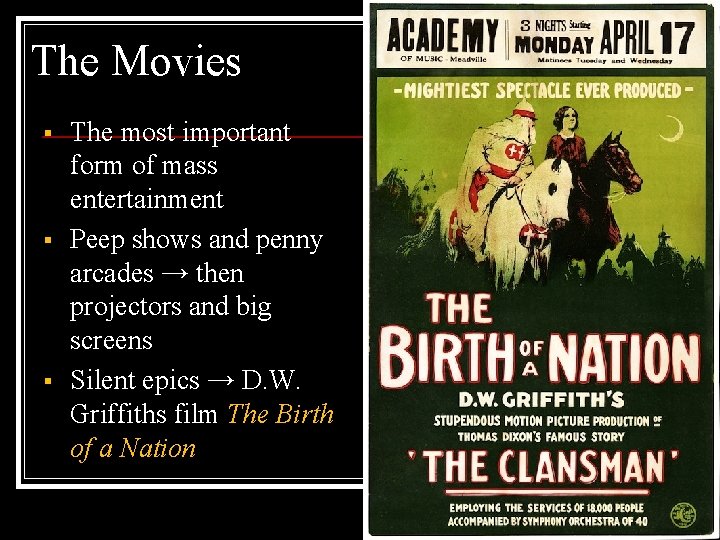
The Movies § § § The most important form of mass entertainment Peep shows and penny arcades → then projectors and big screens Silent epics → D. W. Griffiths film The Birth of a Nation
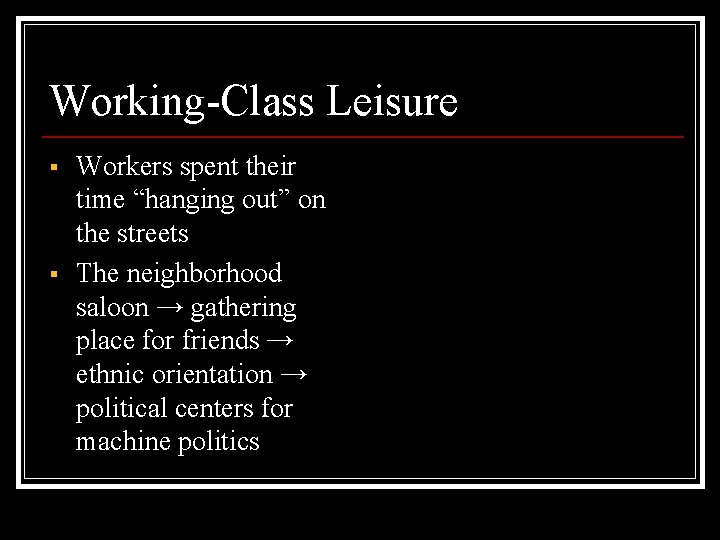
Working-Class Leisure § § Workers spent their time “hanging out” on the streets The neighborhood saloon → gathering place for friends → ethnic orientation → political centers for machine politics
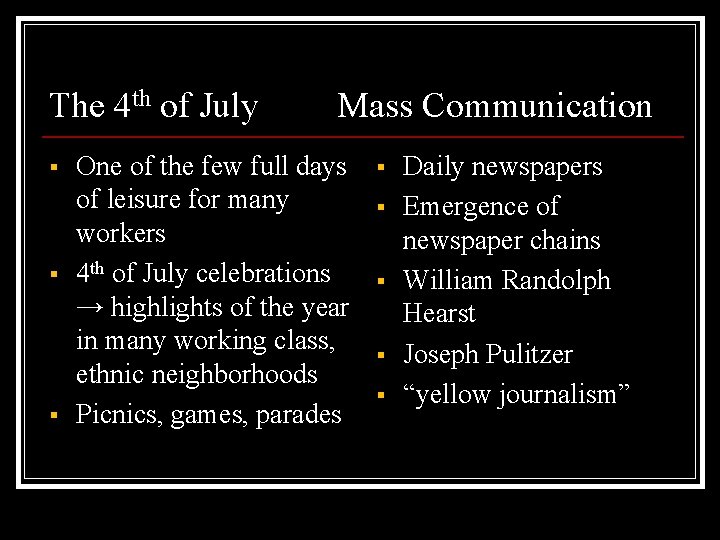
The 4 th of July § § § Mass Communication One of the few full days of leisure for many workers 4 th of July celebrations → highlights of the year in many working class, ethnic neighborhoods Picnics, games, parades § § § Daily newspapers Emergence of newspaper chains William Randolph Hearst Joseph Pulitzer “yellow journalism”
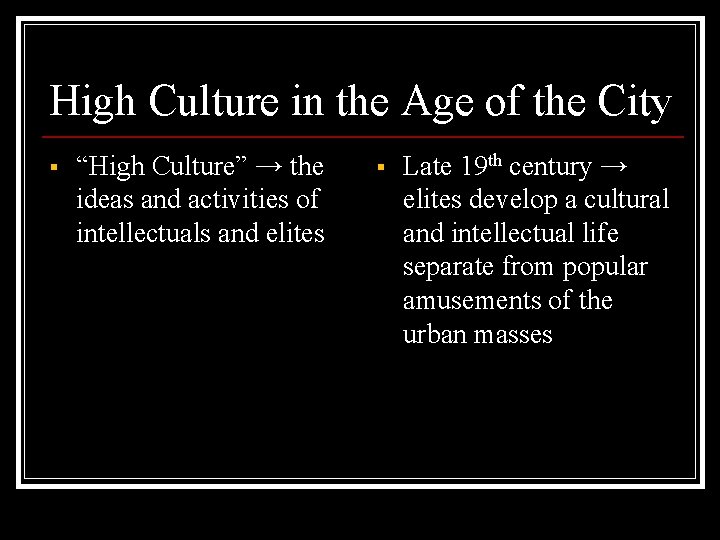
High Culture in the Age of the City § “High Culture” → the ideas and activities of intellectuals and elites § Late 19 th century → elites develop a cultural and intellectual life separate from popular amusements of the urban masses
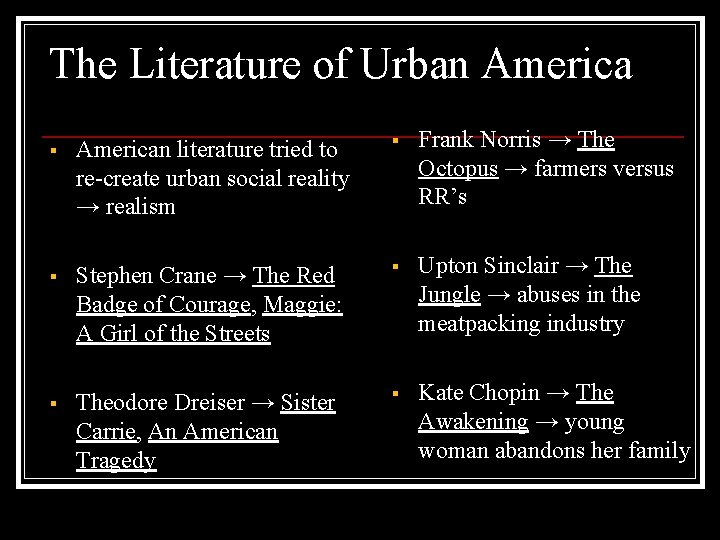
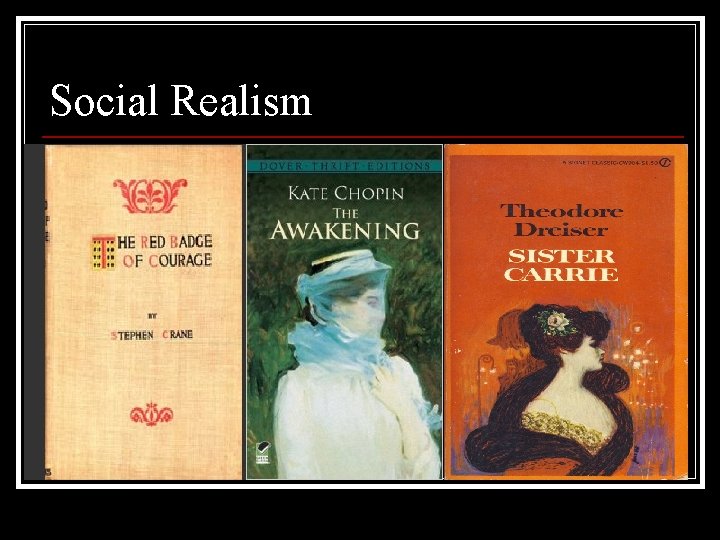
The Literature of Urban America § American literature tried to re-create urban social reality → realism § Frank Norris → The Octopus → farmers versus RR’s § Stephen Crane → The Red Badge of Courage, Maggie: A Girl of the Streets § Upton Sinclair → The Jungle → abuses in the meatpacking industry § Theodore Dreiser → Sister Carrie, An American Tragedy § Kate Chopin → The Awakening → young woman abandons her family
Social Realism
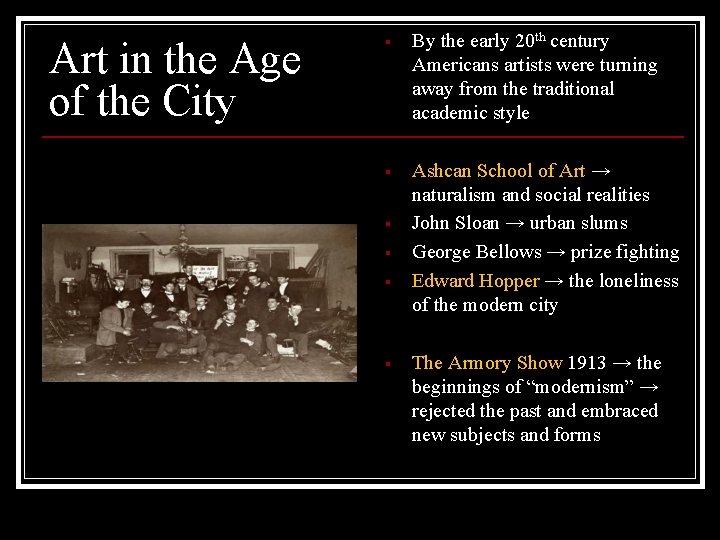
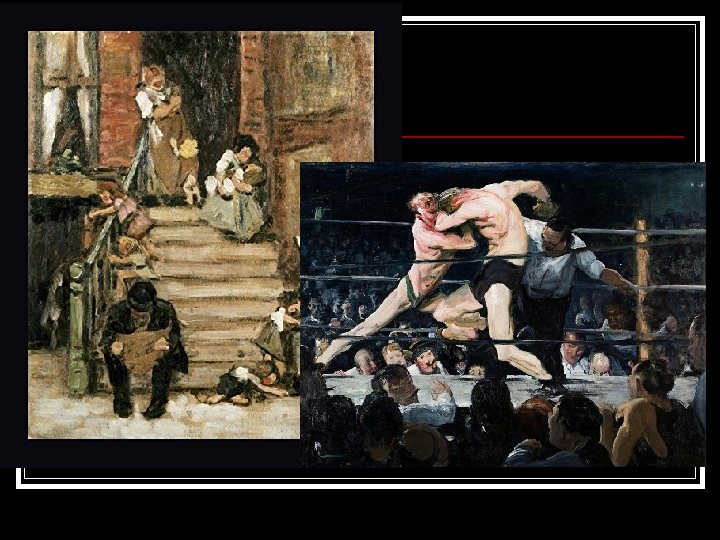
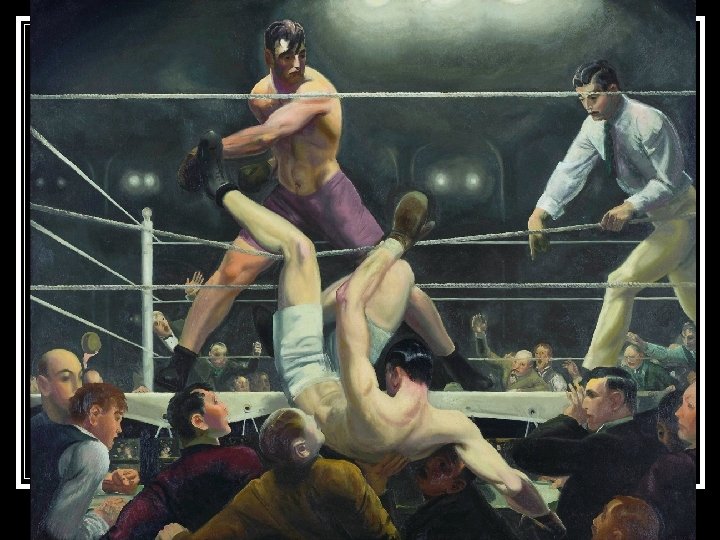
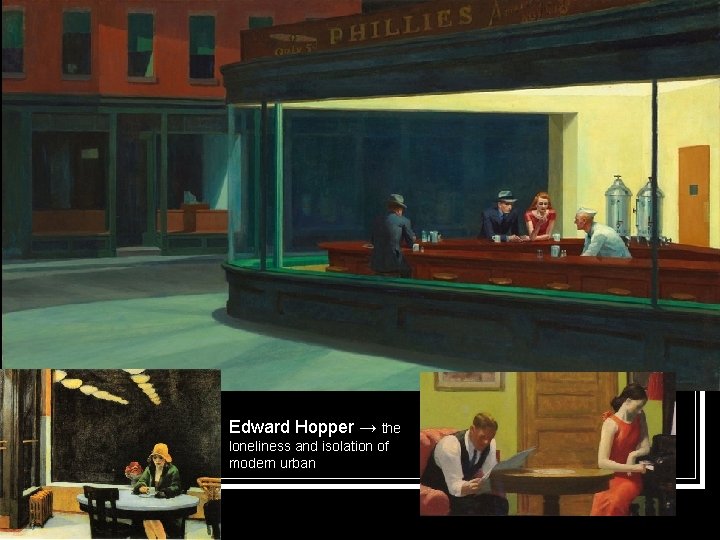
Art in the Age of the City § By the early 20 th century Americans artists were turning away from the traditional academic style § Ashcan School of Art → naturalism and social realities John Sloan → urban slums George Bellows → prize fighting Edward Hopper → the loneliness of the modern city § § The Armory Show 1913 → the beginnings of “modernism” → rejected the past and embraced new subjects and forms
Edward Hopper → the loneliness and isolation of modern urban
The Impact of Darwinism § § The most profound intellectual development of the late 19 th century → widespread acceptance of theory of evolution Human evolution → natural selection § Challenged biblical creation and the tenets of traditional faith § Schism between new, cosmopolitan culture city and traditional rural culture
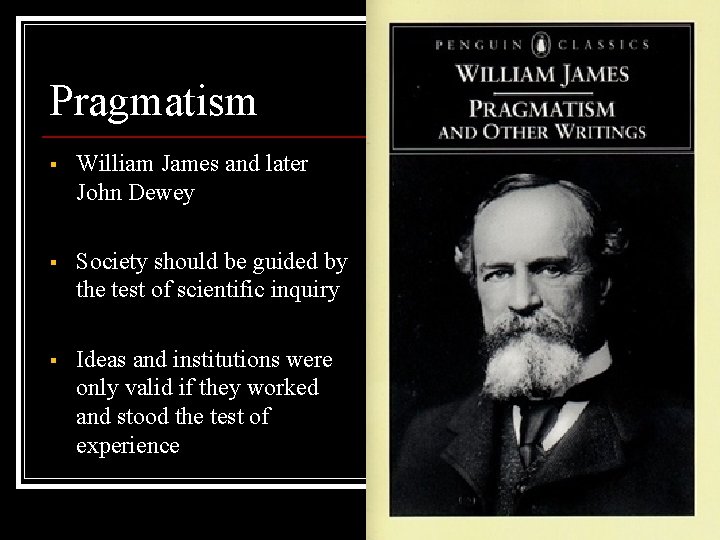
Pragmatism § William James and later John Dewey § Society should be guided by the test of scientific inquiry § Ideas and institutions were only valid if they worked and stood the test of experience
Toward Universal Schooling § § Late 19 th century → rapid expansion and reform of American schools and universities Spread of free public primary and secondary education § Morrill Land Grant Act → “land grant” institutions § Business tycoons donate to universities
Education for Women § Expansion of educational opportunities for women § 1880’s → creation of women’s colleges → Vassar, Wellesley, Smith, Bryn Mawr