
Apuntes Gustar Leccin 2 En la clase Yo
- Slides: 10
Apuntes: Gustar Lección 2: En la clase
Yo puedo… • I can… – Describe my likes and dislikes in Spanish – Ask others about their likes and dislikes • Success Criteria – Identify and use gustar clarifiers and gustar phrases – Ask about likes and respond positively or negatively
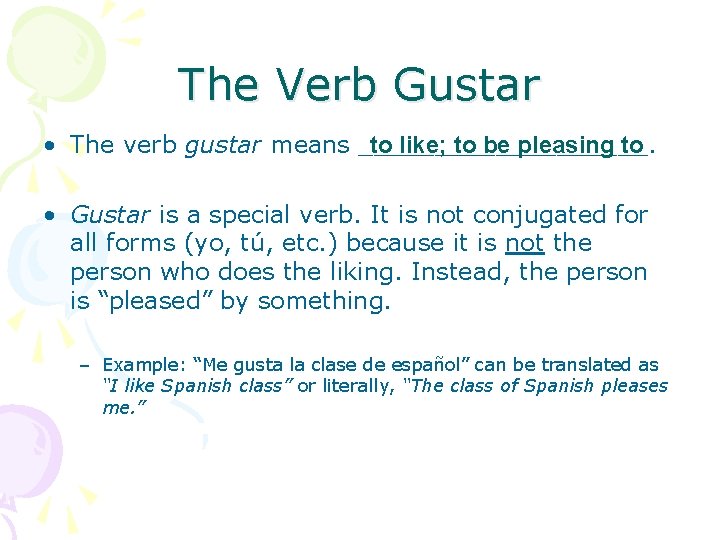
The Verb Gustar to like; to be pleasing to • The verb gustar means __________. • Gustar is a special verb. It is not conjugated for all forms (yo, tú, etc. ) because it is not the person who does the liking. Instead, the person is “pleased” by something. – Example: “Me gusta la clase de español” can be translated as “I like Spanish class” or literally, “The class of Spanish pleases me. ”
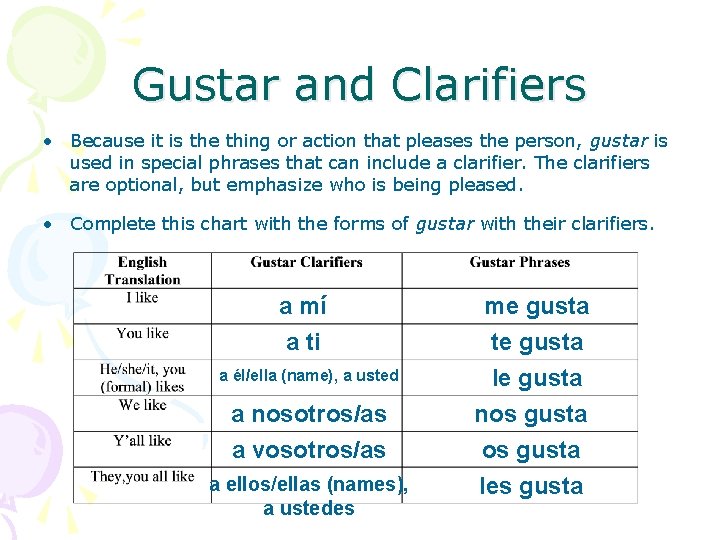
Gustar and Clarifiers • Because it is the thing or action that pleases the person, gustar is used in special phrases that can include a clarifier. The clarifiers are optional, but emphasize who is being pleased. • Complete this chart with the forms of gustar with their clarifiers. a mí a ti a él/ella (name), a usted a nosotros/as a vosotros/as a ellos/ellas (names), a ustedes me gusta te gusta le gusta nos gusta les gusta
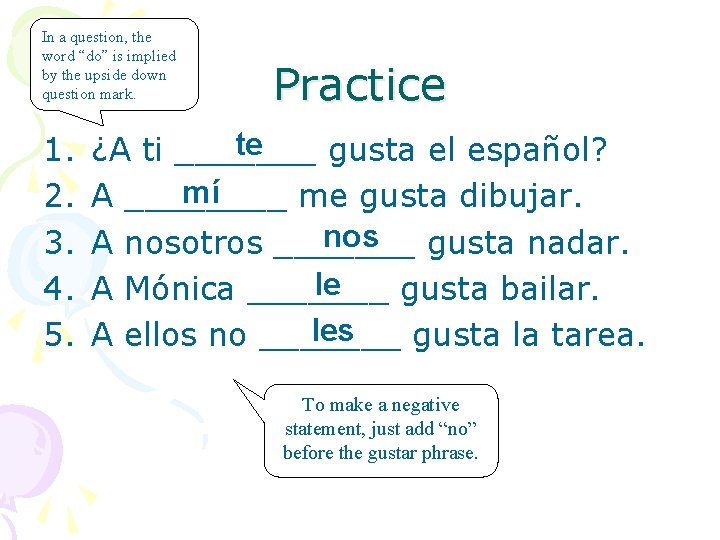
In a question, the word “do” is implied by the upside down question mark. 1. 2. 3. 4. 5. Practice te ¿A ti _______ gusta el español? mí A ____ me gusta dibujar. nos gusta nadar. A nosotros _______ le A Mónica _______ gusta bailar. les A ellos no _______ gusta la tarea. To make a negative statement, just add “no” before the gustar phrase.
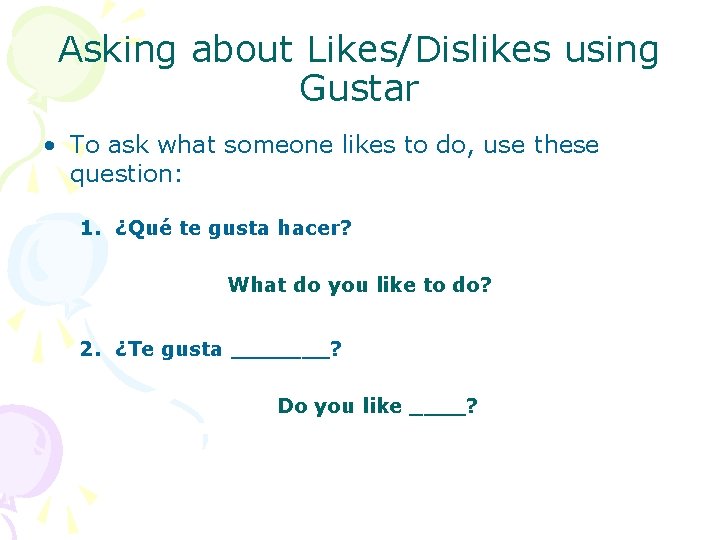
Asking about Likes/Dislikes using Gustar • To ask what someone likes to do, use these question: 1. ¿Qué te gusta hacer? What do you like to do? 2. ¿Te gusta _______? Do you like ____?
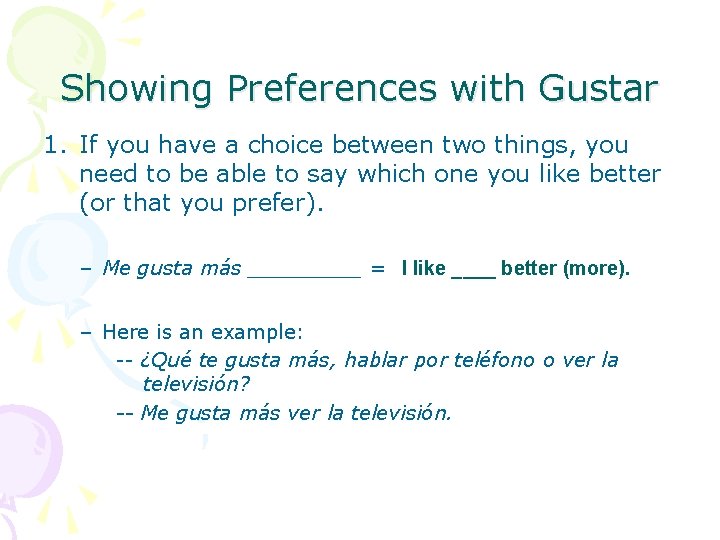
Showing Preferences with Gustar 1. If you have a choice between two things, you need to be able to say which one you like better (or that you prefer). – Me gusta más _____ = I like ____ better (more). – Here is an example: -- ¿Qué te gusta más, hablar por teléfono o ver la televisión? -- Me gusta más ver la televisión.
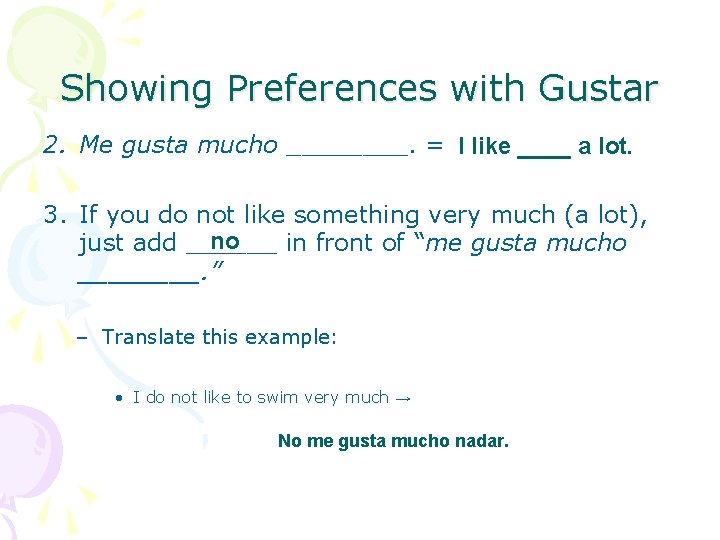
Showing Preferences with Gustar 2. Me gusta mucho ____. = I like ____ a lot. 3. If you do not like something very much (a lot), no just add ______ in front of “me gusta mucho ____. ” – Translate this example: • I do not like to swim very much → No me gusta mucho nadar.
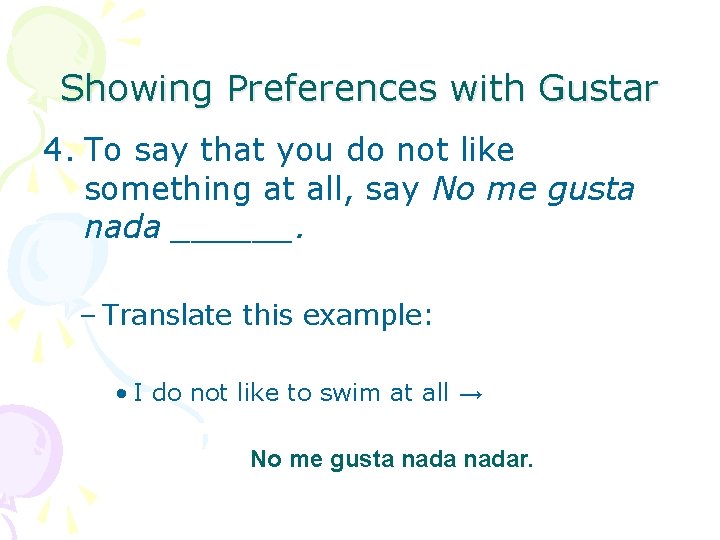
Showing Preferences with Gustar 4. To say that you do not like something at all, say No me gusta nada ______. – Translate this example: • I do not like to swim at all → No me gusta nadar.
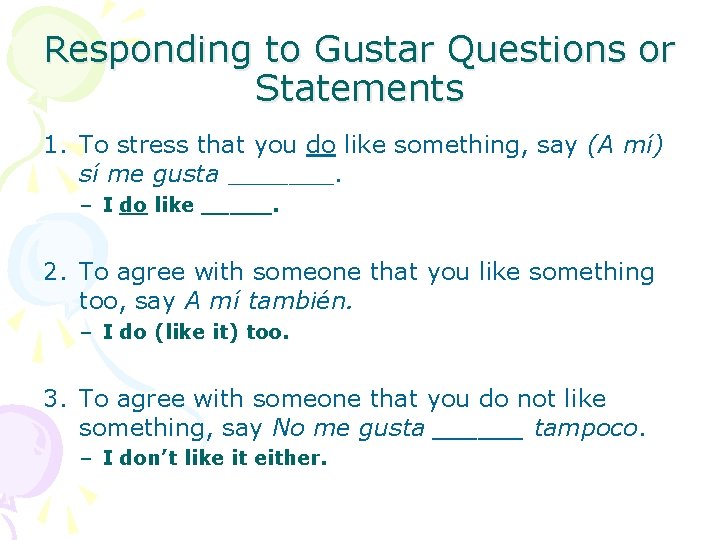
Responding to Gustar Questions or Statements 1. To stress that you do like something, say (A mí) sí me gusta _______. – I do like _____. 2. To agree with someone that you like something too, say A mí también. – I do (like it) too. 3. To agree with someone that you do not like something, say No me gusta ______ tampoco. – I don’t like it either.