
April 27 2006 Using Vex to Supercharge your

- Slides: 21
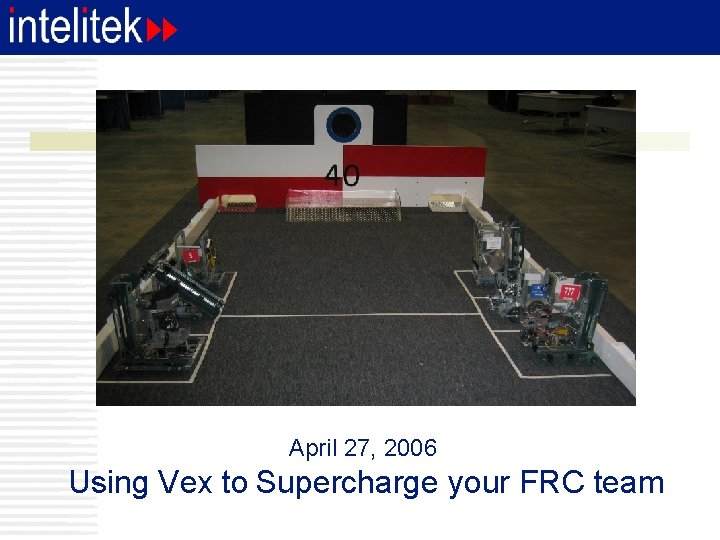
April 27, 2006 Using Vex to Supercharge your FRC team
Speakers 4 Dan Larochelle Engineering Manager - intelitek FRC team #40 and FVC team #9 14 years FRC experience 4 Donn Griffith Engineering Outreach Director - USC FRC team #343 9 Years FRC experience
Overview 4 Introductions 4 What is Vex? 4 Who is intelitek 4 FVC program 4 Software Overview 4 Curriculum available for Vex 4 Mini FRC video 4 Questions
Who is intelitek? 4 Intelitek is a world-leading developer, producer and supplier of industrial CNC machines and technology training solutions. 4 Our educational solutions are the ideal choice for Pre. Engineering programs, Automation Programs and Middle School and High School Technology Programs. 4 Our educational and industrial product line covers subjects such as CAD, CAM, CNC, robotics, machine vision, FMS, CIM, hydraulics, pneumatics, PLC, sensors, process control and data acquisition. We also offer e-learning solutions designed to prepare students for careers in technologically advanced business environments. 4 For over 20 years we have provided comprehensive solutions for training in engineering, mechatronics, automated manufacturing and industrial technologies.
Who is intelitek? (continued) 4 More than 10, 500 CNC and 12, 500 robots installed worldwide 4 PLTW 4 Skills USA 4 More than 1, 100 CNC machines to industrial accounts 4 World leader in industrial Benchtop VMC’s 4 250 CIM installations worldwide 4 More than 500 Labs worldwide 4 Over $250 Million installed in North America
What is Vex? 4 Vex is a robotics design system that allows students to bring their ideas to life. 4 The Vex Starter kit has over 500 parts including a configurable chassis, programmable microcontroller, gears, wheels, hardware and much more. 4 In simple terms - it is like an erector set with a brain.
Why did intelitek choose Vex? 4 Intelitek was developing a world class robotics curriculum (REC) and needed a platform to base the content on. 4 After a year long search and lots of testing of various robotic platforms, Vex proved to be the most compete solution at a price point appealing to the educational market.
FIRST Vex Challenge (FVC)
Educating the FRC team members 4 Robotic Engineering Curriculum (REC) 4 Assumes no prior knowledge of robotics 4 Robotic concepts are introduced and reinforced with activities and projects. 4 Material is web based and interactive making it appealing to students. 4 Content is presented in an effective blend of text and visual materials. 4 easy. C integrated in to curriculum
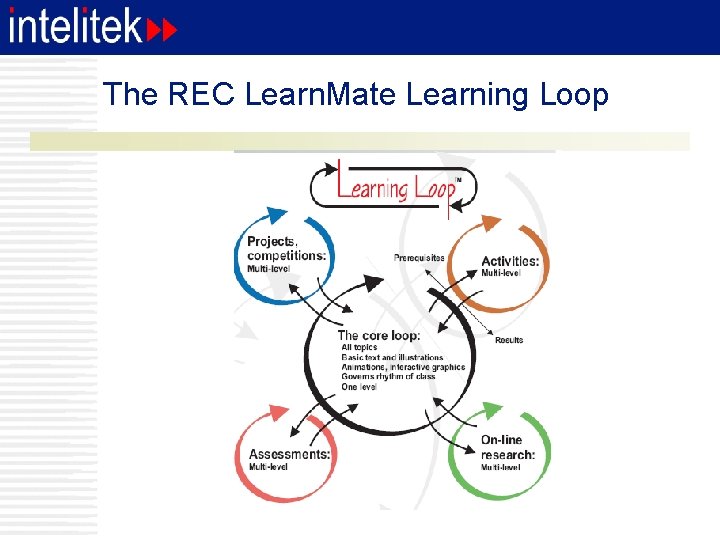
The REC Learn. Mate Learning Loop
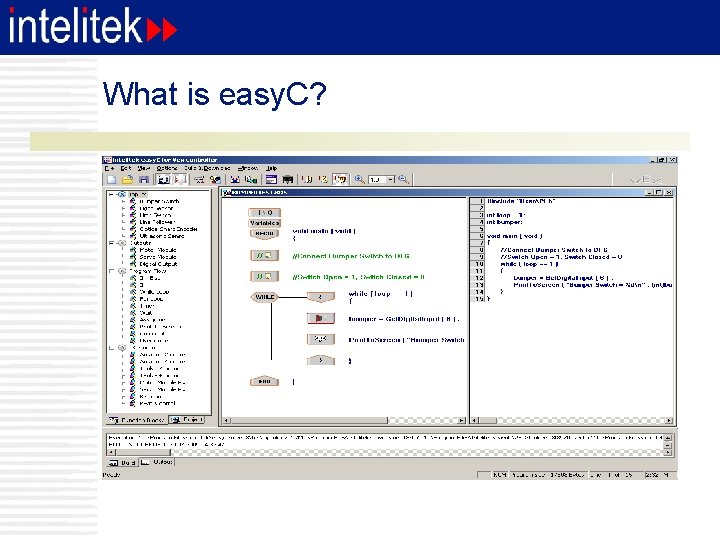
What is easy. C?
The Big Test Goals 4 Enhance current brainstorming techniques with the Vex platform. 4 Rapid prototype 6 mini robots for to prove out the validity of our ideas from our initial brainstorming session. 4 3 shooters and 3 ball dumpers 4 Limit the build to 2 -3 days. 4 Compete the various designs against each other and see what happens. 4 Test the robustness of the Vex platform and identify possible limitations.
Mini FRC Video 4 This video can be downloaded from the intelitek website at www. intelitekdownloads. com/Mini. FRC
What did we learn about the game? 4 Winning autonomous was a big advantage, it put the losing team in catch up mode. 4 Good shooting robots are hard to beat. 4 Shooters missed a lot more than they got in. 4 Ramp points weighed heavy in low scoring matches. 4 The field was littered with balls after the first few periods, picking up balls from the floor was key. 4 A good defensive robot can nullify a good offensive robot, especially while a shooter is shooting! 4 Mobility was important, the field was crowded and there were lots of places the robot could be pinned
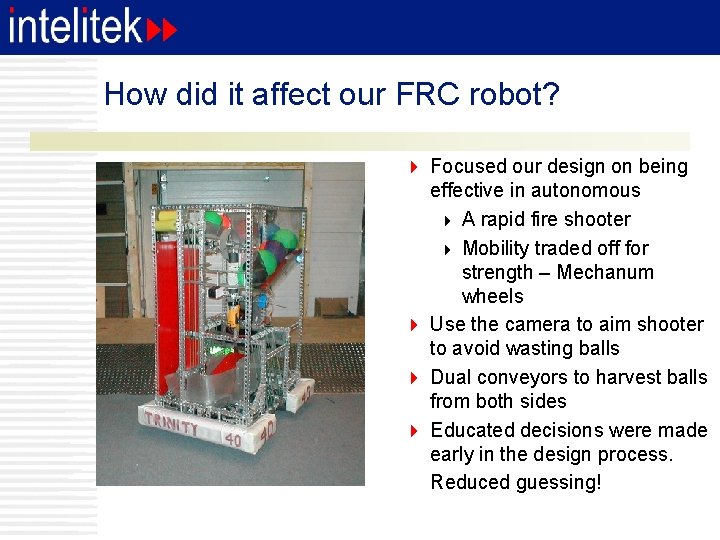
How did it affect our FRC robot? 4 Focused our design on being effective in autonomous 4 A rapid fire shooter 4 Mobility traded off for strength – Mechanum wheels 4 Use the camera to aim shooter to avoid wasting balls 4 Dual conveyors to harvest balls from both sides 4 Educated decisions were made early in the design process. Reduced guessing!
How did it affect our team? 4 First project in 14 years that involved every single member of an FRC team. 4 Leveled the playing field enabling younger students to learn and share their ideas with their more experienced teammates. 4 Higher level of thinking about the game. Game strategies could be played out in real time. 4 Students were challenged to show their ideas 4 It made believers out of the skeptics that felt that Mini. FRC project was a waste of time. 4 Team bonded together and had a lot of fun.
What did the students learn? 4 Working in smaller groups allowed more ideas to be developed and tested. 4 Students not intimidated by the hardware, permitting greater experimentation and innovation. 4 Student experimented with autonomous programs using easy. C 4 The competitive element of the competition drove them to keep making their robots better. 4 The engineering design process was dramatically reinforced through competition, especially the concept of design iterations 4 Shooting balls is FUN!
What did the mentors learn? 4 Mentors became facilitators, empowering the students. 4 The students had to understand the Aim High Rules. This led to a better informed team. 4 Leveled the playing field between the boys and the girls. 4 Robustness of the Vex platform allowed for a direct correlation of concepts and ideas to our FRC robot. 4 Team spent time testing ideas and strategies in week 1 and 2 rather than week 6 when it is typically too late! 4 Increased comfort level with trying out new ideas. 4 Training prior to kickoff with Vex, easy. C and REC made the project run smoothly.
Was it worth it? Absolutely! 4 Increased comfort level with final design 4 Team 40’s most advanced design to date 4 Great team building exercise. 4 Increased student knowledge and awareness 4 Surprise! – BAE regional confirmed most of our Mini FRC findings
Would we do it again? Yes! …. . but 4 Get familiar with all the accessories and options for the Vex platform 4 Build and test various drive trains before kickoff 4 Set firm dates for mini completion – know when to end the mini robots and start the big one. 4 Integrate more sensors and programming into the mini designs
Questions?