
April 26 2006 Presented By 2 Power Amplifier
April 26, 2006 Presented By: 2
Power Amplifier Loading n n n The complex load presented by the antenna system to the power amplifier in an AM transmitter has a large impact on both the analog modulation and digital radio performance. What is the benefit if the antenna rotation is optimized? The advantage of output network (DAX, DX and 3 DX transmitters) 3
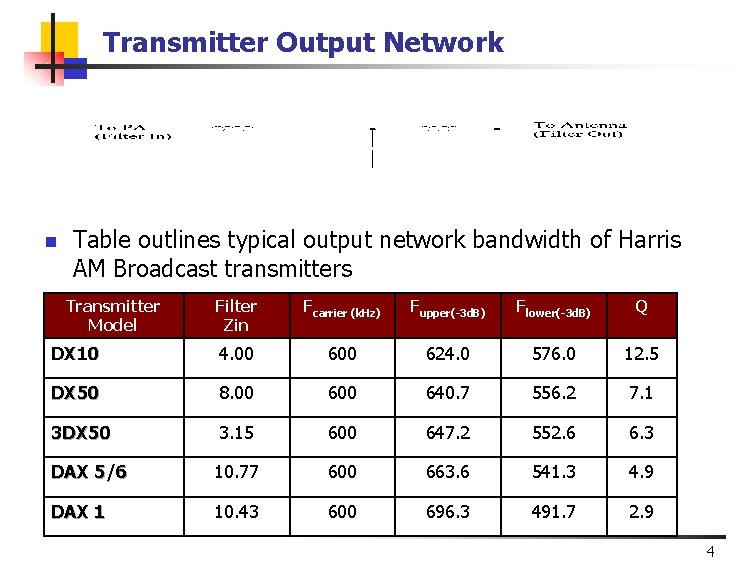
Transmitter Output Network n Table outlines typical output network bandwidth of Harris AM Broadcast transmitters Transmitter Model Filter Zin Fcarrier (k. Hz) Fupper(-3 d. B) Flower(-3 d. B) Q DX 10 4. 00 624. 0 576. 0 12. 5 DX 50 8. 00 640. 7 556. 2 7. 1 3 DX 50 3. 15 600 647. 2 552. 6 6. 3 DAX 5/6 10. 77 600 663. 6 541. 3 4. 9 DAX 1 10. 43 600 696. 3 491. 7 2. 9 4
Optimum antenna rotation n The impedance of the antenna load reflected to the Power amplifier can vary greatly through the transmitter’s output filter. Optimum phase rotated load presented to the RF Power Amplifier Mos. FET’s needs to provide for minimum impedance variation (ie: small VSWR circle) Using the an artificial antenna (VSWR=1. 4: 1 at +/-15 k. Hz) n n Optimum antenna rotation through the Harris output network actually reduces the antenna VSWR from 1. 4: 1 to 1. 15: 1 (+/-15 k. Hz) at the power amplifier devices. If the antenna rotation is NOT optimum, then VSWR increases from 1. 4: 1 to 2. 0: 1 at +/-15 k. Hz from carrier frequency 5
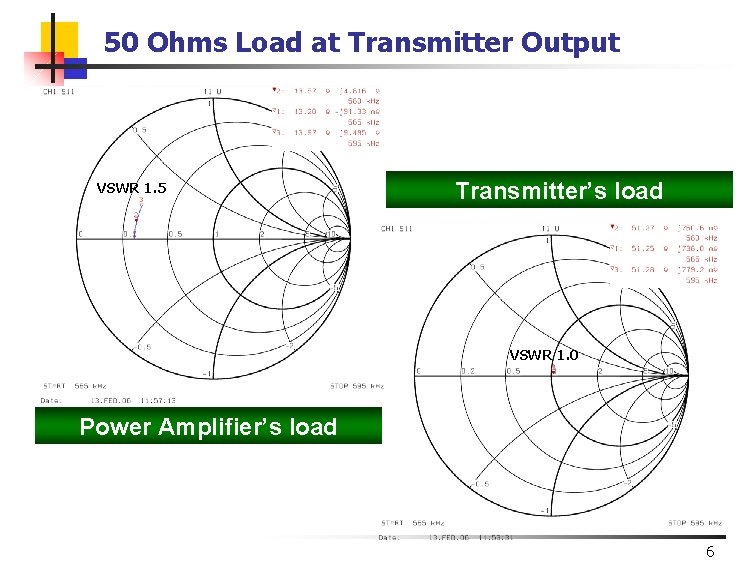
50 Ohms Load at Transmitter Output VSWR 1. 5 Transmitter’s load VSWR 1. 0 Power Amplifier’s load 6
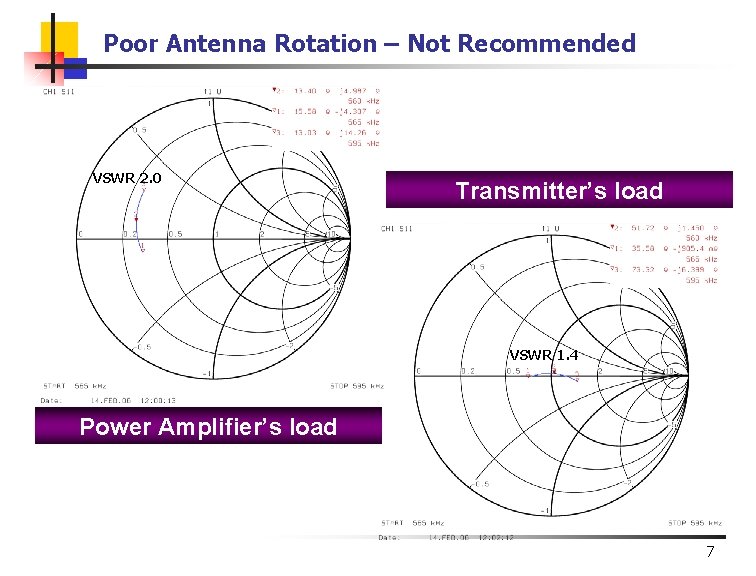
Poor Antenna Rotation – Not Recommended VSWR 2. 0 Transmitter’s load VSWR 1. 4 Power Amplifier’s load 7
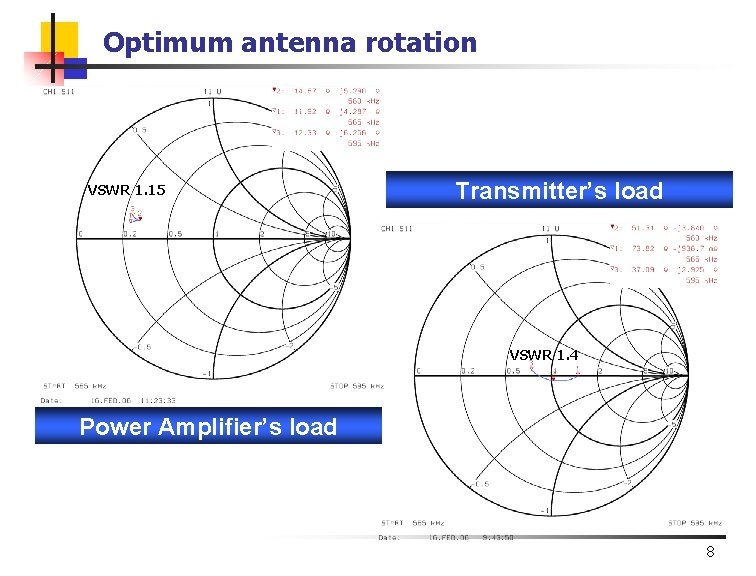
Optimum antenna rotation VSWR 1. 15 Transmitter’s load VSWR 1. 4 Power Amplifier’s load 8
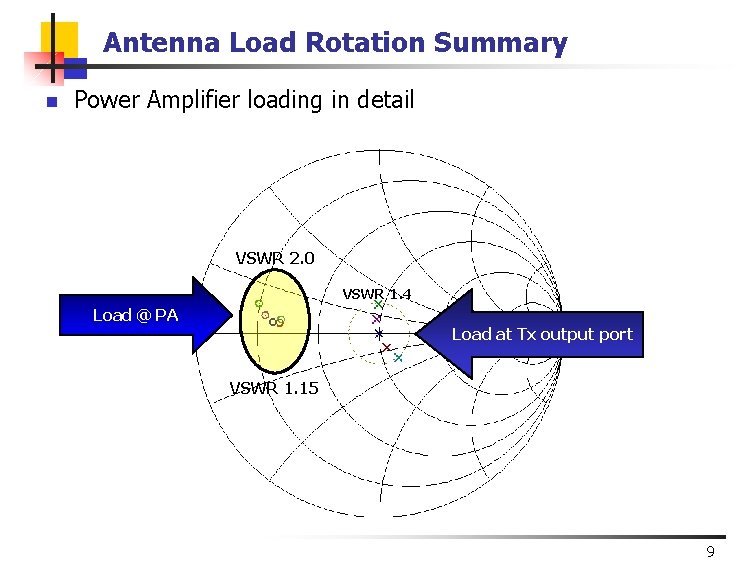
Antenna Load Rotation Summary n Power Amplifier loading in detail VSWR 2. 0 VSWR 1. 4 Load @ PA Load at Tx output port VSWR 1. 15 9
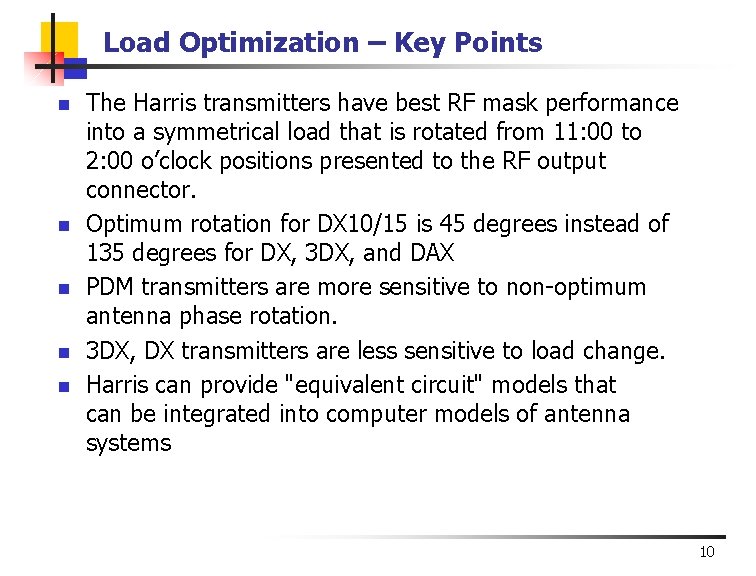
Load Optimization – Key Points n n n The Harris transmitters have best RF mask performance into a symmetrical load that is rotated from 11: 00 to 2: 00 o’clock positions presented to the RF output connector. Optimum rotation for DX 10/15 is 45 degrees instead of 135 degrees for DX, 3 DX, and DAX PDM transmitters are more sensitive to non-optimum antenna phase rotation. 3 DX, DX transmitters are less sensitive to load change. Harris can provide "equivalent circuit" models that can be integrated into computer models of antenna systems 10
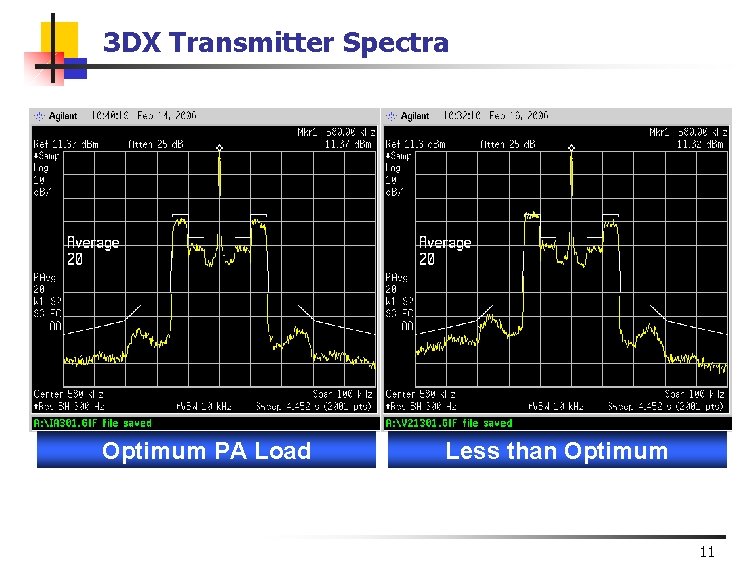
3 DX Transmitter Spectra Optimum PA Load Less than Optimum 11
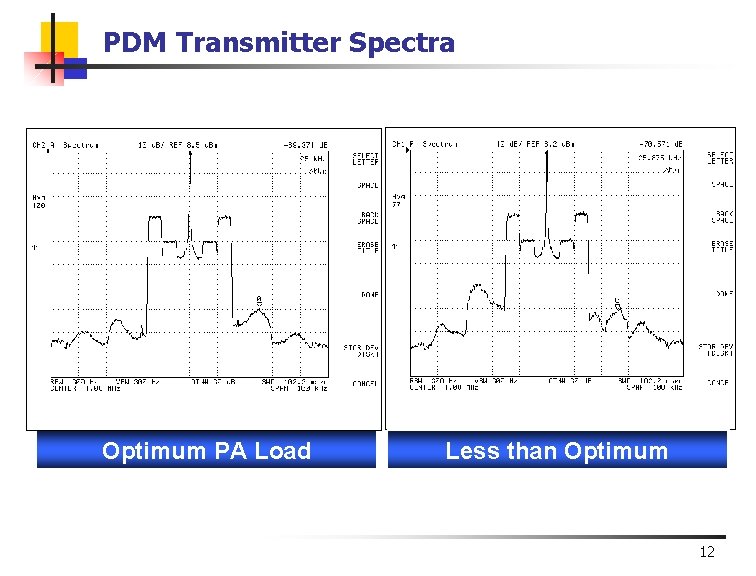
PDM Transmitter Spectra Optimum PA Load Less than Optimum 12
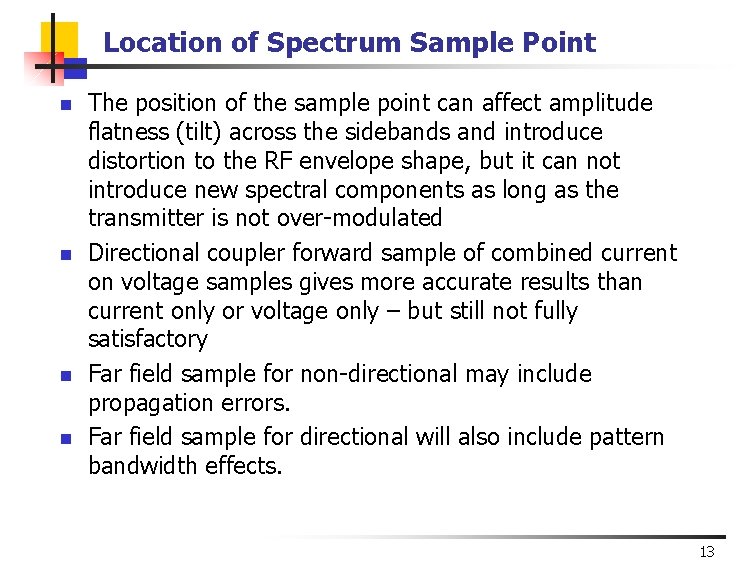
Location of Spectrum Sample Point n n The position of the sample point can affect amplitude flatness (tilt) across the sidebands and introduce distortion to the RF envelope shape, but it can not introduce new spectral components as long as the transmitter is not over-modulated Directional coupler forward sample of combined current on voltage samples gives more accurate results than current only or voltage only – but still not fully satisfactory Far field sample for non-directional may include propagation errors. Far field sample for directional will also include pattern bandwidth effects. 13
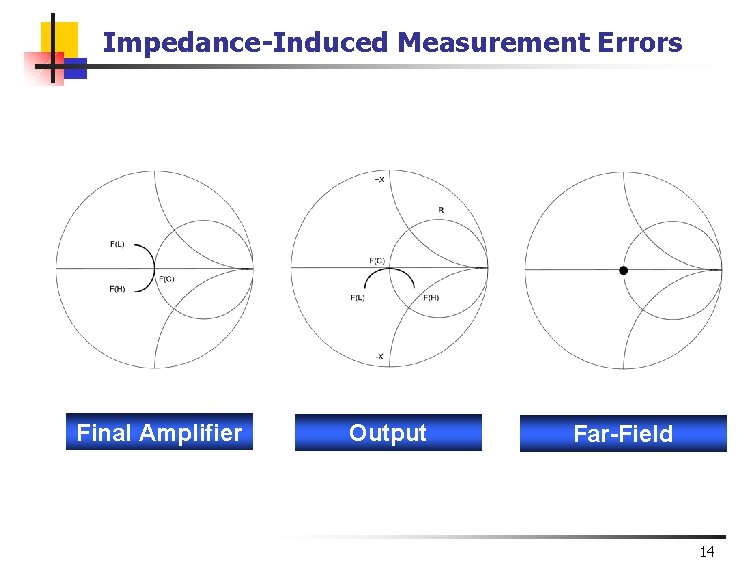
Impedance-Induced Measurement Errors Final Amplifier Output Far-Field 14
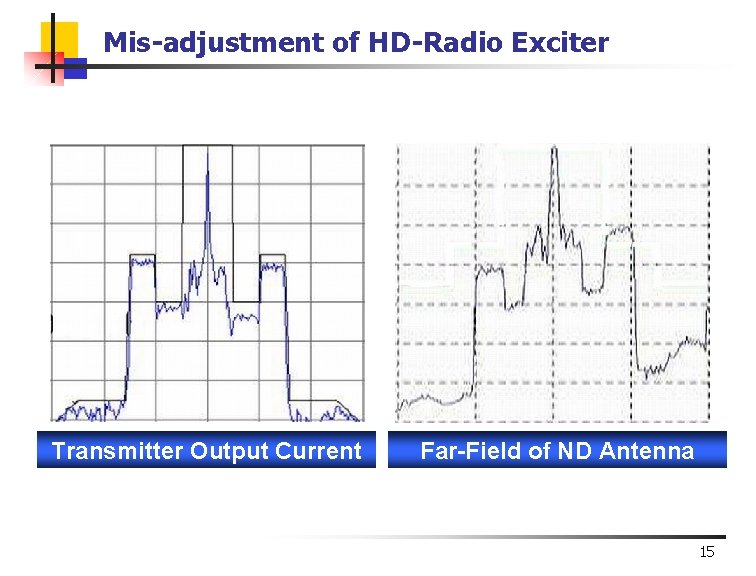
Mis-adjustment of HD-Radio Exciter Transmitter Output Current Far-Field of ND Antenna 15
Summary n n n Optimum performance depends on handling impedance related issues correctly. Transmitter final amplifiers must operate into symmetrical load with sufficiently low sideband VSWR (Optimum rotation of antenna complex impedance). Sampling errors must be considered when adjusting exciter using spectrum analyzer. 16

Questions ? Email: Ky Luu – Kluu@harris. com Email: Ronald Rackley – ron@dlr. com 17
- Slides: 16