
APQP Five Phase Process Concept InitiationApproval Program Approval
- Slides: 14
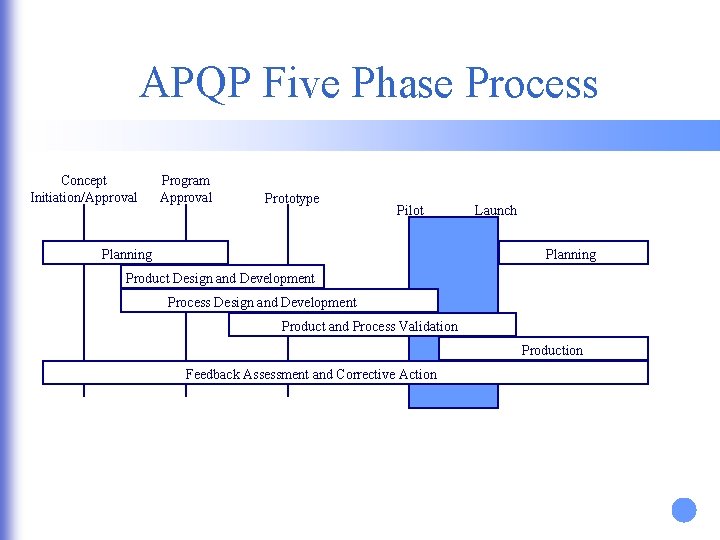
APQP Five Phase Process Concept Initiation/Approval Program Approval Prototype Pilot Planning Launch Planning Product Design and Development Process Design and Development Product and Process Validation Production Feedback Assessment and Corrective Action
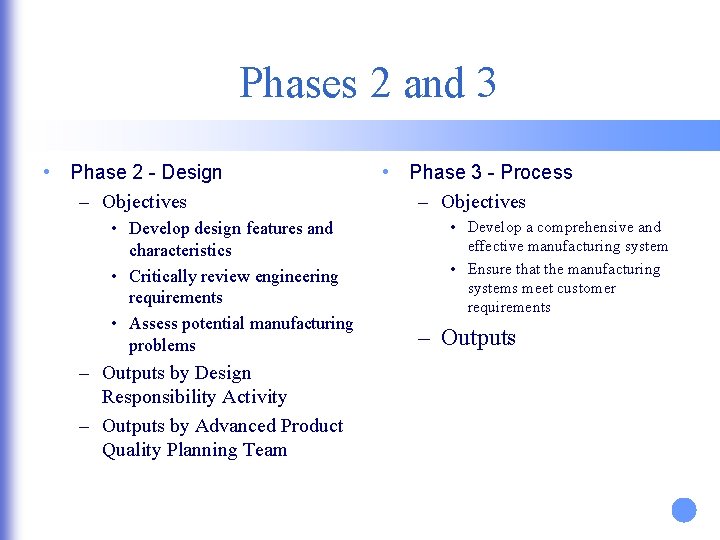
Phases 2 and 3 • Phase 2 - Design – Objectives • Develop design features and characteristics • Critically review engineering requirements • Assess potential manufacturing problems – Outputs by Design Responsibility Activity – Outputs by Advanced Product Quality Planning Team • Phase 3 - Process – Objectives • Develop a comprehensive and effective manufacturing system • Ensure that the manufacturing systems meet customer requirements – Outputs
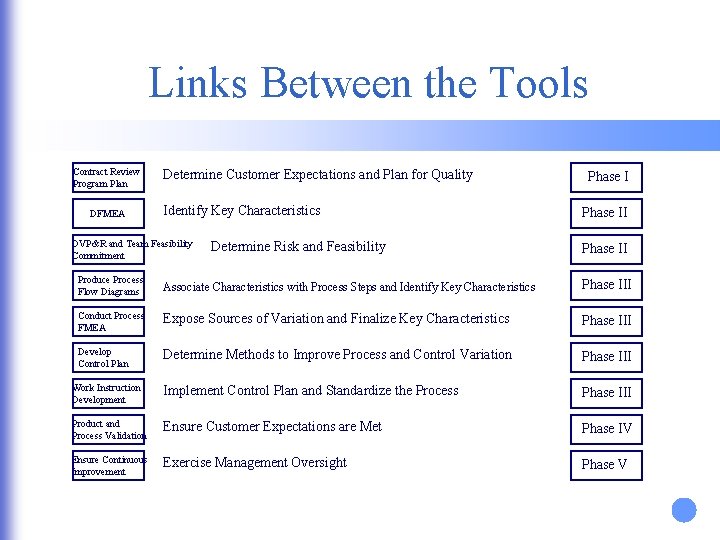
Links Between the Tools Contract Review Program Plan DFMEA Determine Customer Expectations and Plan for Quality Identify Key Characteristics DVP&R and Team Feasibility Commitment Determine Risk and Feasibility Phase II Produce Process Flow Diagrams Associate Characteristics with Process Steps and Identify Key Characteristics Phase III Conduct Process FMEA Expose Sources of Variation and Finalize Key Characteristics Phase III Develop Control Plan Determine Methods to Improve Process and Control Variation Phase III Work Instruction Development Implement Control Plan and Standardize the Process Phase III Product and Process Validation Ensure Customer Expectations are Met Phase IV Ensure Continuous Improvement Exercise Management Oversight Phase V
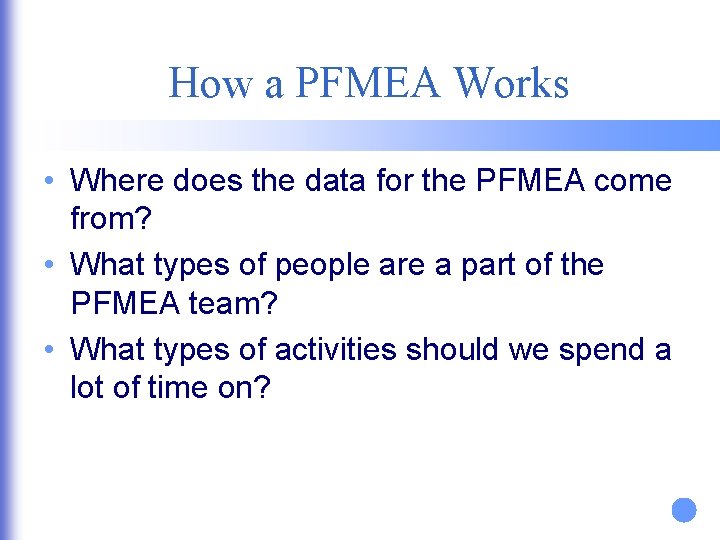
How a PFMEA Works • Where does the data for the PFMEA come from? • What types of people are a part of the PFMEA team? • What types of activities should we spend a lot of time on?
Link Between the Documents
APQP Links to PFMEA
APQP Links to Control Plan
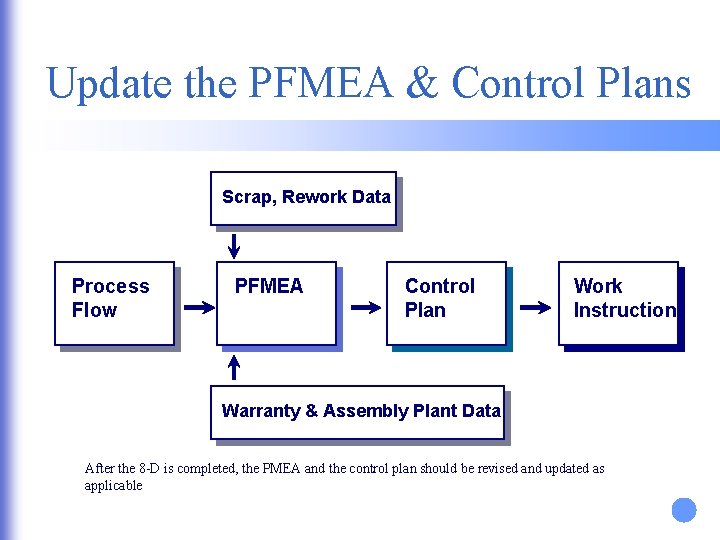
PFMEAs/Control Plans and 8 -Ds During APQP • PFMEAs should be driven by real data, including 8 -Ds (internal and external), warranty and returned pat analysis • PFMEAs should be completed by process experts and should be a driver of the control plans and work instructions • Work instructions (Post control log, process parameter logs, preventive maintenance, etc. ) implement the control plan in the process • When there is a quality problem there is an opportunity to improve the control plan and the work instructions
Quality Problems no yes yes no
Cause unknown • Use PFMEA Note: When a customer problem occurs, follow customer prescribed methodology
When to use 8 -D • When the cause is unknown • When you need to get input from several parties • When customers dictate use Note: We use voting techniques, X to Y variable testing, and IS/IS Not to determine the root cause. However, you still may not know what the root cause is?
When to use Designed Experiments or Regression • After using 8 -D, the cause is still unknown • Designed experiments between cause and effect voted by team could identify the vital few root causes • Semi-conductor companies collect product and process information that could be used to identify root cause using regression
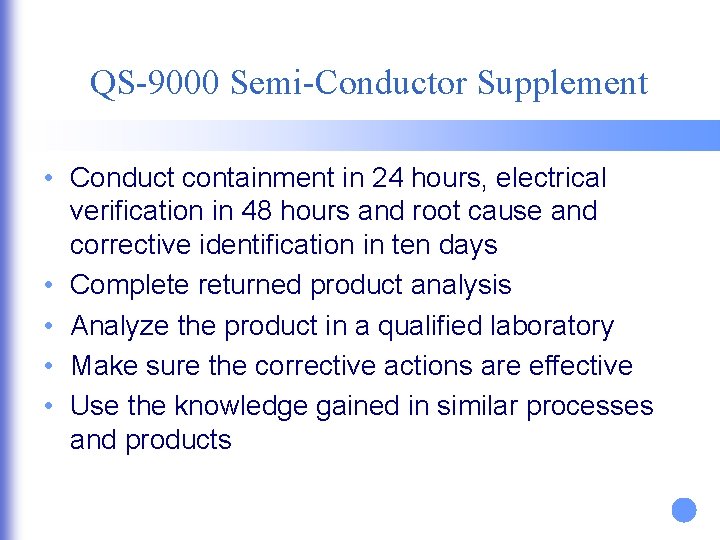
QS-9000 Semi-Conductor Supplement • Conduct containment in 24 hours, electrical verification in 48 hours and root cause and corrective identification in ten days • Complete returned product analysis • Analyze the product in a qualified laboratory • Make sure the corrective actions are effective • Use the knowledge gained in similar processes and products
Update the PFMEA & Control Plans Scrap, Rework Data Process Flow PFMEA Control Plan Work Instruction Warranty & Assembly Plant Data After the 8 -D is completed, the PMEA and the control plan should be revised and updated as applicable