
APPROXIMATING NUMERICAL SOLUTION OF L CHAOTIC SYSTEM USING

- Slides: 23
APPROXIMATING NUMERICAL SOLUTION OF LÜ CHAOTIC SYSTEM USING BERNSTEIN POLYNOMIALS PAPER ID: 53 AUTHOR: KIRAN SULTAN DEPARTMENT OF CIT, FACULTY OF APPLIED STUDIES, KING ABDULAZIZ UNIVERSITY, JEDDAH SAUDI ARABIA EMAIL: KKHAN 2@KAU. EDU. SA
Contents Introduction Problem Formulation Proposed Artificial Bee Colony based Scheme Simulation Results Conclusion
Introduction Chaotic Theory has been extensively studied in the last three decades Chaotic systems are special non-linear dynamical systems that are highly sensitive to initial conditions Diverse applications in Engineering, Computer Science, Robotics, Secure Communication, Economics exist Mathematical modeling of chaotic systems is a challenging task and they are highly sensitive to time-step sizes
Introduction (Cont’d) Bernstein polynomials are acknowledged as an important member of polynomial family. They possess exceptional capability to handle polynomial uncertainty structures and to obtain smooth solutions of the function approximation problems. Applications of Bernstein polynomials exist in solving of linear and non-linear numerical problems, design filter banks, synthesize linear antenna arrays and so on.
Introduction (Cont’d) Swarm Intelligence (SI) is a class of Evolutionary Computation that is derived from the collaborative behavior of self-organized swarms Artificial Bee Colony (ABC) is acknowledged as one of the competent tools of SI family that can efficiently solve non-linear constrained optimization problems. ABC randomizes the search in the search space through its both local and global search agents while intelligently avoiding of getting trapped in a local optima Simplementation with fewer control parameters
Contributions Three-dimensional Lü chaotic system has been treated numerically and converted into an error minimization problem applying the properties of Bernstein Polynomial Basis Functions with unknown coefficients. The values of unknown coefficients which minimize the error function are obtained through ABC global optimization algorithm. The application of Bernstein Polynomials to solve the Lü chaotic system followed by optimization using ABC does not exist in literature so far to the best of author’s knowledge.
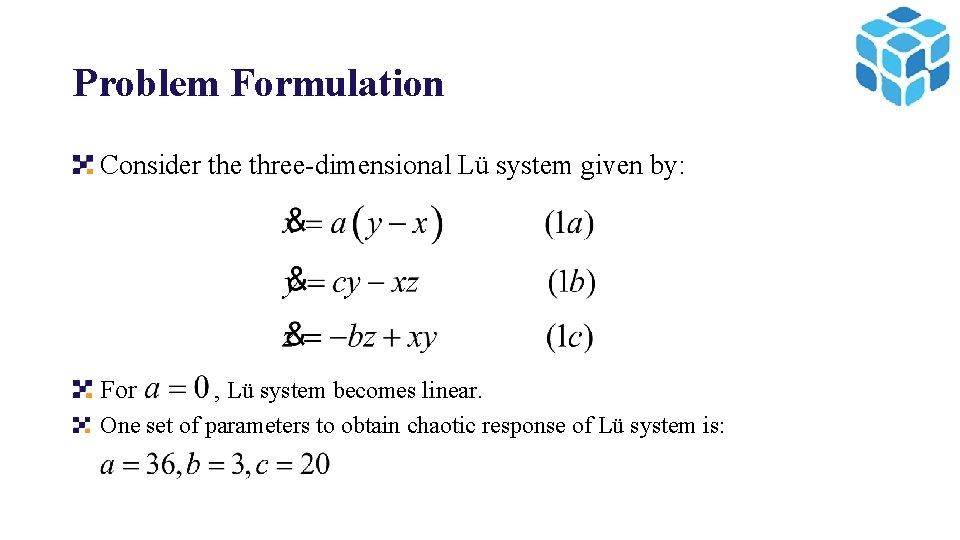
Problem Formulation Consider the three-dimensional Lü system given by: For , Lü system becomes linear. One set of parameters to obtain chaotic response of Lü system is:
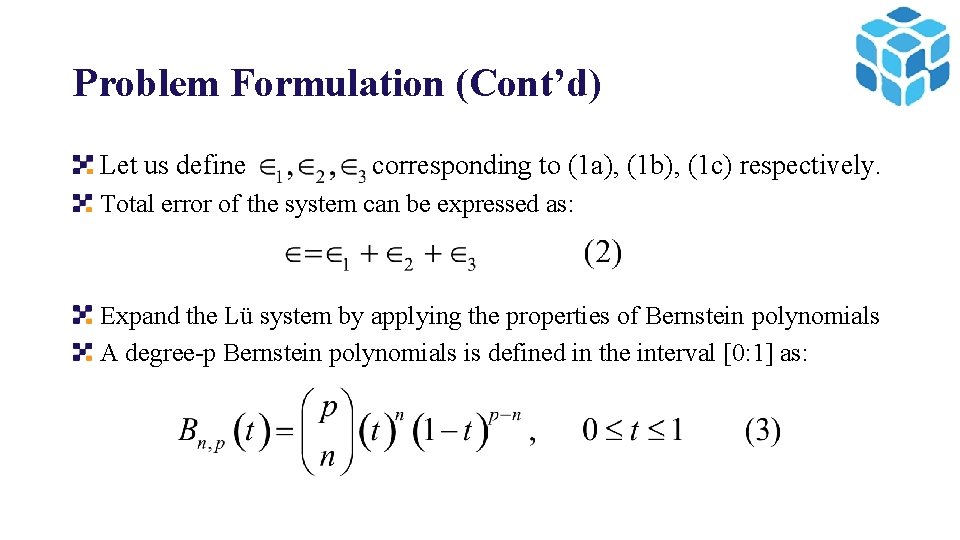
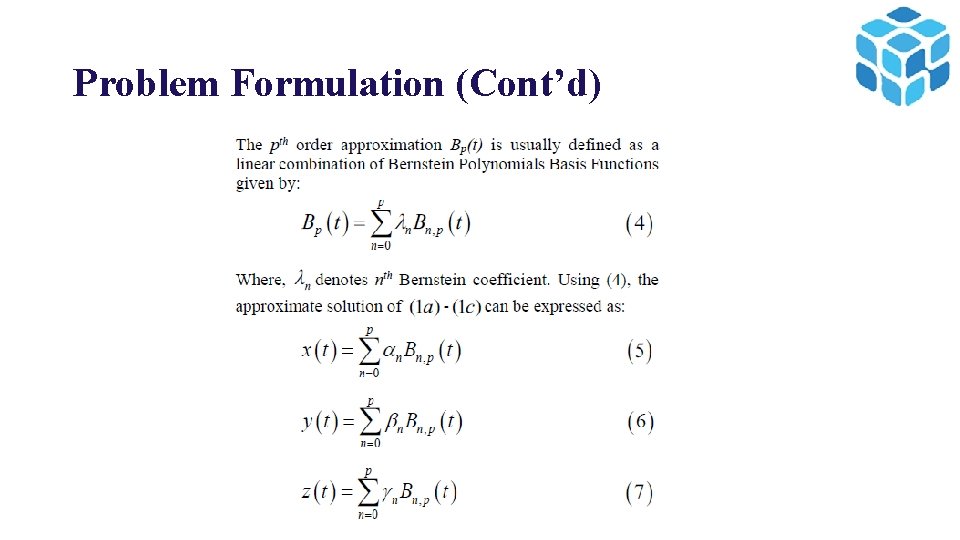
Problem Formulation (Cont’d) Let us define corresponding to (1 a), (1 b), (1 c) respectively. Total error of the system can be expressed as: Expand the Lü system by applying the properties of Bernstein polynomials A degree-p Bernstein polynomials is defined in the interval [0: 1] as:
Problem Formulation (Cont’d)
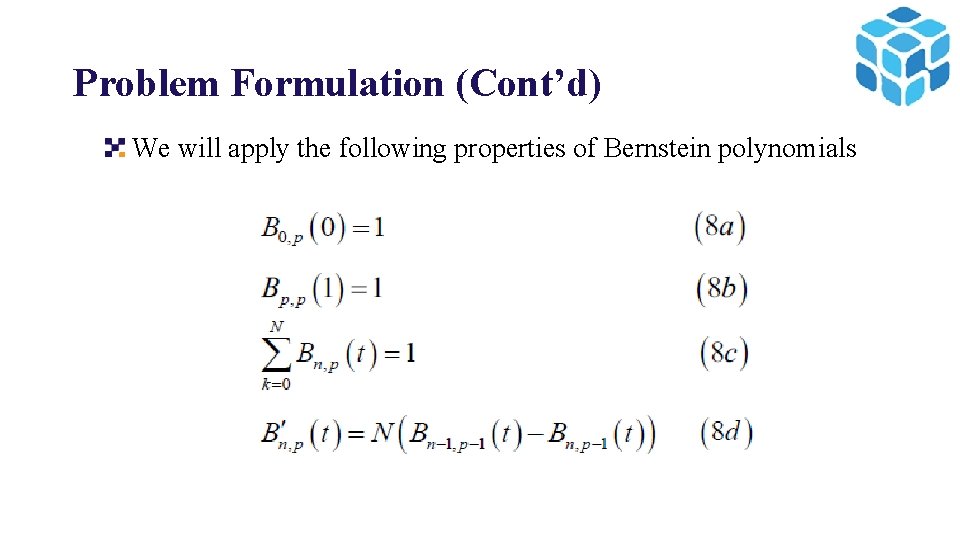
Problem Formulation (Cont’d) We will apply the following properties of Bernstein polynomials
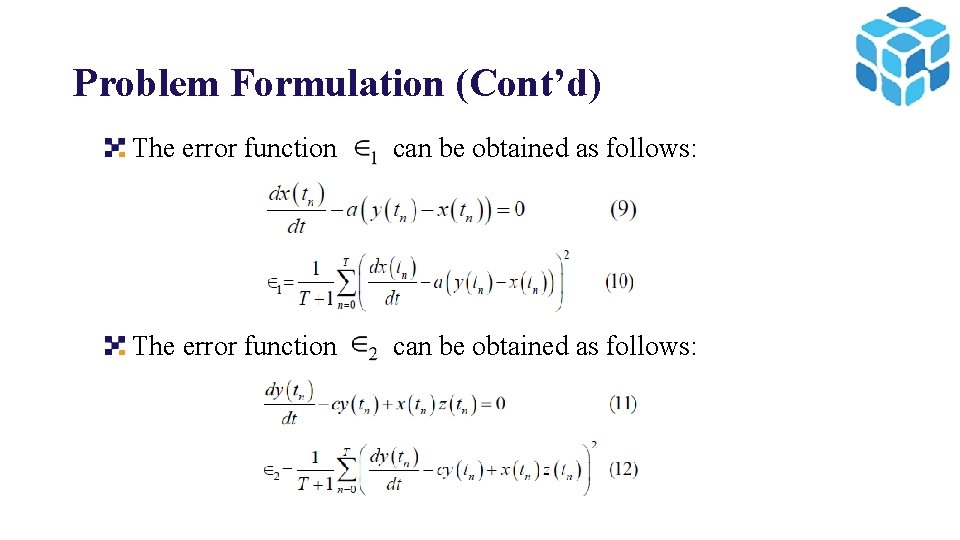
Problem Formulation (Cont’d) The error function can be obtained as follows:
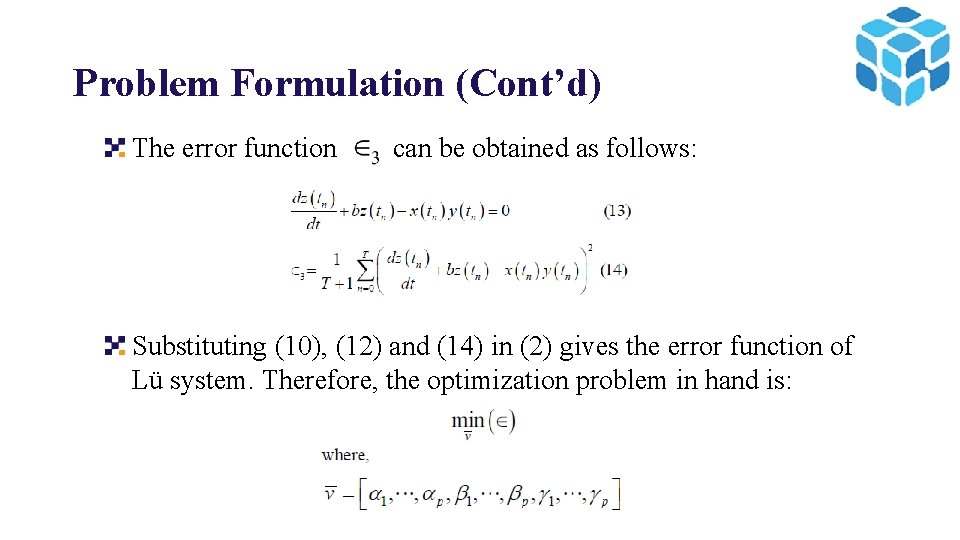
Problem Formulation (Cont’d) The error function can be obtained as follows: Substituting (10), (12) and (14) in (2) gives the error function of Lü system. Therefore, the optimization problem in hand is:
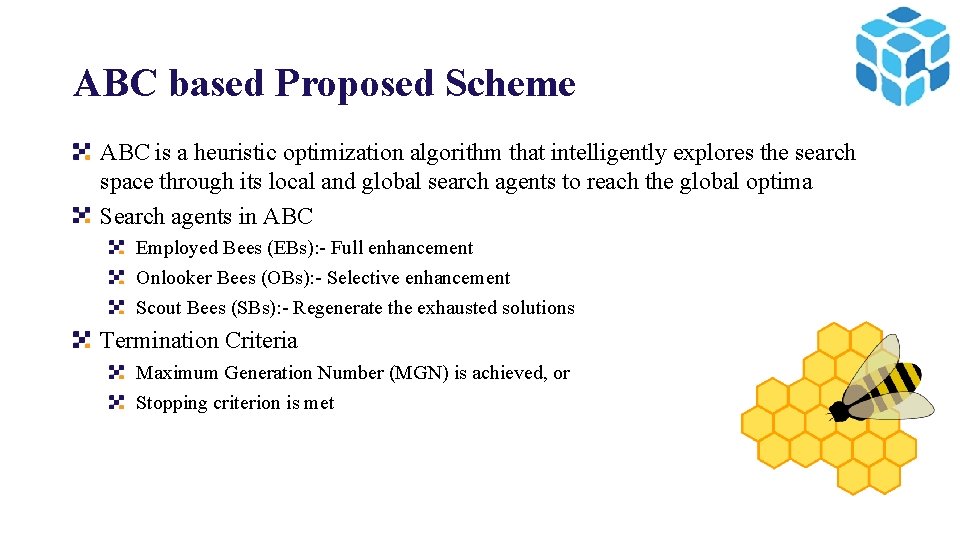
ABC based Proposed Scheme ABC is a heuristic optimization algorithm that intelligently explores the search space through its local and global search agents to reach the global optima Search agents in ABC Employed Bees (EBs): - Full enhancement Onlooker Bees (OBs): - Selective enhancement Scout Bees (SBs): - Regenerate the exhausted solutions Termination Criteria Maximum Generation Number (MGN) is achieved, or Stopping criterion is met
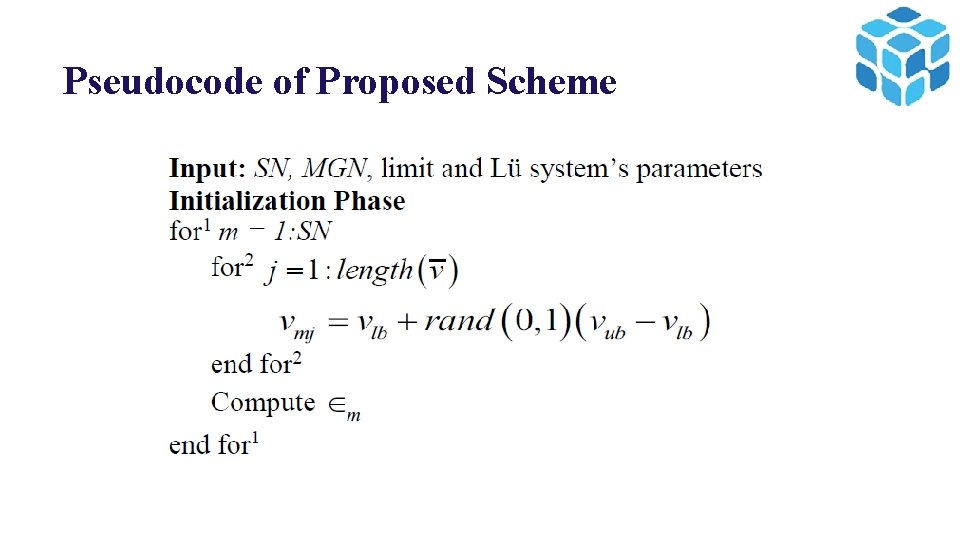
Pseudocode of Proposed Scheme
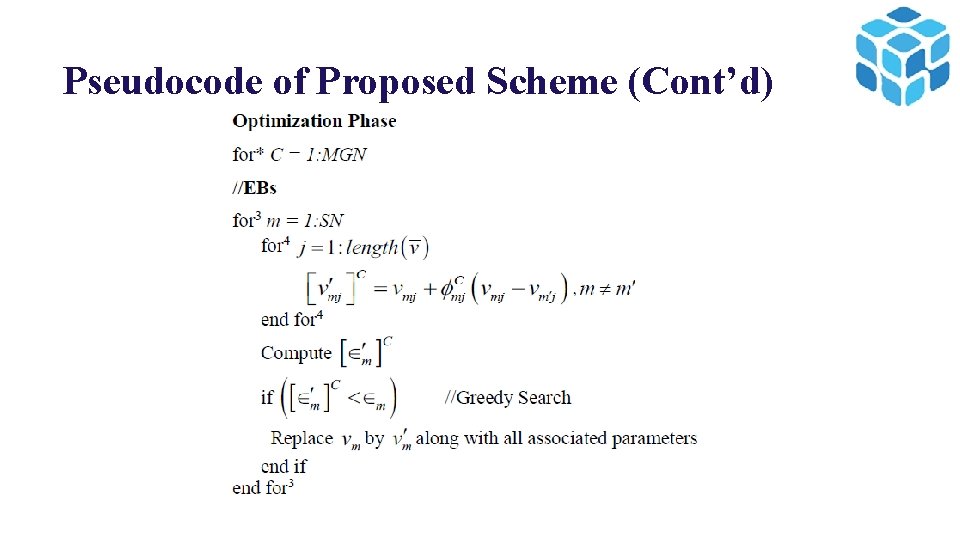
Pseudocode of Proposed Scheme (Cont’d)
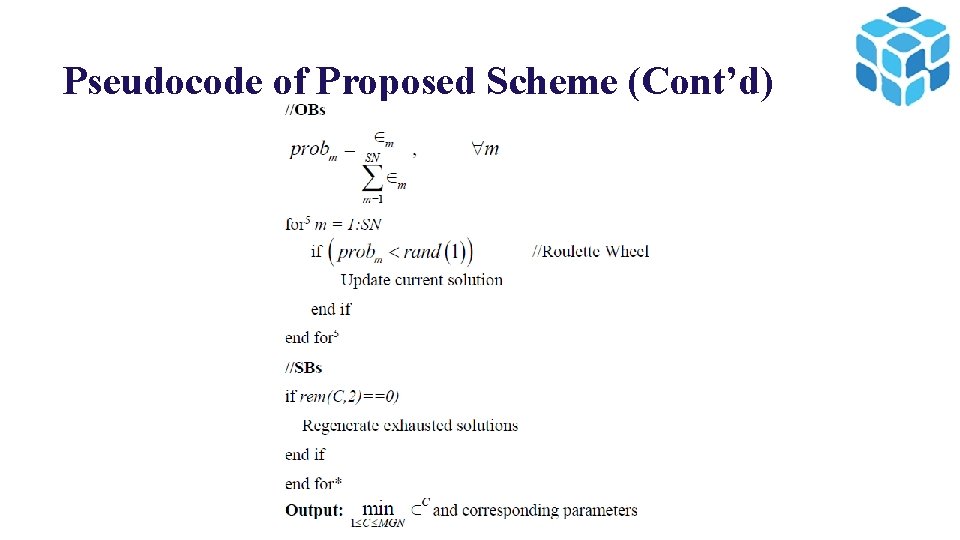
Pseudocode of Proposed Scheme (Cont’d)
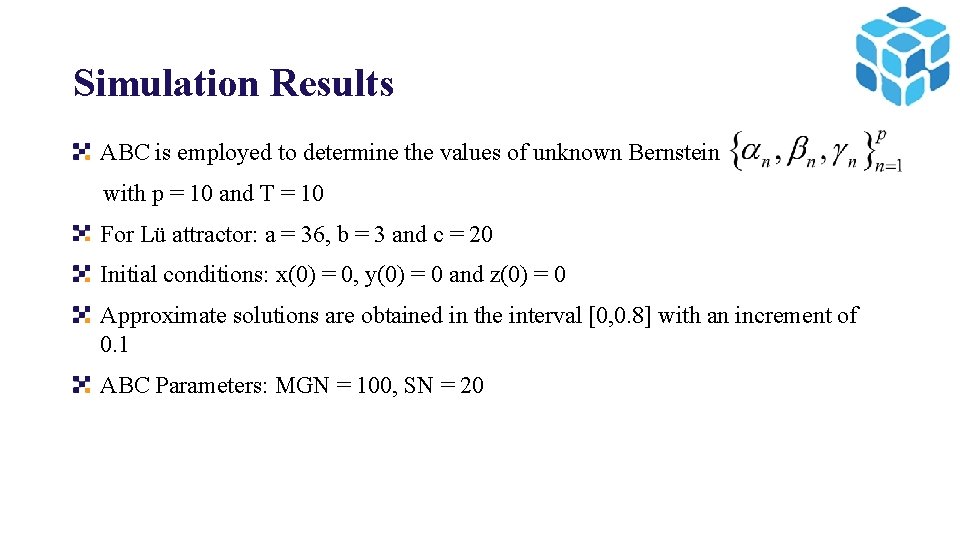
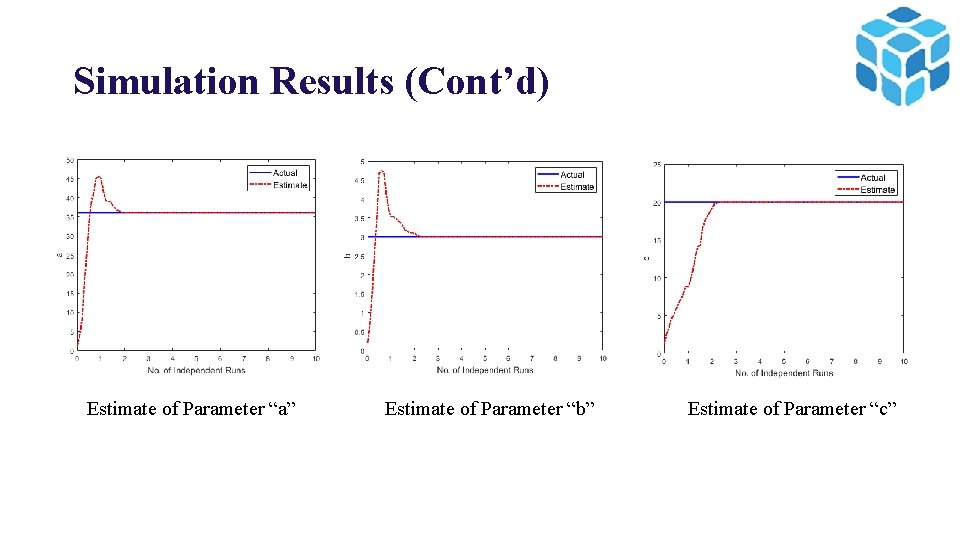
Simulation Results ABC is employed to determine the values of unknown Bernstein with p = 10 and T = 10 For Lü attractor: a = 36, b = 3 and c = 20 Initial conditions: x(0) = 0, y(0) = 0 and z(0) = 0 Approximate solutions are obtained in the interval [0, 0. 8] with an increment of 0. 1 ABC Parameters: MGN = 100, SN = 20
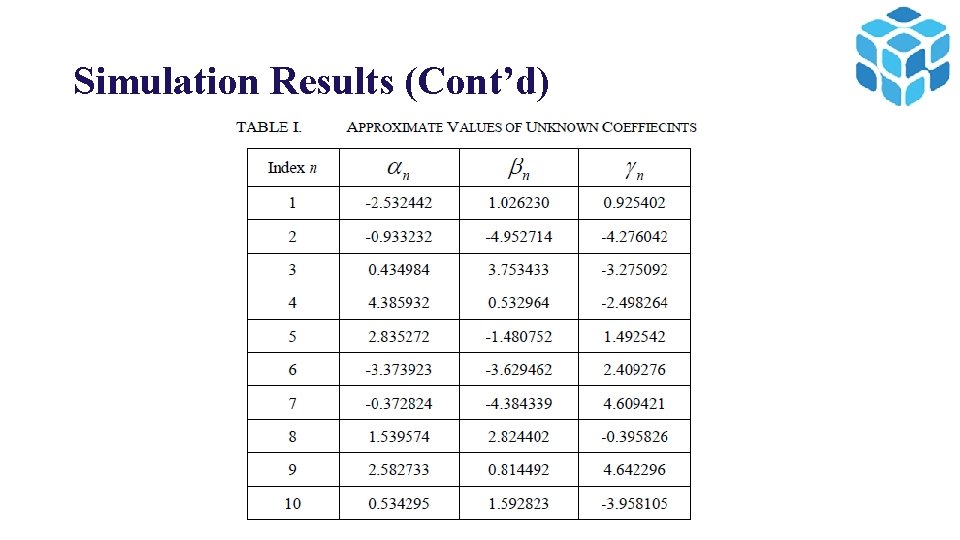
Simulation Results (Cont’d)
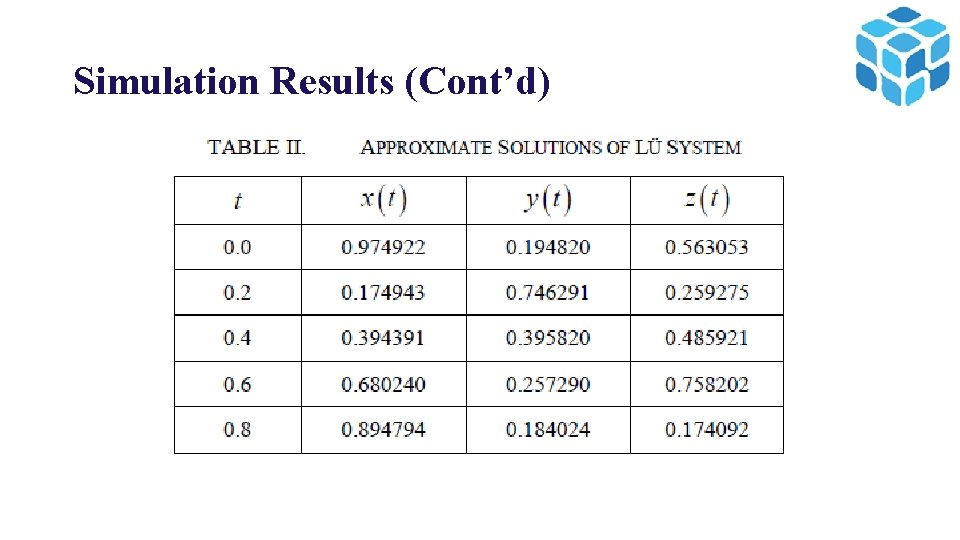
Simulation Results (Cont’d)
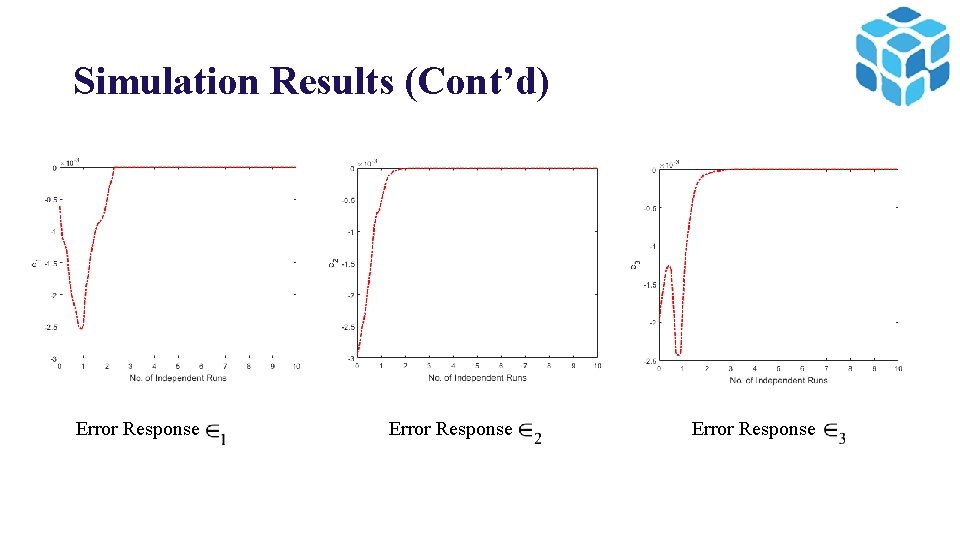
Simulation Results (Cont’d) Error Response
Simulation Results (Cont’d) Estimate of Parameter “a” Estimate of Parameter “b” Estimate of Parameter “c”
Conclusion Bernstein Polynomials based solution of Lü chaotic system is proposed and implemented using ABC global optimization algorithm Simulation results proved the effectiveness of the proposed method to accurate estimate the unknown parameters. The exponential decay of fitness function showed global stability and ABC quickly converged to the global optima.
THANK YOU