
Approaches to signal transduction pathway ligandreceptor proteinprotein interactions
- Slides: 12
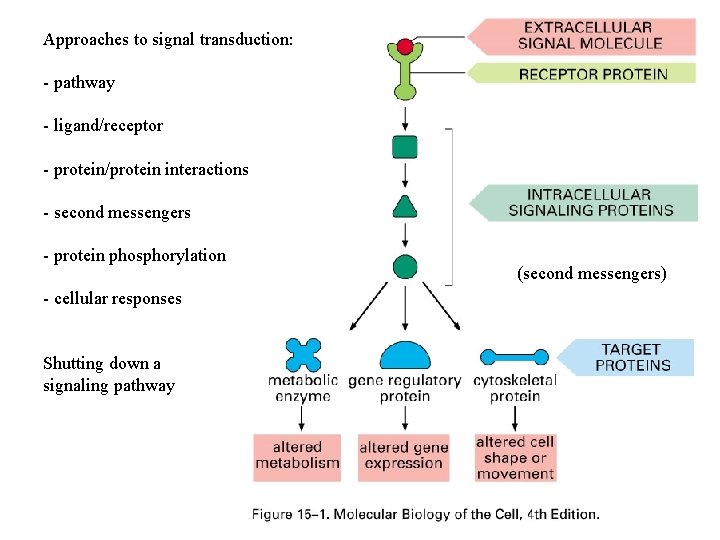
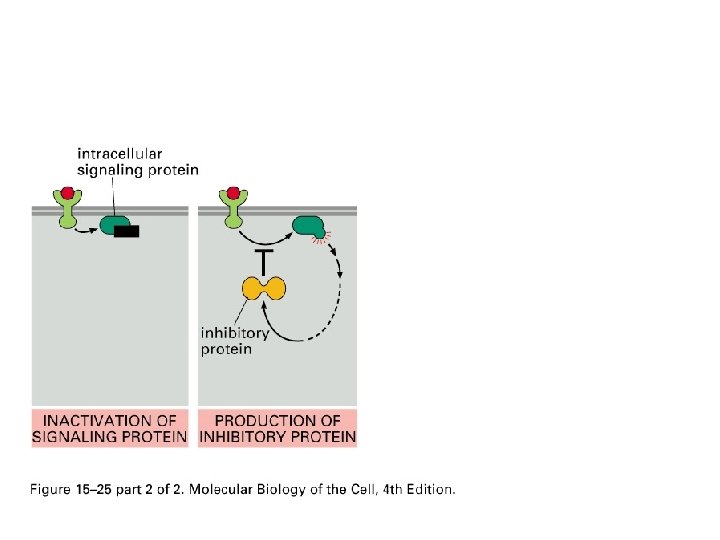
Approaches to signal transduction: - pathway - ligand/receptor - protein/protein interactions - second messengers - protein phosphorylation - cellular responses Shutting down a signaling pathway (second messengers)
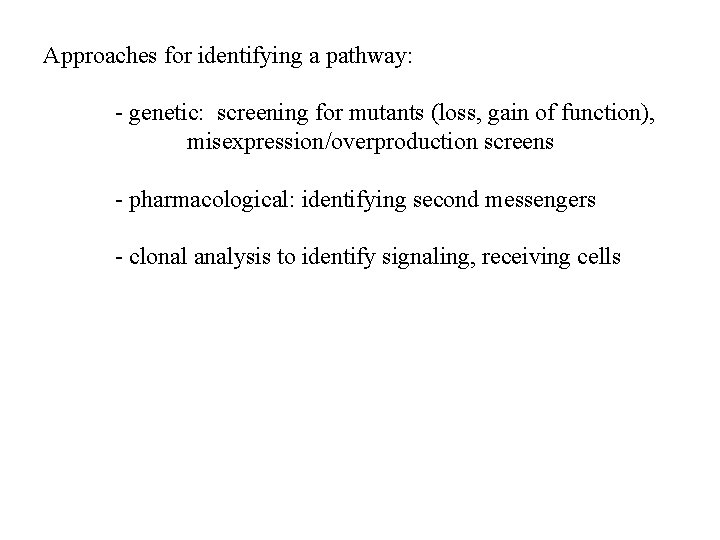
Approaches for identifying a pathway: - genetic: screening for mutants (loss, gain of function), misexpression/overproduction screens - pharmacological: identifying second messengers - clonal analysis to identify signaling, receiving cells
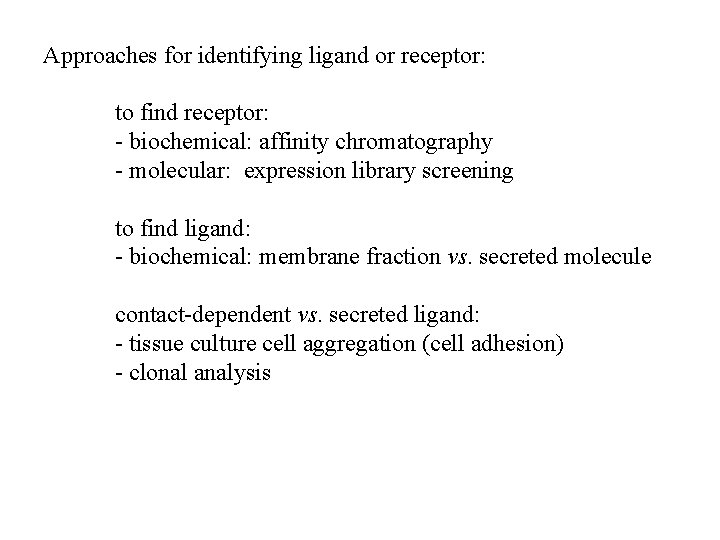
Approaches for identifying ligand or receptor: to find receptor: - biochemical: affinity chromatography - molecular: expression library screening to find ligand: - biochemical: membrane fraction vs. secreted molecule contact-dependent vs. secreted ligand: - tissue culture cell aggregation (cell adhesion) - clonal analysis
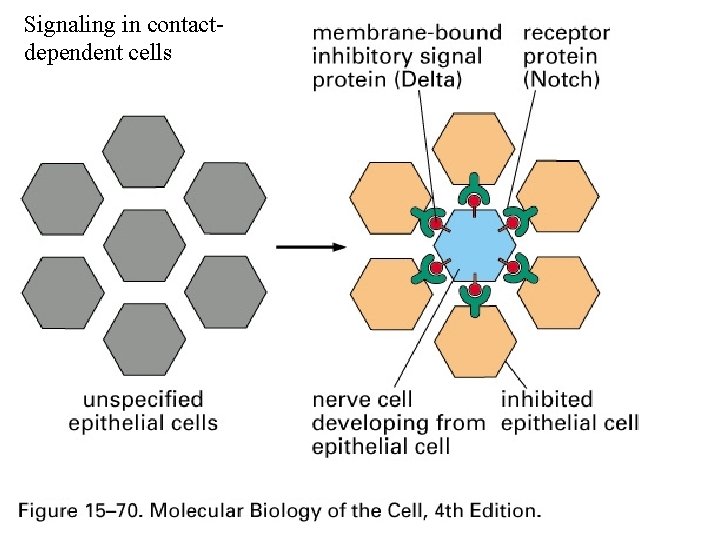
Signaling in contactdependent cells
Protein-protein interactions: - biochemical: tagged fusion proteins, co-IP - molecular: yeast 2 -hybrid - genetic: screening with mutant receptor background
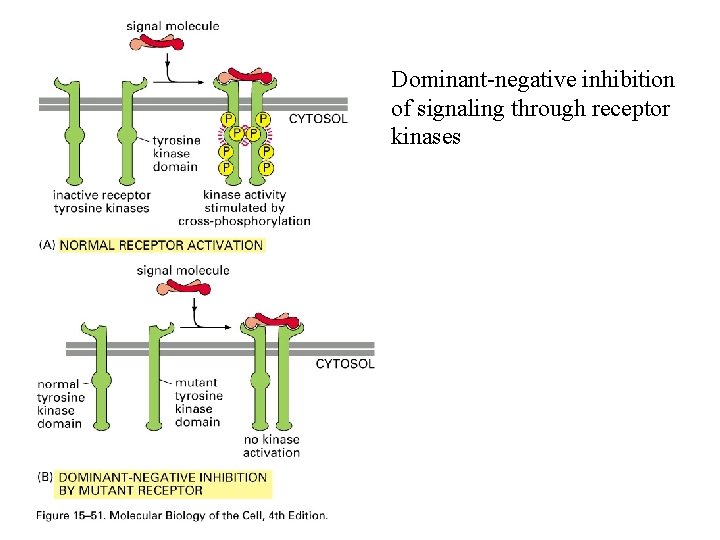
Dominant-negative inhibition of signaling through receptor kinases
Second messengers: - pharmacological: reporter dyes
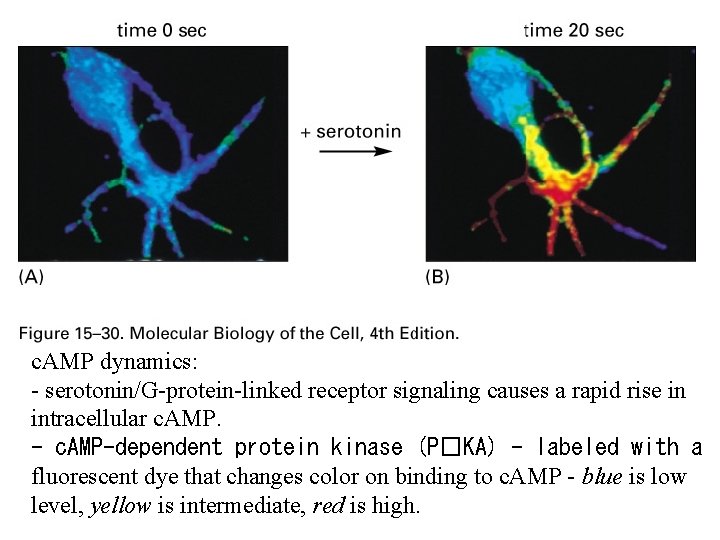
c. AMP dynamics: - serotonin/G-protein-linked receptor signaling causes a rapid rise in intracellular c. AMP. - c. AMP-dependent protein kinase (P�KA) - labeled with a fluorescent dye that changes color on binding to c. AMP - blue is low level, yellow is intermediate, red is high.
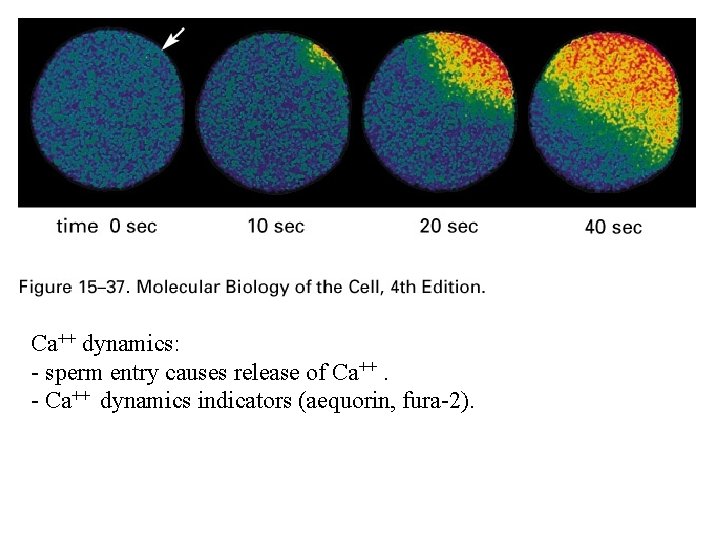
Ca++ dynamics: - sperm entry causes release of Ca++. - Ca++ dynamics indicators (aequorin, fura-2).
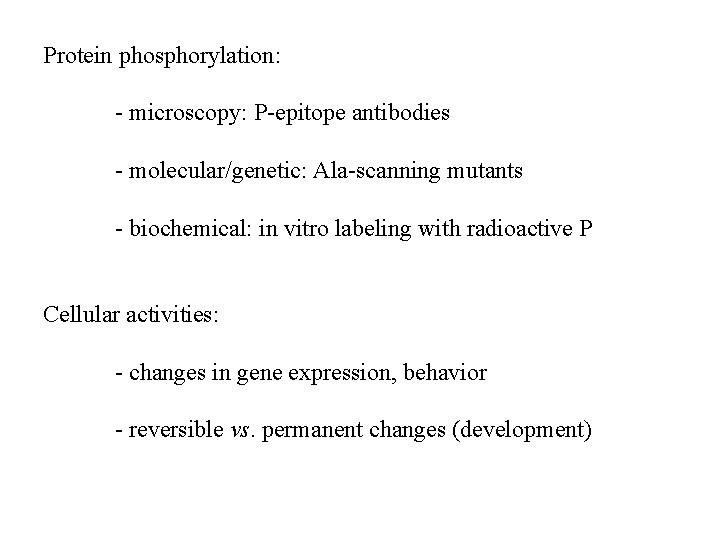
Protein phosphorylation: - microscopy: P-epitope antibodies - molecular/genetic: Ala-scanning mutants - biochemical: in vitro labeling with radioactive P Cellular activities: - changes in gene expression, behavior - reversible vs. permanent changes (development)
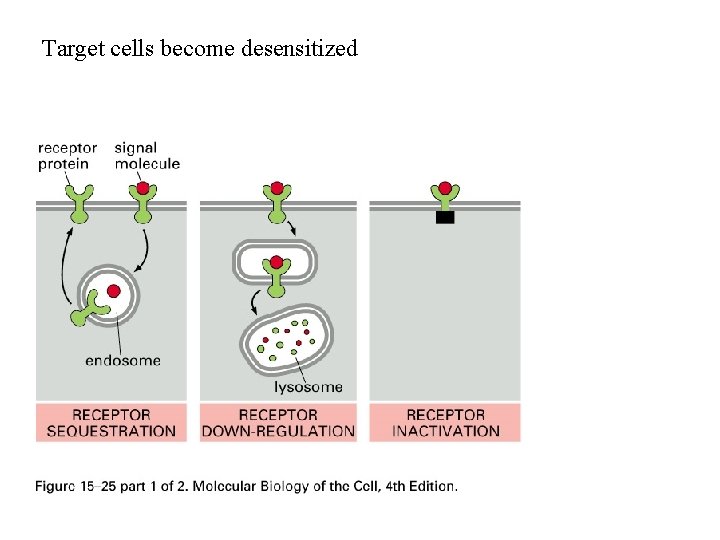
Target cells become desensitized