
Approaches to assessment and feedback Aims Examine different
Approaches to assessment and feedback
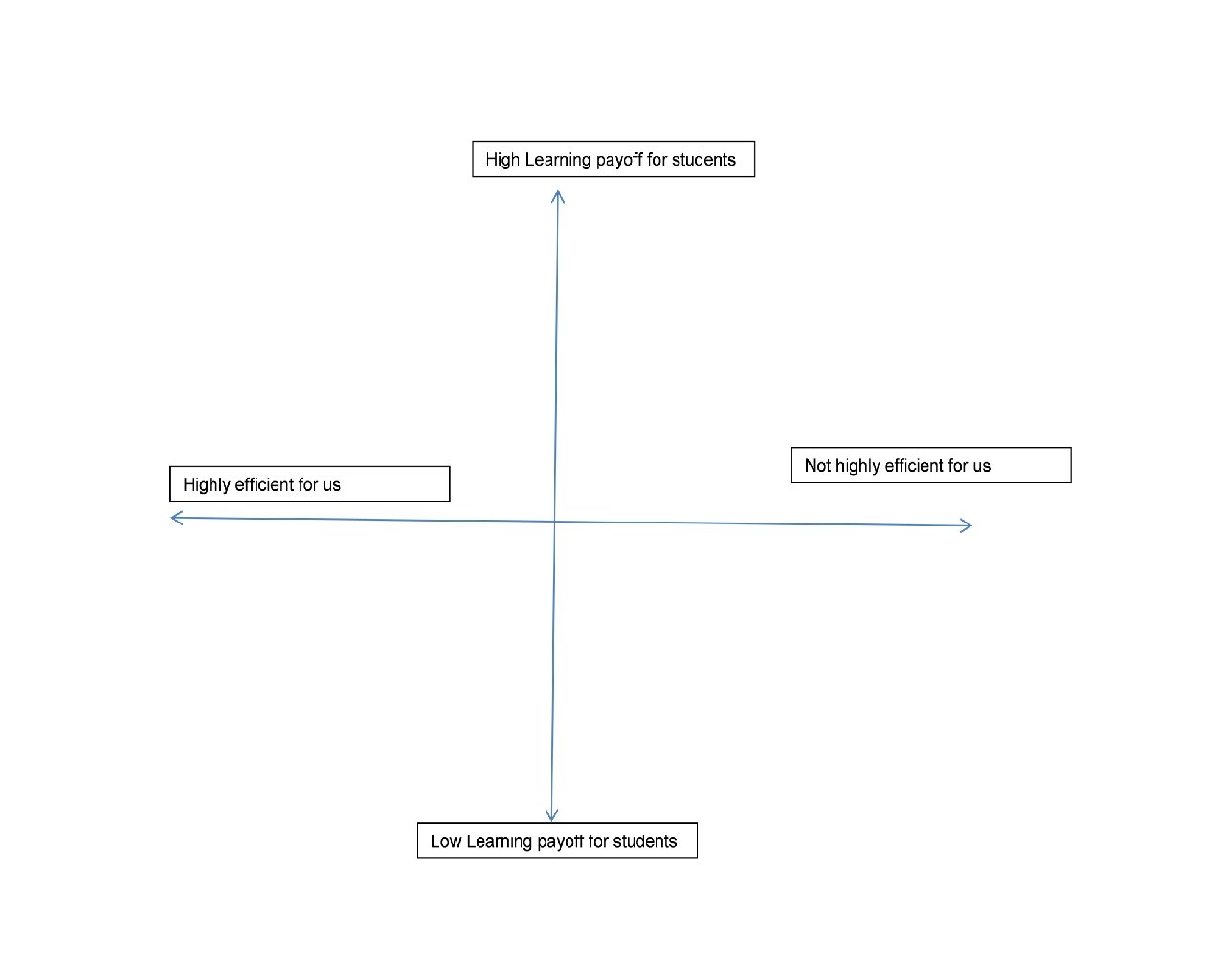
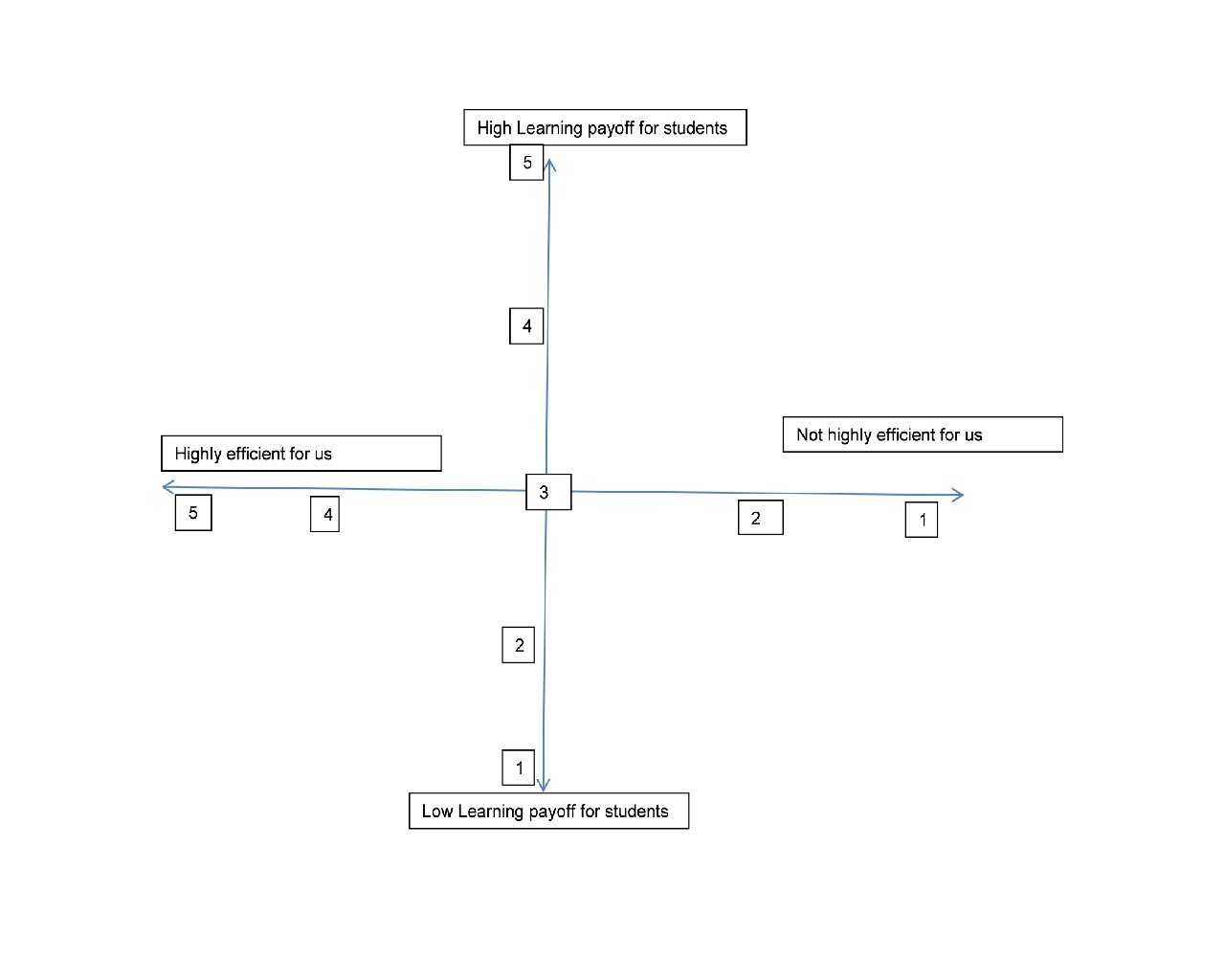
Aims: Examine different approaches to assessment and feedback Intended Outcomes: • Identify and discuss the ways in which students are assessed and the ways we provide feedback to enable development and progression (Conscious competence) • Analyse methods in relation to a) effectiveness for learners and efficiency (for marking staff / lecturers) • Explore new ideas for assessment approaches to encourage collaborative, participative, vocationally relevant and describe how these extend learner creativity, employability whilst reducing stress on learners (and staff!)
Think about…. . Something you are good at… Was there a time to begin with when you were less skilled at it or less knowledgeable? How did you become good….
Activity 1 Interpretation 1. 2. Looking at the conscious competence grid, explain how you became good at your identified activity Did you move through the stages of awareness and competence?
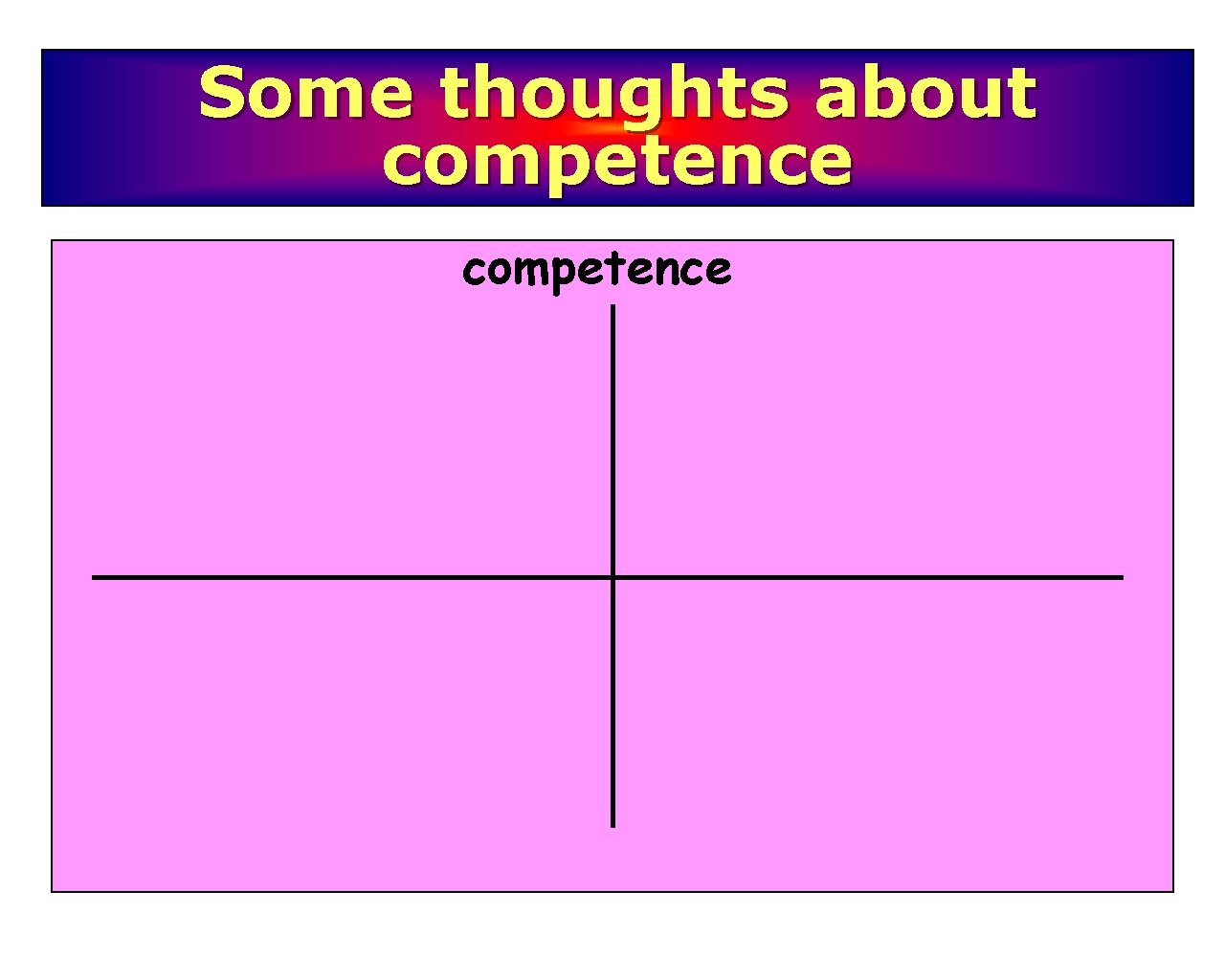
Some thoughts about competence
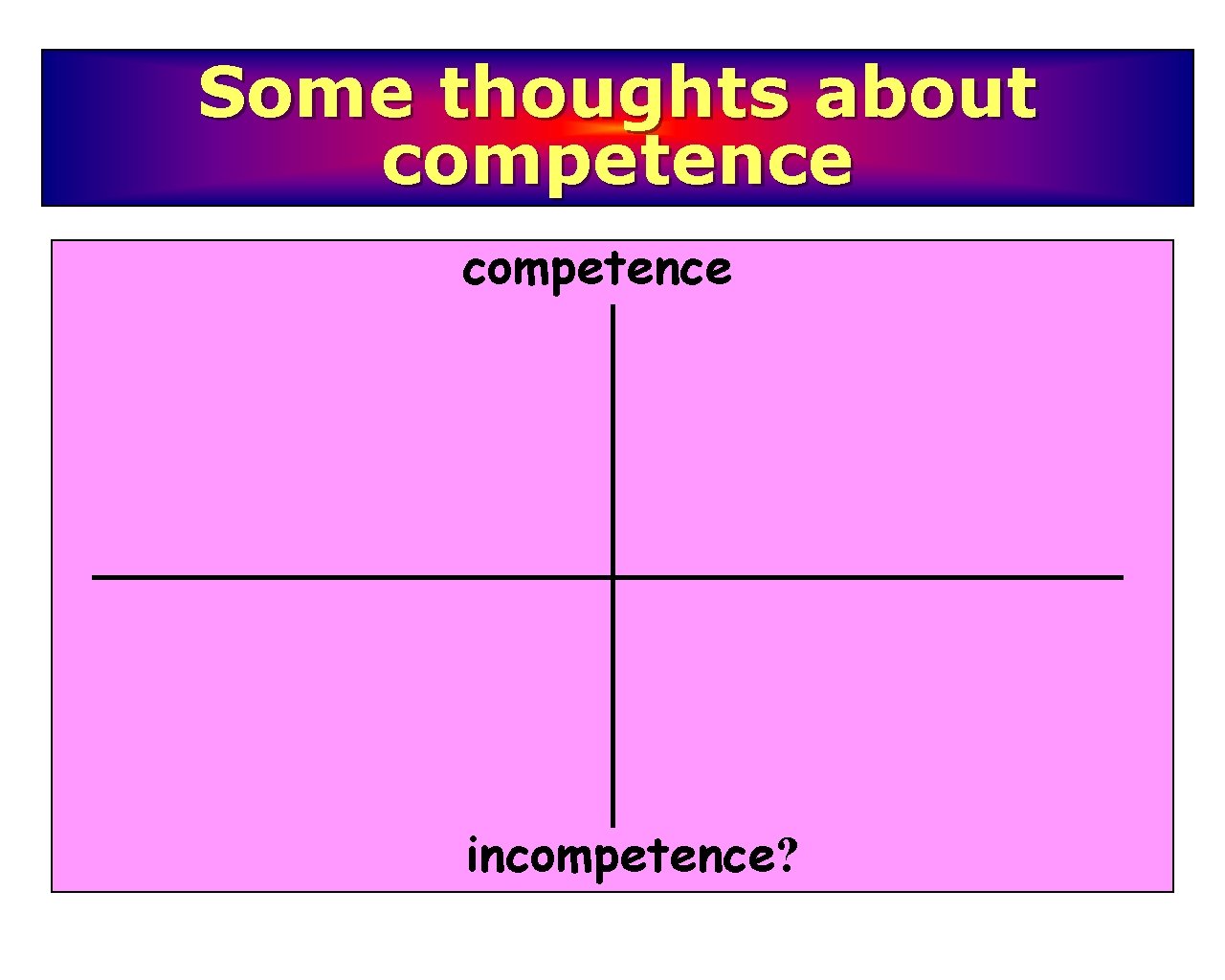
Some thoughts about competence incompetence?
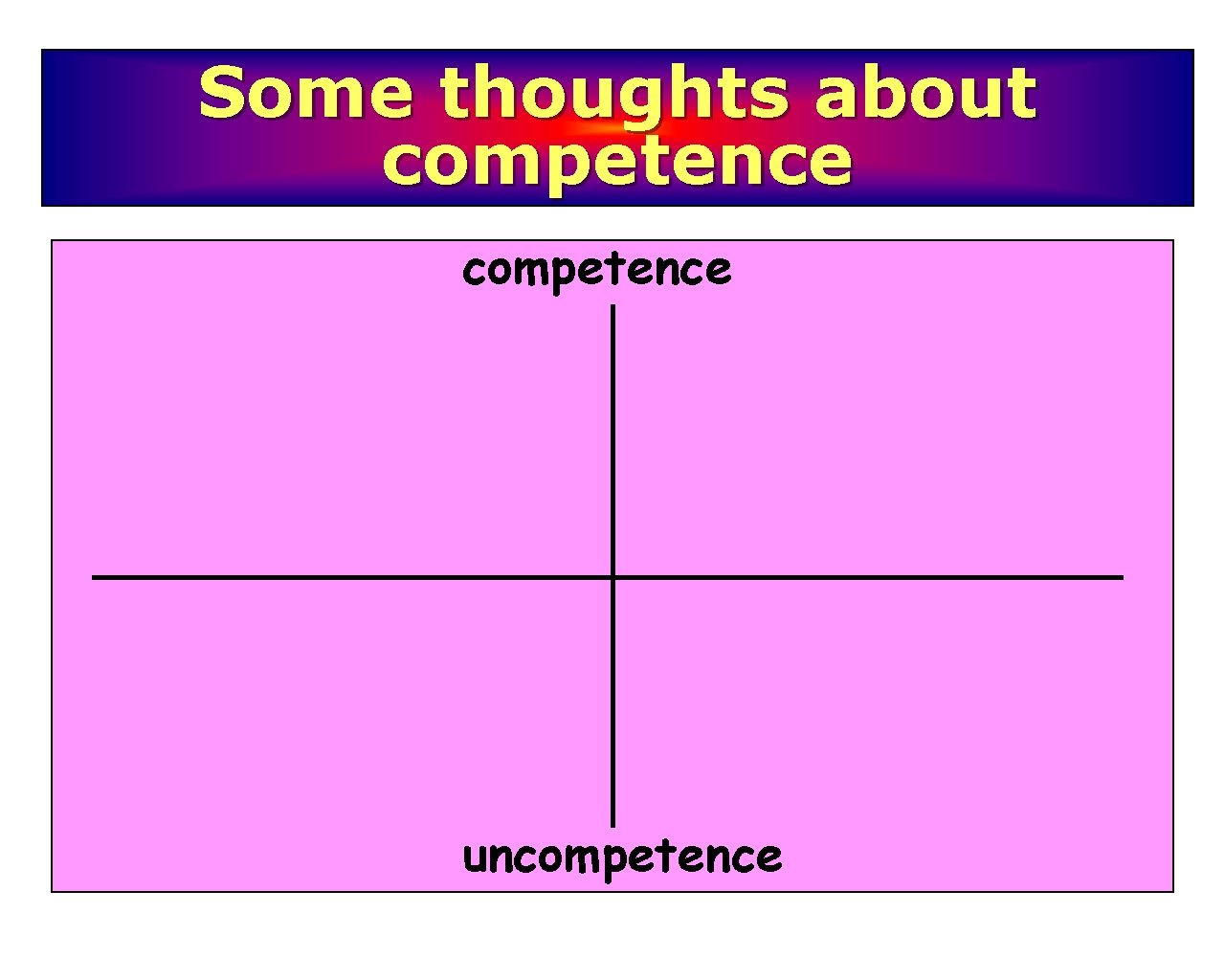
Some thoughts about competence uncompetence
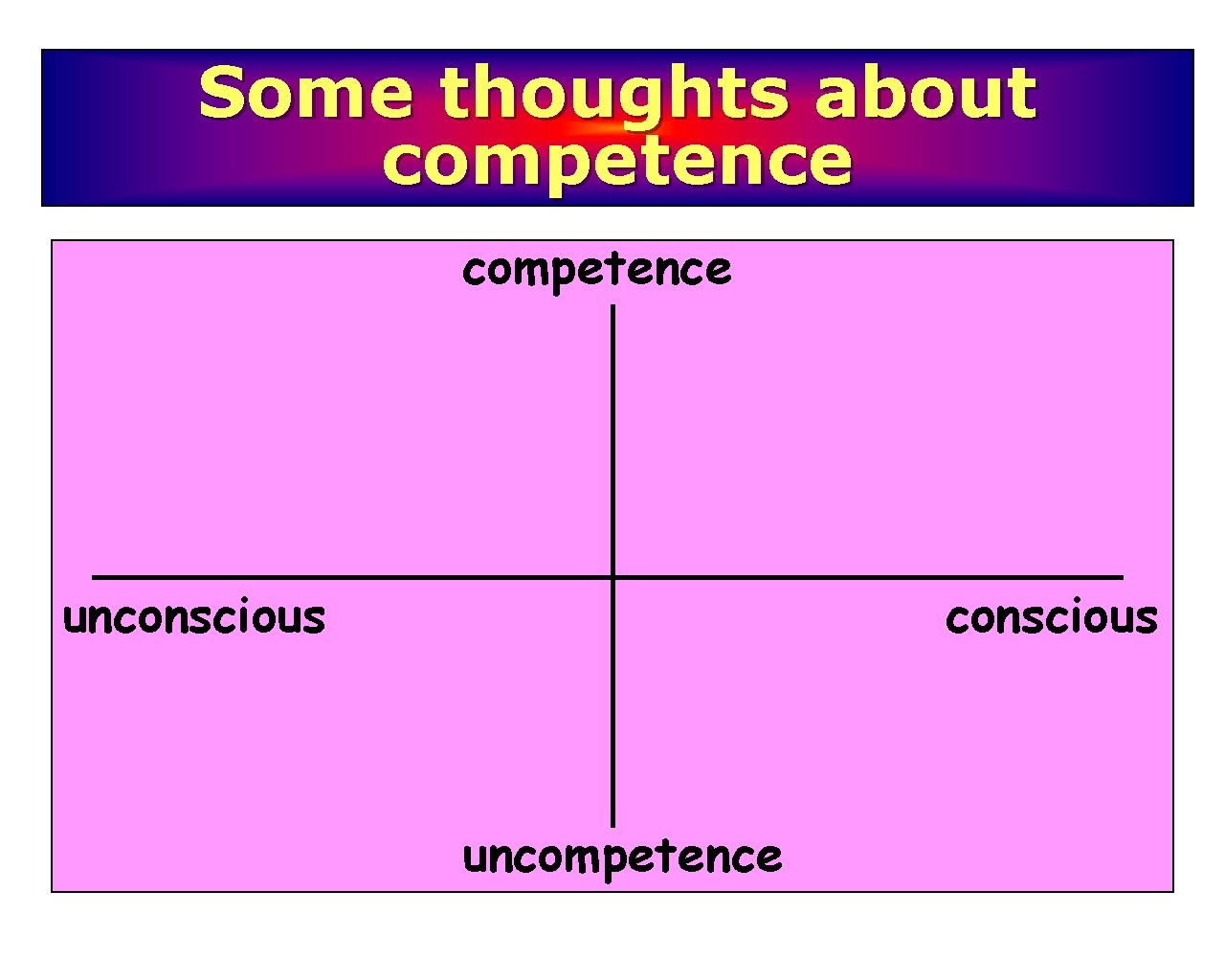
Some thoughts about competence unconscious uncompetence
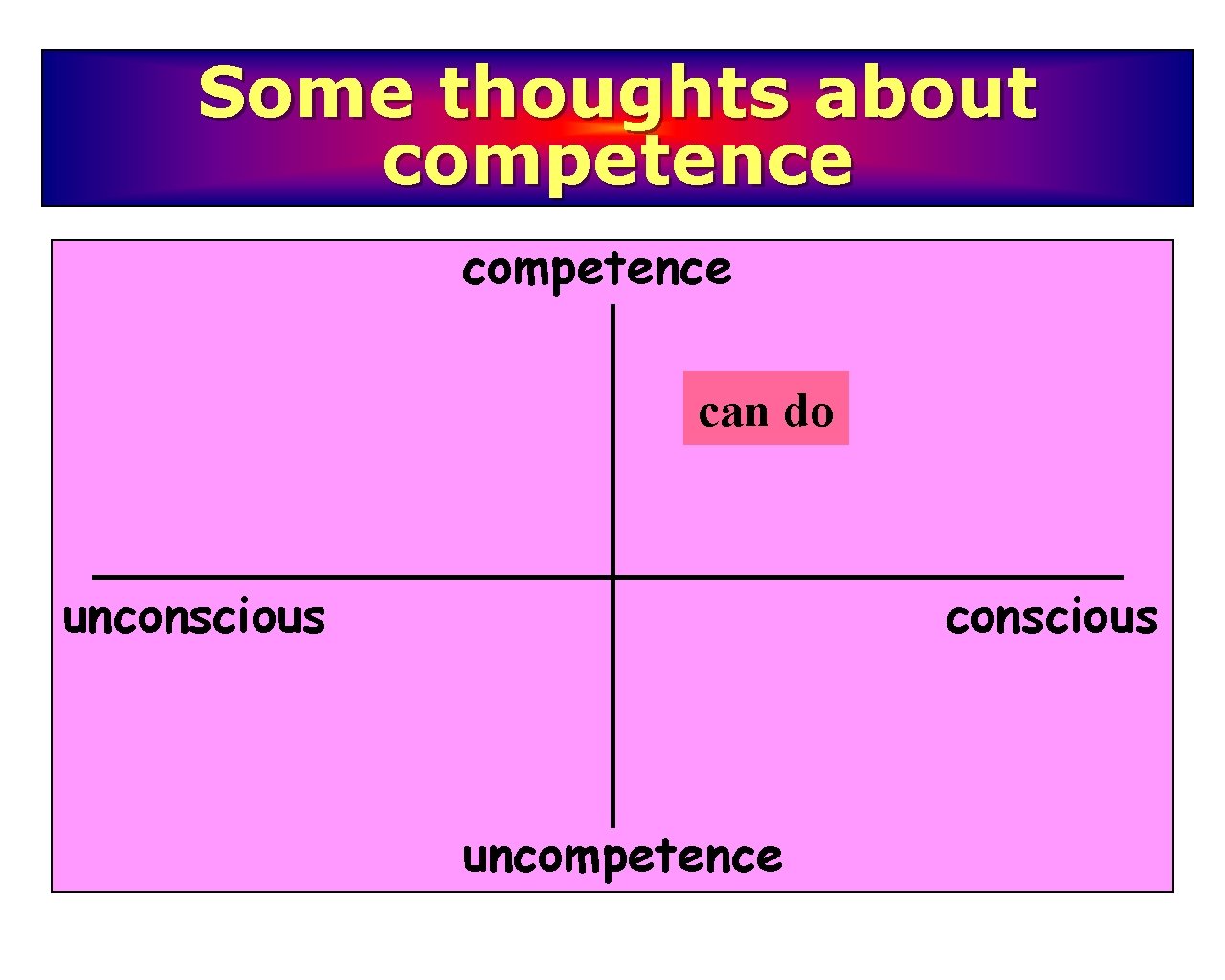
Some thoughts about competence can do unconscious uncompetence
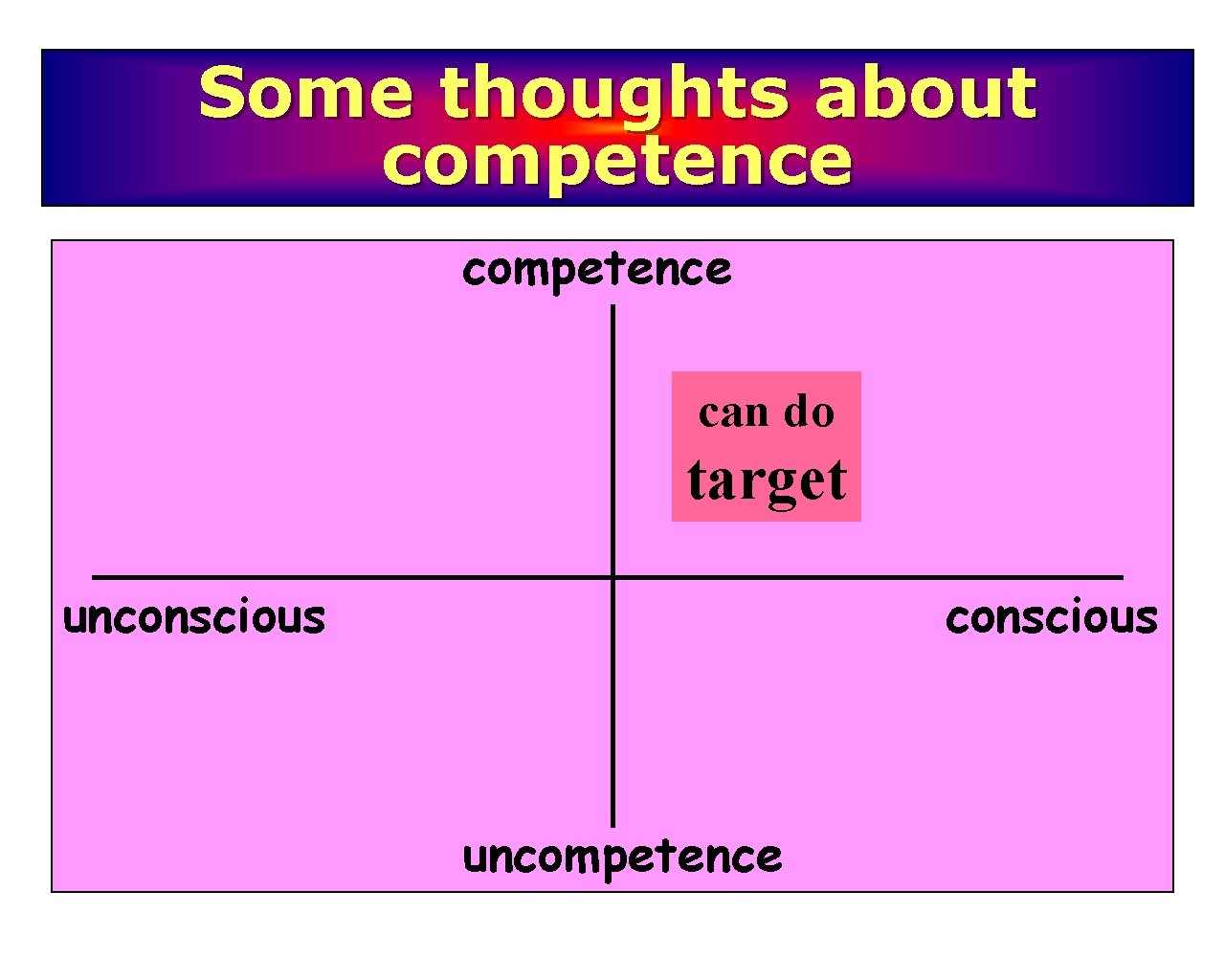
Some thoughts about competence can do target unconscious uncompetence
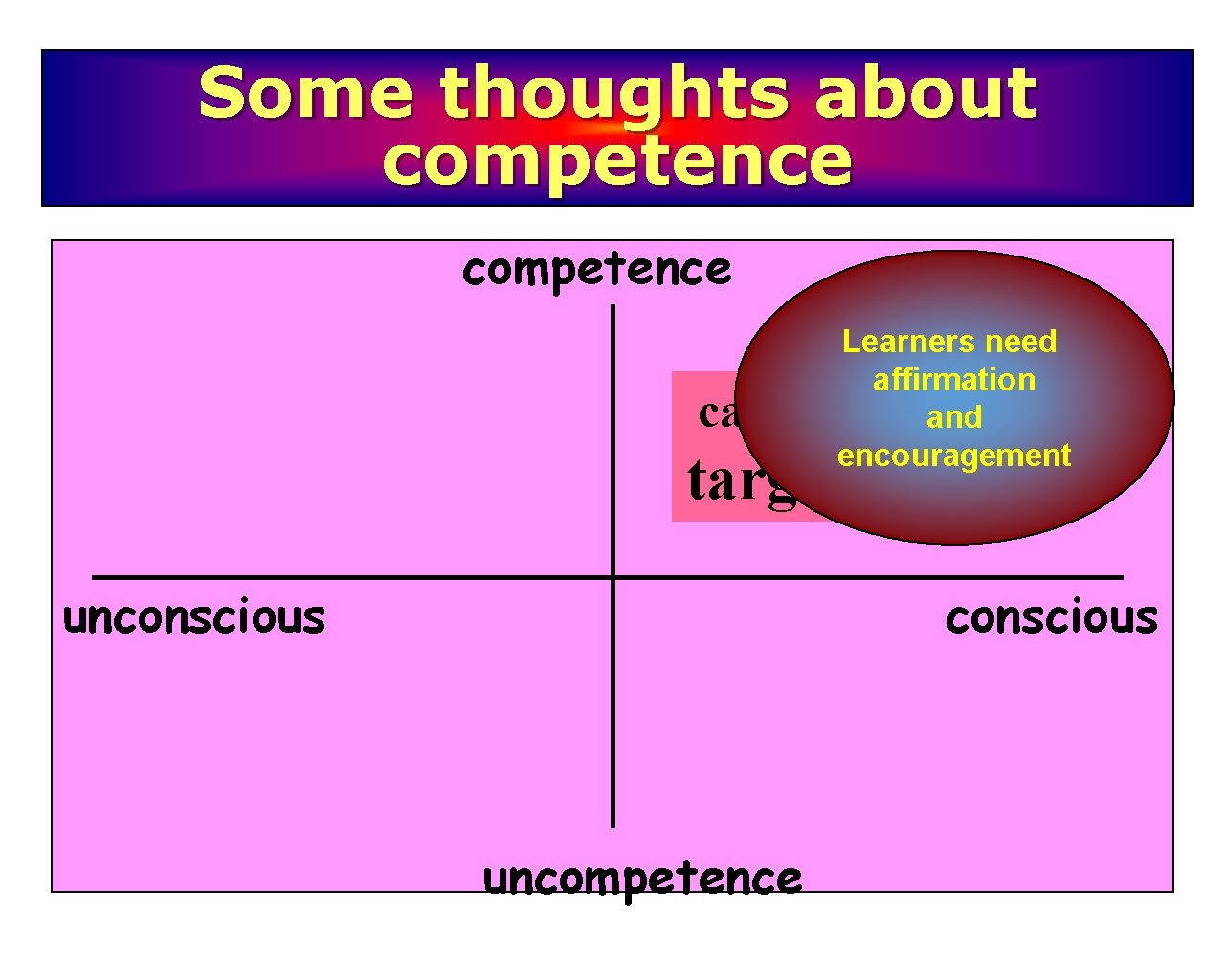
Some thoughts about competence Learners need affirmation do and encouragement can target unconscious uncompetence
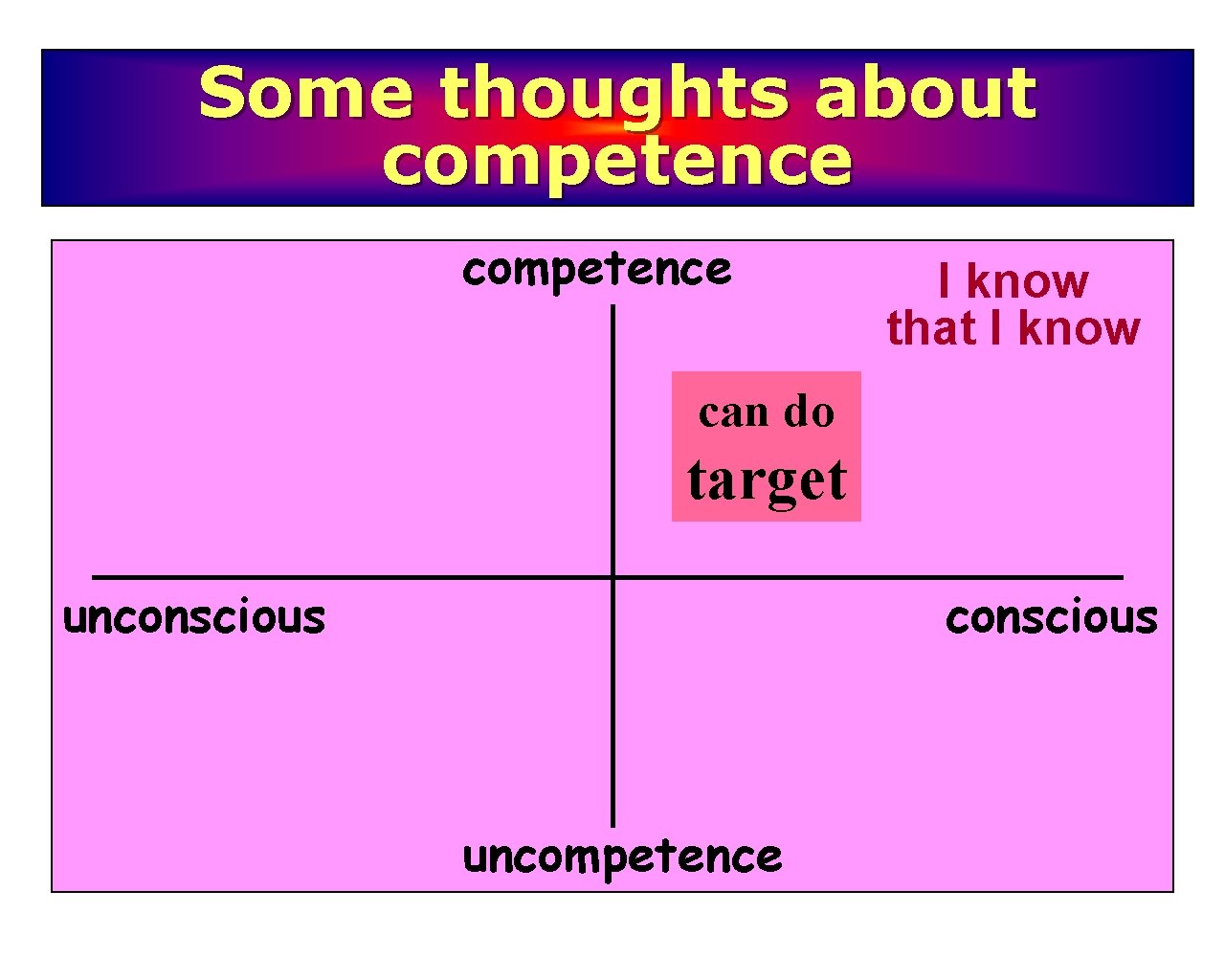
Some thoughts about competence I know that I know can do target unconscious uncompetence
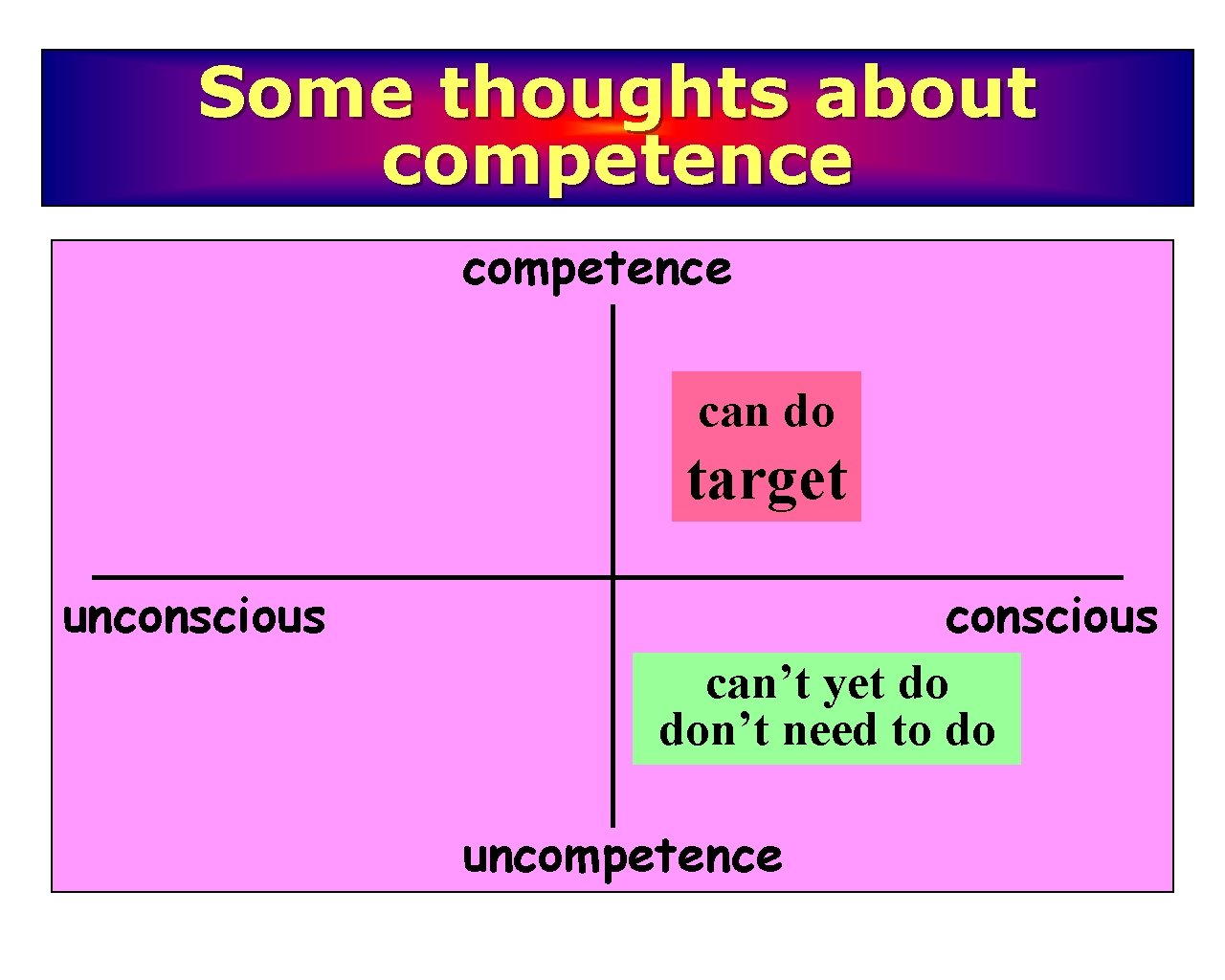
Some thoughts about competence can do target unconscious can’t yet do don’t need to do uncompetence
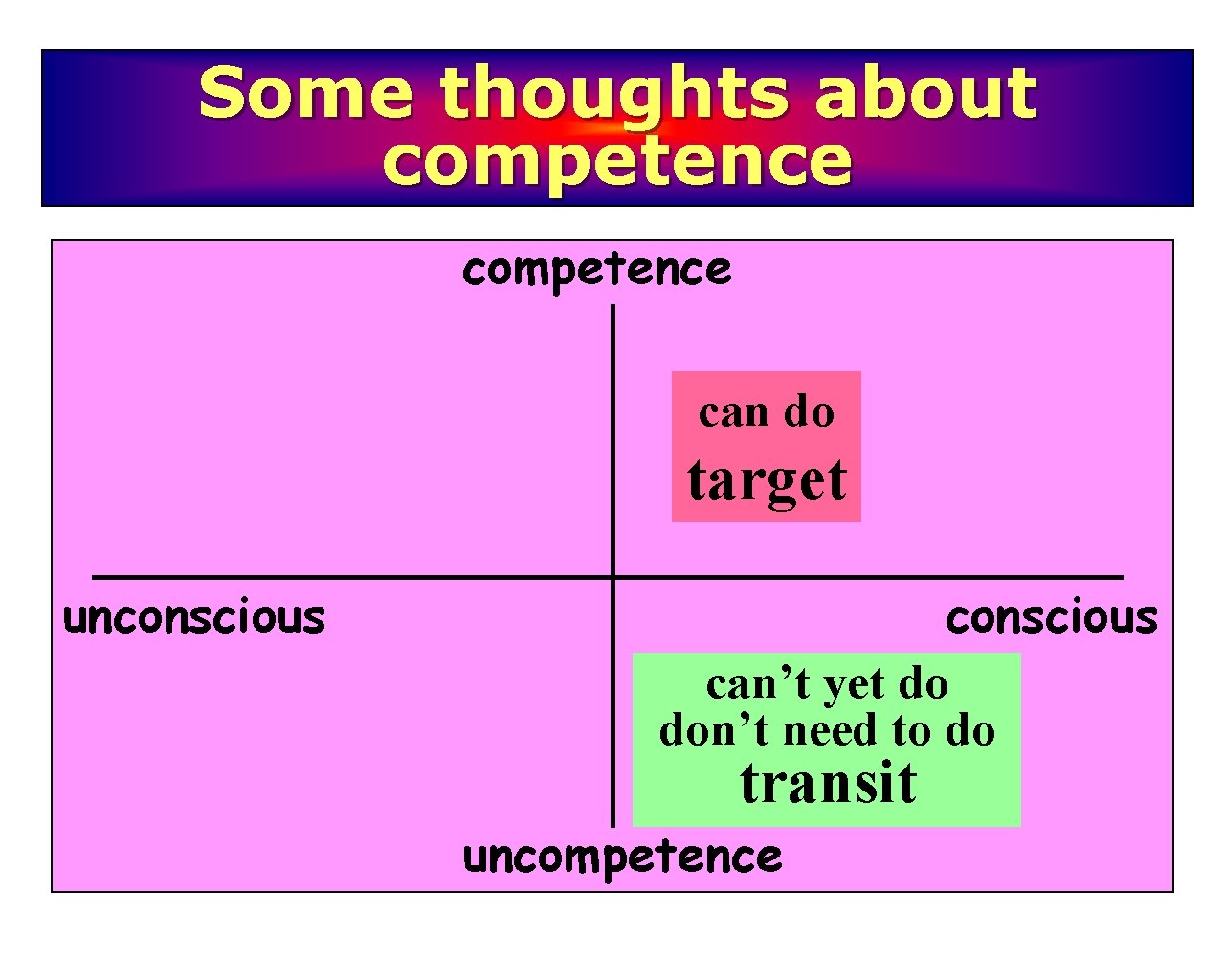
Some thoughts about competence can do target unconscious can’t yet do don’t need to do transit uncompetence
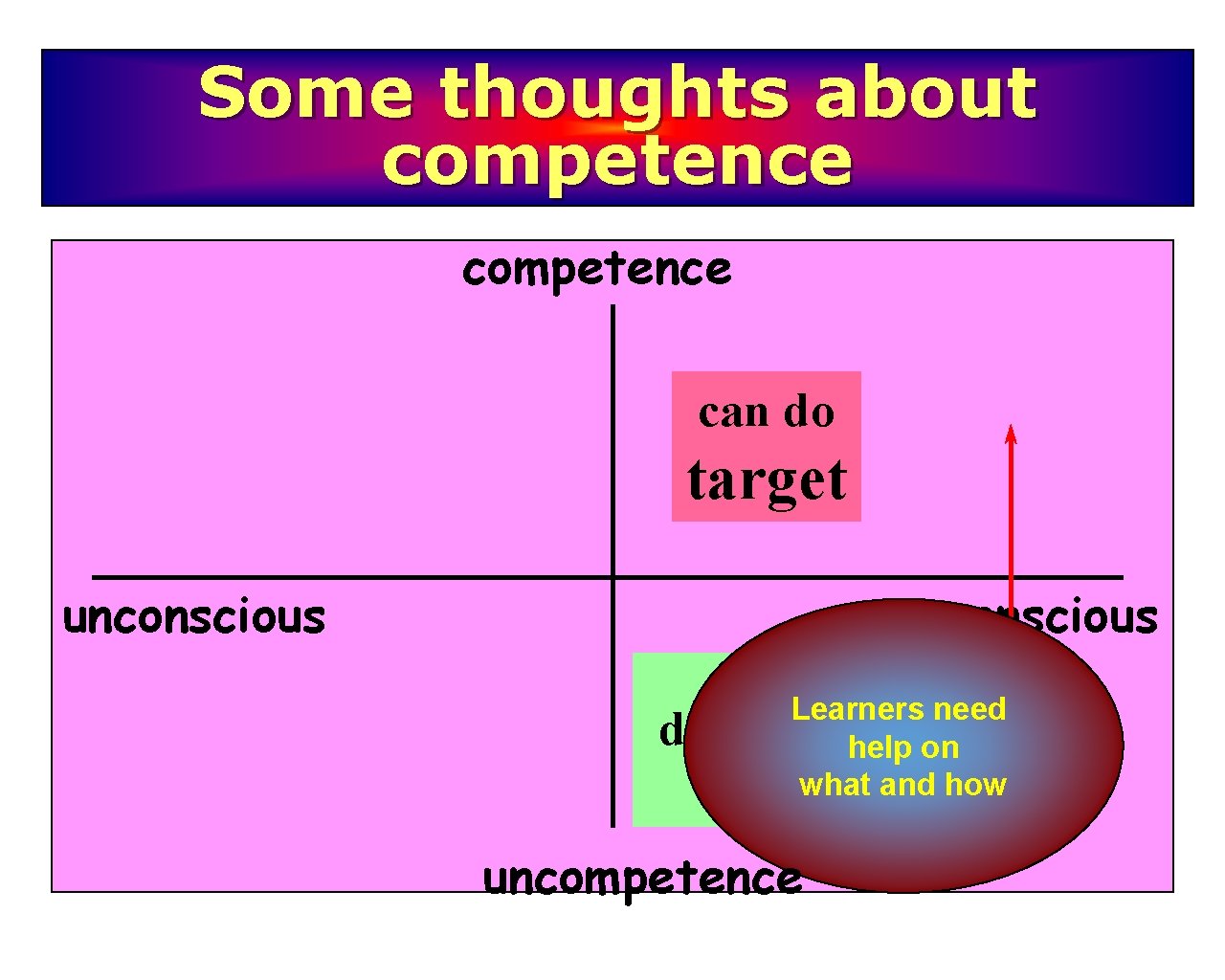
Some thoughts about competence can do target unconscious can’t. Learners yet doneed don’t need toondo help what and how transit uncompetence
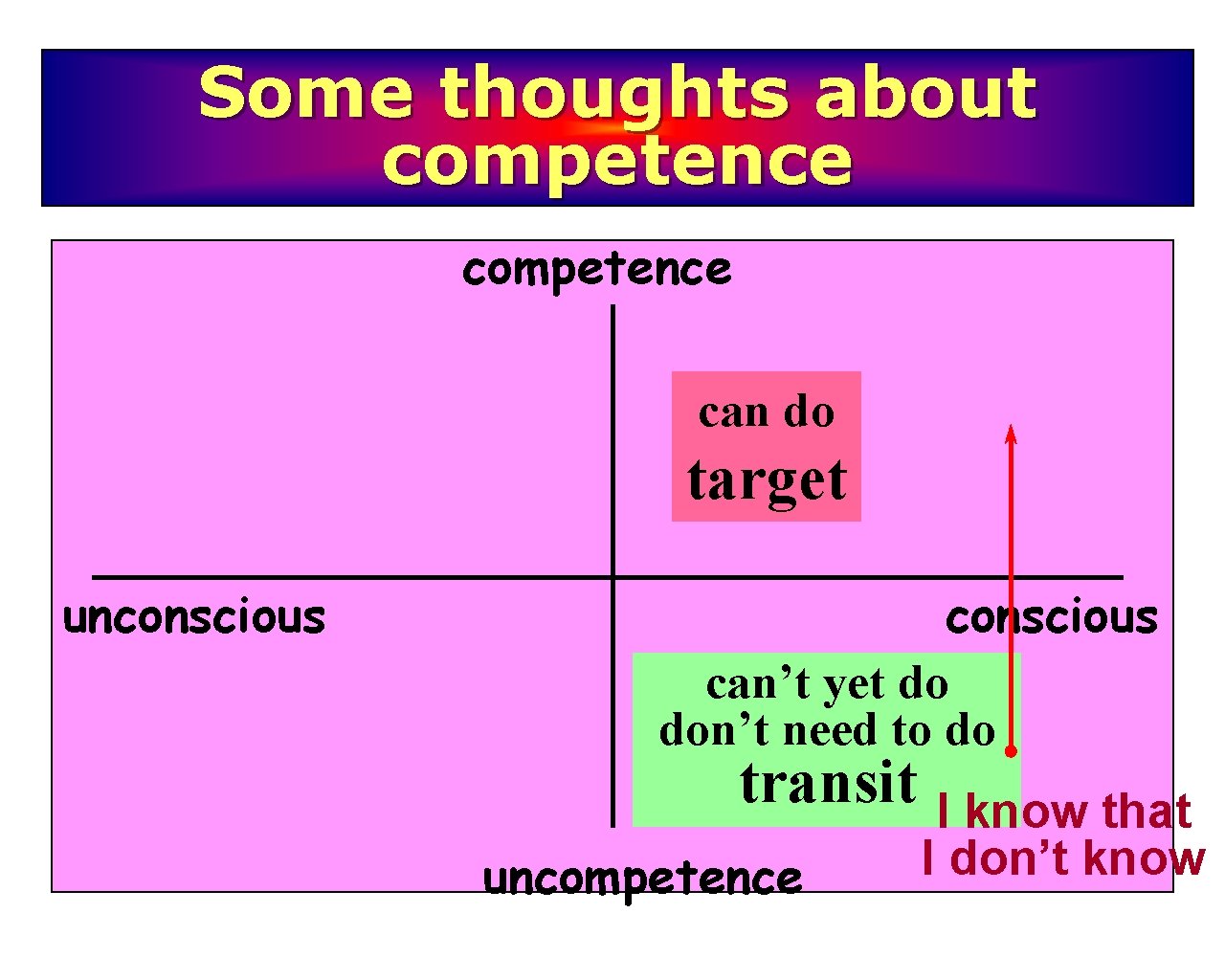
Some thoughts about competence can do target unconscious can’t yet do don’t need to do transit uncompetence I know that I don’t know
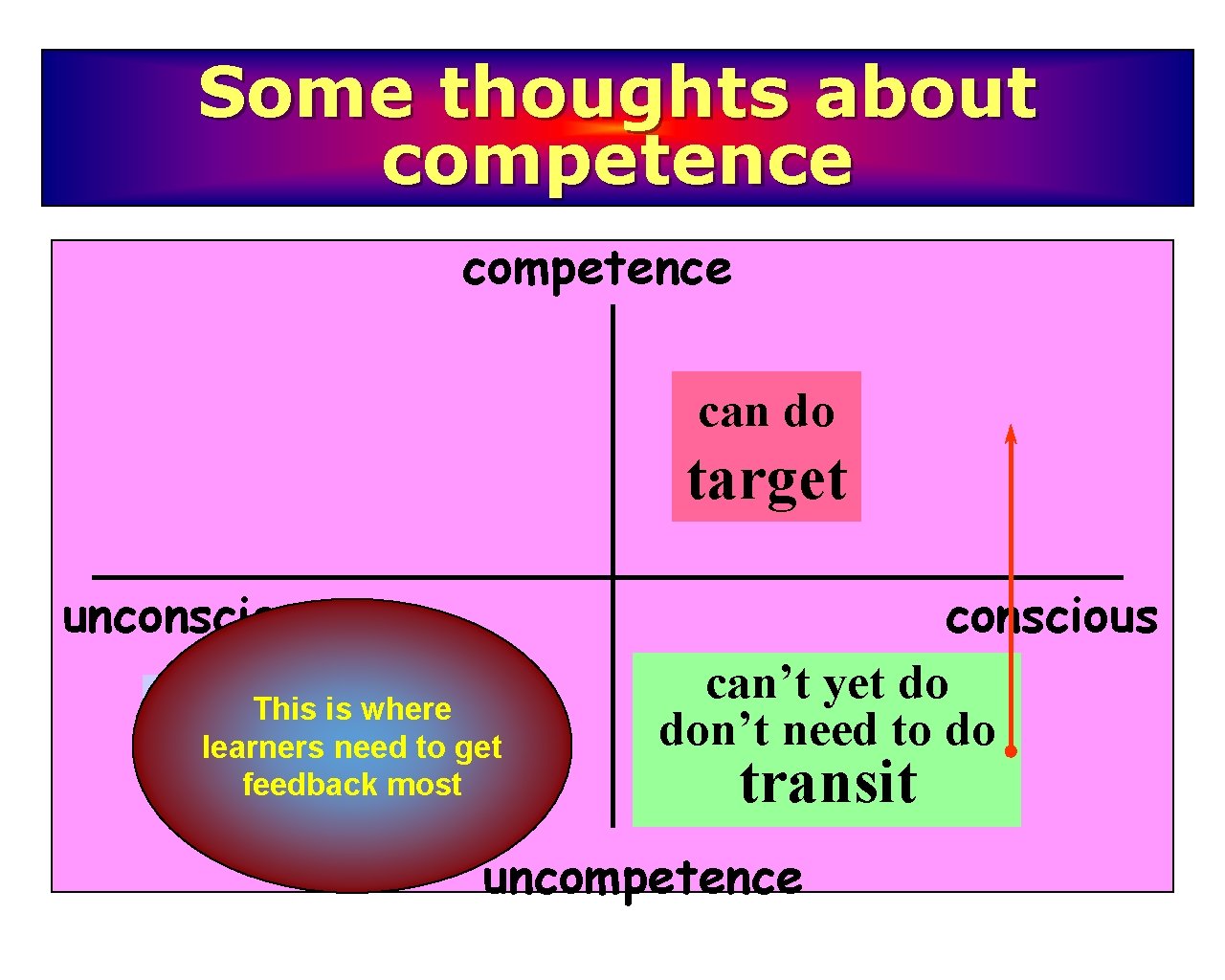
Some thoughts about competence can do target unconscious danger This is where learners need to get feedback most conscious can’t yet do don’t need to do transit uncompetence
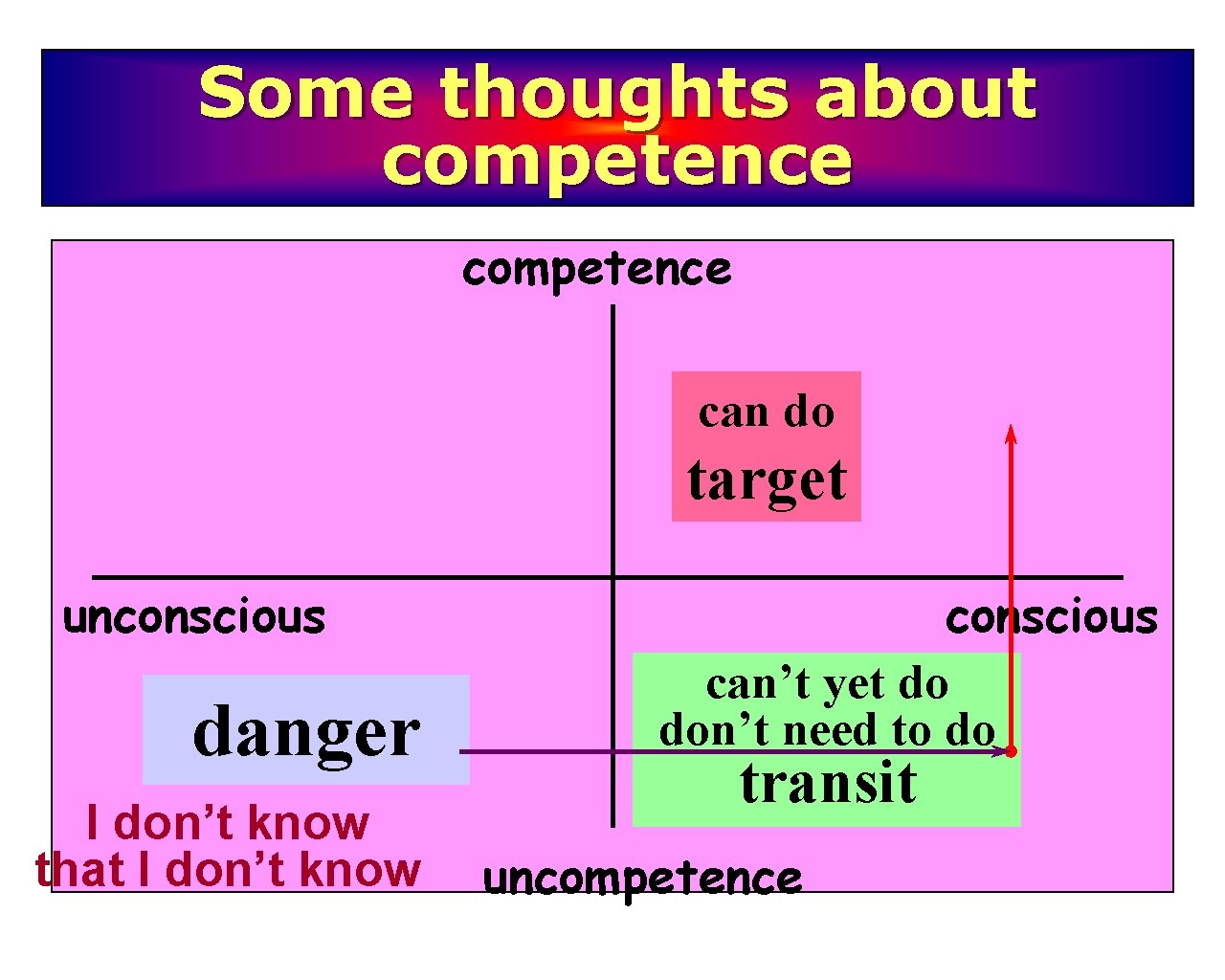
Some thoughts about competence can do target unconscious danger I don’t know that I don’t know conscious can’t yet do don’t need to do transit uncompetence
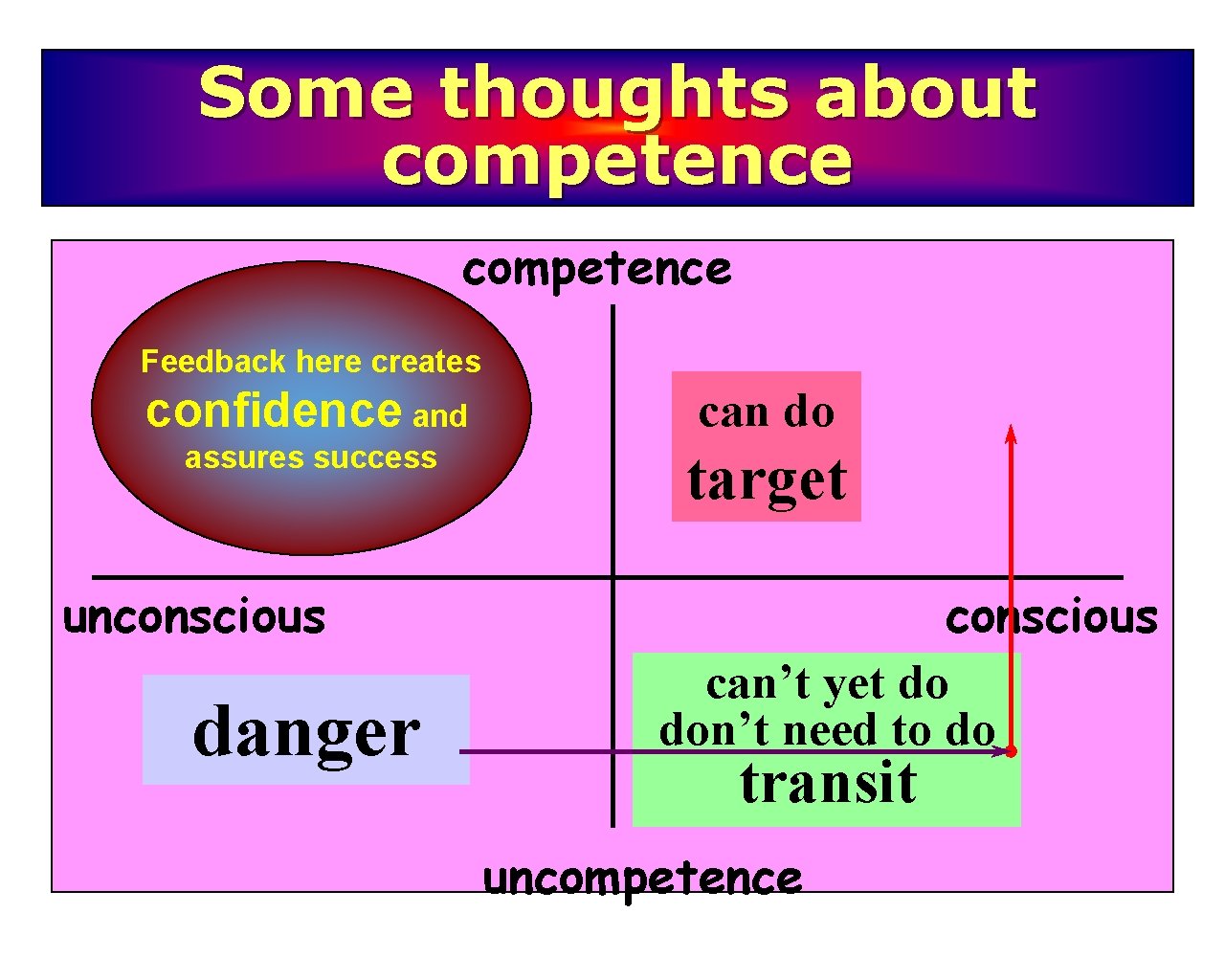
Some thoughts about competence Feedback here creates magic and confidence assures success unconscious danger can do target conscious can’t yet do don’t need to do transit uncompetence
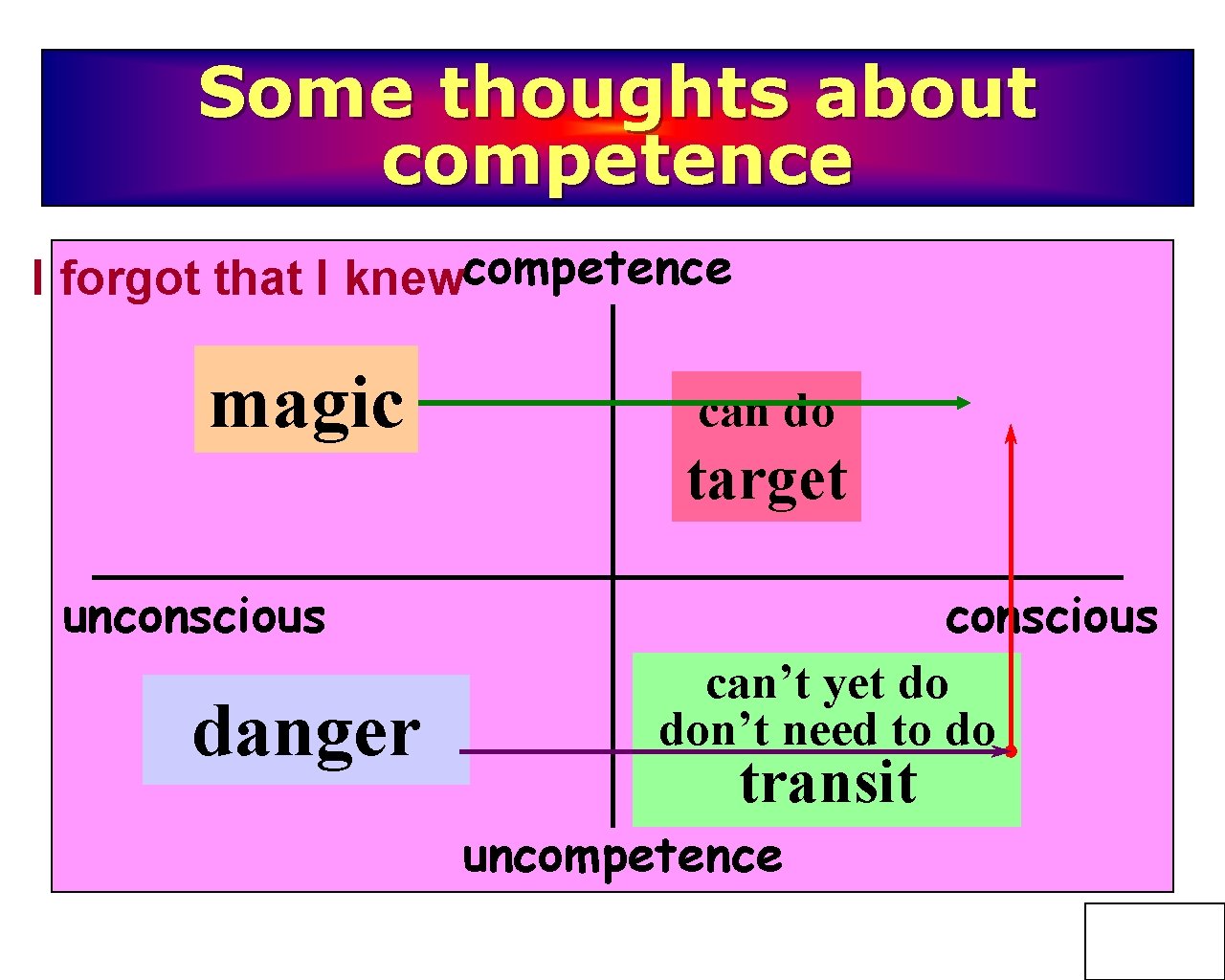
Some thoughts about competence I forgot that I knewcompetence magic unconscious danger can do target conscious can’t yet do don’t need to do transit uncompetence
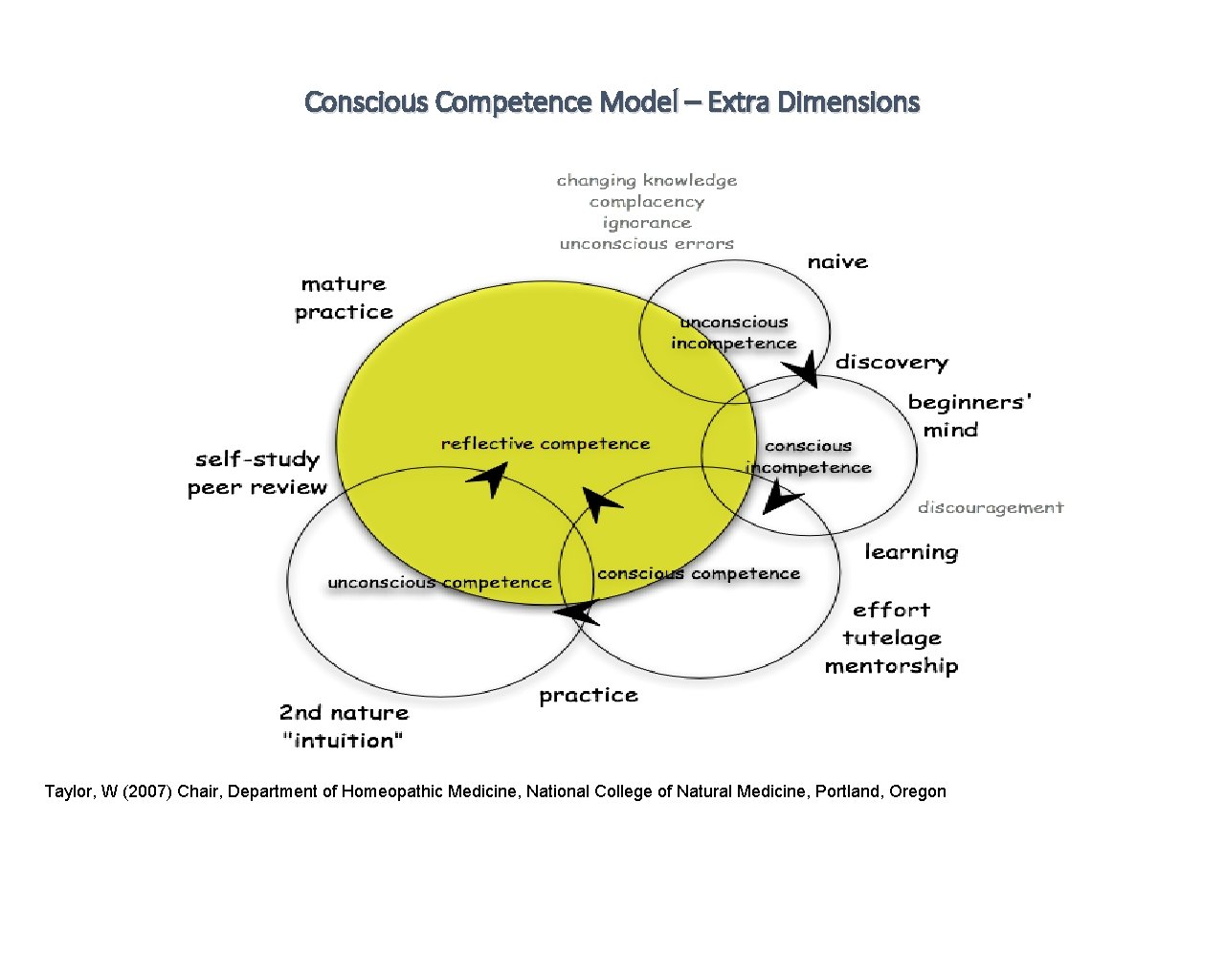
Conscious Competence Model – Extra Dimensions Taylor, W (2007) Chair, Department of Homeopathic Medicine, National College of Natural Medicine, Portland, Oregon
Activity 2 List 1. 2. Spend 5 minutes in your pair / team creating a list of all the different ways you assess your students On the post it notes note the ways in which feedback is provided to students on these assessments methods
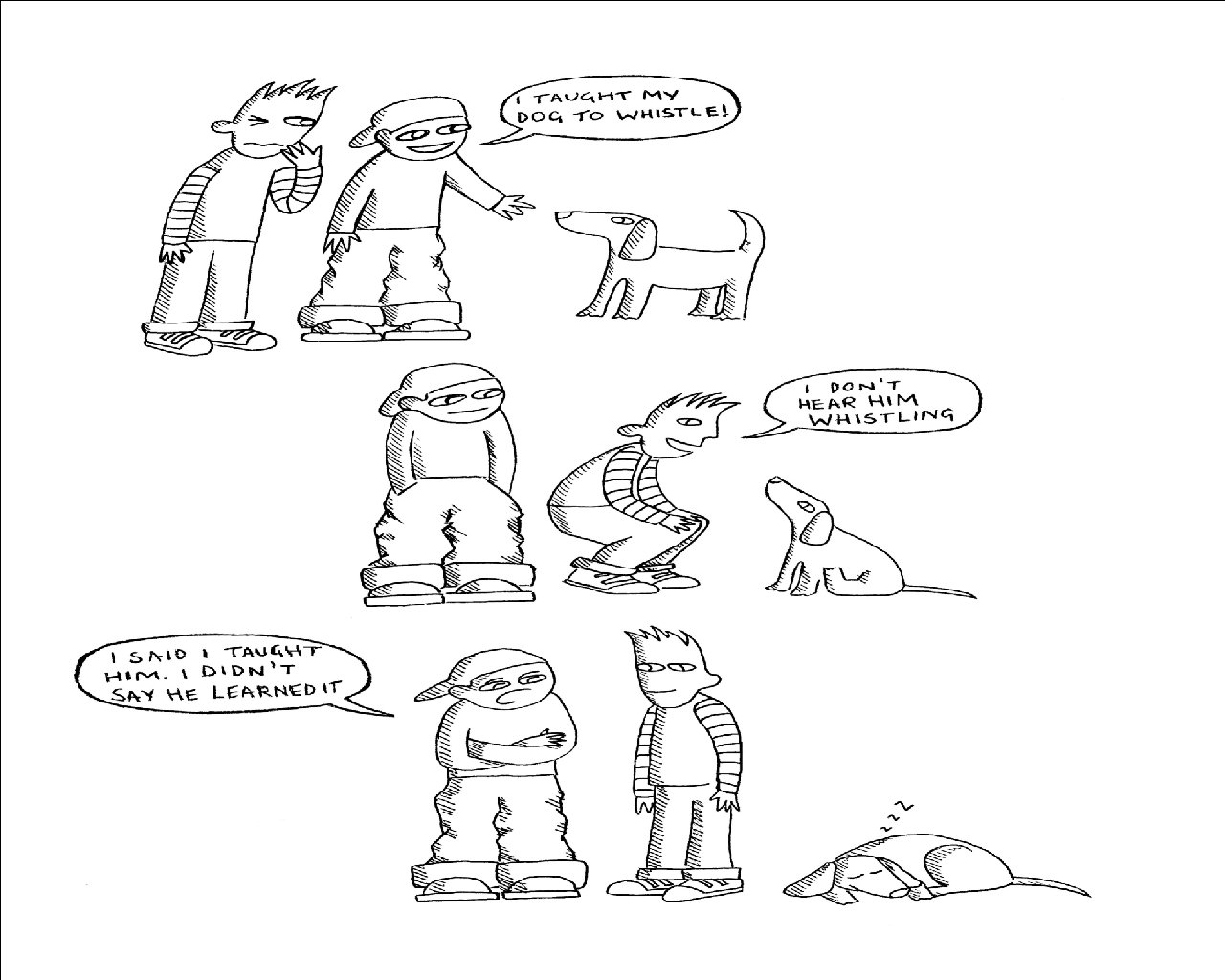
A quick question • Think of something you’ve taught for some time. Think back particularly to the first time you taught it. • To what extent did you find that you ‘had your head around it’ much better after teaching it for the first time? • Very much better: raise two hands • Somewhat better: raise one hand • No better: raise no hand
Another quick question. . . • Still thinking of the first time you taught that particular topic, think back to the first time you measured students’ learning of the topic. • To what extent did you find that after assessing students work, yourself had ‘made sense’ of the topic even more deeply? • Very much better: raise two hands • Somewhat better: raise one hand • No better: raise no hand
Fishing for feedback? Feedback is like fish. If it is not used quickly, it becomes useless. (Sally Brown). Give a man a fish, Feed him for a day. Teach a man to fish, And you won’t see him for weeks! (Australian proverb).
Increasing feedback efficiency and feedback • Exploit human nature – procrastination linked to peer, self and group feedback! • Get learners reflecting on their own assessment outcomes – develops their autonomy & can decrease your workloads – eventually
Questions / Final reflections
Links to further reading / literature / references • Brown, S. & Knight, P. (1994) Assessing Learners in Higher Education: London: Kogan Page • Race. P (2004) Using feedback to help students learn. Higher Education Academy [on-line] http: //cmsws 1. rdg. ac. uk/web/FILES/Engagein. Feedback/R ace_using_feedback_to_help_students_learn. pdf
- Slides: 31