
Approach to Tracheostomies Dr Neil Arnstead PGY5 Department




- Slides: 30
Approach to Tracheostomies Dr. Neil Arnstead PGY-5, Department of Otolaryngology University of Toronto
Educational Objectives 1. To describe tracheostomy anatomy and technique 2. To discuss indications for tracheostomy 3. To explain the common components of a tracheostomy tube 4. To highlight the management and recognition of commonly encountered complications 5. To understand considerations for decannulation
Anatomy and Technique
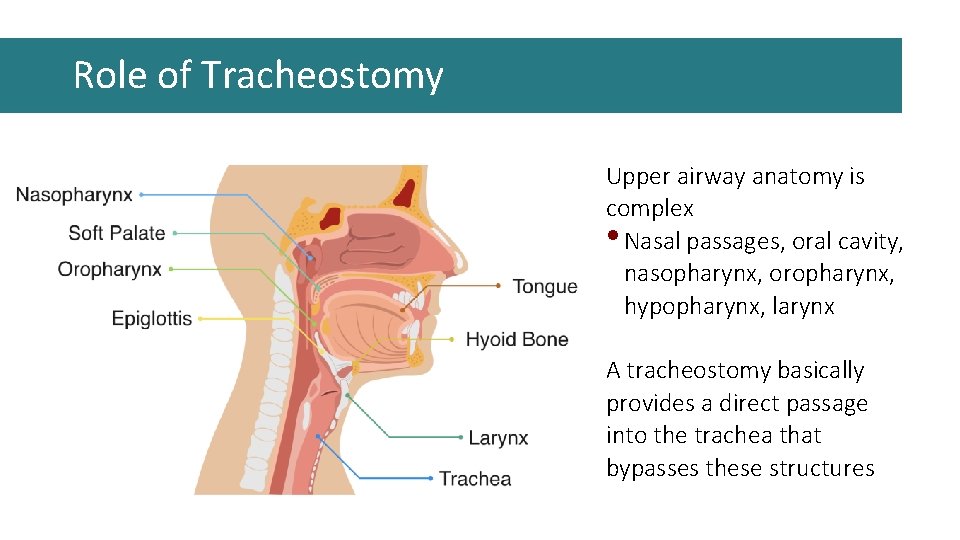
Role of Tracheostomy Upper airway anatomy is complex • Nasal passages, oral cavity, nasopharynx, oropharynx, hypopharynx, larynx A tracheostomy basically provides a direct passage into the trachea that bypasses these structures
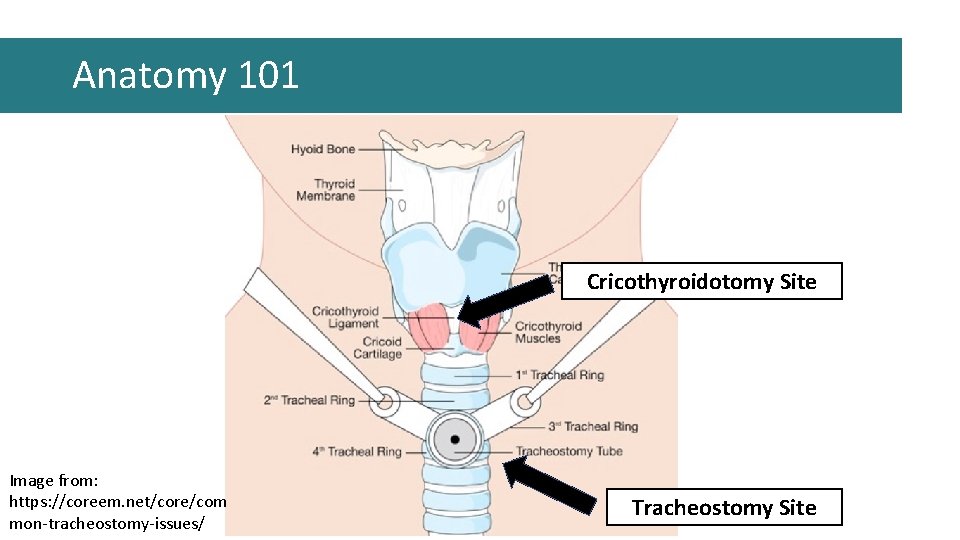
Anatomy 101 Cricothyroidotomy Site Image from: https: //coreem. net/core/com mon-tracheostomy-issues/ Tracheostomy Site
Cricothyroidotomy vs. Tracheostomy Cricothyroidotomy • Typically done in emergency situations • Surgical incision between the thyroid cartilage and cricoid cartilage • Pros: • Easy and fast to perform, does not require extensive training Go to approach in crash situations • Cons: • Temporary (must be converted to tracheostomy), small space, difficult to ventilate, risk of vocal cord injury, cannot be performed in laryngeal pathology
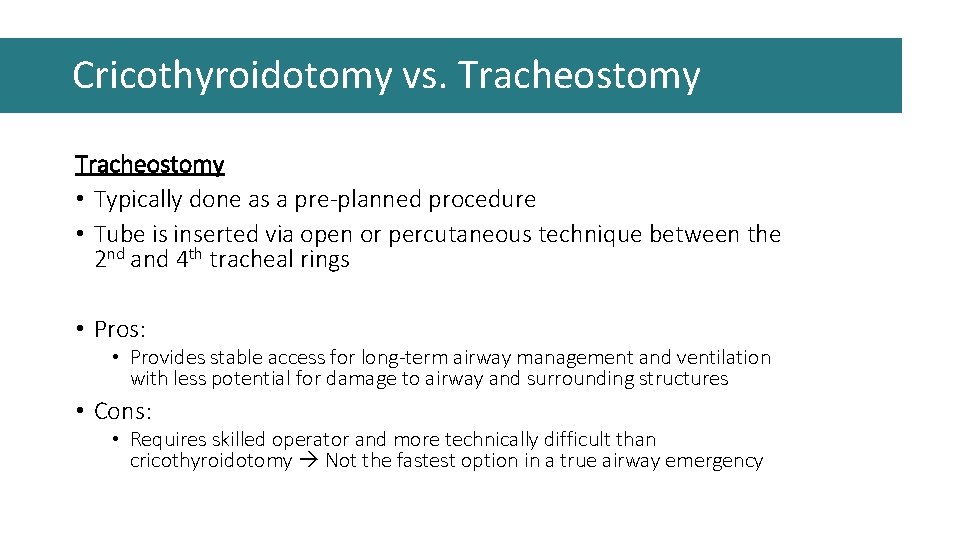
Cricothyroidotomy vs. Tracheostomy • Typically done as a pre-planned procedure • Tube is inserted via open or percutaneous technique between the 2 nd and 4 th tracheal rings • Pros: • Provides stable access for long-term airway management and ventilation with less potential for damage to airway and surrounding structures • Cons: • Requires skilled operator and more technically difficult than cricothyroidotomy Not the fastest option in a true airway emergency
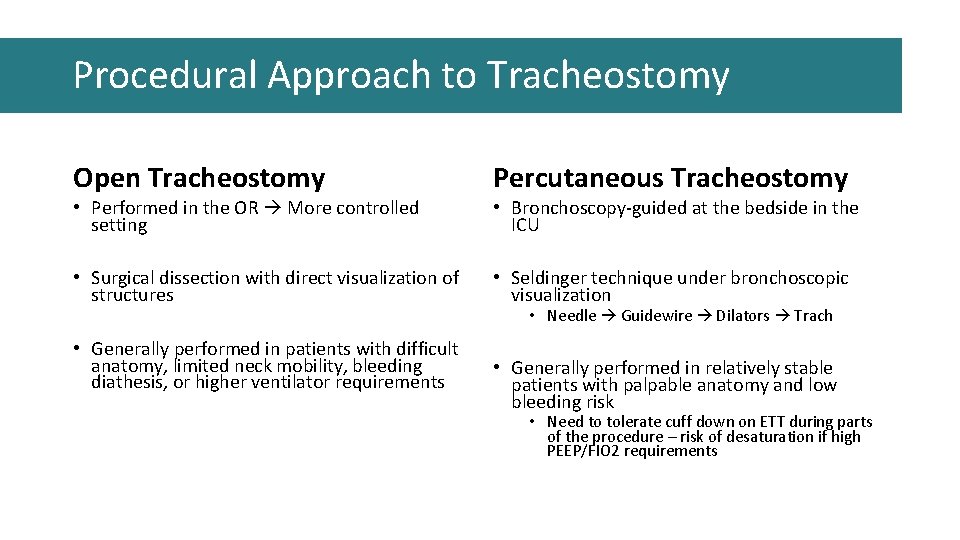
Procedural Approach to Tracheostomy Open Tracheostomy Percutaneous Tracheostomy • Performed in the OR More controlled setting • Bronchoscopy-guided at the bedside in the ICU • Surgical dissection with direct visualization of structures • Seldinger technique under bronchoscopic visualization • Generally performed in patients with difficult anatomy, limited neck mobility, bleeding diathesis, or higher ventilator requirements • Needle Guidewire Dilators Trach • Generally performed in relatively stable patients with palpable anatomy and low bleeding risk • Need to tolerate cuff down on ETT during parts of the procedure – risk of desaturation if high PEEP/FIO 2 requirements
Indications for Tracheostomy
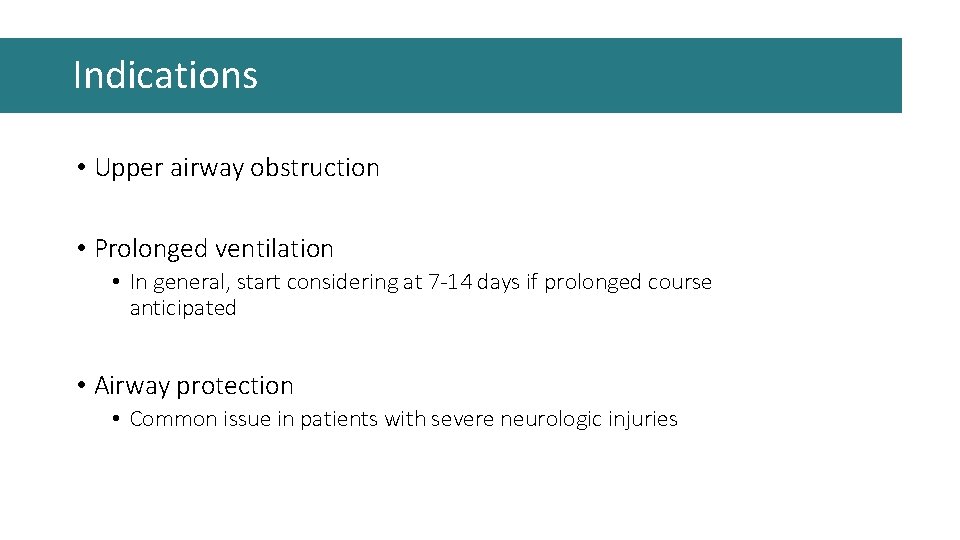
Indications • Upper airway obstruction • Prolonged ventilation • In general, start considering at 7 -14 days if prolonged course anticipated • Airway protection • Common issue in patients with severe neurologic injuries
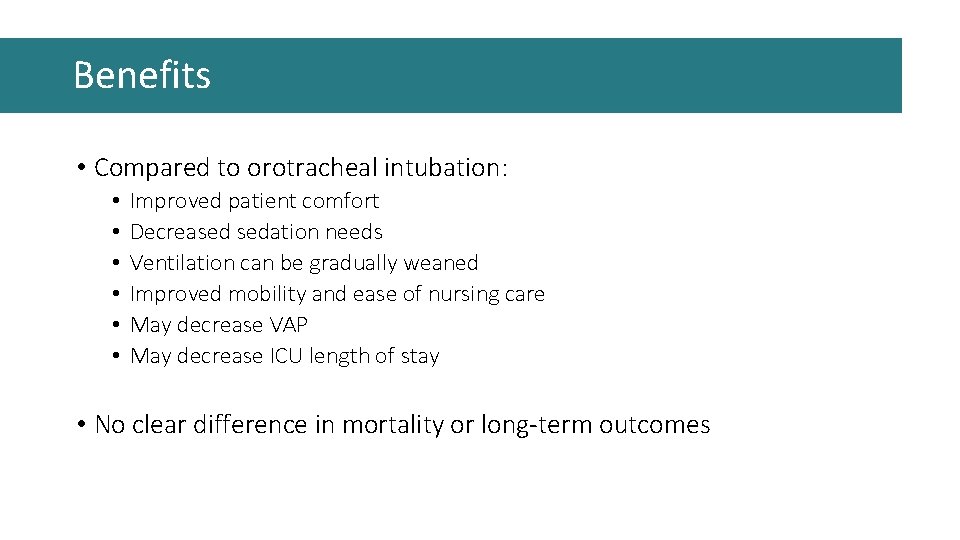
Benefits • Compared to orotracheal intubation: • • • Improved patient comfort Decreased sedation needs Ventilation can be gradually weaned Improved mobility and ease of nursing care May decrease VAP May decrease ICU length of stay • No clear difference in mortality or long-term outcomes
Tracheostomy Tubes 101
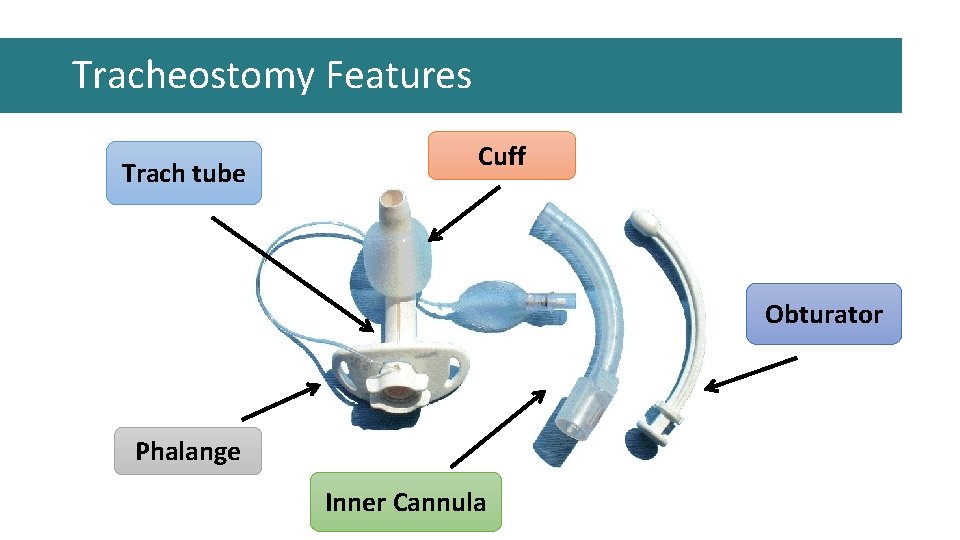
Tracheostomy Features Trach tube Cuff Obturator Phalange Inner Cannula
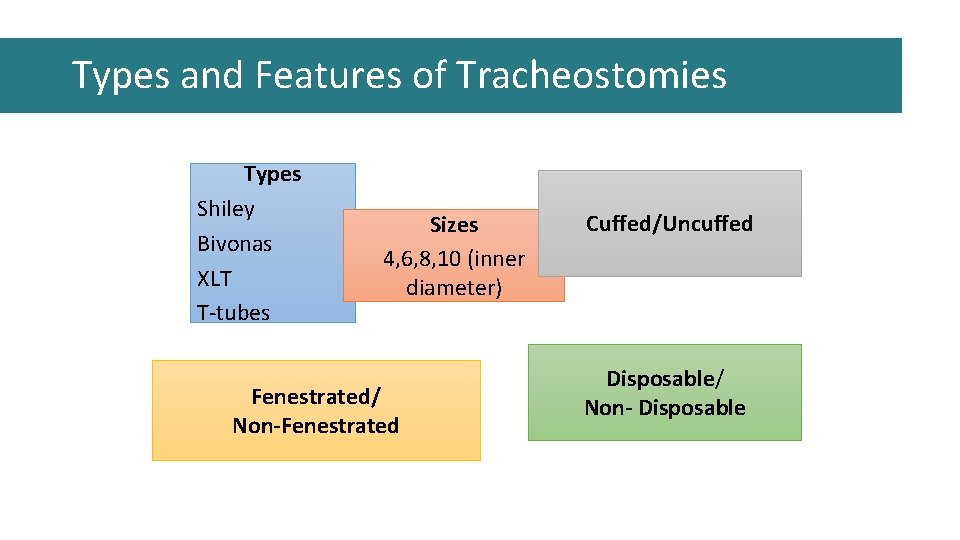
Types and Features of Tracheostomies Types Shiley Bivonas XLT T-tubes Sizes 4, 6, 8, 10 (inner diameter) Fenestrated/ Non-Fenestrated Cuffed/Uncuffed Disposable/ Non- Disposable
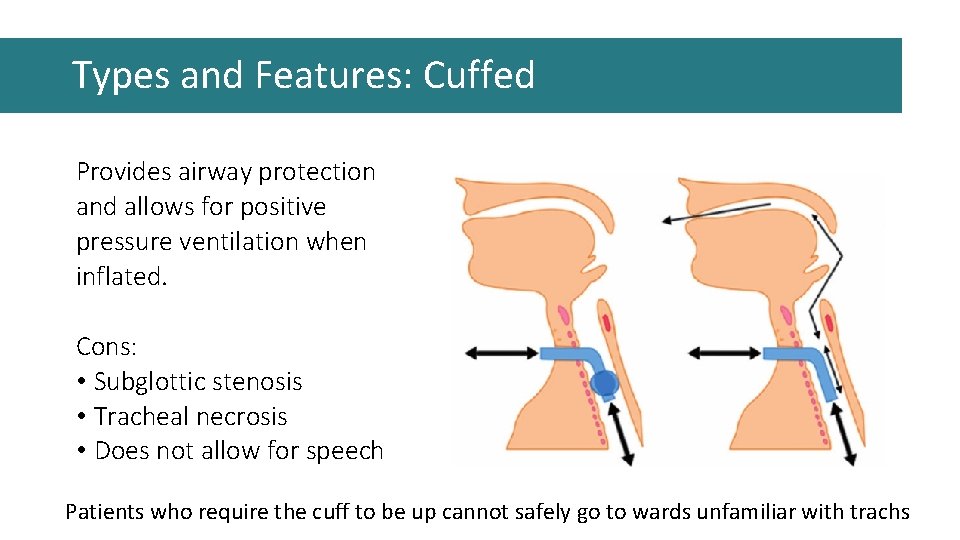
Types and Features: Cuffed Provides airway protection and allows for positive pressure ventilation when inflated. Cons: • Subglottic stenosis • Tracheal necrosis • Does not allow for speech Patients who require the cuff to be up cannot safely go to wards unfamiliar with trachs
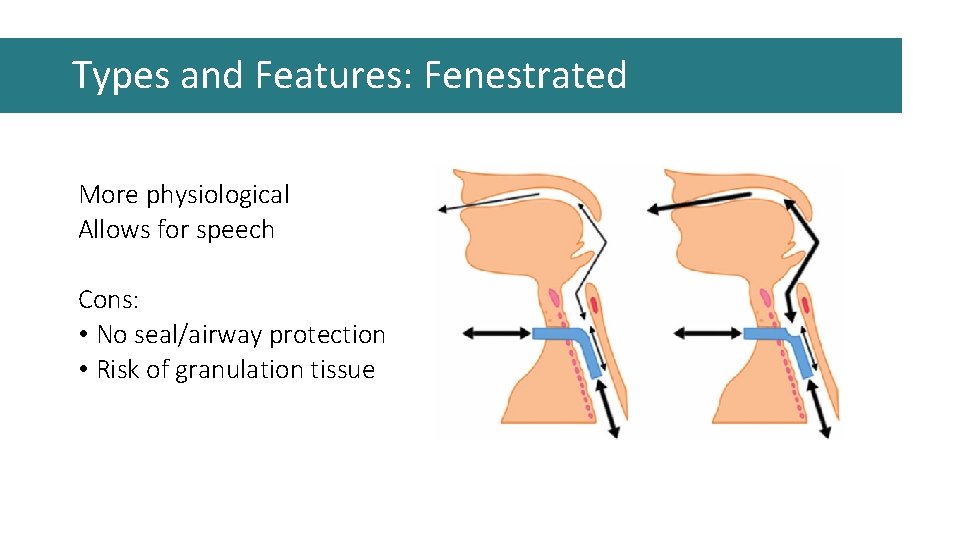
Types and Features: Fenestrated More physiological Allows for speech Cons: • No seal/airway protection • Risk of granulation tissue
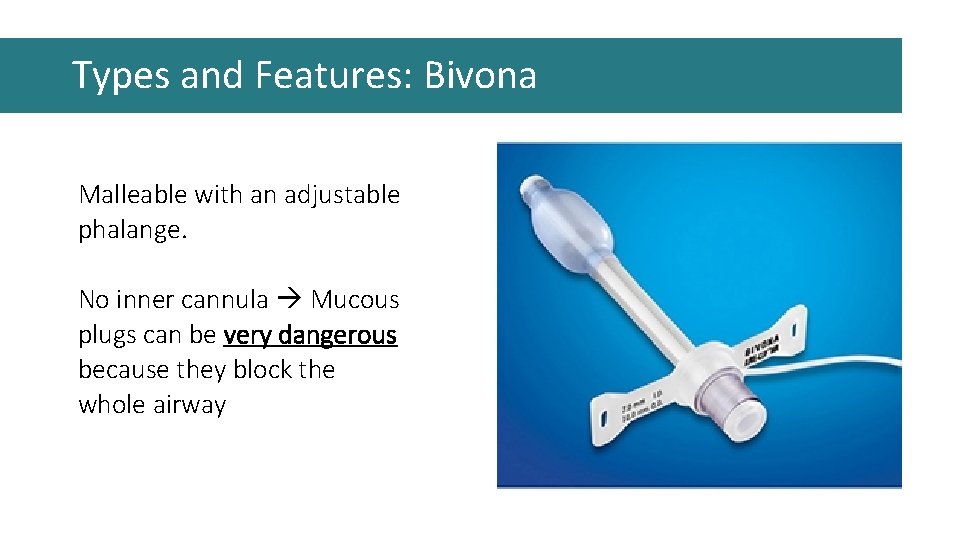
Types and Features: Bivona Malleable with an adjustable phalange. No inner cannula Mucous plugs can be very dangerous because they block the whole airway
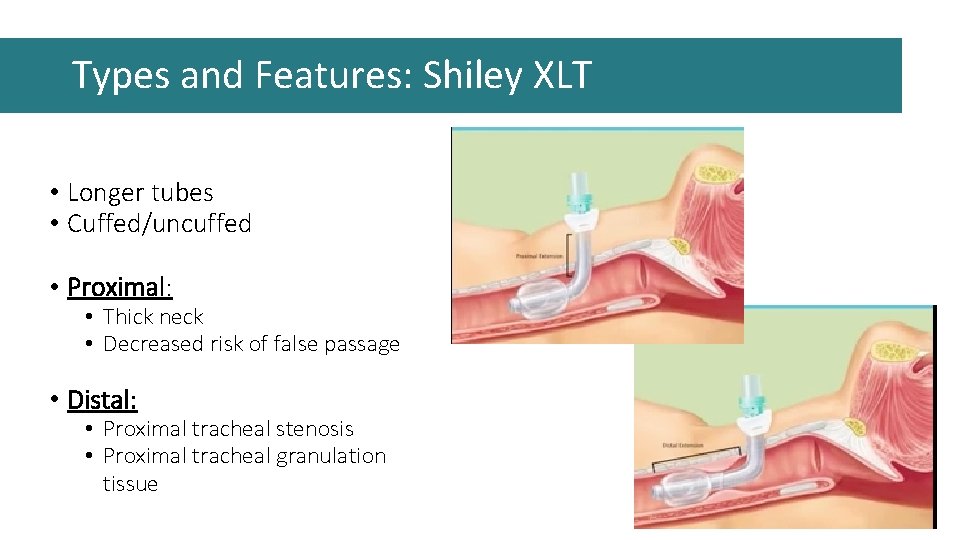
Types and Features: Shiley XLT • Longer tubes • Cuffed/uncuffed • Proximal: • Thick neck • Decreased risk of false passage • Distal: • Proximal tracheal stenosis • Proximal tracheal granulation tissue
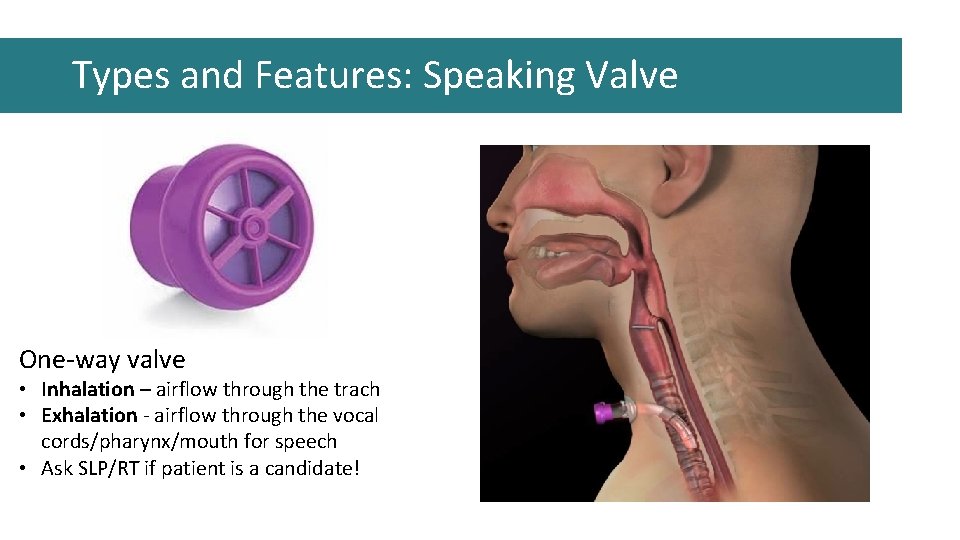
Types and Features: Speaking Valve One-way valve • Inhalation – airflow through the trach • Exhalation - airflow through the vocal cords/pharynx/mouth for speech • Ask SLP/RT if patient is a candidate!
Tracheostomy Complications
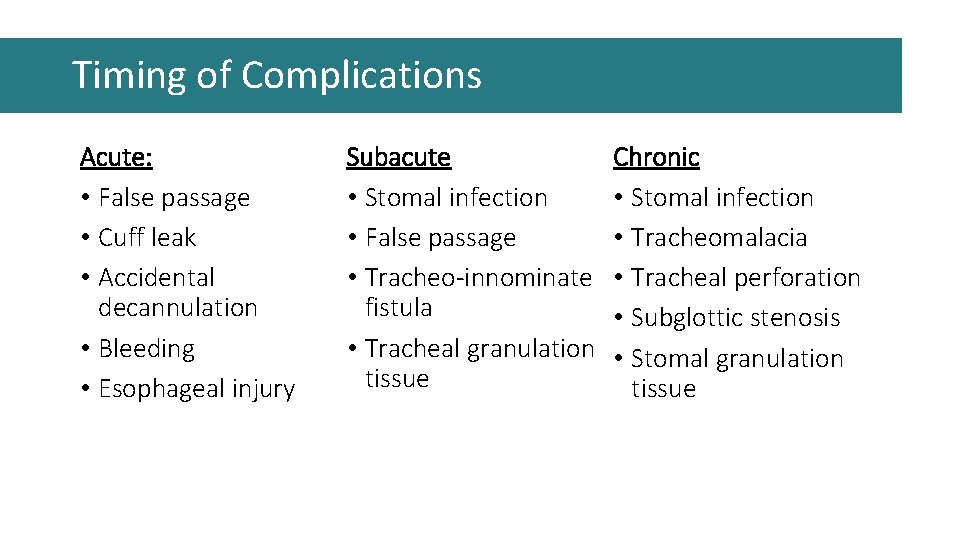
Timing of Complications Acute: • False passage • Cuff leak • Accidental decannulation • Bleeding • Esophageal injury Subacute • Stomal infection • False passage • Tracheo-innominate fistula • Tracheal granulation tissue Chronic • Stomal infection • Tracheomalacia • Tracheal perforation • Subglottic stenosis • Stomal granulation tissue
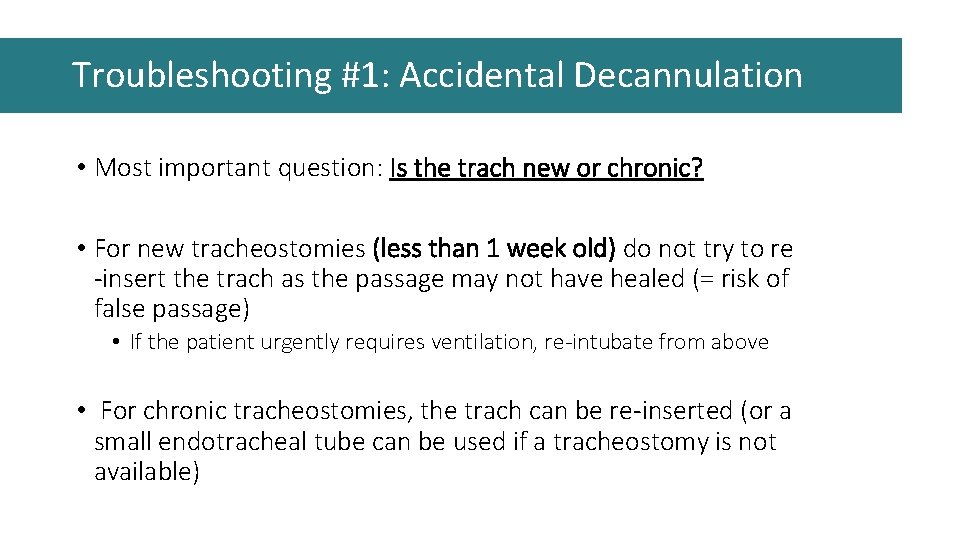
Troubleshooting #1: Accidental Decannulation • Most important question: Is the trach new or chronic? • For new tracheostomies (less than 1 week old) do not try to re -insert the trach as the passage may not have healed (= risk of false passage) • If the patient urgently requires ventilation, re-intubate from above • For chronic tracheostomies, the trach can be re-inserted (or a small endotracheal tube can be used if a tracheostomy is not available)
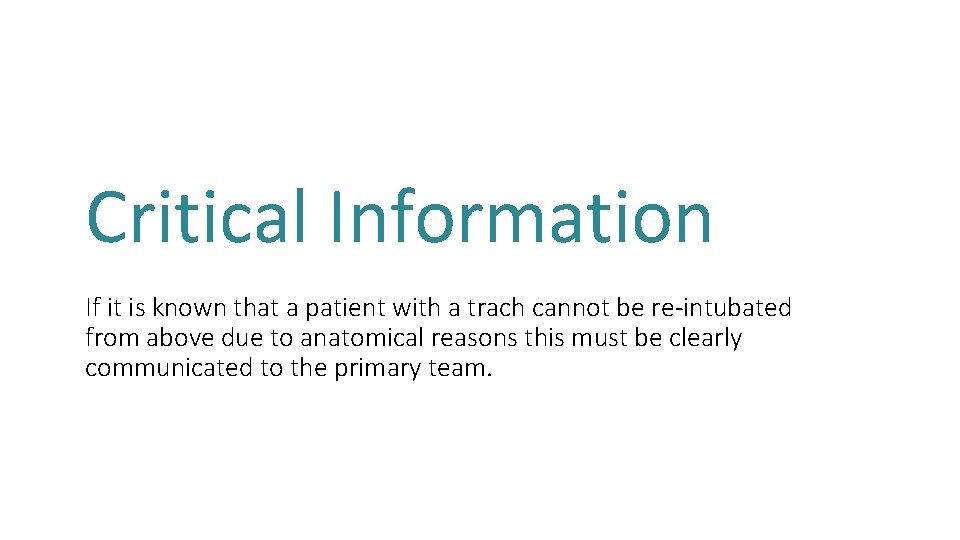
Critical Information If it is known that a patient with a trach cannot be re-intubated from above due to anatomical reasons this must be clearly communicated to the primary team.
Troubleshooting #2: Bleeding at Trach Site • Address ABCs as you would for any bleeding patient • Ensure the cuff is inflated • In first two weeks, most common cause = soft tissue bleeding along tract BUT • All hemorrhages can be considered sentinel bleeds for tracheo-innominate fistula • 70% within 3 weeks of the procedure • 50% will have a sentinel bleed preceding the catastrophic hemorrhage • Let the team who performed the procedure know if bleeding is an issue
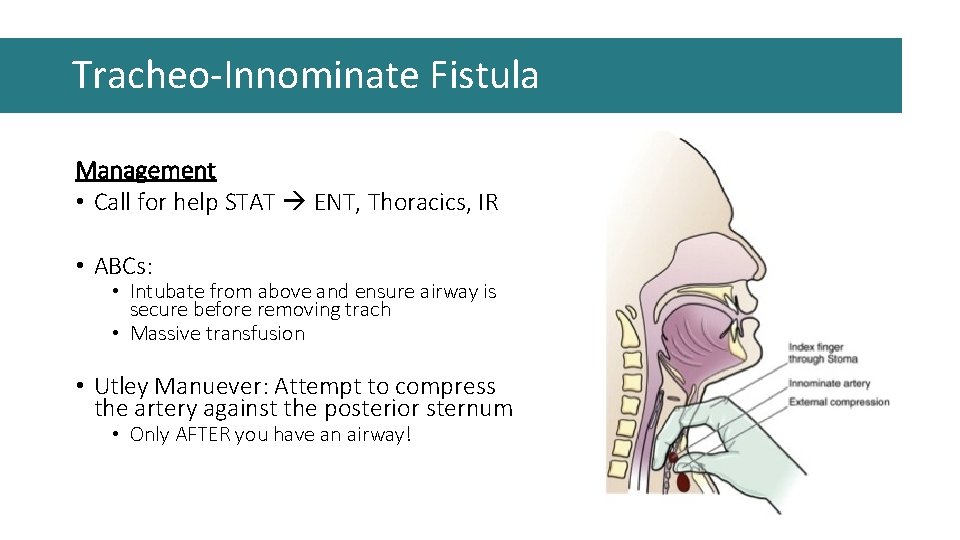
Tracheo-Innominate Fistula Management • Call for help STAT ENT, Thoracics, IR • ABCs: • Intubate from above and ensure airway is secure before removing trach • Massive transfusion • Utley Manuever: Attempt to compress the artery against the posterior sternum • Only AFTER you have an airway!
Troubleshooting #3: Cannot Pass Suction Catheter • Remove the inner cannula as it may be blocked with mucous • If still cannot pass suction catheter with inner cannula removed Suspect false passage • This is when the trach ends up outside of the trachea in the soft tissues of the neck • If the patient’s saturation and breathing are okay Get help to confirm false passage and change the trach • If the patient is in distress Re-intubate from above
Decannulation
Three Important Considerations 1. Why did the patient originally need the tracheostomy? 2. Do they still need the tracheostomy? 3. How can we proceed towards safe decannulation?
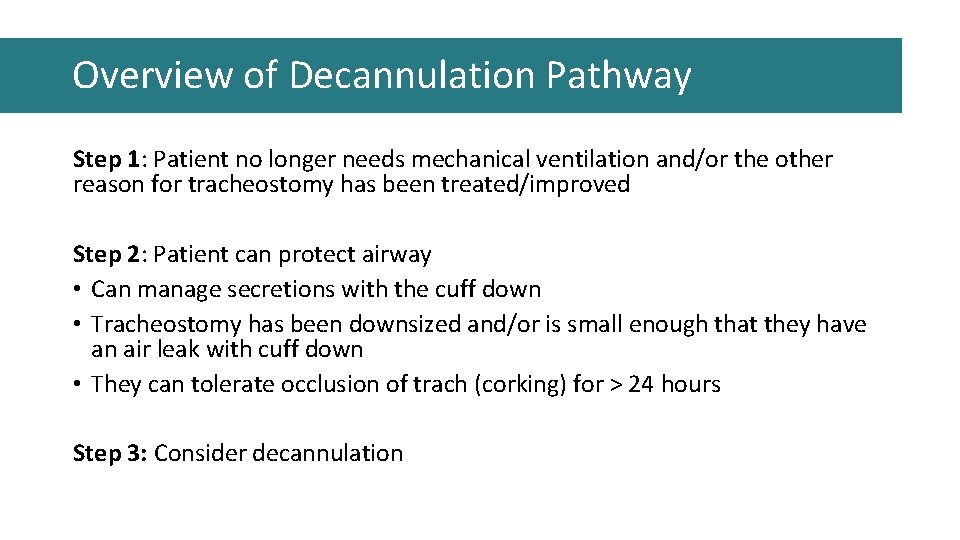
Overview of Decannulation Pathway Step 1: Patient no longer needs mechanical ventilation and/or the other reason for tracheostomy has been treated/improved Step 2: Patient can protect airway • Can manage secretions with the cuff down • Tracheostomy has been downsized and/or is small enough that they have an air leak with cuff down • They can tolerate occlusion of trach (corking) for > 24 hours Step 3: Consider decannulation
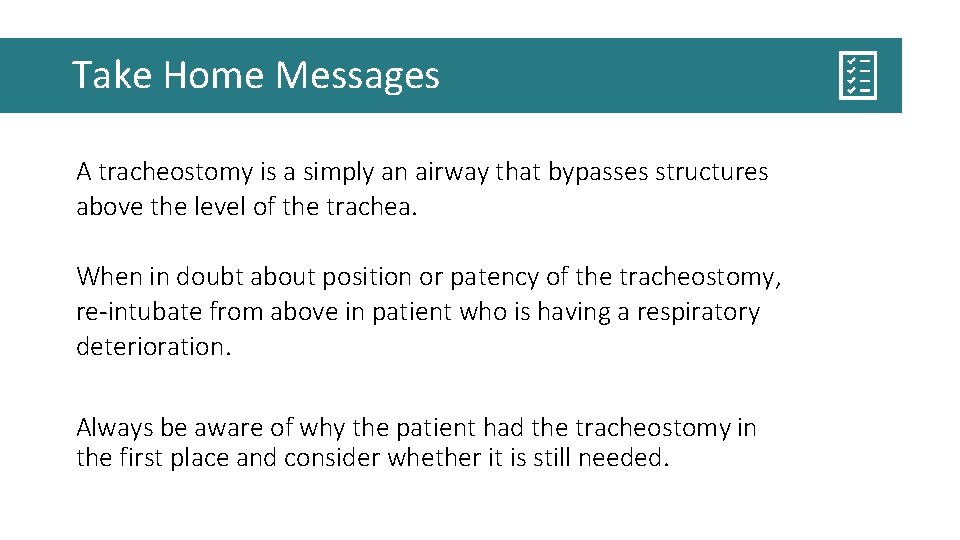
Take Home Messages A tracheostomy is a simply an airway that bypasses structures above the level of the trachea. When in doubt about position or patency of the tracheostomy, re-intubate from above in patient who is having a respiratory deterioration. Always be aware of why the patient had the tracheostomy in the first place and consider whether it is still needed.