
Approach to the Bleeding Patient Clinical Assessment Laboratory
Approach to the Bleeding Patient • Clinical Assessment • Laboratory Assessment
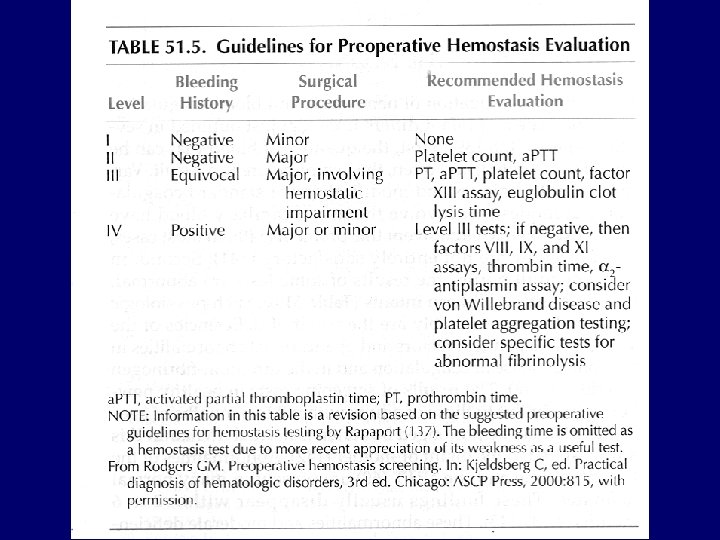
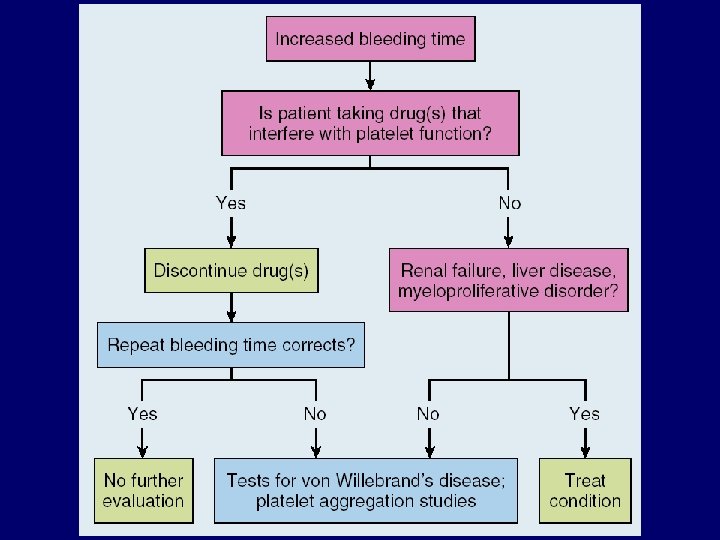
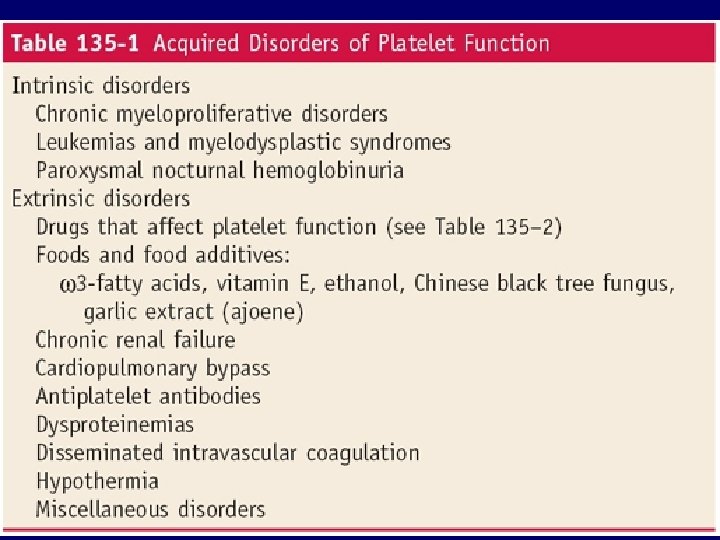
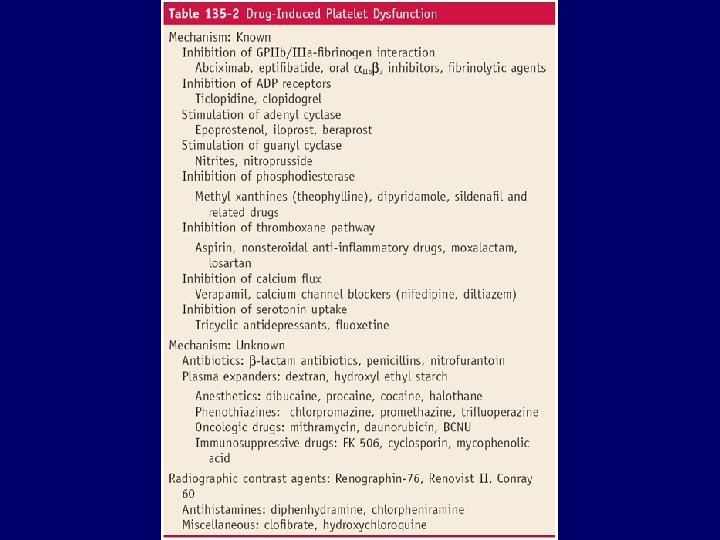
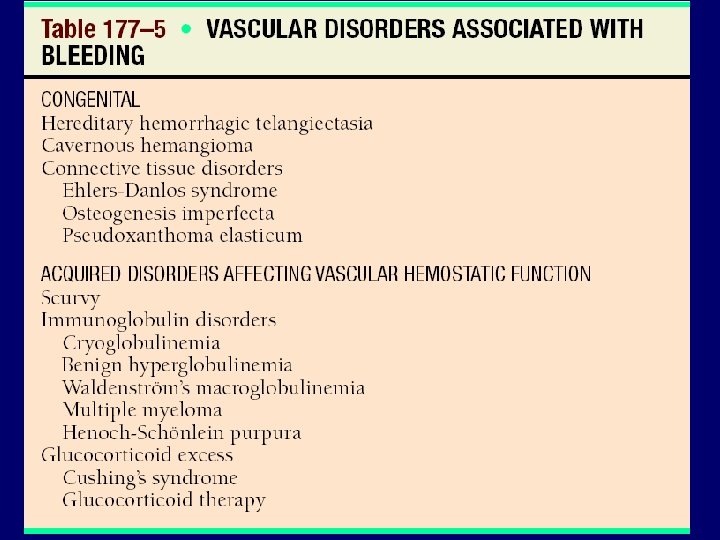
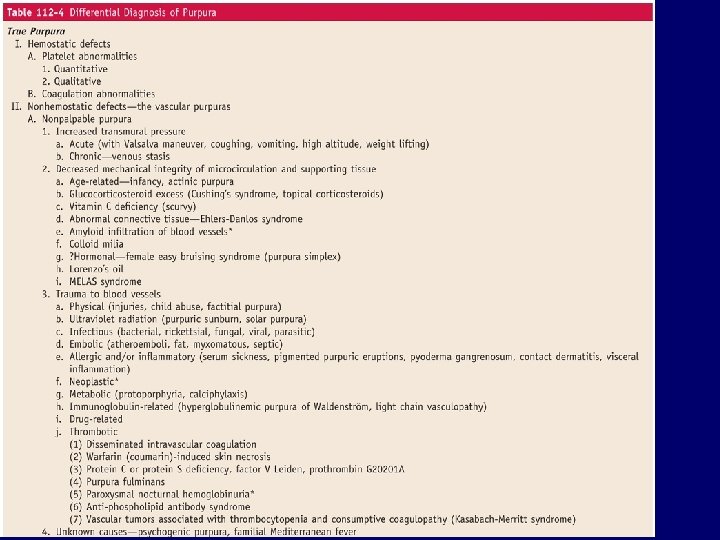
Clinical Assessment: Major issues to be determined, principally from the medical history • Is a bleeding tendency present? • Is the condition familial or acquired? • Is the disorder one affecting primary hemostasis (platelet or vessel wall dependent) or one affecting fibrin formation and stability (dependent on the fluid phase of coagulation)? • Is there another disorder present that could be the cause of or might exacerbate any bleeding tendency? • Is the increased bleeding pharmacologically

Is a Bleeding Disorder Present? • Easy bruising: large lesion, on the trunk, without trauma • Mucosal Bleeding: epistaxis, gingival bleeding, blood blister hematuria, hemoptysis, hematemesis, melena, rectal bldg • Menorrhagia: > 7 days, heavy losses > 3 days, causing IDA • Surgical Hemorrhage: dental extraction, tonsillectomy, delayed wound healing, unusual transfusion • Postpartum Hemorrhage


“The application of the basic clinical skills of history taking and clinical examination are essential components in the assessment of bleeding risk. The use of laboratory tests of coagulation and hemostasis can in no way act as a substitute for clinical assessment. ”

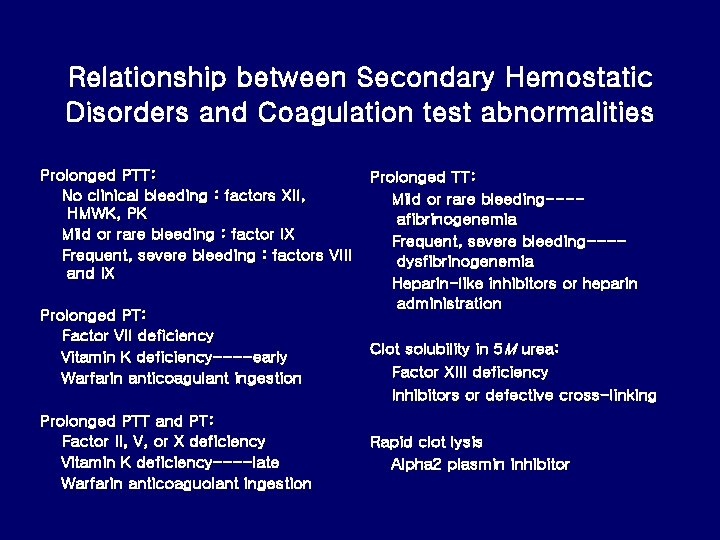
Relationship between Secondary Hemostatic Disorders and Coagulation test abnormalities Prolonged PTT: No clinical bleeding : factors XII, HMWK, PK Mild or rare bleeding : factor IX Frequent, severe bleeding : factors VIII and IX Prolonged PT: Factor VII deficiency Vitamin K deficiency----early Warfarin anticoagulant ingestion Prolonged PTT and PT: Factor II, V, or X deficiency Vitamin K deficiency----late Warfarin anticoaguolant ingestion Prolonged TT: Mild or rare bleeding---afibrinogenemia Frequent, severe bleeding---dysfibrinogenemia Heparin-like inhibitors or heparin administration Clot solubility in 5 M urea: Factor XIII deficiency Inhibitors or defective cross-linking Rapid clot lysis Alpha 2 plasmin inhibitor

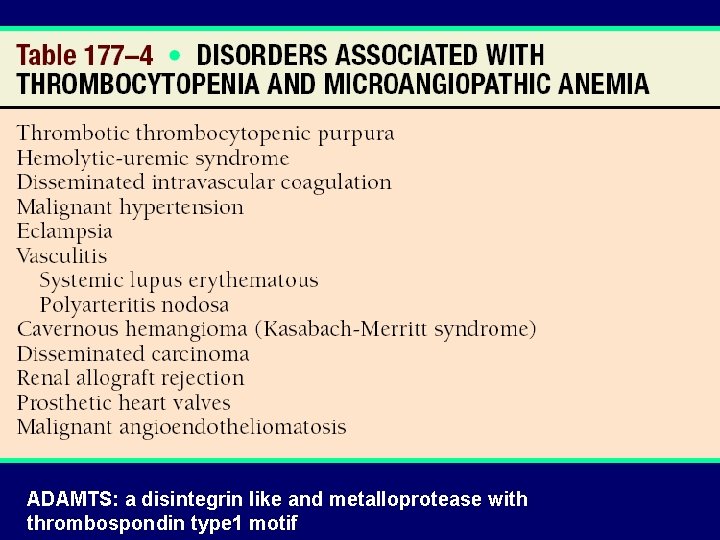
ADAMTS: a disintegrin like and metalloprotease with thrombospondin type 1 motif
- Slides: 32