
Approach to seizure disorder in children Dr A

- Slides: 44
Approach to seizure disorder in children Dr. A. VASUNDHARA, Professor and HOD, Department of Pediatrics
Seizure definition �Sudden paroxysmal transitory disturbance in brain function which starts suddenly, stops spontaneously and shows a tendency to recur. �Manifestations can include motor, sensory , psychic , (or) autonomic disturbances with (or) without alteration in sensorium.
�Convulsion Seizure with predominant motor manifestation �Epilepsy Two or more recurrent seizures occur at an interval greater than 24 hr. . apart.
CONDITIONS THAT MIMIC SEIZURES � Syncope & Breath holding spell � Psychological � Sleep-related disorders episodes � Paroxysmal movement disorders � Migraine and related disorders � Neurologic disorders � Movements disorders
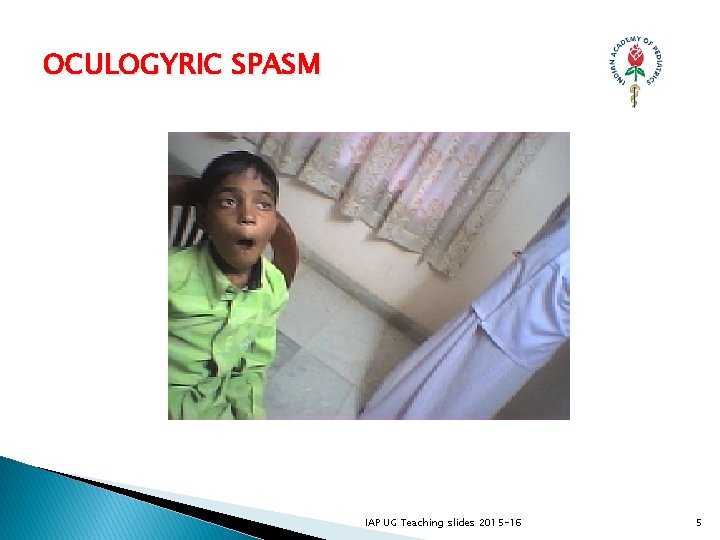
OCULOGYRIC SPASM IAP UG Teaching slides 2015 -16 5
STEPS IN DIAGNOSIS � Accurate seizure description � Perinatal history � Developmental history � Family history of seizures � Etiology � Signs of raised ICT � Signs of neurodegenerative , metabolic or congenital disorders
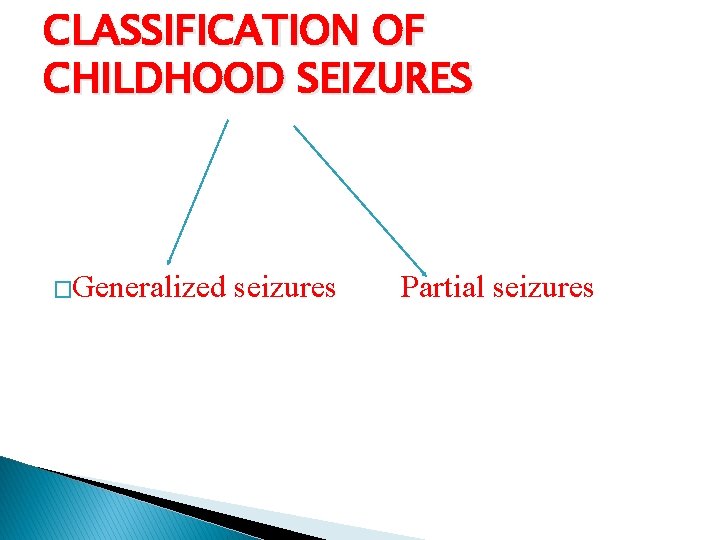
CLASSIFICATION OF CHILDHOOD SEIZURES �Generalized seizures Partial seizures
GENERALIZED SEIZURES 1. Convulsive Tonic – Clonic Tonic Clonic Myoclonic Atonic 2. Nonconvulsive Absence Atonic
PARTIAL SEIZURES �Simple �Complex �Secondary generalized
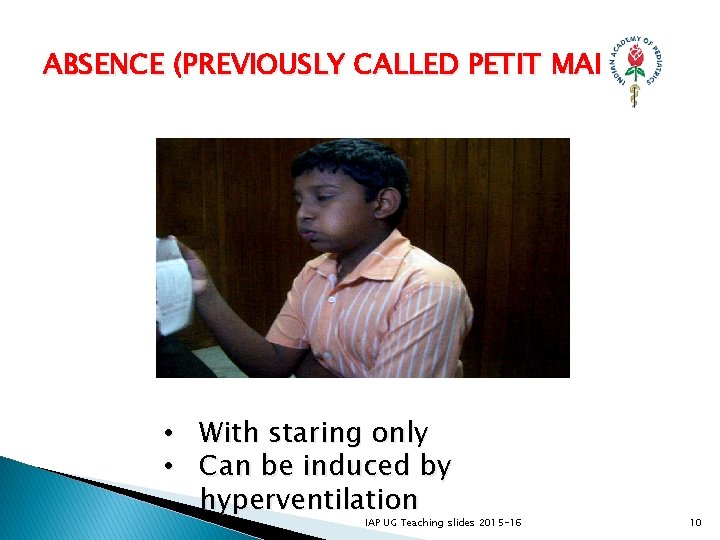
ABSENCE (PREVIOUSLY CALLED PETIT MAL)) • With staring only • Can be induced by hyperventilation IAP UG Teaching slides 2015 -16 10
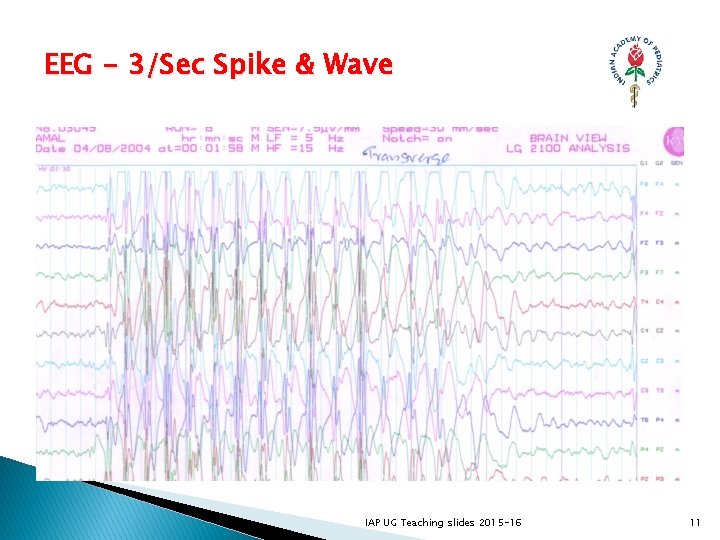
EEG - 3/Sec Spike & Wave IAP UG Teaching slides 2015 -16 11
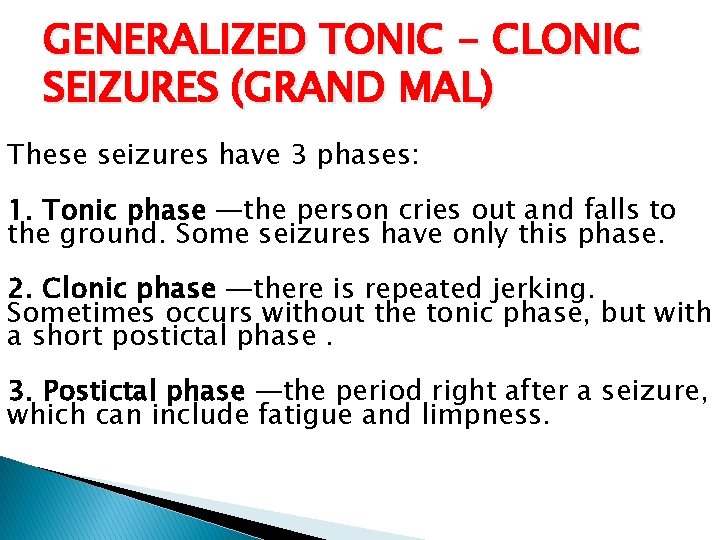
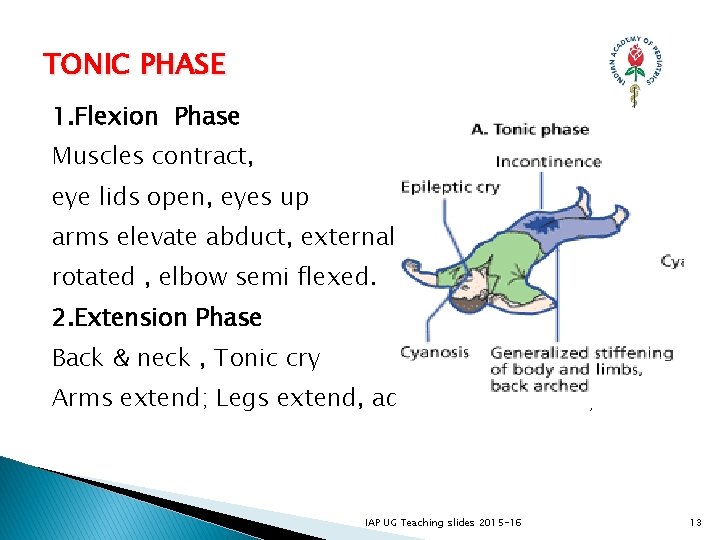
GENERALIZED TONIC - CLONIC SEIZURES (GRAND MAL) These seizures have 3 phases: 1. Tonic phase —the person cries out and falls to the ground. Some seizures have only this phase. 2. Clonic phase —there is repeated jerking. Sometimes occurs without the tonic phase, but with a short postictal phase. 3. Postictal phase —the period right after a seizure, which can include fatigue and limpness.
TONIC PHASE 1. Flexion Phase Muscles contract, eye lids open, eyes up arms elevate abduct, externally rotated , elbow semi flexed. 2. Extension Phase Back & neck , Tonic cry Arms extend; Legs extend, adduct & Externally rotate. IAP UG Teaching slides 2015 -16 13
GTCS - CLONIC PHASE � 30 sec -1 min � Begins when muscular relaxation completely interrupts tonic contraction. � Brief violent flexor spasm of whole body. � Autonomic • Post ictal - Immediate 1 -5 min long 2 -10 min
PARTIAL SEIZURES � Partial seizures are those in which the seizure activity is restricted to discrete areas of the cerebral cortex and are usually associated with structural abnormalities of the brain. � Manifestations can include motor, sensory , psychic, autonomic with aura.
SIMPLE PARTIAL SEIZURES � Rarely lasts longer than a minute. � Typically � Aura begins in hand, foot, or face. of numbness, tingling, crawling feeling. � Without alteration in sensorium -> SIMPLE.
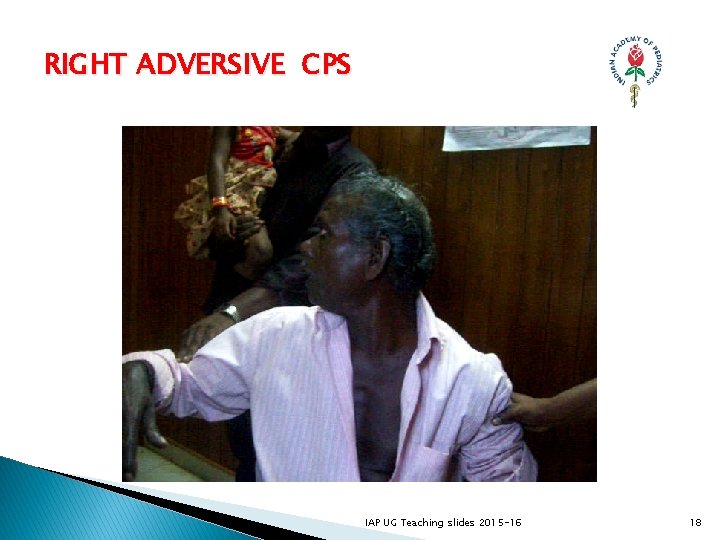
COMPLEX PARTIAL SEIZURES Alteration in consciousness, associated with complex distortion of feeling and thinking and partially coordinated motor activity. � May continue an activity that was initiated before seizure (striking hand on table). � With alteration in sensorium = complex partial seizures. � +/- Automatism. �
RIGHT ADVERSIVE CPS IAP UG Teaching slides 2015 -16 18
PARTIAL (ARISING FROM A FOCAL OR LOCAL CORTICAL LESION) Types of Partial seizures evolving to secondary generalised seizures � Simple partial evolving to secondary generalised � Complex partial evolving to secondary generalised � Simple partial evolving to complex partial evolving to secondary generalised.
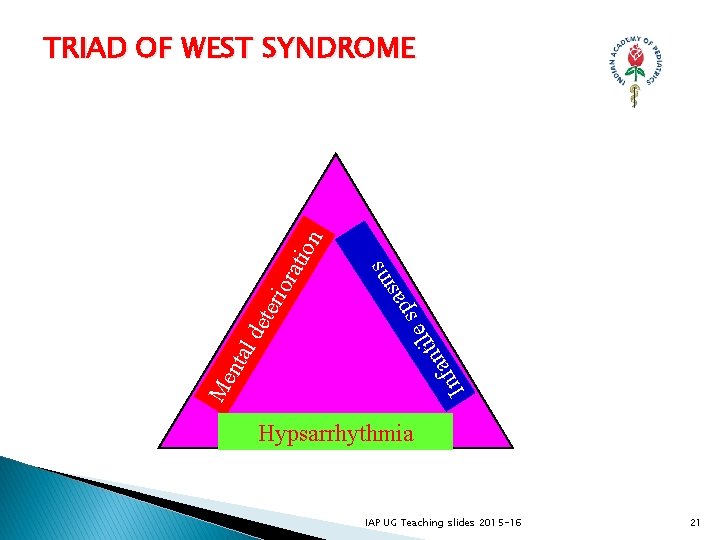
INFANTILE SPASMS (WEST SYNDROME) � Age at onset: < 1 yr (peak 4 – 10 m) � Seizure types: Spasms, Partial. � Neurological exam: Regression; Mental deterioration: � Investigations: EEG � Skin examination; Metabolic screening; MRI; Genetic studies � Treatment: � Prognosis: Steroids , Vigabatrin, Nitrazepam Etiology dependent
n a f In s e l ti p s m as Me nta ld ete rio rat ion TRIAD OF WEST SYNDROME Hypsarrhythmia IAP UG Teaching slides 2015 -16 21
ETIOLOGY � Infections Of The CNS ◦ Acquired bacterial meningitis, TB meningitis, aseptic meningitis, encephalitis, cerebral malaria, tetanus, mumps, encephalopathy, measles encephalopathy and Reye’s syndrome. ◦ Intrauterine infections �Metabolic Causes ◦ Dehydration, dyselectrolytemia, acidosis, alkalosis ◦ Hypoglycemia, Hyperglycemia and inborn errors of metabolism
ETIOLOGY – CONT. � Post Infectious (Or) Post Vaccinal Encephalopathy � Space Occupying Lesions ◦ Neoplasm of brain, Brain abscess, Tuberculoma, Cysticercosis. � Vascular ◦ Arteriovenous malformations, Intracranial Thrombosis (or) ◦ Haemorrhage and Consumptive Coagulopathies. • Genetic ◦ Congenital Malformations, Migration defects, • Trauma
ETIOLOGY – CONT. �Miscellaneous Causes ◦ Anoxic / Hypoxic Ischemic Encephalopathy stage , heat stroke, Hypertensive encephalopathy, grey matter degeneration, and storage disorders. �Drugs And Poisons ◦ Toxic doses of Phenothiazine, Salicylate, Diphenylhydantoin, Strychnine
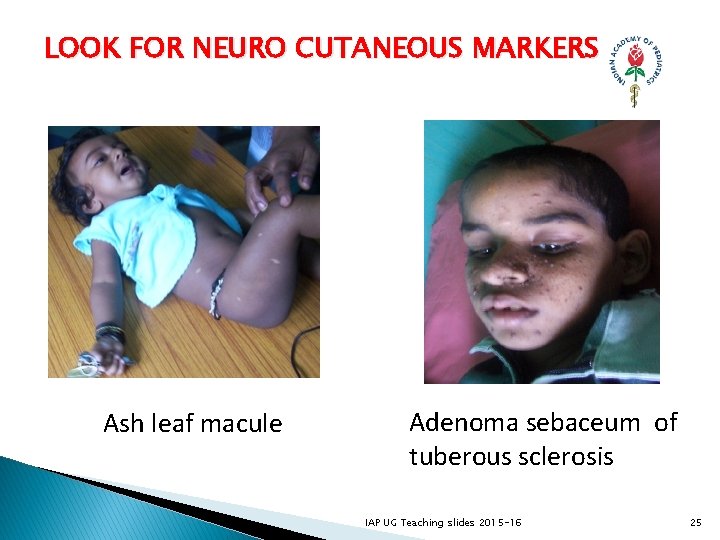
LOOK FOR NEURO CUTANEOUS MARKERS Ash leaf macule Adenoma sebaceum of tuberous sclerosis IAP UG Teaching slides 2015 -16 25
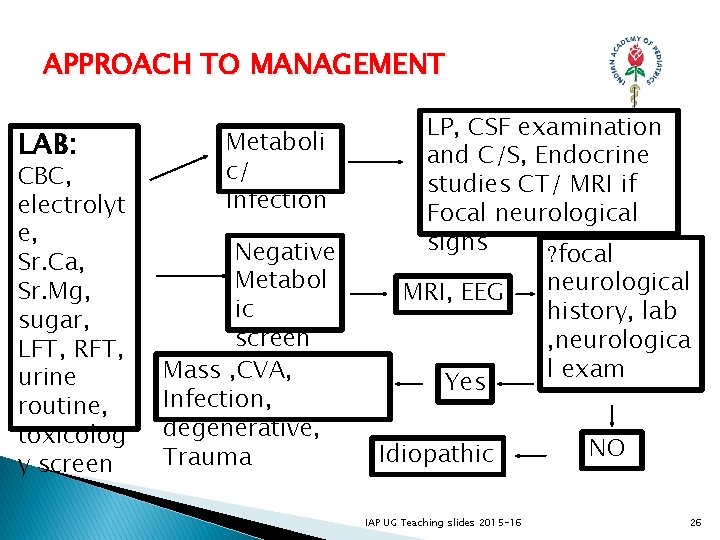
APPROACH TO MANAGEMENT LAB: CBC, electrolyt e, Sr. Ca, Sr. Mg, sugar, LFT, RFT, urine routine, toxicolog y screen Metaboli c/ Infection Negative Metabol ic screen Mass , CVA, Infection, degenerative, Trauma LP, CSF examination and C/S, Endocrine studies CT/ MRI if Focal neurological signs ? focal MRI, EEG Yes Idiopathic IAP UG Teaching slides 2015 -16 neurological history, lab , neurologica l exam NO 26
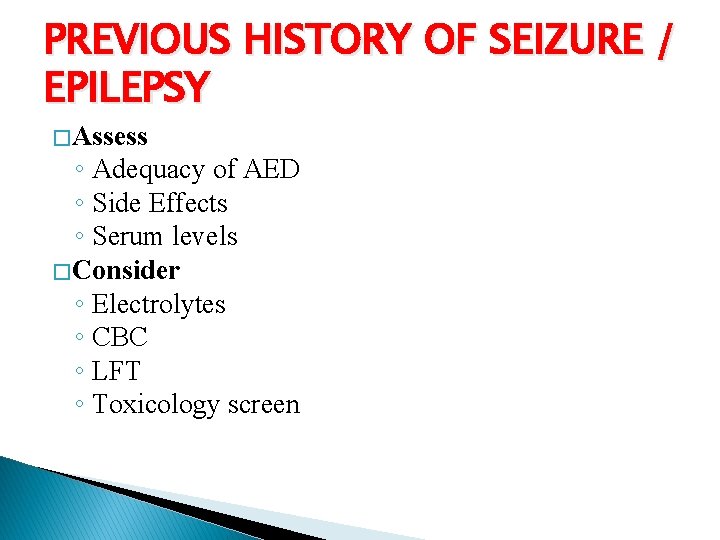
PREVIOUS HISTORY OF SEIZURE / EPILEPSY � Assess ◦ Adequacy of AED ◦ Side Effects ◦ Serum levels � Consider ◦ Electrolytes ◦ CBC ◦ LFT ◦ Toxicology screen
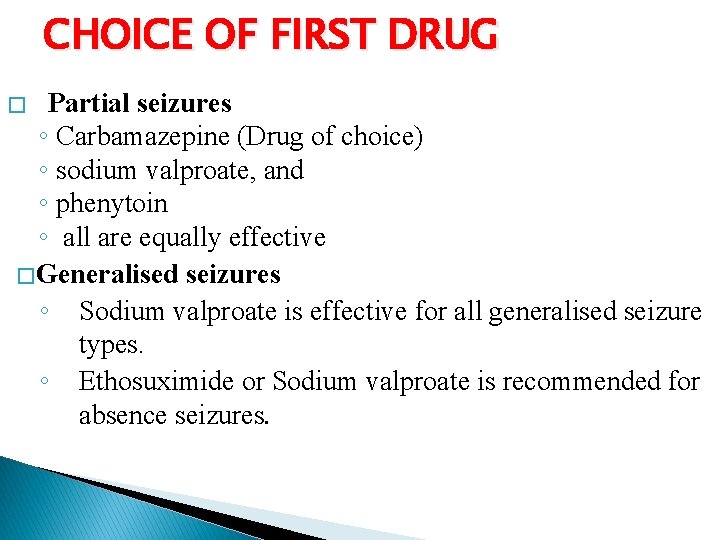
CHOICE OF FIRST DRUG Partial seizures ◦ Carbamazepine (Drug of choice) ◦ sodium valproate, and ◦ phenytoin ◦ all are equally effective � Generalised seizures ◦ Sodium valproate is effective for all generalised seizure types. ◦ Ethosuximide or Sodium valproate is recommended for absence seizures. �
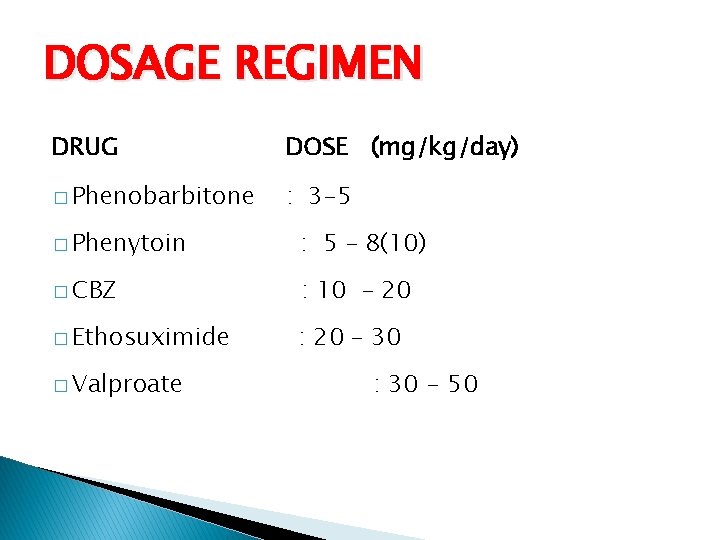
DOSAGE REGIMEN DRUG DOSE (mg/kg/day) � Phenobarbitone : 3 -5 � Phenytoin : 5 – 8(10) � CBZ : 10 – 20 � Ethosuximide : 20 – 30 � Valproate : 30 - 50
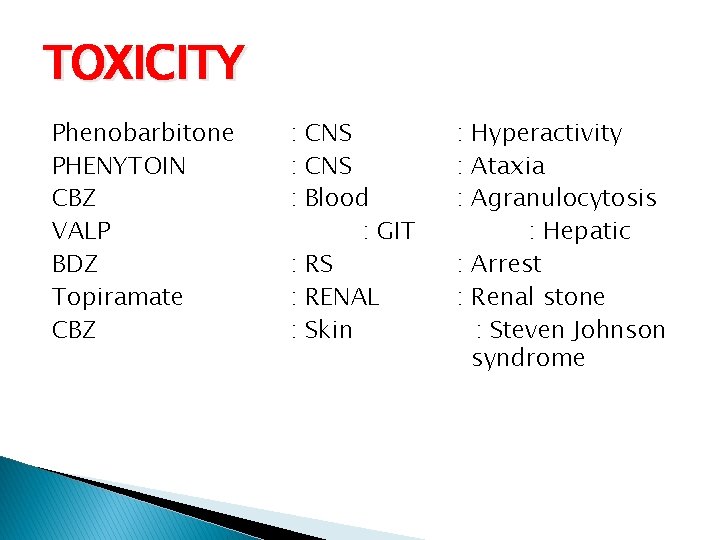
TOXICITY Phenobarbitone PHENYTOIN CBZ VALP BDZ Topiramate CBZ : CNS : Blood : GIT : RS : RENAL : Skin : Hyperactivity : Ataxia : Agranulocytosis : Hepatic : Arrest : Renal stone : Steven Johnson syndrome
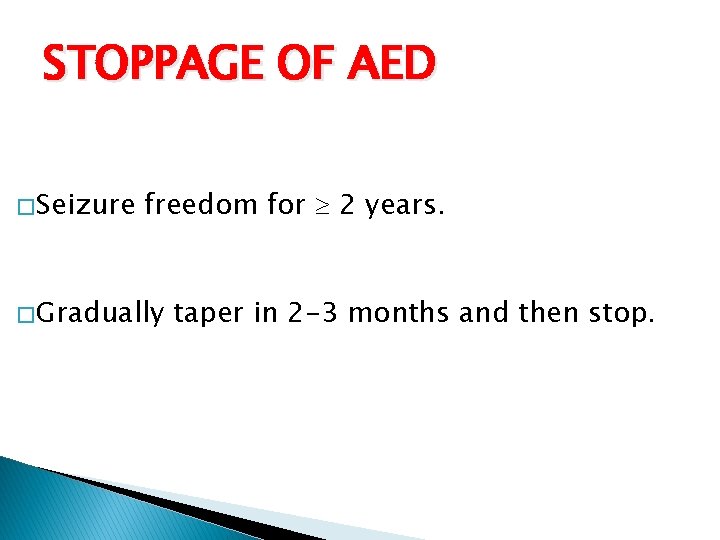
STOPPAGE OF AED � Seizure freedom for 2 years. � Gradually taper in 2 -3 months and then stop.
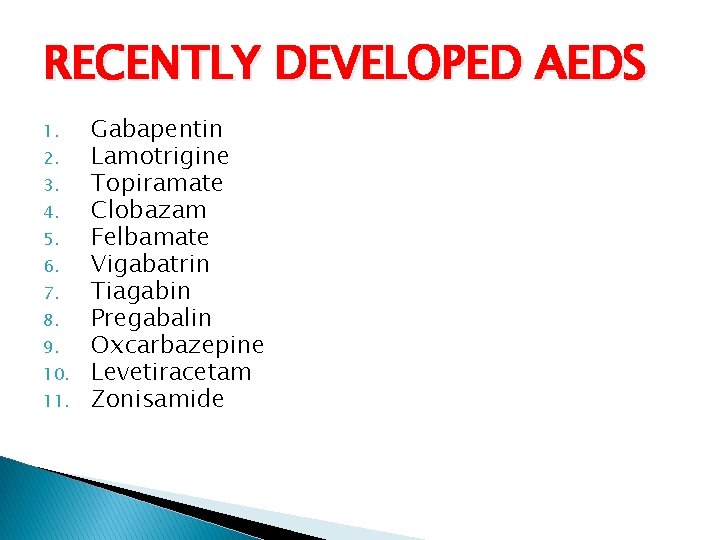
RECENTLY DEVELOPED AEDS 1. 2. 3. 4. 5. 6. 7. 8. 9. 10. 11. Gabapentin Lamotrigine Topiramate Clobazam Felbamate Vigabatrin Tiagabin Pregabalin Oxcarbazepine Levetiracetam Zonisamide
THERAPEUTIC OPTIONS- WHEN DRUGS FAIL 1. New AEDs 2. Surgery 1. MTL {medial temporal lobectomy} 2. Resection 3. Hemispherectomy 4. Multiple subpial resection 5. Commissurotomy, Corpus Callosotomy 3. Vagus Nerve Stimulation 4. Conditioning & Behavior modification. 5. Relaxation Training 6. No Drugs !
MANAGEMENT OF NEONATAL SEIZURE Step 1. Stabilize the vital functions Step 2. Correct transient metabolic disturbance ◦ Hypoglycemia, Hypocalcemia & Hypomagnesemia. Step 3. Phenobarbitone 20 mg/kg iv load, 5 mg/kg iv (may repeat to total dose of 40 mg/kg), consider EEG monitoring, ventilation Step 4. Lorazepam 0. 05 mg/kg iv (may repeat to total dose of 0. 1 mg/kg),
ACUTE MANAGEMENT OF NEONATAL SEIZURE CONT. Step 5. Phenytoin bolus dose- 20 mg/kg slow iv , 5 mg/kg iv (may repeat to total dose of 30 mg/kg), Step 6. Pyridoxine 50 -100 mg/kg Step 7. Midazolam 0. 06 -0. 4 mg/kg/hr. given as infusion
SIMPLE FEBRILE SEIZURE Generalized Duration <15 minutes No recurrence in 24 hrs. No postictal neurological deficit
ATYPICAL FEBRILE SEIZURE � Duration > 15 mins � Family h/o epilepsy � Neurodevelopment retardation � Partial/focal seizures � High risk of recurrence
SYMPTOMATIC FEBRILE SEIZURE � Children with previous neurologic insults, � Known central nervous system abnormalities, or � A history of afebrile seizures.
MANAGEMENT � Control Seizure � Control fever � Rule out CNS infection � Find and treat cause of fever � Counsel parents & teach home management � 1 st episode of febrile convulsions < 12 months. Then do LP to rule out meningitis
HOSPITALIZATION � Very young � Very ill � Parent frightened � Will not come for follow up � Medical complication
TREATMENT – PROPHYLAXIS � Intermittent (preferred) ◦ Oral diazepam 0. 2 – 0. 4 mg /kg/dose, BD, for 3 days ◦ Clobazam 1 mg/kg q BD X 3 days � Continuous ◦ Indication – afebrile seizure ◦ Phenobarbitone – 3 – 5 mg / kg / day, od, ◦ Side effects – hyper active & aggressive behavior ◦ Sodium valproate – 10 – 20 mg / kg / day, bd ◦ Side effects – hepatic toxicity ◦ This have to be given for 2 seizure free years
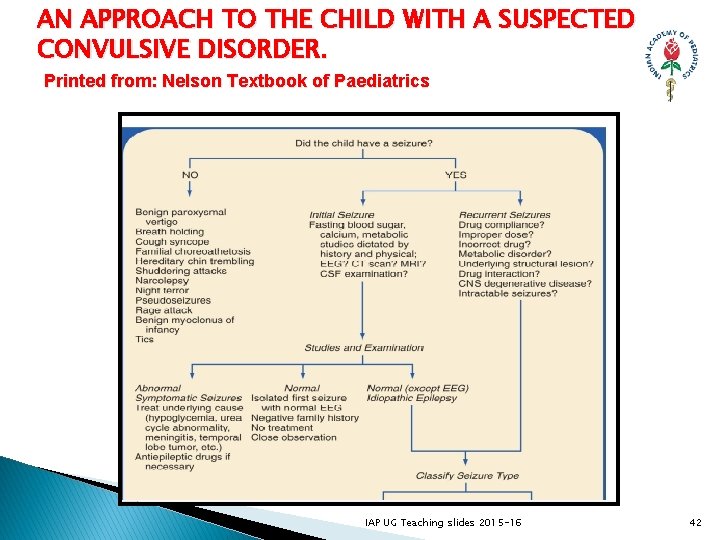
AN APPROACH TO THE CHILD WITH A SUSPECTED CONVULSIVE DISORDER. Printed from: Nelson Textbook of Paediatrics IAP UG Teaching slides 2015 -16 42
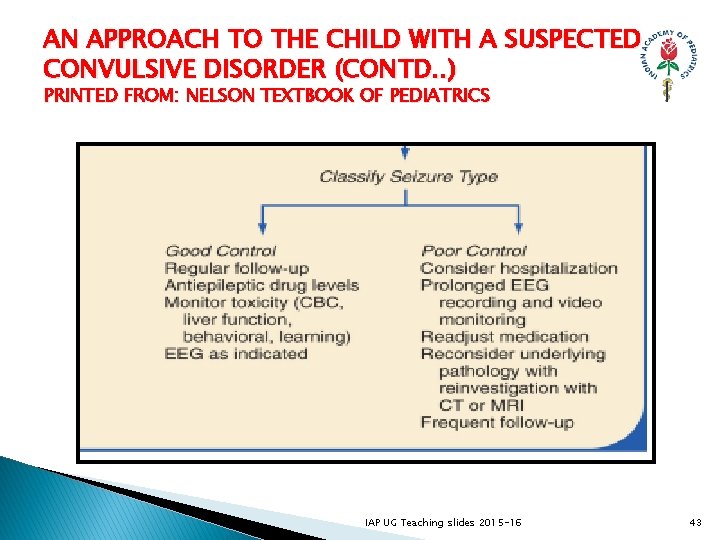
AN APPROACH TO THE CHILD WITH A SUSPECTED CONVULSIVE DISORDER (CONTD. . ) PRINTED FROM: NELSON TEXTBOOK OF PEDIATRICS IAP UG Teaching slides 2015 -16 43