
Approach to Bleeding Disorders Dr Arvind gupta Assistant
Approach to Bleeding Disorders Dr Arvind gupta Assistant professor pathology
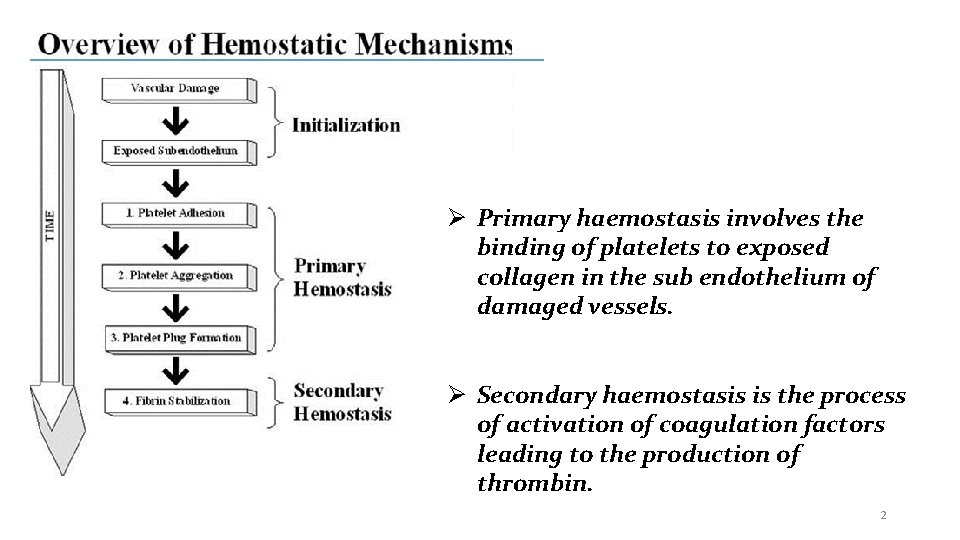
Primary haemostasis involves the binding of platelets to exposed collagen in the sub endothelium of damaged vessels. Secondary haemostasis is the process of activation of coagulation factors leading to the production of thrombin. 2
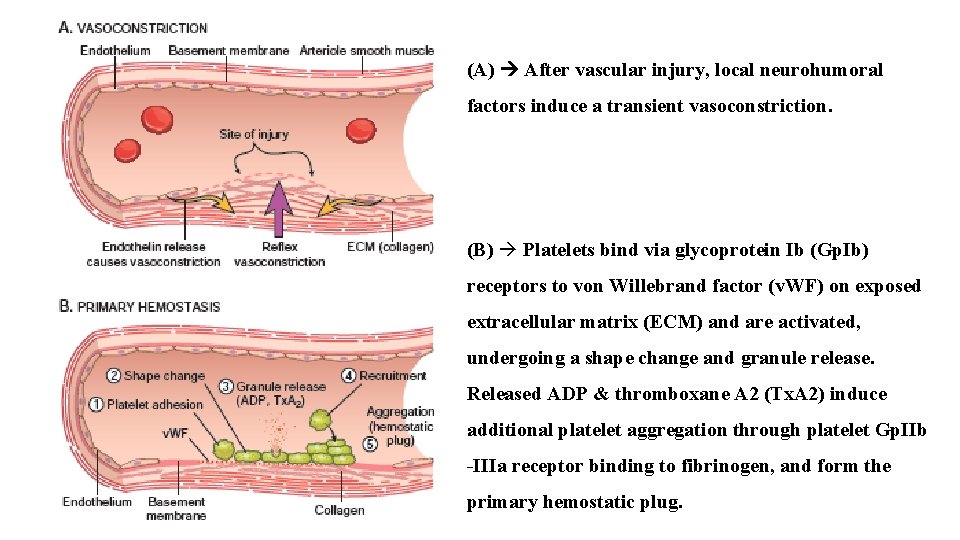
(A) After vascular injury, local neurohumoral factors induce a transient vasoconstriction. (B) Platelets bind via glycoprotein Ib (Gp. Ib) receptors to von Willebrand factor (v. WF) on exposed extracellular matrix (ECM) and are activated, undergoing a shape change and granule release. Released ADP & thromboxane A 2 (Tx. A 2) induce additional platelet aggregation through platelet Gp. IIb -IIIa receptor binding to fibrinogen, and form the primary hemostatic plug.
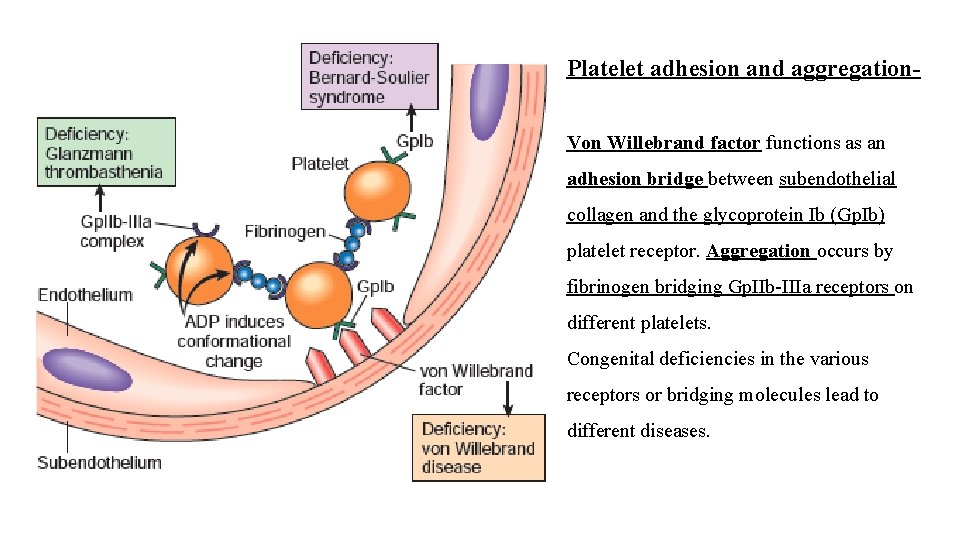
Platelet adhesion and aggregation- Von Willebrand factor functions as an adhesion bridge between subendothelial collagen and the glycoprotein Ib (Gp. Ib) platelet receptor. Aggregation occurs by fibrinogen bridging Gp. IIb-IIIa receptors on different platelets. Congenital deficiencies in the various receptors or bridging molecules lead to different diseases.
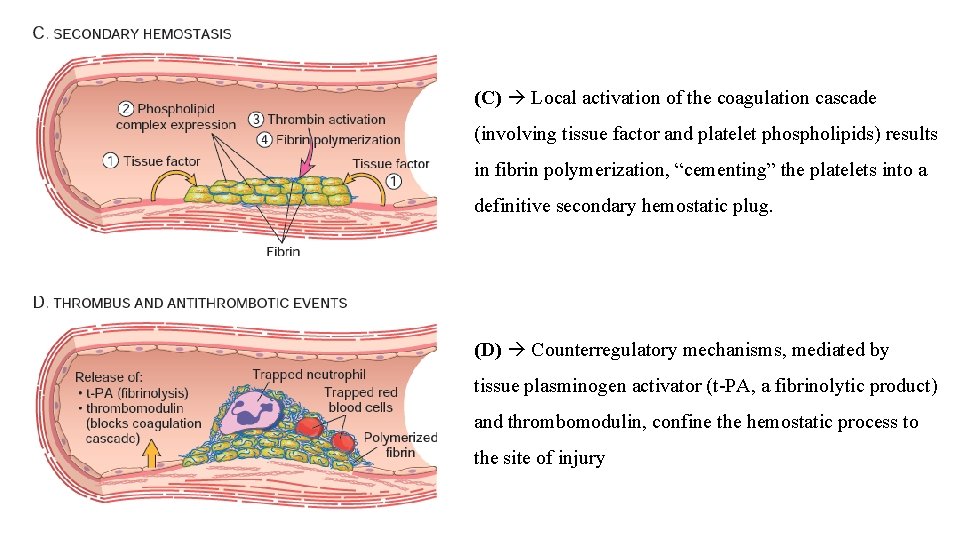
(C) Local activation of the coagulation cascade (involving tissue factor and platelet phospholipids) results in fibrin polymerization, “cementing” the platelets into a definitive secondary hemostatic plug. (D) Counterregulatory mechanisms, mediated by tissue plasminogen activator (t-PA, a fibrinolytic product) and thrombomodulin, confine the hemostatic process to the site of injury

SIMPLIFIED DIAGRAM OF COAGULATION CASCADE: -

PROCOAGULANT FACTORS : -

PROCOAGULANT FACTORS. . Cont’d. . : -
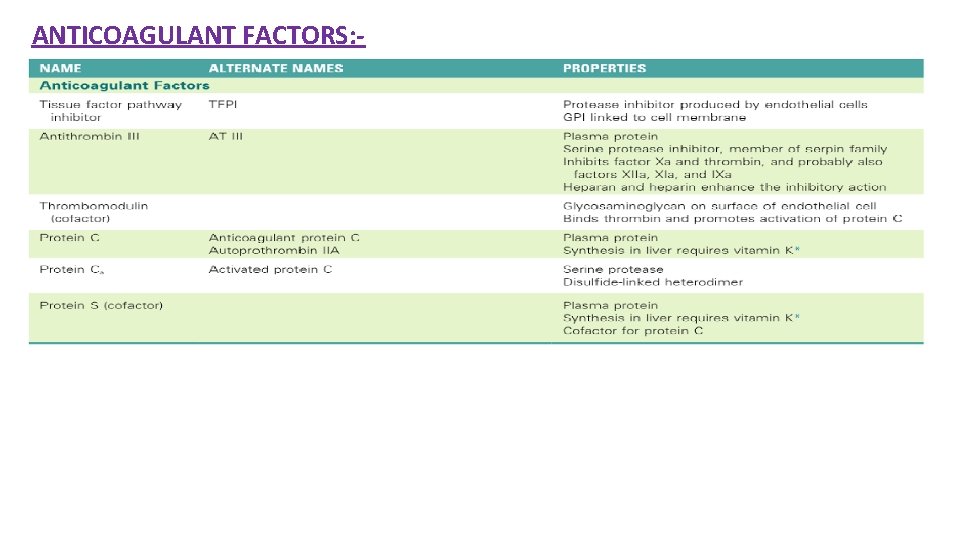
ANTICOAGULANT FACTORS: -
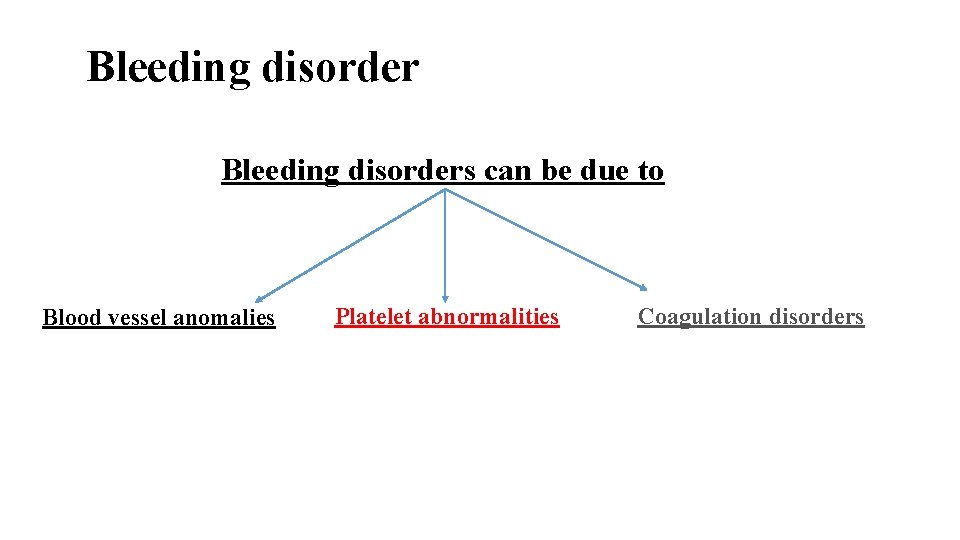
Bleeding disorders can be due to Blood vessel anomalies Platelet abnormalities Coagulation disorders
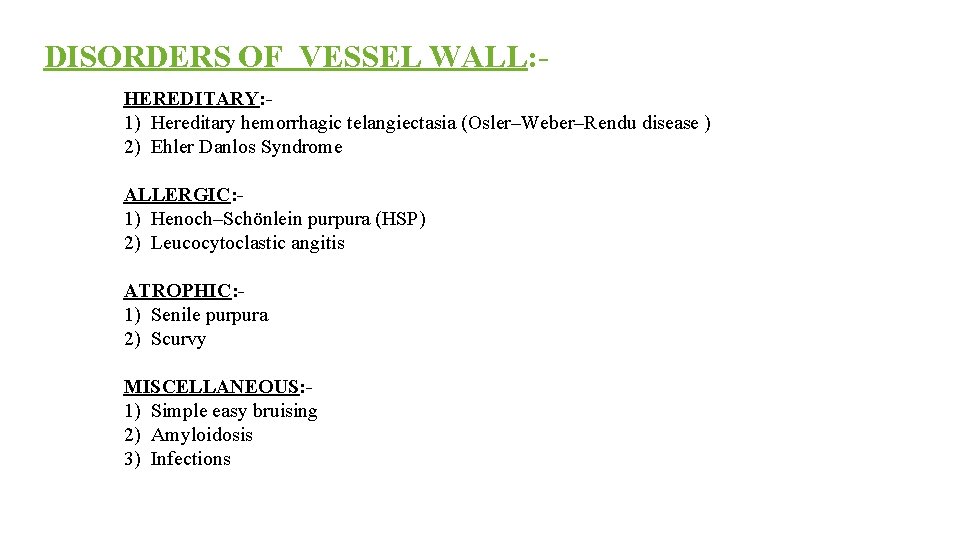
DISORDERS OF VESSEL WALL: HEREDITARY: - 1) Hereditary hemorrhagic telangiectasia (Osler–Weber–Rendu disease ) 2) Ehler Danlos Syndrome ALLERGIC: 1) Henoch–Schönlein purpura (HSP) 2) Leucocytoclastic angitis ATROPHIC: 1) Senile purpura 2) Scurvy MISCELLANEOUS: 1) Simple easy bruising 2) Amyloidosis 3) Infections
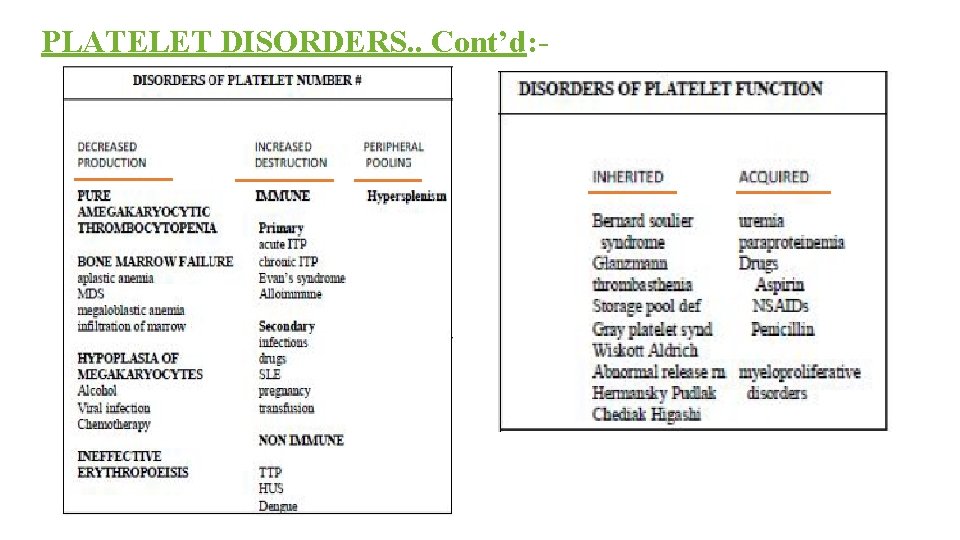
PLATELET DISORDERS. . Cont’d: -
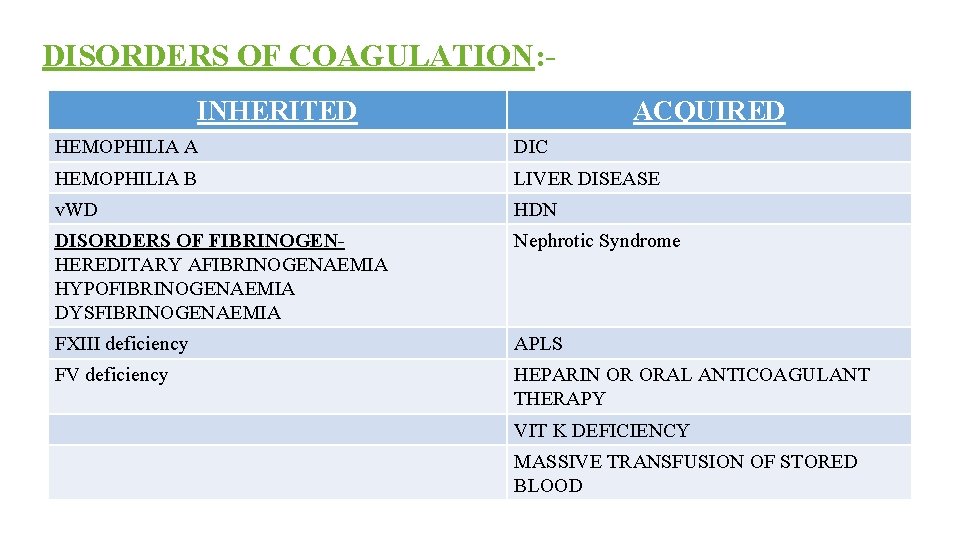
DISORDERS OF COAGULATION: INHERITED ACQUIRED HEMOPHILIA A DIC HEMOPHILIA B LIVER DISEASE v. WD HDN DISORDERS OF FIBRINOGENHEREDITARY AFIBRINOGENAEMIA HYPOFIBRINOGENAEMIA DYSFIBRINOGENAEMIA Nephrotic Syndrome FXIII deficiency APLS FV deficiency HEPARIN OR ORAL ANTICOAGULANT THERAPY VIT K DEFICIENCY MASSIVE TRANSFUSION OF STORED BLOOD

Clinical evaluation. . Cont’d: - . Petechiae <3 mm, Purpura 0. 3– 1 cm (3– 10 mm), ecchymoses >1 cm.
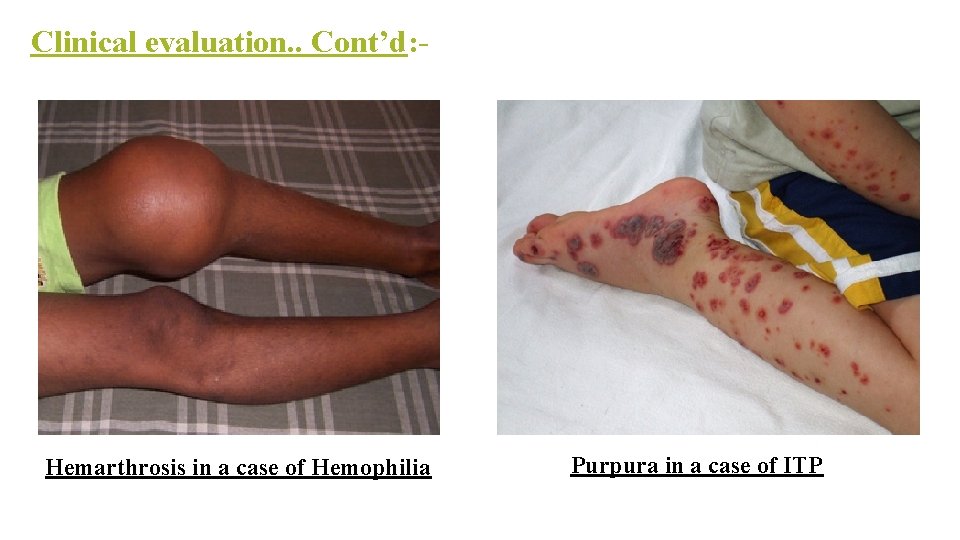
Clinical evaluation. . Cont’d: - Hemarthrosis in a case of Hemophilia Purpura in a case of ITP
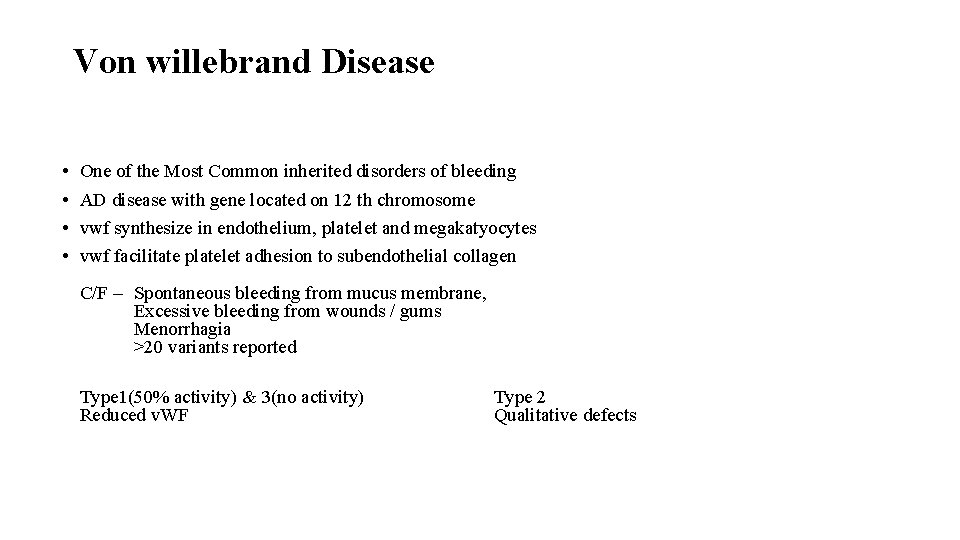
Von willebrand Disease • • One of the Most Common inherited disorders of bleeding AD disease with gene located on 12 th chromosome vwf synthesize in endothelium, platelet and megakatyocytes vwf facilitate platelet adhesion to subendothelial collagen C/F – Spontaneous bleeding from mucus membrane, Excessive bleeding from wounds / gums Menorrhagia >20 variants reported Type 1(50% activity) & 3(no activity) Reduced v. WF Type 2 Qualitative defects
Lab Findings • Prolonged BT • (Normal) platelet count • Deficient Ristocetin aggregation • Prolonged PTT Treatment • cryoprecipitate
HEMOPHILIA – A (F – VIII deficiency) Most Common hereditary disease Reduced activity of F – VIII X – linked recessive trait 30% of patients have no positive family history <1% of normal F-VIII activity – Severe disease 2 – 5% of normal F-VIII activity – Moderate disease 6 – 50% of normal F-VIII activity – Mild disease
Clinical /Features: normal hemostasis require 25% factor VIII activity Symptomatic patients mostly have < 5% factor VIII activity Easy bruising Massive Hemorrhage after mild trauma / operation Joint bleeding – Haemarthrosis – Deformities
Lab Features • Bleeding Time - Normal • Prothrombin Time - Normal • Platelet Count - Normal • APTT - Increased • Diagnosis can be confirmed by F-VIII assay. Therapy F-VIII Infusion 15% of severely affected patients –developed Antibodies against F - VIII
HEMOPHILIA – B Severe Factor - IX deficiency X – linked recessive PT – Normal APTT – Increased Factor assay is must to differentiate between Hemophilia A & Hemophilia B

Screening tests for primary hemostasis are I. Bleeding time- Assesses adequate functioning of platelets and blood vessels II. Peripheral blood smear examination III. Platelet count IV. Mean Platelet volume V. Reticulated platelets VI. Platelet function analysis VII. Tests for Vessel wall disorder

Tests for Vessel wall disorder HESS` CAPILLARY FRAGILITY TEST: Cuff is wrapped in upper arm and pressure is maintained midway b/w systolic and diastolic BP for 15 minutes, 4 cm below the elbow joint, a circle of 2. 5 cm diameter is drawn on the anterior aspect of forearm. Upto 10 new hemorrhagic spots are normal. But >20 new spots are always pathological. This is positive in increased capillary fragility, ITP.
Screening tests for secondary hemostasis are I. Clotting time II. Prothrombin time (PT) and Activated partial thromboplastin time (a. PTT) III. Thrombin Time (TT)
Collection of blood for coagulation studies The anticoagulant used for coagulation studies is trisodium citrate (3. 2%), with anticoagulant to blood proportion being 1: 9.
Clotting Time This is a crude test and is now replaced by activated partial thromboplastin time. Prolongation of clotting time only occurs in severe deficiency of a clotting factor and is normal in mild or moderate deficiency.

PROTHROMBIN TIME(PT) PT assesses coagulation factors in extrinsic pathway (F VII) and common pathway. Principle: - Tissue thromboplastin and calcium are added to platelet poor plasma and clotting time is determined.
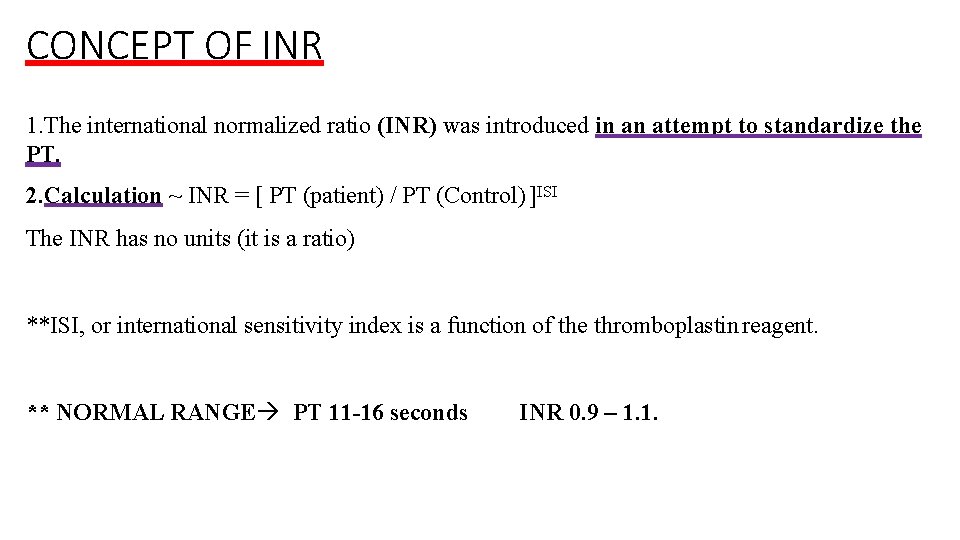
CONCEPT OF INR 1. The international normalized ratio (INR) was introduced in an attempt to standardize the PT. 2. Calculation ~ INR = [ PT (patient) / PT (Control) ]ISI The INR has no units (it is a ratio) **ISI, or international sensitivity index is a function of the thromboplastin reagent. ** NORMAL RANGE PT 11 -16 seconds INR 0. 9 – 1. 1.
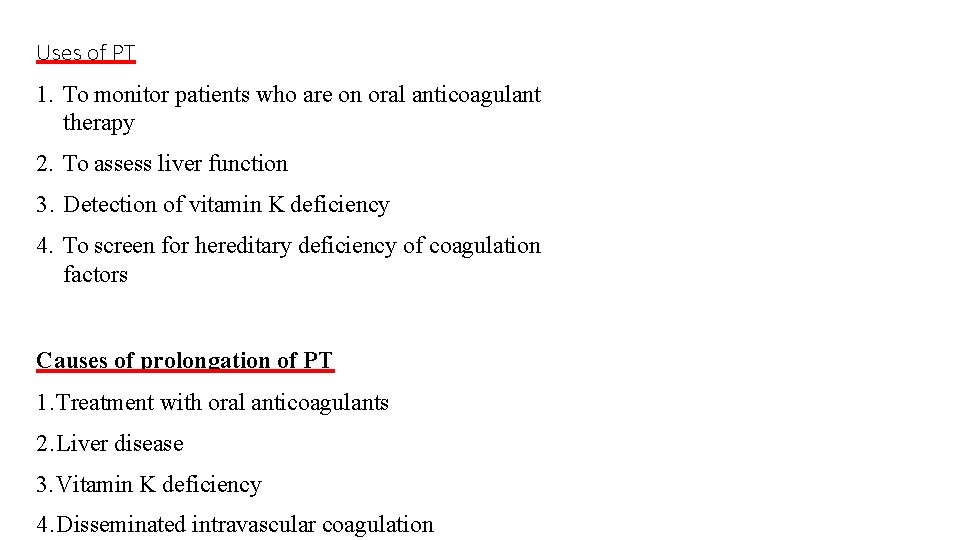
Uses of PT 1. To monitor patients who are on oral anticoagulant therapy 2. To assess liver function 3. Detection of vitamin K deficiency 4. To screen for hereditary deficiency of coagulation factors Causes of prolongation of PT 1. Treatment with oral anticoagulants 2. Liver disease 3. Vitamin K deficiency 4. Disseminated intravascular coagulation

ACTIVATED PARTIAL THROMBOPLASTIN TIME (APTT) Significance Reflects efficiency of Intrinsic and Common pathway. Principle The test measures the clotting time of plasma after the activation of contact factors (Kaolin/Silica/Ellagic acid) and the addition of phospholipid and Ca. Cl 2, but without added tissue thromboplastin. So it indicates the overall efficiency of the Intrinsic pathway. Normal range 26 to 40 seconds.
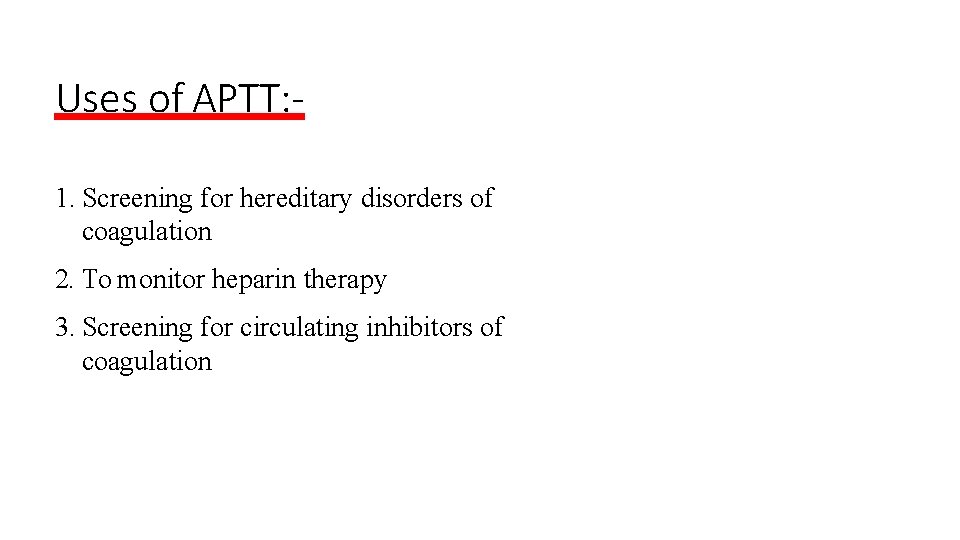
Uses of APTT: 1. Screening for hereditary disorders of coagulation 2. To monitor heparin therapy 3. Screening for circulating inhibitors of coagulation
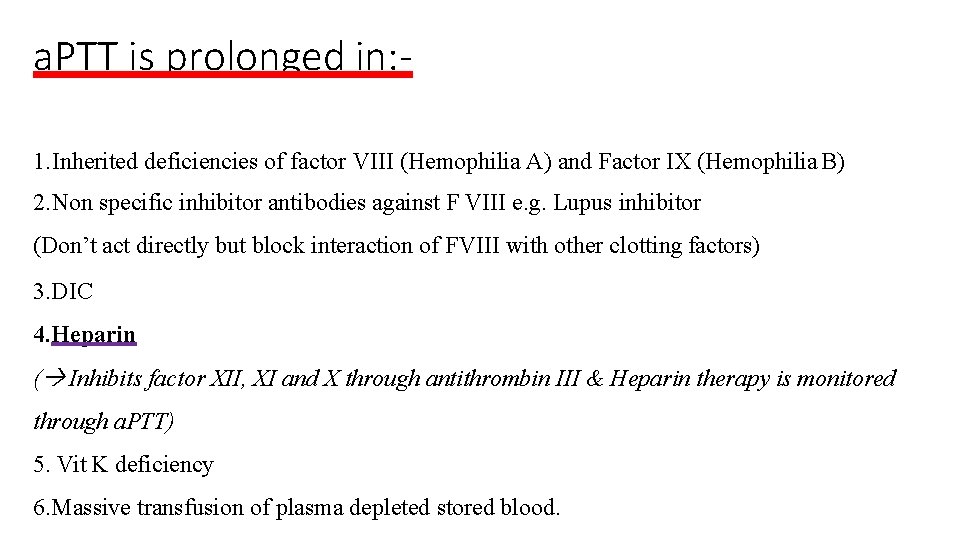
a. PTT is prolonged in: 1. Inherited deficiencies of factor VIII (Hemophilia A) and Factor IX (Hemophilia B) 2. Non specific inhibitor antibodies against F VIII e. g. Lupus inhibitor (Don’t act directly but block interaction of FVIII with other clotting factors) 3. DIC 4. Heparin ( Inhibits factor XII, XI and X through antithrombin III & Heparin therapy is monitored through a. PTT) 5. Vit K deficiency 6. Massive transfusion of plasma depleted stored blood.
THROMBIN TIME(TT) Significance: Asses the final step of coagulation i. e. conversion of fibrinogen to fibrin in presence of thrombin. Bypasses Extrinsic & Intrinsic pathway.
Causes of prolonged TT 1. Disorders of fibrinogen- i) Afibrinogenaemia ii) Hypofibrinogenaemia 3. Chronic liver disease
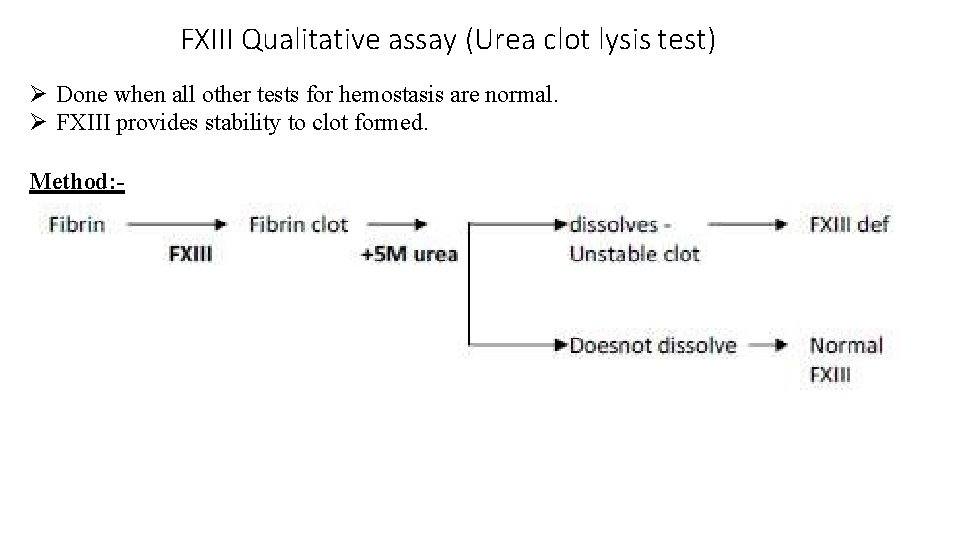
FXIII Qualitative assay (Urea clot lysis test) Done when all other tests for hemostasis are normal. FXIII provides stability to clot formed. Method: -
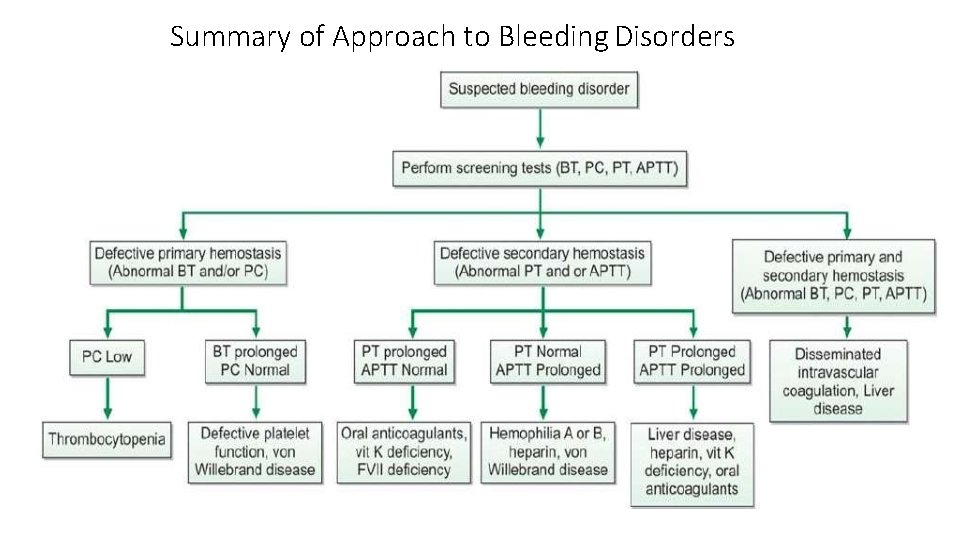
Summary of Approach to Bleeding Disorders

Thank you. .
- Slides: 37