
Approach to Acute Diarrheal Disease Dr Hamzah A






- Slides: 23
Approach to Acute Diarrheal Disease Dr. Hamzah A. Mohammed. MD. , MS-PHS. American Boards of Internal Medicine. American Boards of Infectious Diseases. Master of Science in Public Health Sciences.
Diarrhea • Definition of diarrhea. • Acute vs. Chronic.
Causes of Acute diarrhea • The cause of diarrhea is not identified in most people, especially those who improve without treatment!!!!!
Red flags 1. 2. 3. 4. 5. 6.
Infectious Diarrhea • Eating or drinking contaminated food or water. • Signs and symptoms of infection usually begin 12 hours to four days after exposure and resolve within three to seven days.
Viral • Features: Loose stool, low-grade fever, feel ill. • Treatment: None, usually resolves within 48 hours
Bacterial infection • Features: Fever (temperature >101°F or 38. 4°C), bloody stools. • Treatment: Usually none, antibiotics in selected situations
Parasite • Features: Not common in developed countries, may be seen in returning travelers. • Antibiotics in most cases.
Non-infectious diarrhea
Antibiotics • Loose stool begins after antibiotic started, usually resolves with a few days after stopped
Food intolerance • (eg, lactose intolerance) • Diarrhea, abdominal pain, and/or gas after consuming food
Inflammatory bowel diseases • Crohn's disease, ulcerative colitis. • Mouth sores, diarrhea, abdominal pain, weight loss, and fever
Irritable bowel syndrome • Chronic lower abdominal pain, diarrhea and/or constipation
Celiac disease (gluten sensitivity) • Diarrhea, weight loss, abdominal pain, gas
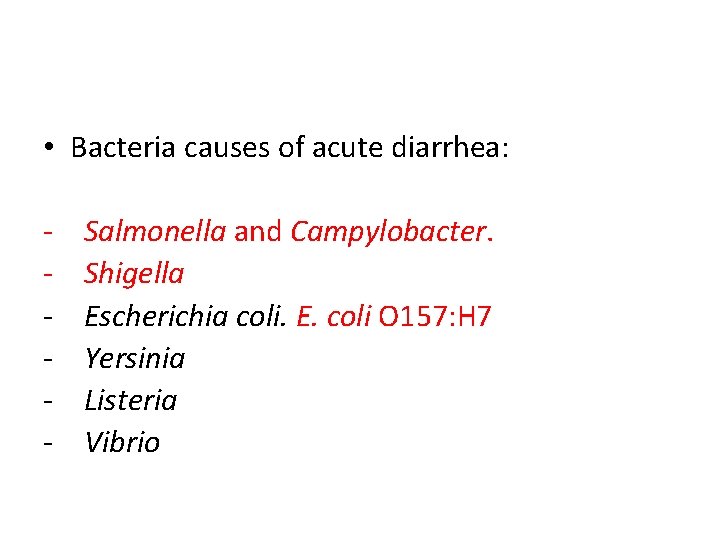
• Bacteria causes of acute diarrhea: - Salmonella and Campylobacter. Shigella Escherichia coli. E. coli O 157: H 7 Yersinia Listeria Vibrio
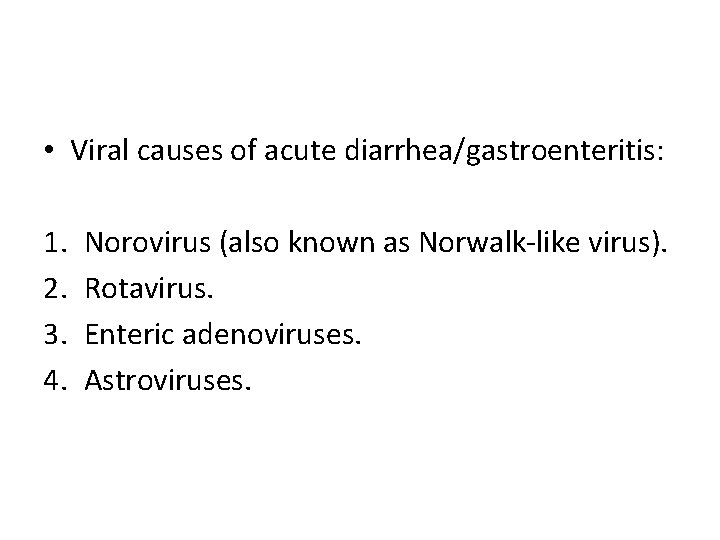
• Viral causes of acute diarrhea/gastroenteritis: 1. 2. 3. 4. Norovirus (also known as Norwalk-like virus). Rotavirus. Enteric adenoviruses. Astroviruses.
• Protozoal of acute diarrhea: 1. Cryptosporidium 2. Giardia 3. Cyclospora
• Thanks….
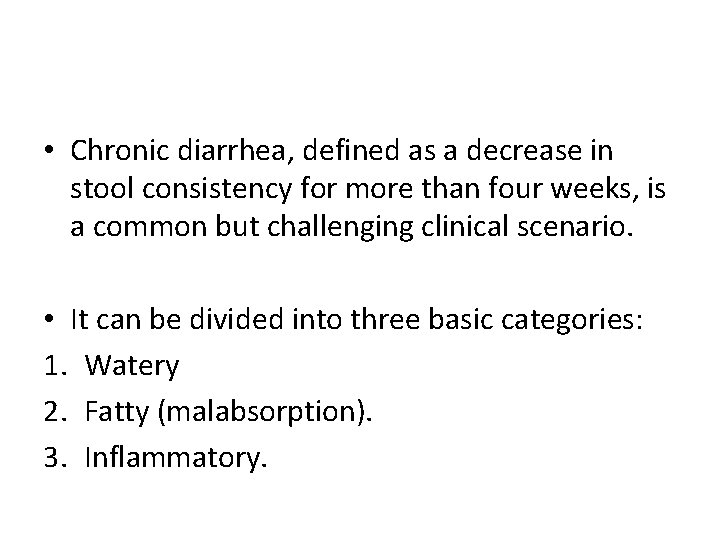
• Chronic diarrhea, defined as a decrease in stool consistency for more than four weeks, is a common but challenging clinical scenario. • It can be divided into three basic categories: 1. Watery 2. Fatty (malabsorption). 3. Inflammatory.
Watery diarrhea • • • Osmotic Secretory Functional types. Watery diarrhea includes irritable bowel syndrome, which is the most common cause of functional diarrhea. Another example of watery diarrhea is microscopic colitis, which is a secretory diarrhea affecting older persons. Laxative-induced diarrhea is often osmotic. Malabsorptive diarrhea is characterized by excess gas, steatorrhea, or weight loss; giardiasis is a classic infectious example. Celiac disease (gluten-sensitive enteropathy) is also malabsorptive, and typically results in weight loss and iron deficiency anemia. Inflammatory diarrhea, such as ulcerative colitis or Crohn disease, is characterized by blood and pus in the stool and an elevated fecal calprotectin level. Invasive bacteria and parasites also produce inflammation. Infections caused by Clostridium difficile subsequent to antibiotic use have become increasingly common and virulent. Not all chronic diarrhea is strictly watery, malabsorptive, or inflammatory, because some categories overlap. Still, the most practical diagnostic approach is to attempt to categorize the diarrhea by type before testing and treating. This narrows the list of diagnostic possibilities and reduces unnecessary testing. Empiric therapy is justified when a specific diagnosis is strongly suspected and follow-up is available.