
Approach To A Child With Hepatosplenomegaly Dr Pushpa
- Slides: 14
Approach To A Child With Hepatosplenomegaly Dr. Pushpa Raj Sharma Professor of Child Health Institute of Medicine
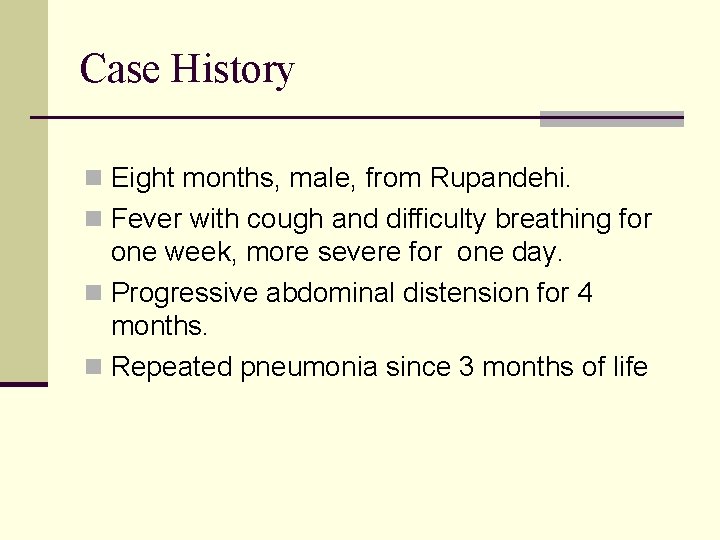
Case History n Eight months, male, from Rupandehi. n Fever with cough and difficulty breathing for one week, more severe for one day. n Progressive abdominal distension for 4 months. n Repeated pneumonia since 3 months of life
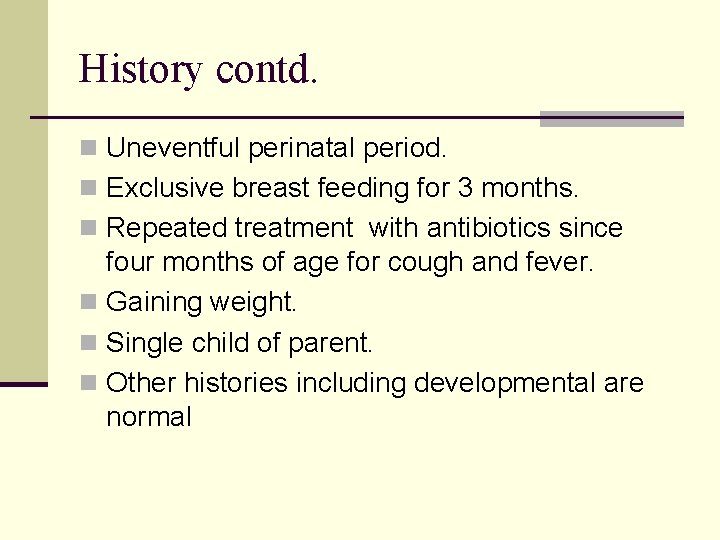
History contd. n Uneventful perinatal period. n Exclusive breast feeding for 3 months. n Repeated treatment with antibiotics since four months of age for cough and fever. n Gaining weight. n Single child of parent. n Other histories including developmental are normal
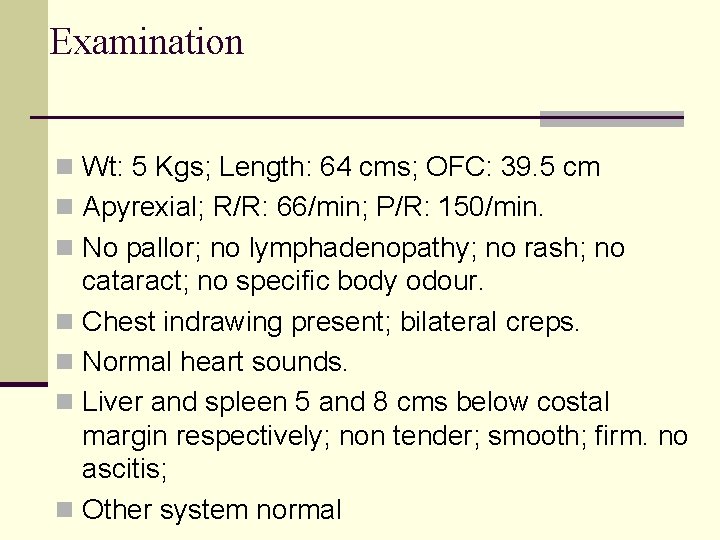
Examination n Wt: 5 Kgs; Length: 64 cms; OFC: 39. 5 cm n Apyrexial; R/R: 66/min; P/R: 150/min. n No pallor; no lymphadenopathy; no rash; no cataract; no specific body odour. n Chest indrawing present; bilateral creps. n Normal heart sounds. n Liver and spleen 5 and 8 cms below costal margin respectively; non tender; smooth; firm. no ascitis; n Other system normal
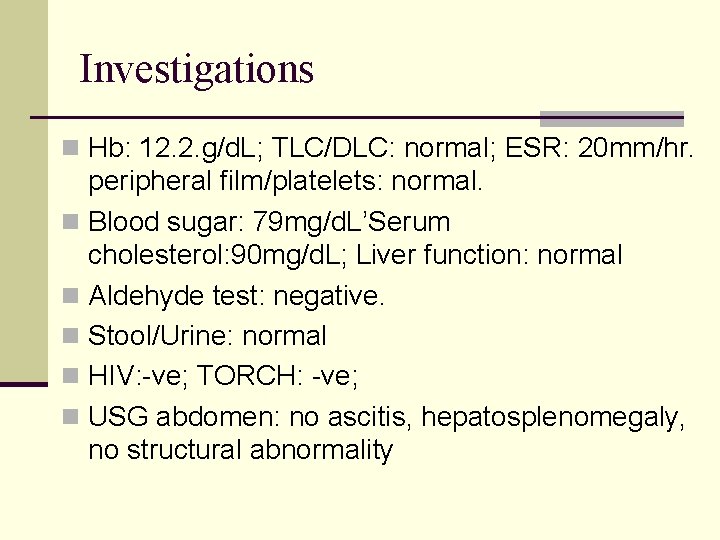
Investigations n Hb: 12. 2. g/d. L; TLC/DLC: normal; ESR: 20 mm/hr. peripheral film/platelets: normal. n Blood sugar: 79 mg/d. L’Serum cholesterol: 90 mg/d. L; Liver function: normal n Aldehyde test: negative. n Stool/Urine: normal n HIV: -ve; TORCH: -ve; n USG abdomen: no ascitis, hepatosplenomegaly, no structural abnormality
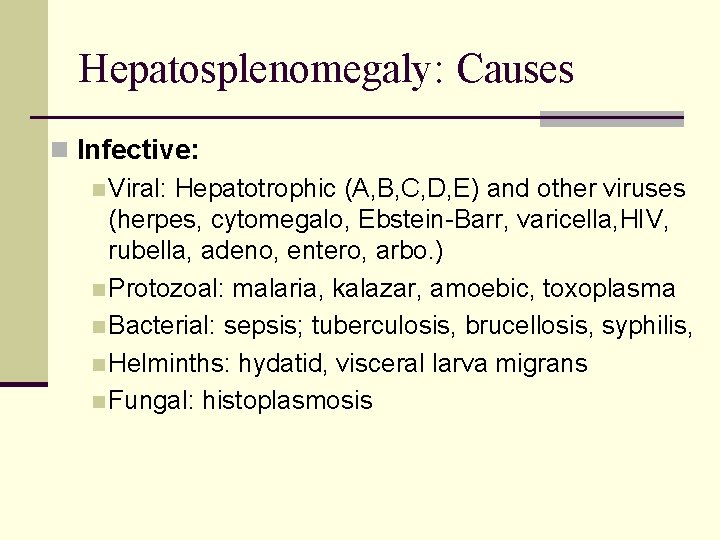
Hepatosplenomegaly: Causes n Infective: n Viral: Hepatotrophic (A, B, C, D, E) and other viruses (herpes, cytomegalo, Ebstein-Barr, varicella, HIV, rubella, adeno, entero, arbo. ) n Protozoal: malaria, kalazar, amoebic, toxoplasma n Bacterial: sepsis; tuberculosis, brucellosis, syphilis, n Helminths: hydatid, visceral larva migrans n Fungal: histoplasmosis
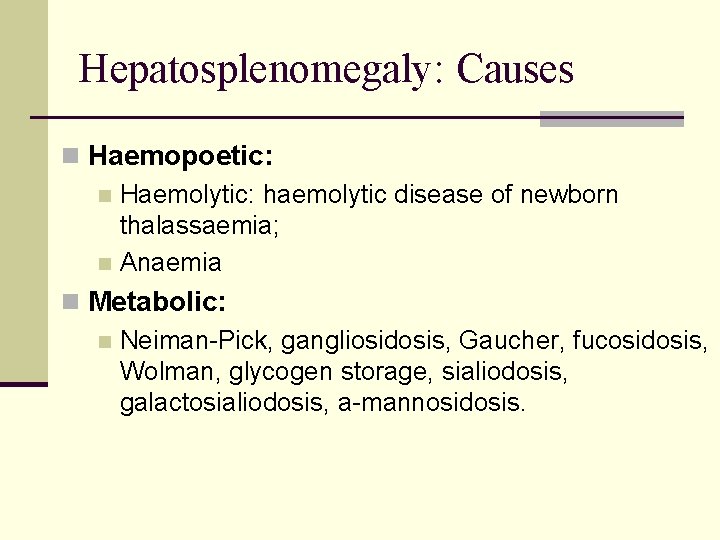
Hepatosplenomegaly: Causes n Haemopoetic: n Haemolytic: haemolytic disease of newborn thalassaemia; n Anaemia n Metabolic: n Neiman-Pick, gangliosidosis, Gaucher, fucosidosis, Wolman, glycogen storage, sialiodosis, galactosialiodosis, a-mannosidosis.
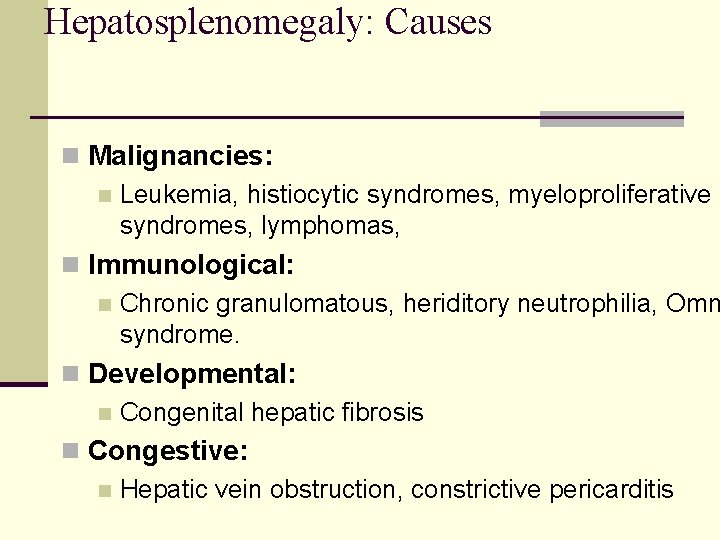
Hepatosplenomegaly: Causes n Malignancies: n Leukemia, histiocytic syndromes, myeloproliferative syndromes, lymphomas, n Immunological: n Chronic granulomatous, heriditory neutrophilia, Omm syndrome. n Developmental: n Congenital hepatic fibrosis n Congestive: n Hepatic vein obstruction, constrictive pericarditis
This patient n Infective cause that can have lung, liver and spleen involvement: Sepsis/other bacterial infection unlikely: normal blood count, normal immunological reports for HIV, TORCH, syphilis. n Viral infections unlikely: normal liver function test, no clinical evidence of congenital infections as: n n Neonatal jaundice, retinitis, microcephaly, hydrocephaly, intracranial infections, osteochondritis, rash, normal weight and height for age.
This patient n Protozoal unlikely: n Negative blood report (anaemia, jaundice, pancytopenia), big hepatosplenomegaly. n Haematological unlikely: n Absence of anaemia, jaundice and in the presence of huge spleenomegaly. n Malignancies unlikely: n Normal blood report, absence of lymphadenopathy
This patient n Immunological unlikely: n Normal liver function, absence of hypereosinophilia and diarrhoea n Developmental unlikely: n Absence of features of portal hypertension n Congestive unlikely: n Absence of cardiac insufficiency signs, absence of ascitis.
This patient: Metabolic Diseases Causing Hepatosplenomegaly n Infantile GM 1 gangliodidosis (type 1) n Hepatosplenomegaly at birth, oedema, skin erruptions, retardation development, seizure n Gauchers: n Features of bone marrow involvement, skeletal complications n Fucosidosis: n Macroglossia, neurodegenerative features n Wolman disease: n Failure to thrive, steatorrhoea, relentless vomiting
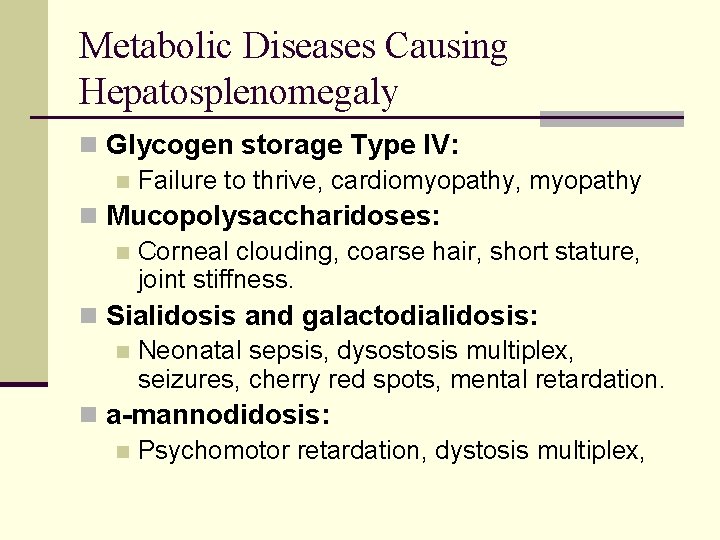
Metabolic Diseases Causing Hepatosplenomegaly n Glycogen storage Type IV: n Failure to thrive, cardiomyopathy, myopathy n Mucopolysaccharidoses: n Corneal clouding, coarse hair, short stature, joint stiffness. n Sialidosis and galactodialidosis: n Neonatal sepsis, dysostosis multiplex, seizures, cherry red spots, mental retardation. n a-mannodidosis: n Psychomotor retardation, dystosis multiplex,
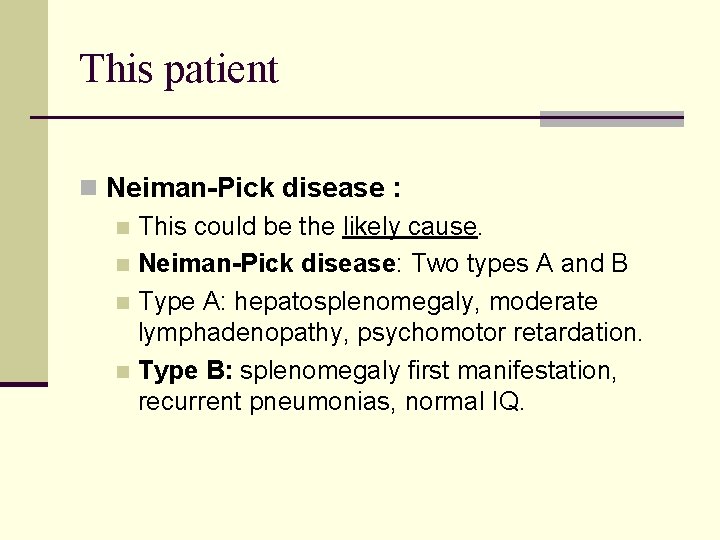
This patient n Neiman-Pick disease : n This could be the likely cause. n Neiman-Pick disease: Two types A and B n Type A: hepatosplenomegaly, moderate lymphadenopathy, psychomotor retardation. n Type B: splenomegaly first manifestation, recurrent pneumonias, normal IQ.