
Appreciative Inquiry An Introduction What is Appreciative Inquiry




- Slides: 43
Appreciative Inquiry An Introduction
What is Appreciative Inquiry?
Appreciative Inquiry A Positive Revolution in Change
The Birth of Appreciative Inquiry l l David Cooperrider & Suresh Srivastva in 1987 With colleagues from Case Western University & Taos Institute
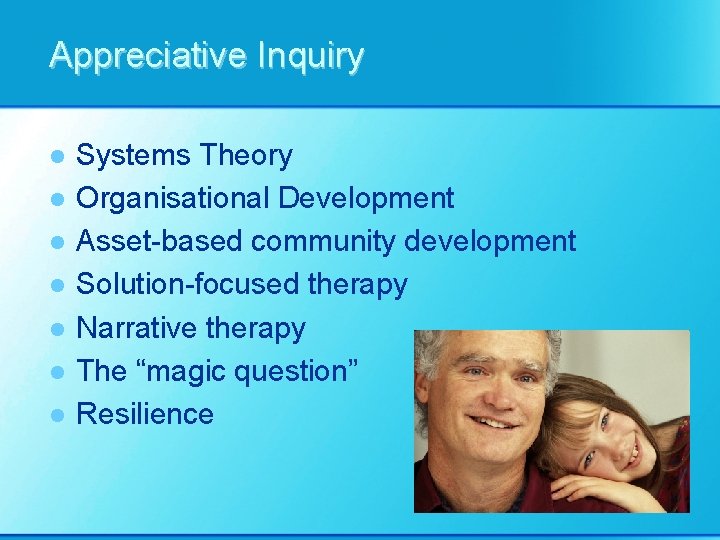
Appreciative Inquiry l l l l Systems Theory Organisational Development Asset-based community development Solution-focused therapy Narrative therapy The “magic question” Resilience
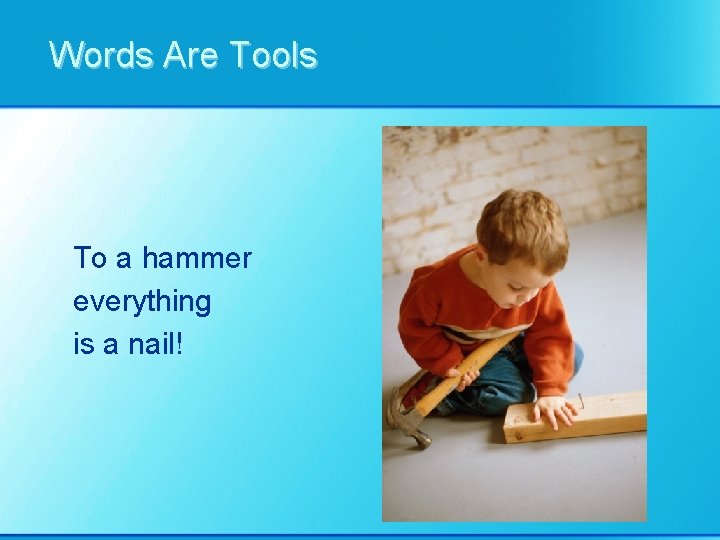
Words Are Tools To a hammer everything is a nail!
Ap-pre’ci-ate (verb) l l valuing; the act of recognizing the best in people or the world around us; affirming past and present strengths, successes, and potentials; to perceive those things that give life (health, vitality, excellence) to living systems to increase in value, e. g. the economy has appreciated in value Synonyms: valuing, prizing, esteeming and honouring
In-quire’ (kwir) (verb) l l the act of exploration and discovery to ask questions; to be open to seeing new potentials and possibilities Synonyms: discovery, search, systematic exploration and study
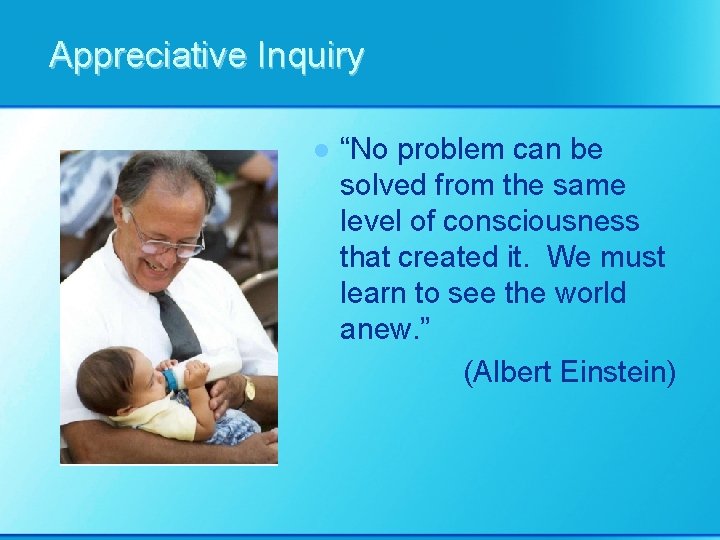
Appreciative Inquiry l “No problem can be solved from the same level of consciousness that created it. We must learn to see the world anew. ” (Albert Einstein)
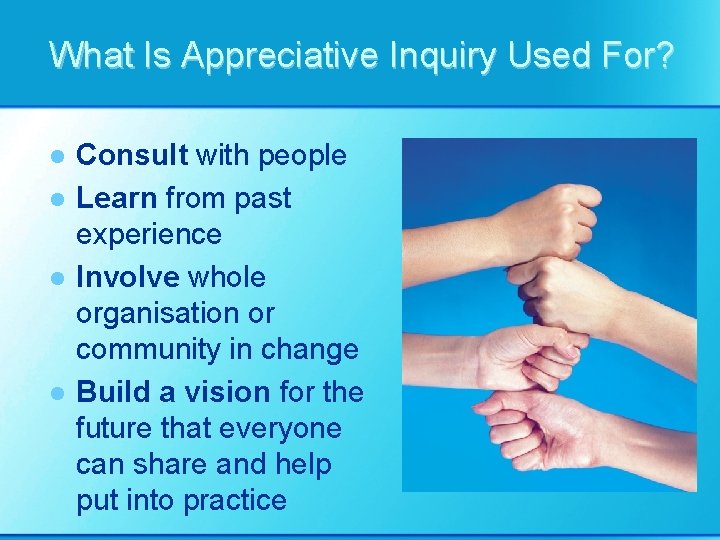
What Is Appreciative Inquiry Used For? l l Consult with people Learn from past experience Involve whole organisation or community in change Build a vision for the future that everyone can share and help put into practice
What Is Appreciative Inquiry Used For? l l l l l Strategic Planning School Improvement Action Research Evaluation Mentoring & Performance Management Leadership Training Community Development Business Excellence Customer Service / Client Satisfaction Culture Change & Transformation
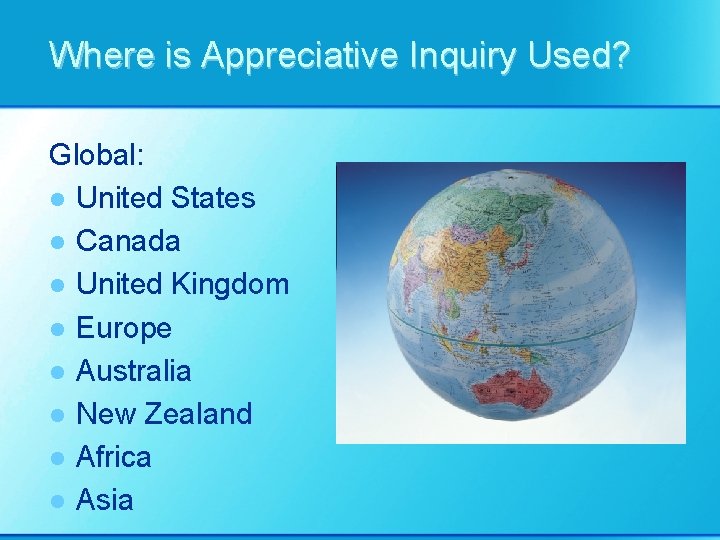
Where is Appreciative Inquiry Used? Global: l United States l Canada l United Kingdom l Europe l Australia l New Zealand l Africa l Asia
6 Principles of Appreciative Inquiry l l l Descriptive or Constructionist Principle Simultaneous Principle Poetic Principle Anticipatory Principle Positive Principle Wholeness Principle
8 Assumptions of Appreciative Inquiry In every human situation something works From: The Thin Book of Appreciative Inquiry, by Sue Annis Hammond
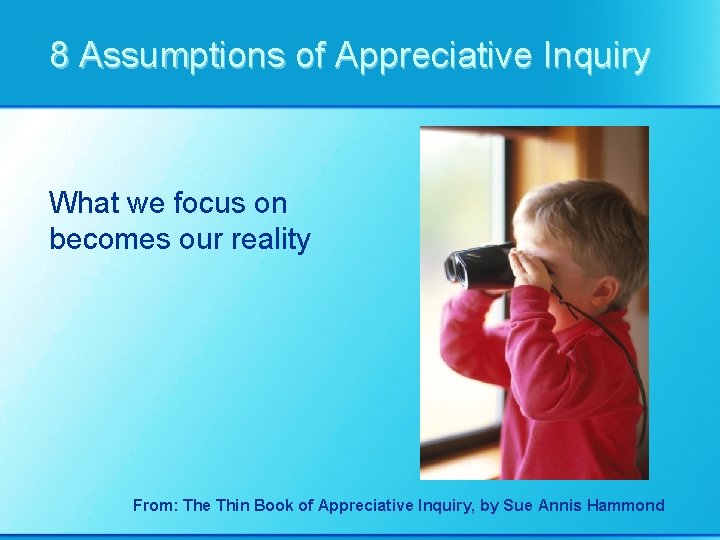
8 Assumptions of Appreciative Inquiry What we focus on becomes our reality From: The Thin Book of Appreciative Inquiry, by Sue Annis Hammond
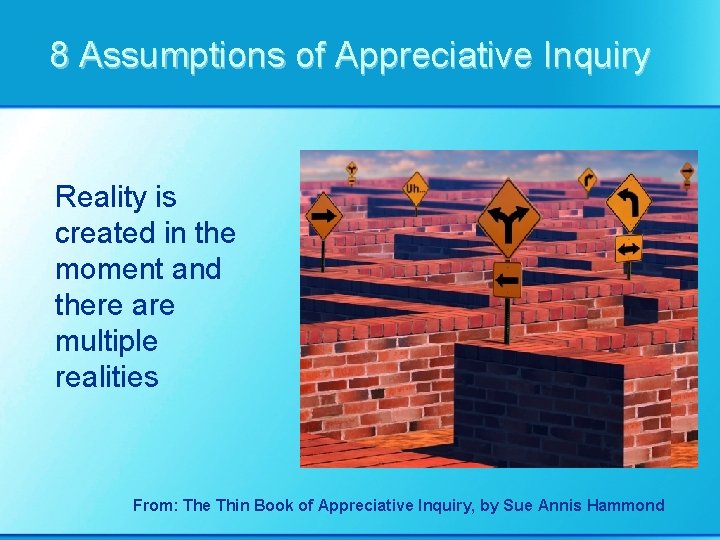
8 Assumptions of Appreciative Inquiry Reality is created in the moment and there are multiple realities From: The Thin Book of Appreciative Inquiry, by Sue Annis Hammond
8 Assumptions of Appreciative Inquiry The language we use shapes our reality From: The Thin Book of Appreciative Inquiry, by Sue Annis Hammond
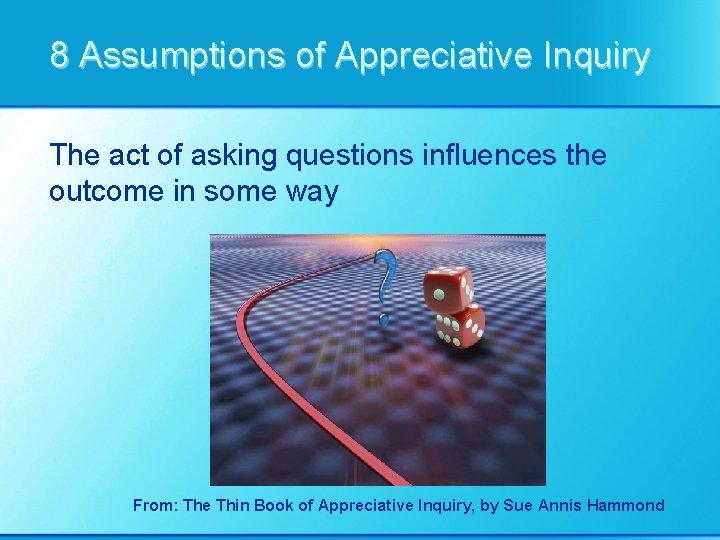
8 Assumptions of Appreciative Inquiry The act of asking questions influences the outcome in some way From: The Thin Book of Appreciative Inquiry, by Sue Annis Hammond
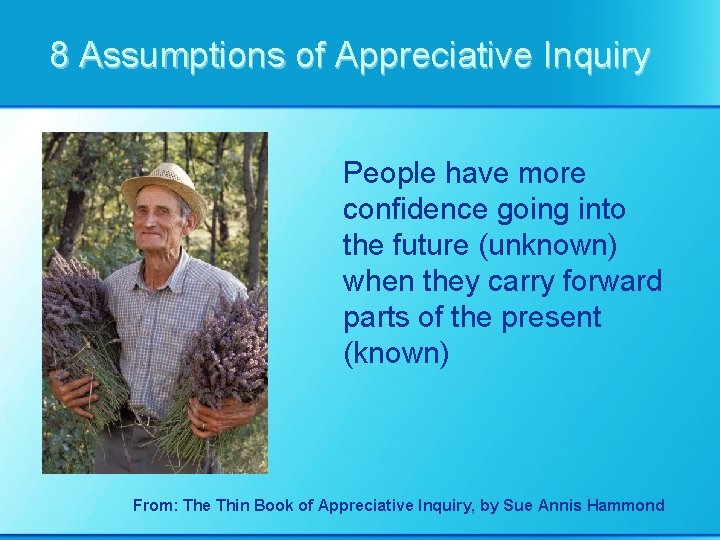
8 Assumptions of Appreciative Inquiry People have more confidence going into the future (unknown) when they carry forward parts of the present (known) From: The Thin Book of Appreciative Inquiry, by Sue Annis Hammond
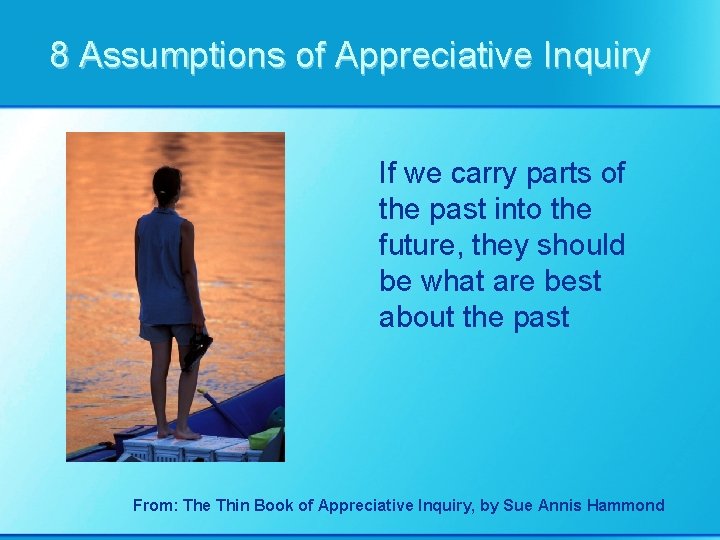
8 Assumptions of Appreciative Inquiry If we carry parts of the past into the future, they should be what are best about the past From: The Thin Book of Appreciative Inquiry, by Sue Annis Hammond
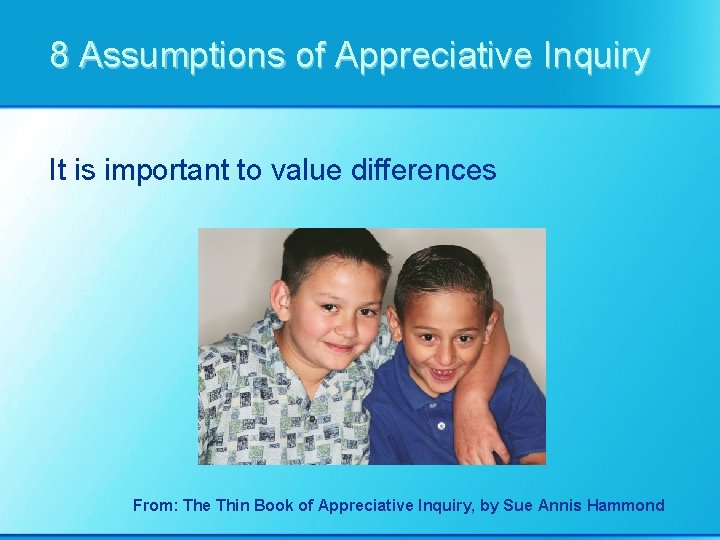
8 Assumptions of Appreciative Inquiry It is important to value differences From: The Thin Book of Appreciative Inquiry, by Sue Annis Hammond
Positive Image Positive Action Six main areas of research: l Powerful placebo l Pygmalion effect l Positive affect & learned helpfulness l Imbalanced inner dialogue (2: 1) l Positive imagery as a dynamic force l Affirmative capability
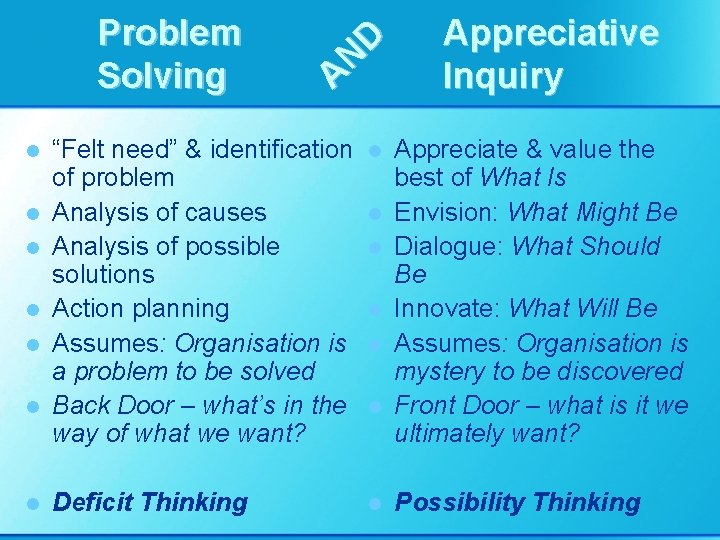
l l l l A N D Problem Solving “Felt need” & identification of problem Analysis of causes Analysis of possible solutions Action planning Assumes: Organisation is a problem to be solved Back Door – what’s in the way of what we want? l Deficit Thinking l l l Appreciative Inquiry Appreciate & value the best of What Is Envision: What Might Be Dialogue: What Should Be Innovate: What Will Be Assumes: Organisation is mystery to be discovered Front Door – what is it we ultimately want? Possibility Thinking
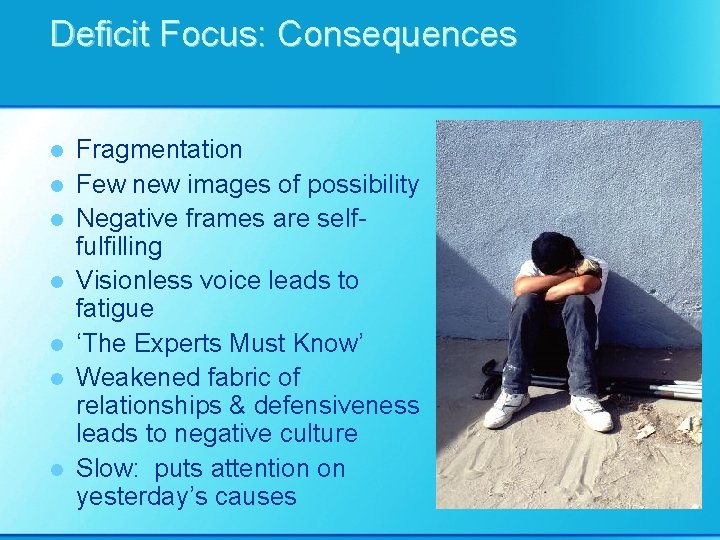
Deficit Focus: Consequences l l l l Fragmentation Few new images of possibility Negative frames are selffulfilling Visionless voice leads to fatigue ‘The Experts Must Know’ Weakened fabric of relationships & defensiveness leads to negative culture Slow: puts attention on yesterday’s causes
The Positive Core l l Energy Enthusiasm Commitment Action
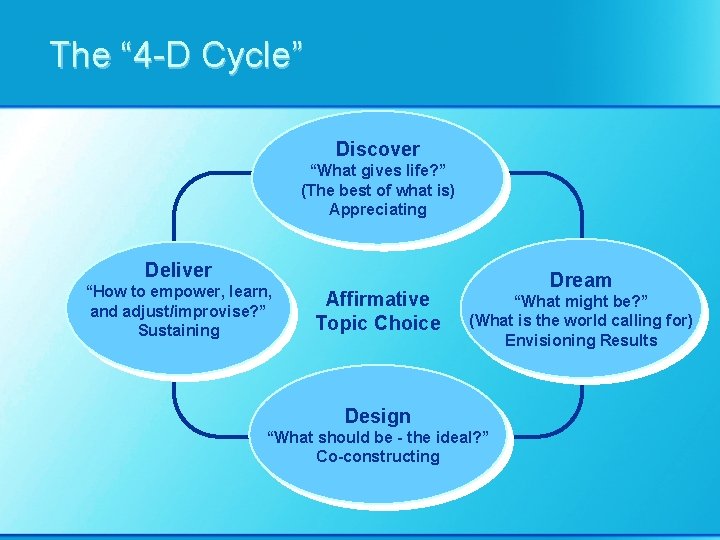
The “ 4 -D Cycle” Discover “What gives life? ” (The best of what is) Appreciating Deliver “How to empower, learn, and adjust/improvise? ” Sustaining Affirmative Topic Choice Dream “What might be? ” (What is the world calling for) Envisioning Results Design “What should be - the ideal? ” Co-constructing
Full AI Process l l l Select focus area or topic(s) of interest Conduct interviews designed to discover strengths, passions, unique attributes Identify patterns, themes and/or intriguing possibilities Create bold statements of ideal possibilities ("Provocative Propositions") Co-determine "what should be" (consensus re: principles & priorities) Take/sustain action
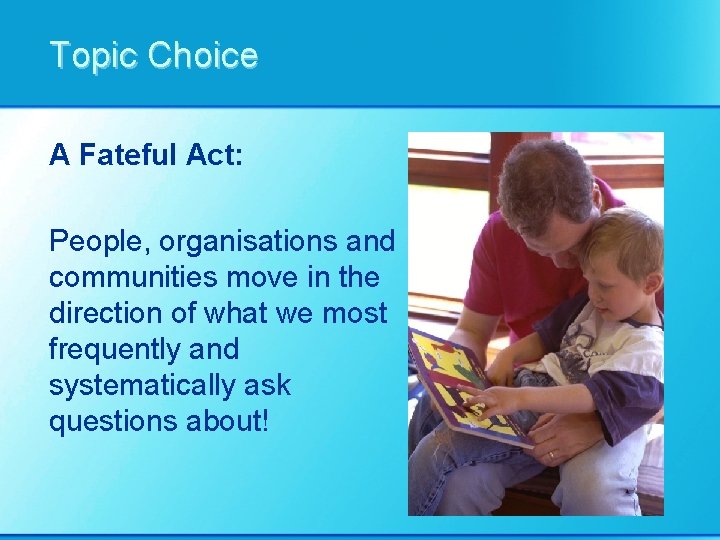
Topic Choice A Fateful Act: People, organisations and communities move in the direction of what we most frequently and systematically ask questions about!
Genius is in Creating the Question “What would the universe look like if I were riding on the end of a light beam at the speed of light? ” (Albert Einstein)
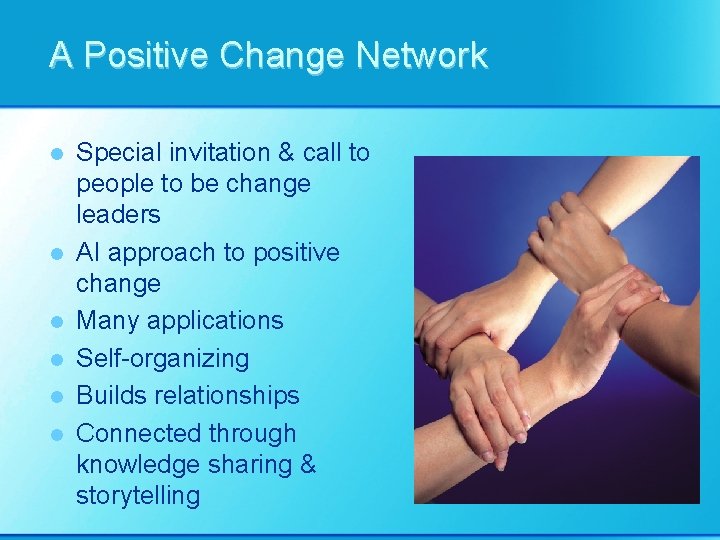
A Positive Change Network l l l Special invitation & call to people to be change leaders AI approach to positive change Many applications Self-organizing Builds relationships Connected through knowledge sharing & storytelling
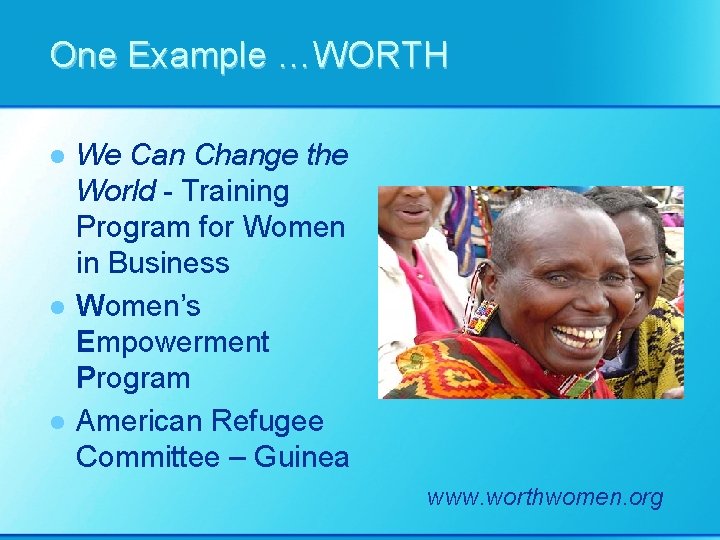
One Example …WORTH l l l We Can Change the World - Training Program for Women in Business Women’s Empowerment Program American Refugee Committee – Guinea www. worthwomen. org
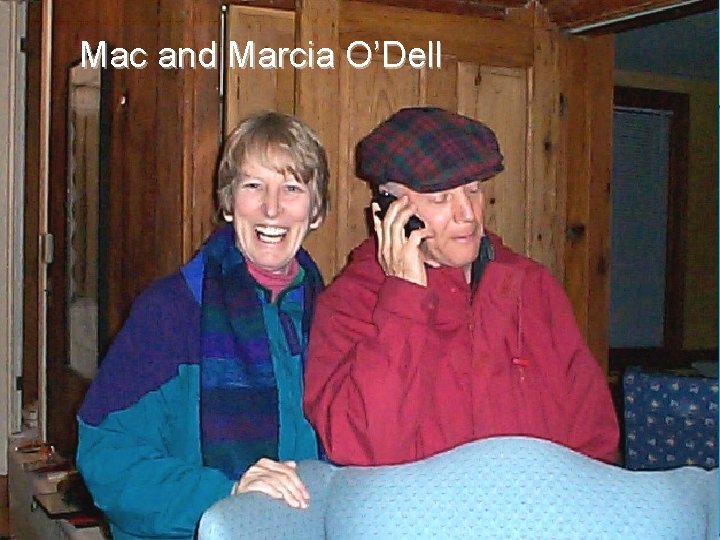
Mac and Marcia O’Dell
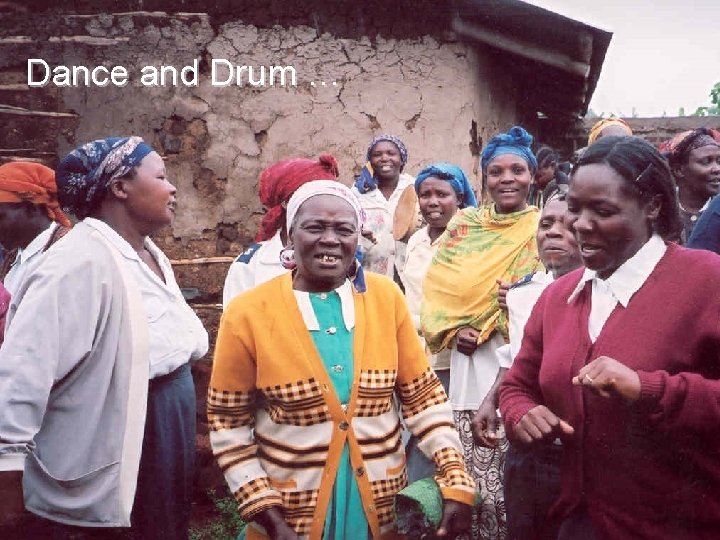
Dance and Drum …
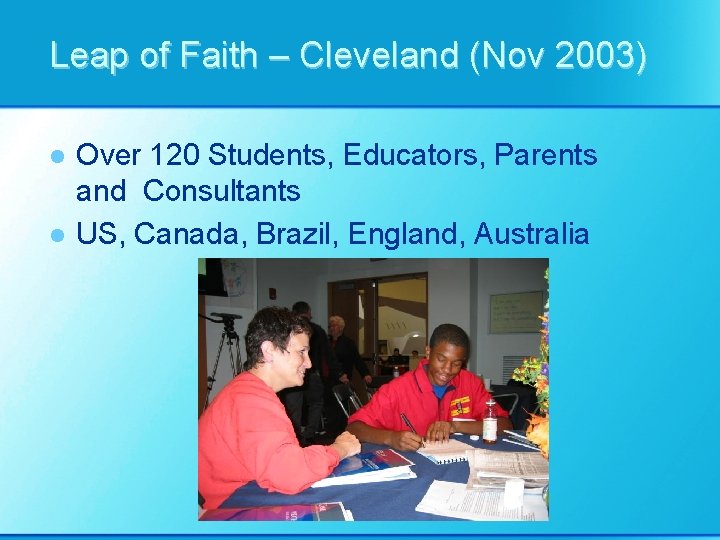
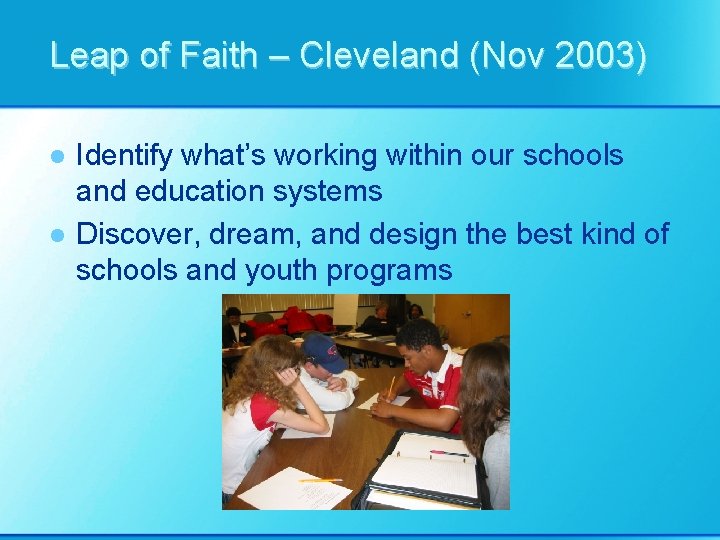
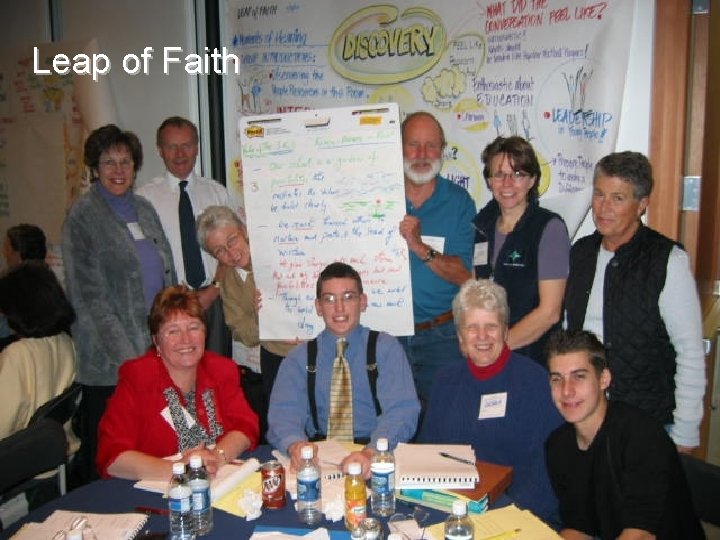
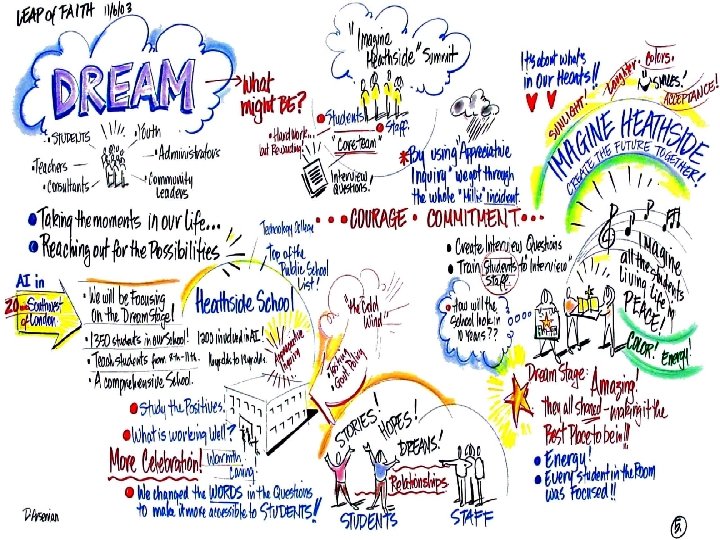
Leap of Faith – Cleveland (Nov 2003) l l Over 120 Students, Educators, Parents and Consultants US, Canada, Brazil, England, Australia
Leap of Faith – Cleveland (Nov 2003) l l Identify what’s working within our schools and education systems Discover, dream, and design the best kind of schools and youth programs
Leap of Faith
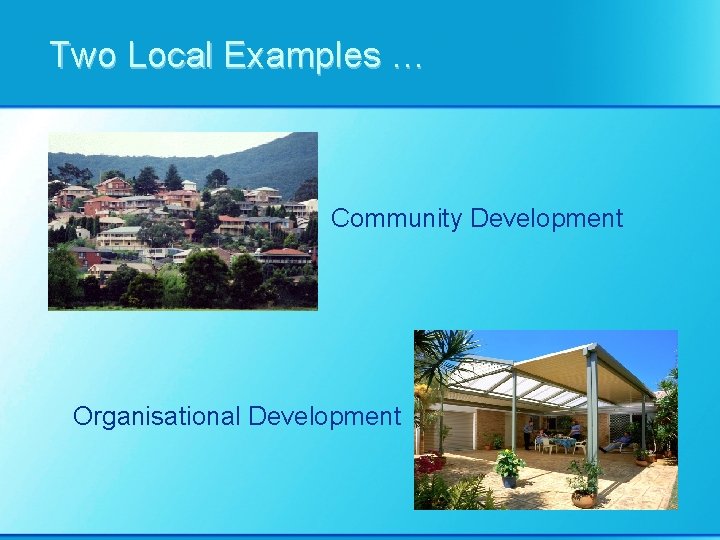
Two Local Examples … Community Development Organisational Development
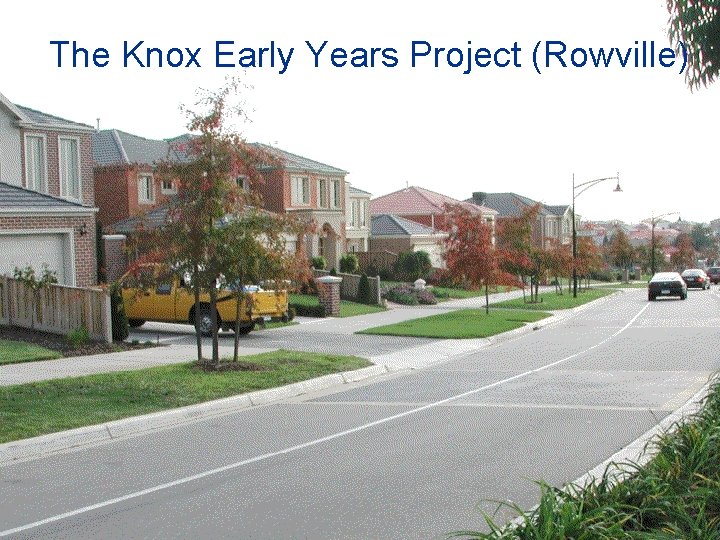
The Knox Early Years Project (Rowville)
Designer Pergolas & Carports Pty Ltd
Acknowledgements l A debt of gratitude is owed to the following people for generously sharing their time, wisdom and materials: § § § David Cooperrider Sue Annis Hammond Gina Hinrichs Mac & Marcia Odell Marge Schiller Other members of the Positive Change Corps and Appreciative Inquiry Consulting
SUE JAMES PO Box 197 Boronia, VIC, 3156 Phone: (03) 9758 2528 Mobile: 0402 979 384 Email: info@suejames. com. au Web: www. suejames. com. au www. appreciativeinquiry. com. au www. aiconsulting. com. au