
Applying the Principles of Effective Interventions with Juvenile
- Slides: 33
Applying the Principles of Effective Interventions with Juvenile Offenders Presented by: Edward J. Latessa, Ph. D. Center for Criminal Justice Research Division of Criminal Justice University of Cincinnati www. uc. edu/criminaljustice Edward. Latessa@uc. edu
Evidence Based – What does it mean? There are different forms of evidence: – The lowest form is anecdotal evidence, but it makes us feel good – The highest form is empirical evidence – results from controlled studies, but it doesn’t make us feel good
What does the Research tell us? There is often a Misapplication of Research: “XXX Study Says” - the problem is if you believe every study we wouldn’t eat anything (but we would drink a lot of red wine!) • Looking at one study can be a mistake • Need to examine a body of research • So, what does the body of knowledge about correctional interventions tell us?
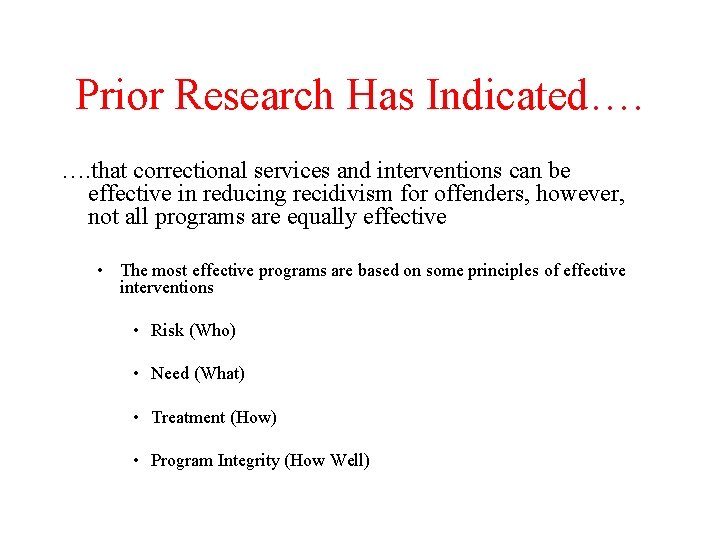
Prior Research Has Indicated…. …. that correctional services and interventions can be effective in reducing recidivism for offenders, however, not all programs are equally effective • The most effective programs are based on some principles of effective interventions • Risk (Who) • Need (What) • Treatment (How) • Program Integrity (How Well)
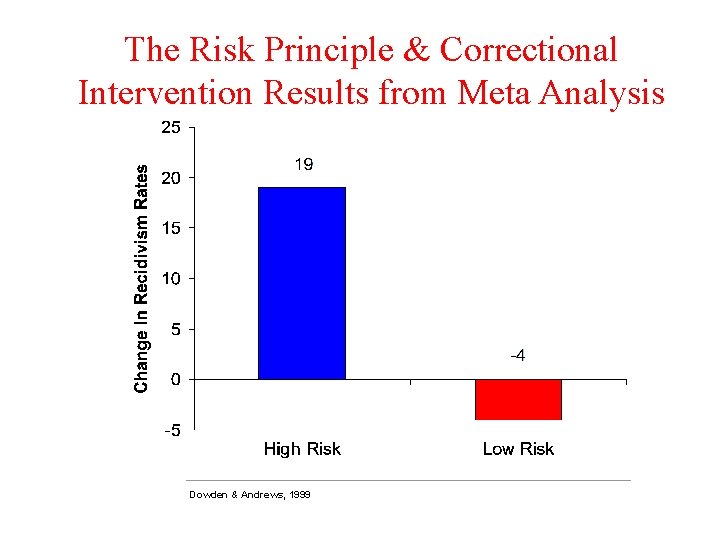
Risk Principle • Provide more intense services to higher -risk offenders • Targeting lower risk offenders can lead to increases in recidivism rates
The Risk Principle & Correctional Intervention Results from Meta Analysis Dowden & Andrews, 1999
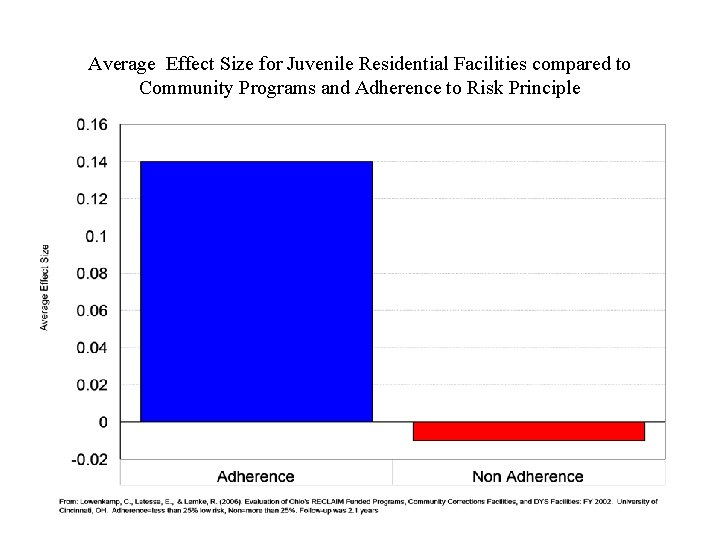
Average Effect Size for Juvenile Residential Facilities compared to Community Programs and Adherence to Risk Principle
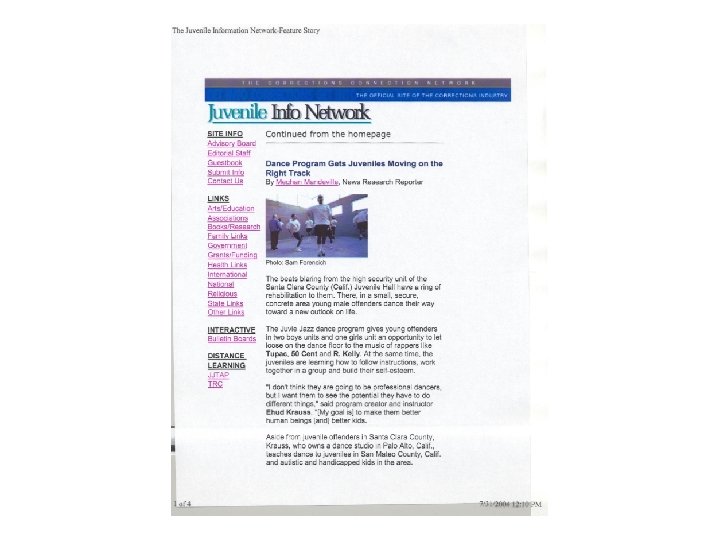
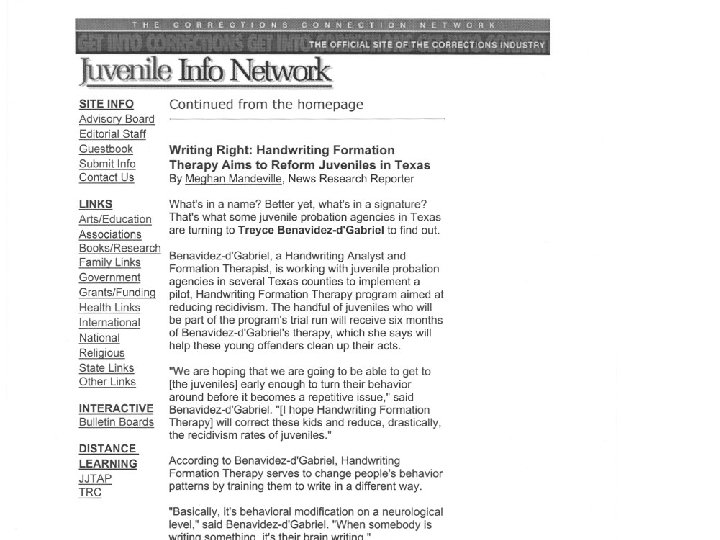
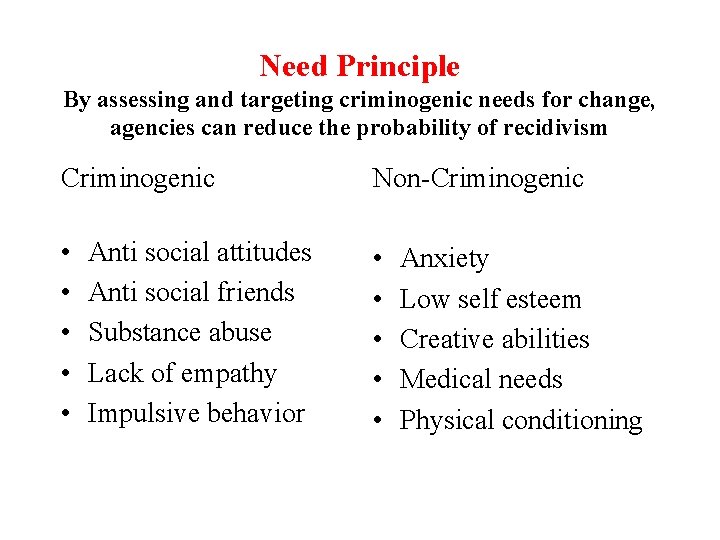
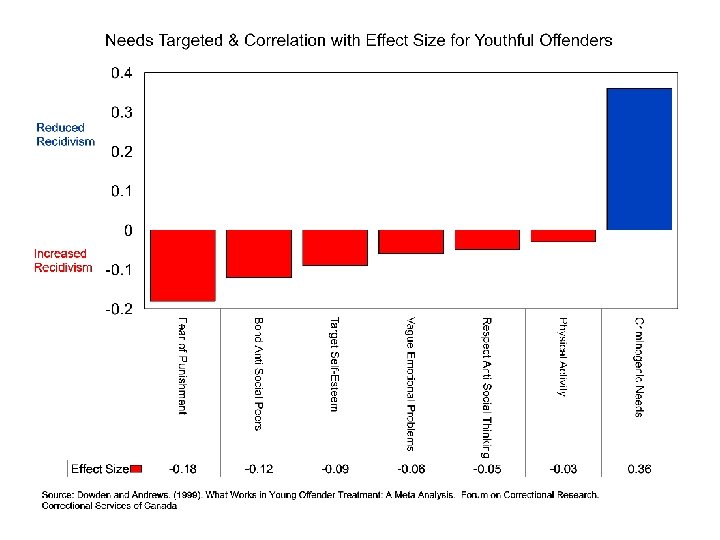
Need Principle • Target crime producing needs and risk factors • Not met as often as needed—many programs practice “correctional quackery”
Definitely NOT Criminogenic Needs
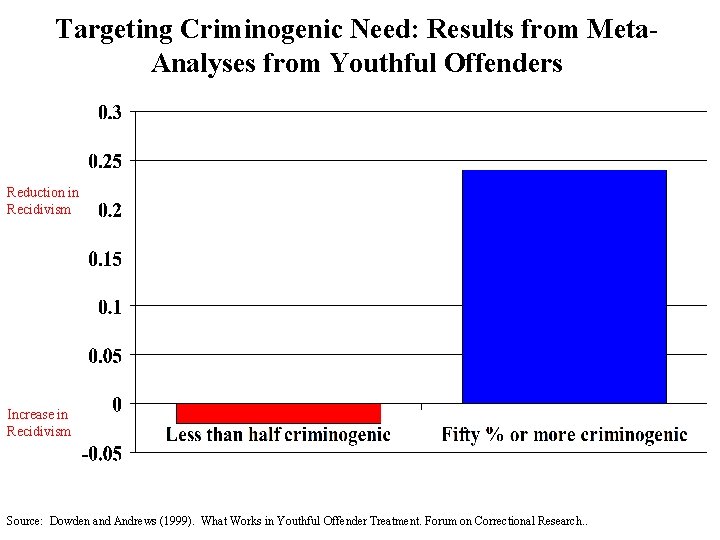
Need Principle By assessing and targeting criminogenic needs for change, agencies can reduce the probability of recidivism Criminogenic Non-Criminogenic • • • Anti social attitudes Anti social friends Substance abuse Lack of empathy Impulsive behavior Anxiety Low self esteem Creative abilities Medical needs Physical conditioning
Targeting Criminogenic Need: Results from Meta. Analyses from Youthful Offenders Reduction in Recidivism Increase in Recidivism Source: Dowden and Andrews (1999). What Works in Youthful Offender Treatment. Forum on Correctional Research. .
Treatment Principle: Provide Behavioral Treatment
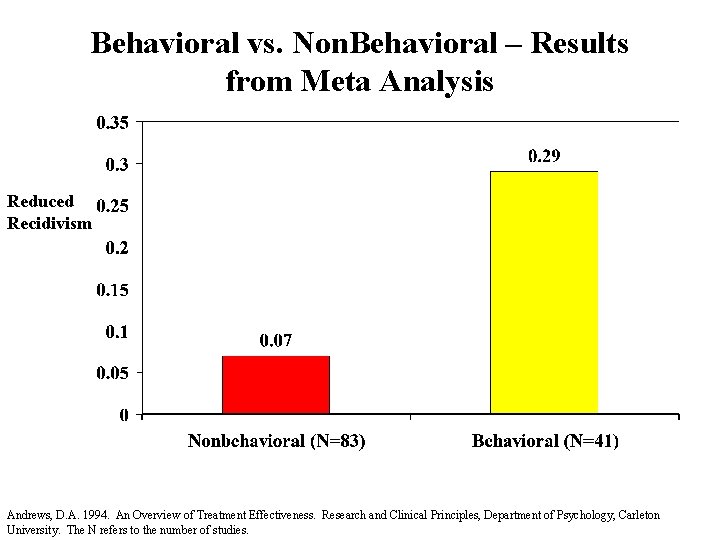
Behavioral vs. Non. Behavioral – Results from Meta Analysis Reduced Recidivism Andrews, D. A. 1994. An Overview of Treatment Effectiveness. Research and Clinical Principles, Department of Psychology, Carleton University. The N refers to the number of studies.
Attributes of Behavioral Treatment • Focus on current factors that influence behavior • Action oriented • Offender behavior is appropriately reinforced
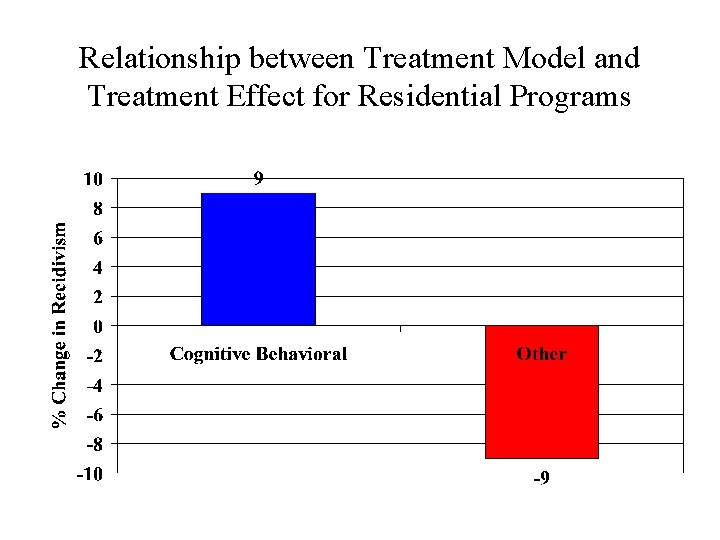
Most Effective Behavioral Models • Structured social learning where new skills and behavioral are modeled • Cognitive behavioral approaches that target criminogenic risk factors • Family based approaches that train family on appropriate techniques
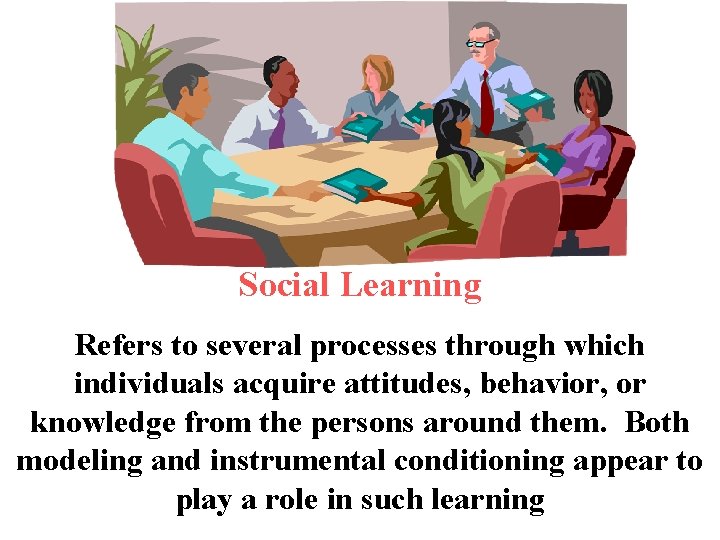
Social Learning Refers to several processes through which individuals acquire attitudes, behavior, or knowledge from the persons around them. Both modeling and instrumental conditioning appear to play a role in such learning
The Four Principles of Cognitive Intervention 1. Thinking affects behavior 2. Antisocial, distorted, unproductive irrational thinking causes antisocial and unproductive behavior 3. Thinking can be influenced 4. We can change how we feel and behave by changing what we think
Relationship between Treatment Model and Treatment Effect for Residential Programs
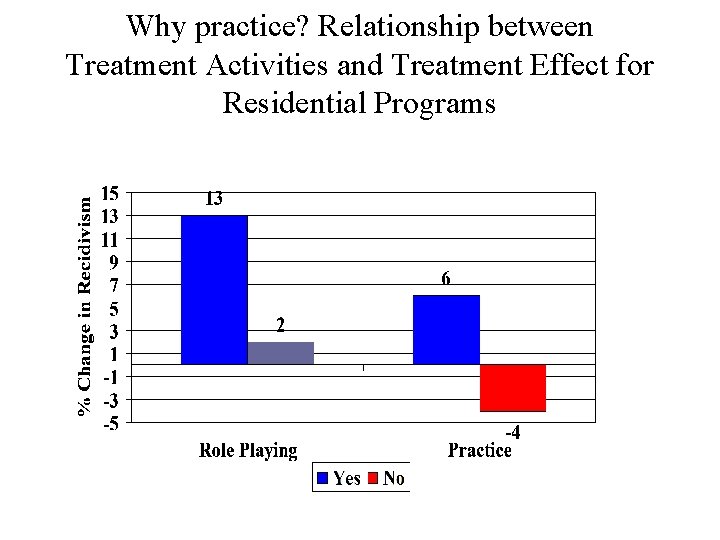
Why practice? Relationship between Treatment Activities and Treatment Effect for Residential Programs
Of course some things don’t work
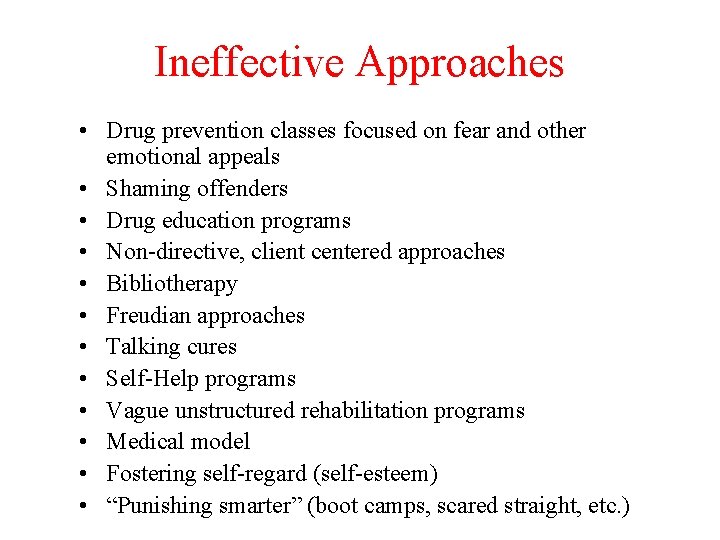
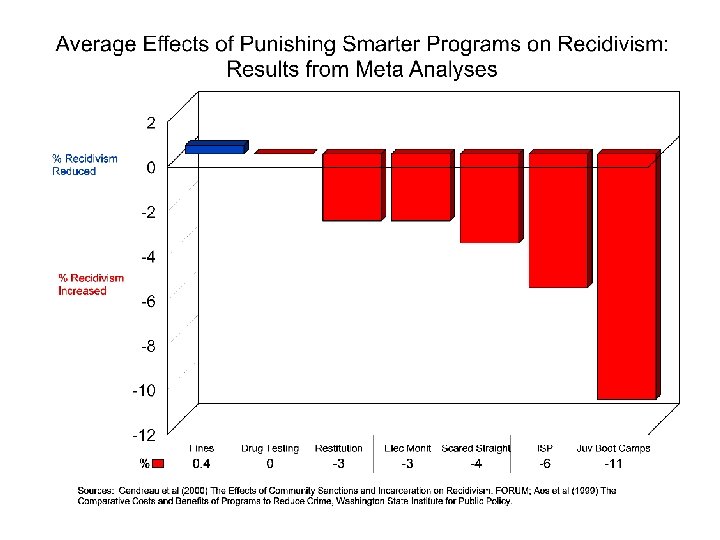
Ineffective Approaches • Drug prevention classes focused on fear and other emotional appeals • Shaming offenders • Drug education programs • Non-directive, client centered approaches • Bibliotherapy • Freudian approaches • Talking cures • Self-Help programs • Vague unstructured rehabilitation programs • Medical model • Fostering self-regard (self-esteem) • “Punishing smarter” (boot camps, scared straight, etc. )
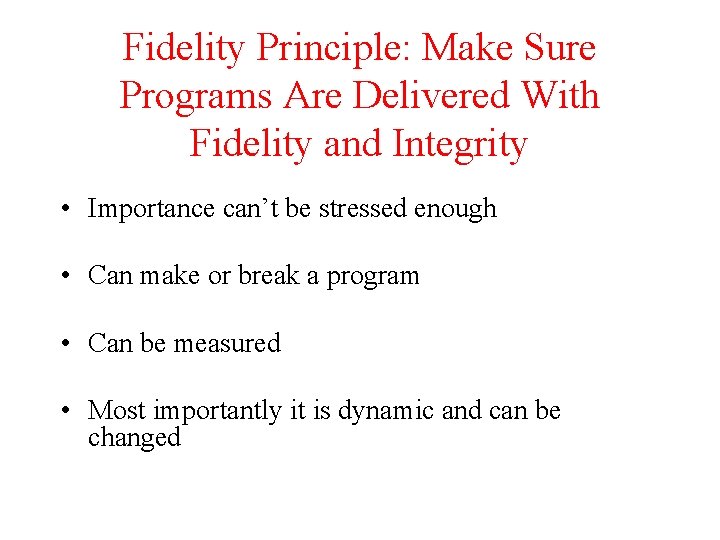
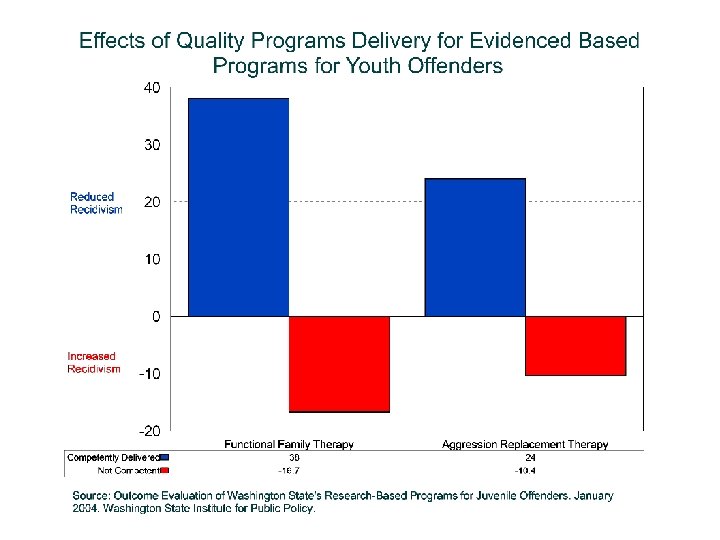
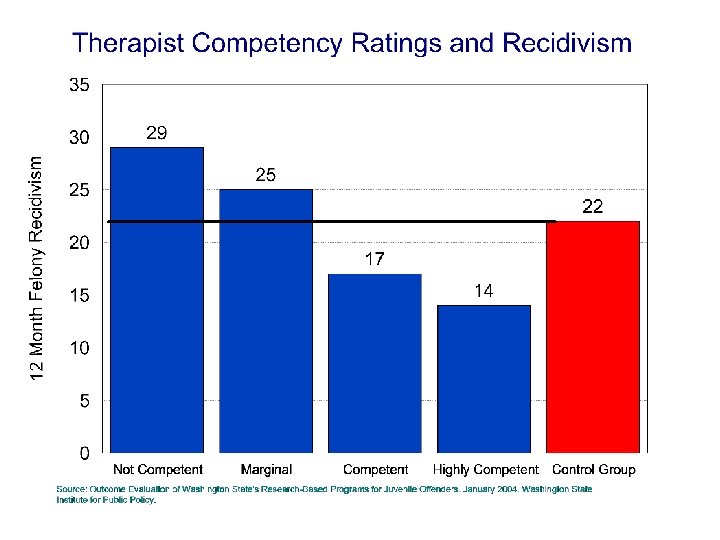
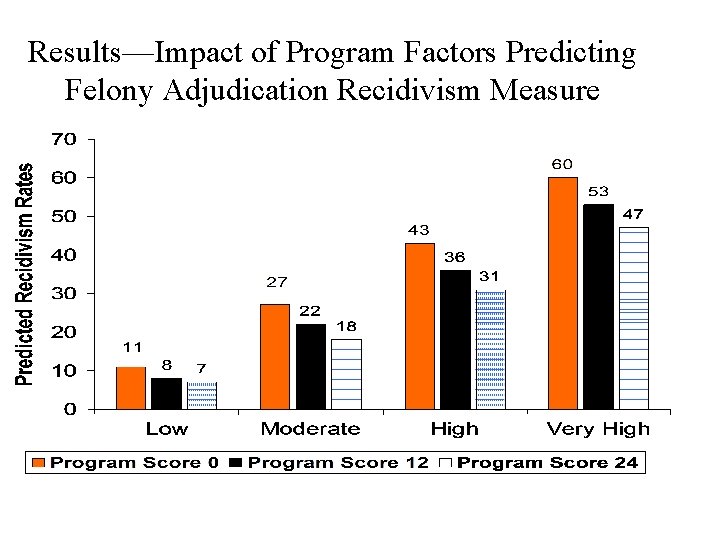
Fidelity Principle: Make Sure Programs Are Delivered With Fidelity and Integrity • Importance can’t be stressed enough • Can make or break a program • Can be measured • Most importantly it is dynamic and can be changed
Results—Impact of Program Factors Predicting Felony Adjudication Recidivism Measure
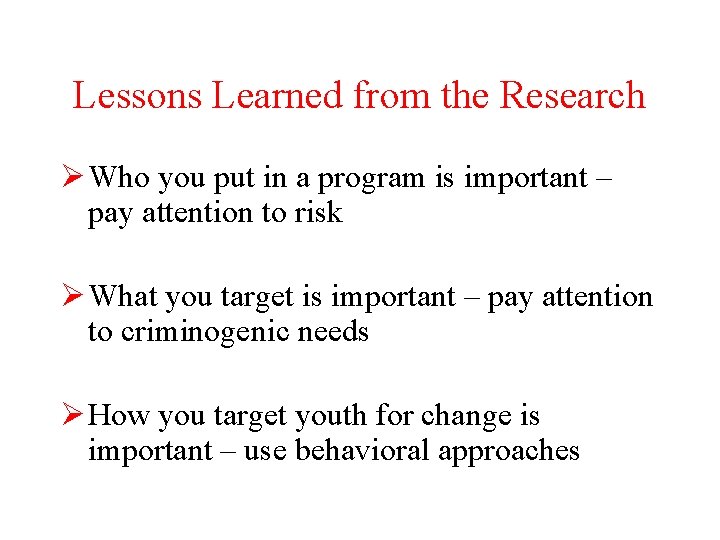
Lessons Learned from the Research Ø Who you put in a program is important – pay attention to risk Ø What you target is important – pay attention to criminogenic needs Ø How you target youth for change is important – use behavioral approaches
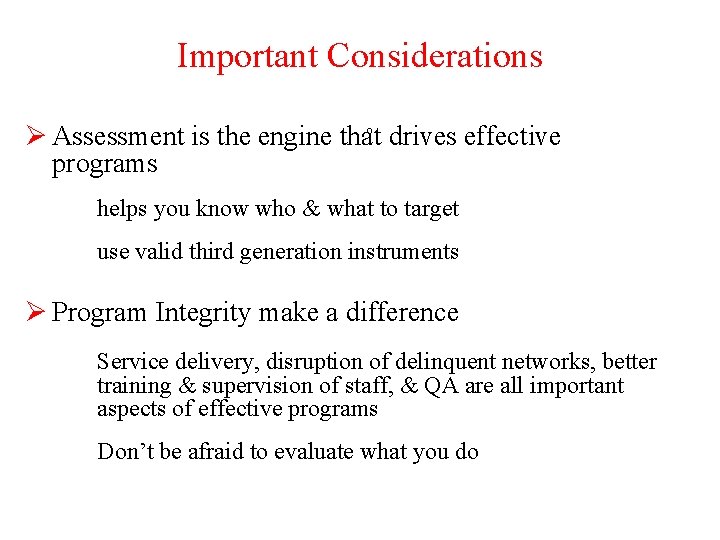
Important Considerations o Ø Assessment is the engine that drives effective programs helps you know who & what to target use valid third generation instruments Ø Program Integrity make a difference Service delivery, disruption of delinquent networks, better training & supervision of staff, & QA are all important aspects of effective programs Don’t be afraid to evaluate what you do
Many Programs Use the Christopher Columbus Style of Program Design WHEN HE SET OUT… He didn’t know where he was going. WHEN HE GOT THERE… He didn’t know where he was. WHEN HE GOT BACK… He didn’t know where he had been.
Use Evidence Based Approaches and Design Programs Around the Empirical Research