
Applying the Fair Finance Guide Methodology to DFIs
- Slides: 7
Applying the Fair Finance Guide Methodology to DFIs 27 May 2020
Brief introduction of Profundo Our Experience • Independent not-for-profit company with 30 years of sustainability research experience • 20 experienced research professionals from 10 countries Our Clients Our Competencies 2 • Established in 2000 in Amsterdam • Long-standing, global client base • NGOs, governments, foundations and investors • Strong knowledge of the financial sector, policy developments and the impacts of businesses and financiers on sustainability aspects • Understanding different sustainability issues and standards • Customized research and advice to help our clients with fostering sustainability and social justice
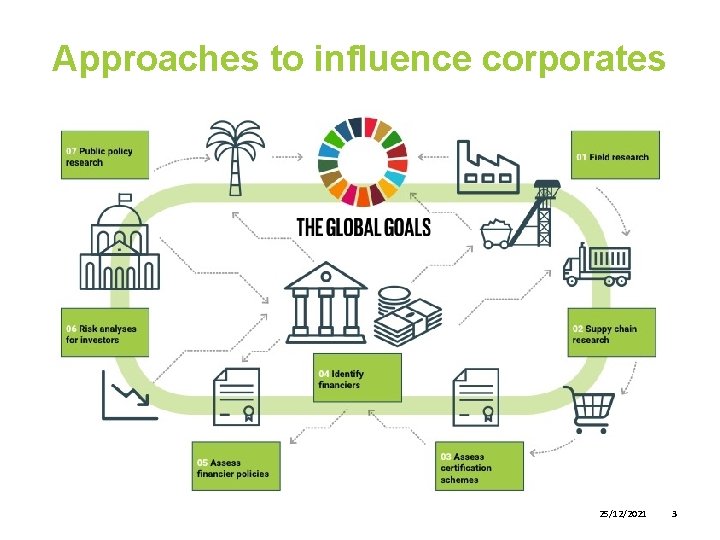
Approaches to influence corporates 25/12/2021 3
What is the Fair Finance Guide? • Fair Finance Guide (FFG) methodology developed by Profundo and FFI network to assess banks’ investment and lending policies • Overview of international standards & initiatives • Standards are used as background and foundation for FFG assessment elements • Indicates what a financier should expect of a company • Take into account public information only • Policy assessment should be complemented by case studies to see what banks do in practice 4
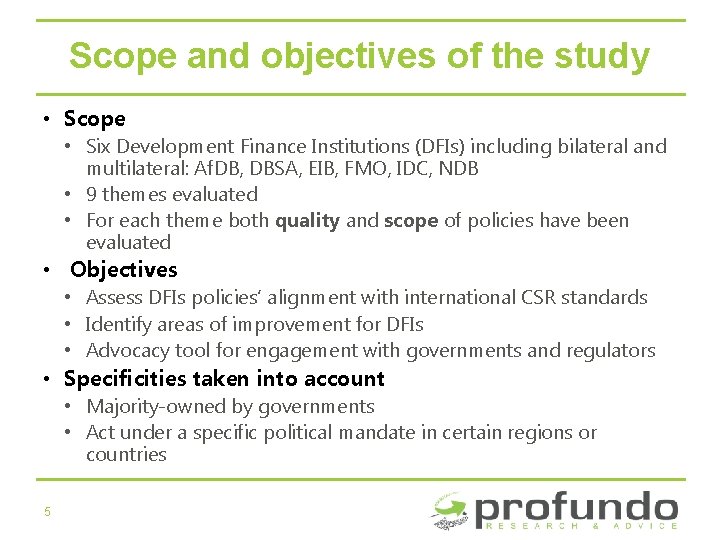
Scope and objectives of the study • Scope • Six Development Finance Institutions (DFIs) including bilateral and multilateral: Af. DB, DBSA, EIB, FMO, IDC, NDB • 9 themes evaluated • For each theme both quality and scope of policies have been evaluated • Objectives • Assess DFIs policies’ alignment with international CSR standards • Identify areas of improvement for DFIs • Advocacy tool for engagement with governments and regulators • Specificities taken into account • Majority-owned by governments • Act under a specific political mandate in certain regions or countries 5
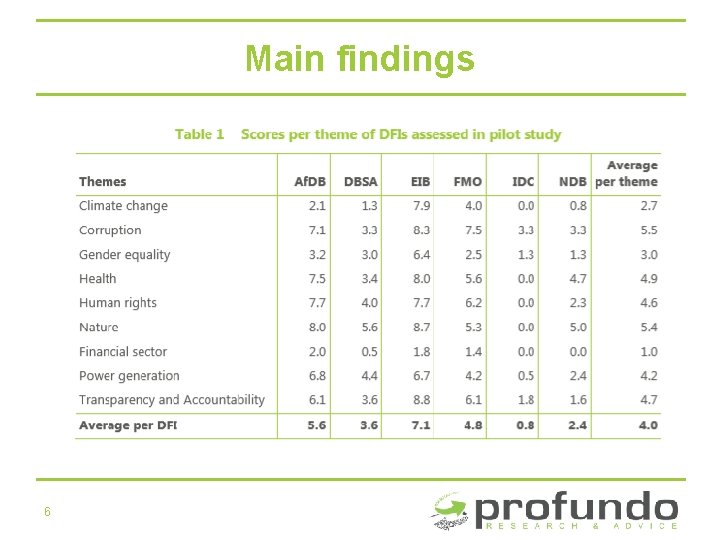
Main findings 6
Thank you for participating! More information: Juliette Laplane j. laplane@profundo. nl 7