
Applying HumanCentered Design Techniques to Design a Taskcentered
![Workshop – HCD influences [St 08] Steen, M. : Early user involvement in research](https://slidetodoc.com/presentation_image_h2/392a98e88b1d0e50645bb447659c5eeb/image-7.jpg "Workshop – HCD influences [St 08] Steen, M. : Early user involvement in research")
- Slides: 37
Applying Human-Centered Design Techniques to Design a Task-centered Project Management Tool Lukas Langlechner, 27. 03. 2017, Munich Chair of Software Engineering for Business Information Systems (sebis) Faculty of Informatics Technische Universität München wwwmatthes. in. tum. de
Outline Motivation Human-Centered Design Approach § Hackathon Planning Process § Interviews § Workshops § Results Evaluation Limitations & Future Work 170327 Langlechner BA Final Presentation © sebis 2
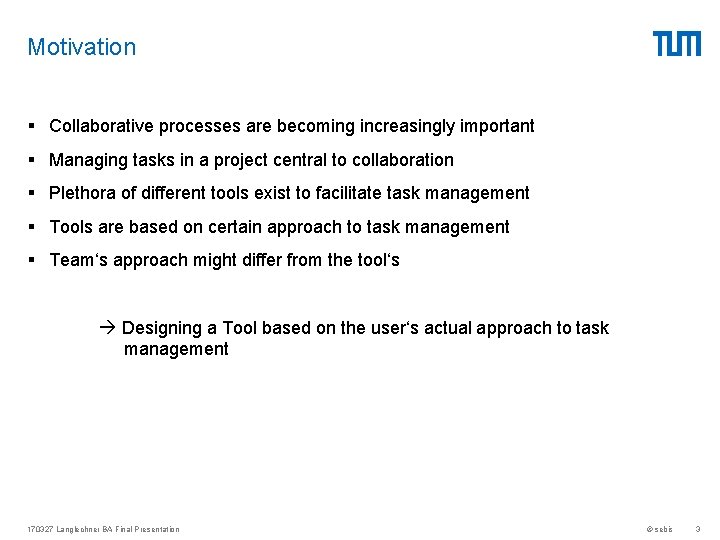
Motivation § Collaborative processes are becoming increasingly important § Managing tasks in a project central to collaboration § Plethora of different tools exist to facilitate task management § Tools are based on certain approach to task management § Team‘s approach might differ from the tool‘s Designing a Tool based on the user‘s actual approach to task management 170327 Langlechner BA Final Presentation © sebis 3
Outline Motivation Human-Centered Design Approach § Hackathon Planning Process § Interviews § Workshops § Results Evaluation Limitations & Future Work 170327 Langlechner BA Final Presentation © sebis 4
Human-Centered Design (1) Human-centered design is a creative approach to interactive systems development that aims to make systems usable and useful by focusing on the users, designing around their needs and requirements at all stages, and by applying human factors/ergonomics, usability knowledge, and techniques. This approach enhances effectiveness and efficiency, improves human well-being, user satisfaction, accessibility and sustainability; and counteracts possible adverse effects of use on human health, safety and performance. ISO 9241 -210 170327 Langlechner BA Final Presentation © sebis 5
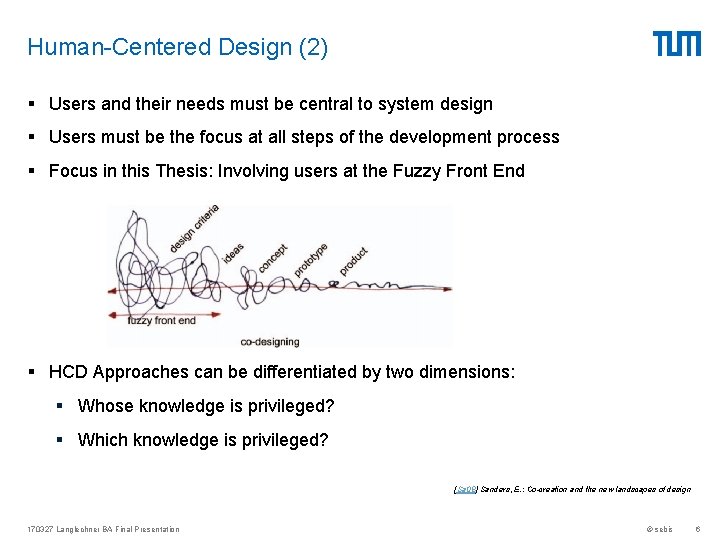
Human-Centered Design (2) § Users and their needs must be central to system design § Users must be the focus at all steps of the development process § Focus in this Thesis: Involving users at the Fuzzy Front End § HCD Approaches can be differentiated by two dimensions: § Whose knowledge is privileged? § Which knowledge is privileged? [Sa 08] Sanders, E. : Co-creation and the new landscapes of design 170327 Langlechner BA Final Presentation © sebis 6
Workshop – HCD influences [St 08] Steen, M. : Early user involvement in research and design projects – A review of methods and practices 170327 Langlechner BA Final Presentation © sebis 7
Outline Motivation Human-Centered Design Approach § Hackathon Planning Process § Interviews § Workshops § Results Evaluation Limitations & Future Work 170327 Langlechner BA Final Presentation © sebis 8
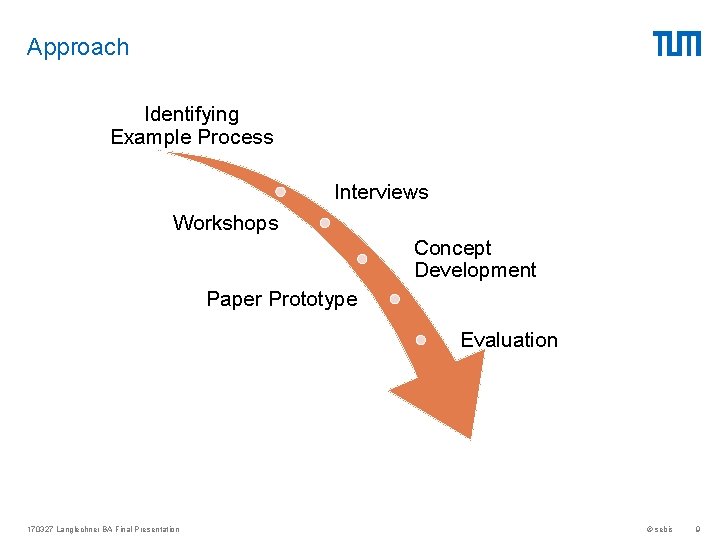
Approach Identifying Example Process Interviews Workshops Concept Development Paper Prototype Evaluation 170327 Langlechner BA Final Presentation © sebis 9
Hackathon Planning Process – Key Facts Hackathon § Event at TUM § One Weekend in November 2016 § 250 Participants § 15 Sponsors § 10 Challenges § 30 Volunteers Planning: § ~ 3 Months Duration § 8 People involved in planning § Used Tools: MS Office, Email, Trello, Socio. Cortex, Google Docs 170327 Langlechner BA Final Presentation © sebis 10
Interviews Duration: ~ 60 min Location: sebis chair at TUM Participants: 2 Research Assistants at sebis chair Type: Semi-structured Main Goal: Understand the Hackathon Planning Process Covered Topics: § People involved / their roles § Tools used § Tasks performed § Schedule of the planning 170327 Langlechner BA Final Presentation © sebis 11
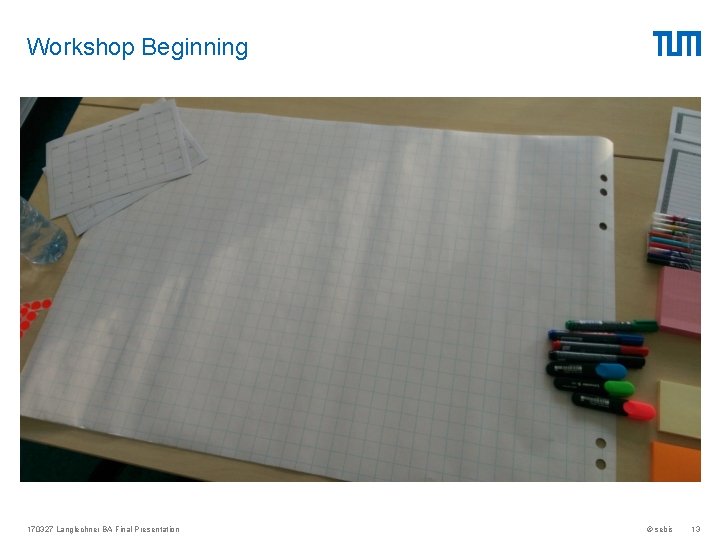
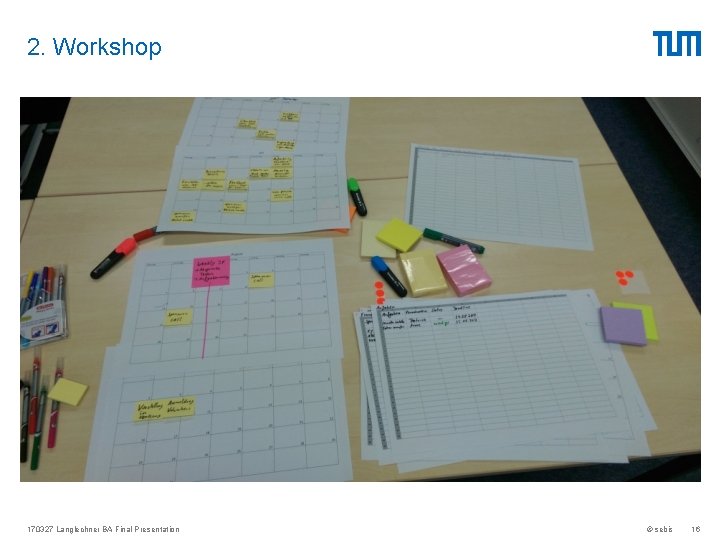
Workshops Duration: ~ 90 min Location: sebis chair at TUM Participants: 2 Research Assistants at sebis chair Activity: Simulation of next Hackathon Planning Process using only paper Materials: § Paper Underlay § Post-its in different sizes and colors § Index Cards § Calendar and Spreadsheets printed § Pens in different colors 170327 Langlechner BA Final Presentation © sebis 12
Workshop Beginning 170327 Langlechner BA Final Presentation © sebis 13
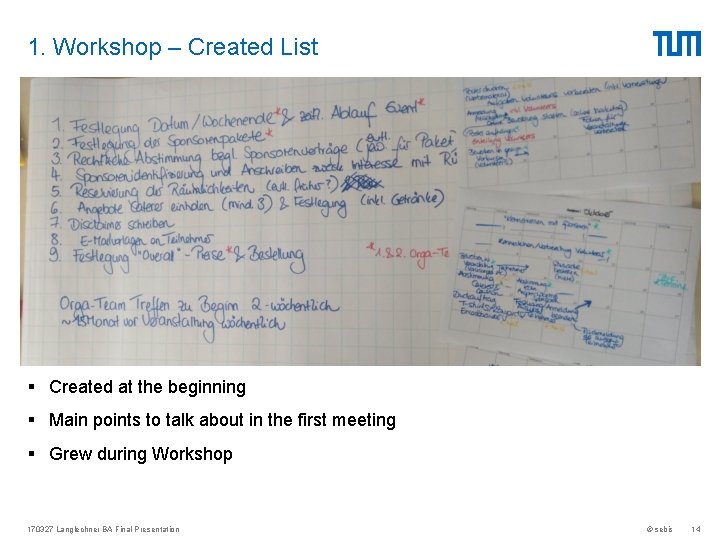
1. Workshop – Created List § Created at the beginning § Main points to talk about in the first meeting § Grew during Workshop 170327 Langlechner BA Final Presentation © sebis 14
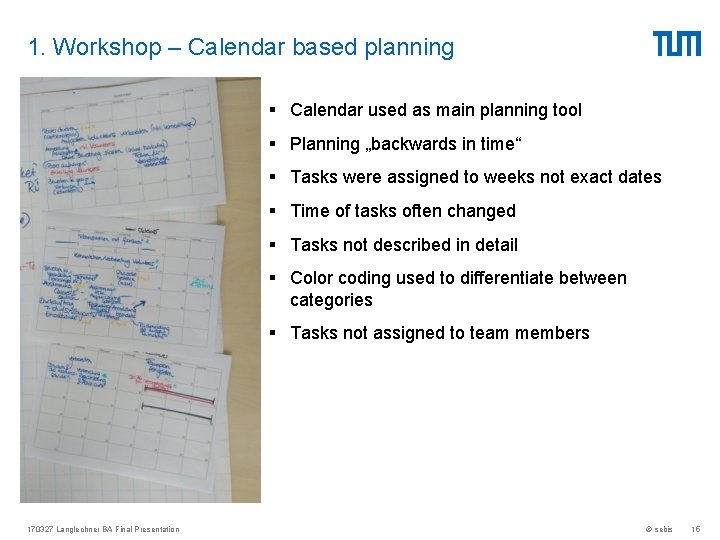
1. Workshop – Calendar based planning § Calendar used as main planning tool § Planning „backwards in time“ § Tasks were assigned to weeks not exact dates § Time of tasks often changed § Tasks not described in detail § Color coding used to differentiate between categories § Tasks not assigned to team members 170327 Langlechner BA Final Presentation © sebis 15
2. Workshop 170327 Langlechner BA Final Presentation © sebis 16
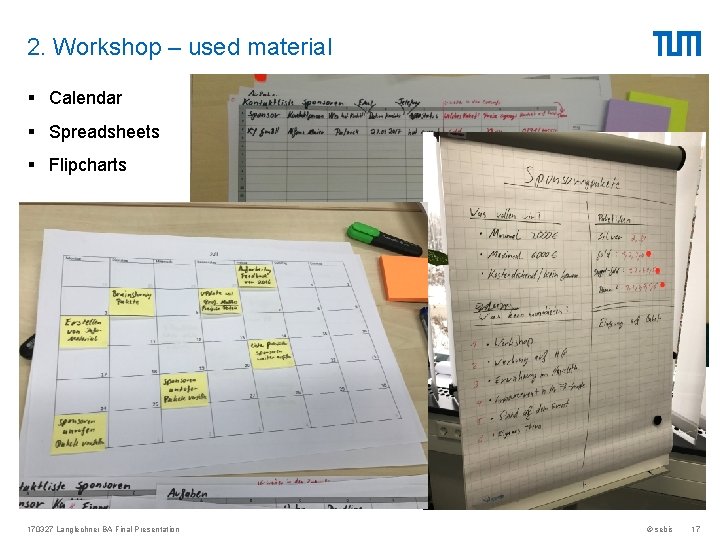
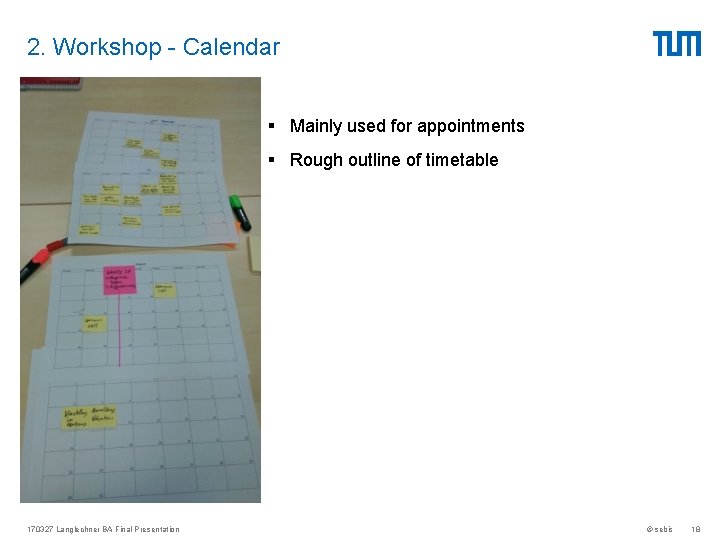
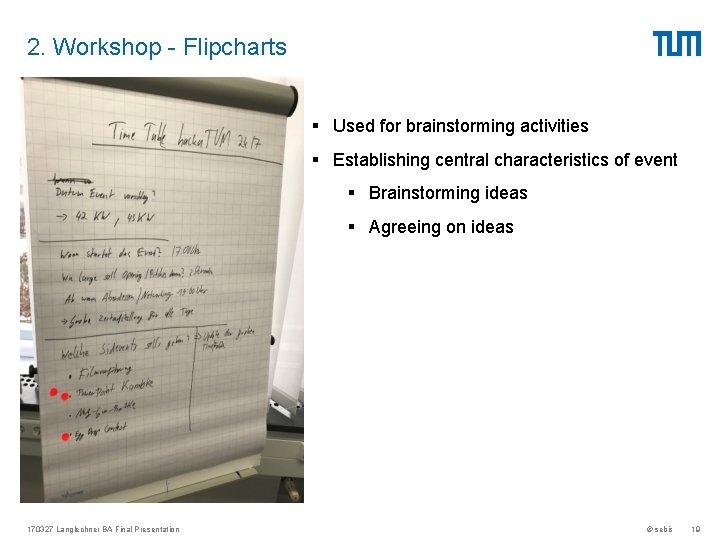
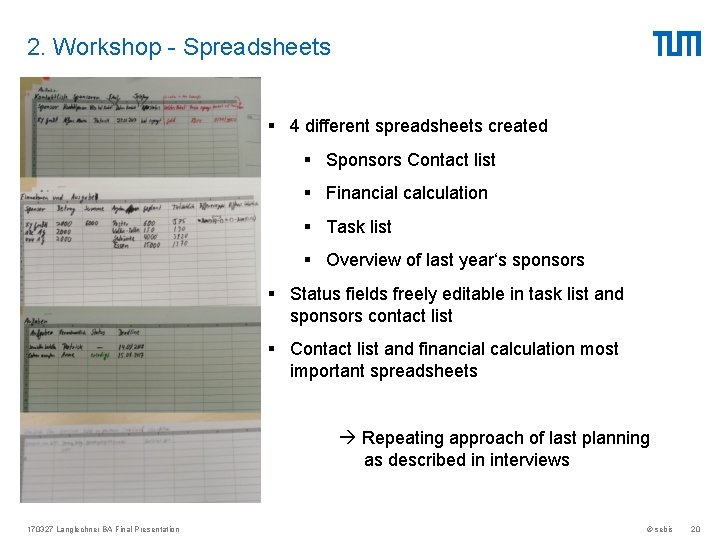
2. Workshop – used material § Calendar § Spreadsheets § Flipcharts 170327 Langlechner BA Final Presentation © sebis 17
2. Workshop - Calendar § Mainly used for appointments § Rough outline of timetable 170327 Langlechner BA Final Presentation © sebis 18
2. Workshop - Flipcharts § Used for brainstorming activities § Establishing central characteristics of event § Brainstorming ideas § Agreeing on ideas 170327 Langlechner BA Final Presentation © sebis 19
2. Workshop - Spreadsheets § 4 different spreadsheets created § Sponsors Contact list § Financial calculation § Task list § Overview of last year‘s sponsors § Status fields freely editable in task list and sponsors contact list § Contact list and financial calculation most important spreadsheets Repeating approach of last planning as described in interviews 170327 Langlechner BA Final Presentation © sebis 20
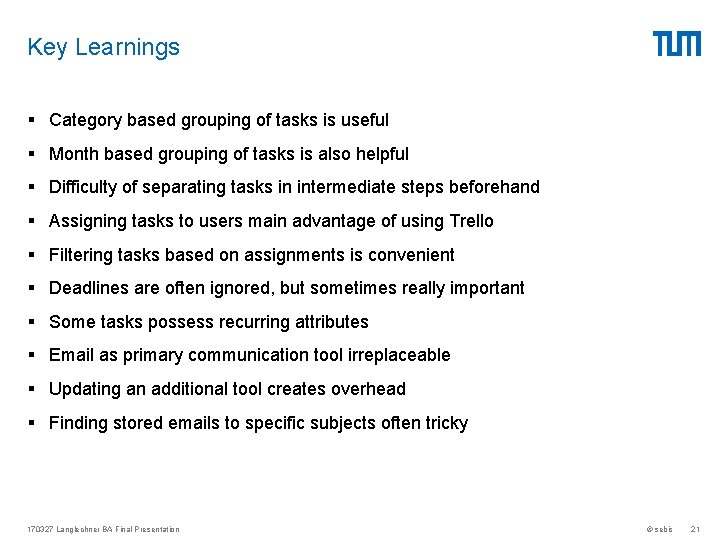
Key Learnings § Category based grouping of tasks is useful § Month based grouping of tasks is also helpful § Difficulty of separating tasks in intermediate steps beforehand § Assigning tasks to users main advantage of using Trello § Filtering tasks based on assignments is convenient § Deadlines are often ignored, but sometimes really important § Some tasks possess recurring attributes § Email as primary communication tool irreplaceable § Updating an additional tool creates overhead § Finding stored emails to specific subjects often tricky 170327 Langlechner BA Final Presentation © sebis 21
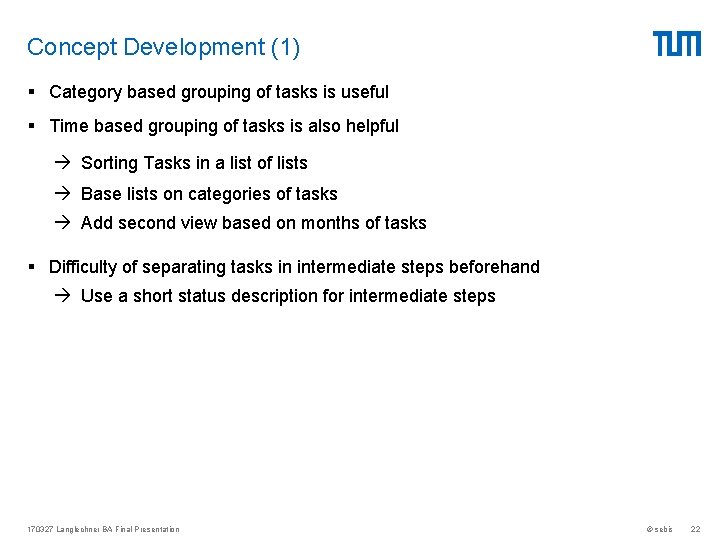
Concept Development (1) § Category based grouping of tasks is useful § Time based grouping of tasks is also helpful Sorting Tasks in a list of lists Base lists on categories of tasks Add second view based on months of tasks § Difficulty of separating tasks in intermediate steps beforehand Use a short status description for intermediate steps 170327 Langlechner BA Final Presentation © sebis 22
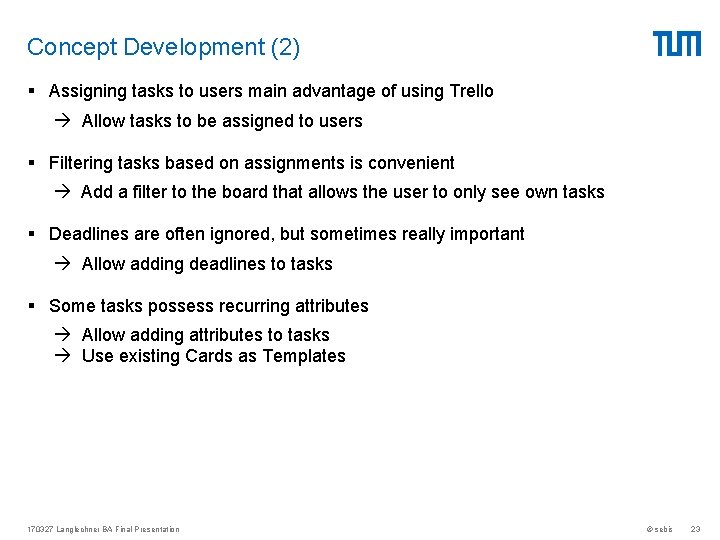
Concept Development (2) § Assigning tasks to users main advantage of using Trello Allow tasks to be assigned to users § Filtering tasks based on assignments is convenient Add a filter to the board that allows the user to only see own tasks § Deadlines are often ignored, but sometimes really important Allow adding deadlines to tasks § Some tasks possess recurring attributes Allow adding attributes to tasks Use existing Cards as Templates 170327 Langlechner BA Final Presentation © sebis 23
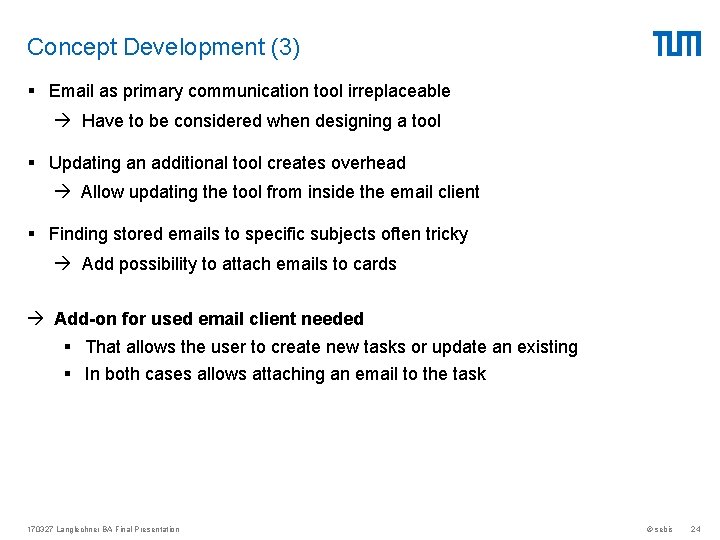
Concept Development (3) § Email as primary communication tool irreplaceable Have to be considered when designing a tool § Updating an additional tool creates overhead Allow updating the tool from inside the email client § Finding stored emails to specific subjects often tricky Add possibility to attach emails to cards Add-on for used email client needed § That allows the user to create new tasks or update an existing § In both cases allows attaching an email to the task 170327 Langlechner BA Final Presentation © sebis 24
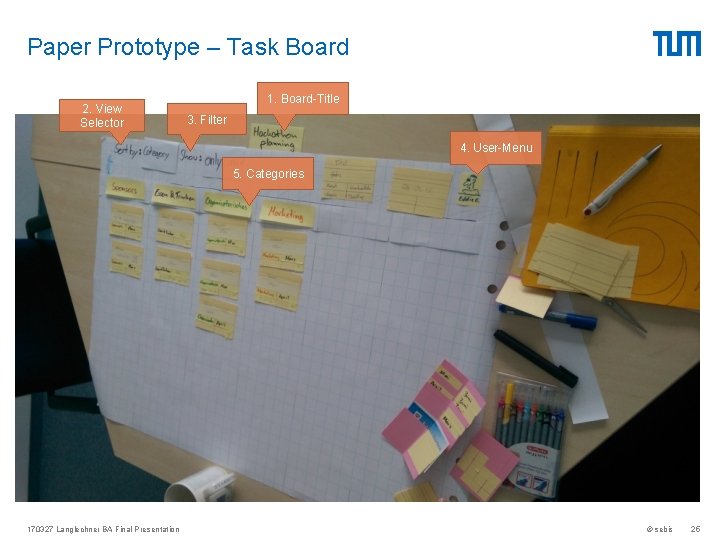
Paper Prototype – Task Board 2. View Selector 1. Board-Title 3. Filter 4. User-Menu 5. Categories 170327 Langlechner BA Final Presentation © sebis 25
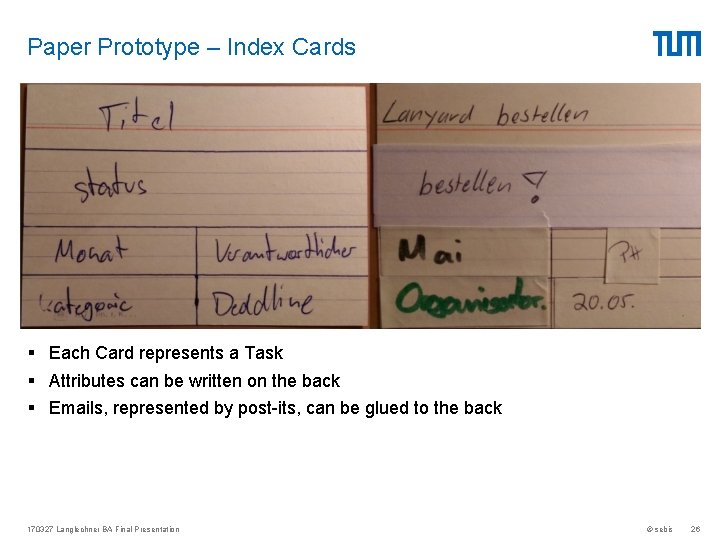
Paper Prototype – Index Cards § Each Card represents a Task § Attributes can be written on the back § Emails, represented by post-its, can be glued to the back 170327 Langlechner BA Final Presentation © sebis 26
Outline Motivation Human-Centered Design Approach § Hackathon Planning Process § Interviews § Workshops § Results Evaluation Limitations & Future Work 170327 Langlechner BA Final Presentation © sebis 27
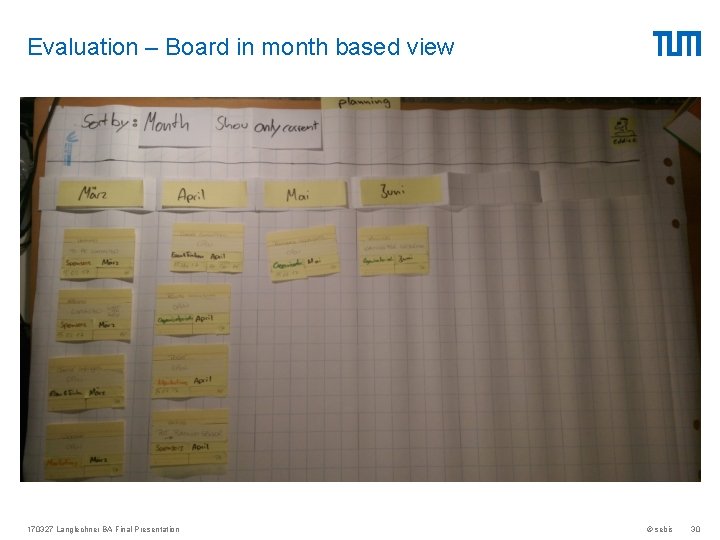
Evaluation § Methodology § ~ 30 min usage simulation of the paper prototype § Followed by 10 questions to concept ideas § Participants § 2 Participants from SEBIS chair § Same participants as in interviews and workshops § Scenario § Planning of hypothetical hackathon at June 23 rd – 25 th § Procedure § Creating cards for catering, website creation, room booking, organizing posters, organizing lanyards and sponsors § Demonstrate different views § Updates to some of the tasks § Updates to cards that are performed inside email client 170327 Langlechner BA Final Presentation © sebis 28
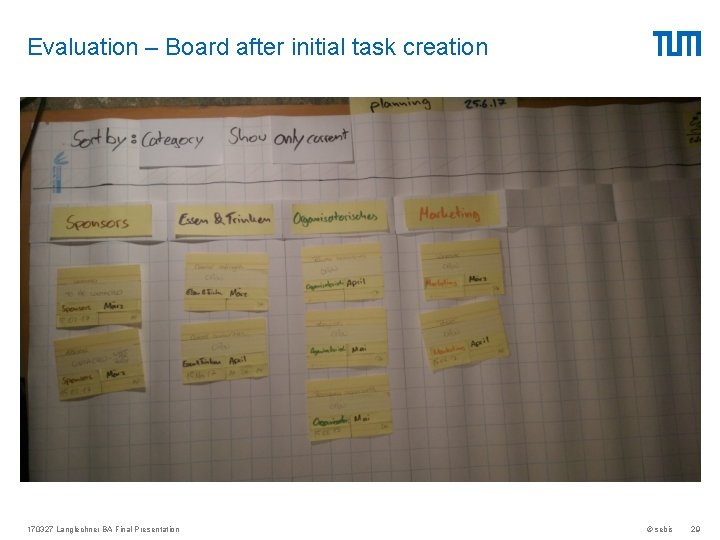
Evaluation – Board after initial task creation 170327 Langlechner BA Final Presentation © sebis 29
Evaluation – Board in month based view 170327 Langlechner BA Final Presentation © sebis 30
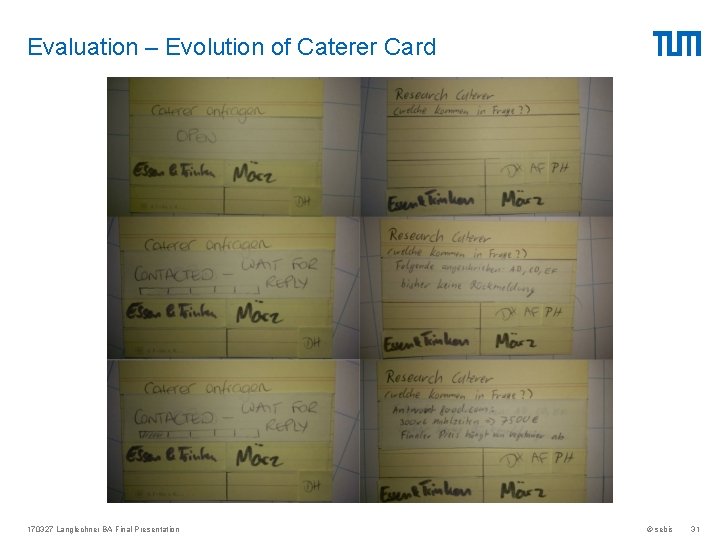
Evaluation – Evolution of Caterer Card 170327 Langlechner BA Final Presentation © sebis 31
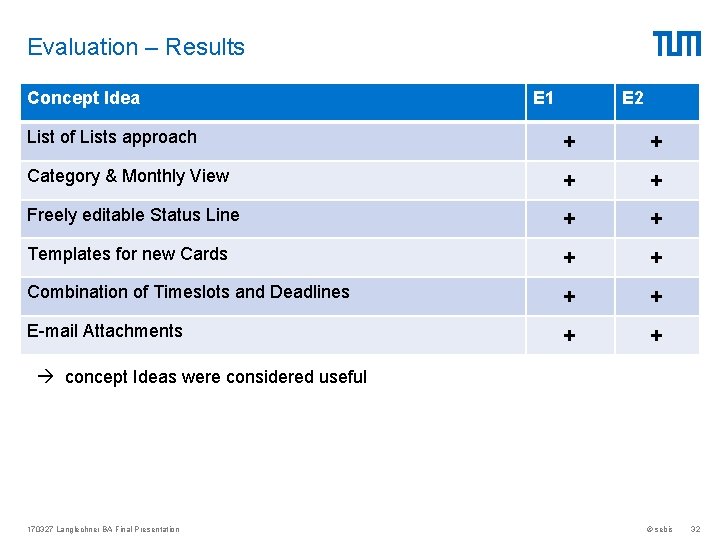
Evaluation – Results Concept Idea E 1 E 2 List of Lists approach + + Category & Monthly View + + Freely editable Status Line + + Templates for new Cards + + Combination of Timeslots and Deadlines + + E-mail Attachments + + concept Ideas were considered useful 170327 Langlechner BA Final Presentation © sebis 32
Final Adjustments § Additional View based on Team Members § Additional Filter that shows only overdue Tasks § Template based suggestions for Status 170327 Langlechner BA Final Presentation © sebis 33
Balsamiq Demo 170327 Langlechner BA Final Presentation © sebis 34
Outline Motivation Human-Centered Design Approach § Hackathon Planning Process § Interviews § Workshops § Results Evaluation Limitations & Future Work 170327 Langlechner BA Final Presentation © sebis 35
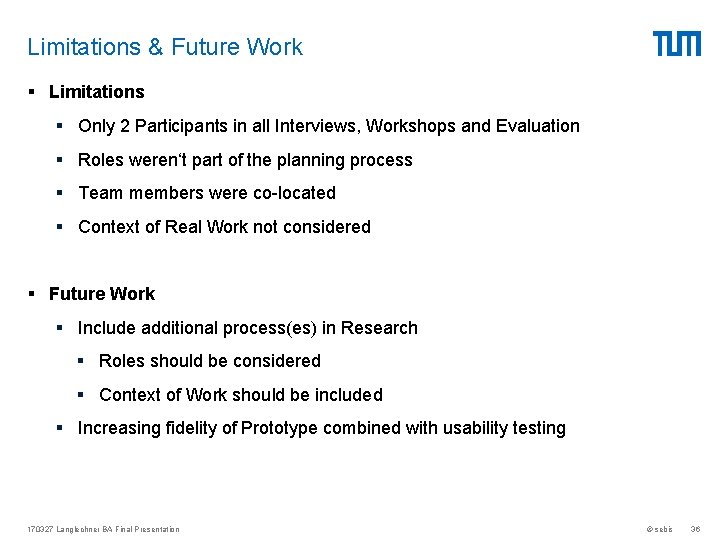
Limitations & Future Work § Limitations § Only 2 Participants in all Interviews, Workshops and Evaluation § Roles weren‘t part of the planning process § Team members were co-located § Context of Real Work not considered § Future Work § Include additional process(es) in Research § Roles should be considered § Context of Work should be included § Increasing fidelity of Prototype combined with usability testing 170327 Langlechner BA Final Presentation © sebis 36
Prof. Dr. Florian Matthes Technische Universität München Faculty of Informatics Chair of Software Engineering for Business Information Systems Boltzmannstraße 3 85748 Garching bei München Tel Fax +49. 89. 289. 17132 +49. 89. 289. 17136 matthes@in. tum. de wwwmatthes. in. tum. de