
Applying for Principal Fellowship of the Higher Education


- Slides: 20
Applying for Principal Fellowship of the Higher Education Academy (HEA) Cordelia Bryan PFHEA c. bryan 2@herts. ac. uk 01707 284230 (internal)4230 Learning and Teaching Innovation Centre
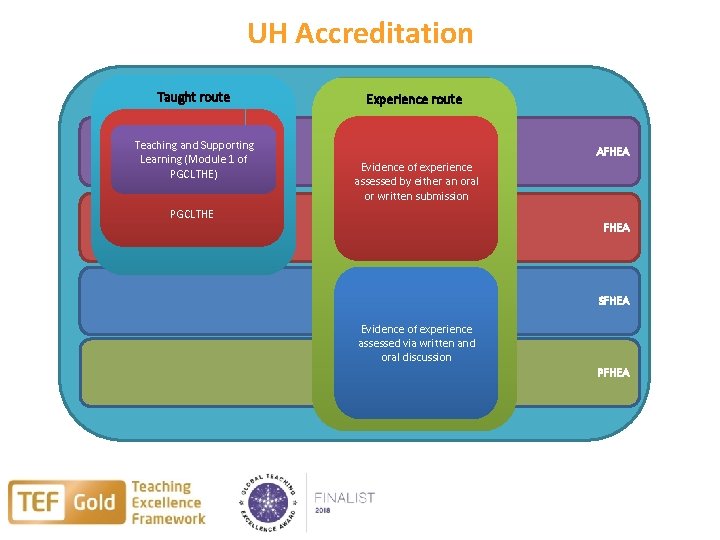
UH Accreditation Taught route Teaching and Supporting Learning (Module 1 of PGCLTHE) Experience route AFHEA Evidence of experience assessed by either an oral or written submission PGCLTHE FHEA SFHEA Evidence of experience assessed via written and oral discussion PFHEA
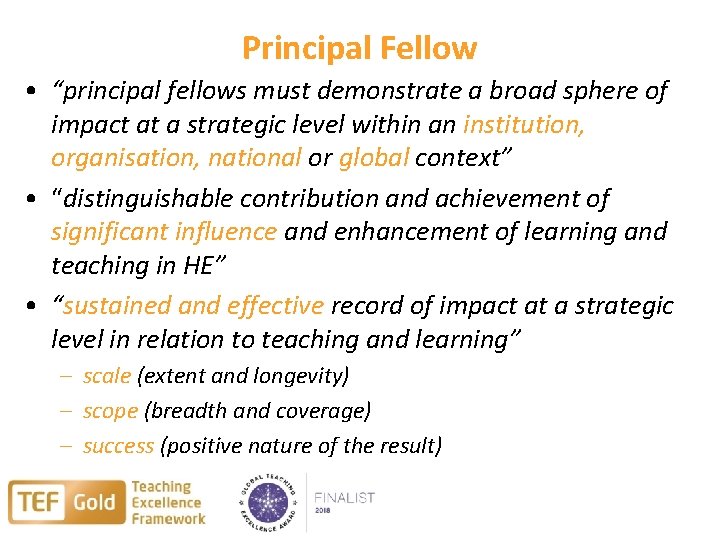
Principal Fellow • “principal fellows must demonstrate a broad sphere of impact at a strategic level within an institution, organisation, national or global context” • “distinguishable contribution and achievement of significant influence and enhancement of learning and teaching in HE” • “sustained and effective record of impact at a strategic level in relation to teaching and learning” – scale (extent and longevity) – scope (breadth and coverage) – success (positive nature of the result)
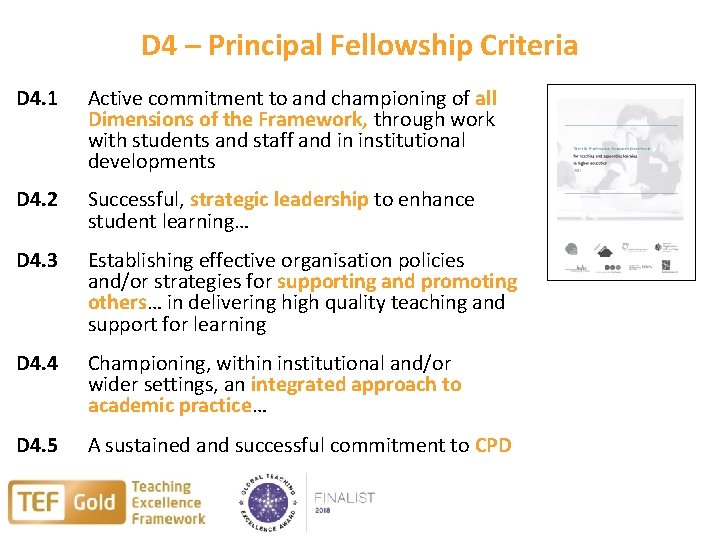
D 4 – Principal Fellowship Criteria D 4. 1 Active commitment to and championing of all Dimensions of the Framework, through work with students and staff and in institutional developments D 4. 2 Successful, strategic leadership to enhance student learning… D 4. 3 Establishing effective organisation policies and/or strategies for supporting and promoting others… in delivering high quality teaching and support for learning D 4. 4 Championing, within institutional and/or wider settings, an integrated approach to academic practice… D 4. 5 A sustained and successful commitment to CPD
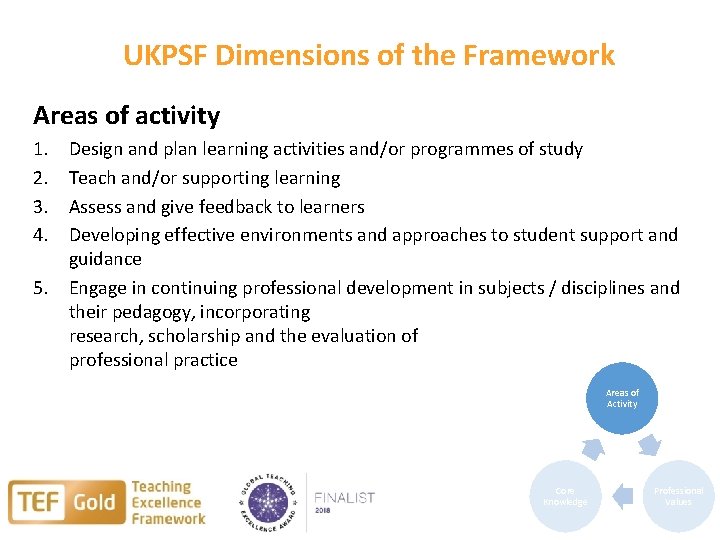
UKPSF Dimensions of the Framework Areas of activity 1. 2. 3. 4. 5. Design and plan learning activities and/or programmes of study Teach and/or supporting learning Assess and give feedback to learners Developing effective environments and approaches to student support and guidance Engage in continuing professional development in subjects / disciplines and their pedagogy, incorporating research, scholarship and the evaluation of professional practice Areas of Activity Core Knowledge Professional Values
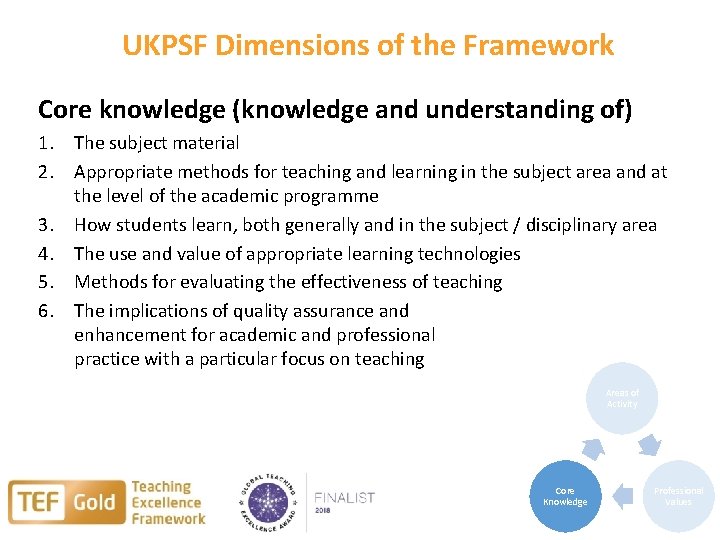
UKPSF Dimensions of the Framework Core knowledge (knowledge and understanding of) 1. The subject material 2. Appropriate methods for teaching and learning in the subject area and at the level of the academic programme 3. How students learn, both generally and in the subject / disciplinary area 4. The use and value of appropriate learning technologies 5. Methods for evaluating the effectiveness of teaching 6. The implications of quality assurance and enhancement for academic and professional practice with a particular focus on teaching Areas of Activity Core Knowledge Professional Values
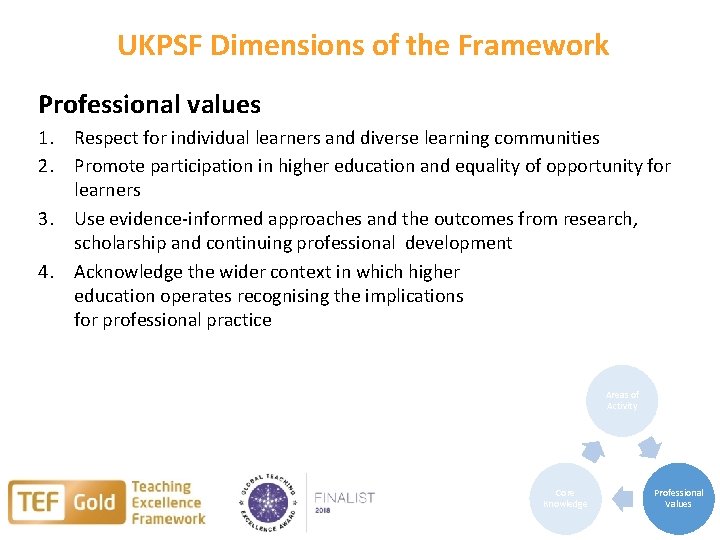
UKPSF Dimensions of the Framework Professional values 1. Respect for individual learners and diverse learning communities 2. Promote participation in higher education and equality of opportunity for learners 3. Use evidence-informed approaches and the outcomes from research, scholarship and continuing professional development 4. Acknowledge the wider context in which higher education operates recognising the implications for professional practice Areas of Activity Core Knowledge Professional Values
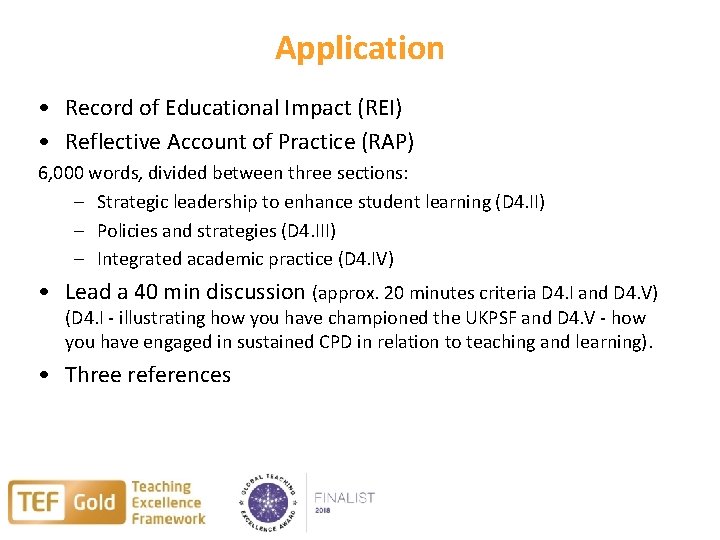
Application • Record of Educational Impact (REI) • Reflective Account of Practice (RAP) 6, 000 words, divided between three sections: – Strategic leadership to enhance student learning (D 4. II) – Policies and strategies (D 4. III) – Integrated academic practice (D 4. IV) • Lead a 40 min discussion (approx. 20 minutes criteria D 4. I and D 4. V) (D 4. I - illustrating how you have championed the UKPSF and D 4. V - how you have engaged in sustained CPD in relation to teaching and learning). • Three references
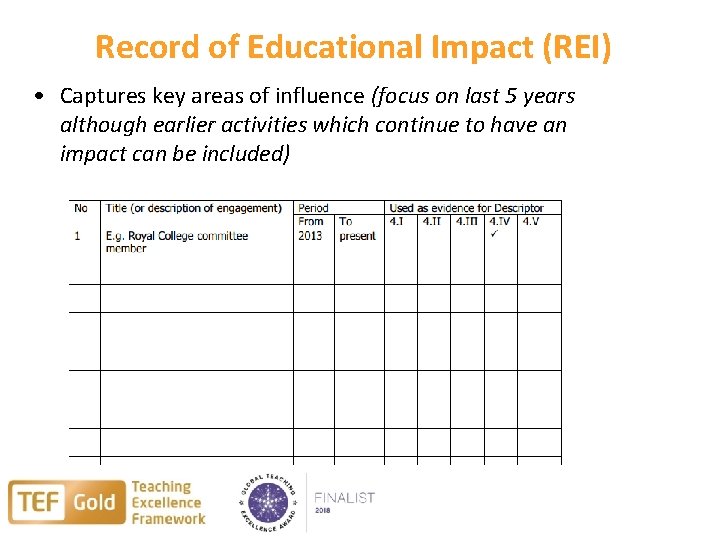
Record of Educational Impact (REI) • Captures key areas of influence (focus on last 5 years although earlier activities which continue to have an impact can be included)
Gathering your evidence; think about your leadership roles and experiences Useful to develop a timeline Might include: • Leadership/management roles • Career milestones • Strategic learning and teaching initiatives • Areas of research/scholarly practice • Recognition and Reward • Collaboration • Staff development policies
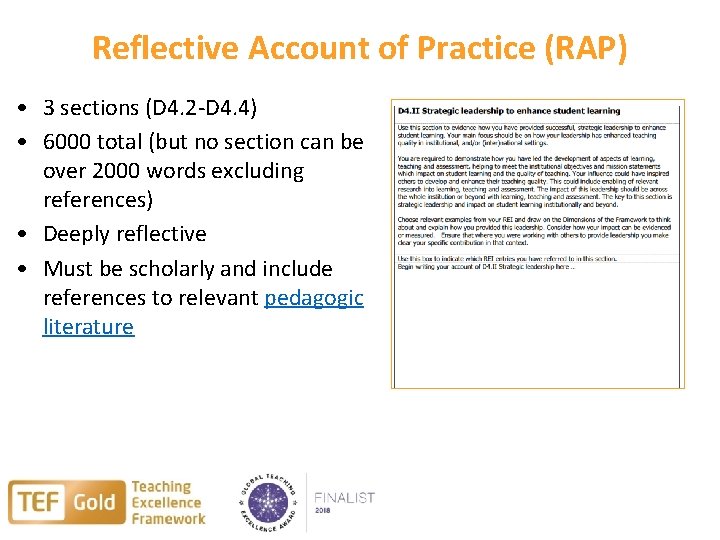
Reflective Account of Practice (RAP) • 3 sections (D 4. 2 -D 4. 4) • 6000 total (but no section can be over 2000 words excluding references) • Deeply reflective • Must be scholarly and include references to relevant pedagogic literature
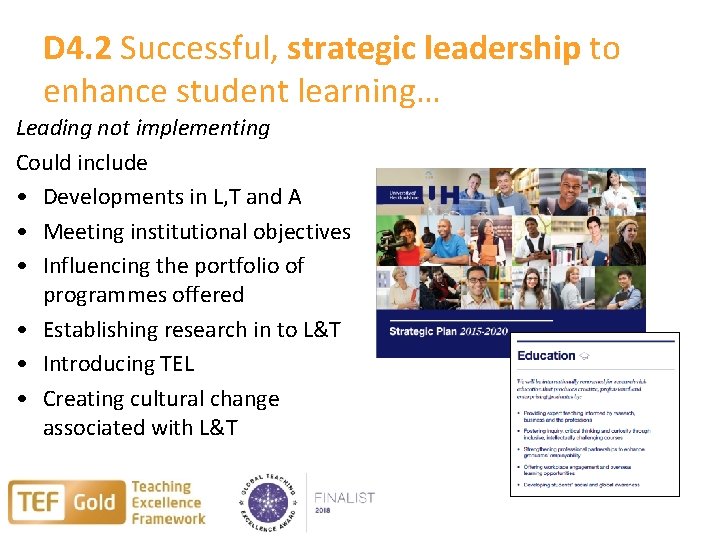
D 4. 2 Successful, strategic leadership to enhance student learning… Leading not implementing Could include • Developments in L, T and A • Meeting institutional objectives • Influencing the portfolio of programmes offered • Establishing research in to L&T • Introducing TEL • Creating cultural change associated with L&T
D 4. 3 Establishing effective organisation policies and/or strategies for supporting and promoting others… in delivering high quality teaching and support for learning Establishing Examples could include: • Instigating reward and recognition policies • Developing recognition schemes • Designing wide-scale mentorship or coaching programmes • CPD programmes and conferences
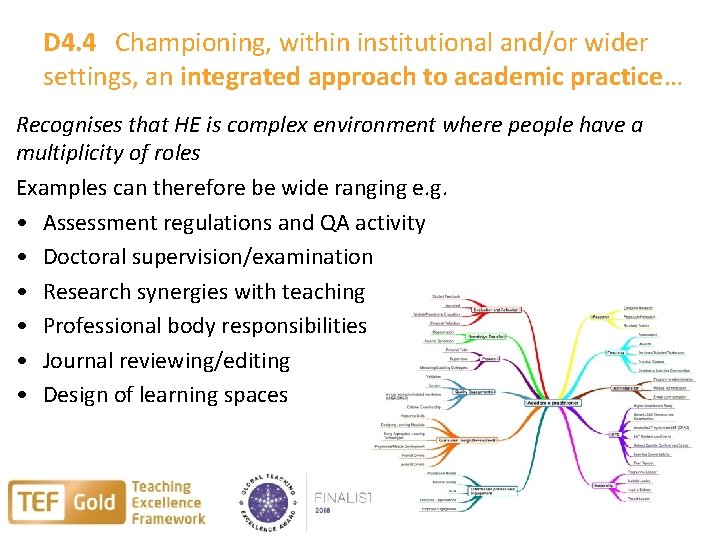
D 4. 4 Championing, within institutional and/or wider settings, an integrated approach to academic practice… Recognises that HE is complex environment where people have a multiplicity of roles Examples can therefore be wide ranging e. g. • Assessment regulations and QA activity • Doctoral supervision/examination • Research synergies with teaching • Professional body responsibilities • Journal reviewing/editing • Design of learning spaces
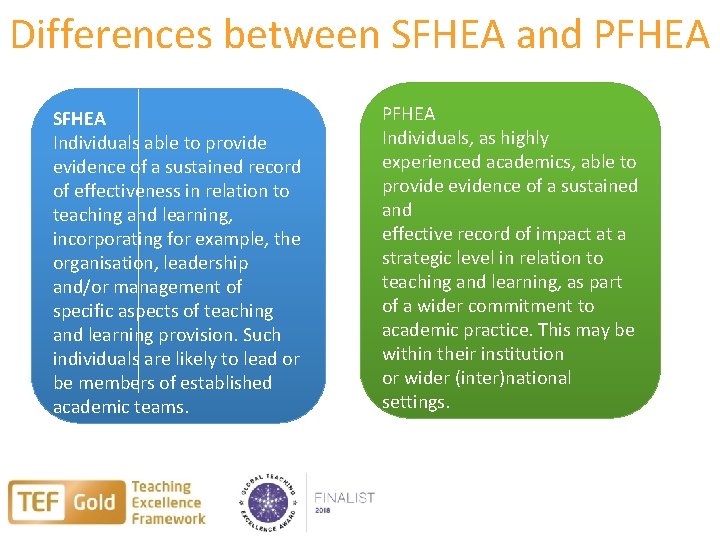
Differences between SFHEA and PFHEA SFHEA Individuals able to provide evidence of a sustained record of effectiveness in relation to teaching and learning, incorporating for example, the organisation, leadership and/or management of specific aspects of teaching and learning provision. Such individuals are likely to lead or be members of established academic teams. PFHEA Individuals, as highly experienced academics, able to provide evidence of a sustained and effective record of impact at a strategic level in relation to teaching and learning, as part of a wider commitment to academic practice. This may be within their institution or wider (inter)national settings.
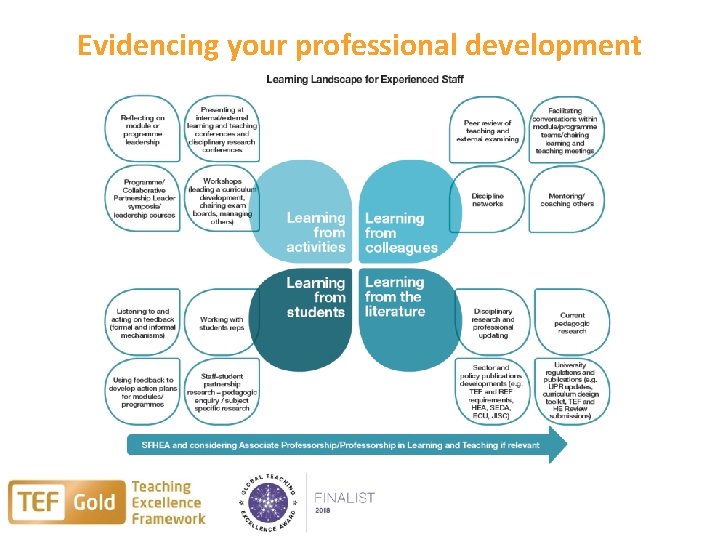
Evidencing your professional development
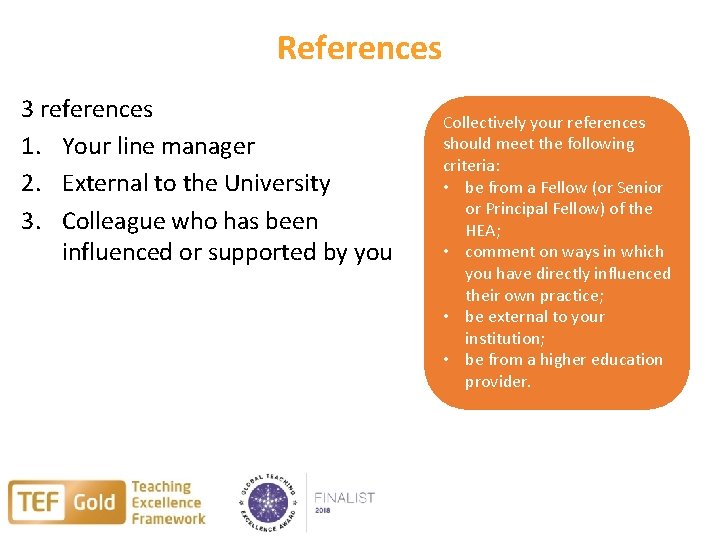
References 3 references 1. Your line manager 2. External to the University 3. Colleague who has been influenced or supported by you Collectively your references should meet the following criteria: • be from a Fellow (or Senior or Principal Fellow) of the HEA; • comment on ways in which you have directly influenced their own practice; • be external to your institution; • be from a higher education provider.
Getting feedback on your submission Feedback from a peer • Find a partner and agree a deadline for peer feedback on one or two sections of the application Feedback from a PFHEA • One of our PFHEA from LTIC is happy to provide feedback on draft applications
Application process 1. Complete REI and application form 2. Send your completed form to your three references 3. Submit form including references to HEAfellowships@herts. ac. uk Submission deadlines for 2019/20 Deadlines for submission • 23 rd August 2019 • 20 th December 2019 • 7 th February 2020 • 26 th June 2020 Assessment Panels will take place on: • 16 th and 17 th September 2019 • 16 th and 17 th January 2020 • 5 th and 6 th March 2020 • 22 nd and 23 rd July 2020
Outcomes Following panel meetings you will be emailed with the outcome. ― If not initially successful you will be referred to a colleague in the Learning and Teaching Innovation Centre for support to reapply and you will receive guidance and information regarding the nature of the resubmission. We will send confirmation to HEA and you will receive certification from them at a later date