
Applying a Formulary Approach to Healthcare Technology Management


- Slides: 26
Applying a Formulary Approach to Healthcare Technology Management Mara Pare’, Vice President, Client Solutions, Parts. Source
Today’s Agenda • Formularies in Healthcare • How to Apply a Formulary in HTM (One approach) • Why to Apply a Formulary in HTM (Hint: outcomes)
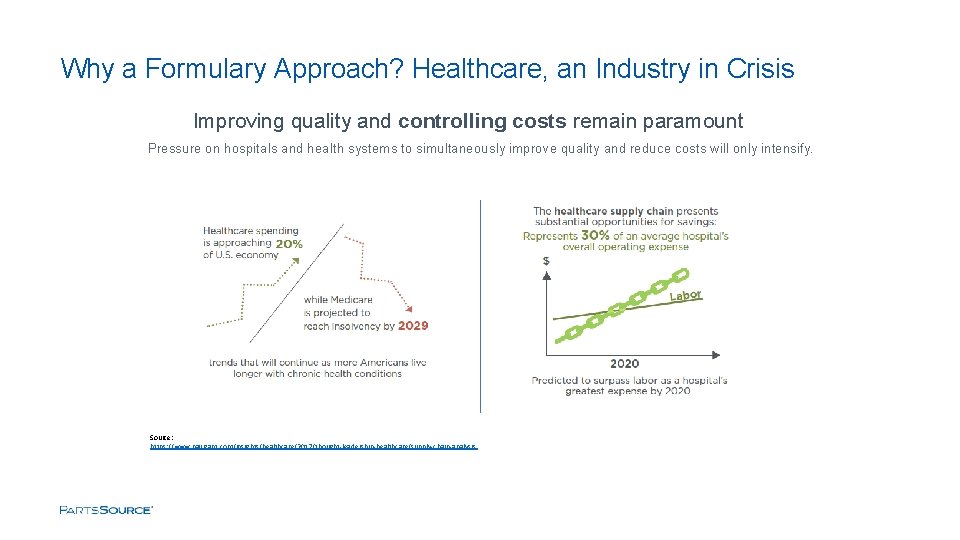
Why a Formulary Approach? Healthcare, an Industry in Crisis Improving quality and controlling costs remain paramount Pressure on hospitals and health systems to simultaneously improve quality and reduce costs will only intensify. Source: https: //www. navigant. com/insights/healthcare/2017/thought-leadership-healthcare/supply-chain-analysis
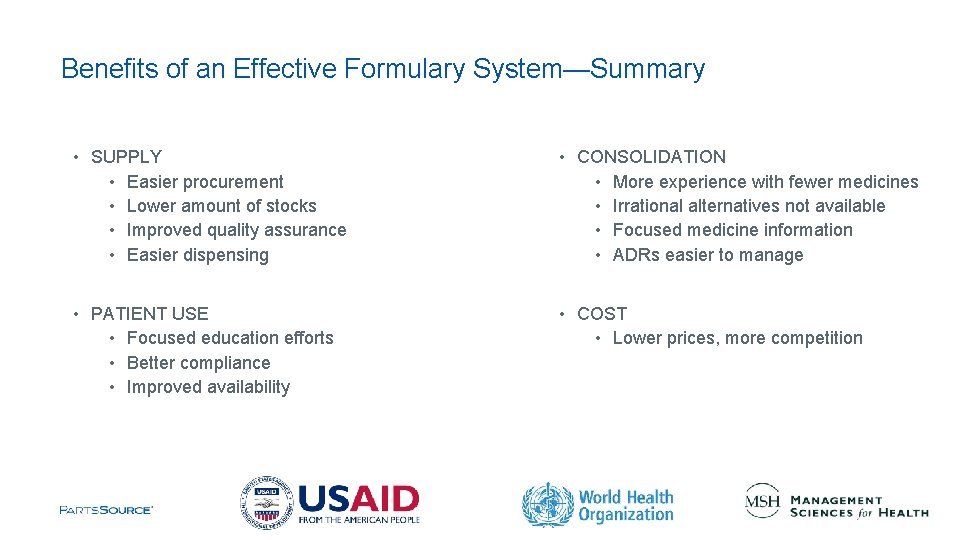
Benefits of an Effective Formulary System: The Drug Formulary • Approved and efficacious medicines that all practitioners will have available for use • • Only the most effective and safest products Medicines have been evaluated systematically Medicines are chosen and approved to treat the diseases of the region or country Physicians develop greater experience with fewer medicines • Pharmaceutical therapy at lower cost • Ineffective, high-cost medicines will be excluded from system • Availability leads to fewer visits, improved outcomes, and lower cost • Reduced inventory cost • Consistent supply of medicines • Regulating the number of medicines will improve procurement and inventory management • Economies of scale will increase availability of essential medicines • Saving money leads to consistency in purchasing
Benefits of an Effective Formulary System—Summary • SUPPLY • Easier procurement • Lower amount of stocks • Improved quality assurance • Easier dispensing • CONSOLIDATION • More experience with fewer medicines • Irrational alternatives not available • Focused medicine information • ADRs easier to manage • PATIENT USE • Focused education efforts • Better compliance • Improved availability • COST • Lower prices, more competition
Switching Gears A Look at the HTM and Clinical Engineering Landscape
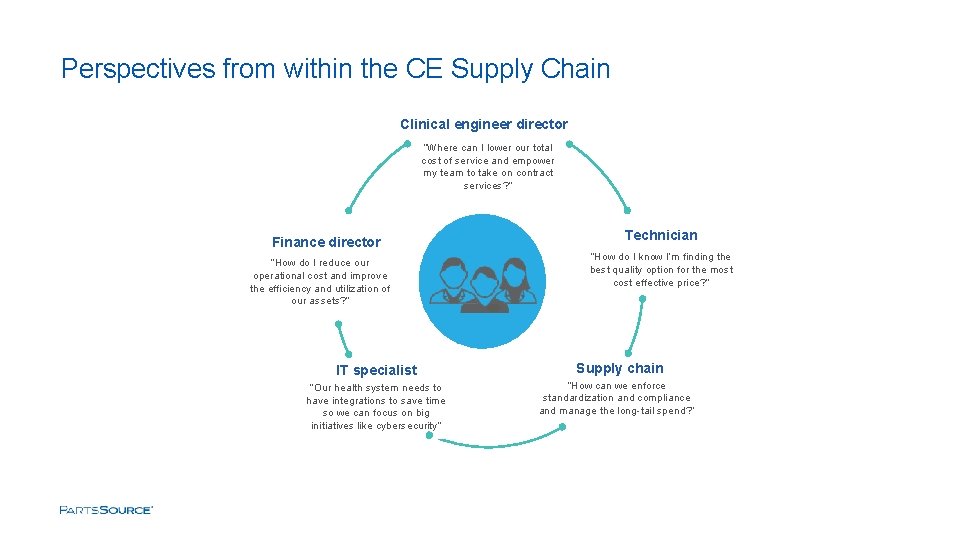
Perspectives from within the CE Supply Chain Clinical engineer director “Where can I lower our total cost of service and empower my team to take on contract services? ” Finance director “How do I reduce our operational cost and improve the efficiency and utilization of our assets? ” IT specialist “Our health system needs to have integrations to save time so we can focus on big initiatives like cybersecurity” Technician “How do I know I’m finding the best quality option for the most cost effective price? ” Supply chain “How can we enforce standardization and compliance and manage the long-tail spend? ”
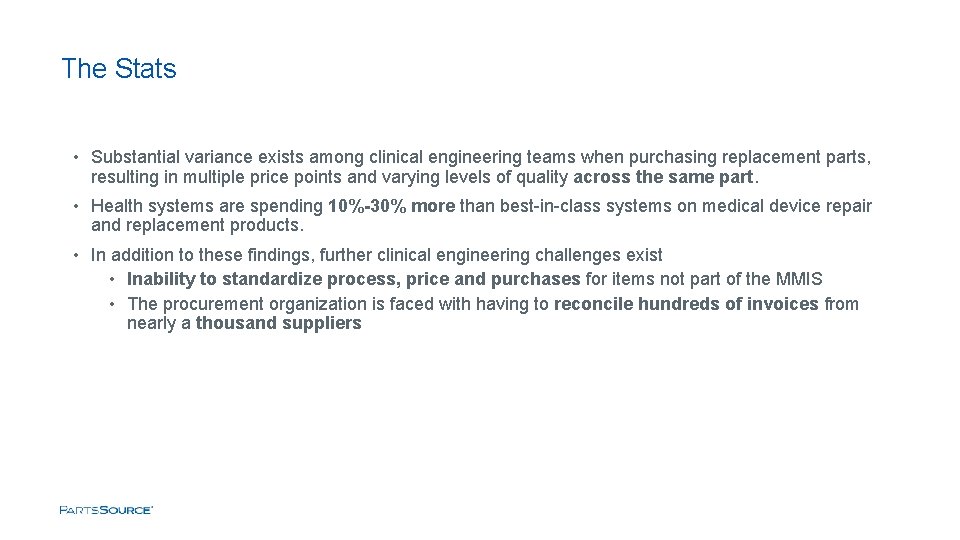
The Stats • Substantial variance exists among clinical engineering teams when purchasing replacement parts, resulting in multiple price points and varying levels of quality across the same part. • Health systems are spending 10%-30% more than best-in-class systems on medical device repair and replacement products. • In addition to these findings, further clinical engineering challenges exist • Inability to standardize process, price and purchases for items not part of the MMIS • The procurement organization is faced with having to reconcile hundreds of invoices from nearly a thousand suppliers
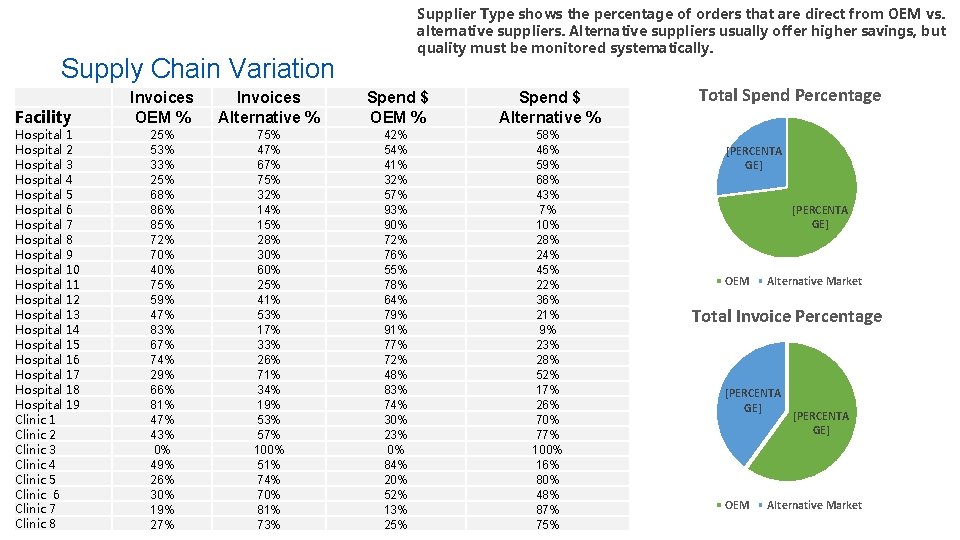
Supplier Type shows the percentage of orders that are direct from OEM vs. alternative suppliers. Alternative suppliers usually offer higher savings, but quality must be monitored systematically. Supply Chain Variation Facility Hospital 1 Hospital 2 Hospital 3 Hospital 4 Hospital 5 Hospital 6 Hospital 7 Hospital 8 Hospital 9 Hospital 10 Hospital 11 Hospital 12 Hospital 13 Hospital 14 Hospital 15 Hospital 16 Hospital 17 Hospital 18 Hospital 19 Clinic 1 Clinic 2 Clinic 3 Clinic 4 Clinic 5 Clinic 6 Clinic 7 Clinic 8 Invoices OEM % Invoices Alternative % Spend $ OEM % Spend $ Alternative % 25% 53% 33% 25% 68% 86% 85% 72% 70% 40% 75% 59% 47% 83% 67% 74% 29% 66% 81% 47% 43% 0% 49% 26% 30% 19% 27% 75% 47% 67% 75% 32% 14% 15% 28% 30% 60% 25% 41% 53% 17% 33% 26% 71% 34% 19% 53% 57% 100% 51% 74% 70% 81% 73% 42% 54% 41% 32% 57% 93% 90% 72% 76% 55% 78% 64% 79% 91% 77% 72% 48% 83% 74% 30% 23% 0% 84% 20% 52% 13% 25% 58% 46% 59% 68% 43% 7% 10% 28% 24% 45% 22% 36% 21% 9% 23% 28% 52% 17% 26% 70% 77% 100% 16% 80% 48% 87% 75% Total Spend Percentage [PERCENTA GE] OEM Alternative Market Total Invoice Percentage [PERCENTA GE] OEM [PERCENTA GE] Alternative Market
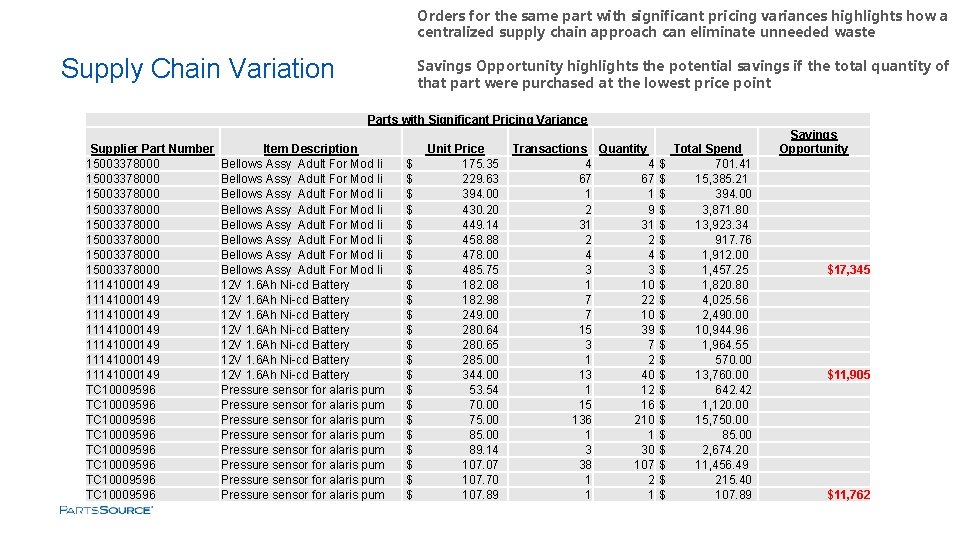
Orders for the same part with significant pricing variances highlights how a centralized supply chain approach can eliminate unneeded waste Supply Chain Variation Savings Opportunity highlights the potential savings if the total quantity of that part were purchased at the lowest price point Parts with Significant Pricing Variance Supplier Part Number 15003378000 15003378000 11141000149 11141000149 TC 10009596 TC 10009596 Item Description Bellows Assy Adult For Mod Ii Bellows Assy Adult For Mod Ii 12 V 1. 6 Ah Ni-cd Battery 12 V 1. 6 Ah Ni-cd Battery Pressure sensor for alaris pum Pressure sensor for alaris pum $ $ $ $ $ $ Unit Price 175. 35 229. 63 394. 00 430. 20 449. 14 458. 88 478. 00 485. 75 182. 08 182. 98 249. 00 280. 64 280. 65 285. 00 344. 00 53. 54 70. 00 75. 00 89. 14 107. 07 107. 70 107. 89 Transactions Quantity Total Spend 4 4$ 701. 41 67 67 $ 15, 385. 21 1 1$ 394. 00 2 9$ 3, 871. 80 31 31 $ 13, 923. 34 2 2$ 917. 76 4 4$ 1, 912. 00 3 3$ 1, 457. 25 1 10 $ 1, 820. 80 7 22 $ 4, 025. 56 7 10 $ 2, 490. 00 15 39 $ 10, 944. 96 3 7$ 1, 964. 55 1 2$ 570. 00 13 40 $ 13, 760. 00 1 12 $ 642. 42 15 16 $ 1, 120. 00 136 210 $ 15, 750. 00 1 1$ 85. 00 3 30 $ 2, 674. 20 38 107 $ 11, 456. 49 1 2$ 215. 40 1 1$ 107. 89 Savings Opportunity $17, 345 $11, 905 $11, 762
What if… We took a formulary approach to maintaining the health and wellness of clinical assets?
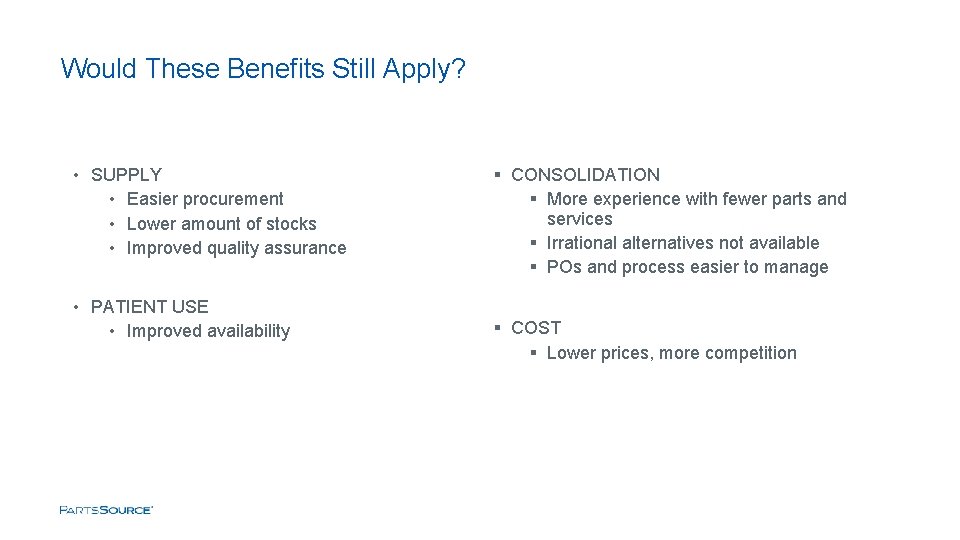
Would These Benefits Still Apply? • SUPPLY • Easier procurement • Lower amount of stocks • Improved quality assurance • PATIENT USE • Improved availability § CONSOLIDATION § More experience with fewer parts and services § Irrational alternatives not available § POs and process easier to manage § COST § Lower prices, more competition
Objectives Based on the Parts. Source approach of creating data-driven solutions for managing clinical resources, we know an enterprise-wide custom formulary: • • • Provides more reliable results Offers reproducible results Ensures quality Provides consistency Generates cost savings
How A Formulary Approach
Formulary Management Principles • Select medicines on the basis of need (diseases and conditions that have been identified locally) • Select “medicines of choice” • Maintain a limited number of medicines (avoid duplications) • Use INN (generic) names • Use combination (fixed-dose) products only in specific proven conditions • Use explicit selection criteria that include— • Efficacy and effectiveness • Safety • Quality • Cost
Maintaining a Formulary § Evaluate new medicine requests and deletions regularly § Conduct a systematic review of therapeutic groups and classes
Establishing a Formulary for HTM
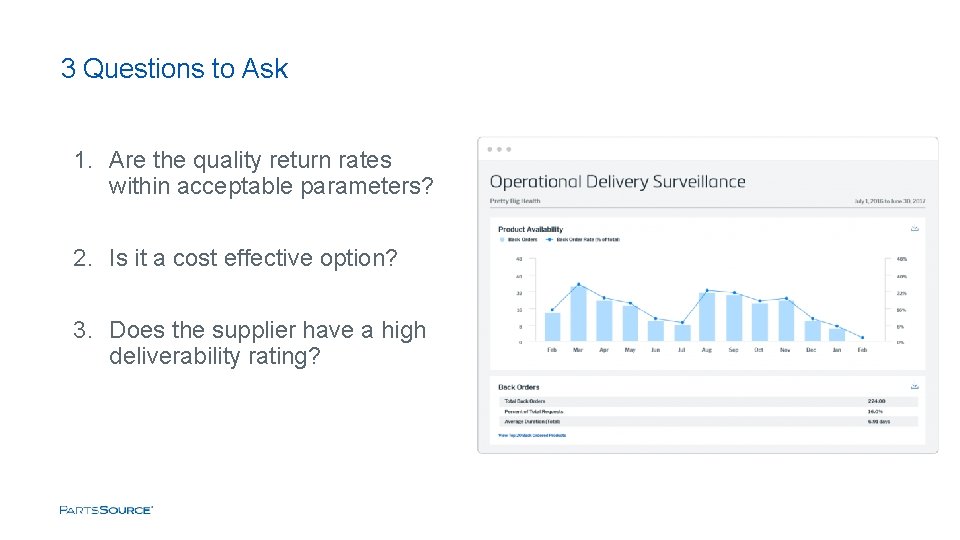
3 Questions to Ask 1. Are the quality return rates within acceptable parameters? 2. Is it a cost effective option? 3. Does the supplier have a high deliverability rating?
Multiple Options • How can I drive my organization to make consistently good buying choices? • How can I get access to the quality, price and deliverability data I need to determine what the right choice is for my organization? • How can I enforce that choice as the system wide standard? Ensure Compliance with Purchasing Policies and Implement Best Practices System-Wide
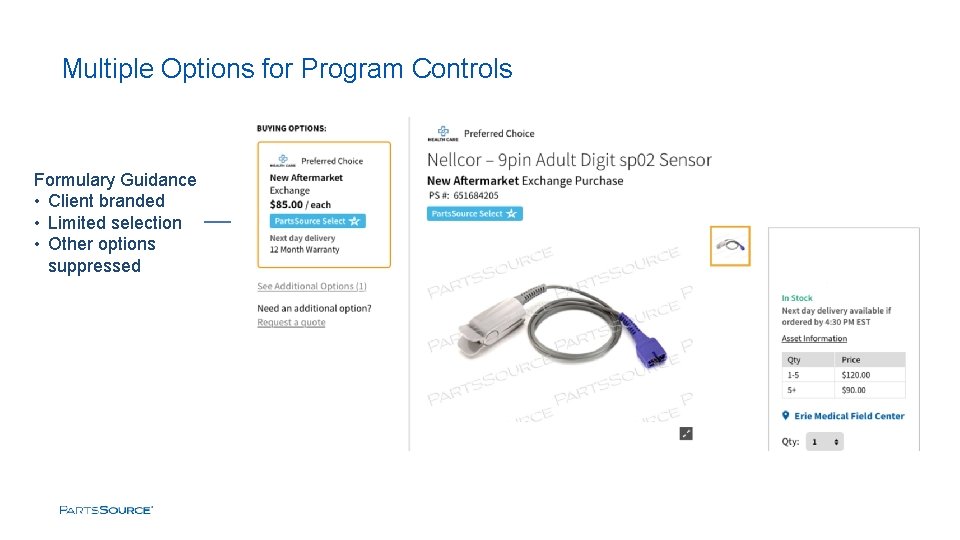
Multiple Options for Program Controls Formulary Guidance • Client branded • Limited selection • Other options suppressed
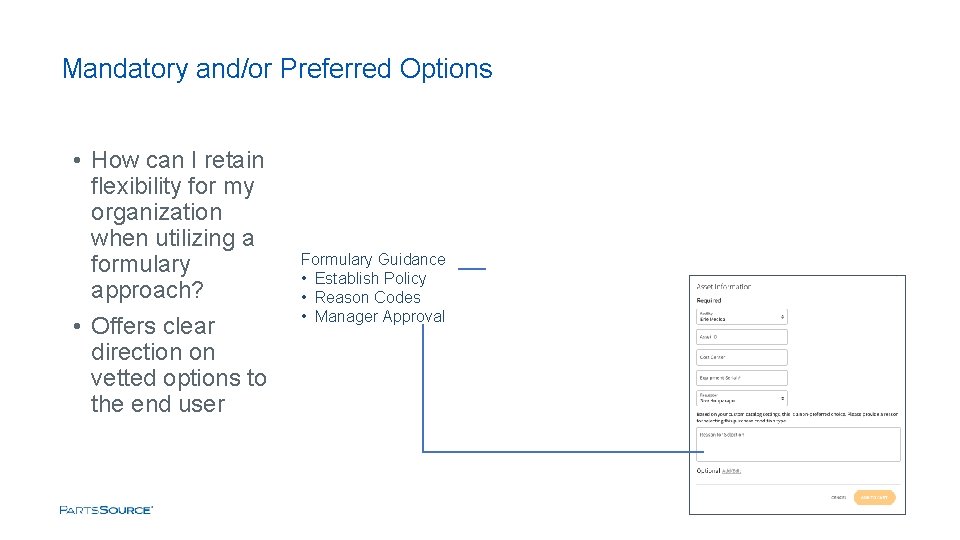
Mandatory and/or Preferred Options • How can I retain flexibility for my organization when utilizing a formulary approach? • Offers clear direction on vetted options to the end user Formulary Guidance • Establish Policy • Reason Codes • Manager Approval
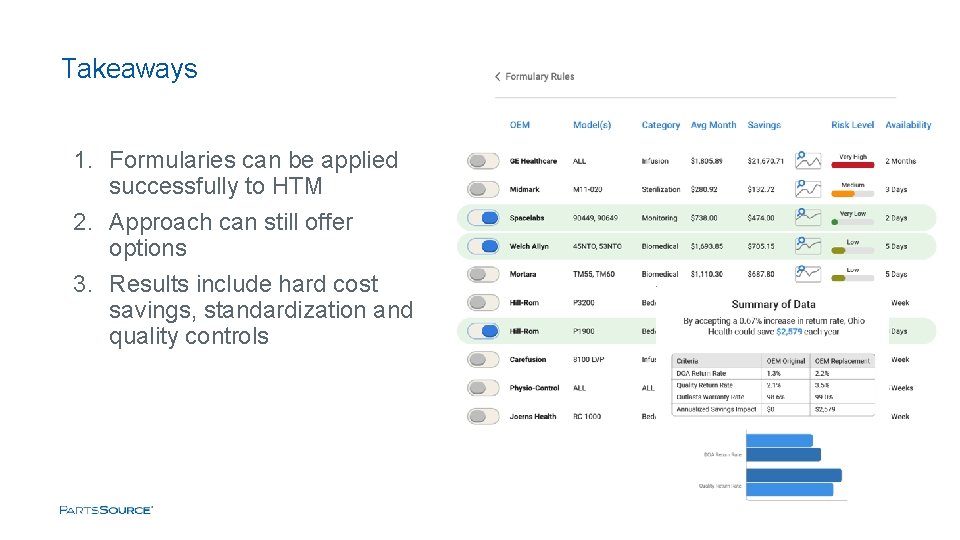
Formulary Management Tool • Customized data analytics peer benchmarks and enterprise catalog management • Evidence-based formulary design, cost reduction opportunities and purchase policy can be followed across a system, region or site level at click of a button • Access to industry benchmarking to create out of the box formulary options Ensure Compliance with Purchasing Policies and Implement Best Practices System-Wide
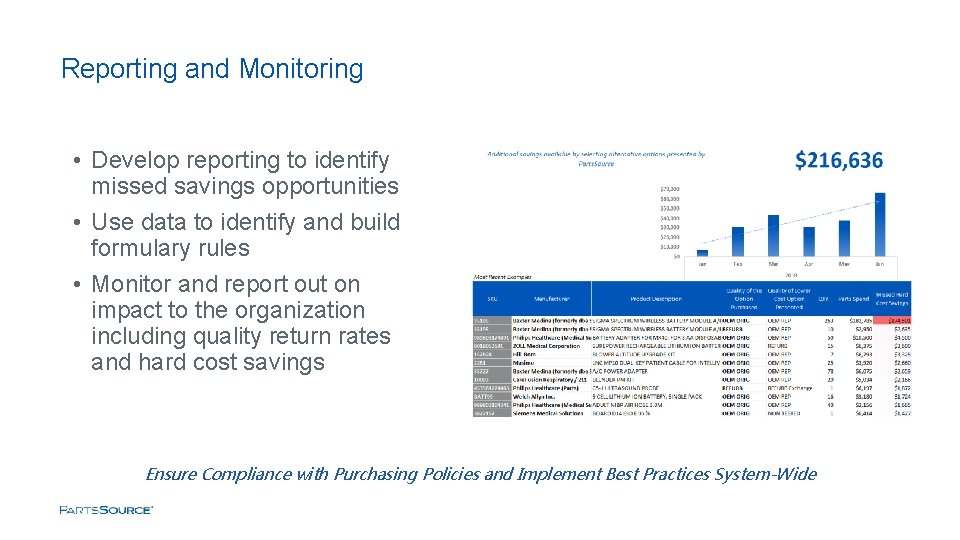
Reporting and Monitoring • Develop reporting to identify missed savings opportunities • Use data to identify and build formulary rules • Monitor and report out on impact to the organization including quality return rates and hard cost savings Ensure Compliance with Purchasing Policies and Implement Best Practices System-Wide
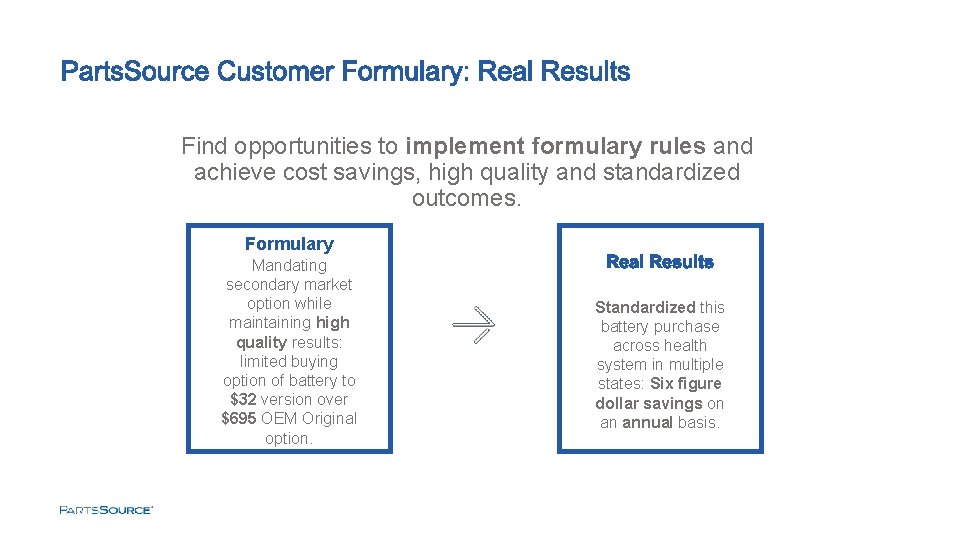
Find opportunities to implement formulary rules and achieve cost savings, high quality and standardized outcomes. Formulary Mandating secondary market option while maintaining high quality results: limited buying option of battery to $32 version over $695 OEM Original option. Standardized this battery purchase across health system in multiple states: Six figure dollar savings on an annual basis.
Takeaways 1. Formularies can be applied successfully to HTM 2. Approach can still offer options 3. Results include hard cost savings, standardization and quality controls
Questions? Mara Pare’ mpare@partssource. com 330 -954 -7674