
APPLIED VISUAL COMMUNICATION EBS 273 WHAT IS SCREEN

APPLIED VISUAL COMMUNICATION EBS 273

WHAT IS SCREEN PRINTING? -cont.
Lesson 4 Objectives q Prepare photosensitive screens using Solar method. q Prepare photosensitive screens using Bulb method. q Produce photosensitive screens using Light box method. q Practice screen printing procedure. q Identify some common problems in screen printing, their causes and remedies. q Understand screen reclamation process.
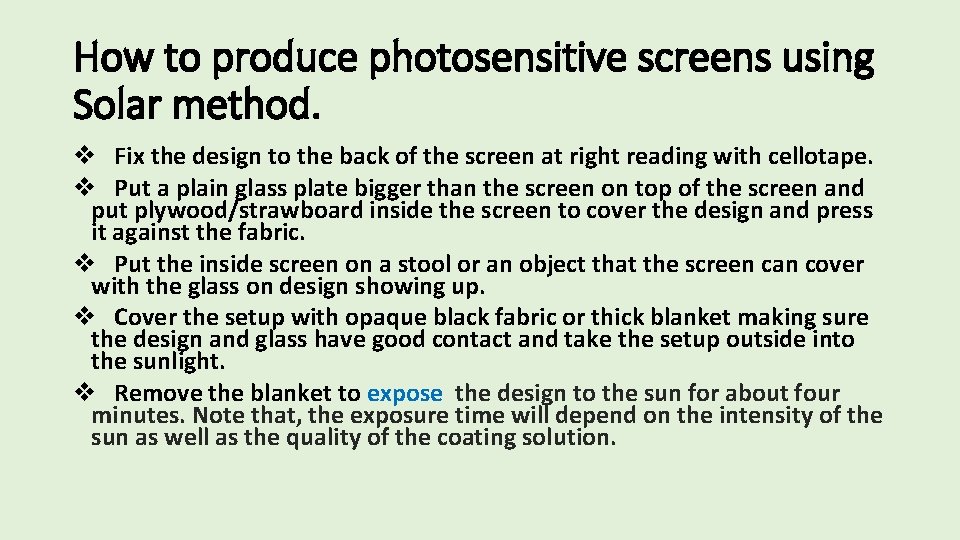
How to produce photosensitive screens using Solar method. v Fix the design to the back of the screen at right reading with cellotape. v Put a plain glass plate bigger than the screen on top of the screen and put plywood/strawboard inside the screen to cover the design and press it against the fabric. v Put the inside screen on a stool or an object that the screen can cover with the glass on design showing up. v Cover the setup with opaque black fabric or thick blanket making sure the design and glass have good contact and take the setup outside into the sunlight. v Remove the blanket to expose the design to the sun for about four minutes. Note that, the exposure time will depend on the intensity of the sun as well as the quality of the coating solution.
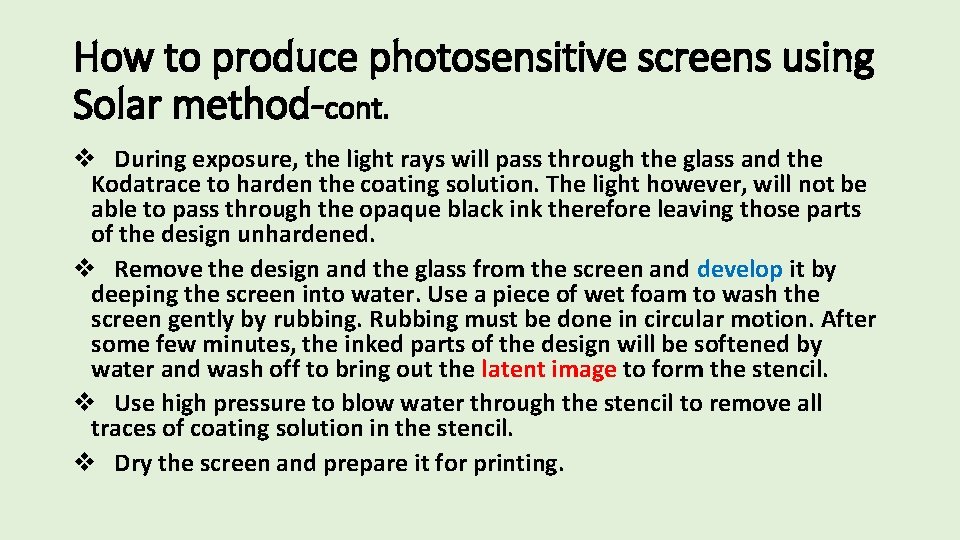
How to produce photosensitive screens using Solar method-cont. v During exposure, the light rays will pass through the glass and the Kodatrace to harden the coating solution. The light however, will not be able to pass through the opaque black ink therefore leaving those parts of the design unhardened. v Remove the design and the glass from the screen and develop it by deeping the screen into water. Use a piece of wet foam to wash the screen gently by rubbing. Rubbing must be done in circular motion. After some few minutes, the inked parts of the design will be softened by water and wash off to bring out the latent image to form the stencil. v Use high pressure to blow water through the stencil to remove all traces of coating solution in the stencil. v Dry the screen and prepare it for printing.
Preparing photosensitive screens using Bulb method. o This method uses the same method as the solar method. o however, ordinary domestic tungsten bulb can be used to expose the screen by holding the setup close to it.
Producing photosensitive screens using Light box method. Ø Clean the glass on the light box. Ø Position the design on the glass at right reading and fix it with transparent cellotape under safe light. Ø Place the back of the dried coated screen on the design in correct position. Ø Put a sand bag(s) in the screen and spread it out to cover the fabric. This will press the design firmly against the fabric.
Producing photosensitive screens using Light box method-cont. Ø Switch off the safe light and switch on the white light for about five minutes to expose the screen. Ø The exposure time would depend on the intensity of the light as well as the quality of the coating solution. It is therefore essential to make trial exposures before the correct time is can be determined. Ø Remove the sand bag from the screen and take off the screen and develop as described in solar method. Ø After the screen is developed and dried, reinforce the ink-wells at the back of the screen by covering with masking tape before using it to print.
Practicing Printing procedure. ü Fix the printing surface/substrate on the printing table to avoid crease. Preferably, the table must be stuffed with foam and leather or padded with blanket. ü Put the screen on the printing surface at correct position. ü Fill the ink-well/reservoir with printing paste. ü Use the correct type of squeegee to spread and force the paste through the stencil by pressing and pulling the blade along the screen.
Practicing Printing procedure. ü When doing multi-colour printing on a large material, make registration marks the screen and the printing table to serve as a guide for perfect registration. ü When printing from mult-screen stencils, it is adviseable to print light colours first. ü It is important to make a trial or proof-print to check the quality of the design, ink, etc. before the final printing is done.
Some common problems in screen-printing. Pinholes: These are tiny holes that found in coated screens. These spots are not covered with photo-emulsion. Causes: § Coating of dusty screen. § The used of skinned coating solution. § The use of dirt contaminated coating solution. § Uneven application of coating solution. § The use of bubbled coating solution. § Improper mixing and stirring of coating solution. § The use of inappropriate coating tool.
Some common problems in screen-printing. Poor adhesion of coating solution on the screen. Causes: § Under exposure of screen. § Using of weak or spoiled sensitizer or photo emulsion. § Coating of greasy screens. § Coating of polyester screens without roughening.
Some common problems in screen-printing. Failure to wash off coating solution during development. Causes: § Over exposure of the screen. § High temperature in the light box during exposure. § Coating of screen under strong white light. § Failure to ink the design to an opaque finish.
Some common problems in screen-printing. Hardened spots of coating solution in a screen after development. Causes: § Uneven coverage of ink in the design. § Parts of the coated screen been exposed to stray light during drying in a dark room.
Screen Reclamation process. Badly developed screens and old screens ca be reclaimed by: v Apply strong liquid detergents (parazon) and bleach on the screen surface. v Leave it for sometime to soften the dried coating solution. v Scrub and wash off the screen gradually with the chemicals and clean water to get the plain fabric. v The fabric can be recoated after it is dried.

What new thing have you learned today? Practice one of the photographic screen exposure methods that interest you most

Read more Ron Photographic screen development from you. tube.

Thank you!
- Slides: 18