
Applied Prevention Science Evidence Based Best Practices Prevention

Applied Prevention Science Evidence Based Best Practices
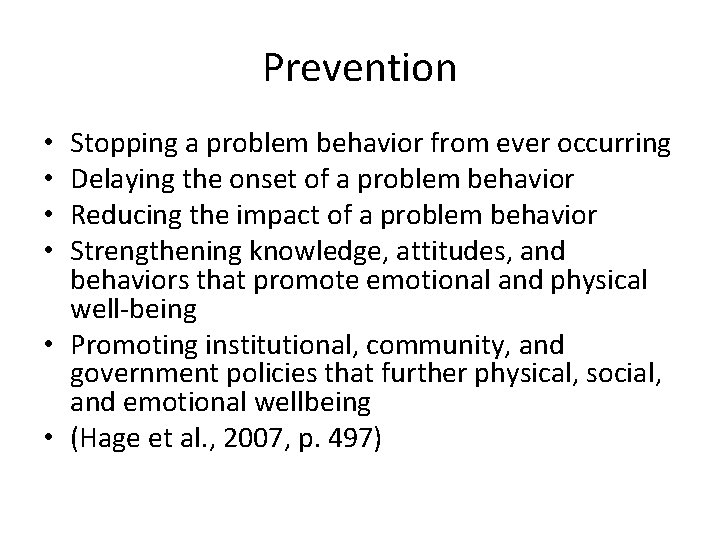
Prevention Stopping a problem behavior from ever occurring Delaying the onset of a problem behavior Reducing the impact of a problem behavior Strengthening knowledge, attitudes, and behaviors that promote emotional and physical well-being • Promoting institutional, community, and government policies that further physical, social, and emotional wellbeing • (Hage et al. , 2007, p. 497) • •
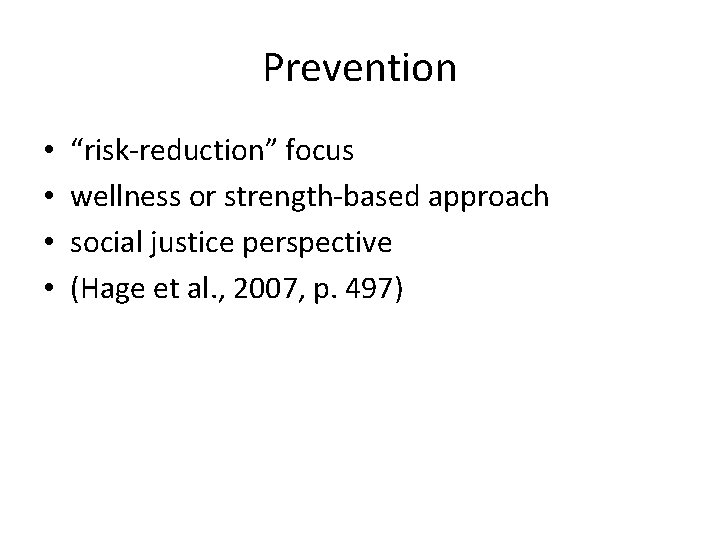
Prevention • • “risk-reduction” focus wellness or strength-based approach social justice perspective (Hage et al. , 2007, p. 497)
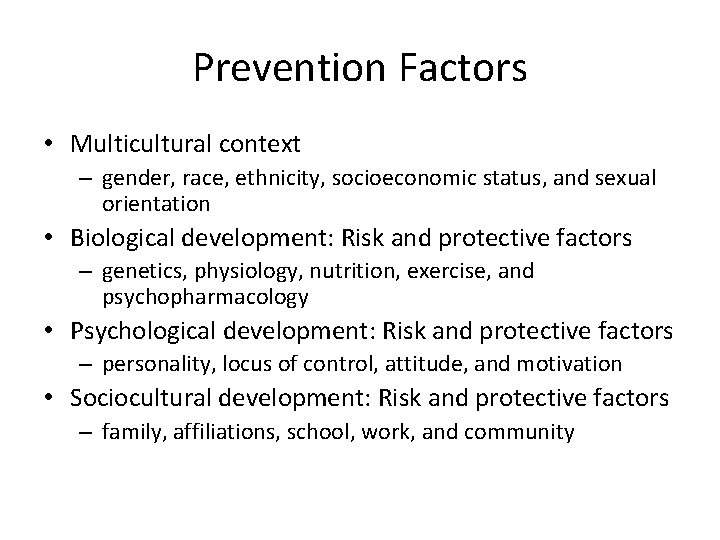
Prevention Factors • Multicultural context – gender, race, ethnicity, socioeconomic status, and sexual orientation • Biological development: Risk and protective factors – genetics, physiology, nutrition, exercise, and psychopharmacology • Psychological development: Risk and protective factors – personality, locus of control, attitude, and motivation • Sociocultural development: Risk and protective factors – family, affiliations, school, work, and community
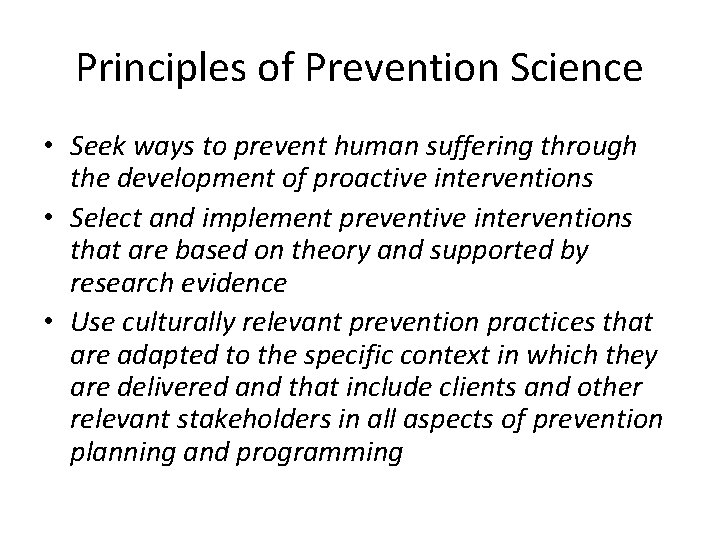
Principles of Prevention Science • Seek ways to prevent human suffering through the development of proactive interventions • Select and implement preventive interventions that are based on theory and supported by research evidence • Use culturally relevant prevention practices that are adapted to the specific context in which they are delivered and that include clients and other relevant stakeholders in all aspects of prevention planning and programming
Principles of Prevention Science • Develop preventive interventions that address both the individual and the contextual/systemic factors that contribute to psychological distress and well-being • Implement interventions that seek to reduce risks as well as promote strengths and well-being across the life span • Attend to the relevance and scope of their prevention research within the current progression of prevention science
Principles of Prevention Science • Conduct research that is relevant to environmental contexts • Consider the ethical issues involved in prevention science (research and practice) • Consider the social justice implications of prevention science • Develop knowledge of prevention concepts, skills in the practice and scholarship of prevention, and attitudes toward prevention
Principles of Prevention Science • Foster awareness of the benefits of prevention science in professional training and education • Encouraged to design, promote, and support systemic initiatives that prevent and reduce the incidence of psychological and physical distress and disability • Encouraged to design, promote, and support institutional change strategies that strengthen the health and well-being of individuals, families, and communities
Principles of Prevention Science • Engage in governmental, legislative, and political advocacy activities that enhance the health and well-being of the broader population served • (Hage et al. , 2007)
Steps in Prevention Science • • Clinical Epidemiology Outcome Studies Primary Prevention (universal) Secondary Prevention (selective) Tertiary Prevention (indicated) Dissemination and Translational Research Evaluation Research Health Information and Economic Systems
Evidence Based Prevention Practice • Defines the clinical problem or question • Finds the best evidence available to address that question • Evaluates the evidence for its validity and usefulness • Applies the evidence to the client situation in question • Evaluates the outcome of the practice decision or intervention • (Rishel, 2007, p. 155)
Durlak and Wells (1997) clearly indicated that prevention in the area of mental health is effective in reducing problems for children. This meta-analysis of 177 universal or selective prevention programs aimed at preventing behavioral and social problems in children and adolescents resulted in an average mean effect of. 42. In practical terms, the average participant of a primary prevention program demonstrated better outcomes than 59%– 82% of those in control groups. (Rishel, 2007, p. 156).
What Works in Prevention? • • • Comprehensive intervention (package) Theoretical foundation (model of care) Epidemiological basis (developmental) Sufficient “dosage” (clinical hours required) Culturally relevant (“localized”) Collaborative (stakeholder/client preferences) Integrated with other systems of care Delivered by well-trained clinicians Based on treatment alliance or relationship Ongoing process and outcome assessments Accessible and affordable care (health economics) (Rishel, 2007)
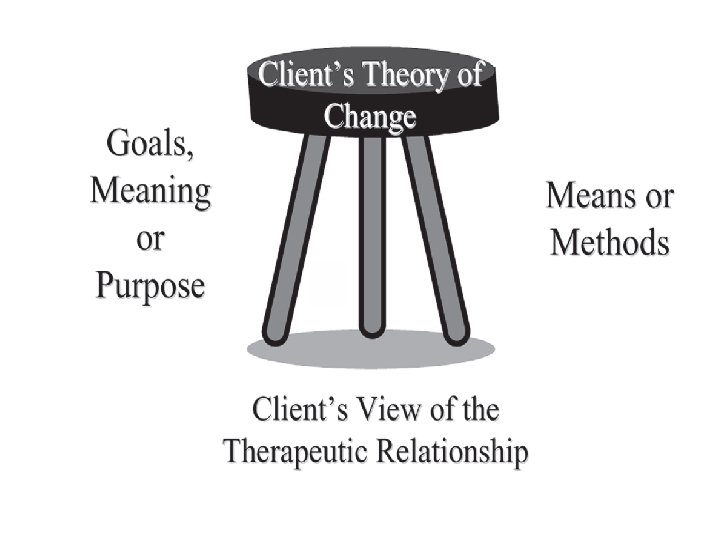
We can all participate in evidence based practice • Session Rating Scale • Outcome Rating Scale
References • Durlak, J. A. , & Wells, A. M. (1997). Primary prevention mental health programs for children and adolescents: A meta-analytic review. American Journal of Community Psychology, 25, 115– 152. • Duncan, B. L. , et al. (2003). The Session Rating Scale: Preliminary • psychometric properties of a “working” alliance measure. Journal of Brief Therapy, 3, 3 -12. • Hage, S. M. , et al. (2007). Best practice guidelines on prevention • practice, research, training, and social advocacy for psychologists. The Counseling Psychologist, 35, 493 -566. • Miller, S. D. , Duncan, B. L. , Brown, J. , Sparks, J. A. , & Cloud, D. A. (2003). The Outcome Rating Scale: A preliminary study of the reliability, validity, and feasibility of a brief visual analog measure. Journal of Brief Therapy, 2(2), 91 -100. • Rishel, C. W. (2007). Evidence-based prevention practice in mental health: What is it and how do we get there? American Journal of Orthopsychiatry, 77, 153 -164.
- Slides: 16