
Applied Hydrogeology Yoram Eckstein Ph D Fulbright Professor
Applied Hydrogeology Прикладная Гидрогеология Yoram Eckstein, Ph. D. Fulbright Professor 2013/2014 Tomsk Polytechnic University Tomsk, Russian Federation Spring Semester 2014
Useful links Øhttp: //www. onlineconversion. com/ Øhttp: //www. digitaldutch. com/unitconverter/ Øhttp: //water. usgs. gov/ogw/basics. html Øhttp: //water. usgs. gov/ogw/pubs. html Øhttp: //ga. water. usgs. gov/edu/earthgwaquifer. html Øhttp: //water. usgs. gov/ogw/techniques. html Øhttp: //water. usgs. gov/ogw/CRT/
Applied Hydrogeology II. Hydrologic Cycle
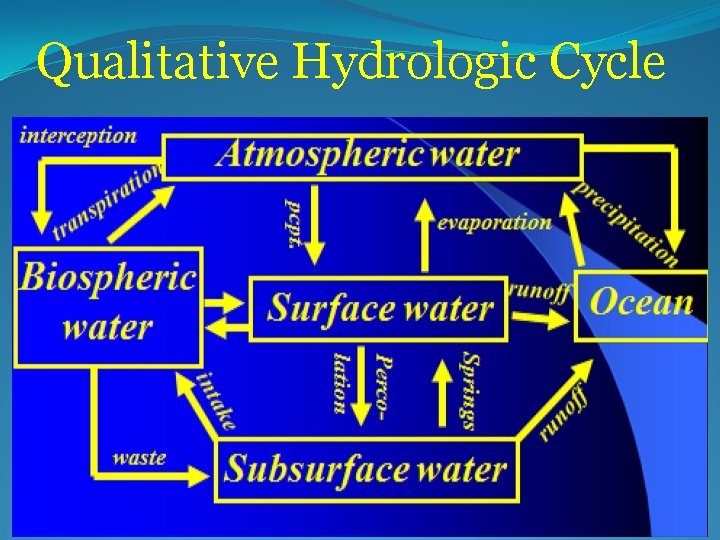
Qualitative Hydrologic Cycle
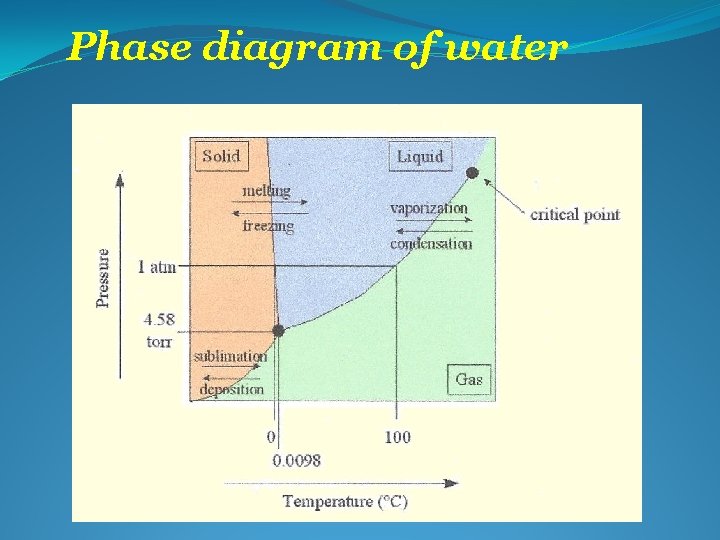
Phase diagram of water
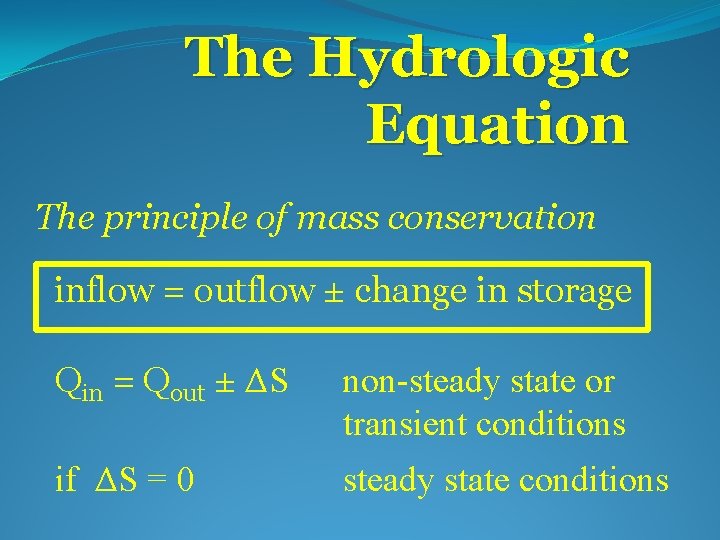
The Hydrologic Equation The principle of mass conservation inflow = outflow ± change in storage Qin = Qout ± ΔS non-steady state or transient conditions if ΔS = 0 steady state conditions
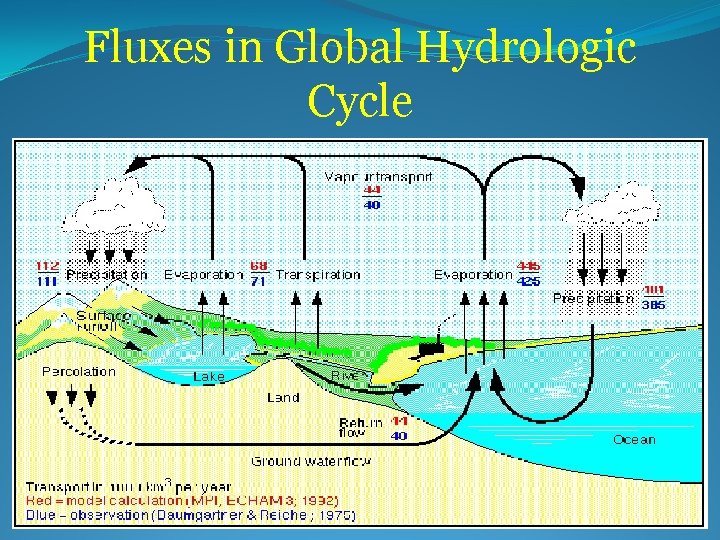
Fluxes in Global Hydrologic Cycle
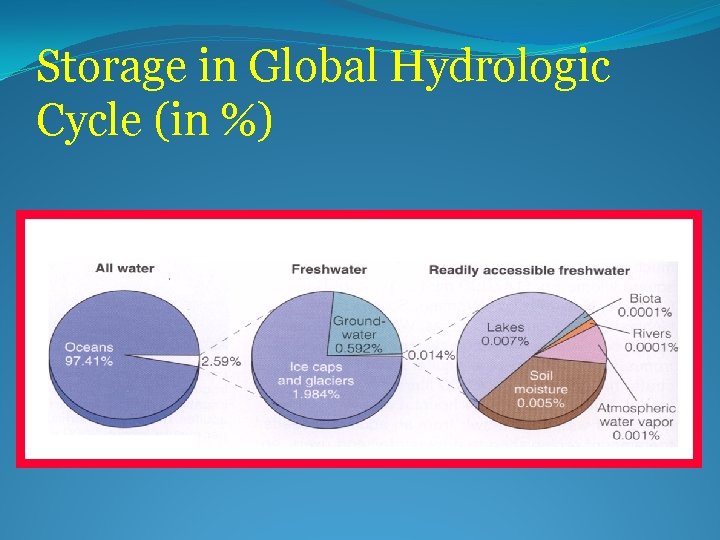
Storage in Global Hydrologic Cycle (in %)
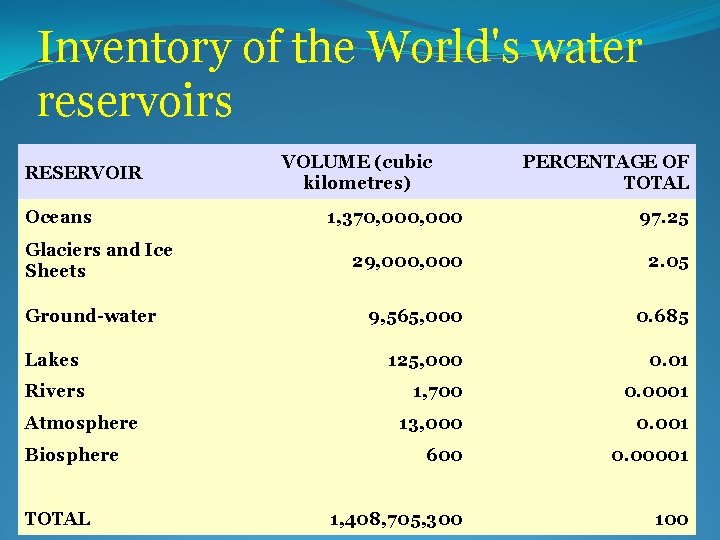
Inventory of the World's water reservoirs RESERVOIR Oceans Glaciers and Ice Sheets Ground-water Lakes Rivers Atmosphere Biosphere TOTAL VOLUME (cubic kilometres) PERCENTAGE OF TOTAL 1, 370, 000 97. 25 29, 000 2. 05 9, 565, 000 0. 685 125, 000 0. 01 1, 700 0. 0001 13, 000 0. 001 600 0. 00001 1, 408, 705, 300 100
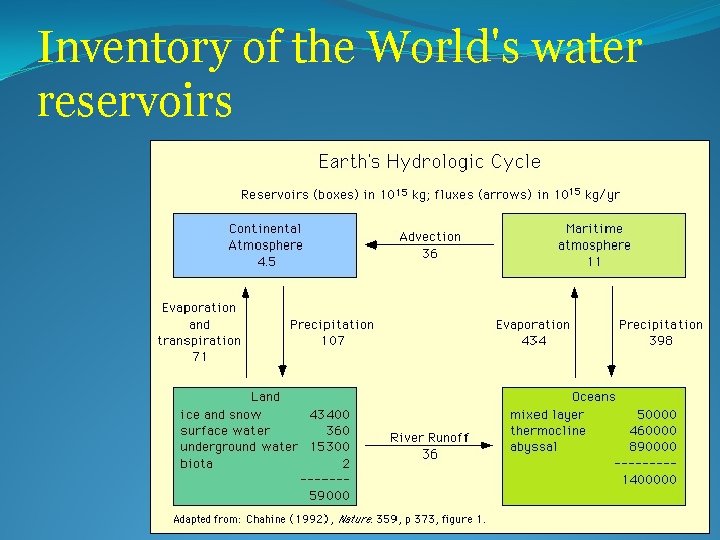
Inventory of the World's water reservoirs
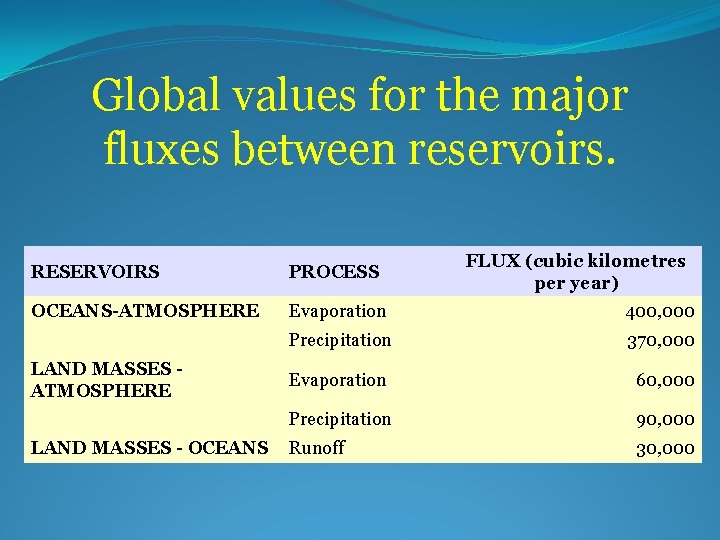
Global values for the major fluxes between reservoirs. FLUX (cubic kilometres per year) RESERVOIRS PROCESS OCEANS-ATMOSPHERE Evaporation 400, 000 Precipitation 370, 000 Evaporation 60, 000 Precipitation 90, 000 Runoff 30, 000 LAND MASSES ATMOSPHERE LAND MASSES - OCEANS
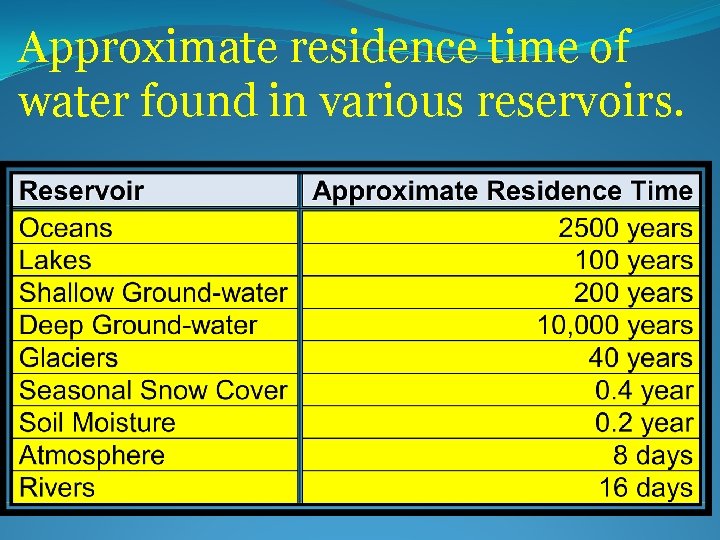
Approximate residence time of water found in various reservoirs.
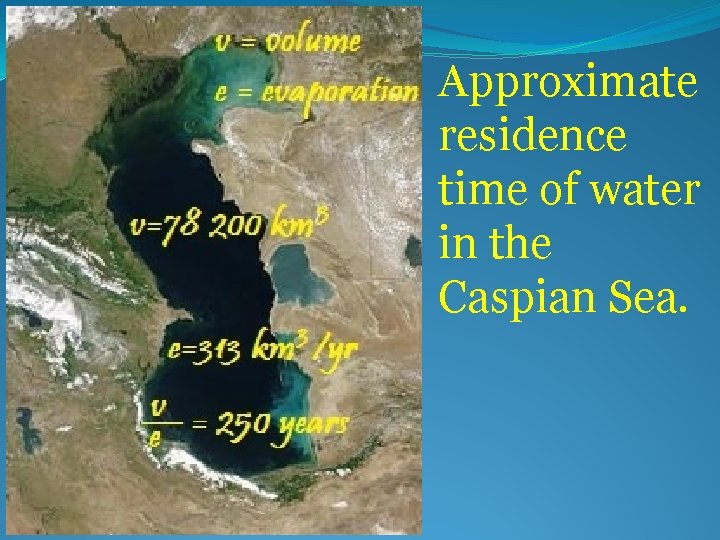
Approximate residence time of water in the Caspian Sea.
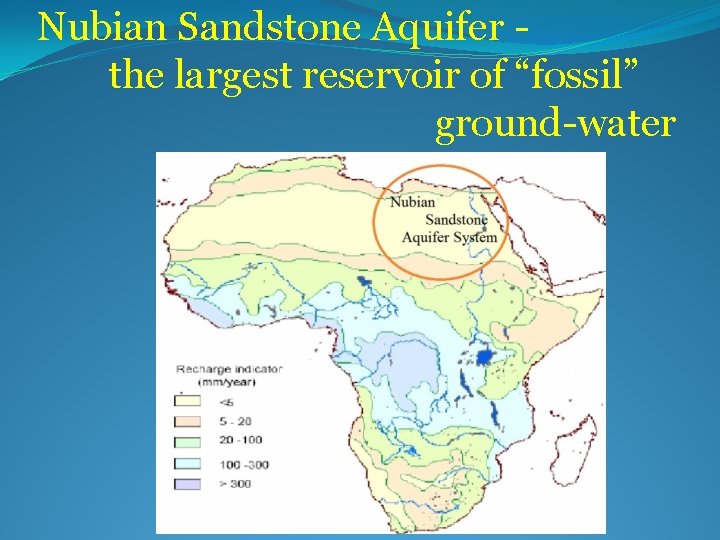
Nubian Sandstone Aquifer the largest reservoir of “fossil” ground-water
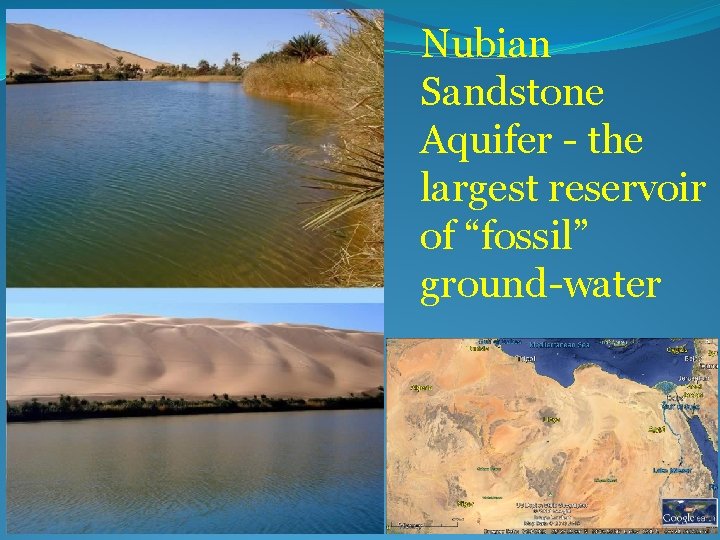
Nubian Sandstone Aquifer - the largest reservoir of “fossil” ground-water
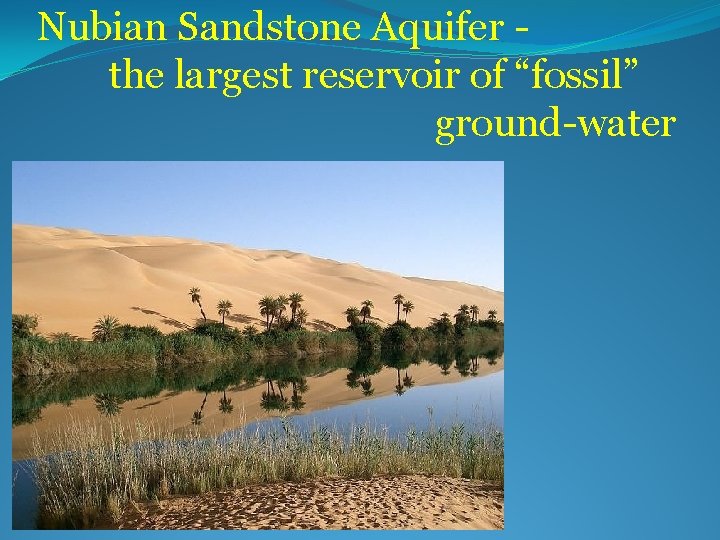
Nubian Sandstone Aquifer the largest reservoir of “fossil” ground-water
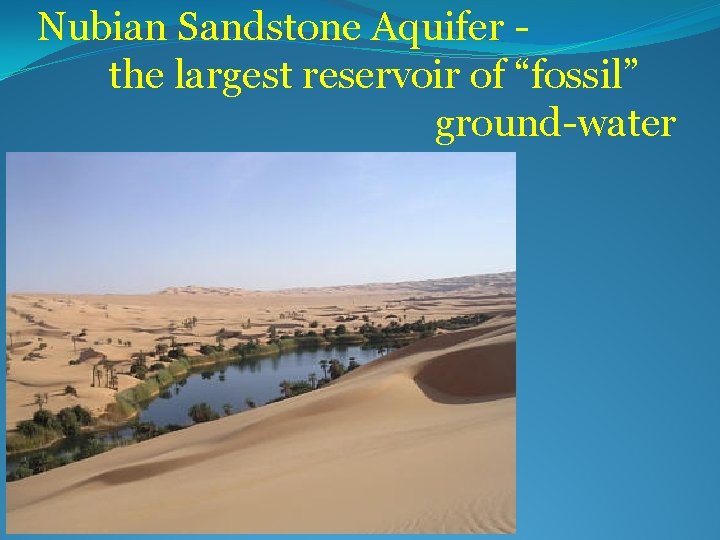
Nubian Sandstone Aquifer the largest reservoir of “fossil” ground-water
Methods of measurements Evaporation http: //www. whycos. org/hwrp/guide/chapt ers/english/original/WMO 168_Ed 2008_V ol_I_Ch 4_Up 2008_en. pdf http: //nora. nerc. ac. uk/14359/1/wmoevap_ 271008. pdf
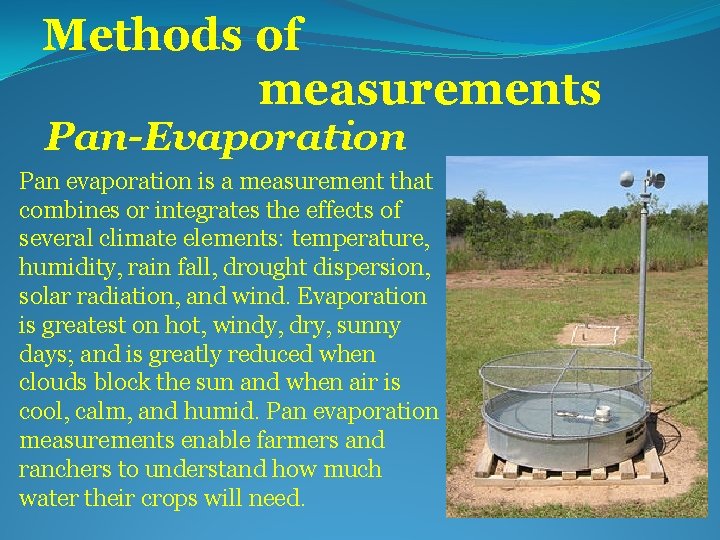
Methods of measurements Pan-Evaporation Pan evaporation is a measurement that combines or integrates the effects of several climate elements: temperature, humidity, rain fall, drought dispersion, solar radiation, and wind. Evaporation is greatest on hot, windy, dry, sunny days; and is greatly reduced when clouds block the sun and when air is cool, calm, and humid. Pan evaporation measurements enable farmers and ranchers to understand how much water their crops will need.
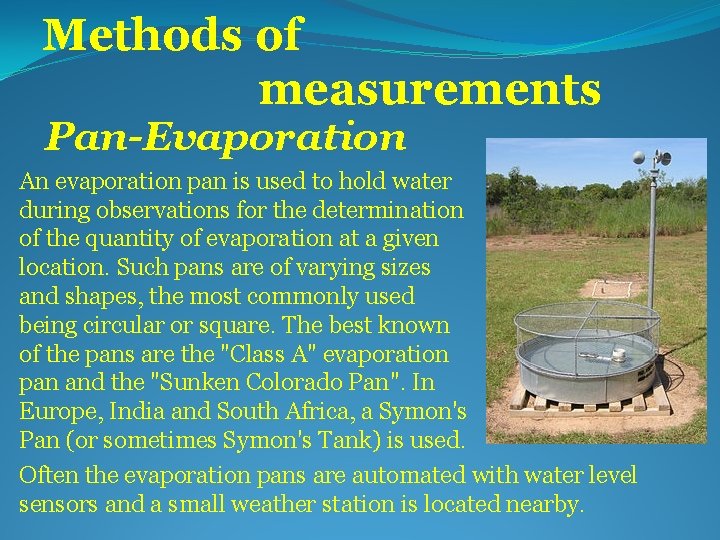
Methods of measurements Pan-Evaporation An evaporation pan is used to hold water during observations for the determination of the quantity of evaporation at a given location. Such pans are of varying sizes and shapes, the most commonly used being circular or square. The best known of the pans are the "Class A" evaporation pan and the "Sunken Colorado Pan". In Europe, India and South Africa, a Symon's Pan (or sometimes Symon's Tank) is used. Often the evaporation pans are automated with water level sensors and a small weather station is located nearby.
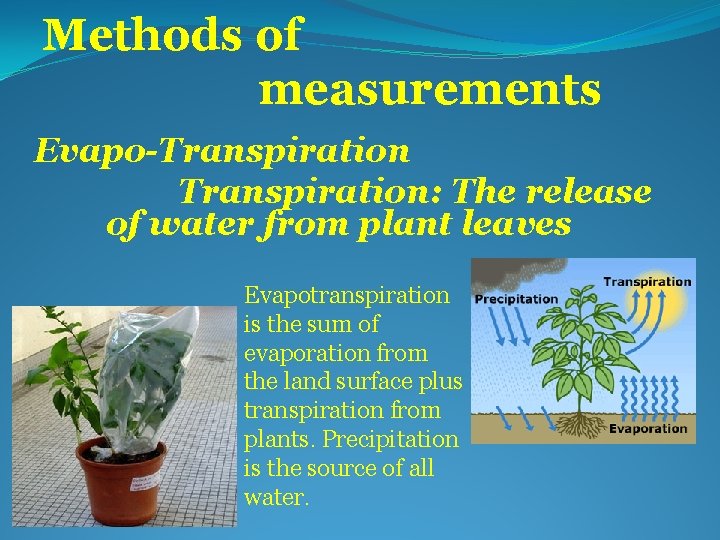
Methods of measurements Evapo-Transpiration: The release of water from plant leaves Evapotranspiration is the sum of evaporation from the land surface plus transpiration from plants. Precipitation is the source of all water.
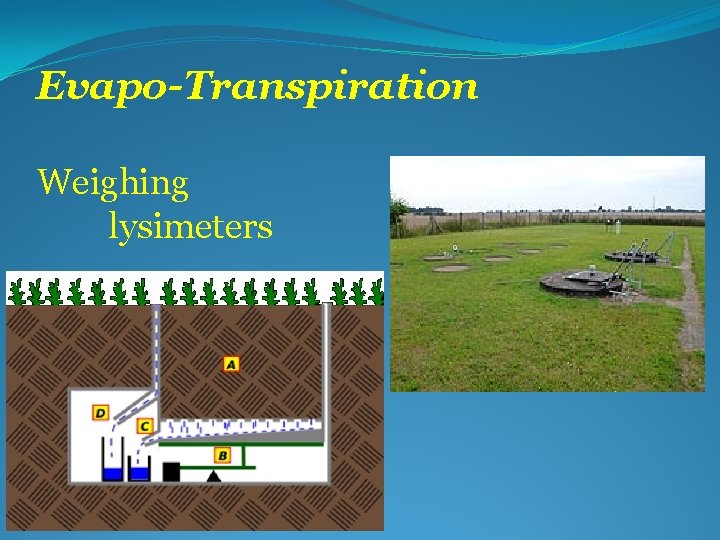
Evapo-Transpiration Weighing lysimeters
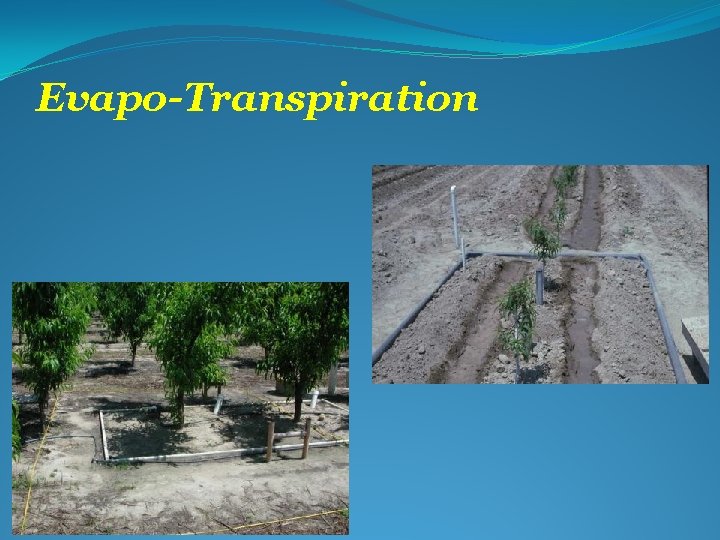
Evapo-Transpiration
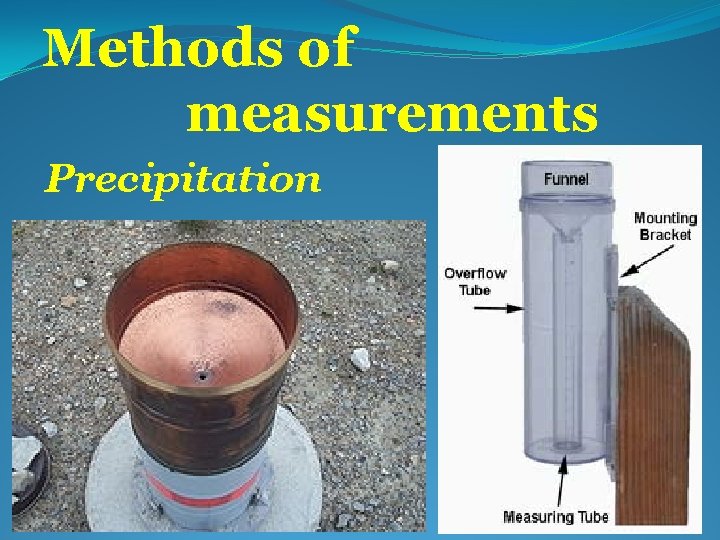
Methods of measurements Precipitation
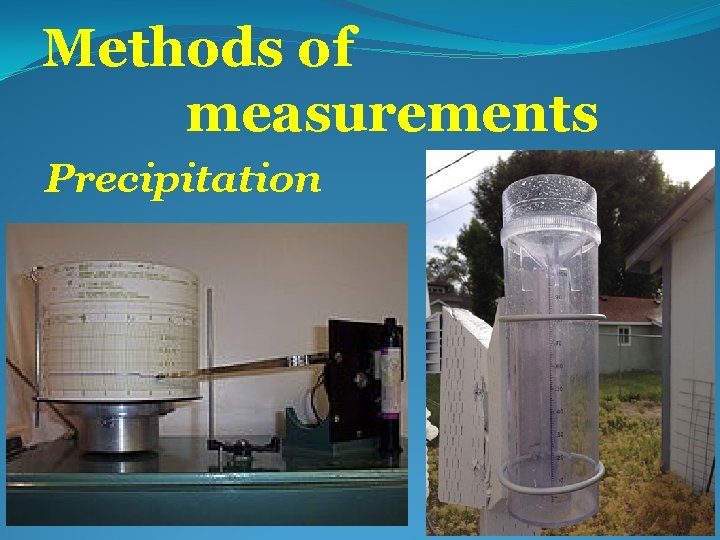
Methods of measurements Precipitation
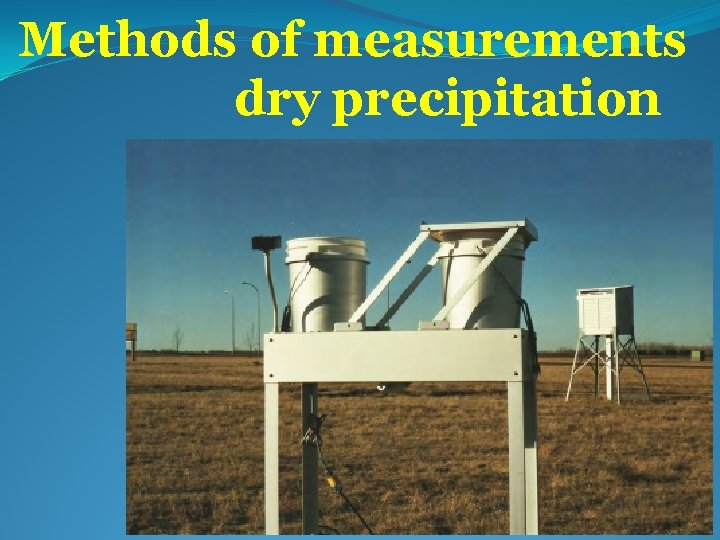
Methods of measurements dry precipitation
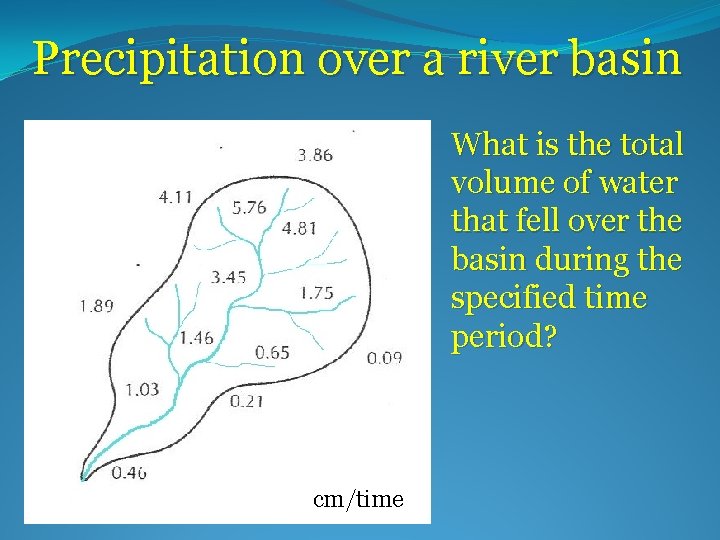
Precipitation over a river basin What is the total volume of water that fell over the basin during the specified time period? cm/time
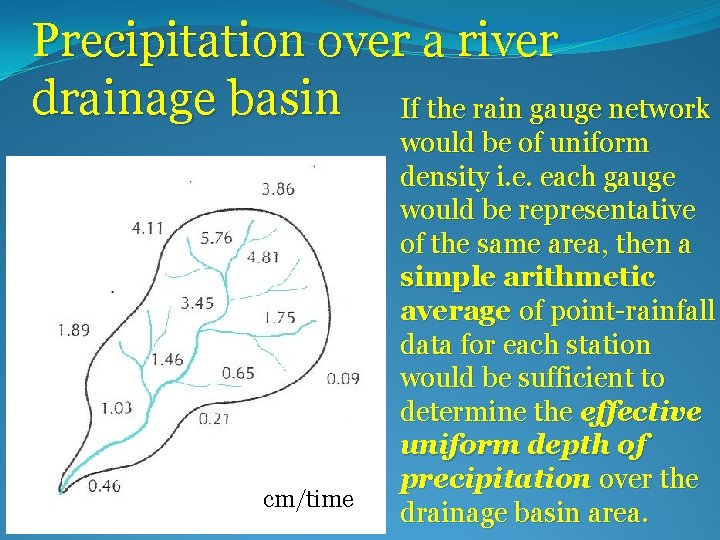
Precipitation over a river drainage basin If the rain gauge network cm/time would be of uniform density i. e. each gauge would be representative of the same area, then a simple arithmetic average of point-rainfall data for each station would be sufficient to determine the effective uniform depth of precipitation over the drainage basin area.
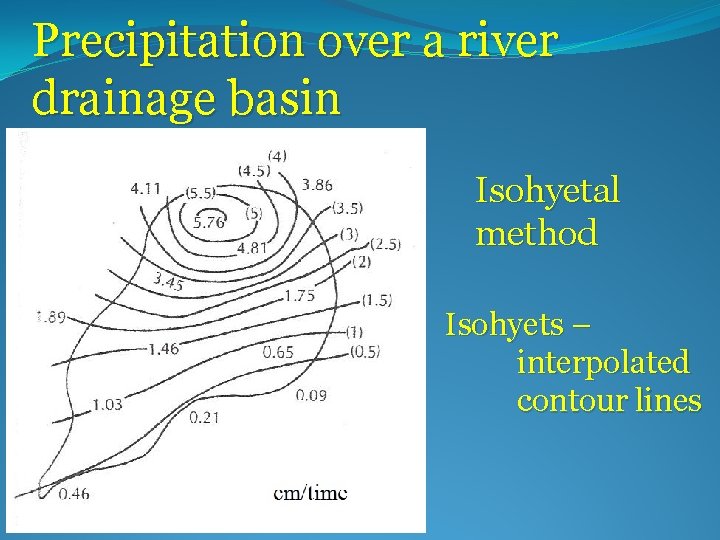
Precipitation over a river drainage basin Isohyetal method Isohyets – interpolated contour lines
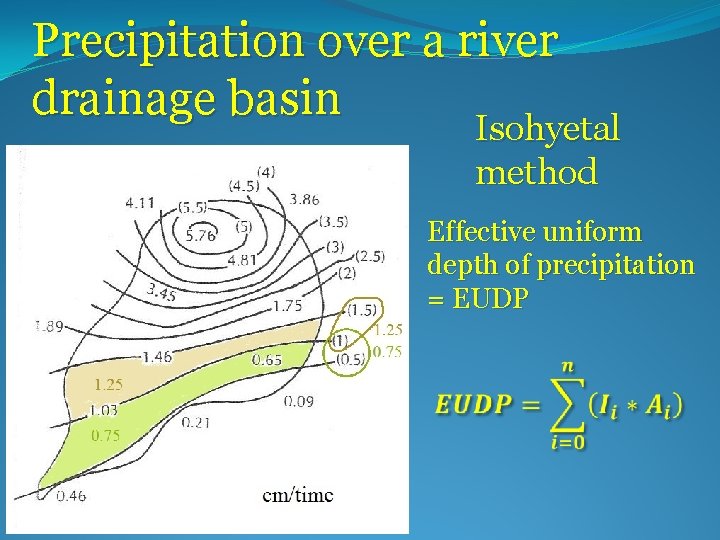
Precipitation over a river drainage basin Isohyetal method Effective uniform depth of precipitation = EUDP
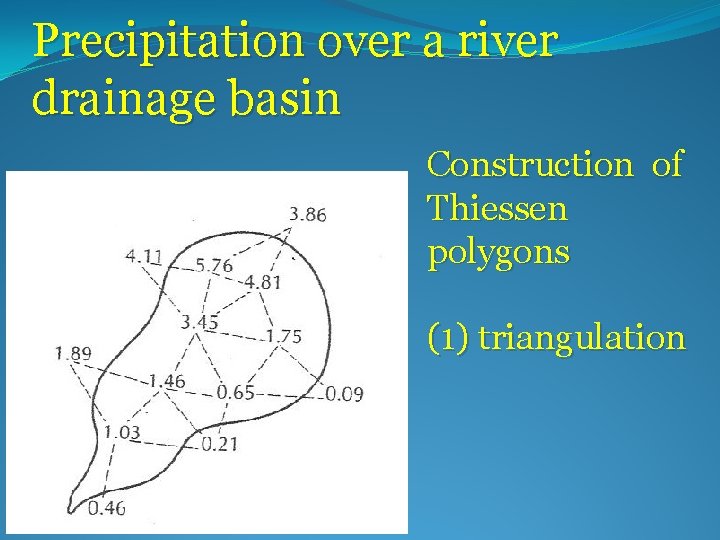
Precipitation over a river drainage basin Construction of Thiessen polygons (1) triangulation
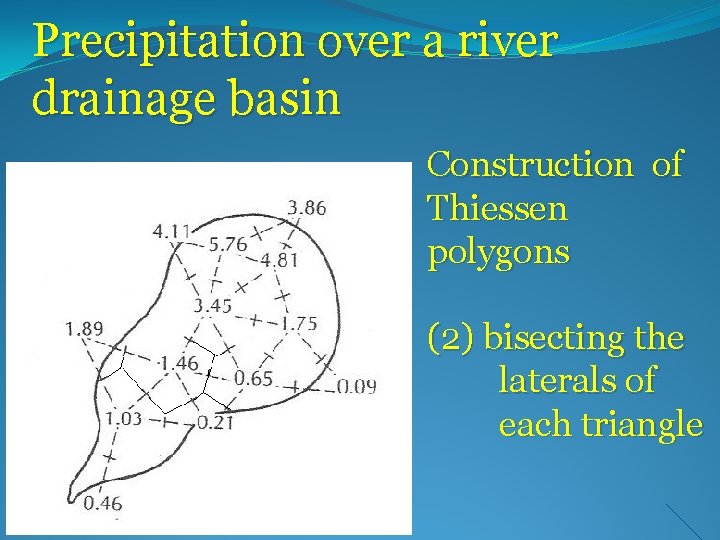
Precipitation over a river drainage basin Construction of Thiessen polygons (2) bisecting the laterals of each triangle
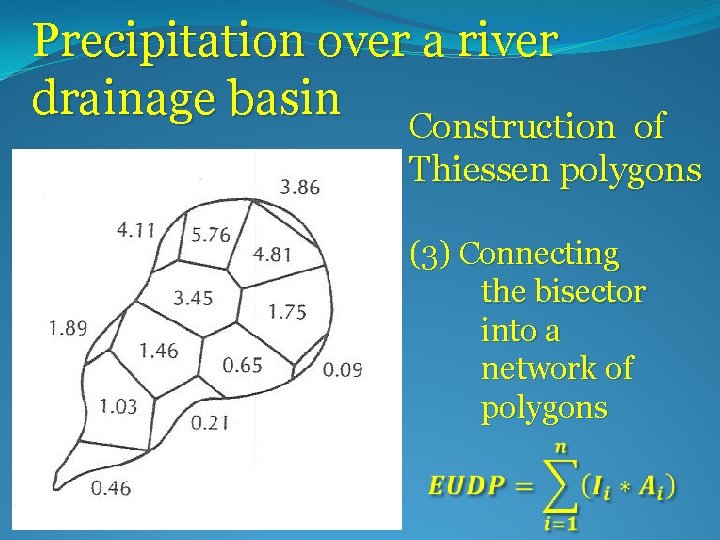
Precipitation over a river drainage basin Construction of Thiessen polygons (3) Connecting the bisector into a network of polygons

Reading assignment http: //content. alterra. wur. nl/Internet/webdocs/ilripublicaties/Pub 162/pub 162 -h 4. 0. pdf
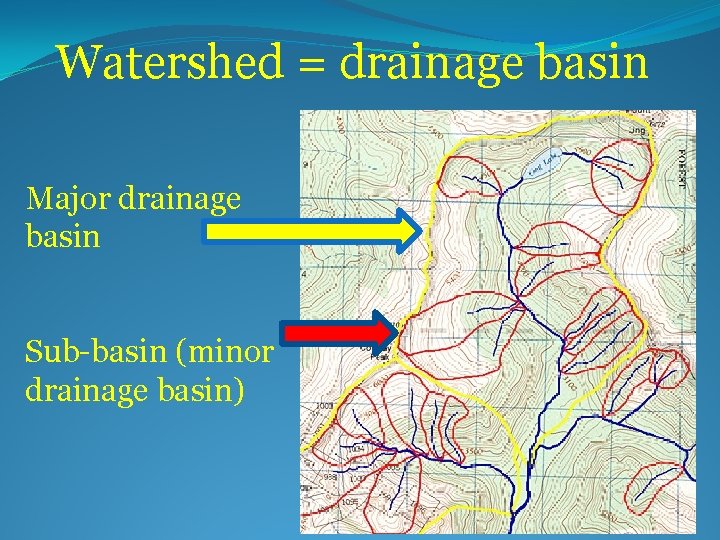
Watershed = drainage basin Major drainage basin Sub-basin (minor drainage basin)
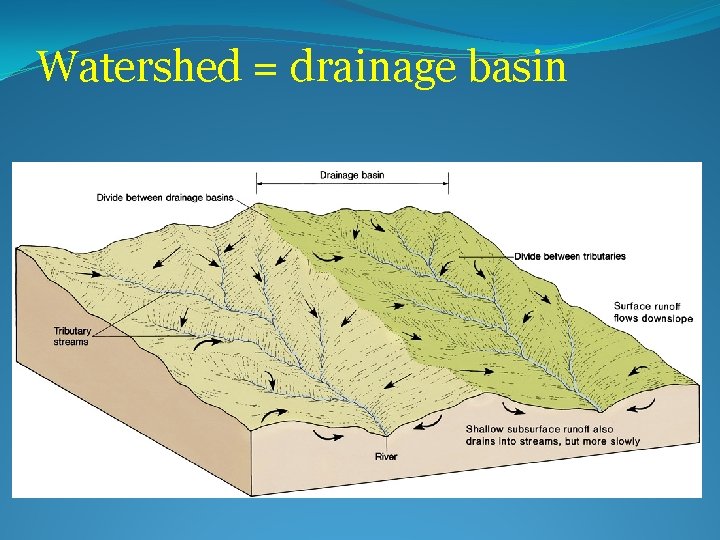
Watershed = drainage basin
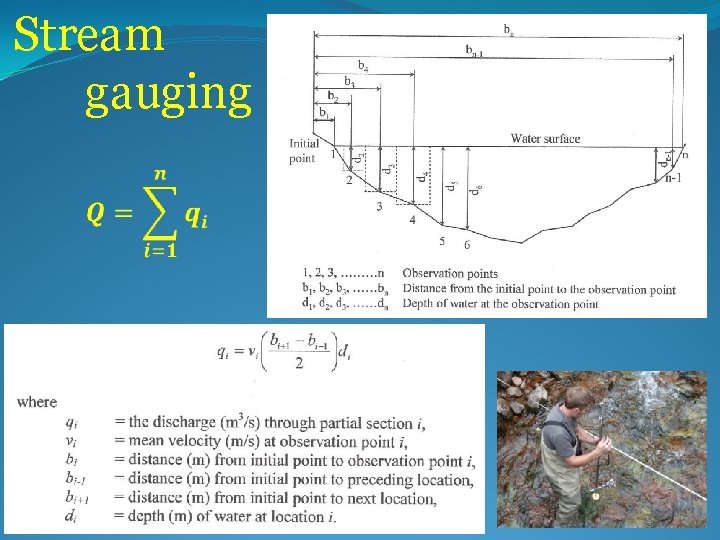
Stream gauging
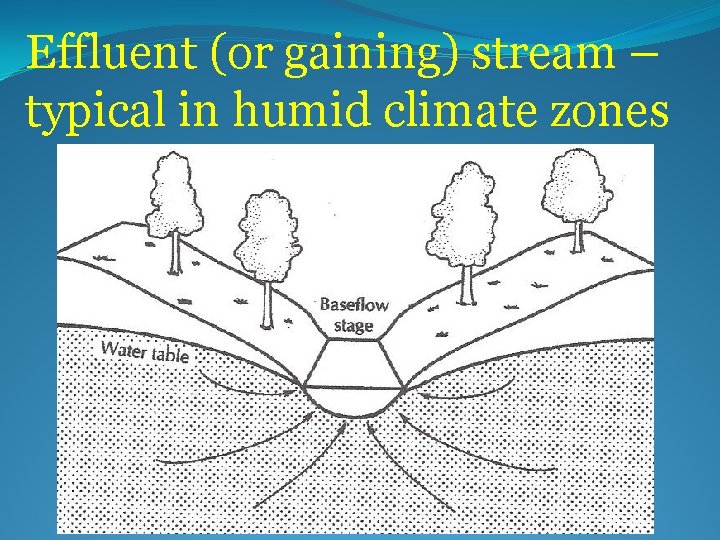
Effluent (or gaining) stream – typical in humid climate zones
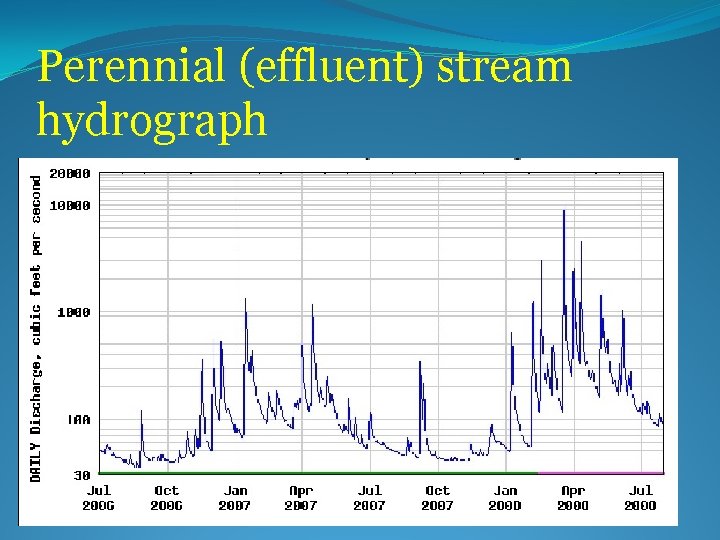
Perennial (effluent) stream hydrograph
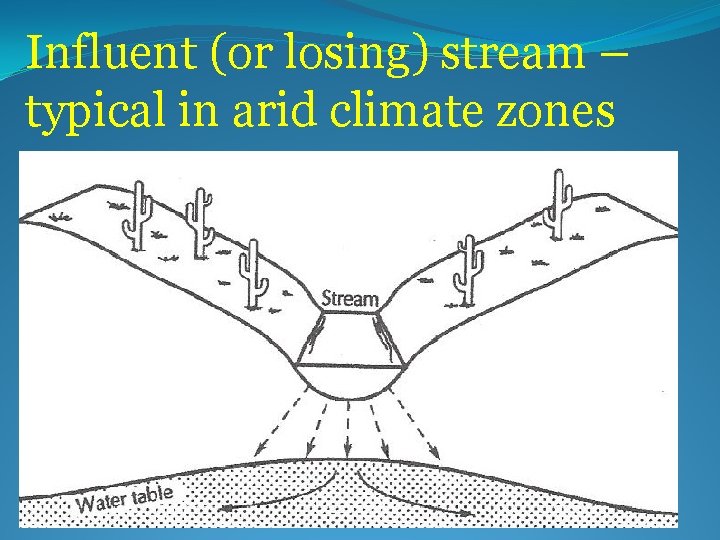
Influent (or losing) stream – typical in arid climate zones
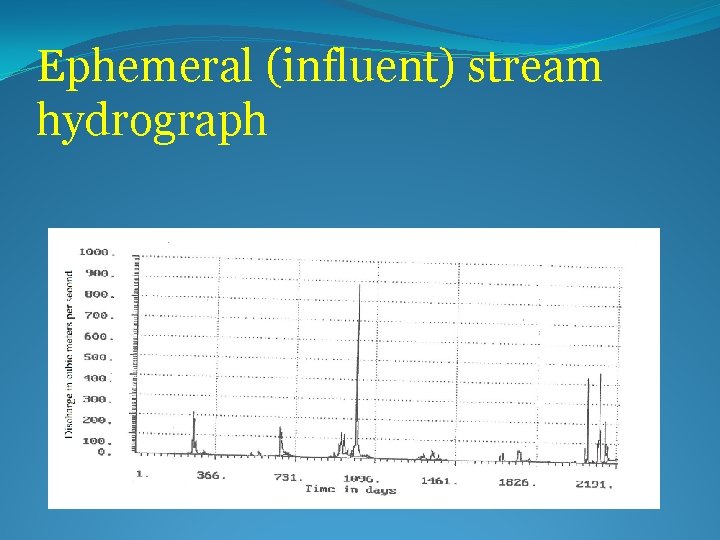
Ephemeral (influent) stream hydrograph
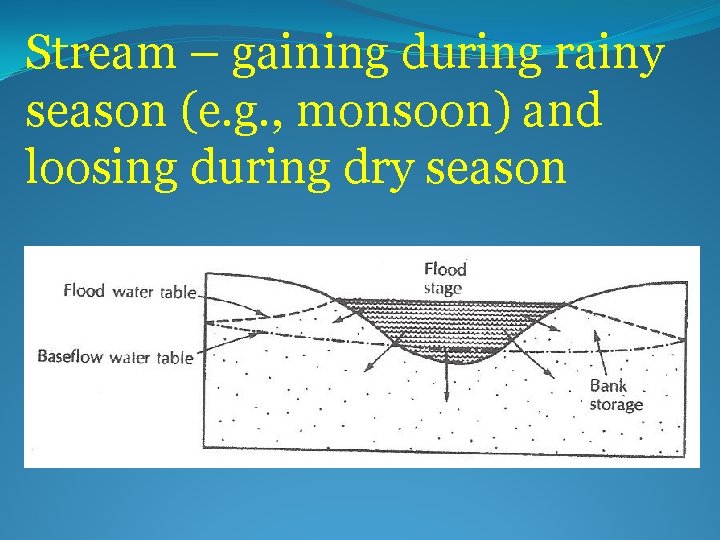
Stream – gaining during rainy season (e. g. , monsoon) and loosing during dry season
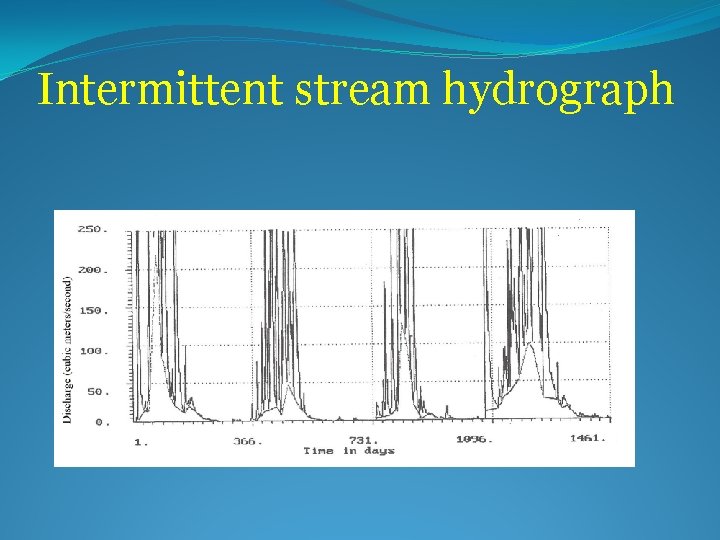
Intermittent stream hydrograph
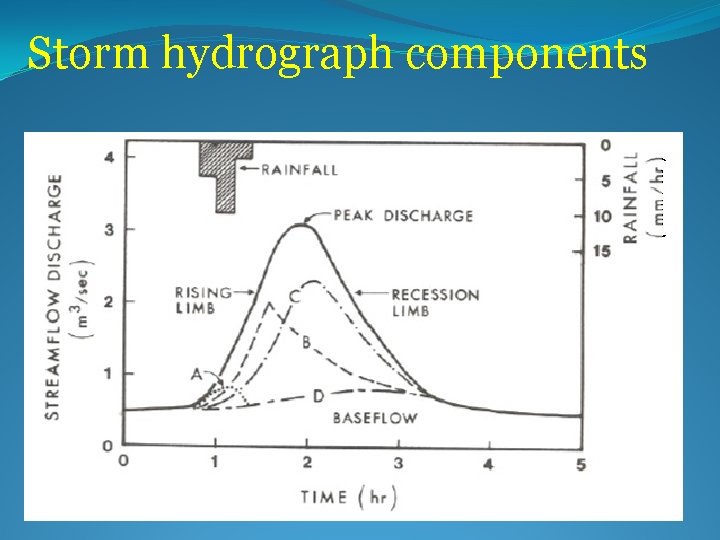
Storm hydrograph components
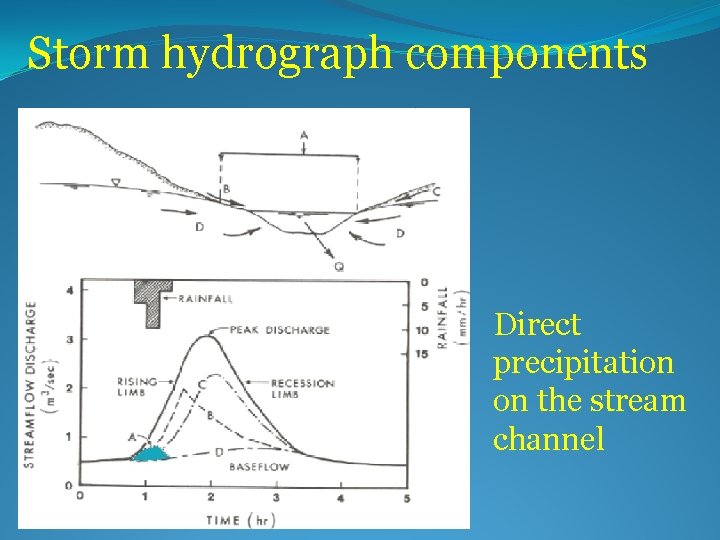
Storm hydrograph components Direct precipitation on the stream channel
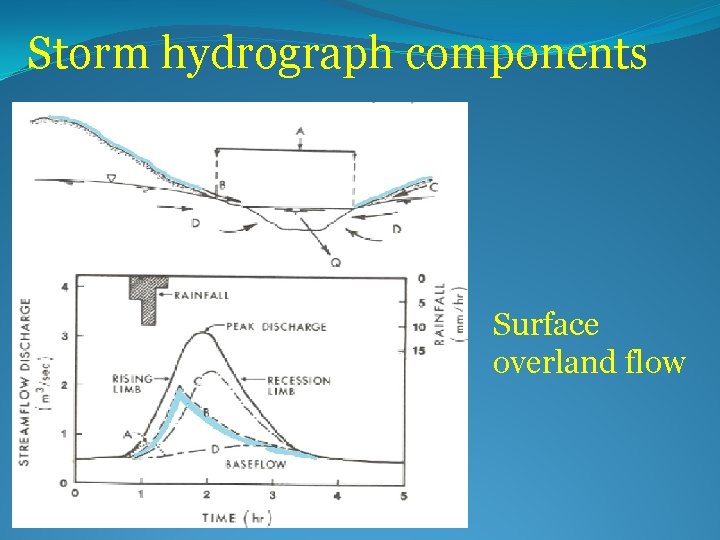
Storm hydrograph components Surface overland flow
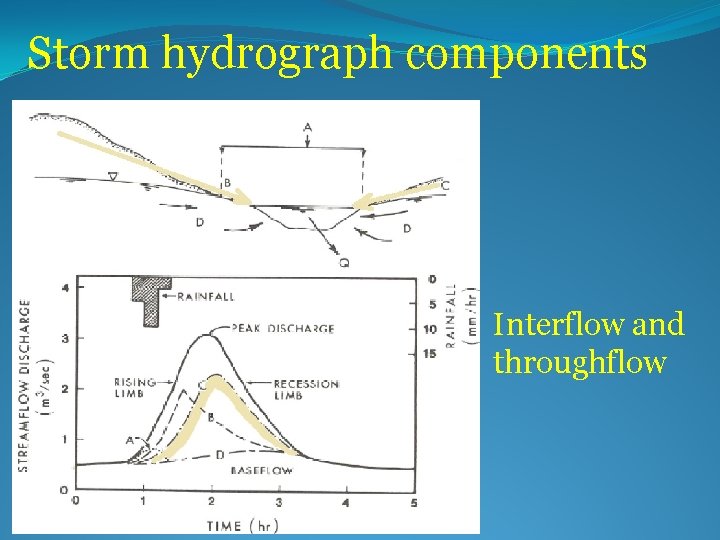
Storm hydrograph components Interflow and throughflow
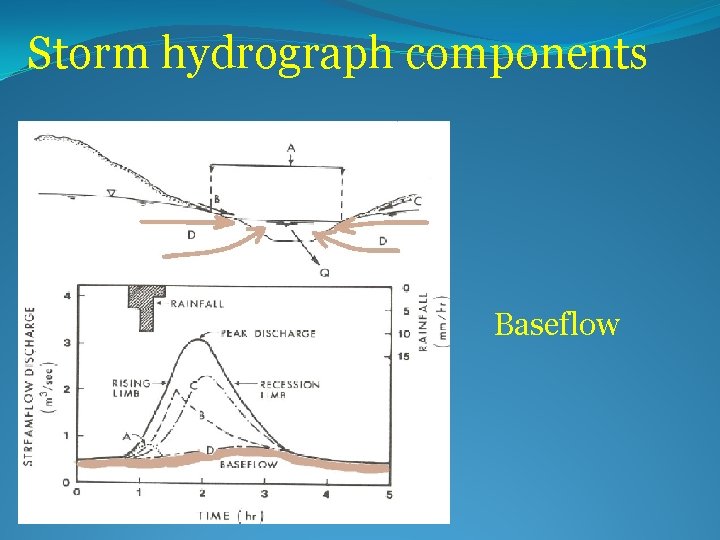
Storm hydrograph components Baseflow
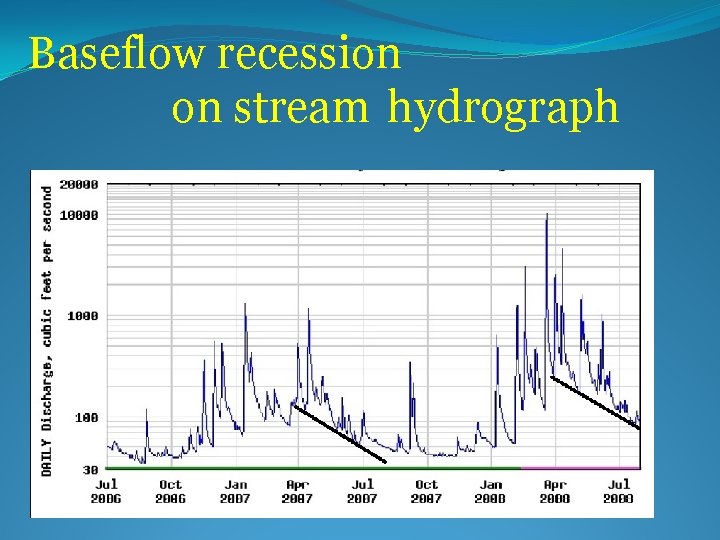
Baseflow recession on stream hydrograph
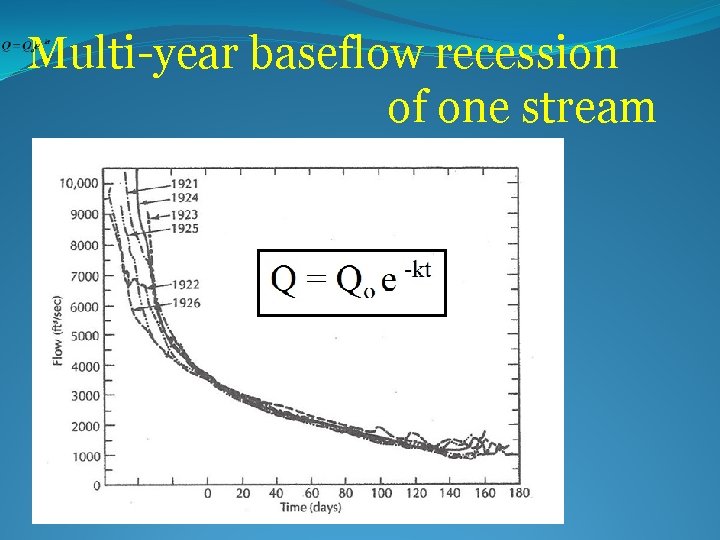
Multi-year baseflow recession of one stream
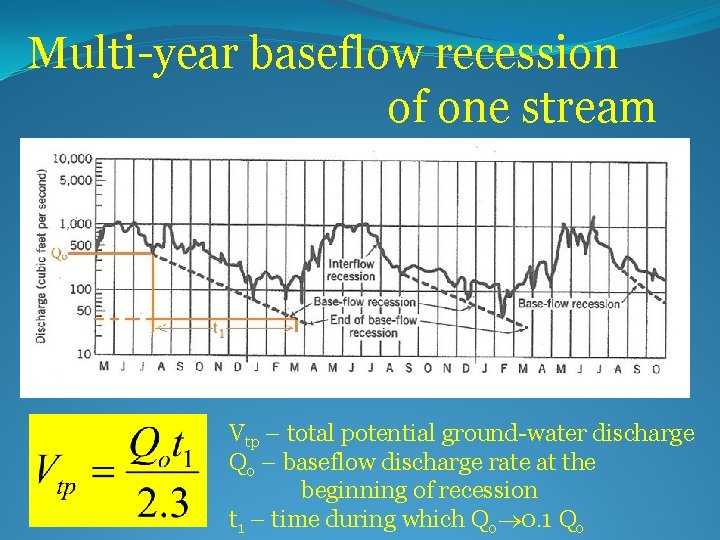
Multi-year baseflow recession of one stream Vtp – total potential ground-water discharge Qo – baseflow discharge rate at the beginning of recession t 1 – time during which Qo 0. 1 Qo
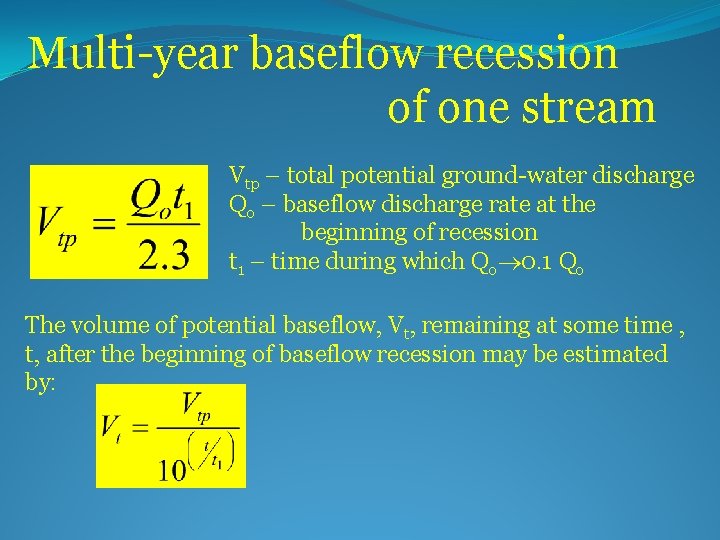
Multi-year baseflow recession of one stream Vtp – total potential ground-water discharge Qo – baseflow discharge rate at the beginning of recession t 1 – time during which Qo 0. 1 Qo The volume of potential baseflow, Vt, remaining at some time , t, after the beginning of baseflow recession may be estimated by:
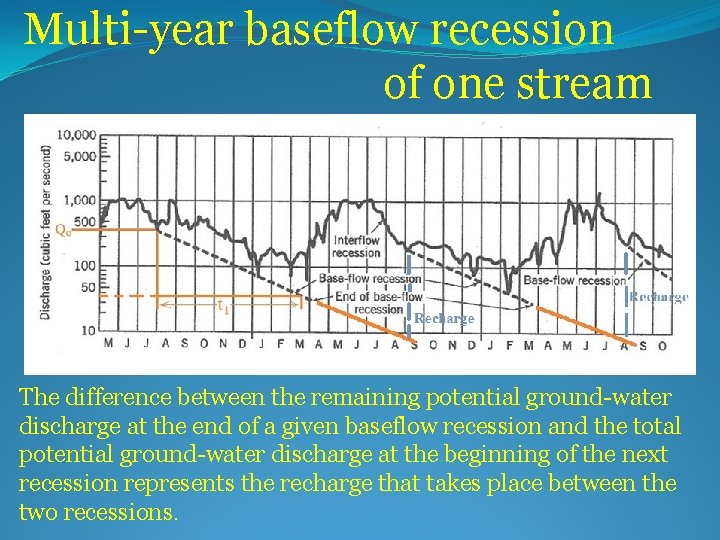
Multi-year baseflow recession of one stream The difference between the remaining potential ground-water discharge at the end of a given baseflow recession and the total potential ground-water discharge at the beginning of the next recession represents the recharge that takes place between the two recessions.
- Slides: 53