
Applied Fieldwork Enquiry 6 Evaluation The six stages
- Slides: 15
Applied Fieldwork Enquiry 6. Evaluation
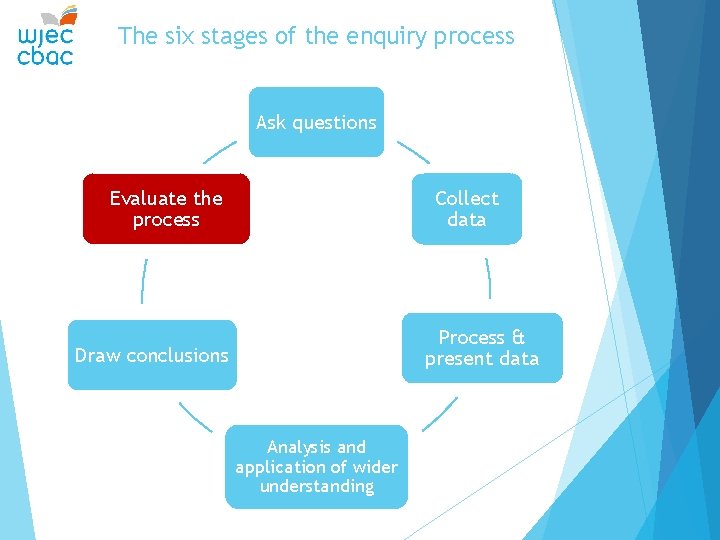
The six stages of the enquiry process Ask questions Evaluate the process Collect data Process & present data Draw conclusions Analysis and application of wider understanding
How to evaluate the enquiry process? Identify the limitations of geographical evidence - accuracy, reliability and bias Reflect critically on the strengths and limitations of both primary and secondary data, methods used, conclusions drawn and knowledge gained Appreciate that stakeholders may have vested interests introducing bias.
How to evaluate the enquiry process? When evaluating the enquiry process you need to comment on: Accuracy – how accurate were your measurements and other forms of data collection? Reliability – how reliable were your results and subsequent conclusions? Bias – to what extent were your results truly representative?
Evaluating data collection Consider the strengths and limitations of your data collection: Sampling technique – was it appropriate and did it generate representative data? Sample size – did you collect enough data for it to represent the real world accurately? Bias – was your data bias and potentially misleading in any way?
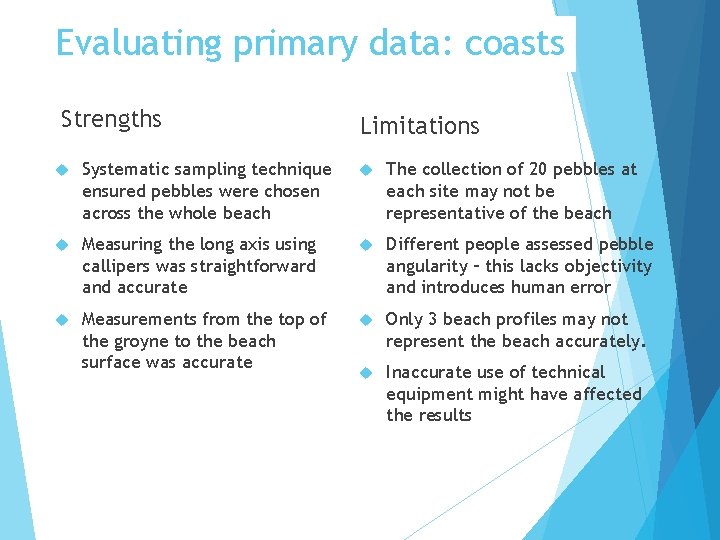
Evaluating primary data: coasts Strengths Limitations Systematic sampling technique ensured pebbles were chosen across the whole beach The collection of 20 pebbles at each site may not be representative of the beach Measuring the long axis using callipers was straightforward and accurate Different people assessed pebble angularity – this lacks objectivity and introduces human error Measurements from the top of the groyne to the beach surface was accurate Only 3 beach profiles may not represent the beach accurately. Inaccurate use of technical equipment might have affected the results
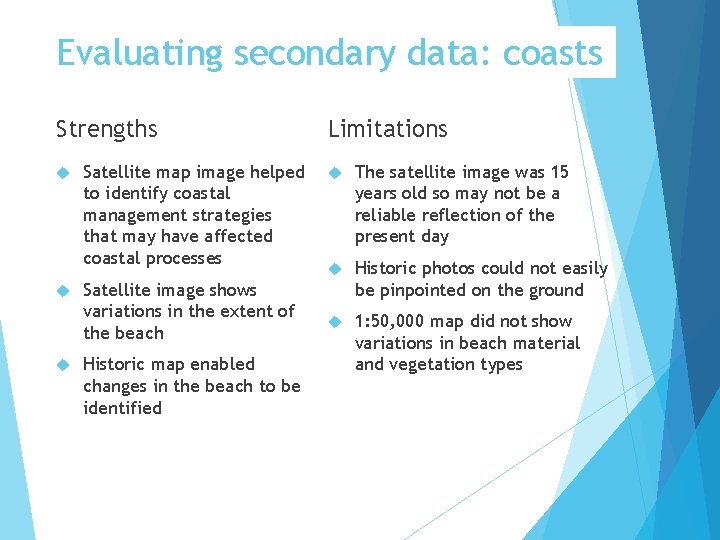
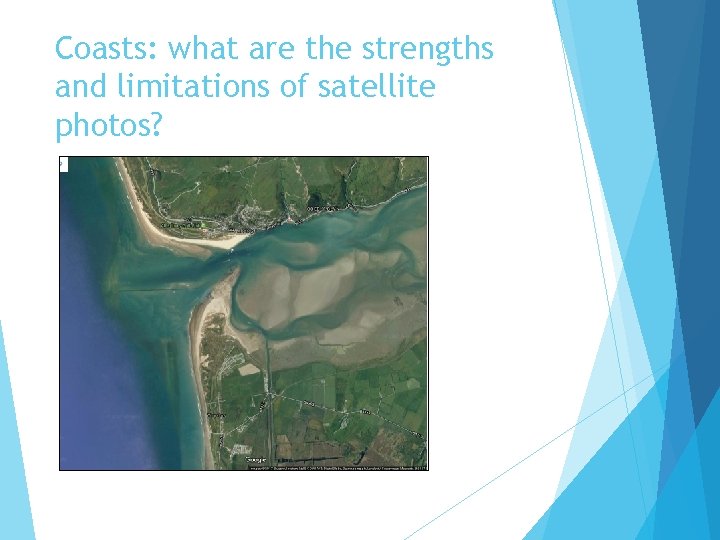
Evaluating secondary data: coasts Strengths Satellite map image helped to identify coastal management strategies that may have affected coastal processes Satellite image shows variations in the extent of the beach Historic map enabled changes in the beach to be identified Limitations The satellite image was 15 years old so may not be a reliable reflection of the present day Historic photos could not easily be pinpointed on the ground 1: 50, 000 map did not show variations in beach material and vegetation types
Coasts: what are the strengths and limitations of satellite photos?
Evaluating primary data: tourism Strengths Limitations The questionnaire had an Most people who answered the appropriate mix of open and questionnaire were elderly closed questions this did not reflect the tourists as a whole A large sample (100) of questionnaires were A large number of respondents completed were part of a single coach party introducing bias Photos were taken throughout the day to Data collection was focused in indicate trends and patterns one area only
Evaluating secondary data: tourism Strengths The historic maps show detailed changes in tourist attractions The historic photos can easily be located and compared with present day views Historic data comes from a reputable academic source so can be considered to be reliable Photos were taken throughout the day to indicate trends and patterns Limitations Local tourist board information might be slightly bias in promoting certain attractions of the area Tourist data is annual so doesn’t show the trends and patterns throughout the year People objecting to new tourist developments in the local newspaper may be stakeholders with vested interests
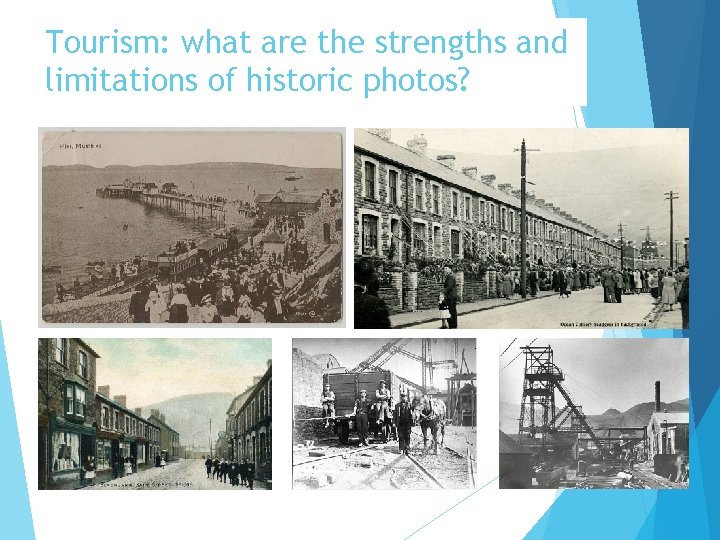
Tourism: what are the strengths and limitations of historic photos?
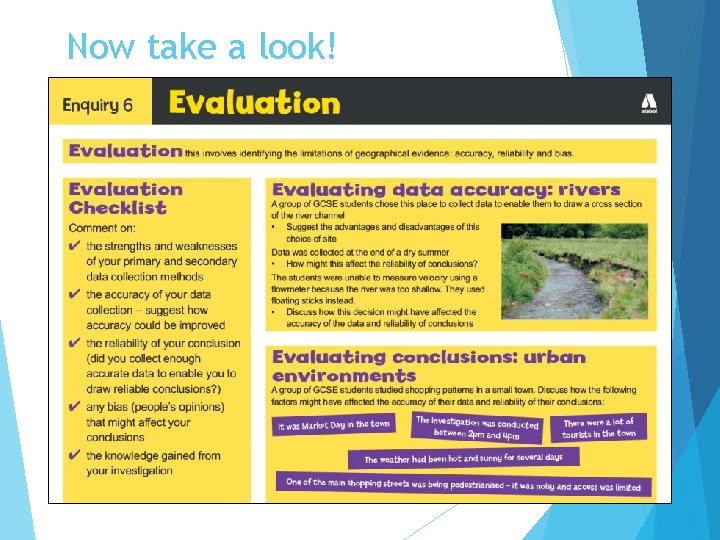
Evaluating your conclusion How might your results be different on another day or at a different time of year? To what extent did the weather affect the reliability your enquiry conclusions? How might limitations and potential inaccuracies in your data collection have affected the reliability of your conclusions? Could inaccurate or inappropriate diagram construction have affected your conclusions?
Now take a look!
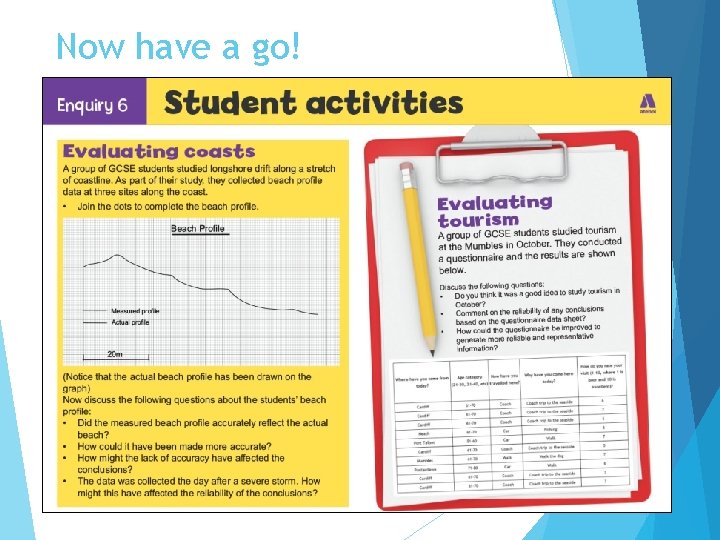
Now have a go!
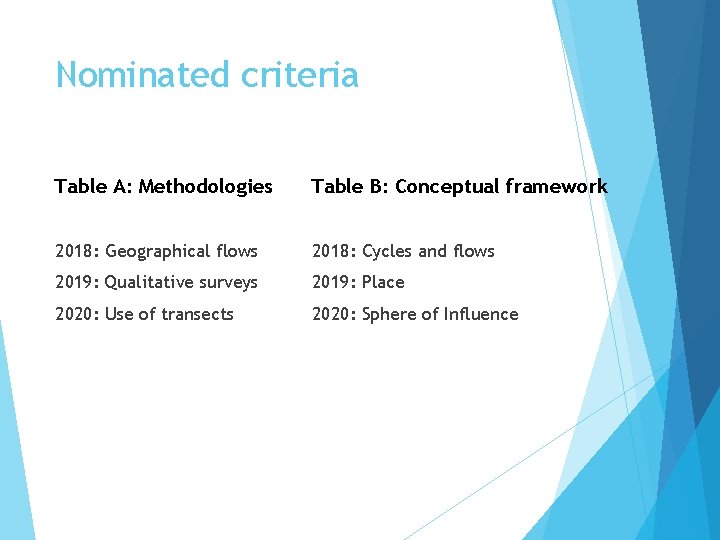
Nominated criteria Table A: Methodologies Table B: Conceptual framework 2018: Geographical flows 2018: Cycles and flows 2019: Qualitative surveys 2019: Place 2020: Use of transects 2020: Sphere of Influence