
Applied Fieldwork Enquiry 1 Geographical Questions The six
- Slides: 19
Applied Fieldwork Enquiry 1. Geographical Questions
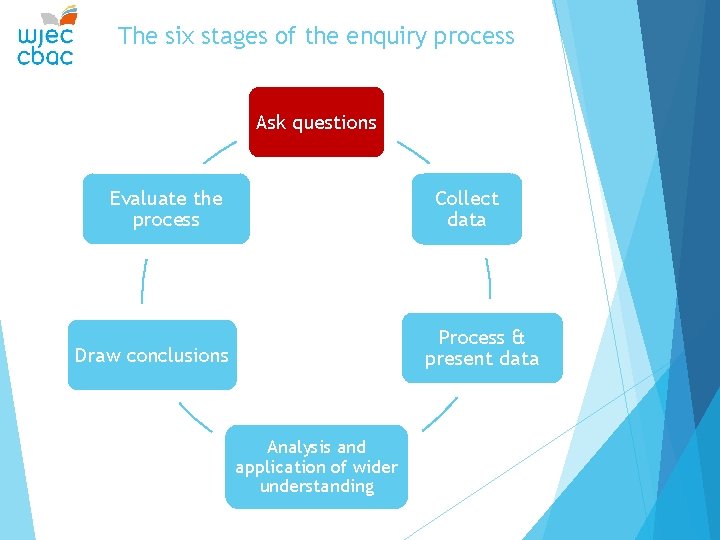
The six stages of the enquiry process Ask questions Evaluate the process Collect data Process & present data Draw conclusions Analysis and application of wider understanding
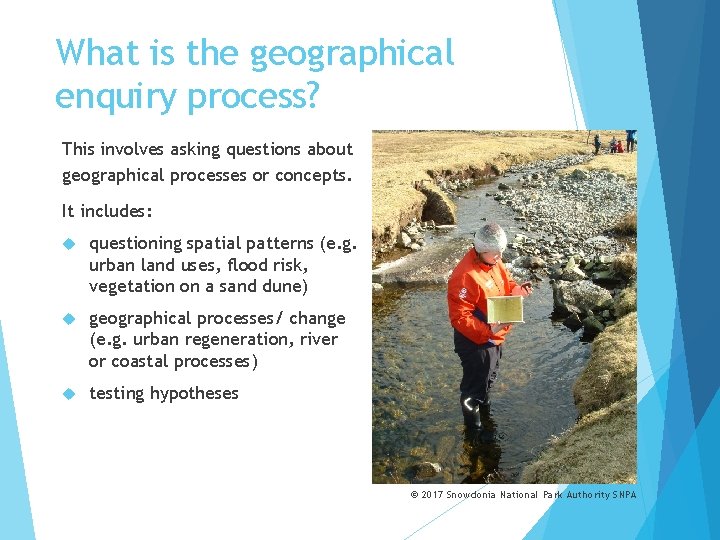
What is the geographical enquiry process? This involves asking questions about geographical processes or concepts. It includes: questioning spatial patterns (e. g. urban land uses, flood risk, vegetation on a sand dune) geographical processes/ change (e. g. urban regeneration, river or coastal processes) testing hypotheses © 2017 Snowdonia National Park Authority SNPA
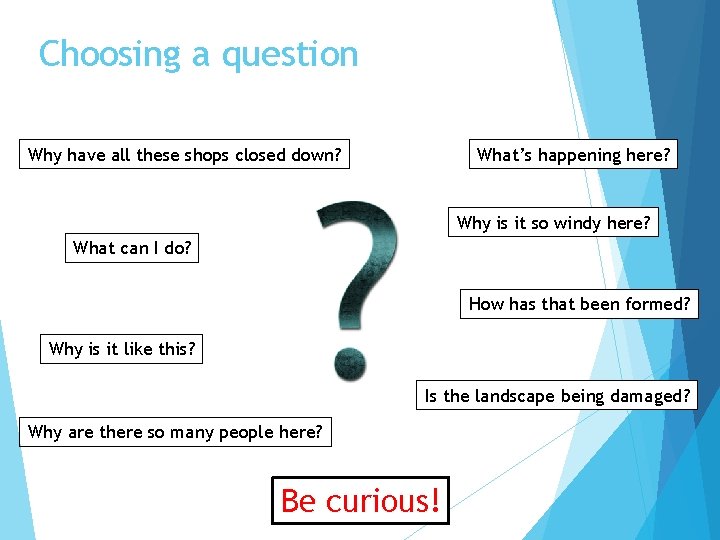
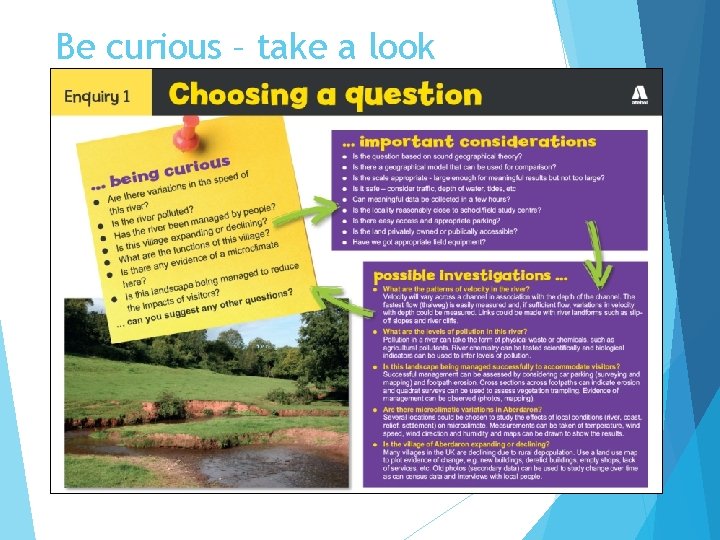
Choosing a question Why have all these shops closed down? What’s happening here? Why is it so windy here? What can I do? How has that been formed? Why is it like this? Is the landscape being damaged? Why are there so many people here? Be curious!
Be curious – take a look
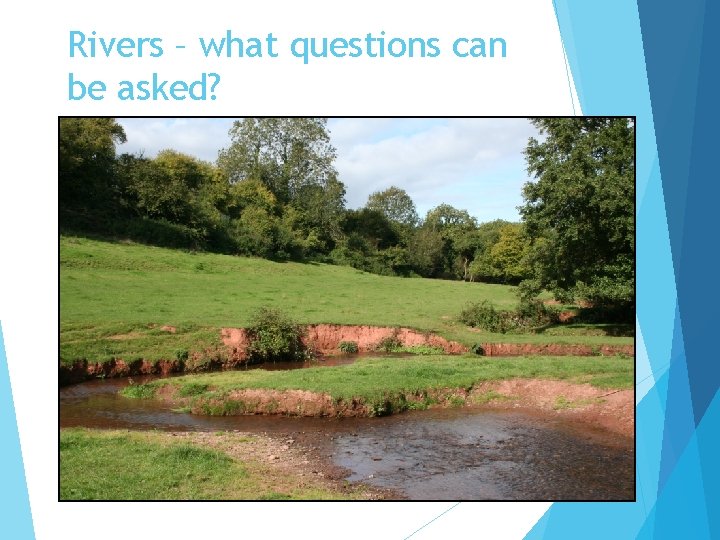
Rivers – what questions can be asked?
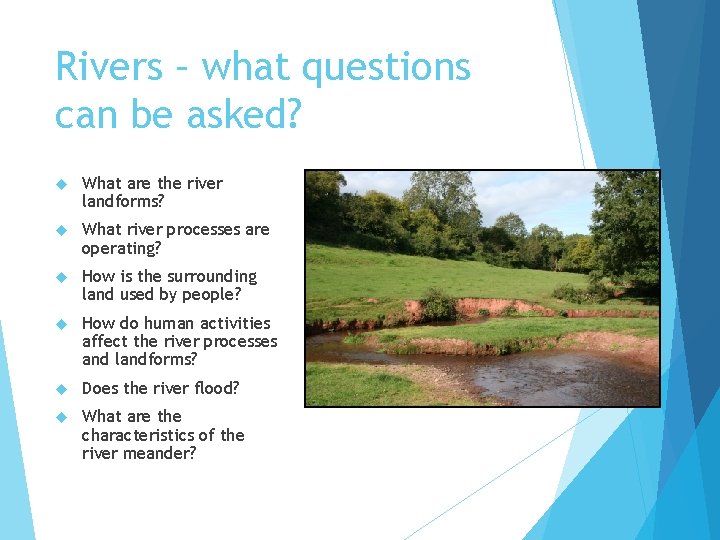
Rivers – what questions can be asked? What are the river landforms? What river processes are operating? How is the surrounding land used by people? How do human activities affect the river processes and landforms? Does the river flood? What are the characteristics of the river meander?
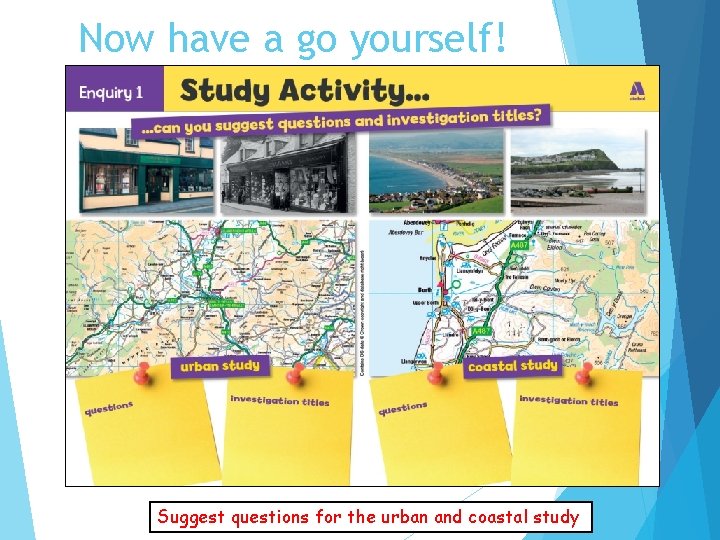
Now have a go yourself! Suggest questions for the urban and coastal study
Possible questions Urban Coasts What changes have taken place in the town? What is the evidence of longshore drift? What are the main functions in Builth Wells? Is there a clearly demarked central area? How has coastal management affected processes and landforms? Is there a risk of river flooding in the town? How does sediment change along the beach? What is the town’s sphere of influence? Does the beach profile change with distance along the beach?
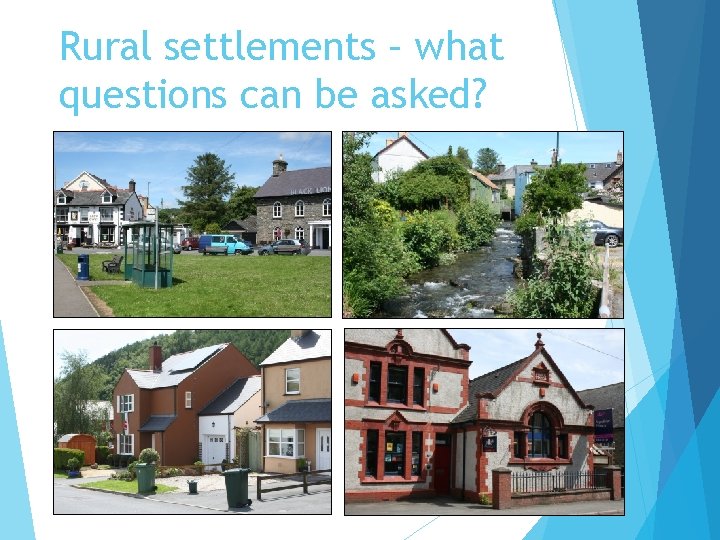
Rural settlements – what questions can be asked?
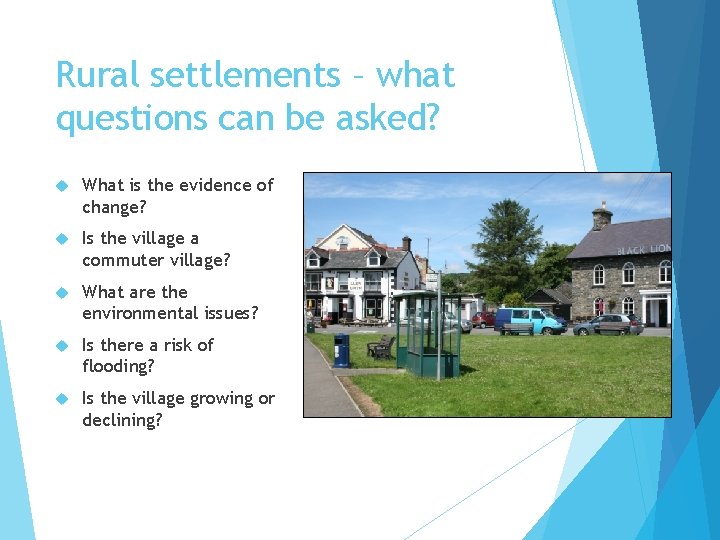
Rural settlements – what questions can be asked? What is the evidence of change? Is the village a commuter village? What are the environmental issues? Is there a risk of flooding? Is the village growing or declining?
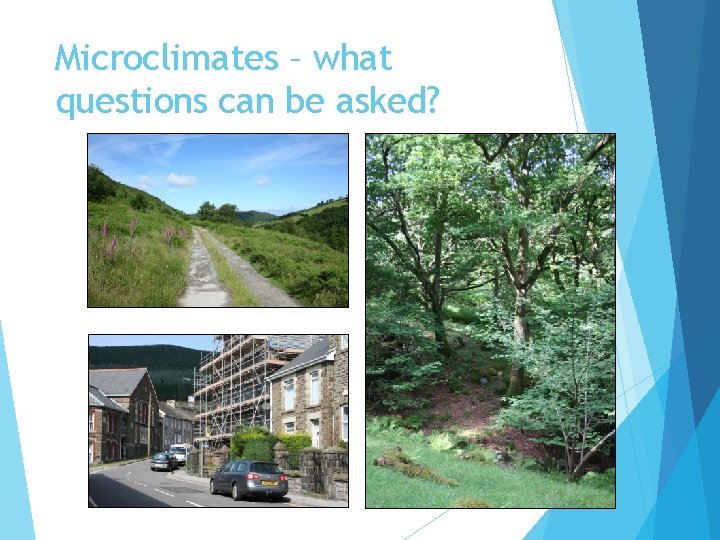
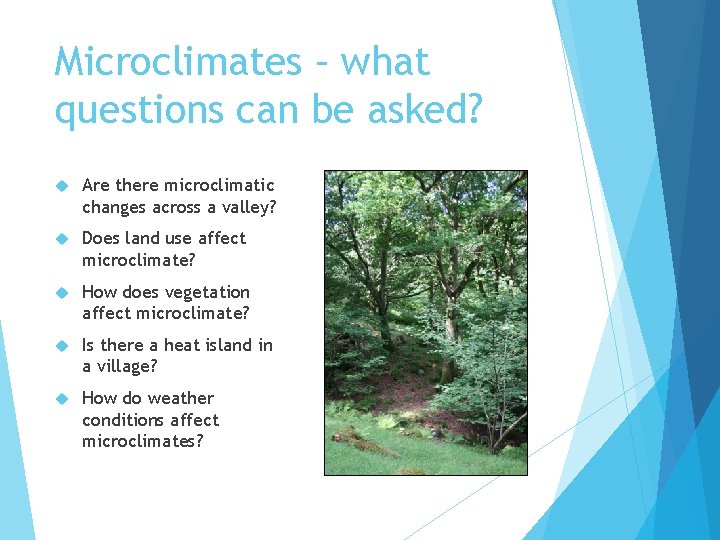
Microclimates – what questions can be asked?
Microclimates – what questions can be asked? Are there microclimatic changes across a valley? Does land use affect microclimate? How does vegetation affect microclimate? Is there a heat island in a village? How do weather conditions affect microclimates?
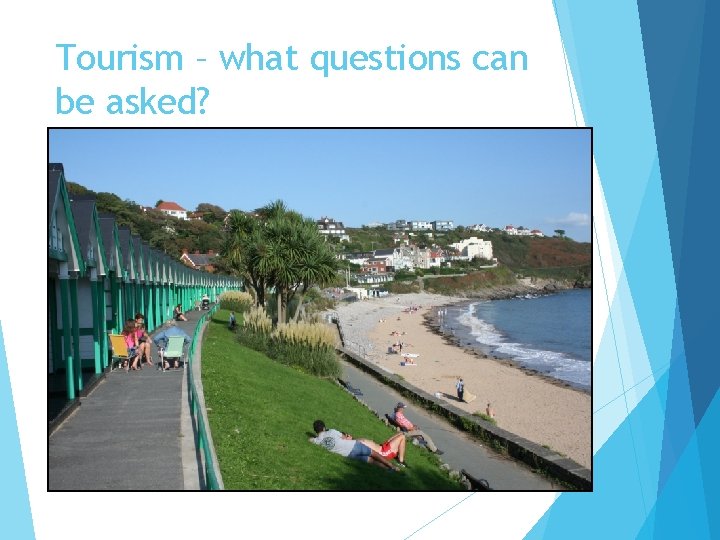
Tourism – what questions can be asked?
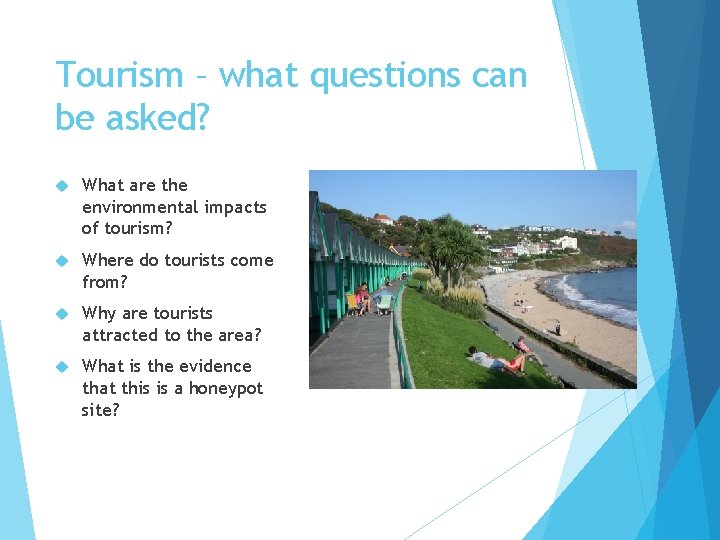
Tourism – what questions can be asked? What are the environmental impacts of tourism? Where do tourists come from? Why are tourists attracted to the area? What is the evidence that this is a honeypot site?
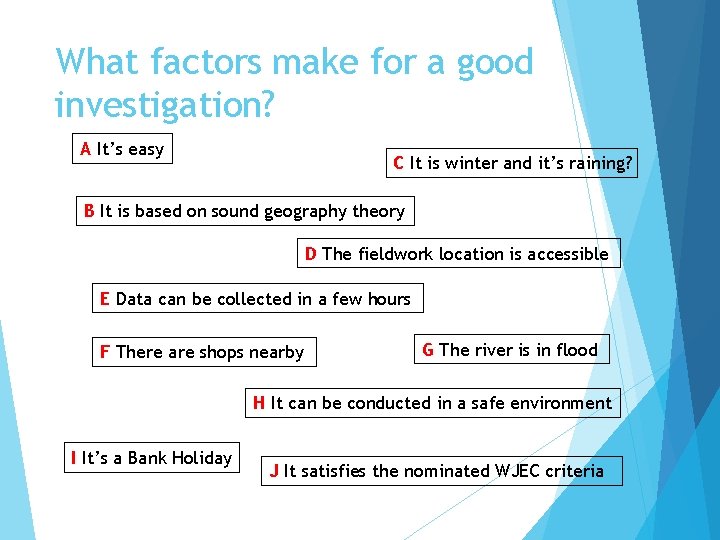
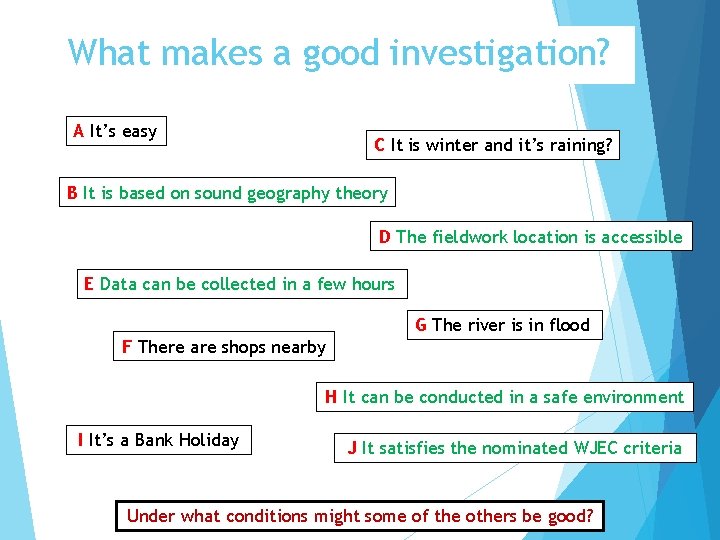
What factors make for a good investigation? A It’s easy C It is winter and it’s raining? B It is based on sound geography theory D The fieldwork location is accessible E Data can be collected in a few hours F There are shops nearby G The river is in flood H It can be conducted in a safe environment I It’s a Bank Holiday J It satisfies the nominated WJEC criteria
What makes a good investigation? A It’s easy C It is winter and it’s raining? B It is based on sound geography theory D The fieldwork location is accessible E Data can be collected in a few hours G The river is in flood F There are shops nearby H It can be conducted in a safe environment I It’s a Bank Holiday J It satisfies the nominated WJEC criteria Under what conditions might some of the others be good?
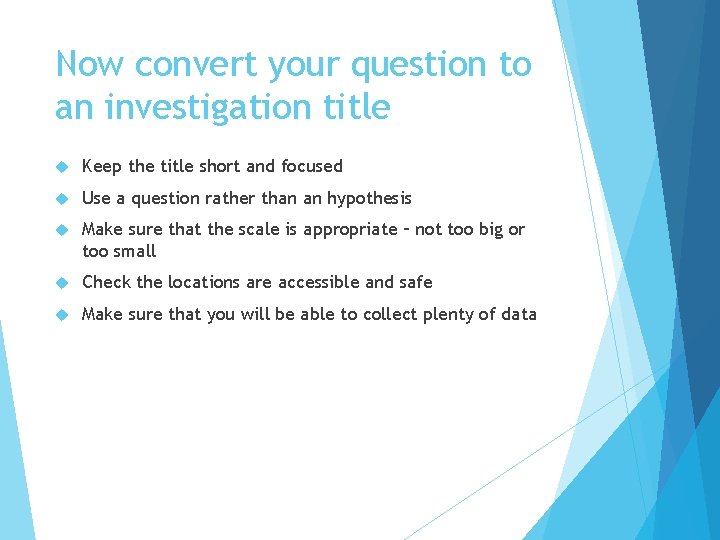
Now convert your question to an investigation title Keep the title short and focused Use a question rather than an hypothesis Make sure that the scale is appropriate – not too big or too small Check the locations are accessible and safe Make sure that you will be able to collect plenty of data
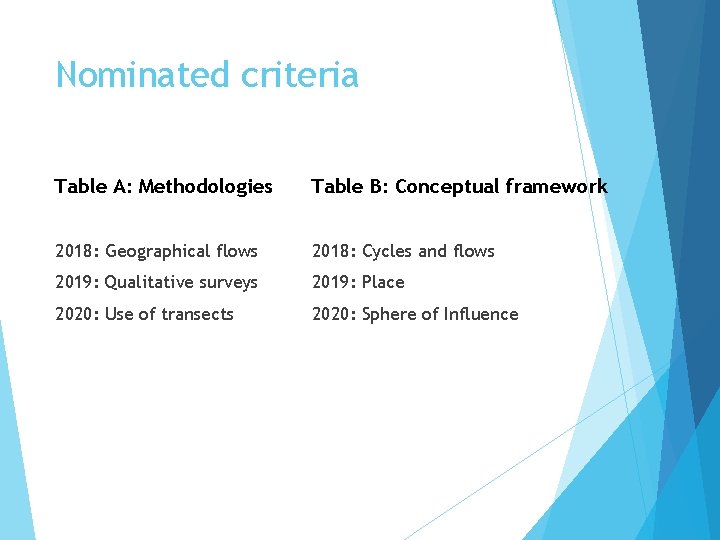
Nominated criteria Table A: Methodologies Table B: Conceptual framework 2018: Geographical flows 2018: Cycles and flows 2019: Qualitative surveys 2019: Place 2020: Use of transects 2020: Sphere of Influence