
Applied Epidemiology Poplhlth 304 Simon Thornley Course coordinator



- Slides: 34
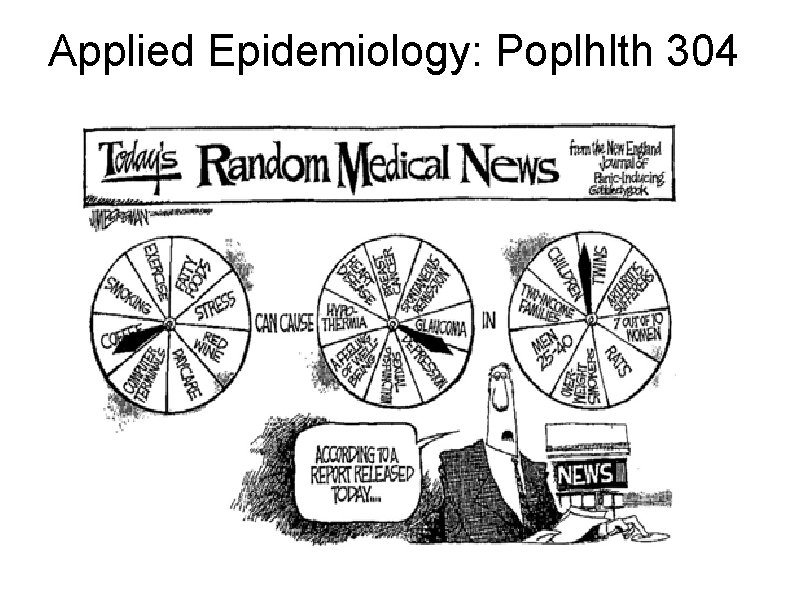
Applied Epidemiology: Poplhlth 304
{ Simon Thornley Course co-ordinator and Ph. D candidate Staff { Josh Knight Tutor and Ph. D candidate
Epidemiology can take you places. . . http: //gameauland. com/thatsugar-film-teaser/
Outline Introductions Why study epidemiology? My story Course outline Assessment : -(
Introductions A bit about you. . . Pairs, 5 mins; report back one thing about the person that stands out and why they are interested in a career in health. A bit about me. . . Lectures and course material made available at. . . http: //flexiblelearning. auckland. ac. nz/poplhlth 304/ Also on CECIL
My career
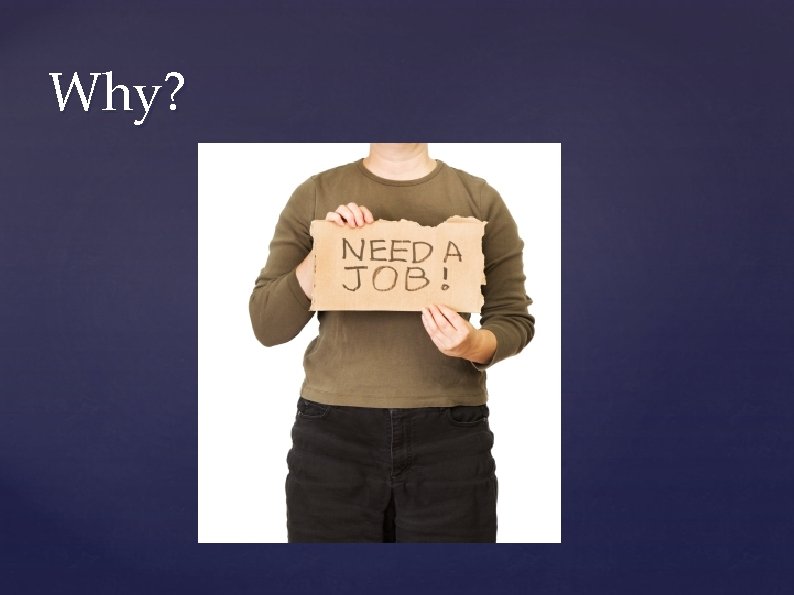
Why?
What is epidemiology?
What is epidemiology? “The study of the distribution and determinants of health related states or events in specified populations, and the application of this study to control health problems”
Detective work Who gets sick and why? Once we've found out why, what can we do about it? Sounds simple, but many fish hooks Many reasons it goes wrong “Wrong”, by Freedman
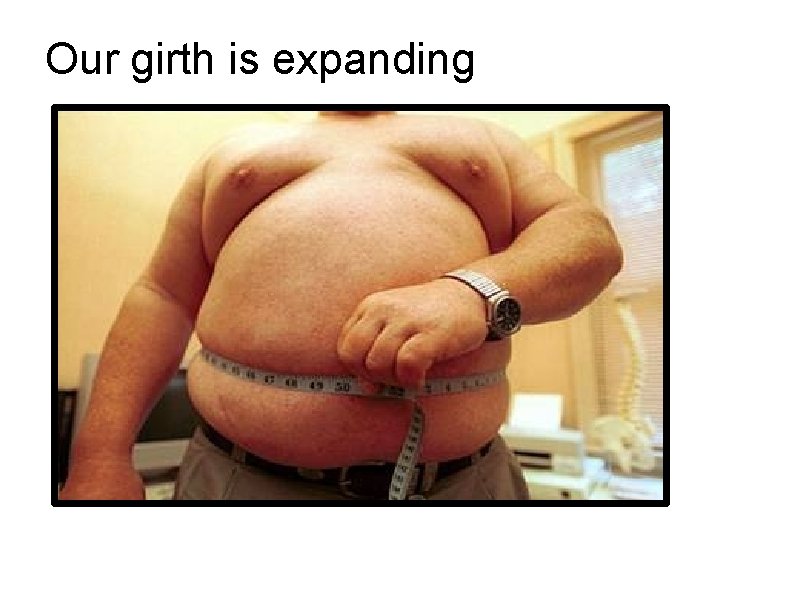
Our girth is expanding
Why?
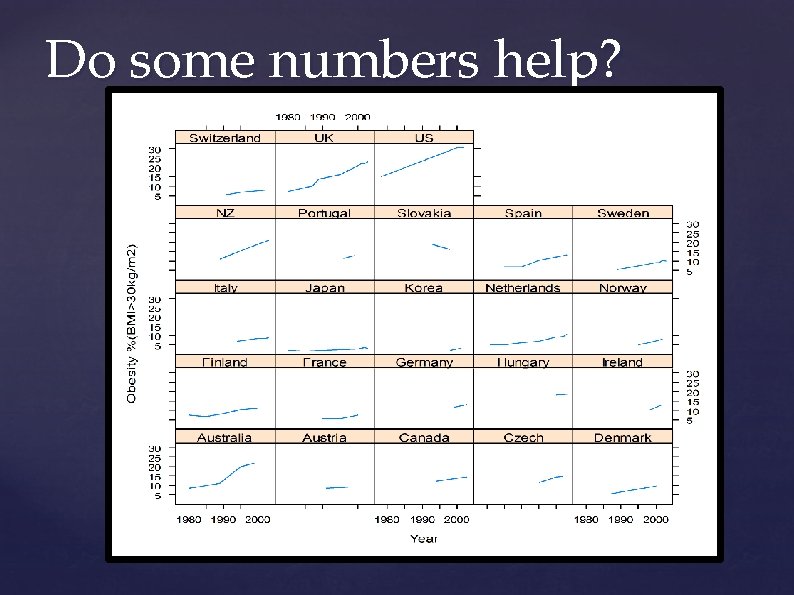
Do some numbers help?
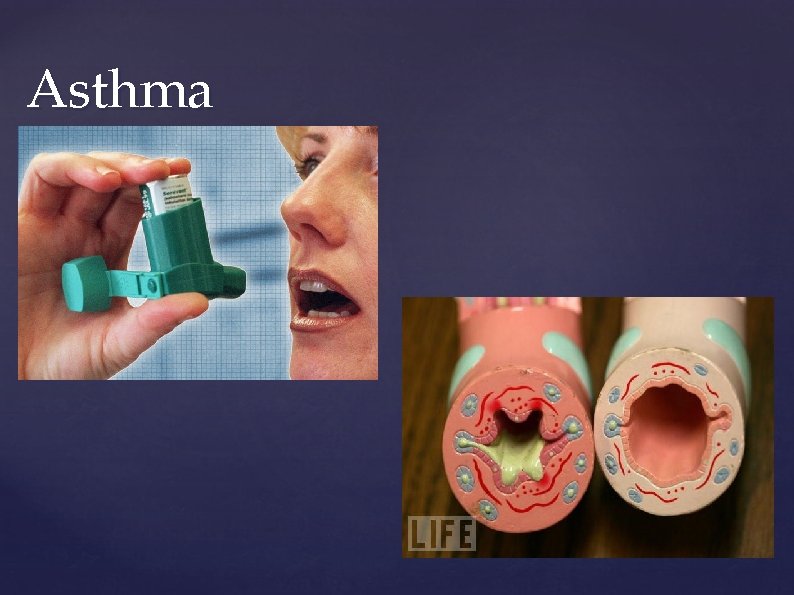
Asthma
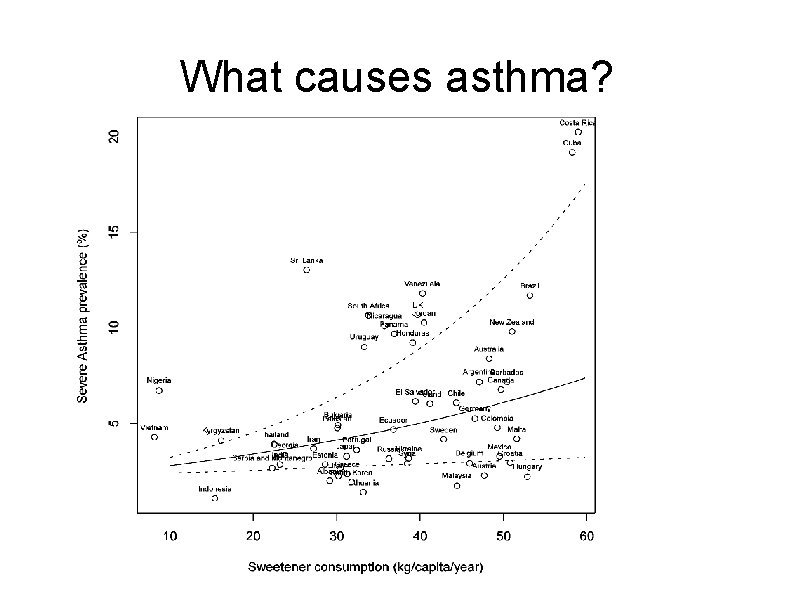
What causes asthma?
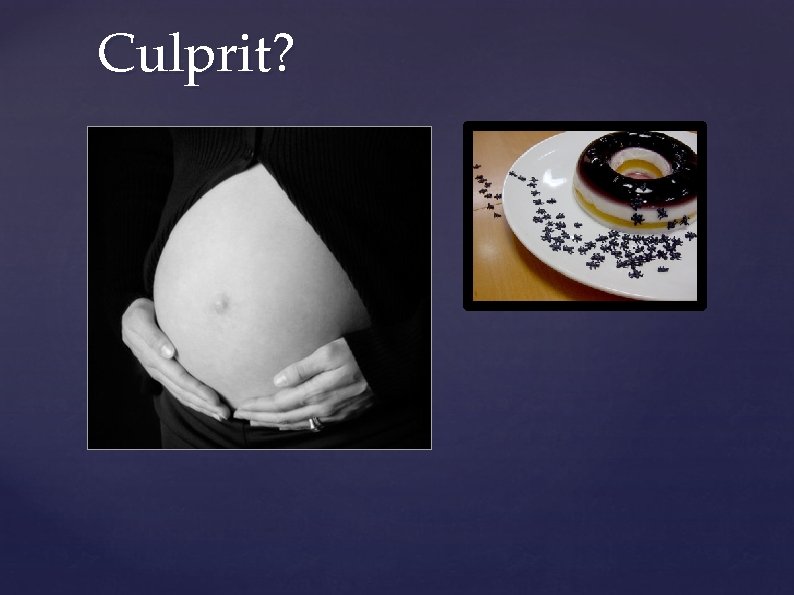
Culprit?
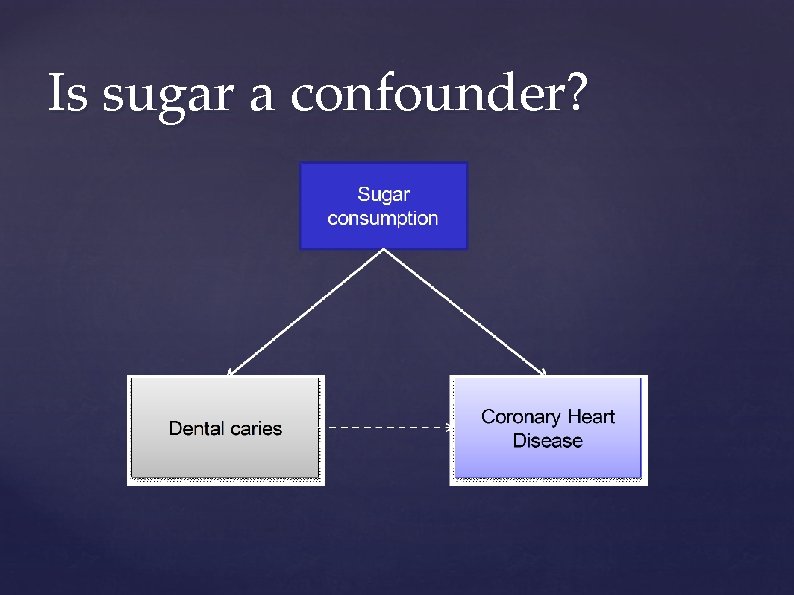
Is sugar a confounder?
What epidemiology isn't Statistics Health promotion Easy, requires effort Static, rather constantly evolving
Why study epidemiology? Skills are transferable to any subject Mercury on cognitive development? How smoking cessation drugs work? Who gets CVD? Why cyclists crash? Effect of alcohol on injury? Smoking policy in prisons? Who gets gout and diabetes? Find out what is working and what is not Stop wasting money, do no harm
What we will cover? Practical aspects of analytical epidemiology Understand different study designs Analysis of data using statistical software (R commander). Health and social progress
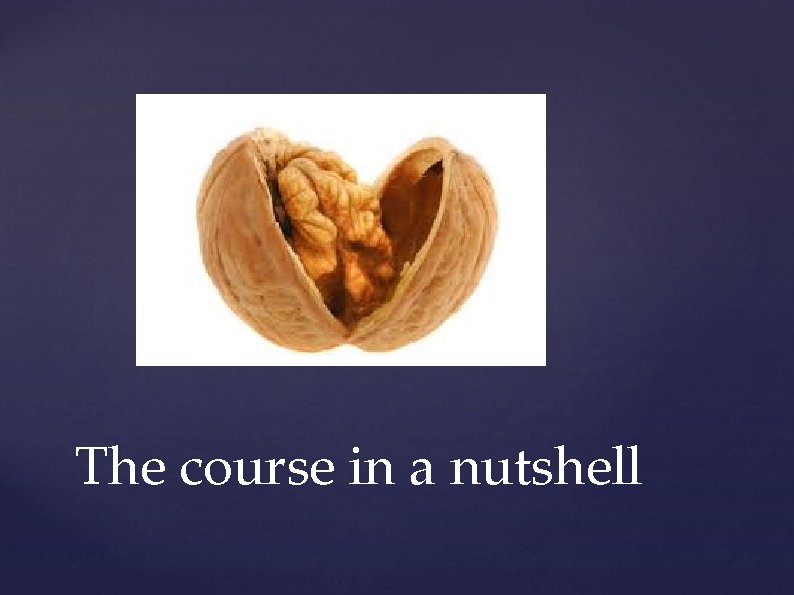
The course in a nutshell
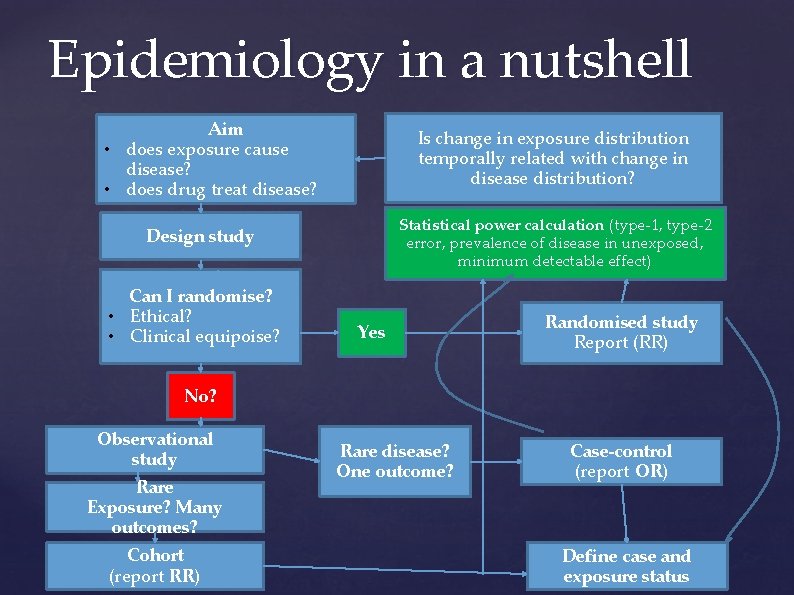
Epidemiology in a nutshell Aim • does exposure cause disease? • does drug treat disease? Is change in exposure distribution temporally related with change in disease distribution? Statistical power calculation (type-1, type-2 error, prevalence of disease in unexposed, minimum detectable effect) Design study Can I randomise? • Ethical? • Clinical equipoise? Yes Randomised study Report (RR) No? Observational study Rare Exposure? Many outcomes? Cohort (report RR) Rare disease? One outcome? Case-control (report OR) Define case and exposure status
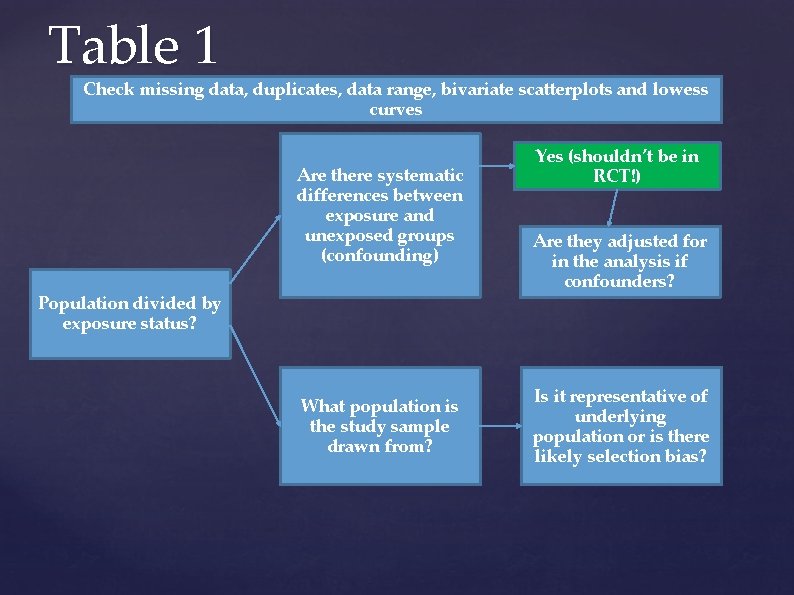
Table 1 Check missing data, duplicates, data range, bivariate scatterplots and lowess curves Are there systematic differences between exposure and unexposed groups (confounding) Population divided by exposure status? What population is the study sample drawn from? Yes (shouldn’t be in RCT!) Are they adjusted for in the analysis if confounders? Is it representative of underlying population or is there likely selection bias?
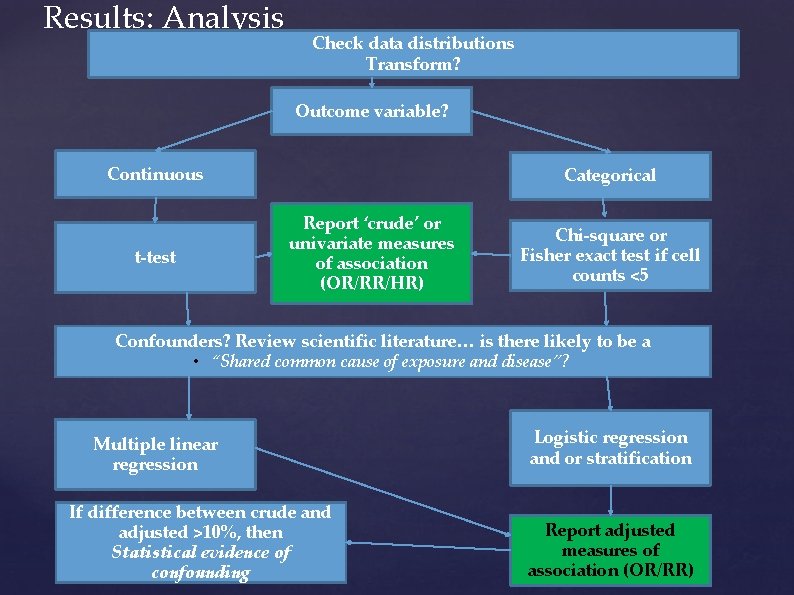
Results: Analysis Check data distributions Transform? Outcome variable? Continuous t-test Categorical Report ‘crude’ or univariate measures of association (OR/RR/HR) Chi-square or Fisher exact test if cell counts <5 Confounders? Review scientific literature… is there likely to be a • “Shared common cause of exposure and disease”? Multiple linear regression If difference between crude and adjusted >10%, then Statistical evidence of confounding Logistic regression and or stratification Report adjusted measures of association (OR/RR)
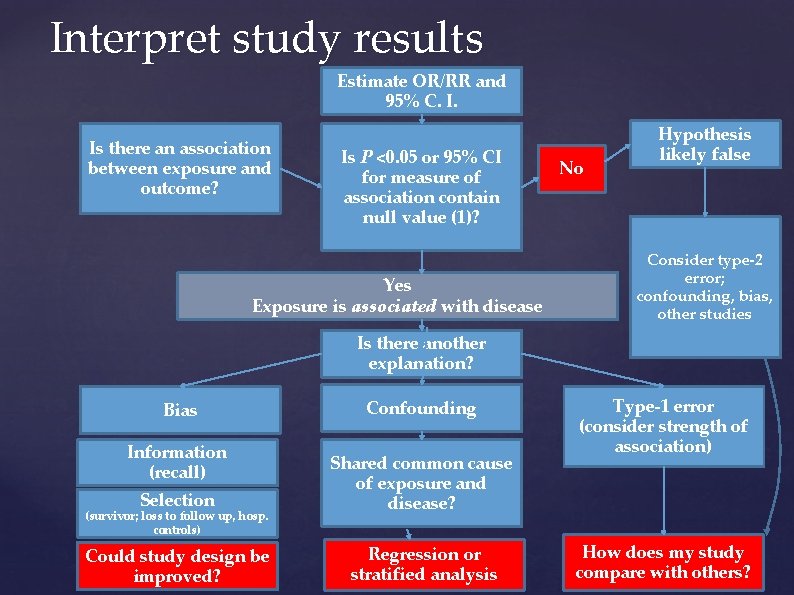
Interpret study results Estimate OR/RR and 95% C. I. Is there an association between exposure and outcome? Is P <0. 05 or 95% CI for measure of association contain null value (1)? Yes Exposure is associated with disease No Hypothesis likely false Consider type-2 error; confounding, bias, other studies Is there another explanation? Bias Information (recall) Confounding Selection Shared common cause of exposure and disease? Could study design be improved? Regression or stratified analysis (survivor; loss to follow up, hosp. controls) Type-1 error (consider strength of association) How does my study compare with others?
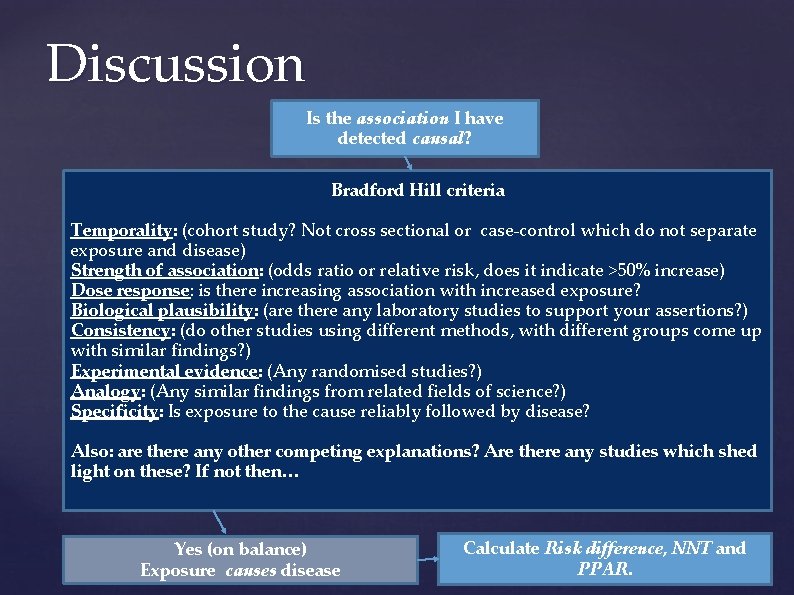
Discussion Is the association I have detected causal? Bradford Hill criteria Temporality: (cohort study? Not cross sectional or case-control which do not separate exposure and disease) Strength of association: (odds ratio or relative risk, does it indicate >50% increase) Dose response: is there increasing association with increased exposure? Biological plausibility: (are there any laboratory studies to support your assertions? ) Consistency: (do other studies using different methods, with different groups come up with similar findings? ) Experimental evidence: (Any randomised studies? ) Analogy: (Any similar findings from related fields of science? ) Specificity: Is exposure to the cause reliably followed by disease? Also: are there any other competing explanations? Are there any studies which shed light on these? If not then… Yes (on balance) Exposure causes disease Calculate Risk difference, NNT and PPAR.
Textbook Designing Clinical Research. Hulley, SB. Lippincott, 3 rd edition. Alternatives available (from library) Many free e-books available. A Pocket Guide to Epidemiology. David G. Kleinbaum, Kevin M. Sullivan, Nancy D. Barker. 2007, Springer.
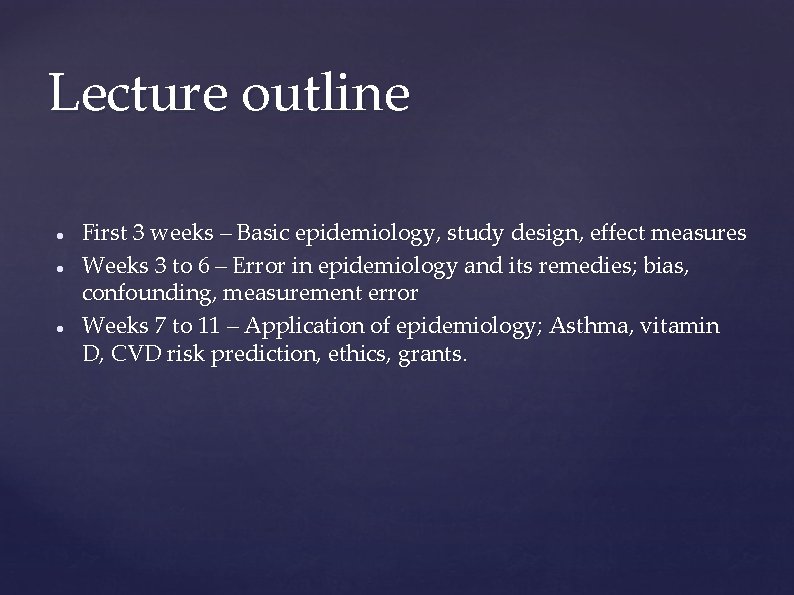
Lecture outline First 3 weeks – Basic epidemiology, study design, effect measures Weeks 3 to 6 – Error in epidemiology and its remedies; bias, confounding, measurement error Weeks 7 to 11 – Application of epidemiology; Asthma, vitamin D, CVD risk prediction, ethics, grants.
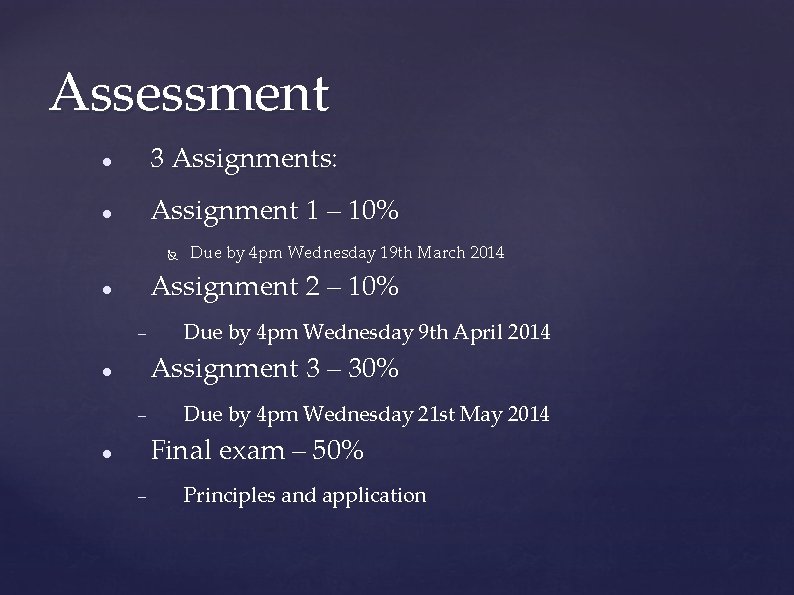
Assessment 3 Assignments: Assignment 1 – 10% Due by 4 pm Wednesday 19 th March 2014 Assignment 2 – 10% Due by 4 pm Wednesday 9 th April 2014 Assignment 3 – 30% Due by 4 pm Wednesday 21 st May 2014 Final exam – 50% Principles and application
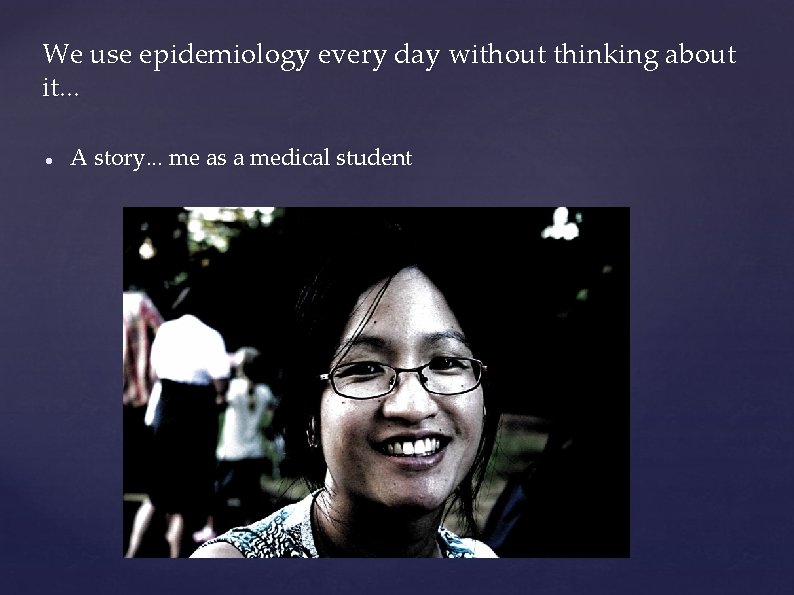
We use epidemiology every day without thinking about it. . . A story. . . me as a medical student
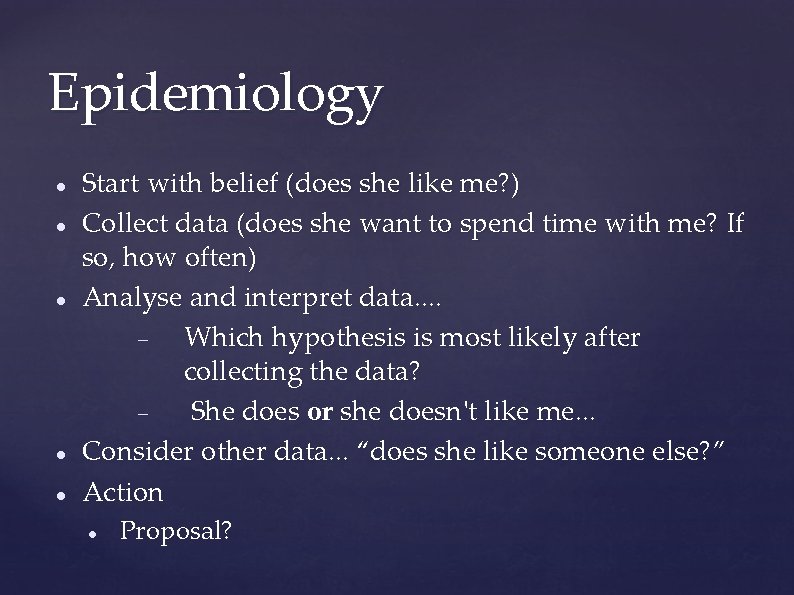
Epidemiology Start with belief (does she like me? ) Collect data (does she want to spend time with me? If so, how often) Analyse and interpret data. . Which hypothesis is most likely after collecting the data? She does or she doesn't like me. . . Consider other data. . . “does she like someone else? ” Action Proposal?
Happy ending. . .
Questions? ?