
Applications of Gradient The Directional Derivative Suppose we
- Slides: 38
Applications of Gradient
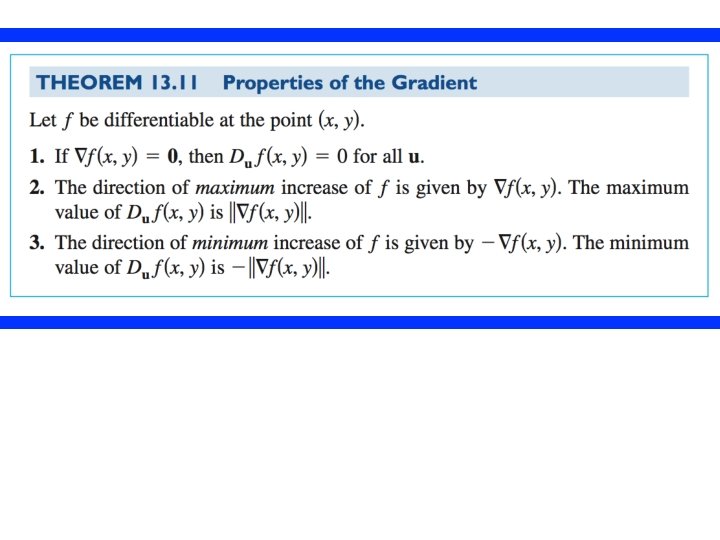
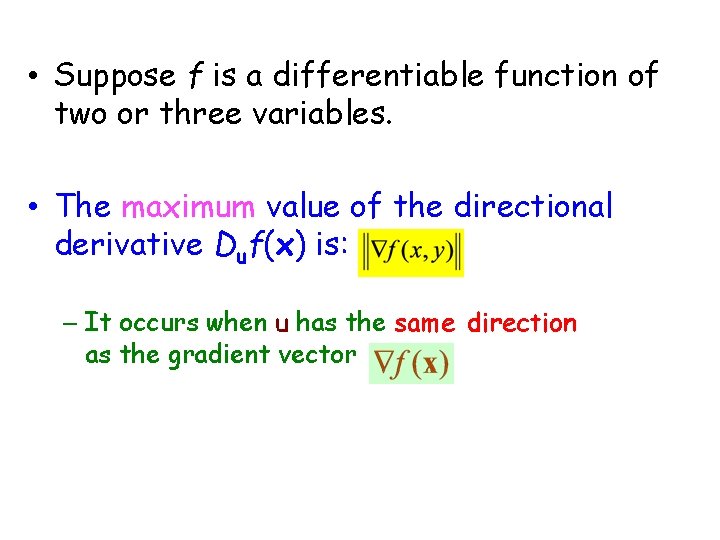
The Directional Derivative Suppose we have a function f of two or three variables and we consider all possible directional derivatives of f at a given point. – These give the rates of change of f in all possible directions.
We can then ask the questions: – In which of these directions does f change fastest? – What is the maximum rate of change?
The answers are provided by the following theorem.
• Suppose f is a differentiable function of two or three variables. • The maximum value of the directional derivative Duf(x) is: – It occurs when u has the same direction as the gradient vector
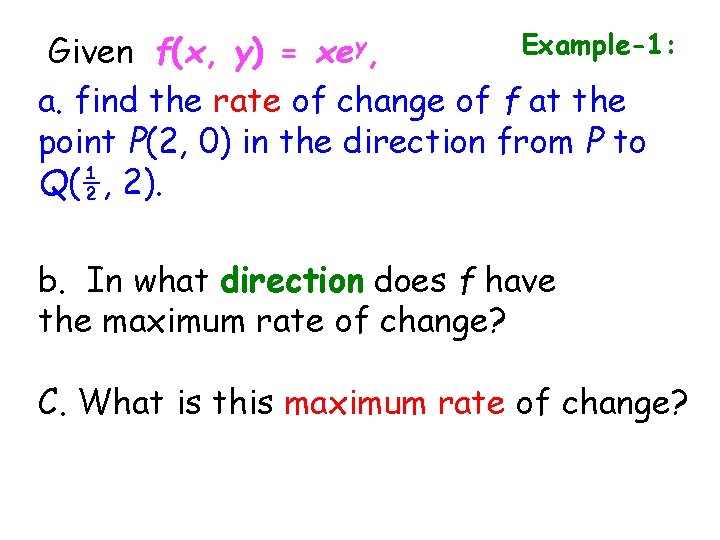
Example-1: Given f(x, y) = xey, a. find the rate of change of f at the point P(2, 0) in the direction from P to Q(½, 2). b. In what direction does f have the maximum rate of change? C. What is this maximum rate of change?
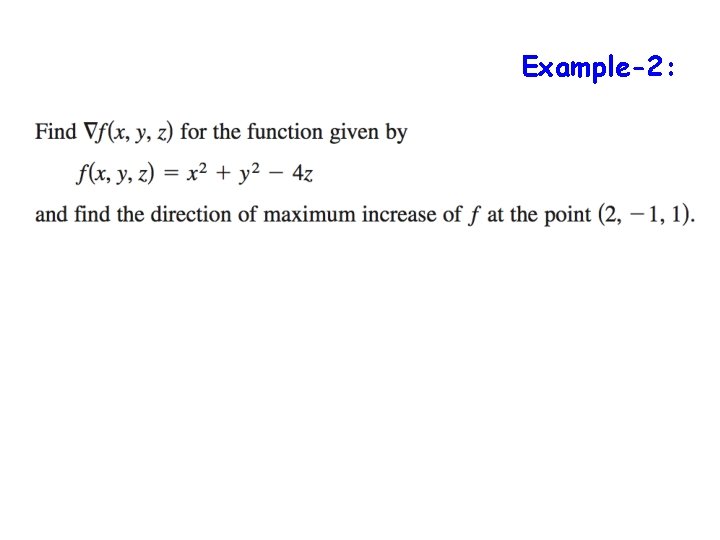
Example-2:
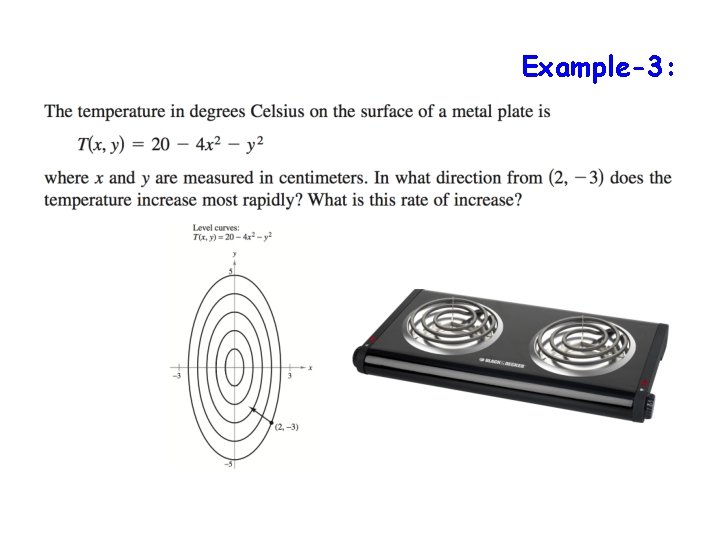
Example-3:
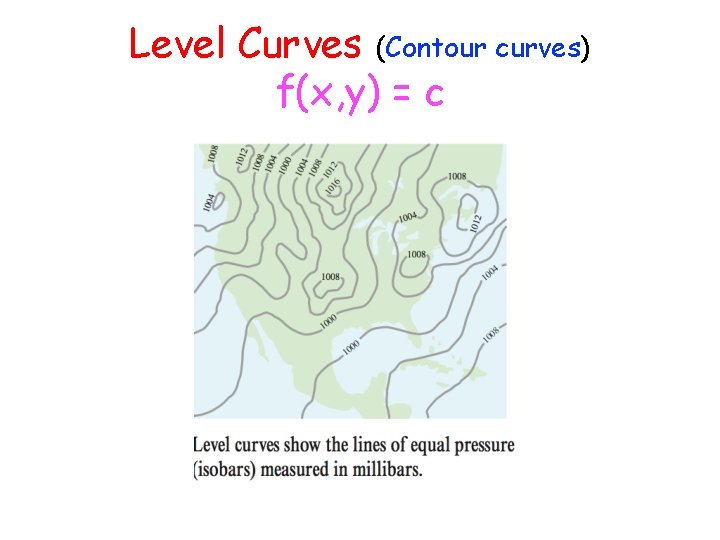
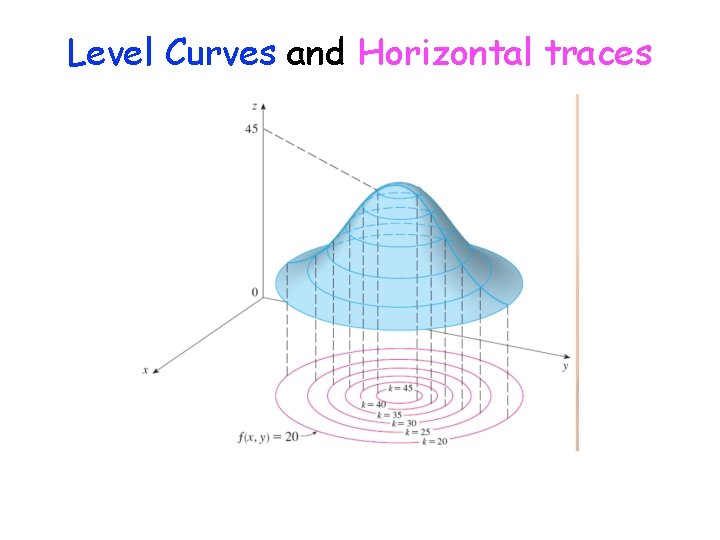
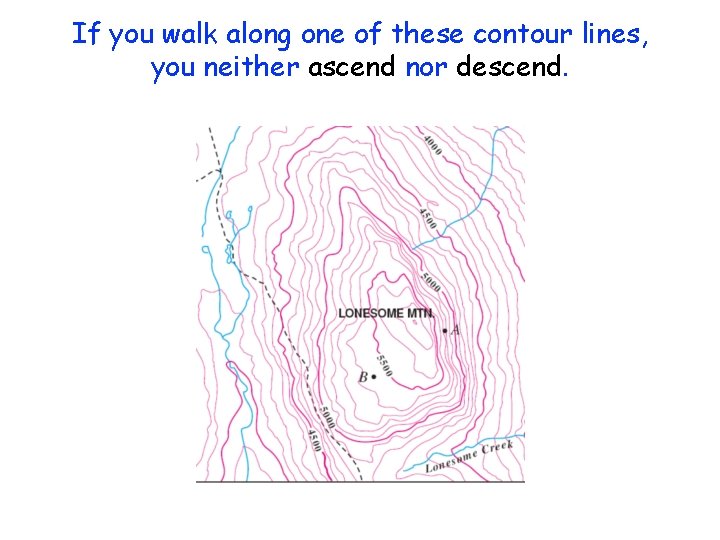
Level Curves (Contour curves) f(x, y) = c
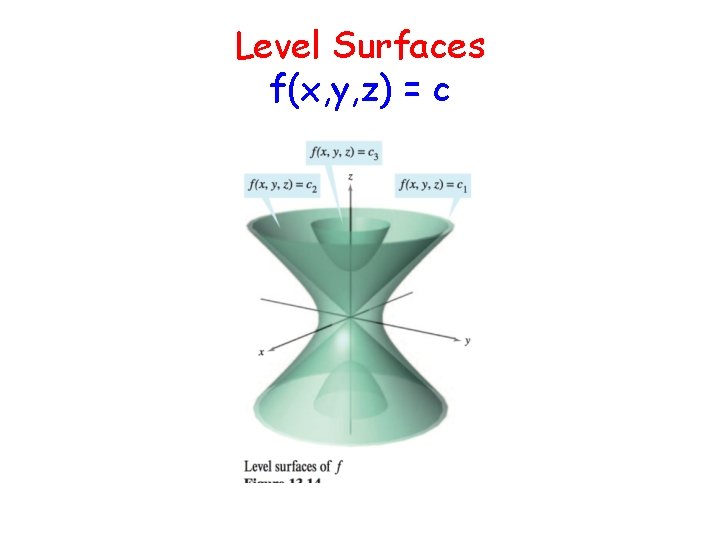
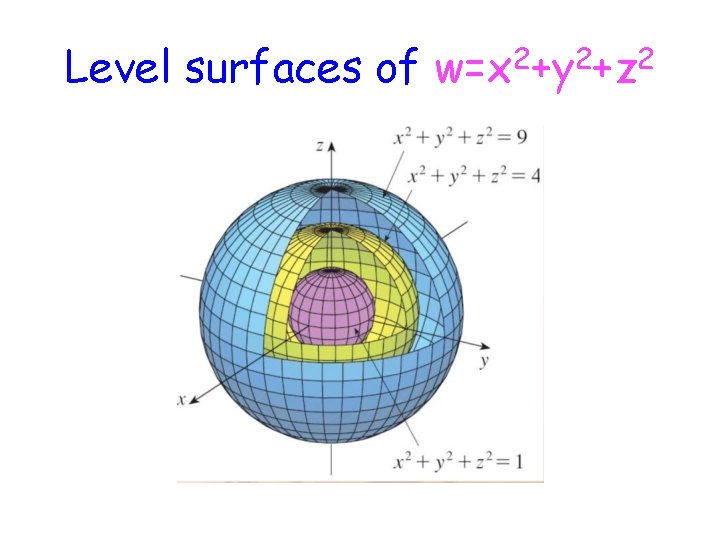
Level Surfaces f(x, y, z) = c
• http: //math. etsu. edu/multicalc/prealpha/Cha p 2/Chap 2 -7/10 -9 -3. gif
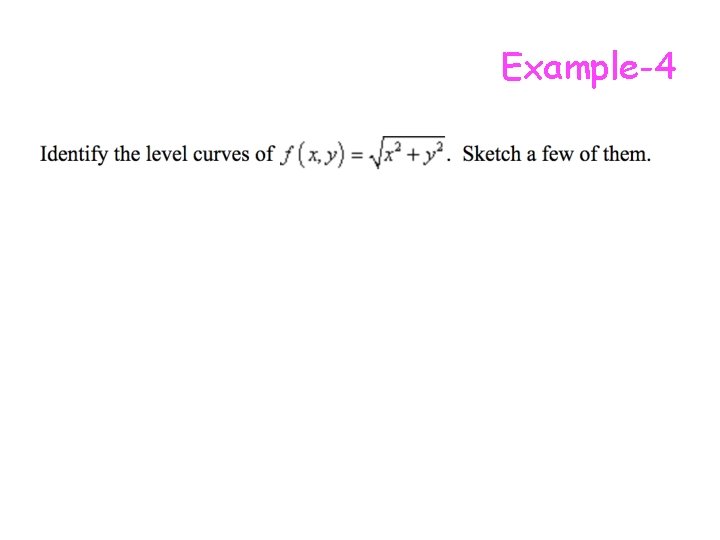
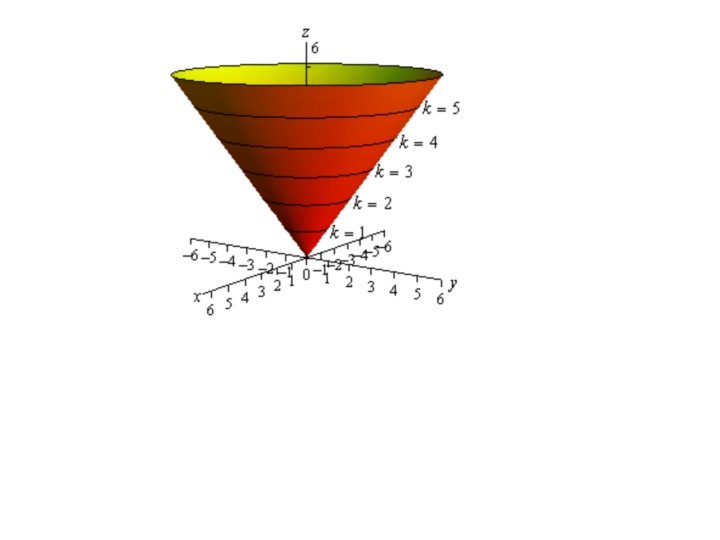
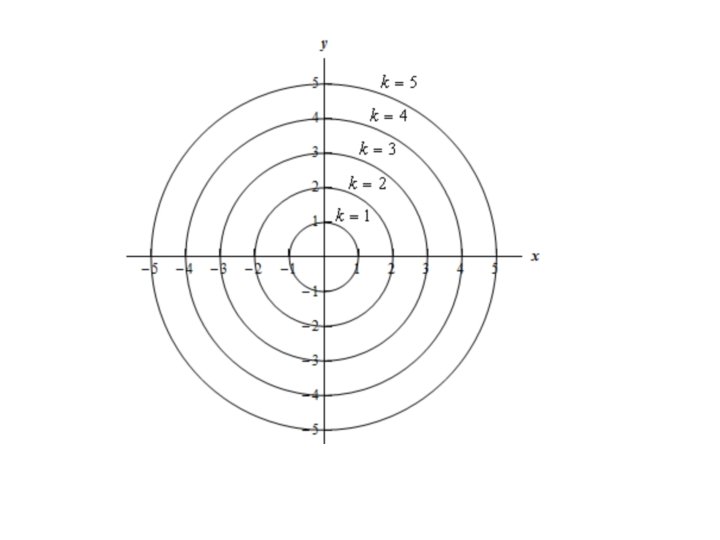
Example-4
Level Curves and Horizontal traces
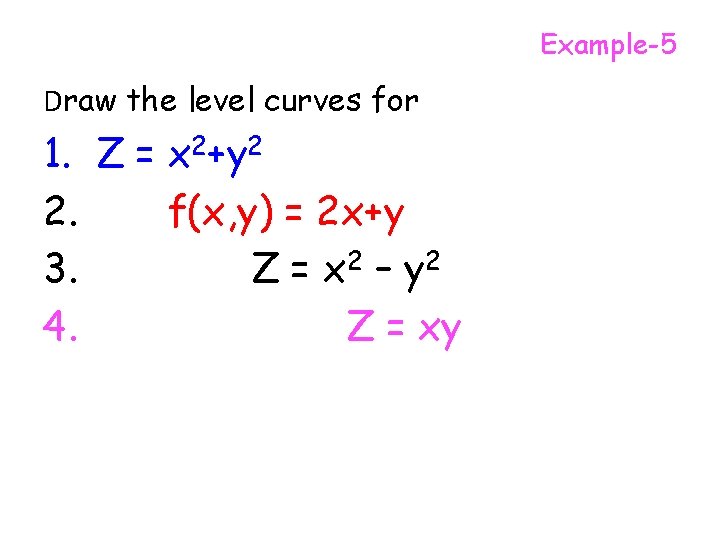
Example-5 Draw the level curves for 1. Z = x 2+y 2 2. f(x, y) = 2 x+y 3. Z = x 2 – y 2 4. Z = xy
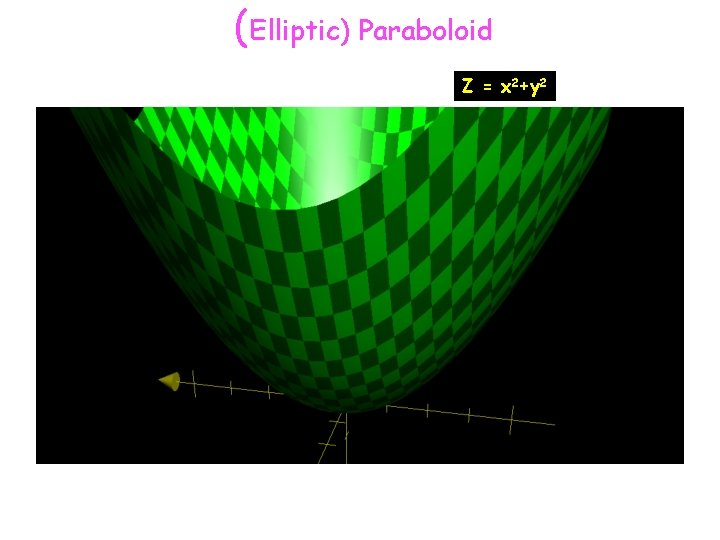
(Elliptic) Paraboloid Z = x 2+y 2
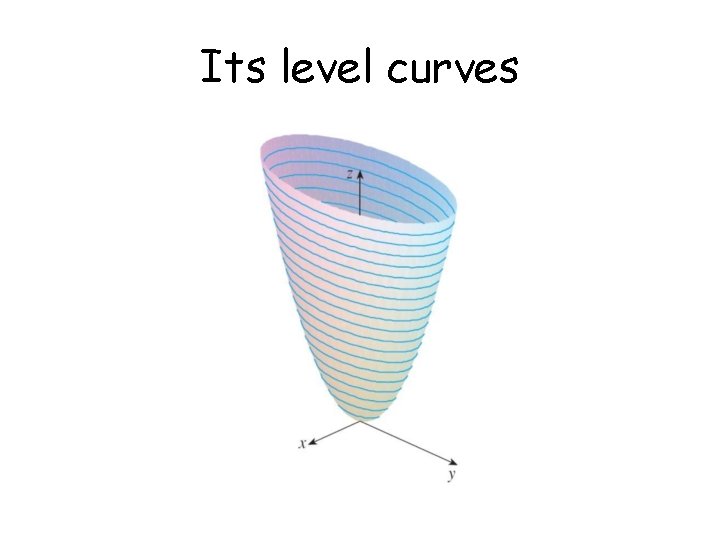
Its level curves
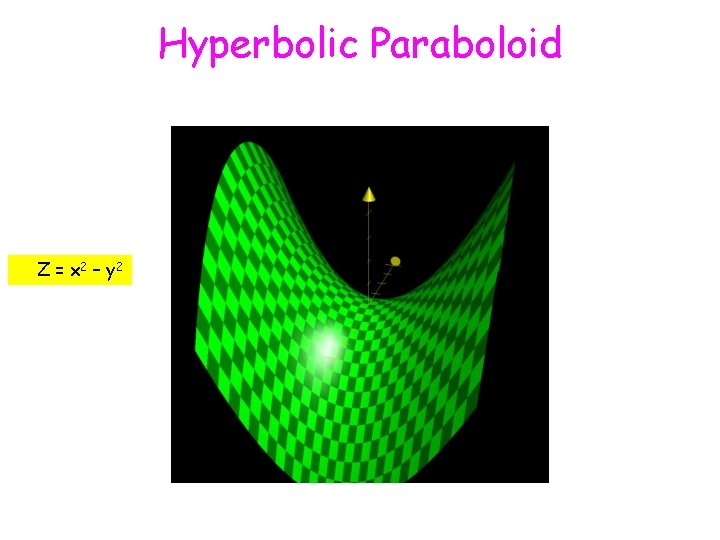
Hyperbolic Paraboloid Z = x 2 – y 2
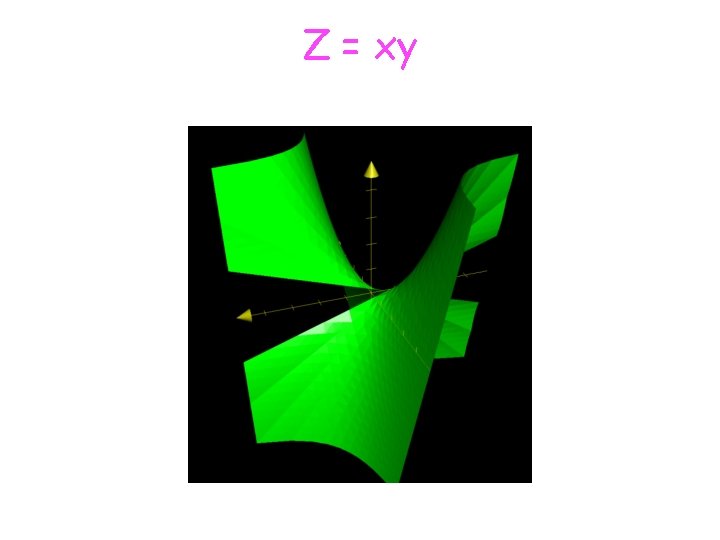
Z = xy
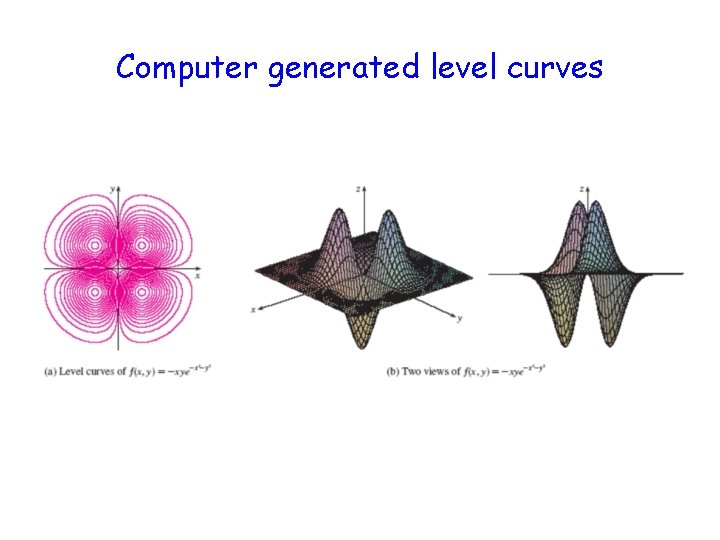
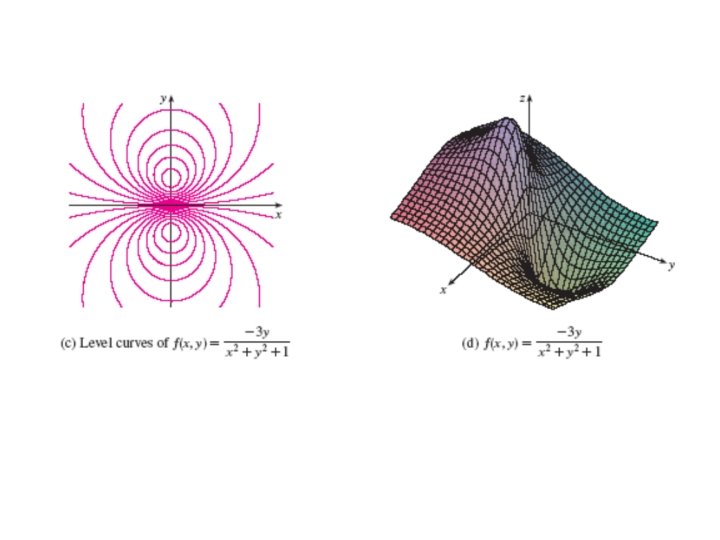
Computer generated level curves
Level surfaces of w=x 2+y 2+z 2
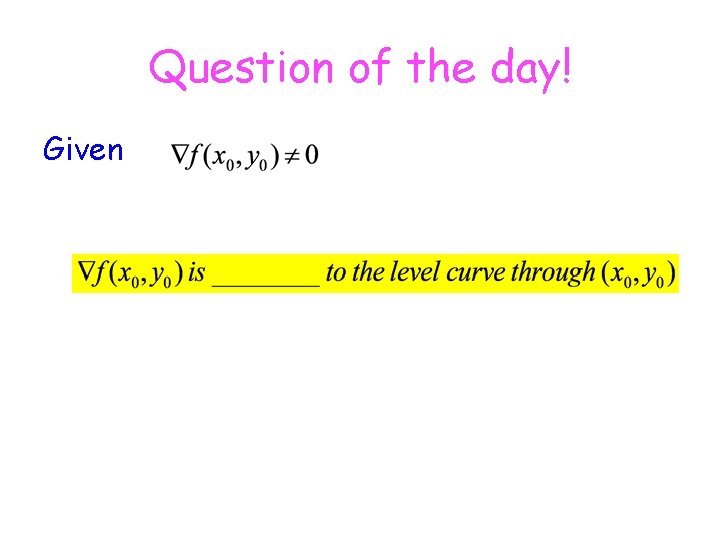
Question of the day! Given
If you walk along one of these contour lines, you neither ascend nor descend.
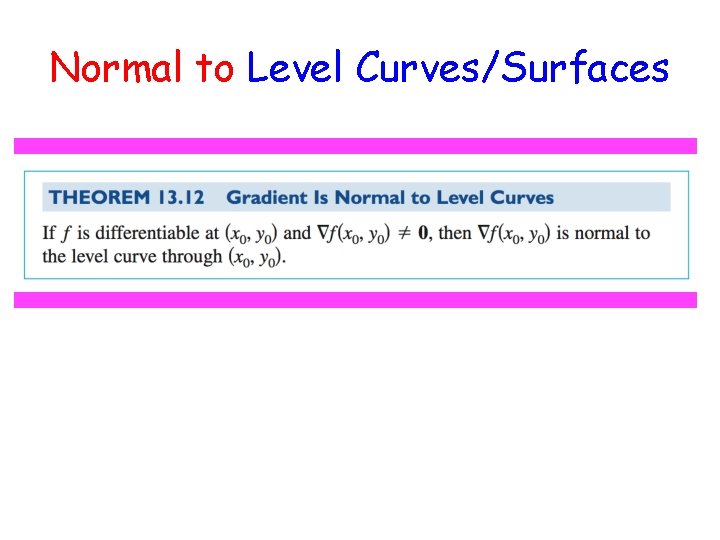
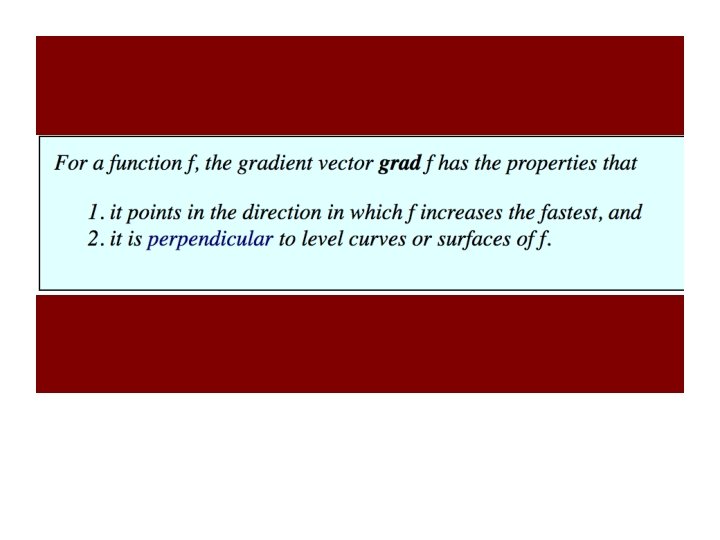
Normal to Level Curves/Surfaces
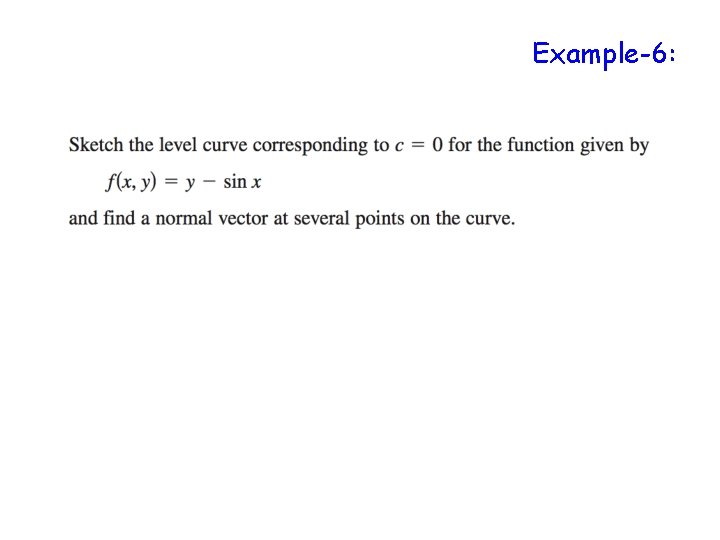
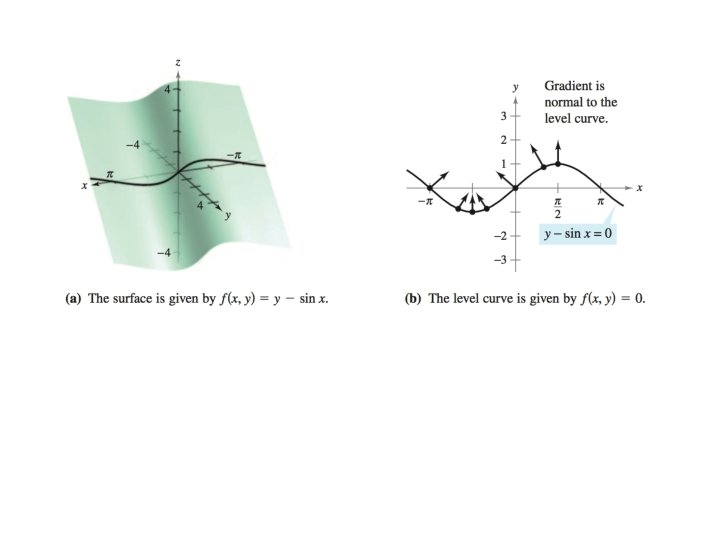
Example-6:
W o r d k e � m p � E x a ! l e s
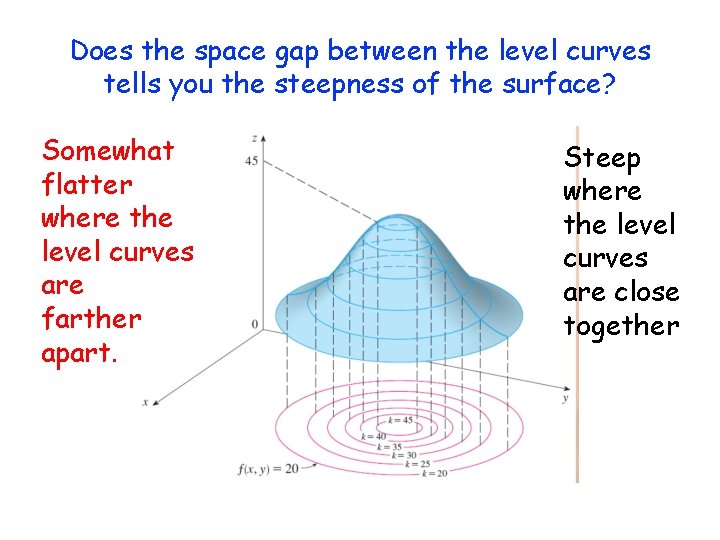
Does the space gap between the level curves tells you the steepness of the surface? Somewhat flatter where the level curves are farther apart. Steep where the level curves are close together
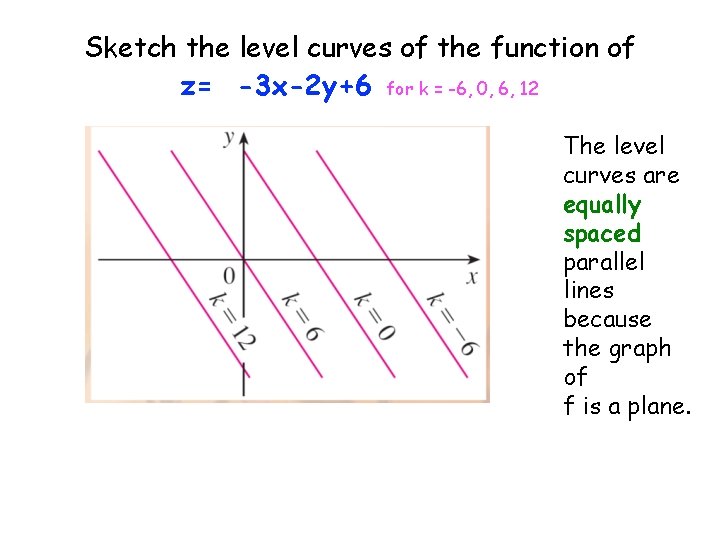
Sketch the level curves of the function of z= -3 x-2 y+6 for k = -6, 0, 6, 12 The level curves are equally spaced parallel lines because the graph of f is a plane.
Class work Worksheet