
Applications for Intravascular Ultrasound in Chronic Total Occlusions
- Slides: 23
Applications for Intravascular Ultrasound in Chronic Total Occlusions Barry D. Rutherford, MD Saint Luke’s Mid America Heart Institute Kansas City, Missouri, USA CRT 2012
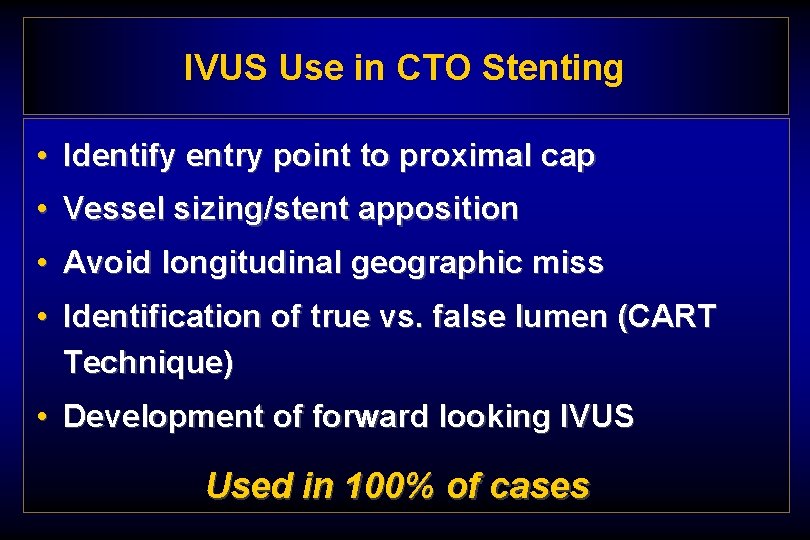
IVUS Use in CTO Stenting • Identify entry point to proximal cap • Vessel sizing/stent apposition • Avoid longitudinal geographic miss • Identification of true vs. false lumen (CART Technique) • Development of forward looking IVUS Used in 100% of cases
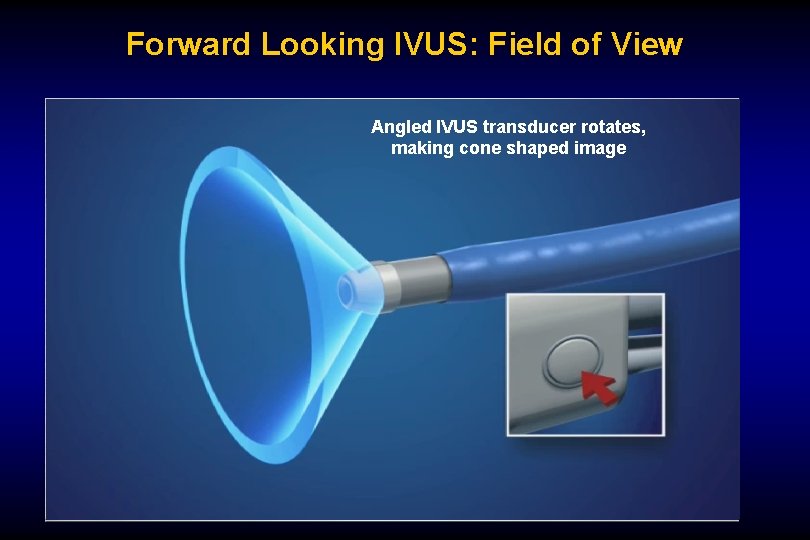
Forward Looking IVUS: Field of View Angled IVUS transducer rotates, making cone shaped image
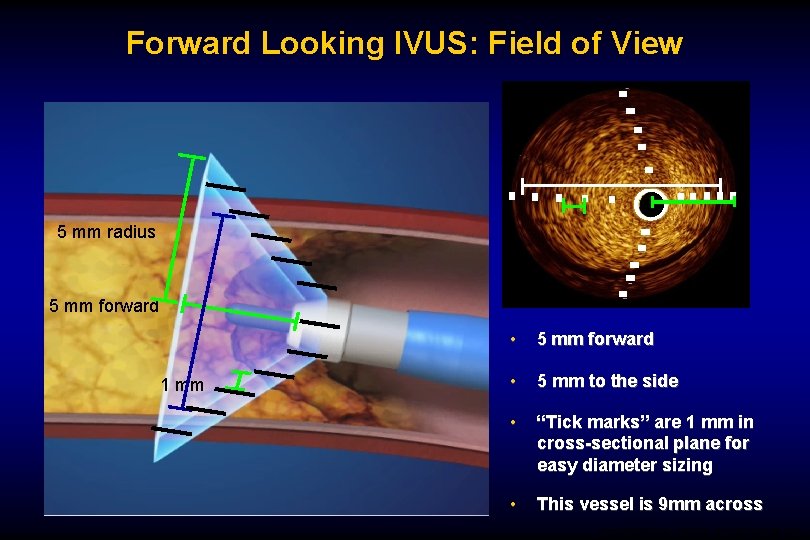
Forward Looking IVUS: Field of View 5 mm radius 5 mm forward 1 mm • 5 mm forward • 5 mm to the side • “Tick marks” are 1 mm in cross-sectional plane for easy diameter sizing • This vessel is 9 mm across Investigational Device, not for human use
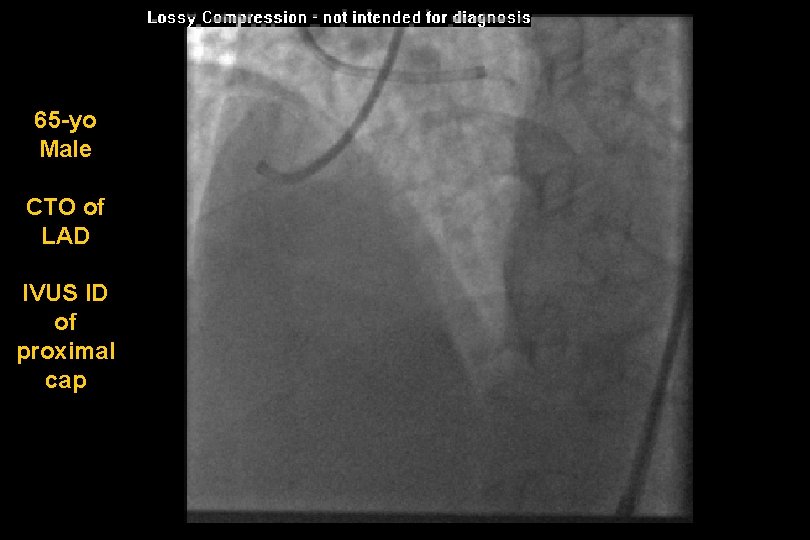
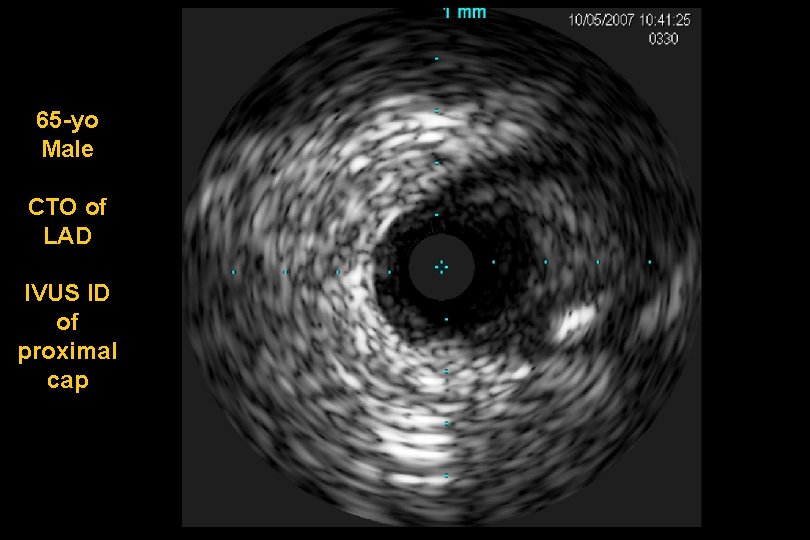
65 -yo Male CTO of LAD IVUS ID of proximal cap
65 -yo Male CTO of LAD IVUS ID of proximal cap
65 -Year. Old Male CTO of RCA Failed Previous Antegrade Attempt
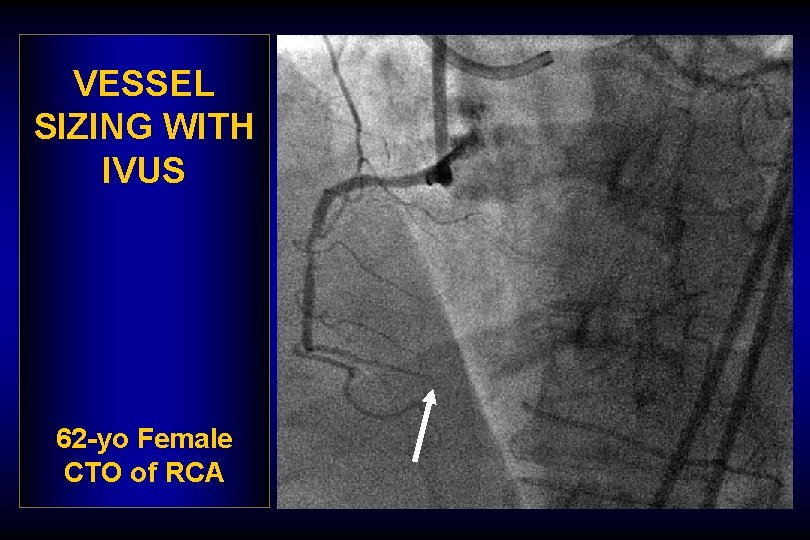
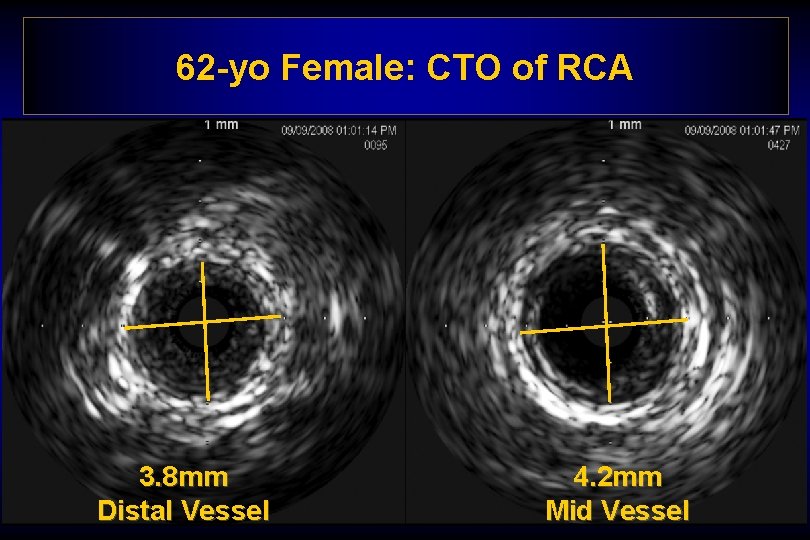
VESSEL SIZING WITH IVUS 62 -yo Female CTO of RCA
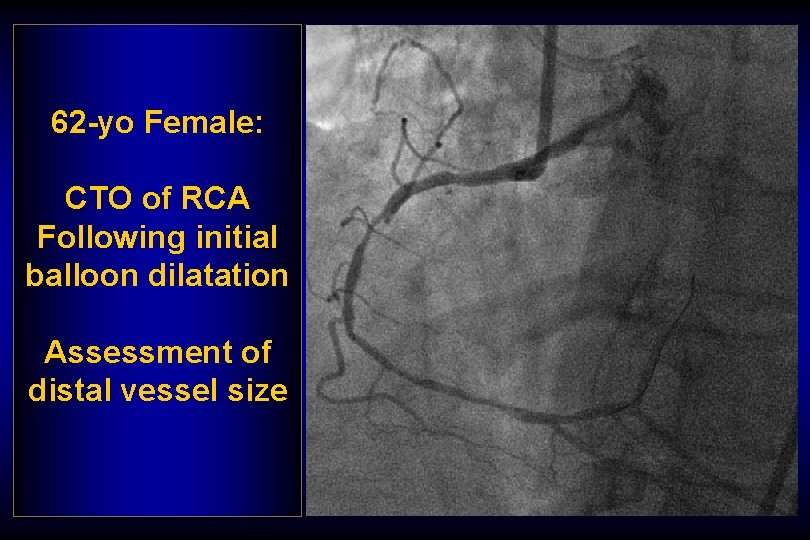
62 -yo Female: CTO of RCA Following initial balloon dilatation Assessment of distal vessel size
62 -yo Female: CTO of RCA 3. 8 mm Distal Vessel 4. 2 mm Mid Vessel
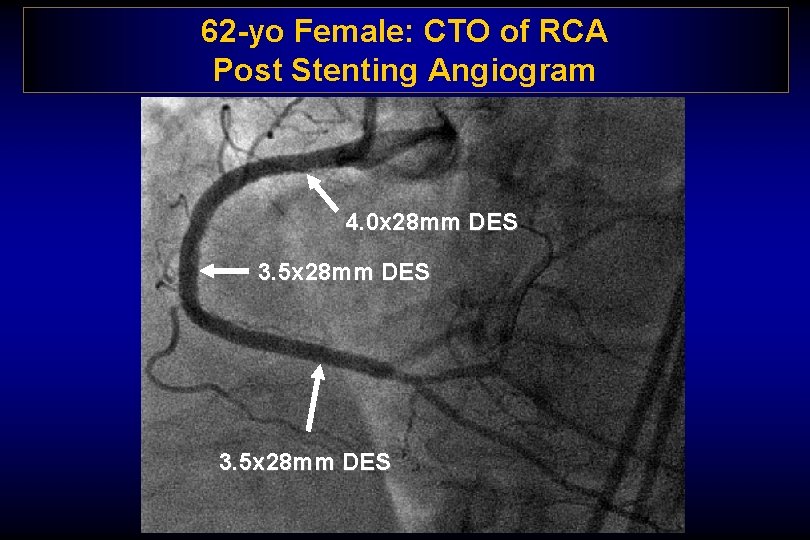
62 -yo Female: CTO of RCA Post Stenting Angiogram 4. 0 x 28 mm DES 3. 5 x 28 mm DES
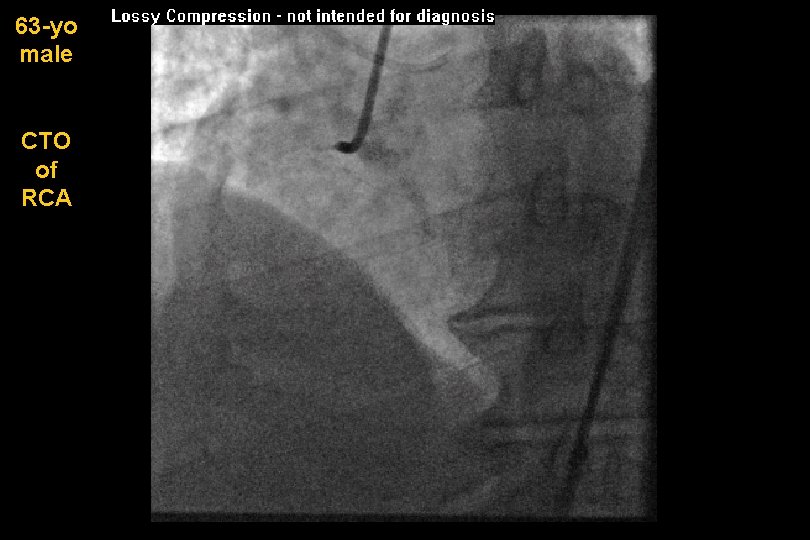
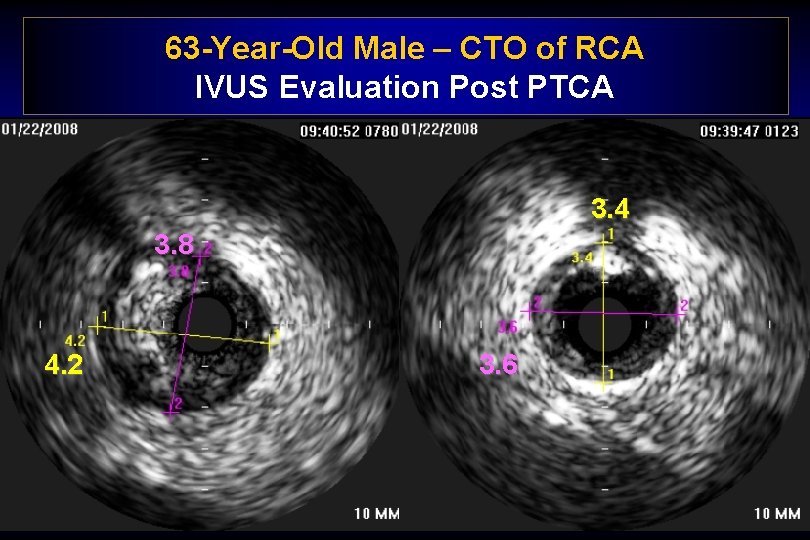
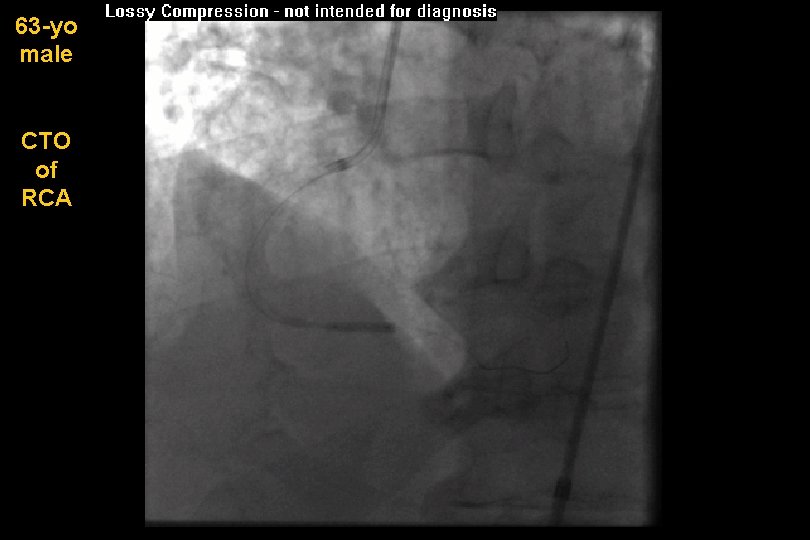
63 -yo male CTO of RCA
63 -Year-Old Male – CTO of RCA IVUS Evaluation Post PTCA 3. 4 3. 8 4. 2 3. 6
63 -yo male CTO of RCA
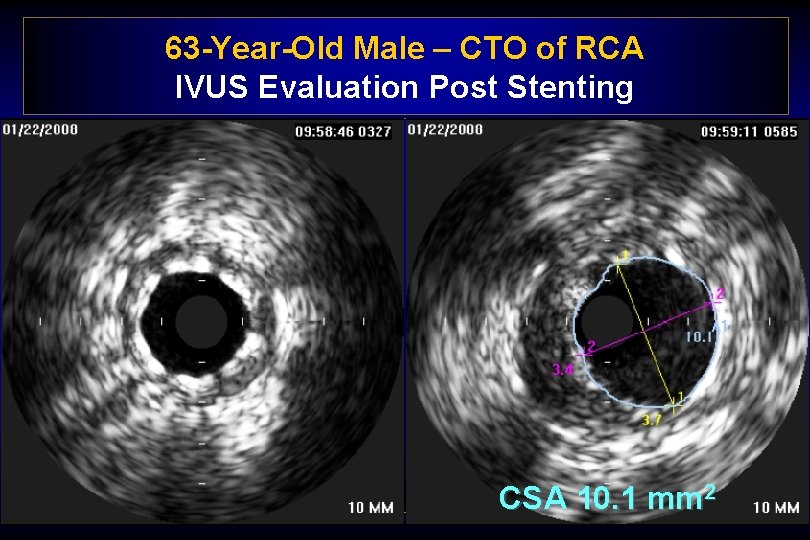
63 -Year-Old Male – CTO of RCA IVUS Evaluation Post Stenting CSA 10. 1 mm 2
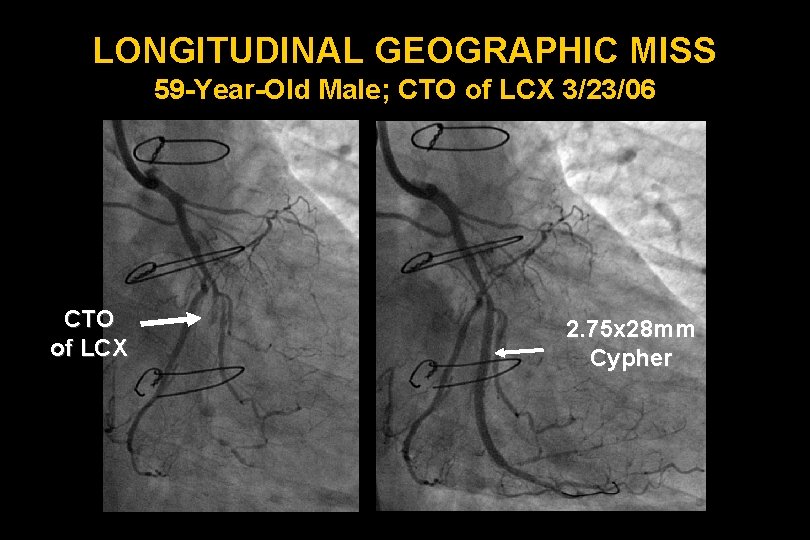
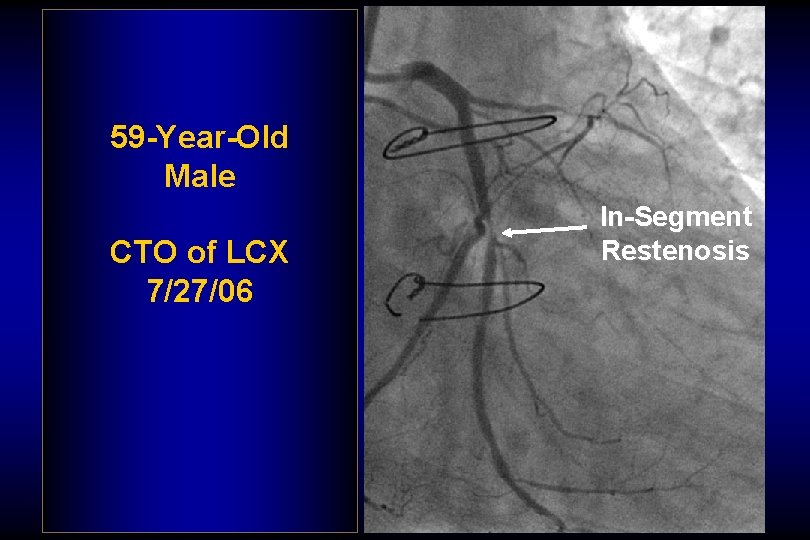
LONGITUDINAL GEOGRAPHIC MISS 59 -Year-Old Male; CTO of LCX 3/23/06 CTO of LCX 2. 75 x 28 mm Cypher
59 -Year-Old Male CTO of LCX 7/27/06 In-Segment Restenosis
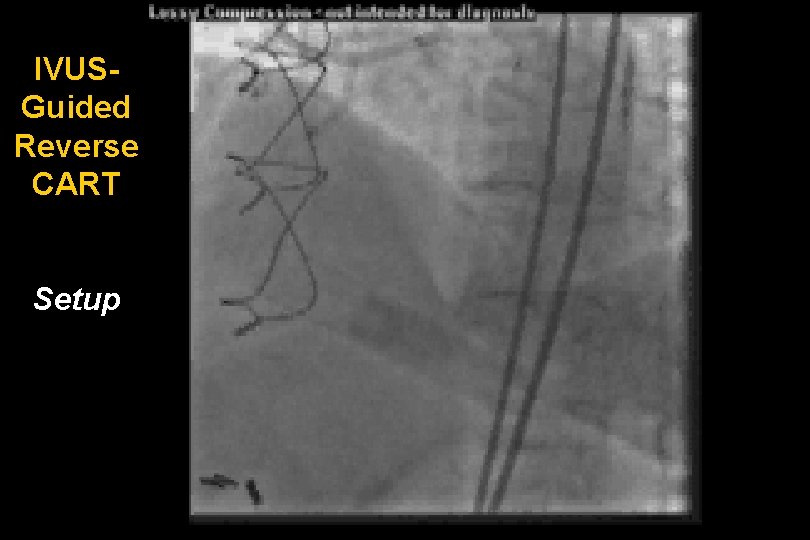
IVUSGuided Reverse CART Setup
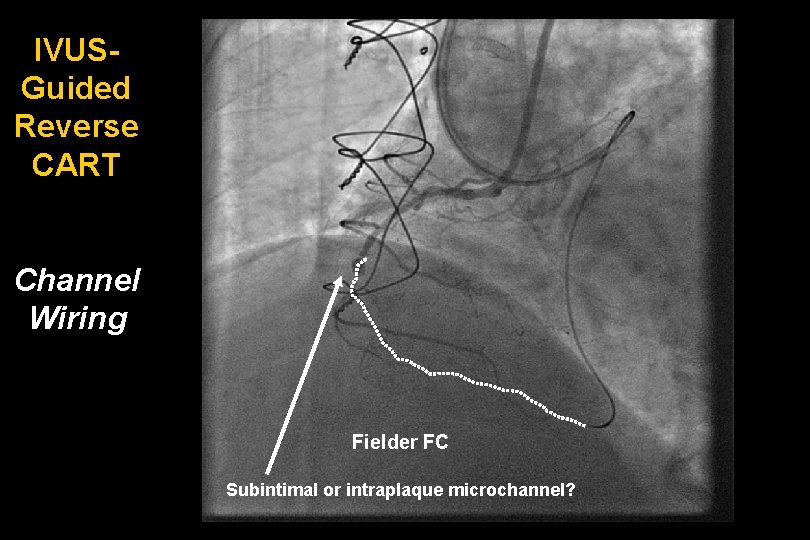
IVUSGuided Reverse CART Channel Wiring Fielder FC Subintimal or intraplaque microchannel?
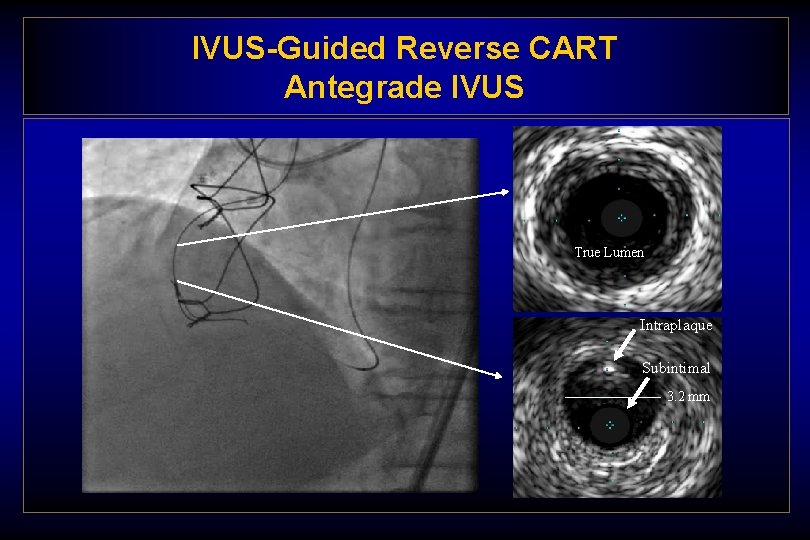
IVUS-Guided Reverse CART Antegrade IVUS True Lumen Intraplaque Subintimal 3. 2 mm
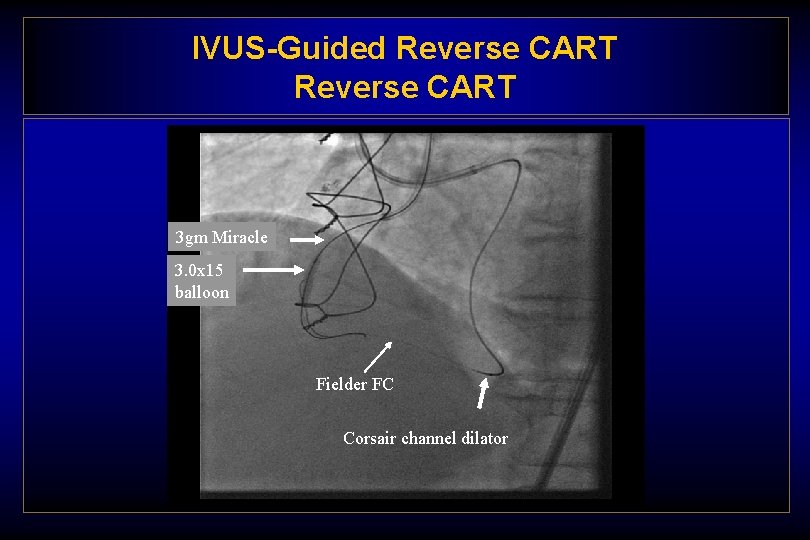
IVUS-Guided Reverse CART 3 gm Miracle 3. 0 x 15 balloon Fielder FC Corsair channel dilator
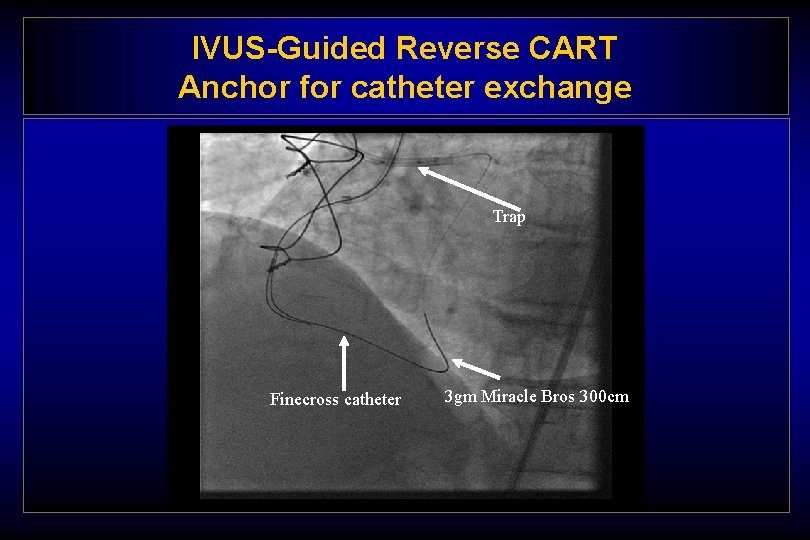
IVUS-Guided Reverse CART Anchor for catheter exchange Trap Finecross catheter 3 gm Miracle Bros 300 cm
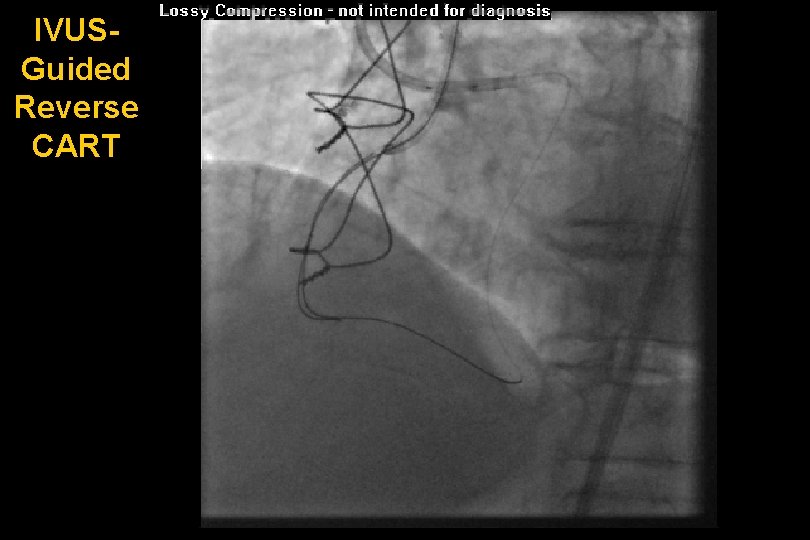
IVUSGuided Reverse CART