
Application of vacuumassisted highpressure RTMprocess for the series


- Slides: 37
Application of vacuum-assisted highpressure RTM-process for the series production of CFRP components for car bodies
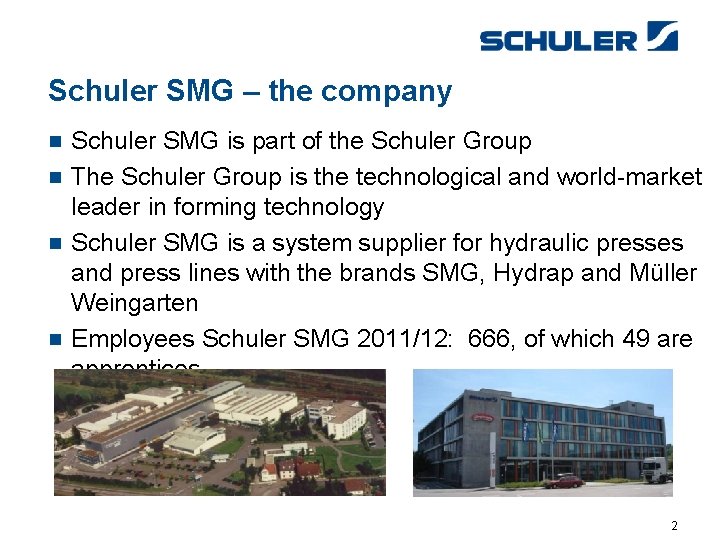
Schuler SMG – the company Schuler SMG is part of the Schuler Group g The Schuler Group is the technological and world-market leader in forming technology g Schuler SMG is a system supplier for hydraulic presses and press lines with the brands SMG, Hydrap and Müller Weingarten g Employees Schuler SMG 2011/12: 666, of which 49 are apprentices g 2
Overview of presentation Motivation for the use of CFRP parts in the automotive industry g The vacuum-assisted high pressure RTM press process g Press technology for the high pressure RTM process with example of supplied presses 36, 000 k. N – 3. 6 x 2. 4 m g System overview of complete RTM process g New development of press technology g 3
Light weight design in the automotive industry Motivation Future of mobility g Energy costs will rise g Fuel consumption and emmissions will be increasingly financially punished. g Laws concerning emissions influence mobility (E- mobility, etc. ) of new For development g Efficiency (environment ) vehicles there is a challenge of balancing safety, efficiency (environment) and joy of driving Joy of driving Vehicle concept car Safety Component function Choice of material 4
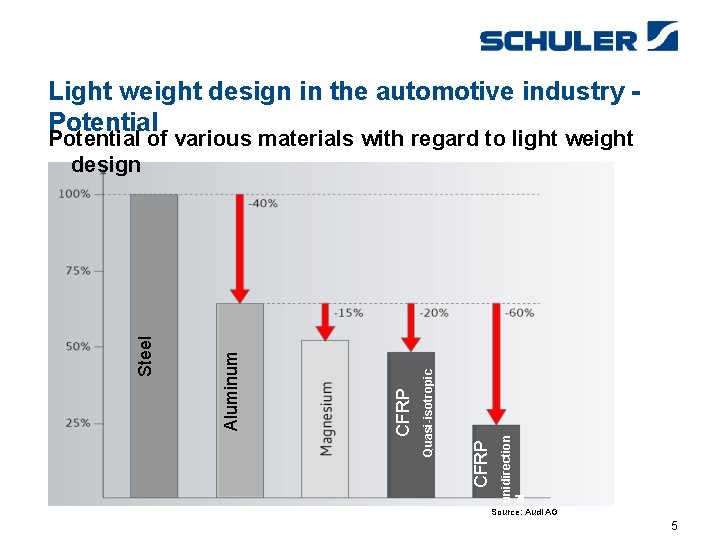
Light weight design in the automotive industry Potential unidirection al CFRP Quasi-isotropic CFRP Aluminum Steel Potential of various materials with regard to light weight design Source: Audi AG 5
Overview of presentation Motivation for the use of CFRP parts in automotive industry g The vacuum-assisted high pressure RTM press process g Press technology for the high pressure RTM process with example of supplied presses 36, 000 k. N – 3. 6 x 2. 4 m g System overview of complete RTM process g New development of press technology g 6
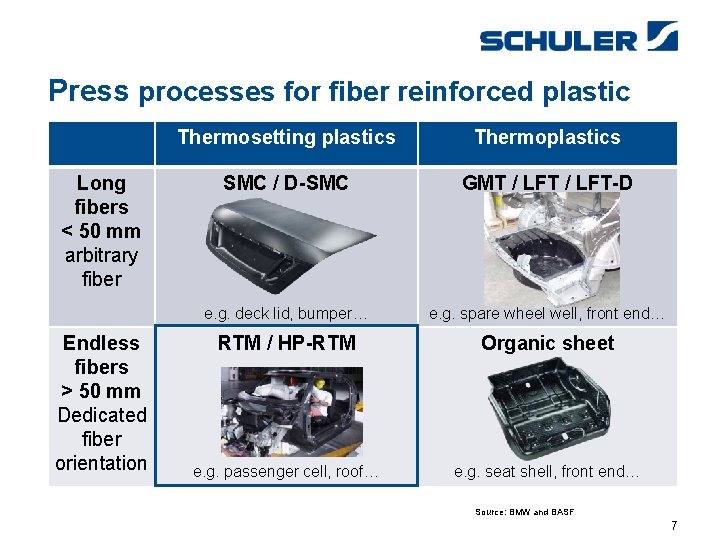
Press processes for fiber reinforced plastic Long fibers < 50 mm arbitrary fiber Endless fibers > 50 mm Dedicated fiber orientation Thermosetting plastics Thermoplastics SMC / D-SMC GMT / LFT-D e. g. deck lid, bumper… e. g. spare wheel well, front end… RTM / HP-RTM Organic sheet e. g. passenger cell, roof… e. g. seat shell, front end… Source: BMW and BASF 7
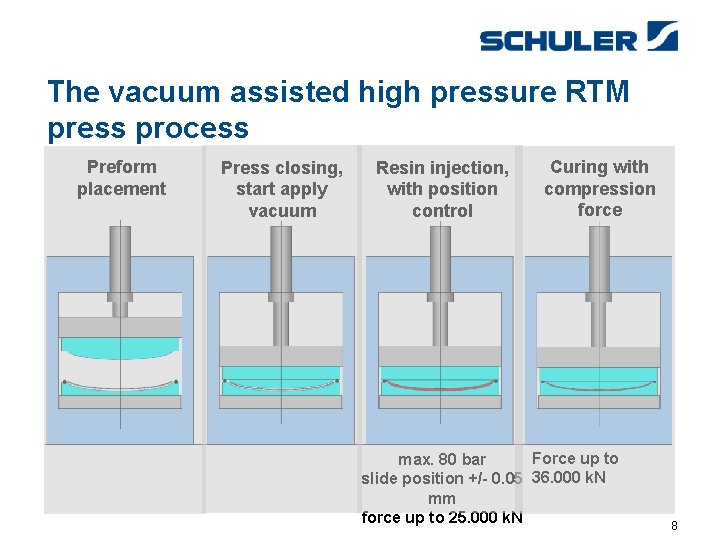
The vacuum assisted high pressure RTM press process Preform placement Press closing, start apply vacuum Resin injection, with position control Curing with compression force Force up to max. 80 bar slide position +/- 0. 05 36. 000 k. N mm force up to 25. 000 k. N 8
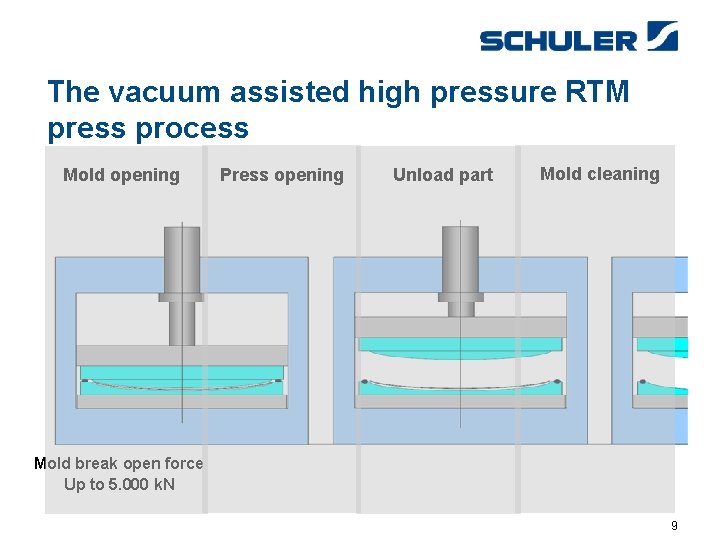
The vacuum assisted high pressure RTM press process Mold opening Press opening Unload part Mold cleaning Mold break open force Up to 5. 000 k. N 9
Overview of presentation Motivation for the use of CFRP parts in automotive industry g The vacuum-assisted high pressure RTM press process g Press technology for the high pressure RTM process with example of supplied presses 36, 000 k. N – 3. 6 x 2. 4 m g System overview of complete RTM process g New development of press technology g 10
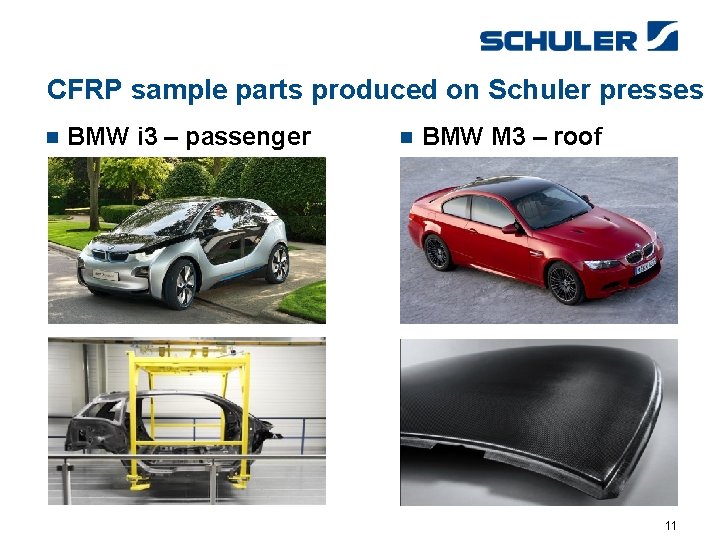
CFRP sample parts produced on Schuler presses g BMW i 3 – passenger cell g BMW M 3 – roof 11
Requirements for the RTM press Uniform wall thickness of the pressed part g Maintaining of resin injection position for gap-injection g Minimizing of non-productive time for mold cleaning / handling g Smooth mold opening g Reliable media supply to the molds g Short pressure build-up and efficient energy use g 12
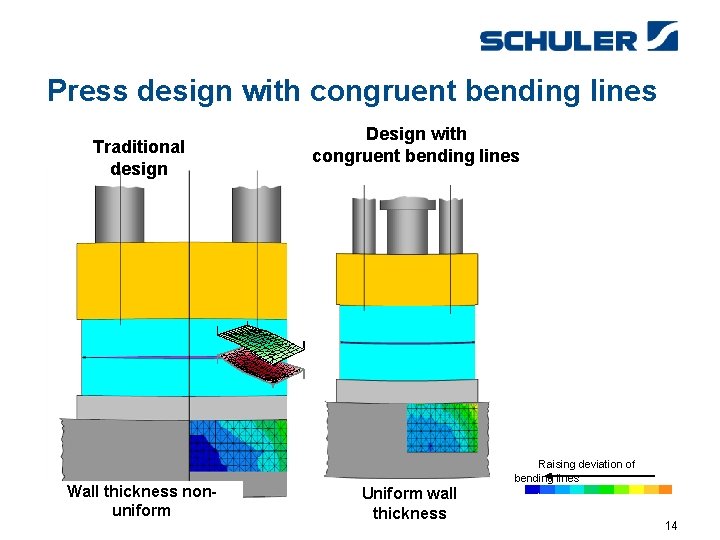
Requirements for the RTM press g Uniform wall thickness of the pressed part n Press statics with congruent bending lines of slide and table n Parallelism of slide to table also at high eccentric load 13
Press design with congruent bending lines Traditional design Wall thickness nonuniform Design with congruent bending lines Raising deviation of bending lines Uniform wall thickness 14
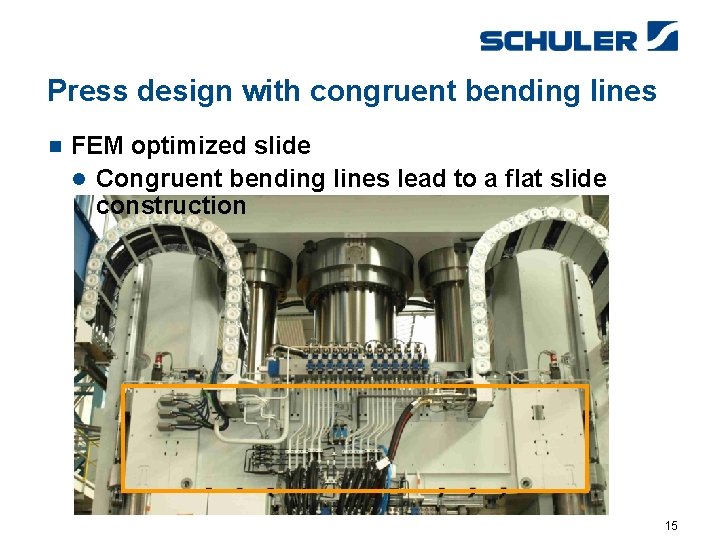
Press design with congruent bending lines g FEM optimized slide n Congruent bending lines lead to a flat slide construction 15
Requirements for the RTM press g Uniform wall thickness of the pressed part n Press statics with congruent bending lines of slide and table n Parallelism of slide to table also at high eccentric load 16
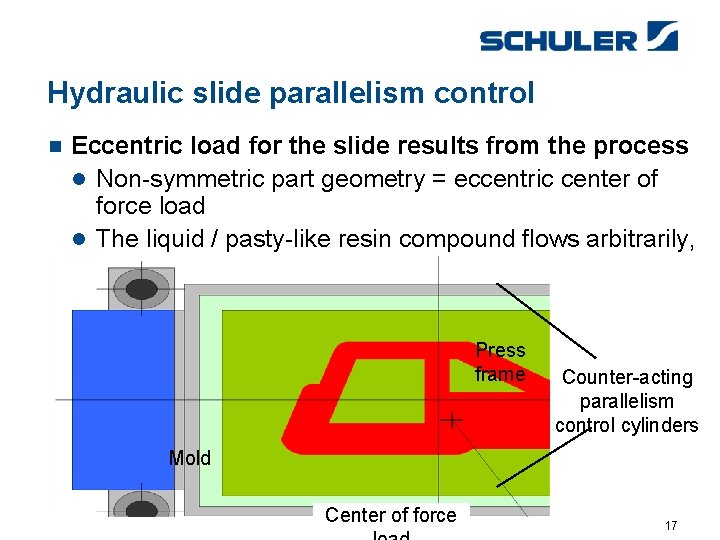
Hydraulic slide parallelism control g Eccentric load for the slide results from the process n Non-symmetric part geometry = eccentric center of force load n The liquid / pasty-like resin compound flows arbitrarily, when closing the mold Press frame Counter-acting parallelism control cylinders Mold Center of force 17
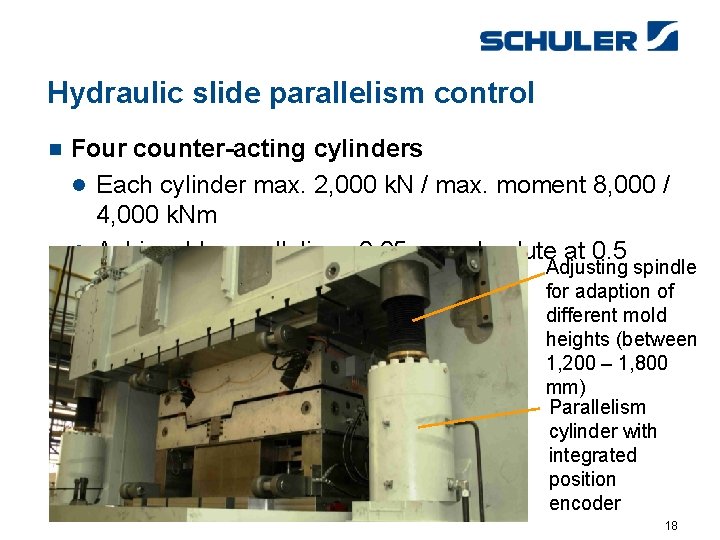
Hydraulic slide parallelism control g Four counter-acting cylinders n Each cylinder max. 2, 000 k. N / max. moment 8, 000 / 4, 000 k. Nm n Achievable parallelism: 0. 05 mm absolute at 0. 5 Adjusting spindle mm/s for adaption of different mold heights (between 1, 200 – 1, 800 mm) Parallelism cylinder with integrated position encoder 18
Requirements for the RTM press Uniform wall thickness of the pressed part g Maintaining of resin injection position for gapinjection g Minimizing of non-productive time for mold cleaning / handling g Smooth mold opening g Reliable media supply to the molds g Short pressure build-up and efficient energy use g 19
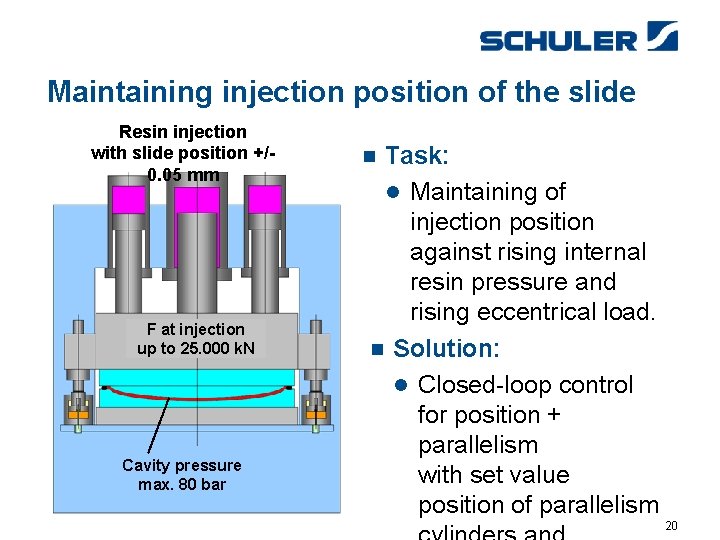
Maintaining injection position of the slide Resin injection with slide position +/0. 05 mm F at injection up to 25. 000 k. N Cavity pressure max. 80 bar Task: n Maintaining of injection position against rising internal resin pressure and rising eccentrical load. g Solution: n Closed-loop control for position + parallelism with set value position of parallelism g 20
Requirements for the RTM press Uniform wall thickness of the pressed part g Maintaining of resin injection position for gap-injection g Minimizing of non-productive time for mold cleaning / handling g Smooth mold opening g Reliable media supply to the molds g Short pressure build-up and efficient energy use g 21
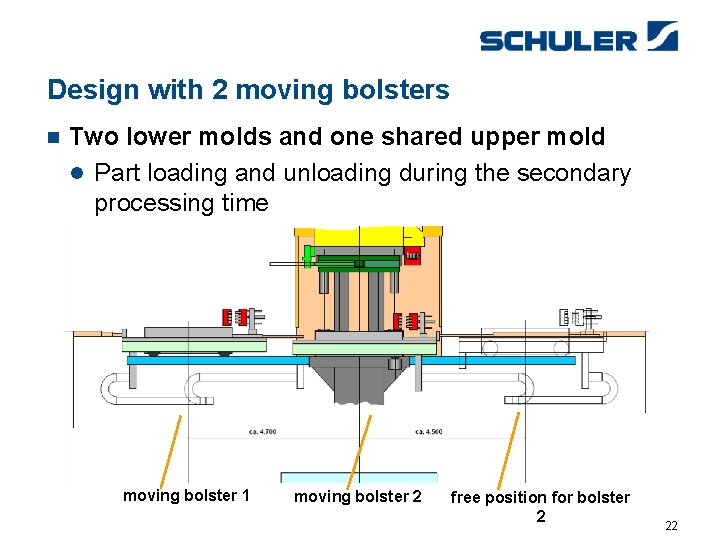
Design with 2 moving bolsters g Two lower molds and one shared upper mold n Part loading and unloading during the secondary processing time n Cleaning of the lower mold during the secondary processing time moving bolster 1 moving bolster 2 free position for bolster 2 22
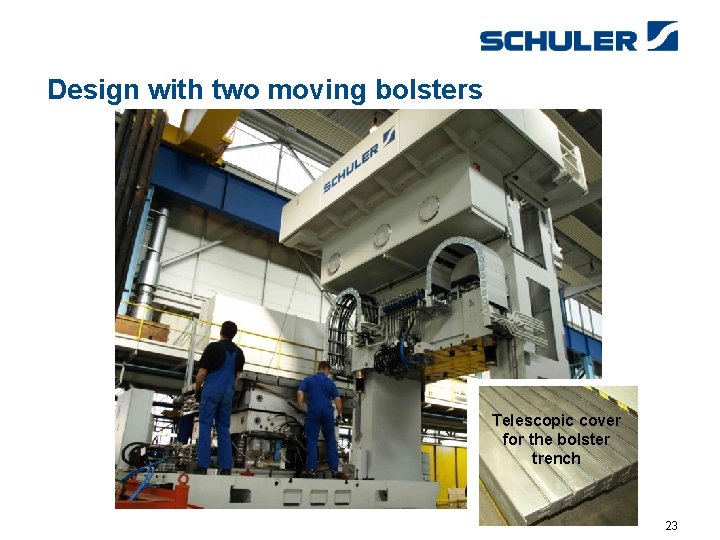
Design with two moving bolsters Telescopic cover for the bolster trench 23
Requirements for the RTM press Uniform wall thickness of the pressed part g Maintaining of resin injection position for gap-injection g Minimizing of non-productive time for mold cleaning / handling g Smooth mold opening g Reliable media supply to the molds g Short pressure build-up and efficient energy use g 24
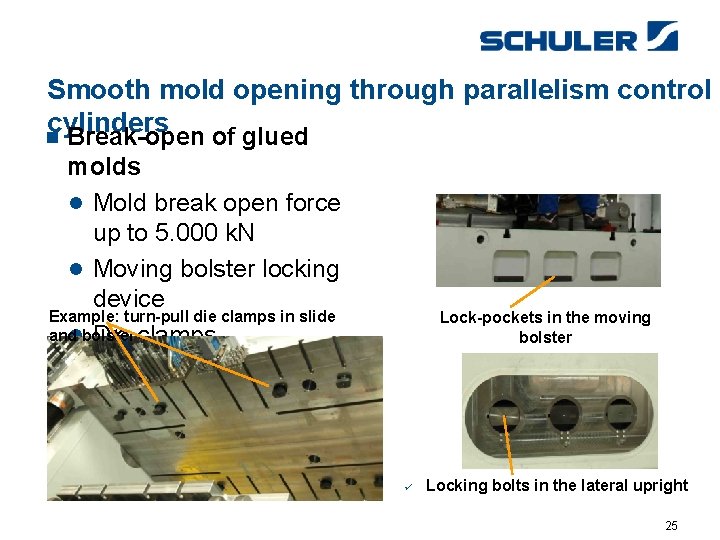
Smooth mold opening through parallelism control cylinders g Break-open of glued molds n Mold break open force up to 5. 000 k. N n Moving bolster locking device Example: turn-pull die clamps in slide and nbolster Die clamps Lock-pockets in the moving bolster ü Locking bolts in the lateral upright 25
Requirements for the RTM press Uniform wall thickness of the pressed part g Maintaining of resin injection position for gap-injection g Minimizing of non-productive time for mold cleaning / handling g Smooth mold opening g Reliable media supply to the molds g Short pressure build-up and efficient energy use g 26
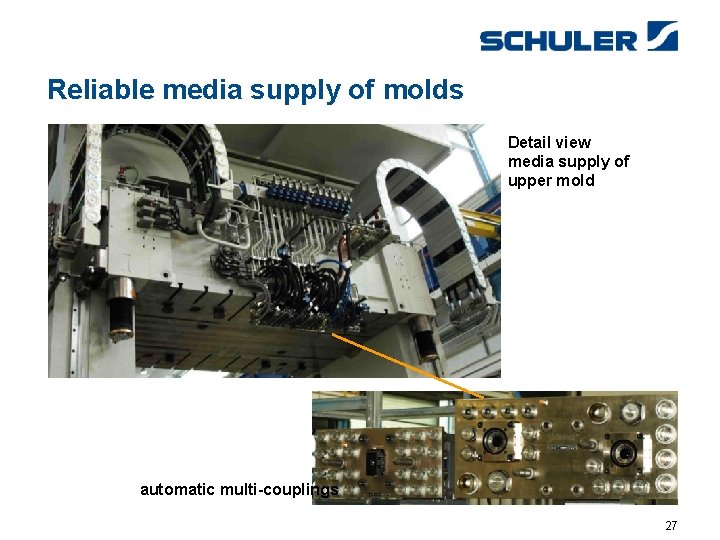
Reliable media supply of molds Detail view media supply of upper mold automatic multi-couplings 27
Requirements for the RTM press Uniform wall thickness of the pressed part g Maintaining of resin injection position for gap-injection g Minimizing of non-productive time for mold cleaning / handling g Smooth mold opening g Reliable media supply to the molds g Short pressure build-up and efficient energy use g 28
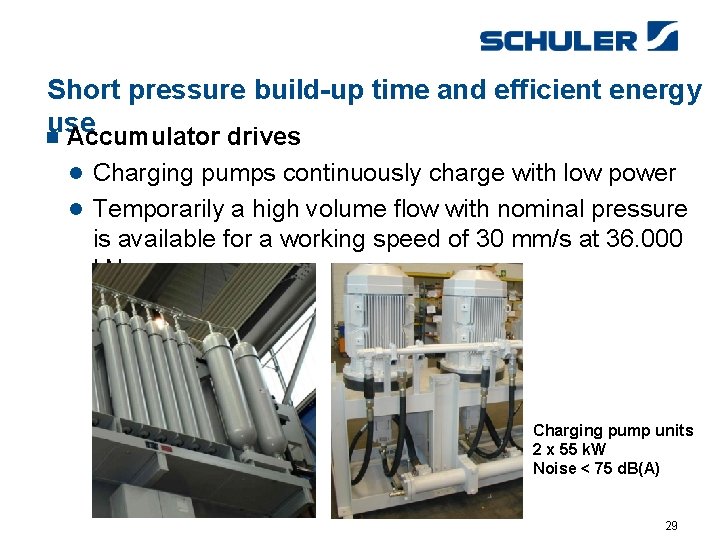
Short pressure build-up time and efficient energy use g Accumulator drives n n Charging pumps continuously charge with low power Temporarily a high volume flow with nominal pressure is available for a working speed of 30 mm/s at 36. 000 k. N Charging pump units 2 x 55 k. W Noise < 75 d. B(A) 29
Overview of presentation Motivation for the use of CFRP parts in automotive industry g The vacuum-assisted high pressure RTM press process g Press technology for the high pressure RTM process with example of supplied presses 36, 000 k. N – 3. 6 x 2. 4 m g System overview of complete RTM process g New development of press technology g 30
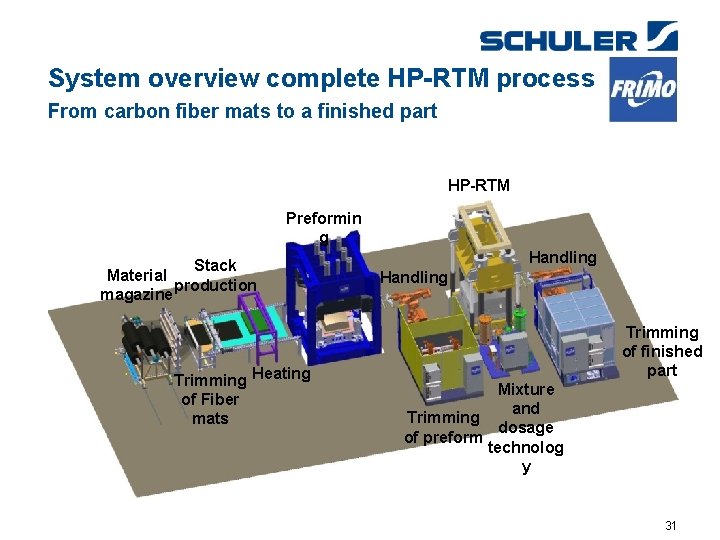
System overview complete HP-RTM process From carbon fiber mats to a finished part HP-RTM Preformin g Stack Material production magazine Trimming Heating of Fiber mats Handling Trimming of finished part Mixture and Trimming dosage of preform technolog y 31
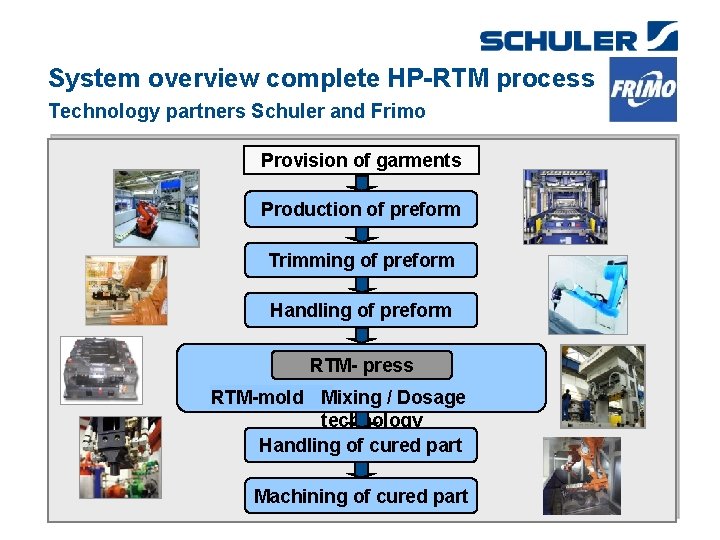
System overview complete HP-RTM process Technology partners Schuler and Frimo Provision of garments Production of preform Trimming of preform Handling of preform RTM- press RTM-mold Mixing / Dosage technology Handling of cured part Machining of cured part 32
Overview of presentation Motivation for the use of CFRP parts in automotive industry g The vacuum-assisted high pressure RTM press process g Press technology for the high pressure RTM process with example of supplied presses 36, 000 k. N – 3. 6 x 2. 4 m g System overview of complete RTM process g New development of press technology g 33
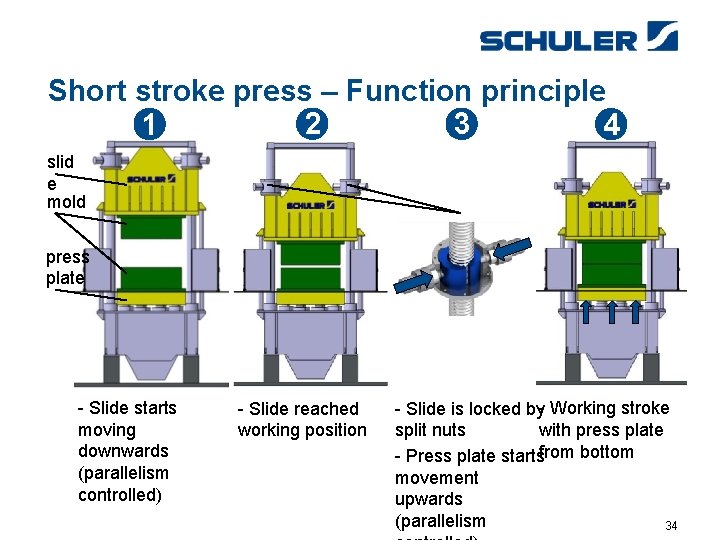
Short stroke press – Function principle 2 3 1 4 slid e mold press plate - Slide starts moving downwards (parallelism controlled) - Slide reached working position - Slide is locked by- Working stroke with press plate split nuts - Press plate startsfrom bottom movement upwards (parallelism 34
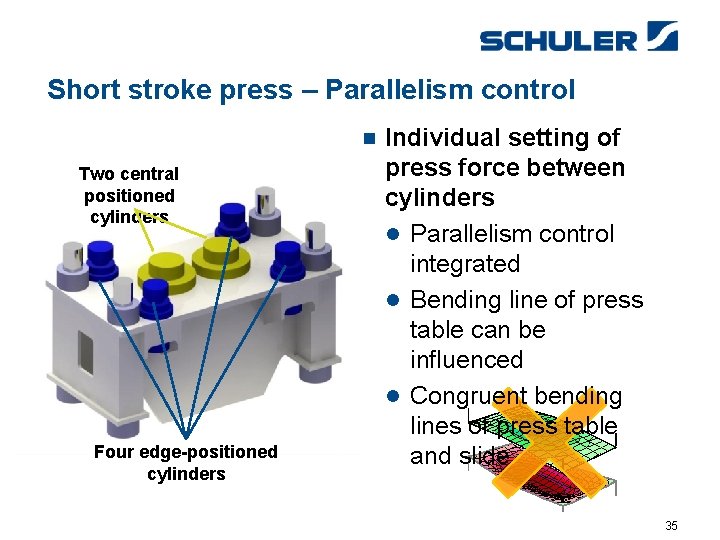
Short stroke press – Parallelism control g Two central positioned cylinders Four edge-positioned cylinders Individual setting of press force between cylinders n Parallelism control integrated n Bending line of press table can be influenced n Congruent bending lines of press table and slide 35
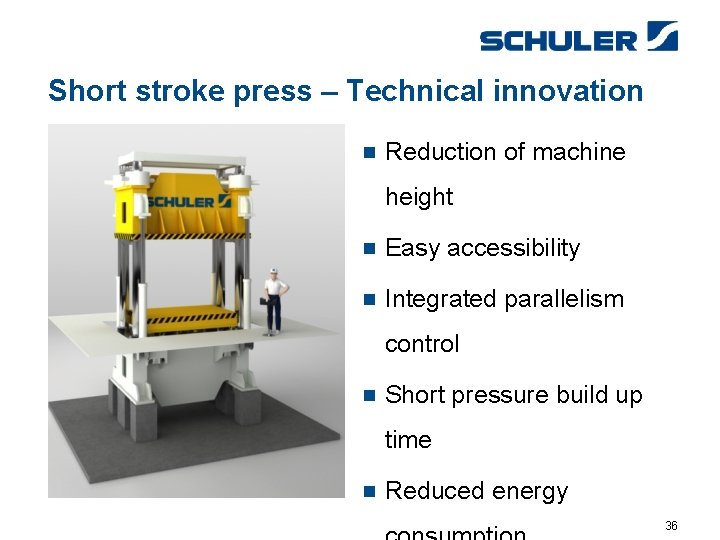
Short stroke press – Technical innovation g Reduction of machine height g Easy accessibility g Integrated parallelism control g Short pressure build up time g Reduced energy 36
Thank you very much for your attention We are looking forward to your visit at our booth 37