
Application of the Diffusion Model in Slope Evolution









- Slides: 26
Application of the Diffusion Model in Slope Evolution Journal of the Geological Society of China 35(4), 407 -419.
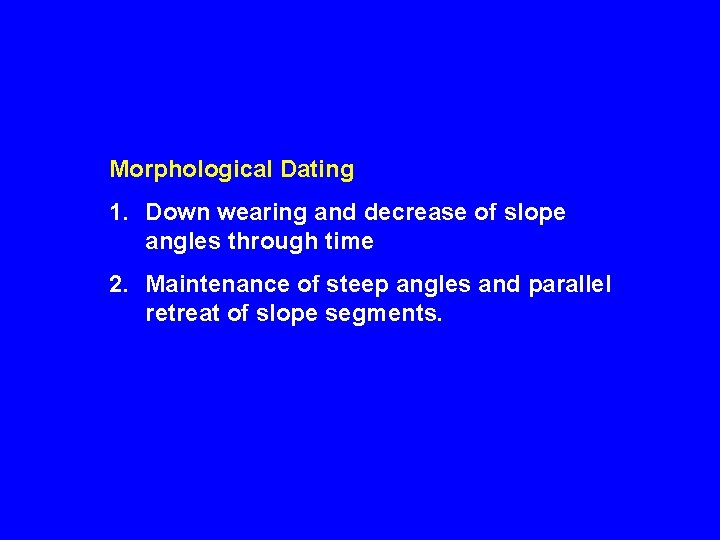
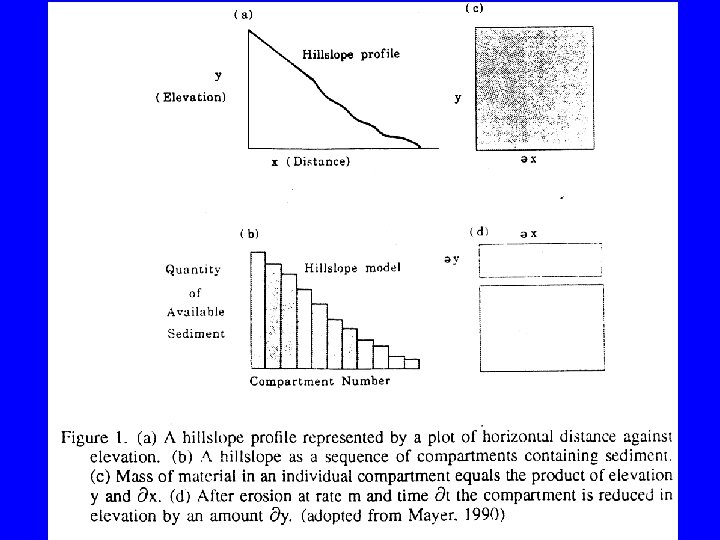
Morphological Dating 1. Down wearing and decrease of slope angles through time 2. Maintenance of steep angles and parallel retreat of slope segments.
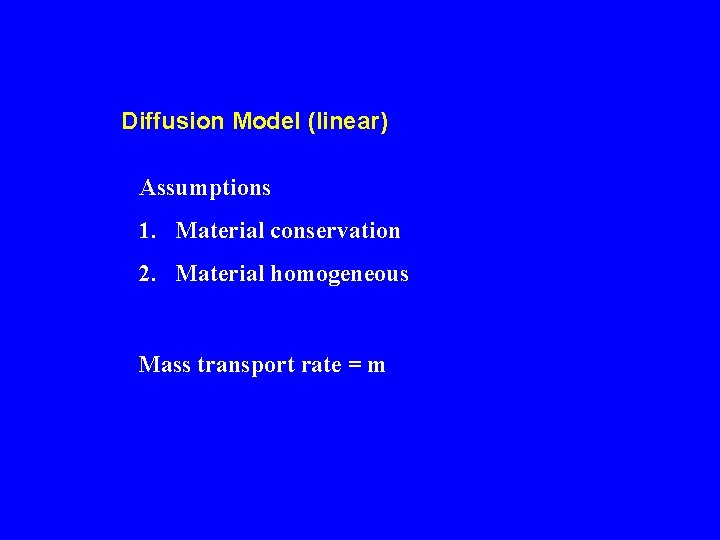
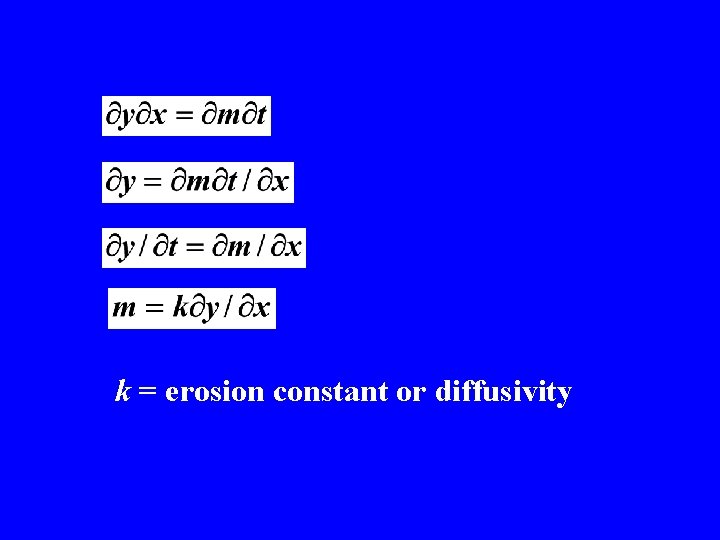
Diffusion Model (linear) Assumptions 1. Material conservation 2. Material homogeneous Mass transport rate = m
k = erosion constant or diffusivity
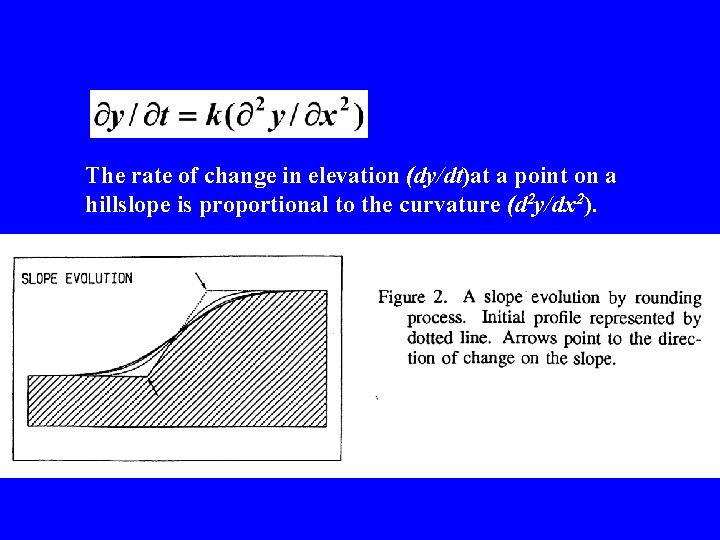
The rate of change in elevation (dy/dt)at a point on a hillslope is proportional to the curvature (d 2 y/dx 2).
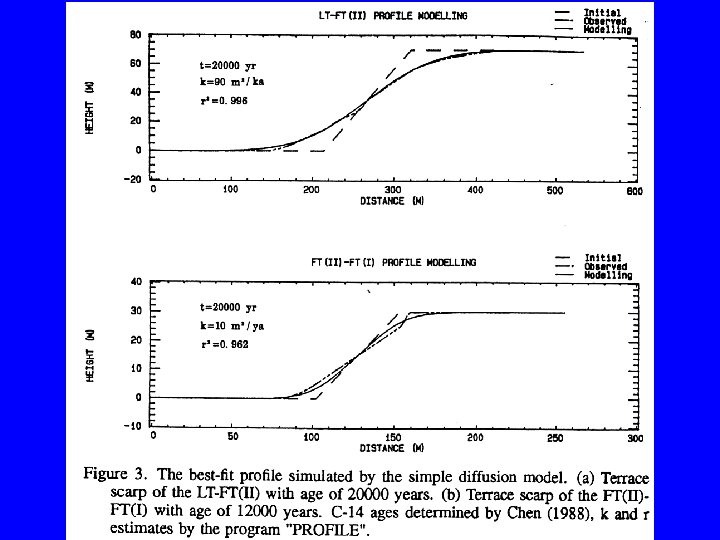
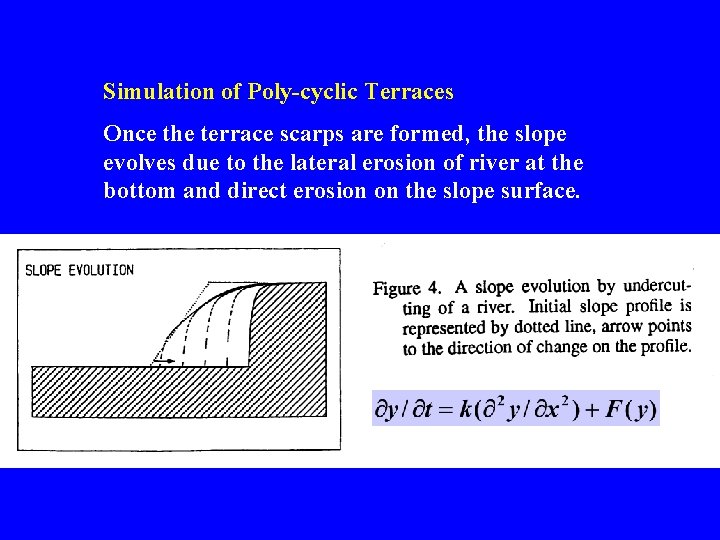
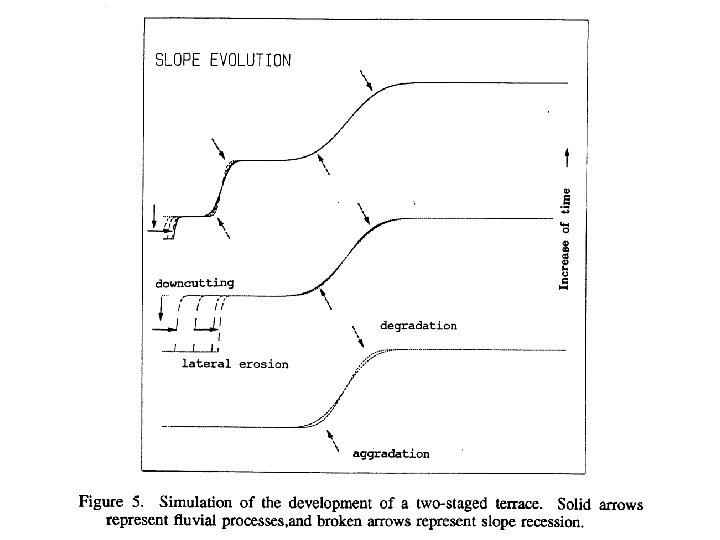
Simulation of Poly-cyclic Terraces Once the terrace scarps are formed, the slope evolves due to the lateral erosion of river at the bottom and direct erosion on the slope surface.
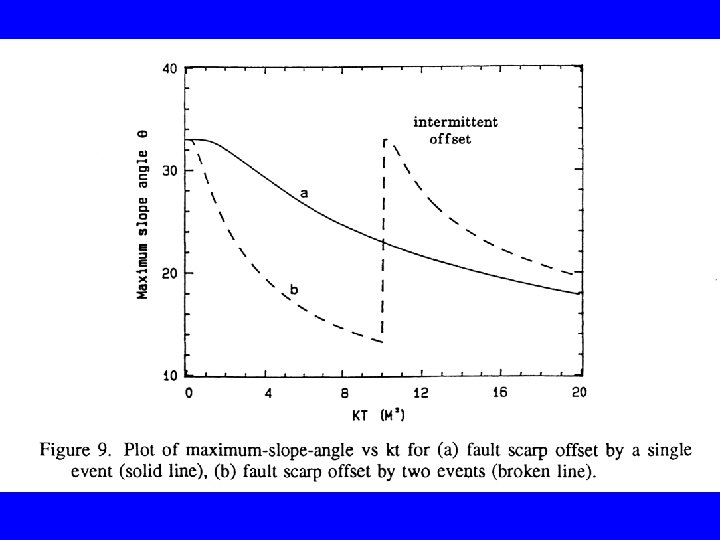
Mid-section Maximum-Slope-Angle (MSA) MSA decreases non-linearly with the diffusivity and t, kt. MSA decreases more rapidly with a larger diffusivity.
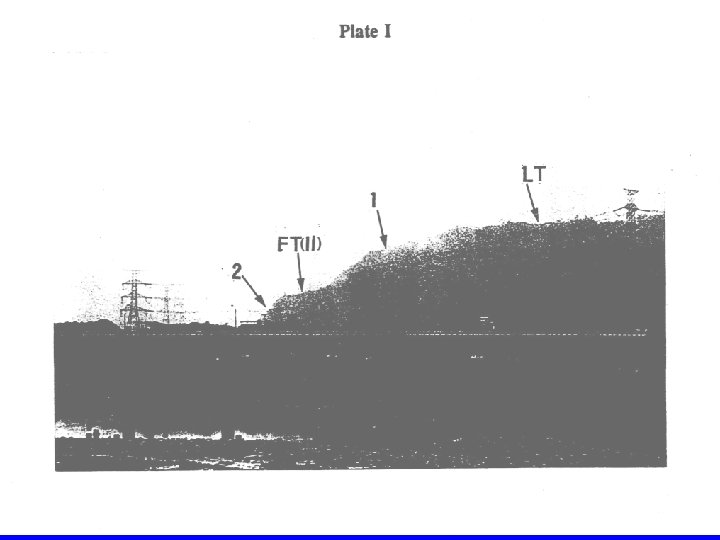
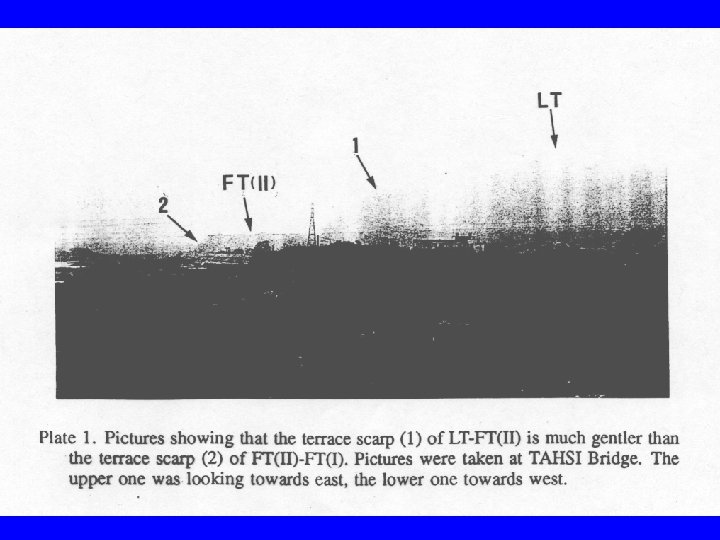
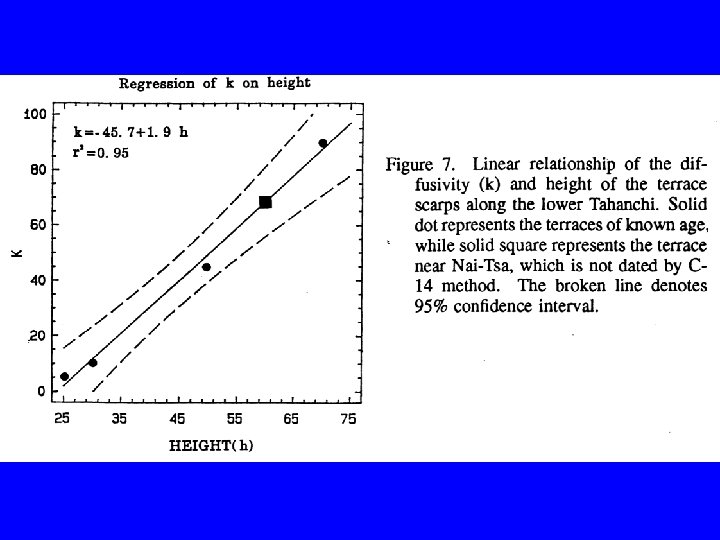
• Diffusivity is a function of lithology and climate, indicating its various in different places and time duration. • Diffusivity can be derived by terrace with known age. Ex: Tahan river. • LT, 90 m 2/ka; FT, 10 m 2/ka • Diffusivity has a linear relationship with the height
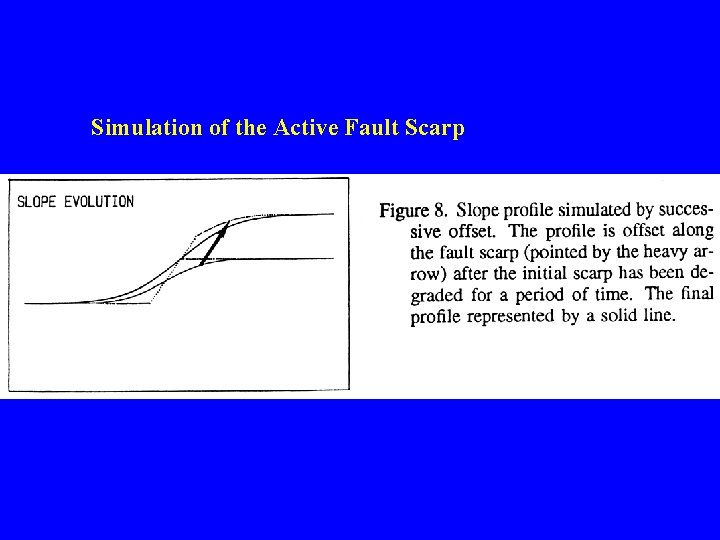
Simulation of the Active Fault Scarp