
Application of Pushover Analysis to the Design of
- Slides: 16
Application of Pushover Analysis to the Design of Structures Containing Dissipative Elements Martin S. Williams 1 and Denis E. Clément 2 1 University of Oxford, UK 2 Thomas Jundt Civil Engineers, Geneva, Switzerland 13 th World Conference on Earthquake Engineering Vancouver, August 2004
Outline v Introduction to knee braced frames v Modelling using Drain-2 DX v Five and ten-storey frame designs v Pushover and time-history analyses v Results v Conclusions and future work
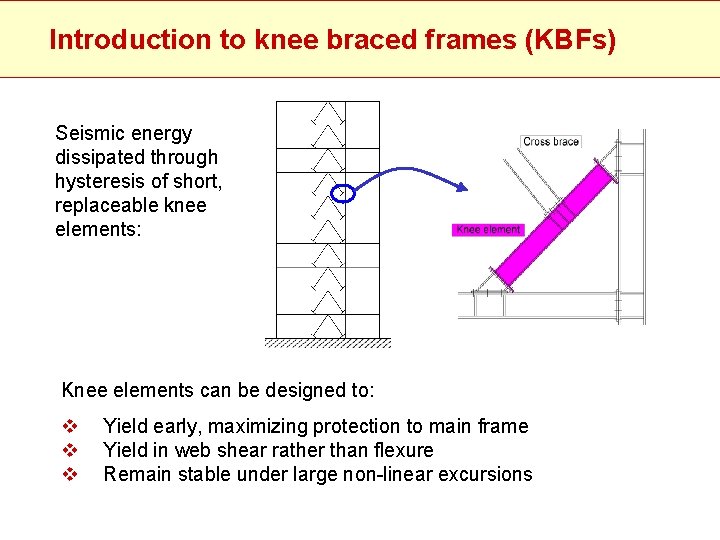
Introduction to knee braced frames (KBFs) Seismic energy dissipated through hysteresis of short, replaceable knee elements: Knee elements can be designed to: v v v Yield early, maximizing protection to main frame Yield in web shear rather than flexure Remain stable under large non-linear excursions
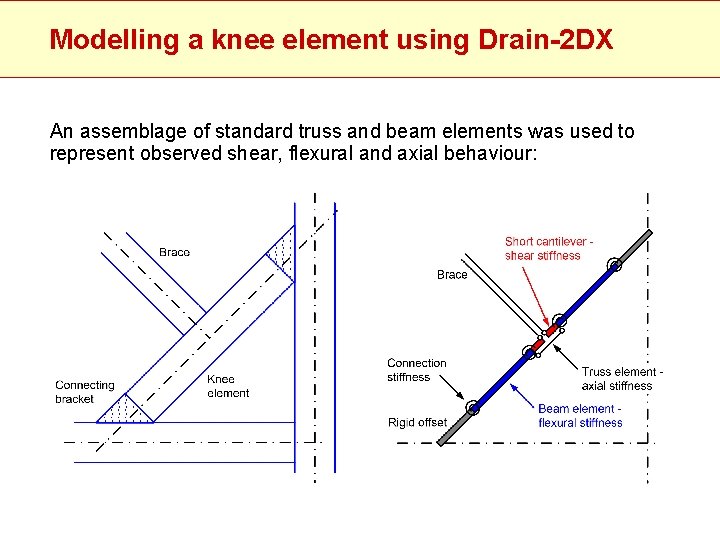
Modelling a knee element using Drain-2 DX An assemblage of standard truss and beam elements was used to represent observed shear, flexural and axial behaviour:
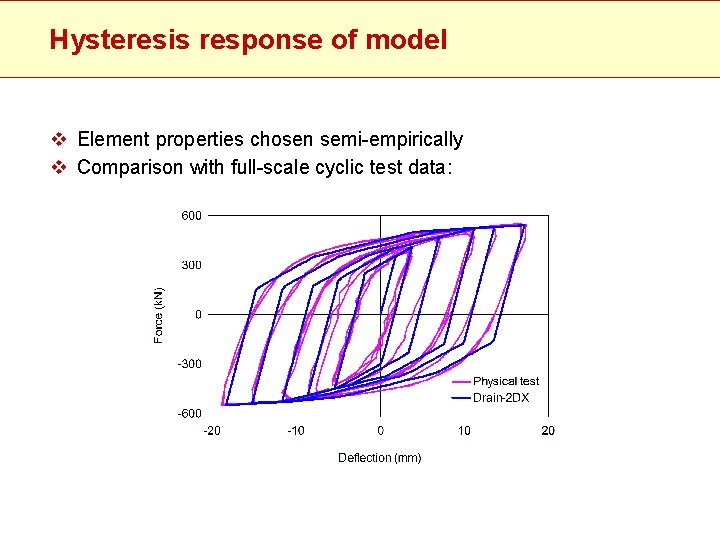
Hysteresis response of model v Element properties chosen semi-empirically v Comparison with full-scale cyclic test data:
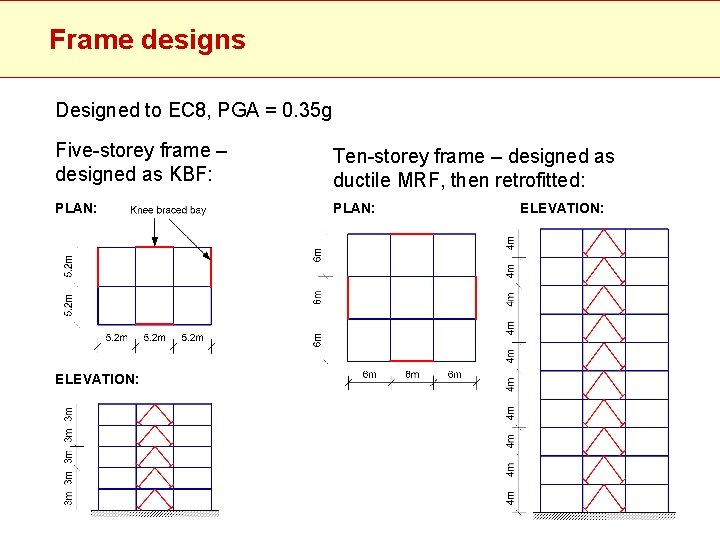
Frame designs Designed to EC 8, PGA = 0. 35 g Five-storey frame – designed as KBF: Ten-storey frame – designed as ductile MRF, then retrofitted: PLAN: ELEVATION:
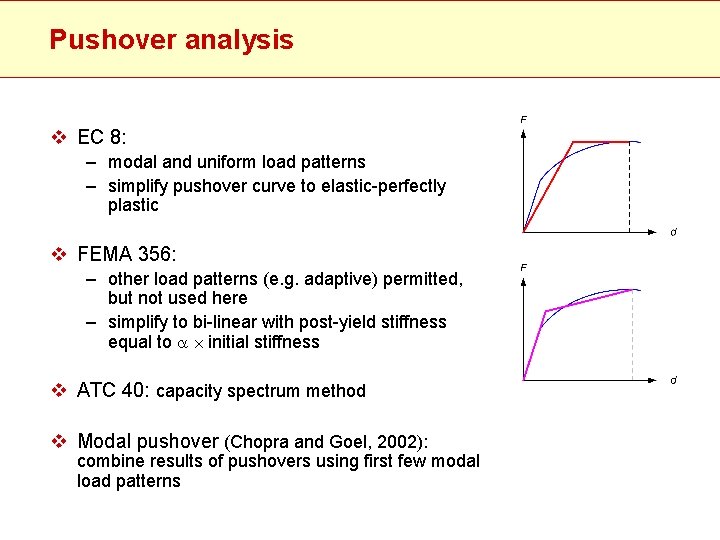
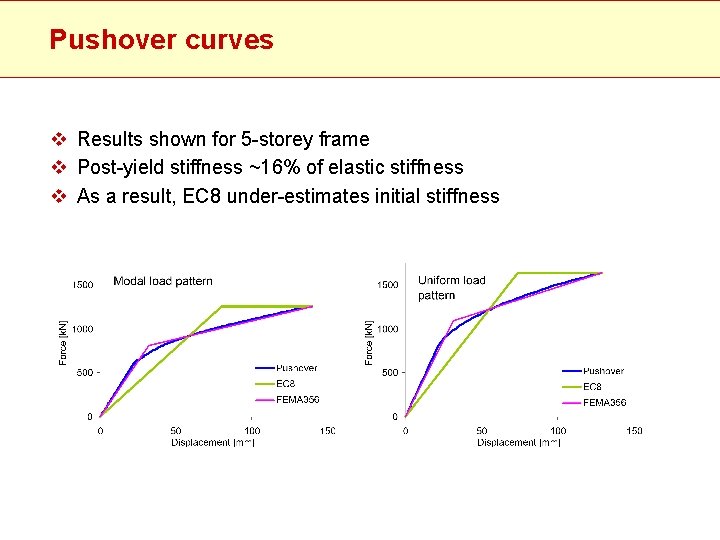
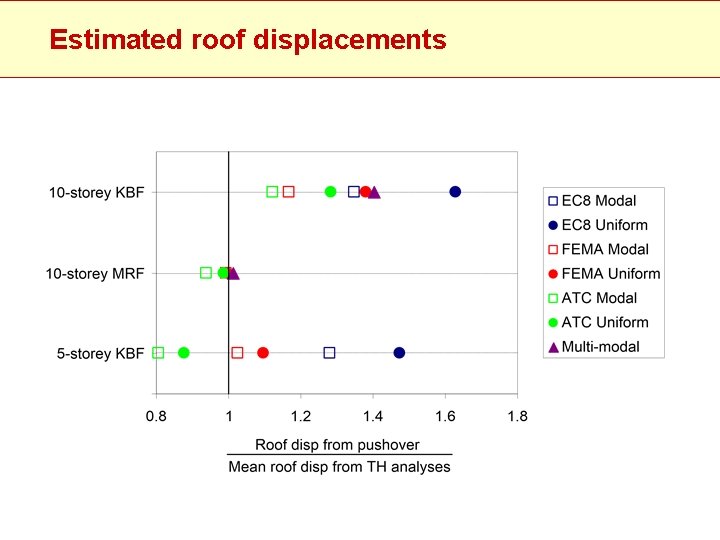
Pushover analysis v EC 8: – modal and uniform load patterns – simplify pushover curve to elastic-perfectly plastic v FEMA 356: – other load patterns (e. g. adaptive) permitted, but not used here – simplify to bi-linear with post-yield stiffness equal to initial stiffness v ATC 40: capacity spectrum method v Modal pushover (Chopra and Goel, 2002): combine results of pushovers using first few modal load patterns
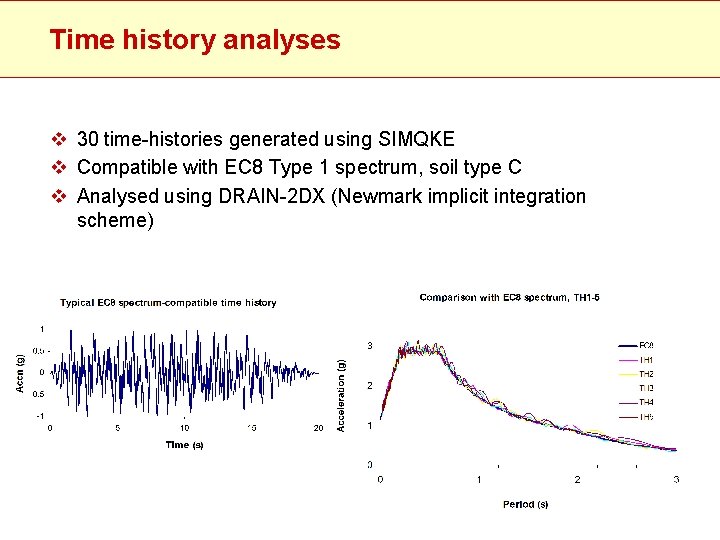
Time history analyses v 30 time-histories generated using SIMQKE v Compatible with EC 8 Type 1 spectrum, soil type C v Analysed using DRAIN-2 DX (Newmark implicit integration scheme)
Pushover curves v Results shown for 5 -storey frame v Post-yield stiffness ~16% of elastic stiffness v As a result, EC 8 under-estimates initial stiffness
Estimated roof displacements
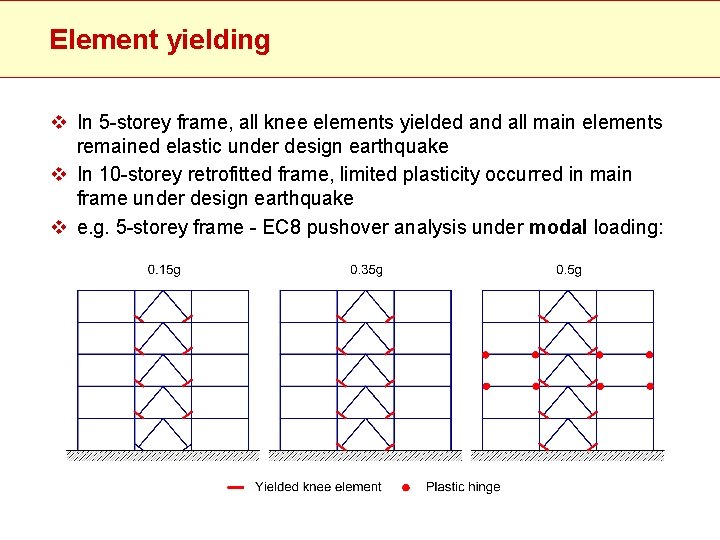
Element yielding v In 5 -storey frame, all knee elements yielded and all main elements remained elastic under design earthquake v In 10 -storey retrofitted frame, limited plasticity occurred in main frame under design earthquake v e. g. 5 -storey frame - EC 8 pushover analysis under modal loading:
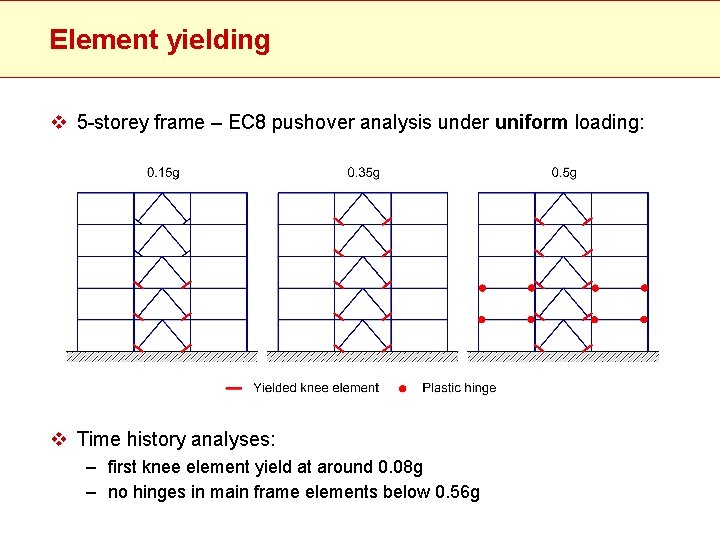
Element yielding v 5 -storey frame – EC 8 pushover analysis under uniform loading: v Time history analyses: – first knee element yield at around 0. 08 g – no hinges in main frame elements below 0. 56 g
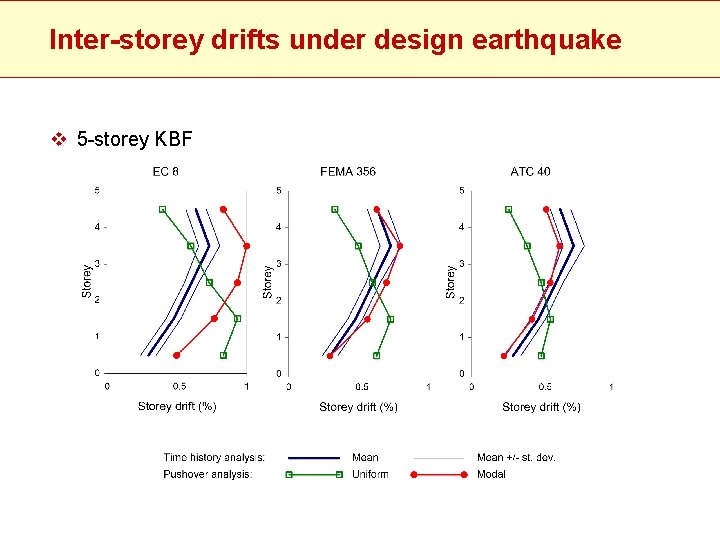
Inter-storey drifts under design earthquake v 5 -storey KBF
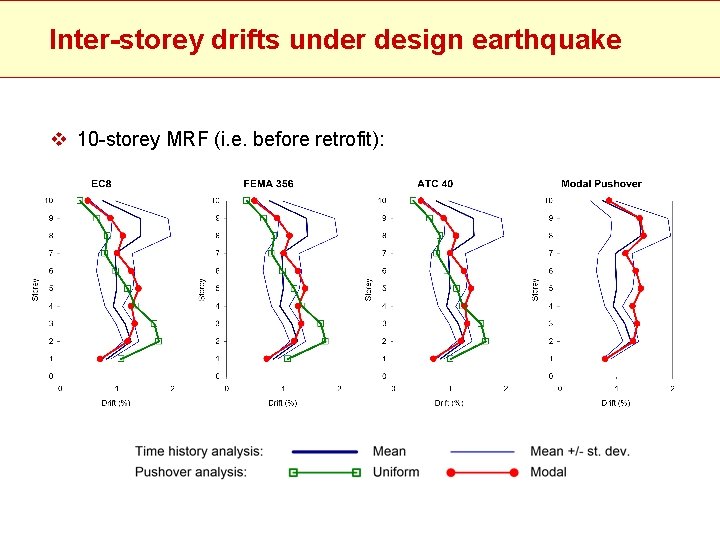
Inter-storey drifts under design earthquake v 10 -storey MRF (i. e. before retrofit):
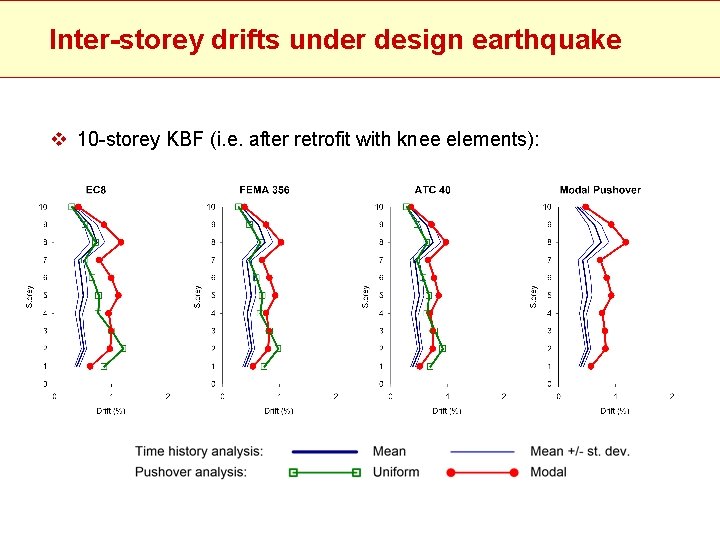
Inter-storey drifts under design earthquake v 10 -storey KBF (i. e. after retrofit with knee elements):
Conclusions v A Drain-2 DX knee element model capable of representing shear, flexural and axial behaviour has been developed and validated. v Pushover analyses of 5 and 10 -storey knee braced frames showed that they possess high ductility (~6) and post-yield stiffness (~16%). v In time-history analyses, knee elements began to yield at just 0. 08 g but remained stable up to 0. 56 g. v Use of pushover analysis does not necessarily lead to optimal design. Multi-modal pushover offers some advantages in this respect. v In comparison with time-history analyses, FEMA 356 pushover approach gave most consistent results, EC 8 approach appears highly conservative for this type of structure.