
Application of Petri Nets to Workflow Management systems












- Slides: 40
Application of Petri Nets to Workflow Management systems By: Yas Yazdanian
Table OF Contents • WHAT IS WORKFLOW? • WHY IS WORKFLOW MANAGEMENT SO IMPORTANT • BASIC CONCEPTS OF WORKFLOW MANAGEMENT SYSTEMS • WHY SHOULD WE USE PETRI NETS • MAPPING WORKFLOW MANAGEMENT CONCEPTS INTO PETRI NETS • EXAMPLES OF WORKFLOW MANAGEMENT SYSTEMS • CONCLUSION • REFRENCES
1. What is Workflow?
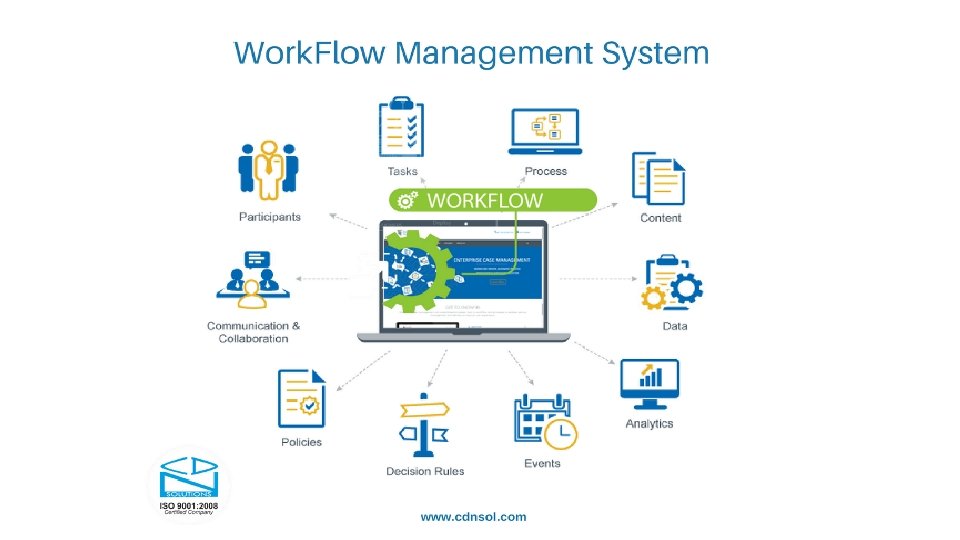
Workflow at it’s core simply refers to process and procedures in which task are completed.
JOB OPENING POSTED ? EMPLOYEE HIRED LOAN APPLICATION SUBMITED LOAN FUNDED INCORRECT BILL RECEIVED MONEY REFUNDED
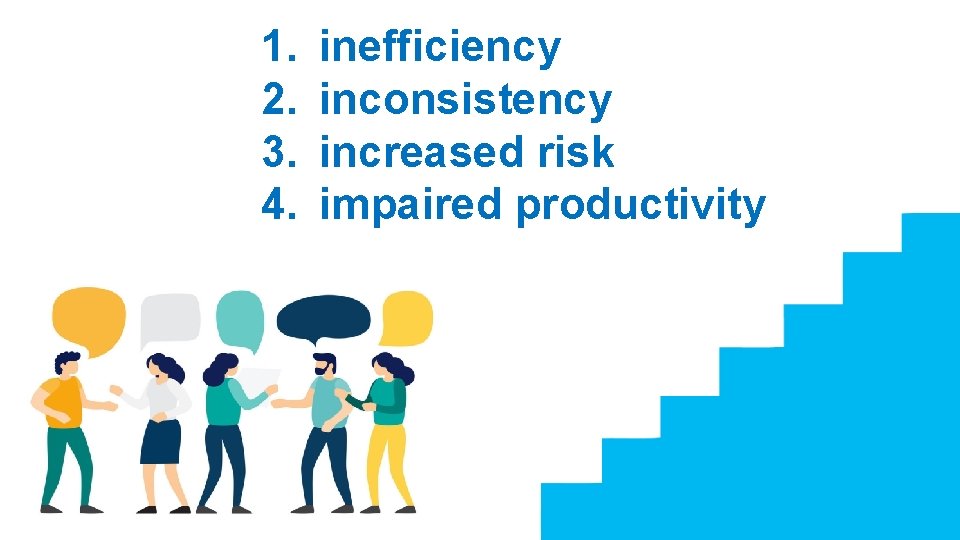
1. 2. 3. 4. inefficiency inconsistency increased risk impaired productivity I a Jane Doe
The goal of an organization is to operate as efficient and as effective as possible this is where workflow management system comes in
I a Jane Doe
2. WHY IS WORKFLOW MANAGEMENT SO important?
HEALTH CARE
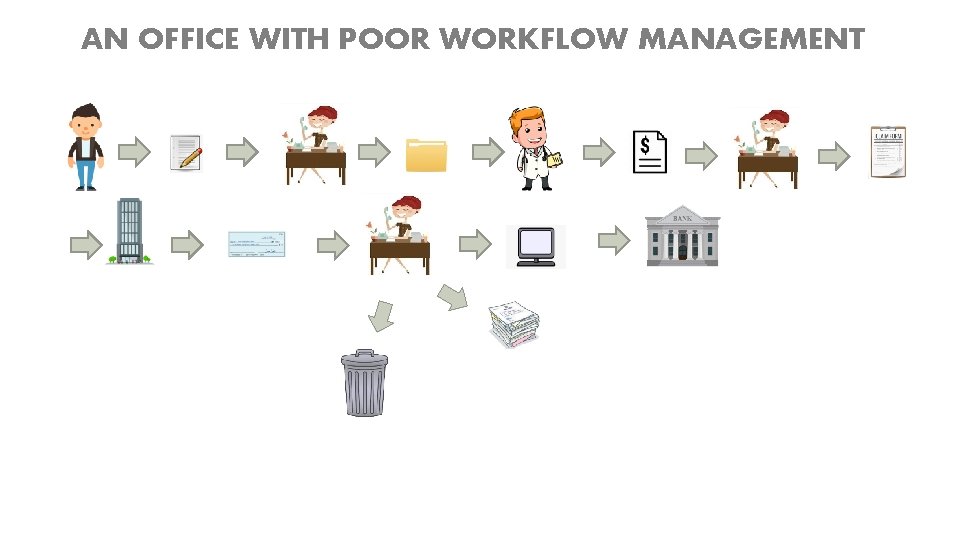
AN OFFICE WITH POOR WORKFLOW MANAGEMENT
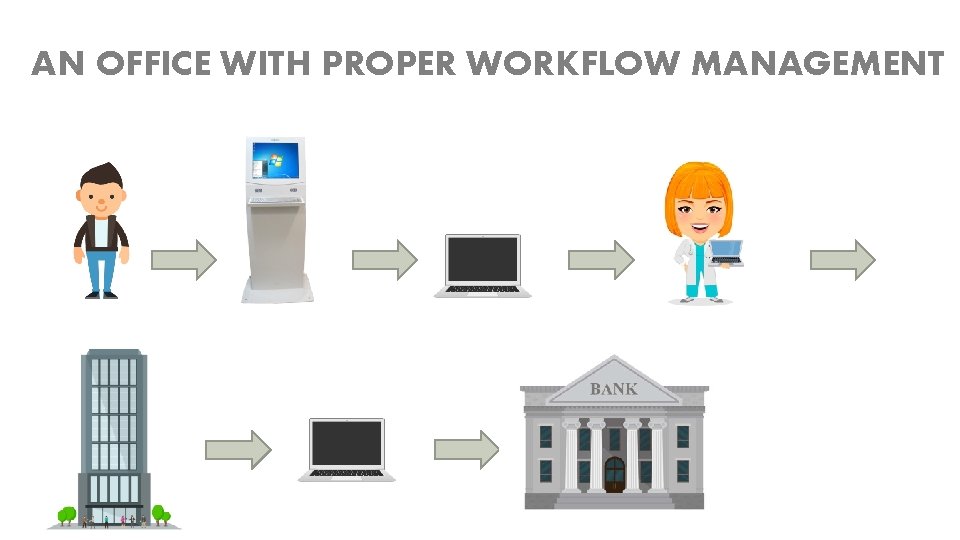
AN OFFICE WITH PROPER WORKFLOW MANAGEMENT
3. BASIC CONCEPTS OF WORKFLOW MANAGEMENT SYSTEMS
Workflows are case-based meaning that every single piece of work is executed for a specific case. TAX DECLARATION MORTGAGE INSURANCE CLAIM
The goal of workflow management system is to handle cases as efficiently and effectively as possible.
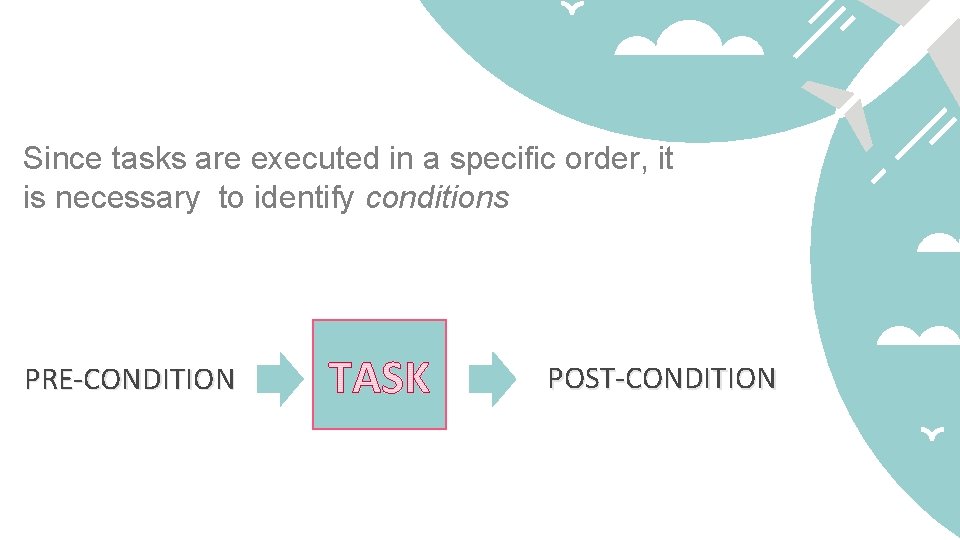
Since tasks are executed in a specific order, it is necessary to identify conditions PRE-CONDITION POST-CONDITION
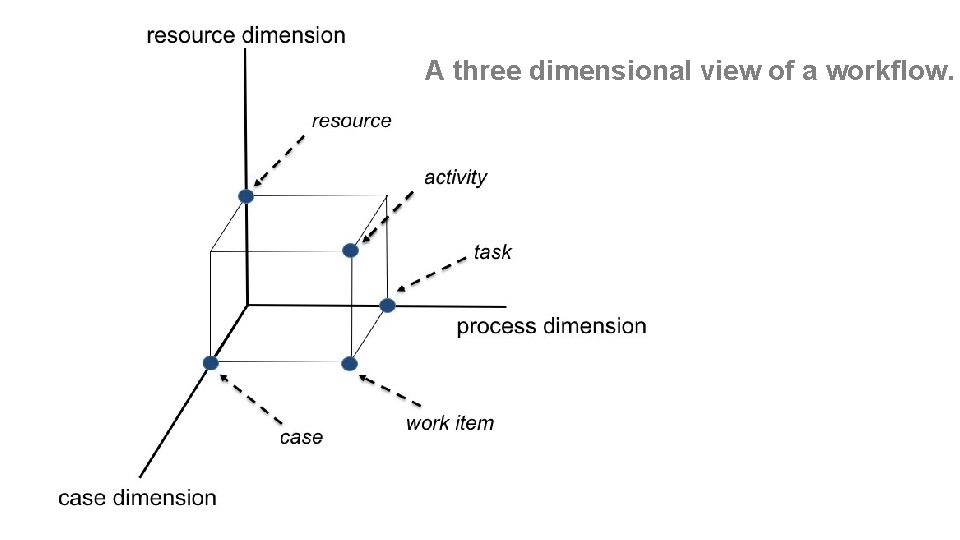
A task which needs to be executed for a specific case is called a work item. An example of a work item is: execute task ‘send refund form to customer’ for case ‘complaint sent by customer’ work items are executed by a resource. A work item which is being executed by a specific resource is called an activity.
A three dimensional view of a workflow.
4. WHY PETRI NETS?
Because processes are a dominant factor in workflow management, it is important to use an established framework for modelling and analysing workflow processes. There are several reasons for using Petri nets as frameworks for workflow modelling.
1. Formal Semantics 2. Graphical Nature 3. Analysis 4. Vendor Independent
5. MAPPING WORKFLOW MANAGEMENT CONCEPTS INTO PETRI NETS
CONDITIONS TASKS CASES
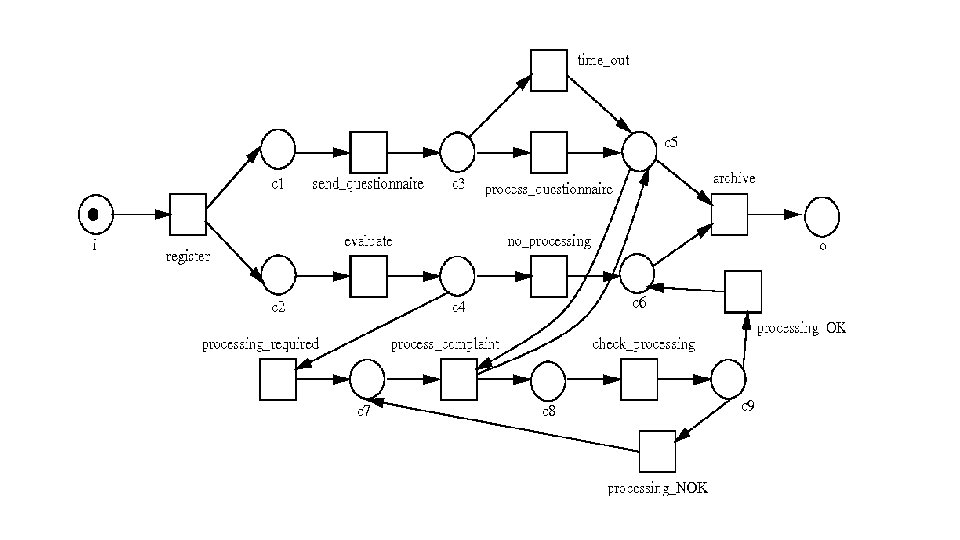
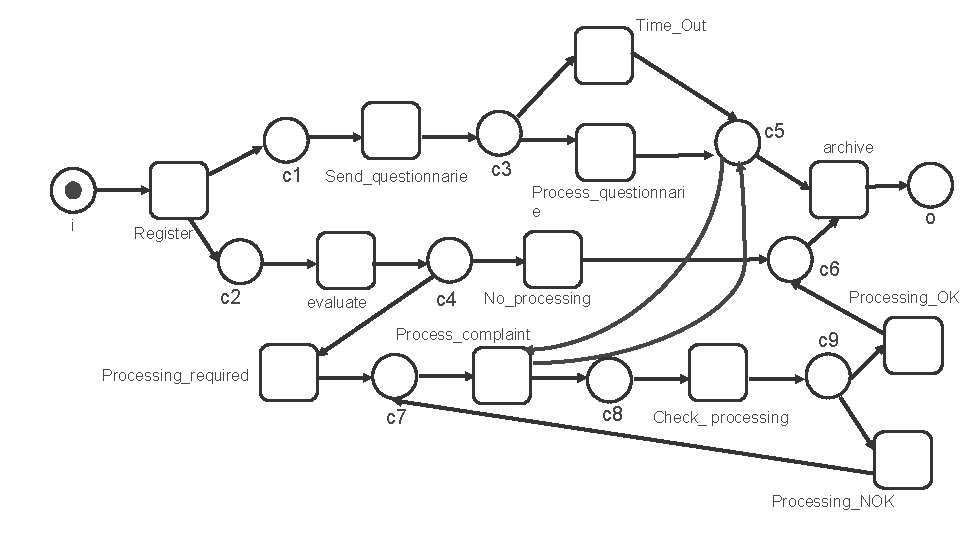
To illustrate the mapping of workflow management concepts onto Petri nets we consider the processing of complaints
Time_Out c 5 c 1 i Send_questionnarie archive c 3 Process_questionnari e o Register c 6 c 2 c 4 evaluate Processing_OK No_processing Process_complaint c 9 Processing_required c 7 c 8 Check_ processing Processing_NOK
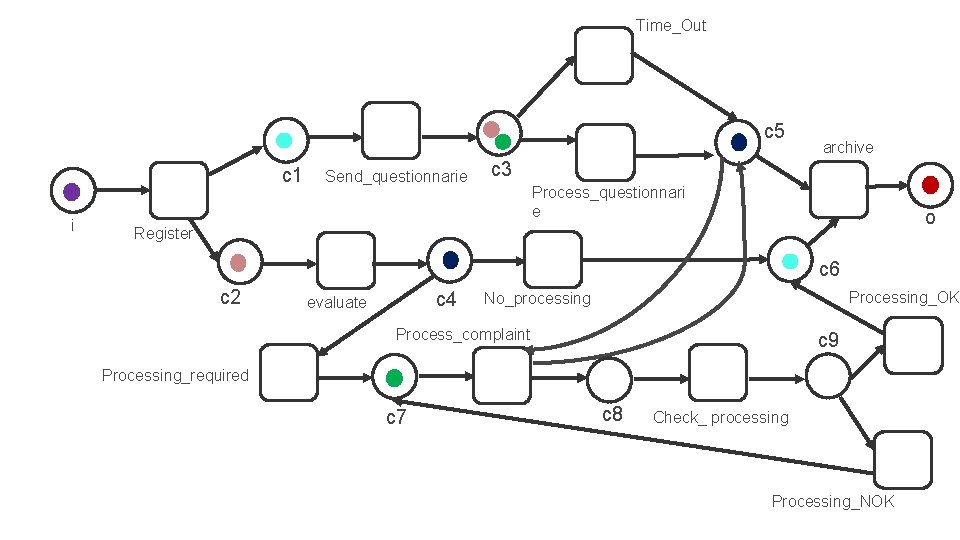
In general, there are many cases which are handled according to the same workflow process definition. Each of these cases corresponds to one or more tokens. If tokens of multiple cases reside in the same Petri net, then these tokens may get mixed.
Time_Out c 5 c 1 i Send_questionnarie archive c 3 Process_questionnari e o Register c 6 c 2 c 4 evaluate Processing_OK No_processing Process_complaint c 9 Processing_required c 7 c 8 Check_ processing Processing_NOK
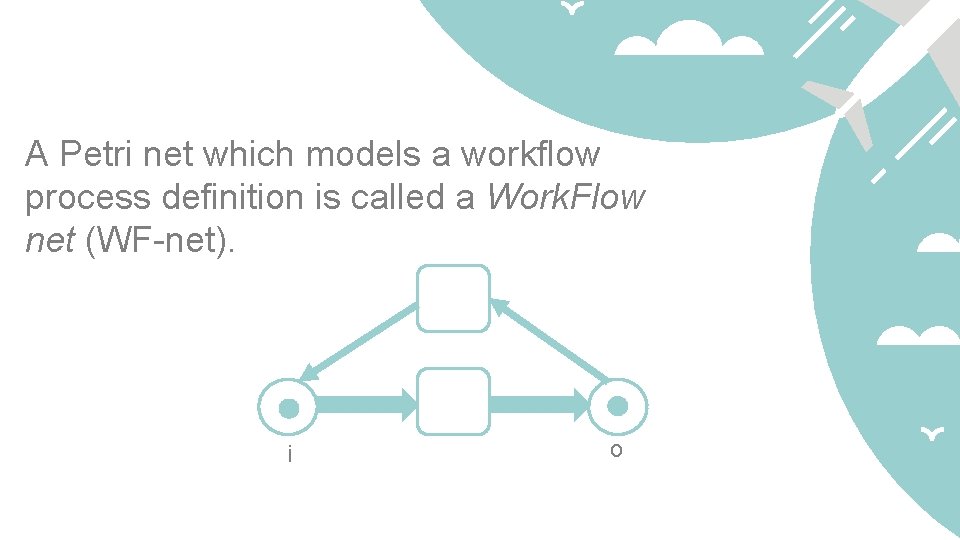
A Petri net which models a workflow process definition is called a Work. Flow net (WF-net). i o
6. EXAMPLES OF WORKFLOW MANAGEMENT SYSTEMS
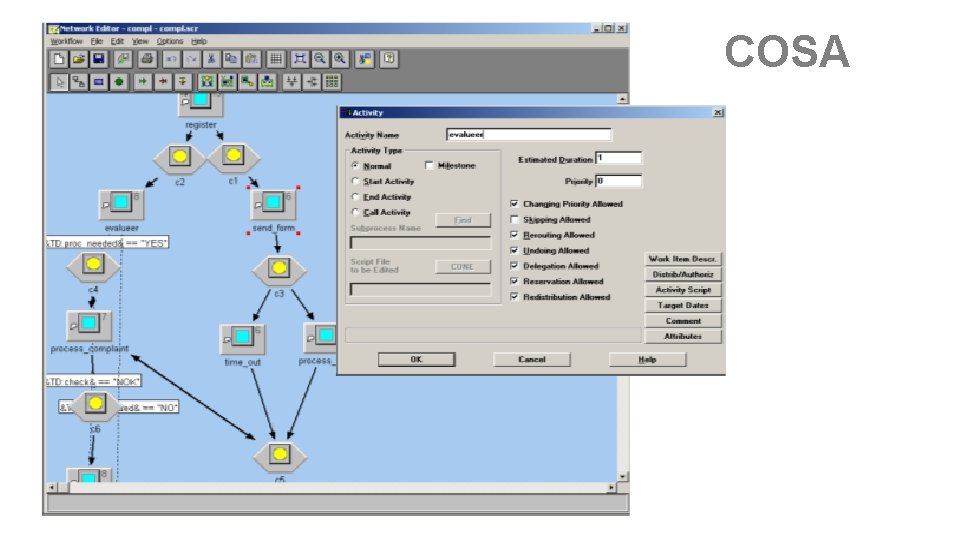
COSA
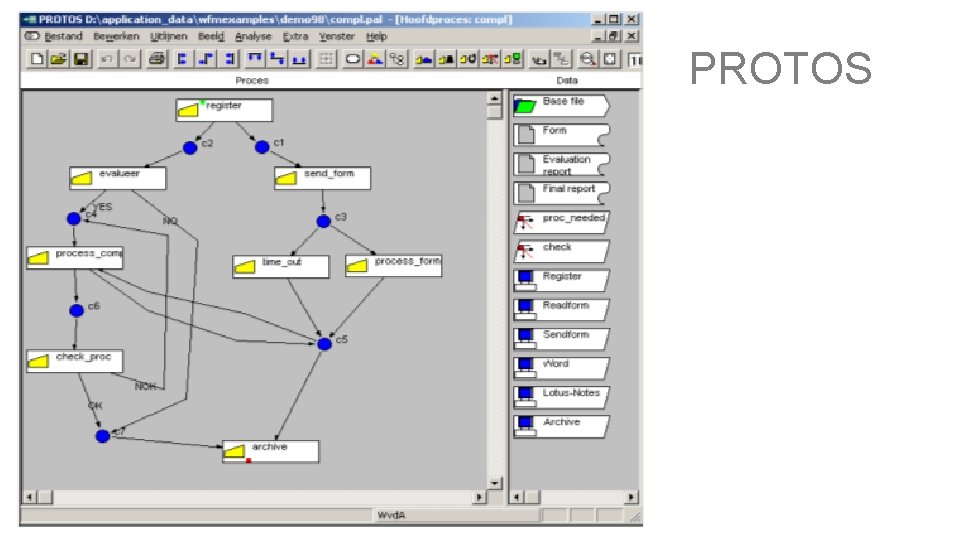
PROTOS
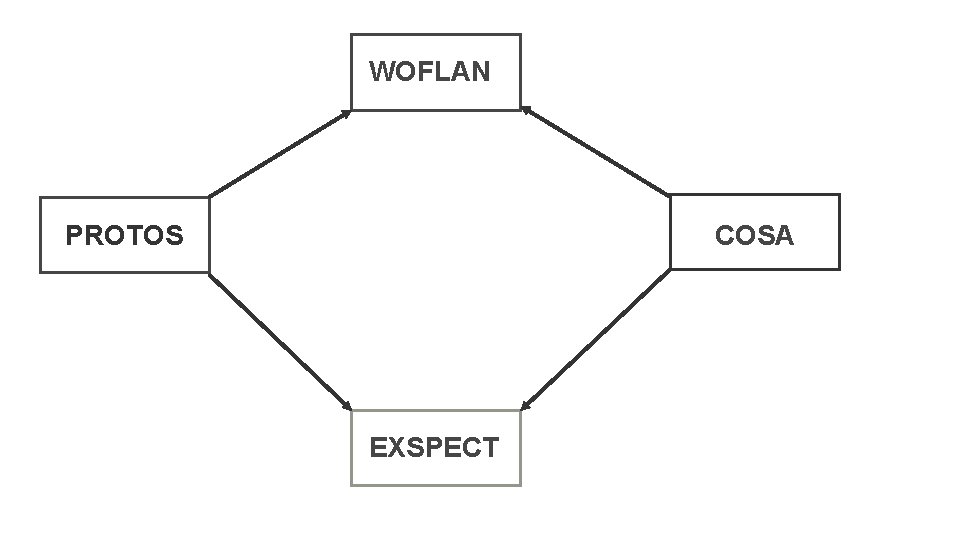
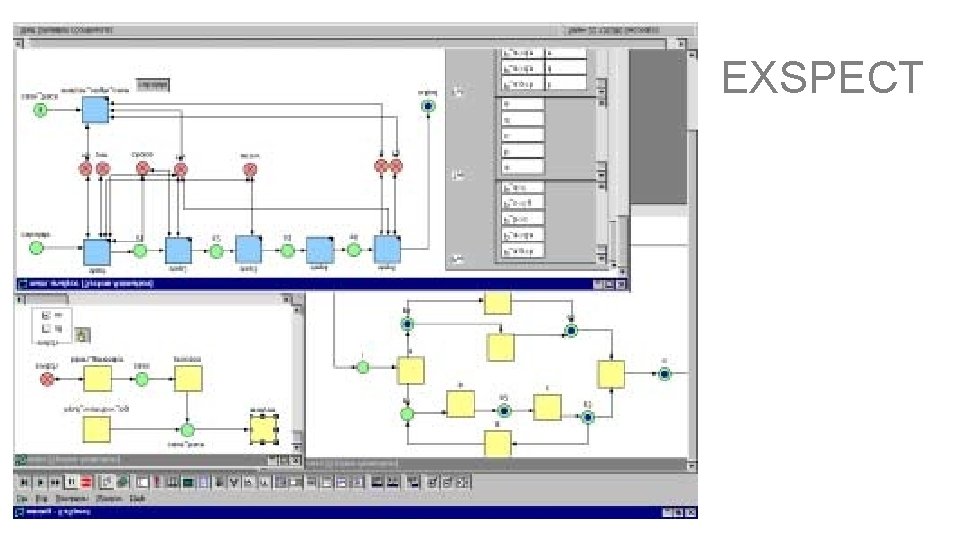
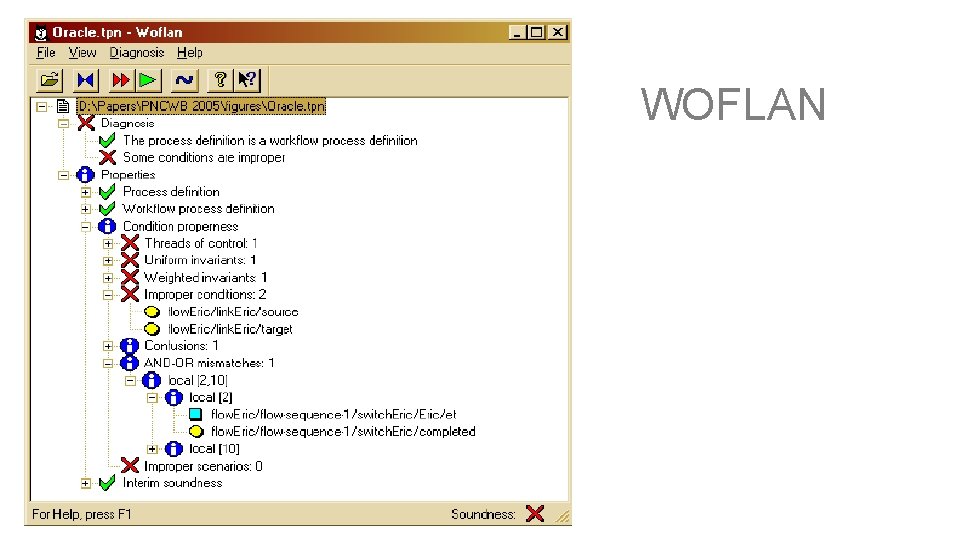
WOFLAN COSA PROTOS EXSPECT
EXSPECT
WOFLAN
7. CONCLUSION
Changes in the environment have made business processes more complex than before therefore, there is a clear need for a building block named workflow management system. With the help of petri nets these workflow management systems can help organizations perform better and more efficient.
8. REFRENCES
• VAN DER AALST, W. (1998). THE APPLICATION OF PETRI NETS TO WORKFLOW MANAGEMENT. Journal of Circuits, Systems and Computers, 08(01), pp. 21 -66. • Pages. di. unipi. it. (2019). [online] Available at: http: //pages. di. unipi. it/ferrari/CORSI/SISD/Lezioni/WFModel. pdf [Accessed 13 Dec. 2019]. • Youtube. com. (2019). You. Tube. [online] Available at: https: //www. youtube. com/watch? v=3 KJj. KY 8 k 9 Lk&t=119 s [Accessed 13 Dec. 2019].