
Application of Immunology Clinical diagnosis Treatment Prophylaxis Research



- Slides: 17
Application of Immunology • • Clinical diagnosis Treatment Prophylaxis Research
Types of immunity • (Natural or Innate immunity) • (adaptive or acquired immunity)
Innate immunity • First line of defence • Cellular and biochemical mechanisms are present before infection • These mechanisms react only to microbes • They respond in essentially the same way to repeated infections • The principal components of innate immunity are: a) Physical and chemical barriers b) Phagocytic cells c) Blood proteins(CRP, complement, interferons) d) cytokines
Innate immunity • Some components are functioning at all times even before infection • Others are normally inactive but poised to respond rapidly to the microbes
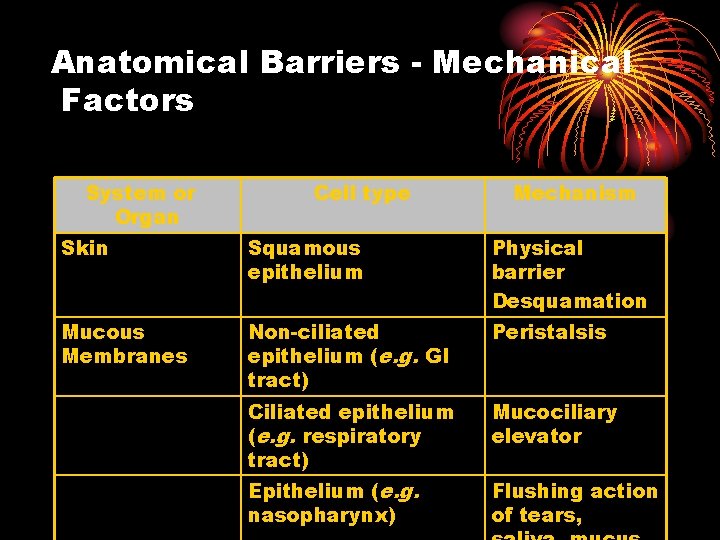
Anatomical Barriers - Mechanical Factors System or Organ Cell type Mechanism Skin Squamous epithelium Physical barrier Desquamation Mucous Membranes Non-ciliated epithelium (e. g. GI tract) Peristalsis Ciliated epithelium (e. g. respiratory tract) Mucociliary elevator Epithelium (e. g. nasopharynx) Flushing action of tears,
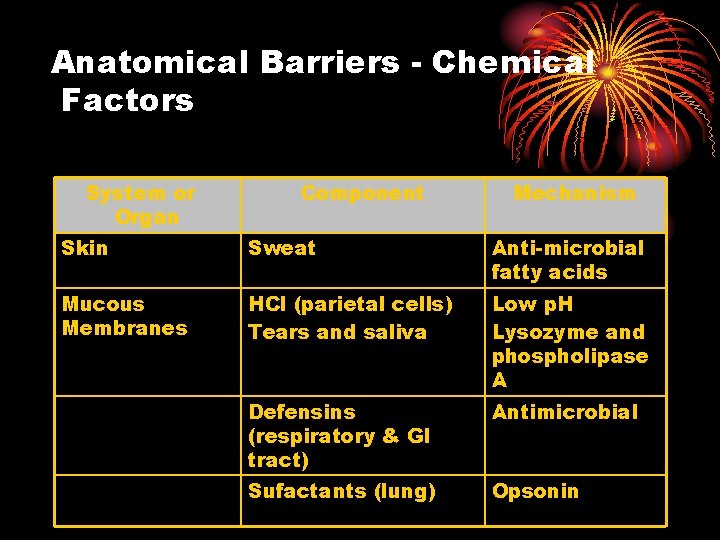
Anatomical Barriers - Chemical Factors System or Organ Component Mechanism Skin Sweat Anti-microbial fatty acids Mucous Membranes HCl (parietal cells) Tears and saliva Low p. H Lysozyme and phospholipase A Defensins (respiratory & GI tract) Antimicrobial Sufactants (lung) Opsonin
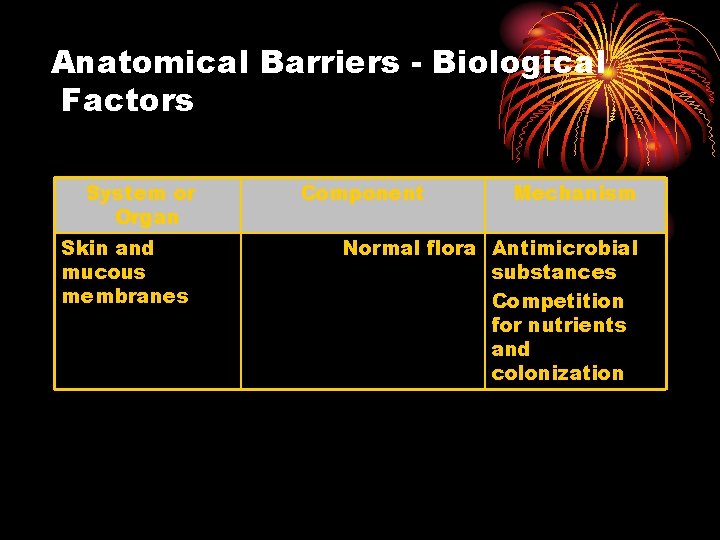
Anatomical Barriers - Biological Factors System or Organ Skin and mucous membranes Component Mechanism Normal flora Antimicrobial substances Competition for nutrients and colonization
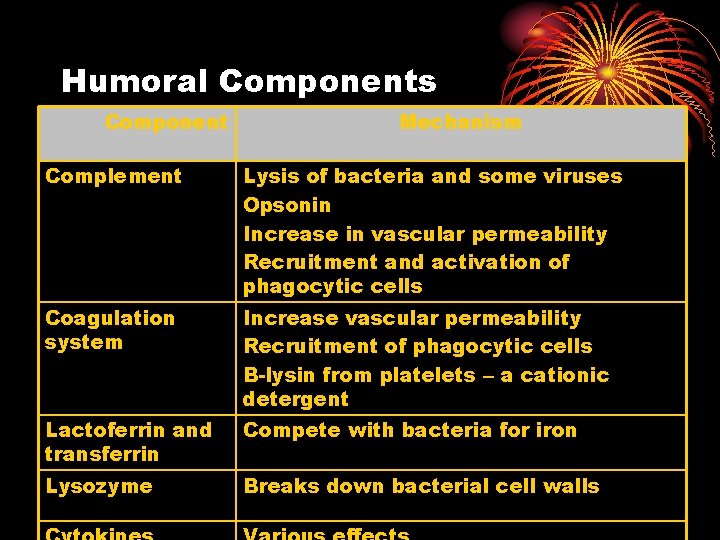
Humoral Components Component Mechanism Complement Lysis of bacteria and some viruses Opsonin Increase in vascular permeability Recruitment and activation of phagocytic cells Coagulation system Increase vascular permeability Recruitment of phagocytic cells Β-lysin from platelets – a cationic detergent Lactoferrin and transferrin Compete with bacteria for iron Lysozyme Breaks down bacterial cell walls
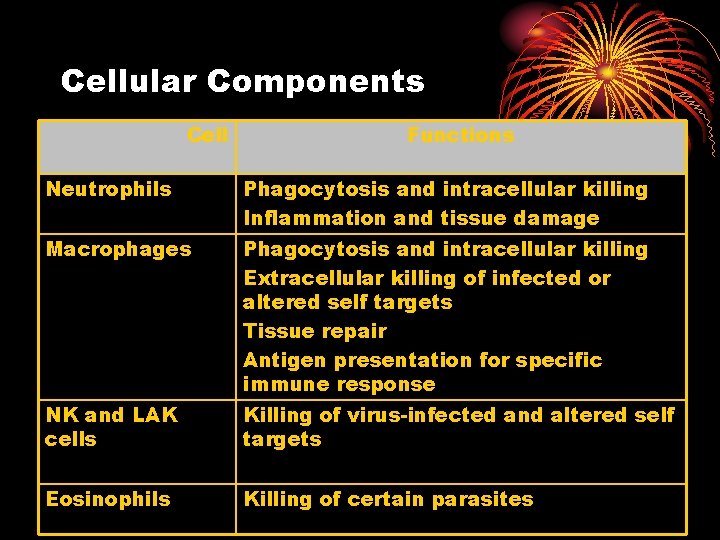
Cellular Components Cell Functions Neutrophils Phagocytosis and intracellular killing Inflammation and tissue damage Macrophages Phagocytosis and intracellular killing Extracellular killing of infected or altered self targets Tissue repair Antigen presentation for specific immune response NK and LAK cells Killing of virus-infected and altered self targets Eosinophils Killing of certain parasites
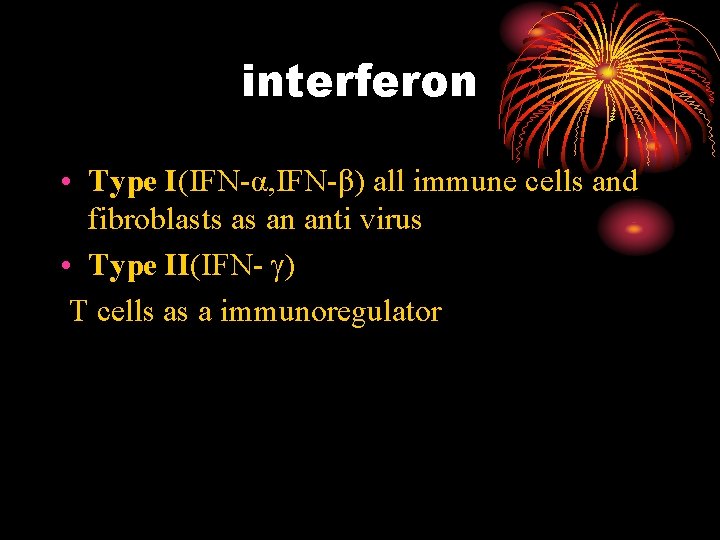
interferon • Type I(IFN-α, IFN-β) all immune cells and fibroblasts as an anti virus • Type II(IFN- ) T cells as a immunoregulator
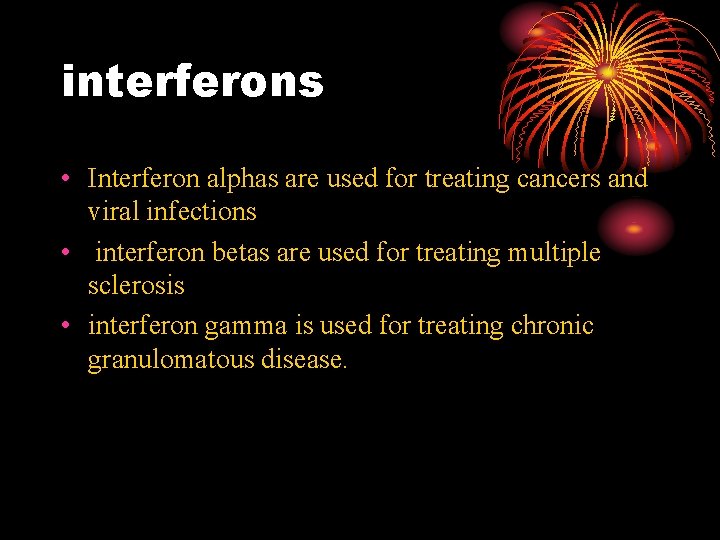
interferons • Interferon alphas are used for treating cancers and viral infections • interferon betas are used for treating multiple sclerosis • interferon gamma is used for treating chronic granulomatous disease.
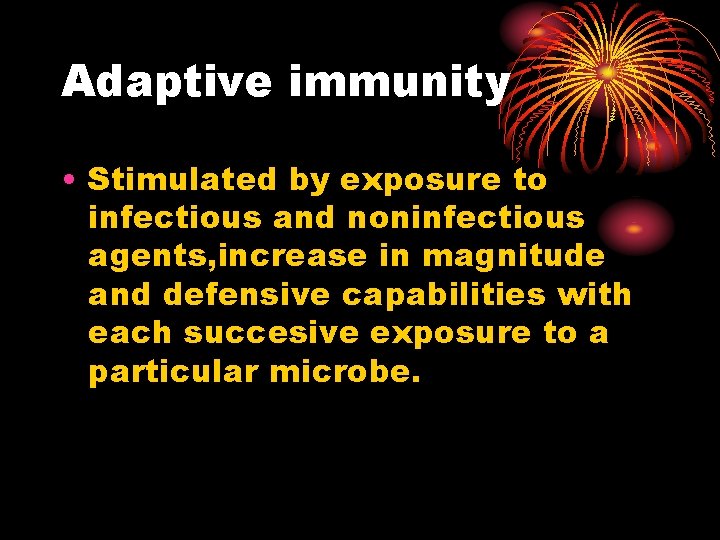
Adaptive immunity • Stimulated by exposure to infectious and noninfectious agents, increase in magnitude and defensive capabilities with each succesive exposure to a particular microbe.
Types of adaptive immunity • Humoral immunity (antibodies) Principal defence mechanism against extracellular microbes and their toxins • Cell mediated immunity (CMI) Defence against intracellular microbes
Phases of adaptive immune resposes • Recognition of antigen • Activation of lymphocytes • Elimination of antigen(effector phase) • Decline of immune responses(homeostasis)