
Application of hazard and risk maps in structural
- Slides: 52
Application of hazard and risk maps in structural funds Philipp Schmidt-Thomé
Contents Summarizing final results of ESPON 1. 3. 1 ”Hazards” • • Specification of spatially relevant hazards Set of developed hazard maps (15 hazards) Aggregated hazard and risk maps Climate change affecting natural hazards European Regions with specific hazard typologies Examples of policy recommendations Planning response towards natural and technological hazards
Project partners Geological Survey of Finland (GTK) Centre for Urban and Regional Studies /University of Helsinki (YTK/HUT) Swedish Meteorological and Hydrological Institute (SMHI) Comissão de Coordenação da Região Centro (CCRC) / Instituto Geológico e Mineiro (IGM) Institute Of Ecological And Regional Development (IÖR) Institute for Spatial Planning, University of Dortmund (IRPUD)
Primary goals of Espon 1. 3. 1 Hazards (I) ”Spatial planning response” • To review the main components of natural and technological risk reduction and spatial planning • To gather information of current risk management practices and ’good practice’ • To document a ”spatial planning response” to natural and technological hazard risk reduction and assist in future guidelines
Primary goals of Espon 1. 3. 1 Hazards (II) ”Typologies of regions and vulnerability” • To compile a first typology of regions: kinds of risks, their degree and management • To develop a second typology of regions based on climate change • To detect the relation of vulnerable areas to spatial typologies (e. g. Interreg areas)
Selection of spatially relevant hazards • Probability of ocurrence (P) • Extent of damage (E) • Not all hazards (risks) are relevant for spatial planning application of a spatial filter • Identified Hazard (risk) types are: – Damocles: low P, very high E, both can be assessed with high certainty (e. g. , nuclear power plant accidents) – Cyclops: P is unknown, E is high (natural disasters)
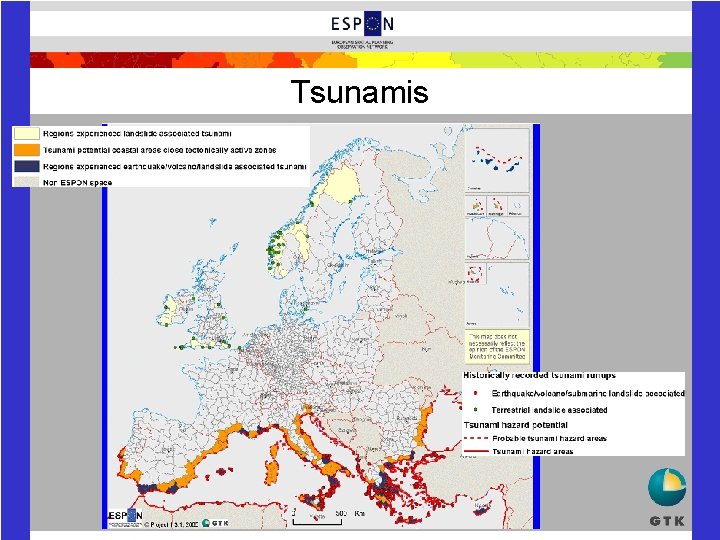
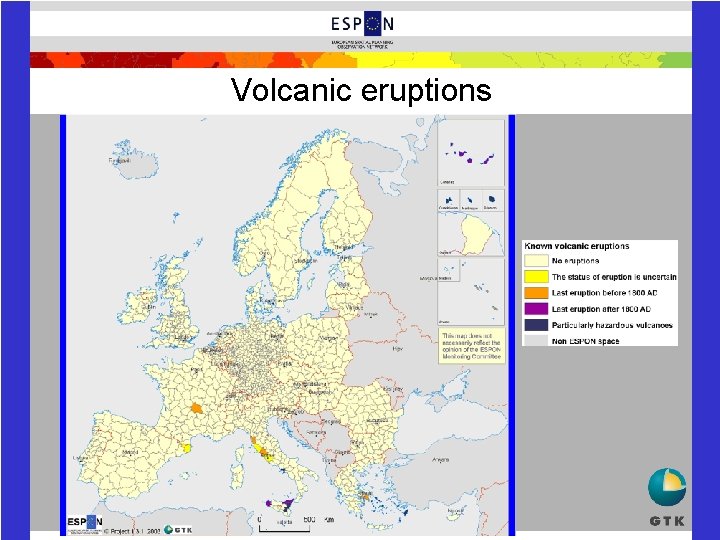
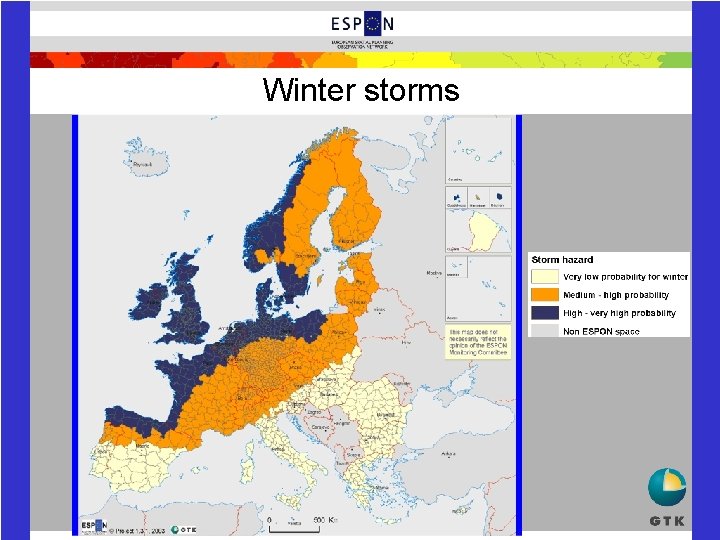
Natural hazards • • • Avalanches Drought potential Earthquakes Extreme temperatures Floods Forest fires Landslides Storm surges Tsunamis Volcanic activities Winter Storms
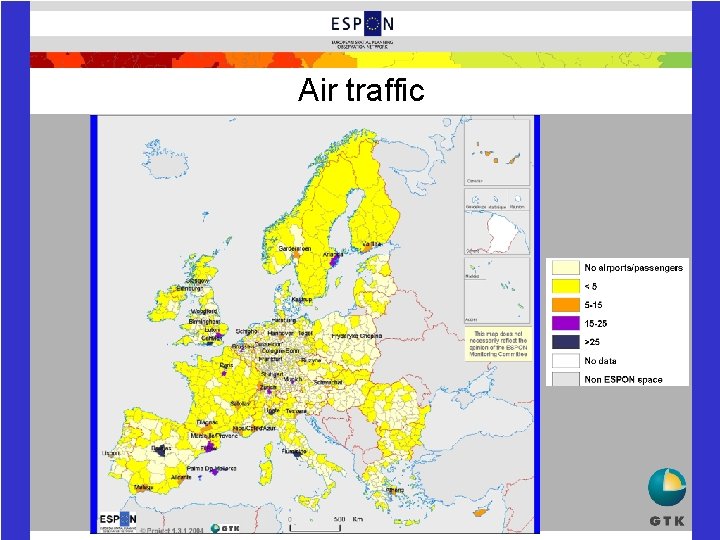
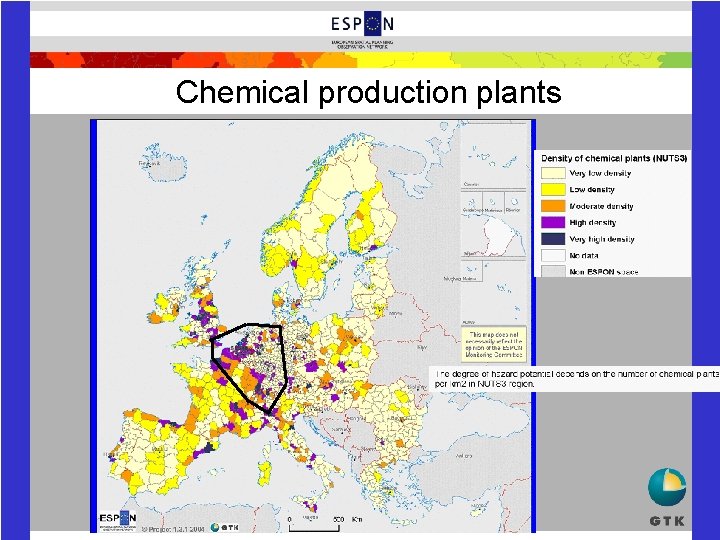
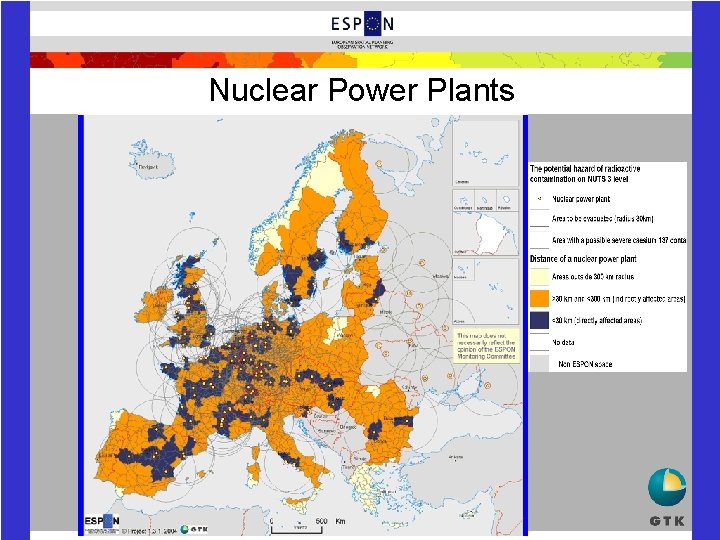
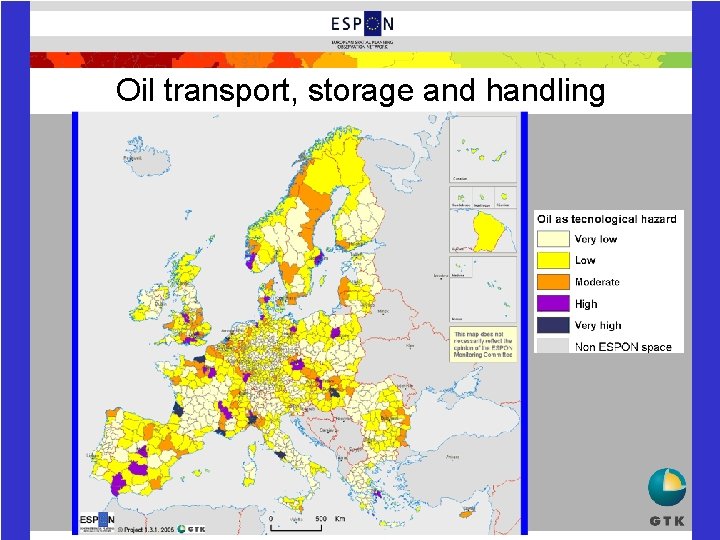
Technological hazards • • Air traffic Major accident hazards (chemical plants) Nuclear Power plants Oil transport, storage and handling
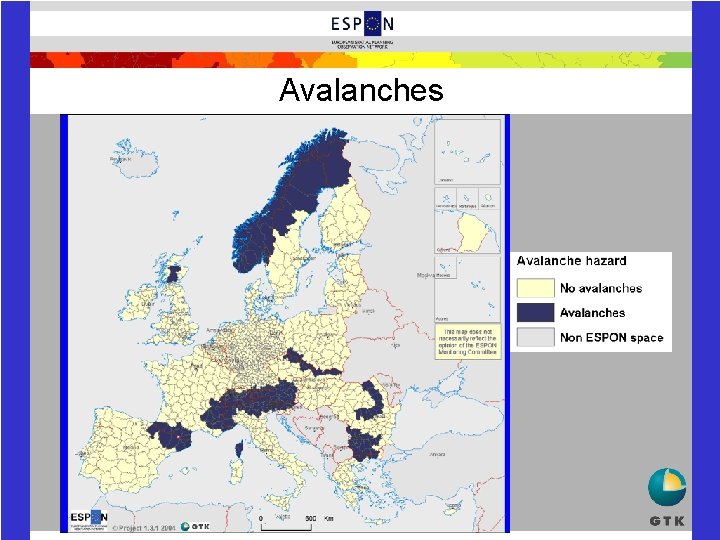
Avalanches
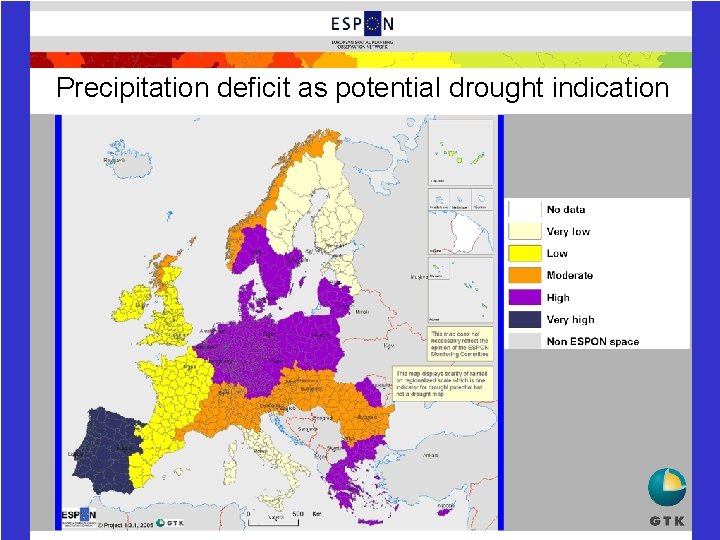
Precipitation deficit as potential drought indication
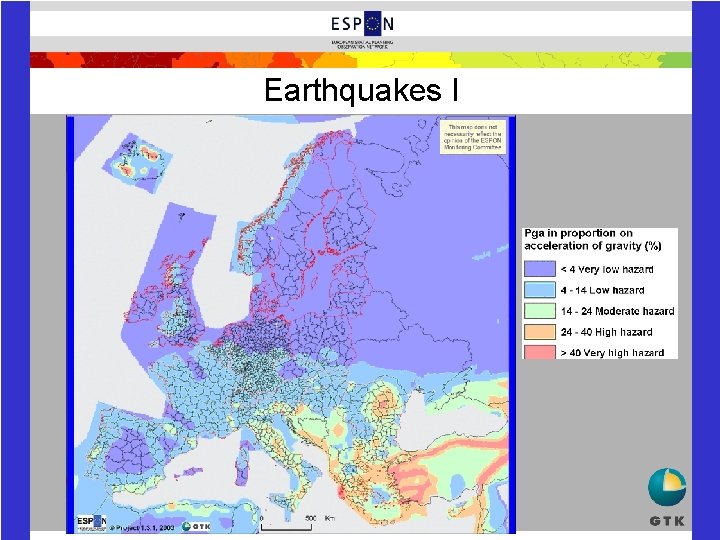
Earthquakes I
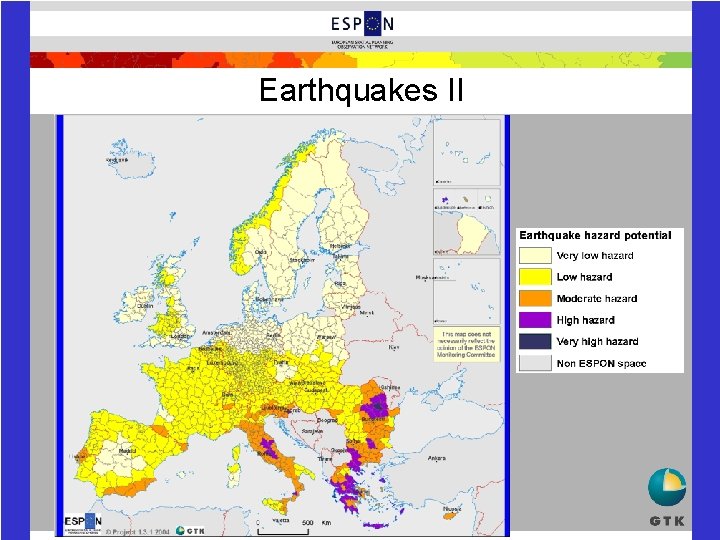
Earthquakes II
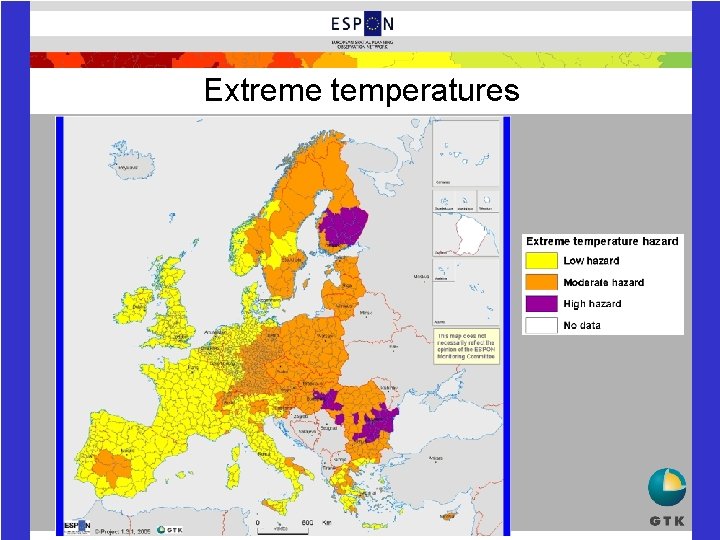
Extreme temperatures
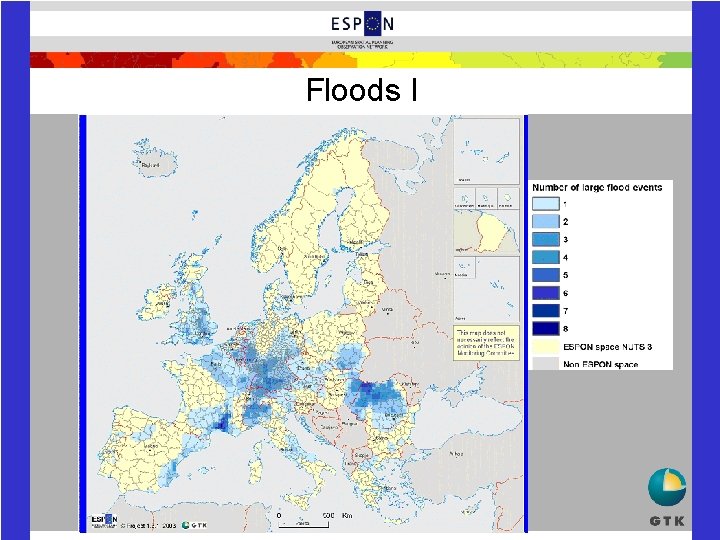
Floods I
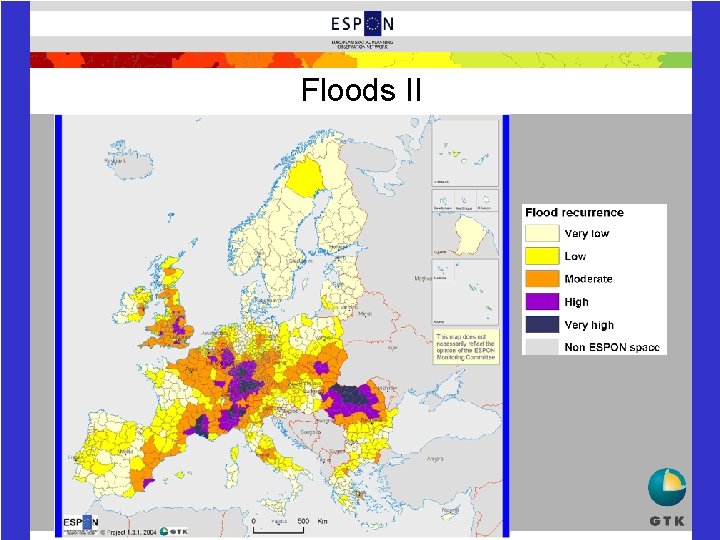
Floods II
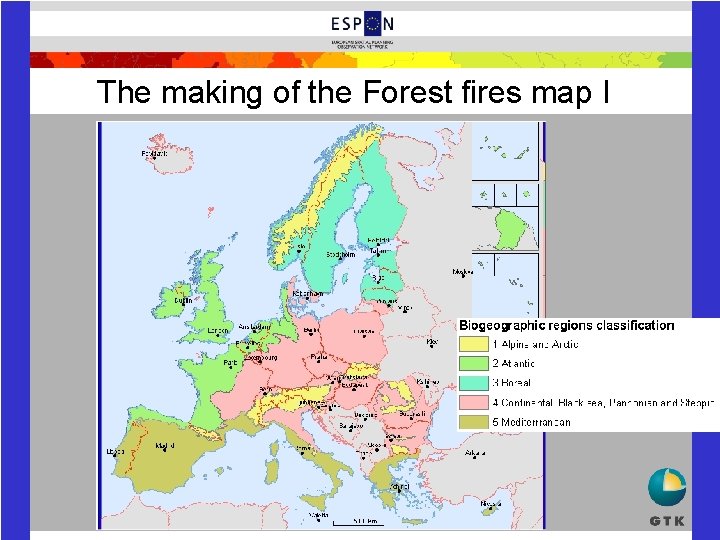
The making of the Forest fires map I
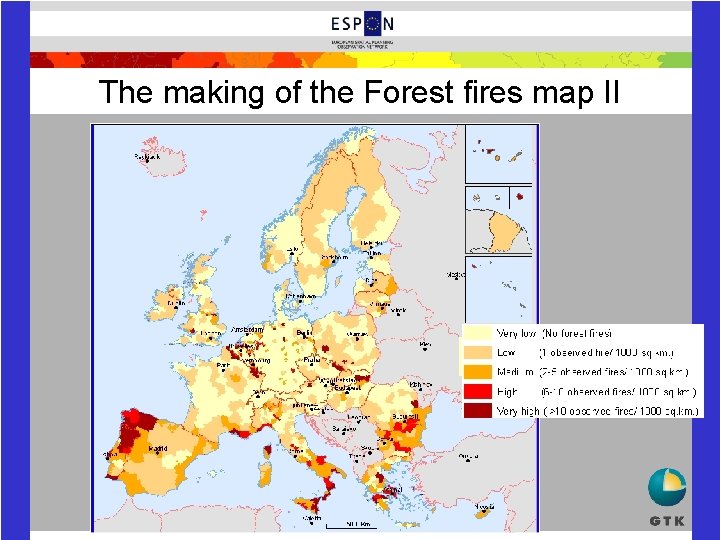
The making of the Forest fires map II
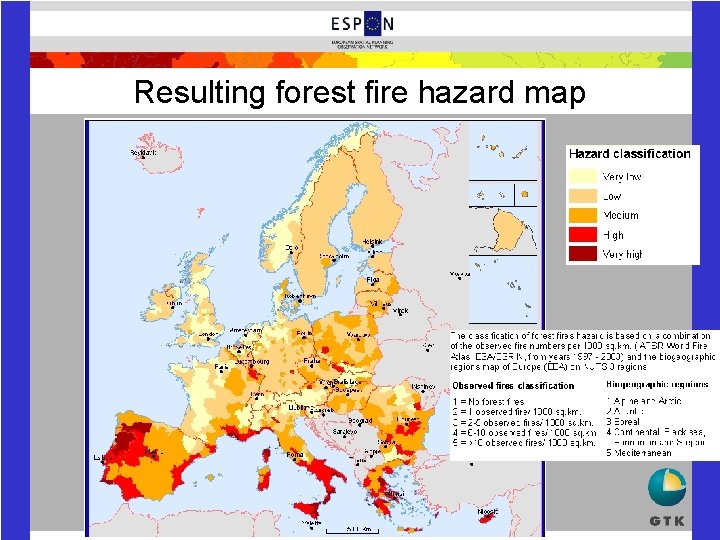
Resulting forest fire hazard map
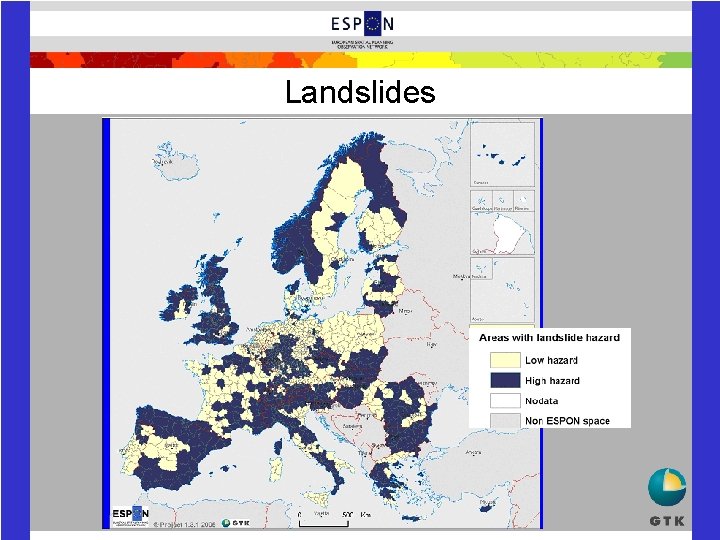
Landslides
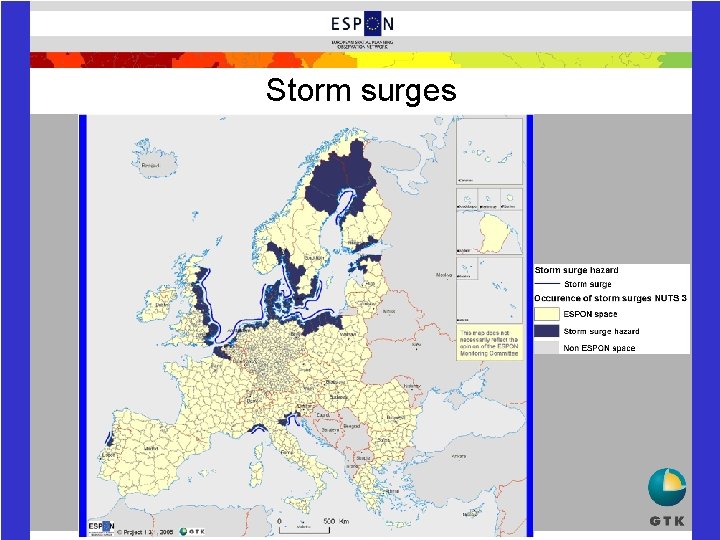
Storm surges
Tsunamis
Volcanic eruptions
Winter storms
Air traffic
Chemical production plants
Nuclear Power Plants
Oil transport, storage and handling
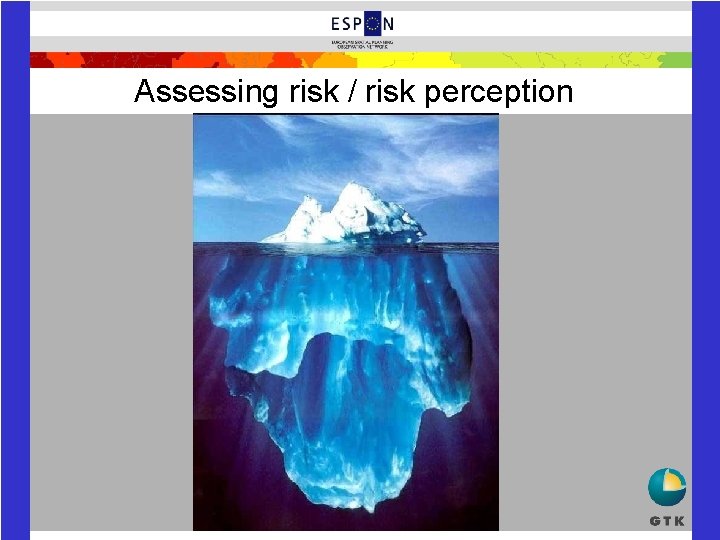
Assessing risk / risk perception
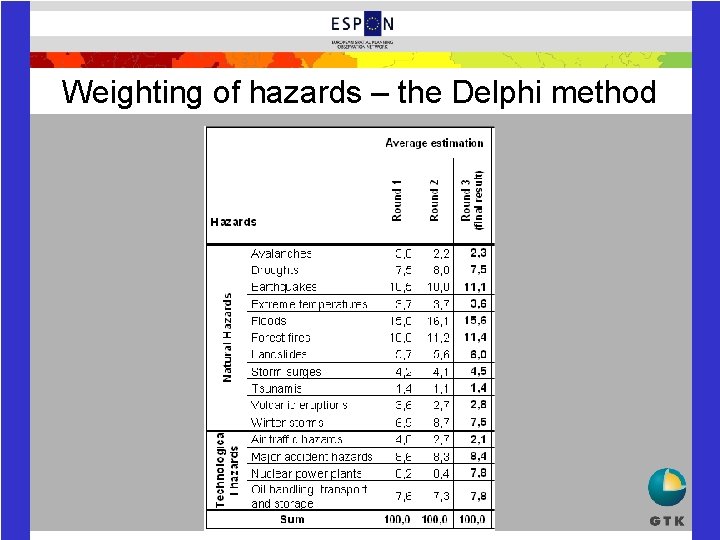
Weighting of hazards – the Delphi method
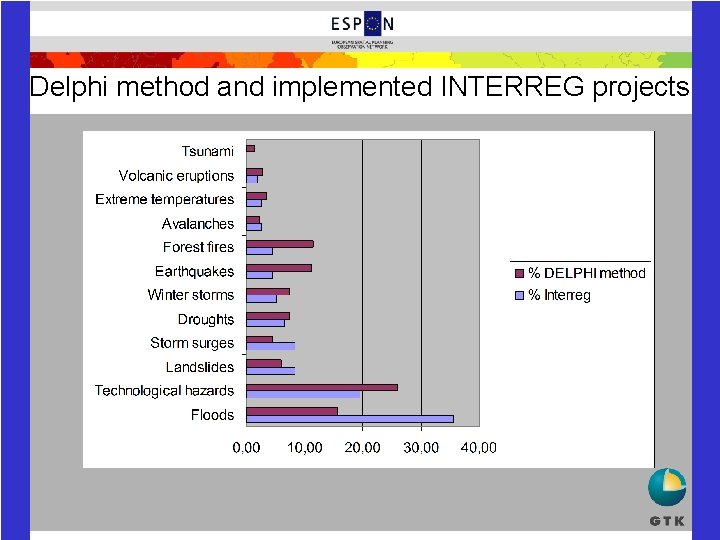
Delphi method and implemented INTERREG projects
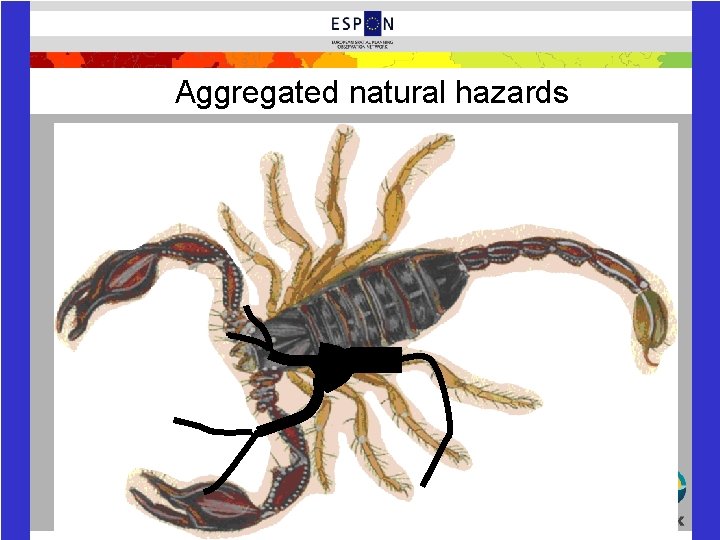
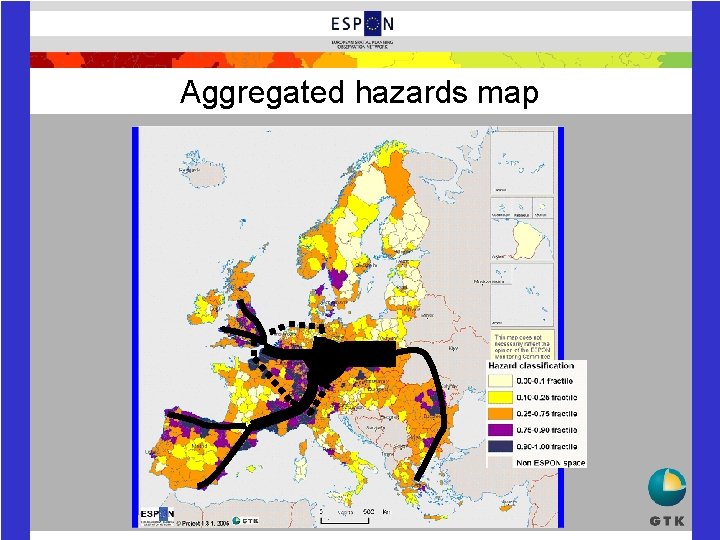
Aggregated natural hazards
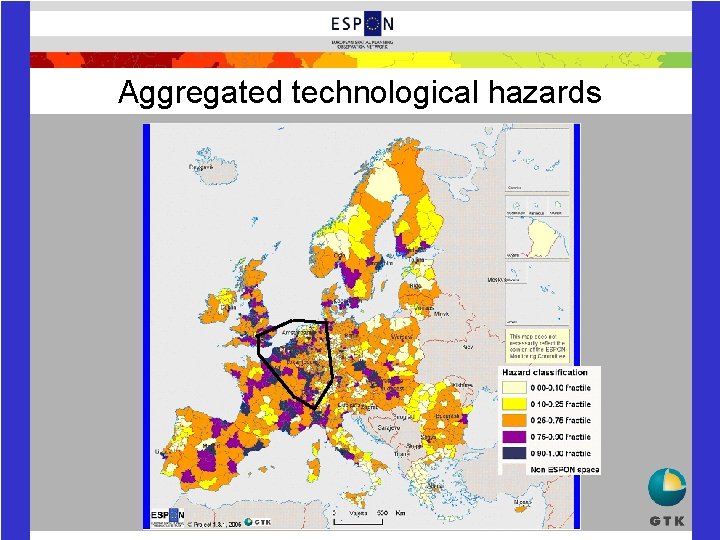
Aggregated technological hazards
Aggregated hazards map
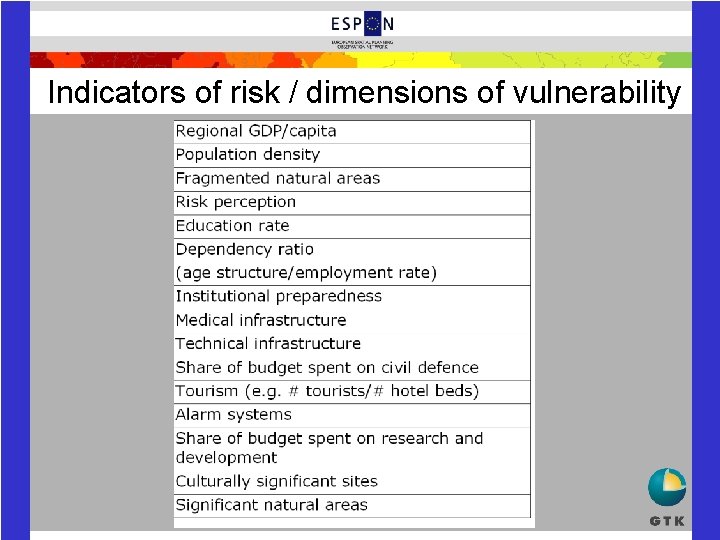
Indicators of risk / dimensions of vulnerability
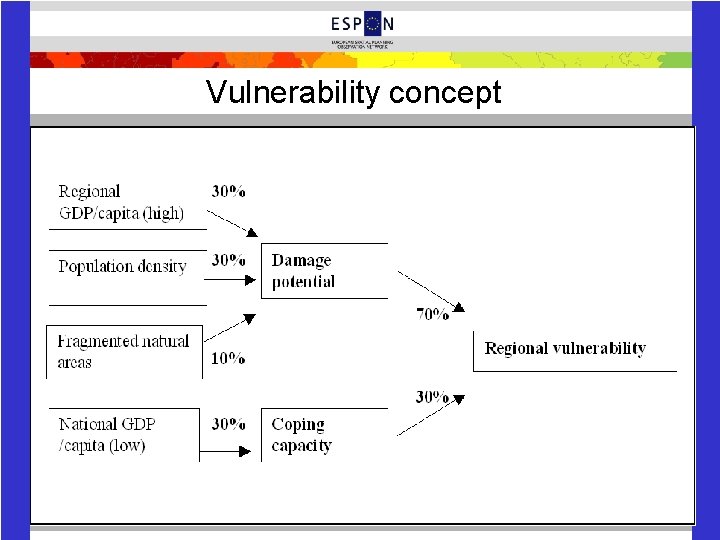
Vulnerability concept
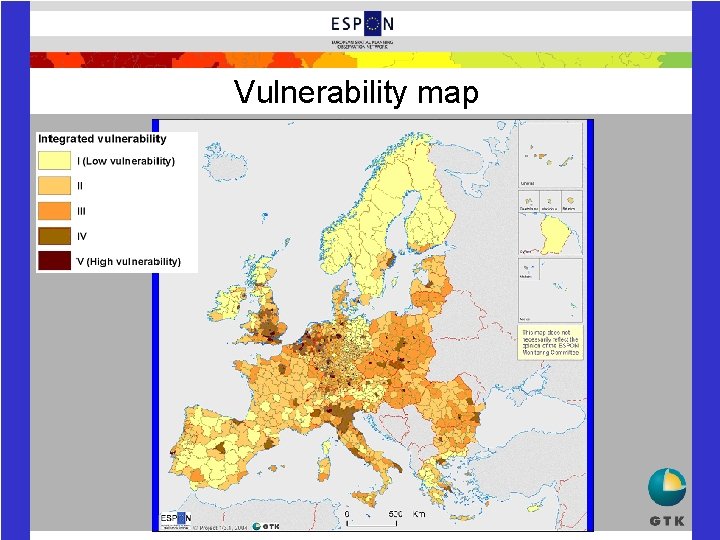
Vulnerability map
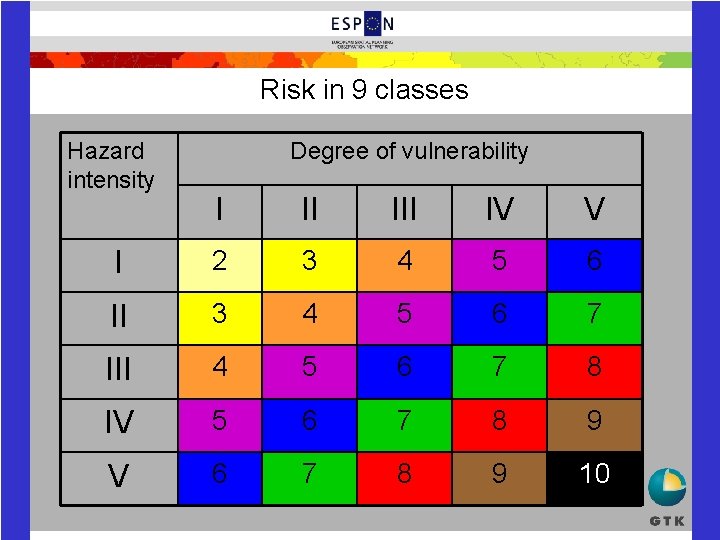
Risk in 9 classes Hazard intensity Degree of vulnerability I II IV V I 2 3 4 5 6 II 3 4 5 6 7 III 4 5 6 7 8 IV 5 6 7 8 9 V 6 7 8 9 10
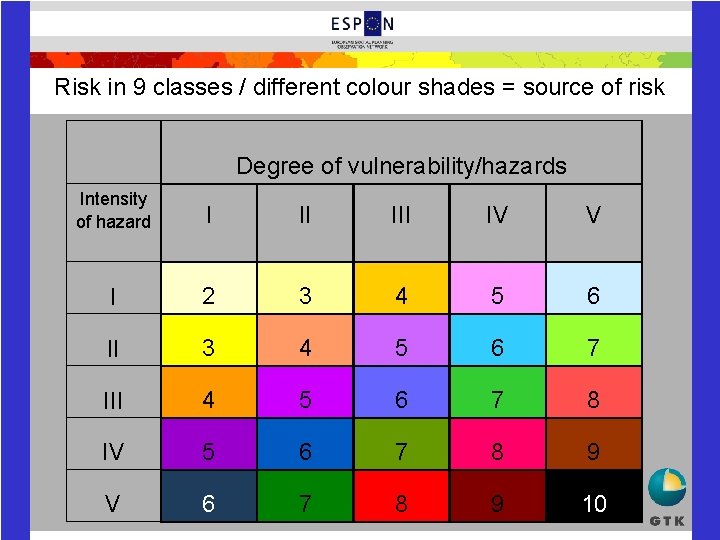
Risk in 9 classes / different colour shades = source of risk Degree of vulnerability/hazards Intensity of hazard I II IV V I 2 3 4 5 6 II 3 4 5 6 7 III 4 5 6 7 8 IV 5 6 7 8 9 V 6 7 8 9 10
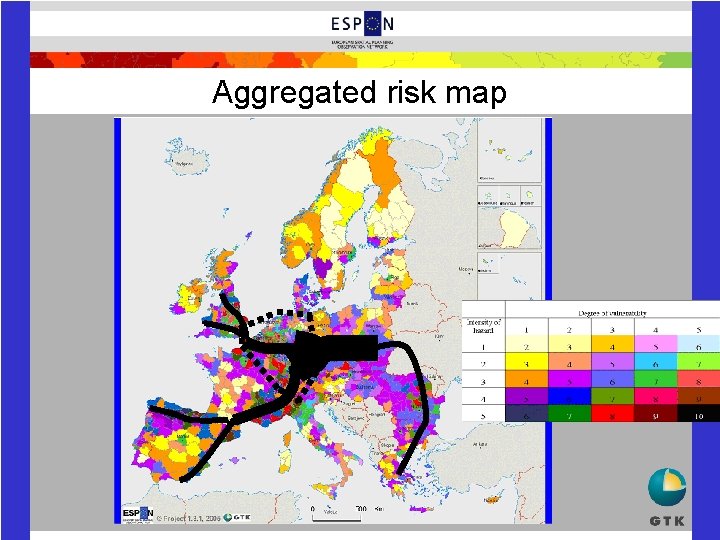
Aggregated risk map
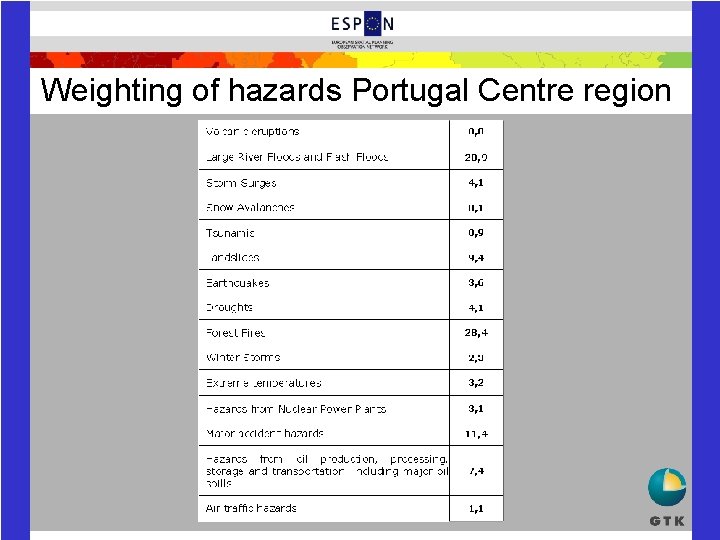
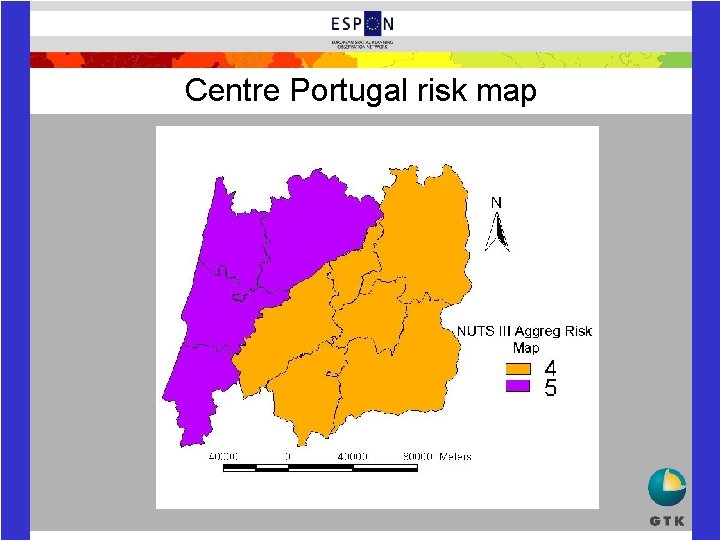
Weighting of hazards Portugal Centre region
Centre Portugal risk map
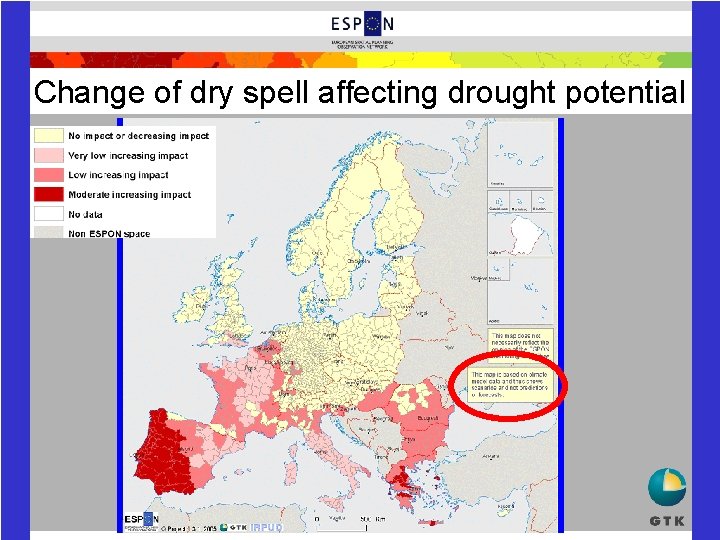
Change of dry spell affecting drought potential
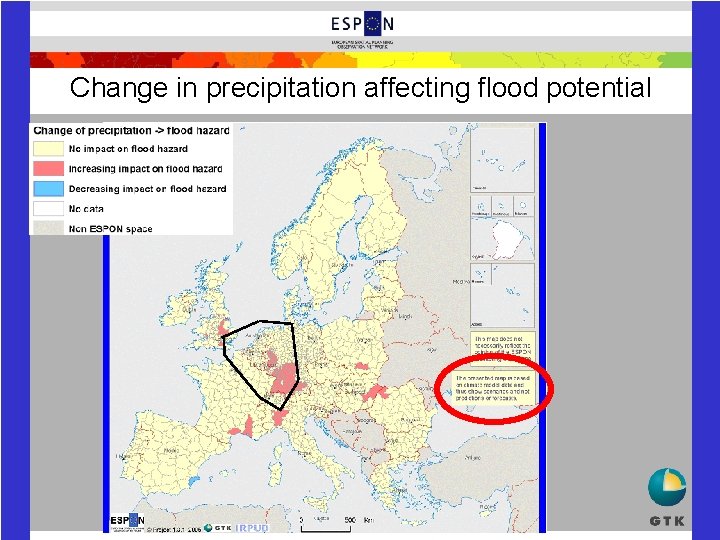
Change in precipitation affecting flood potential
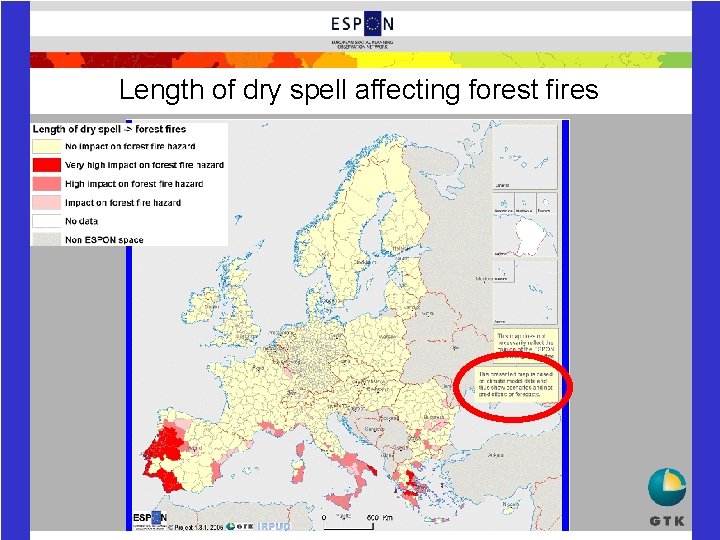
Length of dry spell affecting forest fires
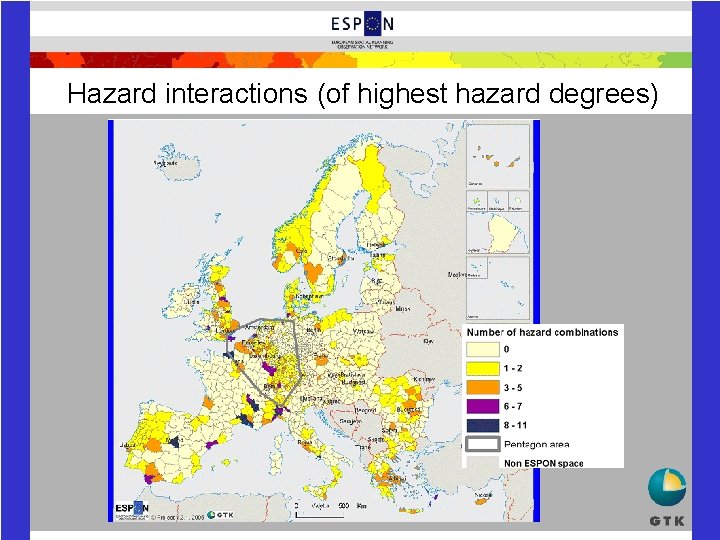
Hazard interactions (of highest hazard degrees)
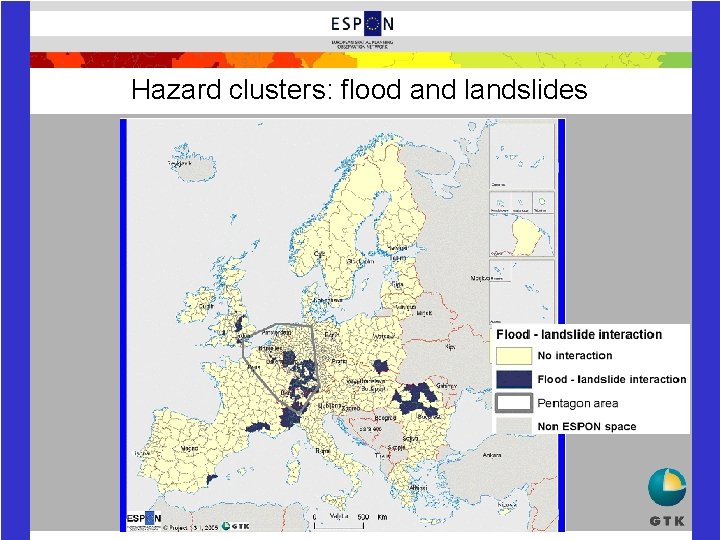
Hazard clusters: flood and landslides
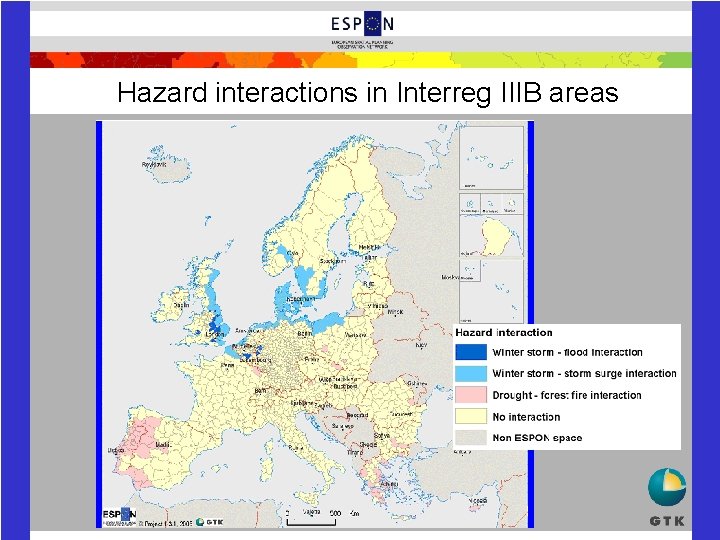
Hazard interactions in Interreg IIIB areas
Summary of selected policy recommendations I. Guiding principles: 1. Employ risk management as an integral and explicit part of EU cohesion policy. Improve coordination of policy measures at all spatial scales 2. Integration of both substantial goals and procedural rules related to vulnerability reduction and risk mitigation into policies and programmes
Policy recommendations II II. EU-level instruments 1. Coordination of the use of Structural Funds for risk management, by e. g. using criteria relevant to risk and vulnerability to guide and support funding through the Structural Fund objectives 2. Ensuring the effective implementation of the strategic environmental assessment (SEA) directive; integrating risk mitigation principles for planning into its implementation
Policy recommendations III. Meso-level (national, transnational co-operation, Interreg) Recognition of the upgraded status of risk mitigation in the cohesion policy for the period 2007 -2013, including principles of vulnerability reduction and risk mitigation in the programme guidelines. Adoption of Strategic Environmental Assessment directive (2001/42/EC) by member states, preferably in a uniform fashion across Europe Enhancing the use of the Water Framework Directive (2000/60/EC) for integrating land use planning and water resources management in support of risk management (not only water quality) purposes
Planning response, example on risks • Split up "risk" into the elements: hazard potential, damage potential and coping capacity • Framework for monitoring not only on risk but also for monitoring the elements of risk • Monitor of hazards impact and the vulnerability (damage potential and coping capacity) of an area • Risk monitoring as a major role in defining and deciding on actions like mitigation and reaction (preparedness, response, recovery)
Thank you very much for your attention! philipp. schmidt-thome@gtk. fi www. gtk. fi/projects/espon