
Application of Community Score Card in different settings
- Slides: 11
Application of Community Score Card in different settings of Women Empowerment “Experience of CARE Rwanda” Janvier Kubwimana CARE Rwanda CARE Gender Equality and Women’s Voice Conference 2016
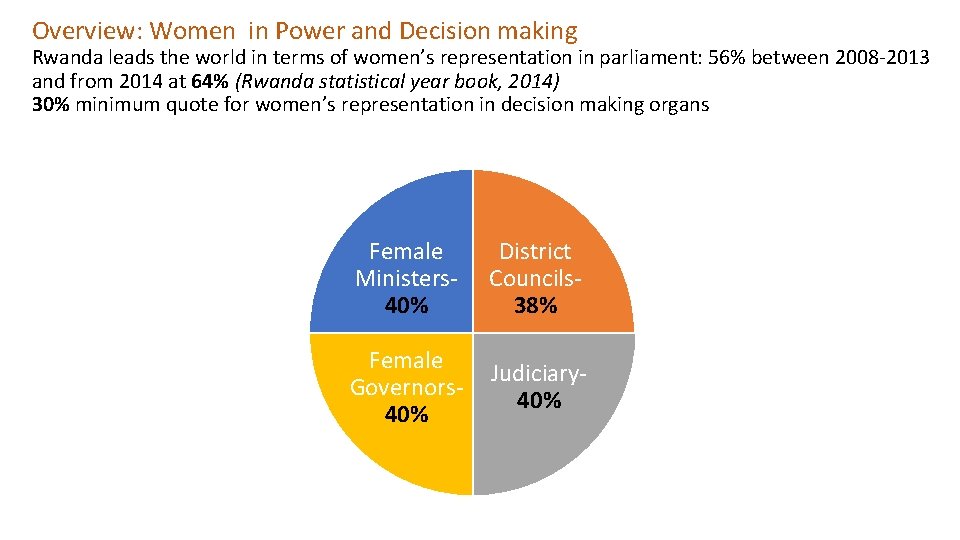
Overview: Women in Power and Decision making Rwanda leads the world in terms of women’s representation in parliament: 56% between 2008 -2013 and from 2014 at 64% (Rwanda statistical year book, 2014) 30% minimum quote for women’s representation in decision making organs Female Ministers 40% District Councils 38% Female Governors 40% Judiciary 40%
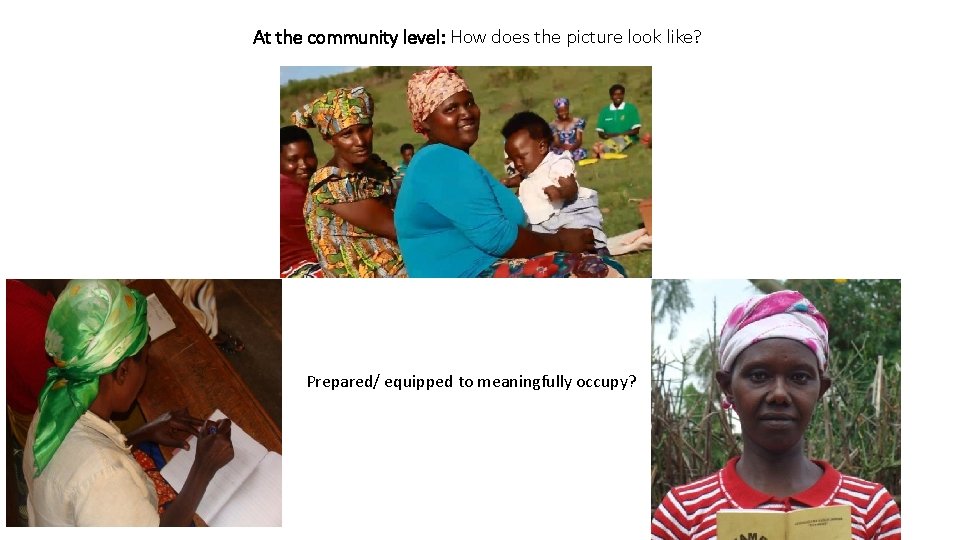
At the community level: How does the picture look like? Prepared/ equipped to meaningfully occupy?
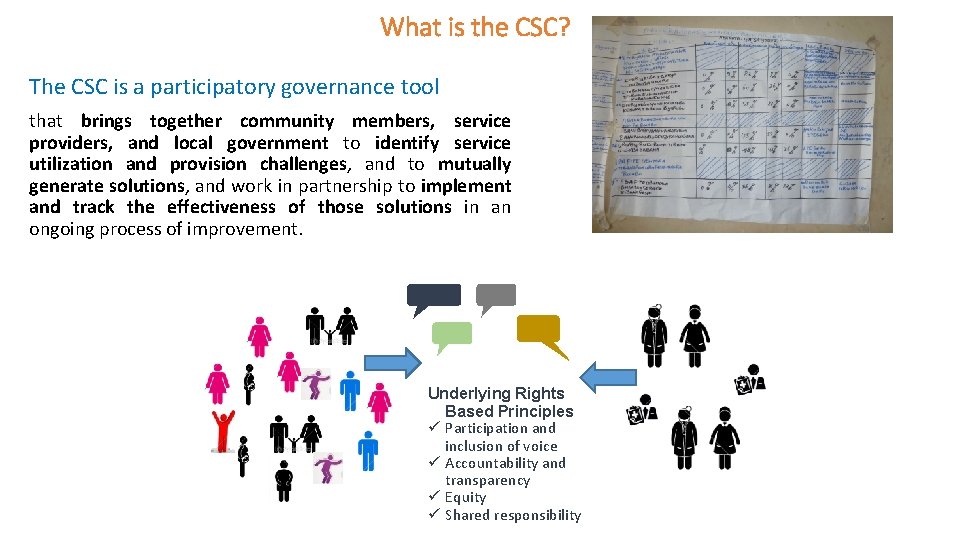
What is the CSC? The CSC is a participatory governance tool that brings together community members, service providers, and local government to identify service utilization and provision challenges, and to mutually generate solutions, and work in partnership to implement and track the effectiveness of those solutions in an ongoing process of improvement. Underlying Rights Based Principles ü Participation and inclusion of voice ü Accountability and transparency ü Equity ü Shared responsibility
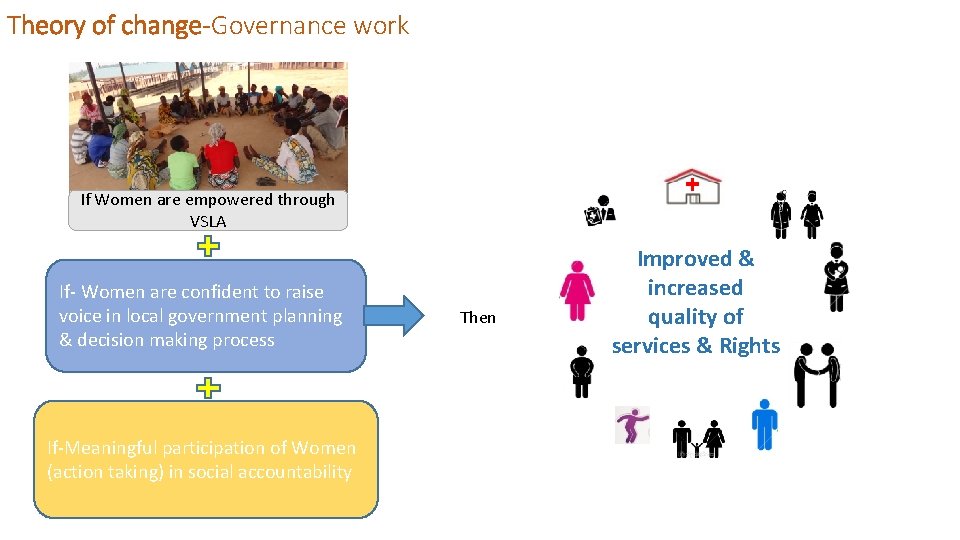
Theory of change-Governance work If Women are empowered through VSLA If- Women are confident to raise voice in local government planning & decision making process If-Meaningful participation of Women (action taking) in social accountability Then Improved & increased quality of services & Rights
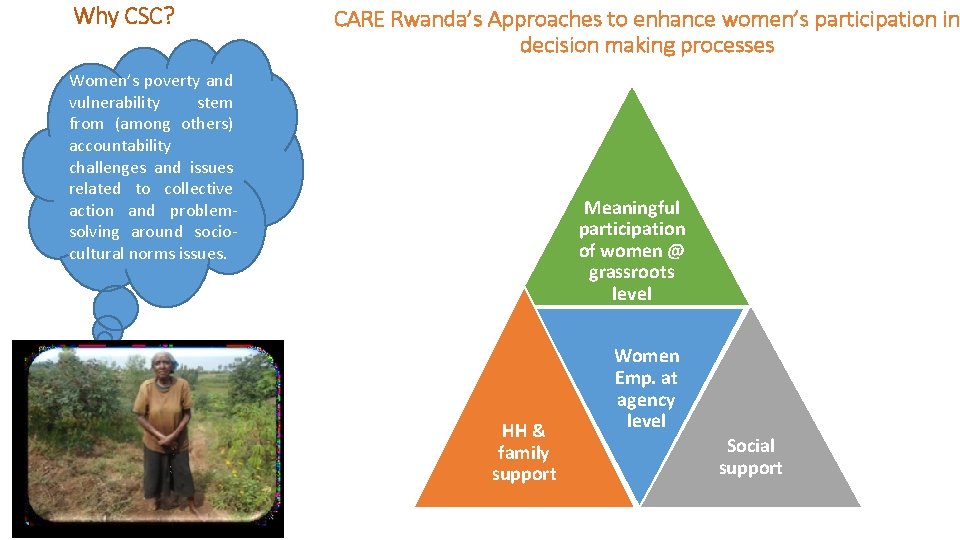
Why CSC? CARE Rwanda’s Approaches to enhance women’s participation in decision making processes Women’s poverty and vulnerability stem from (among others) accountability challenges and issues related to collective action and problemsolving around sociocultural norms issues. Meaningful participation of women @ grassroots level HH & family support Women Emp. at agency level Social support
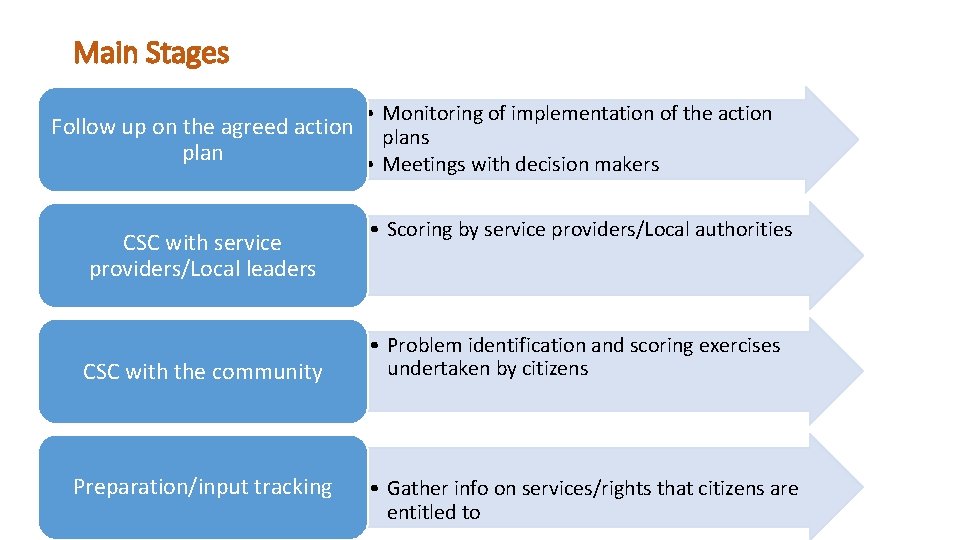
Main Stages • Monitoring of implementation of the action Follow up on the agreed action plans plan • Meetings with decision makers CSC with service providers/Local leaders CSC with the community Preparation/input tracking • Scoring by service providers/Local authorities • Problem identification and scoring exercises undertaken by citizens • Gather info on services/rights that citizens are entitled to
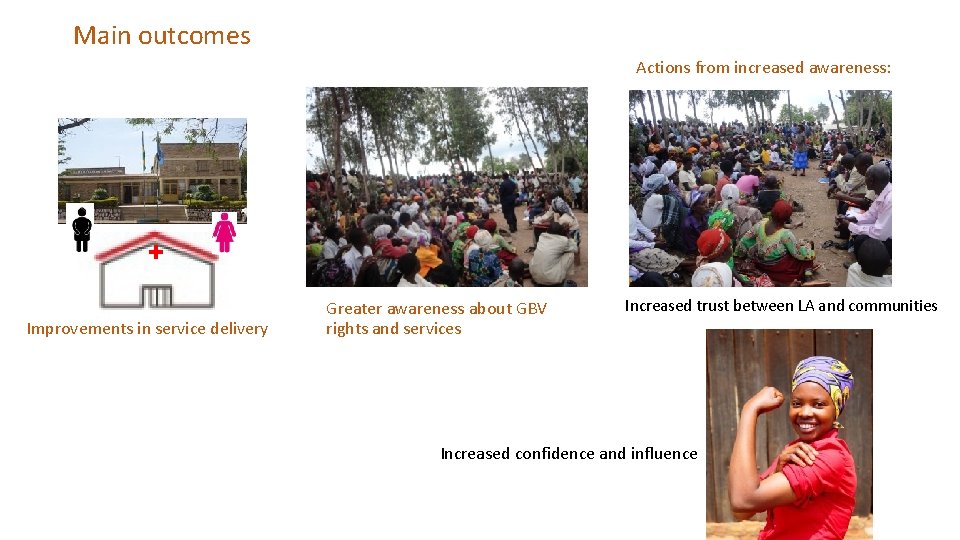
Main outcomes Actions from increased awareness: Improvements in service delivery Greater awareness about GBV rights and services Increased trust between LA and communities Increased confidence and influence
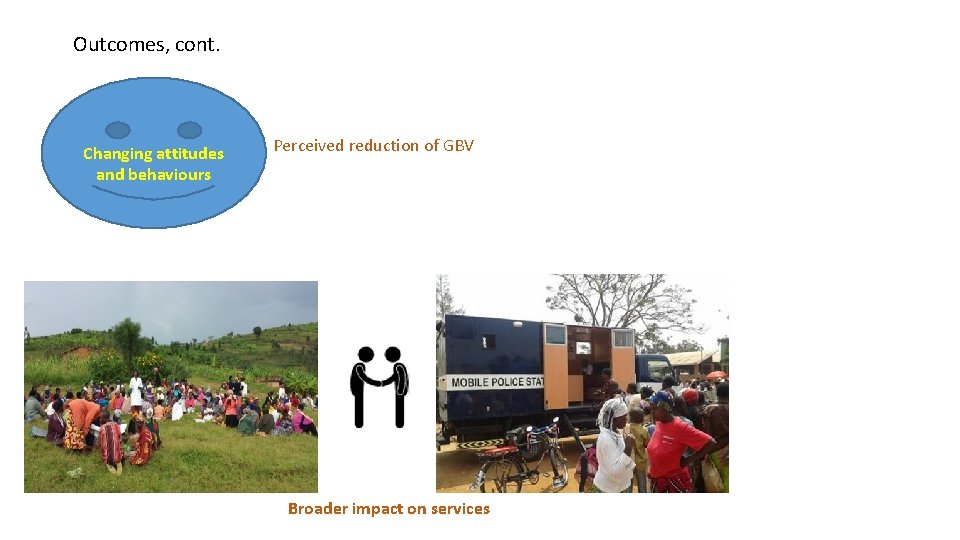
Outcomes, cont. Changing attitudes and behaviours Perceived reduction of GBV Broader impact on services
Learning from the scorecard experience • The CSC is not a rigid one-size-fits-all solution to improving developmental outcomes. Rather, it needs to be applied as a flexible tool that can and should be adapted to the distinct contextual and operational environment in which it is implemented and based on the objectives and changes it intends to produce. • The specific objective of a project will shape the design and implementation approach of a CSC initiative. • Entry points and their mechanisms are key when implementing a CSC. Decisions on these need to be considered carefully against the project objectives and the broader context. • The operational conditions of a CSC are critical and will affect programming implications. The background approach of implementing partners will help with filtering and processing the project objectives, adapting the process even when these decisions are not deliberate. Scalability-sustainability- Gisagara district successfully adopted CARE’s CSC as an innovative model to engage citizens in giving feedback on the state of corruption and how it affects service delivery.
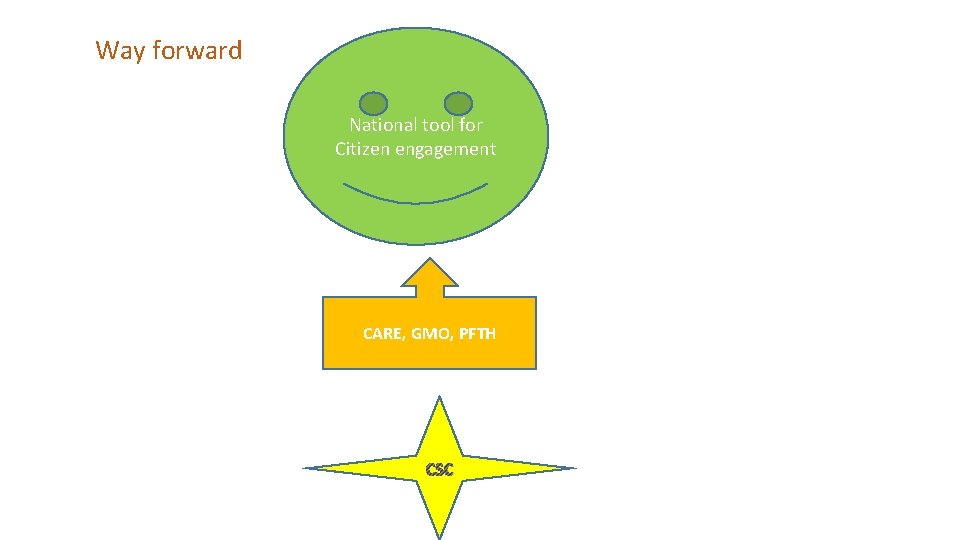
Way forward National tool for Citizen engagement CARE, GMO, PFTH CSC