
Application of Advanced Composites to Helicopter Structures Introduction
- Slides: 18
Application of Advanced Composites to Helicopter Structures Introduction to Composites 1
Application of Advanced Composites to Helicopter Structures Introduction to Composites . 2
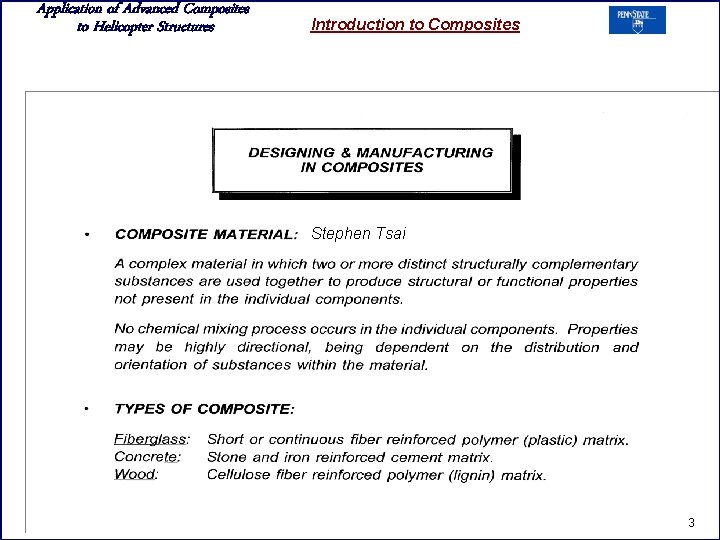
Application of Advanced Composites to Helicopter Structures Introduction to Composites Stephen Tsai 3
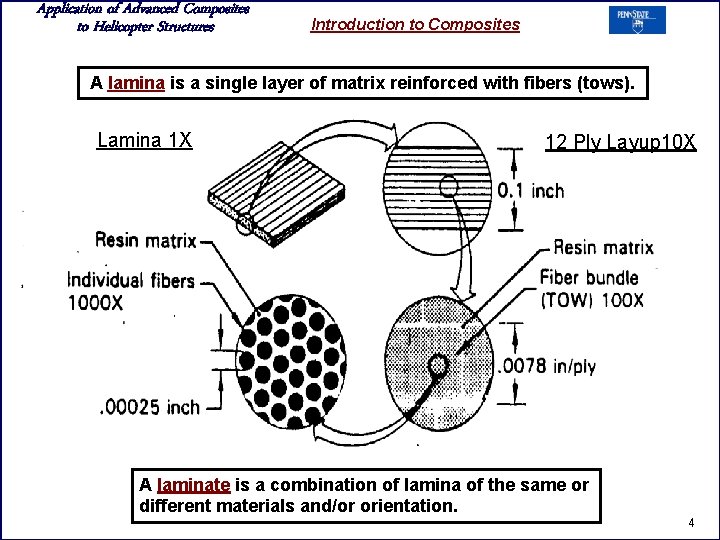
Application of Advanced Composites to Helicopter Structures Introduction to Composites A lamina is a single layer of matrix reinforced with fibers (tows). Lamina 1 X 12 Ply Layup 10 X A laminate is a combination of lamina of the same or different materials and/or orientation. 4
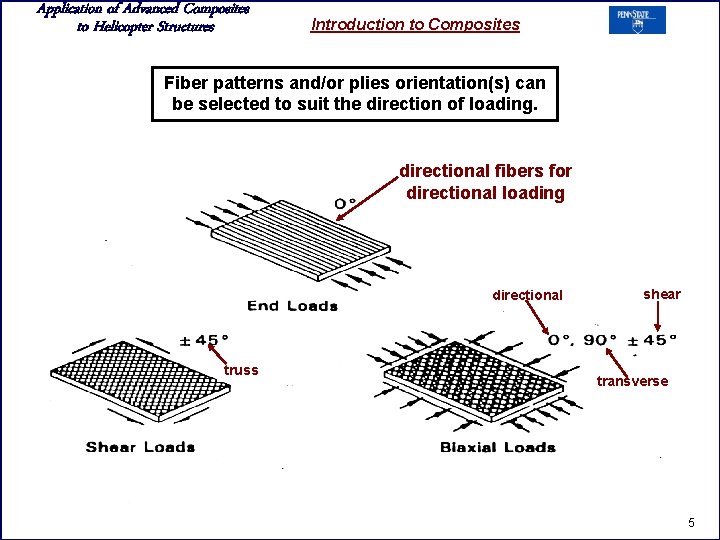
Application of Advanced Composites to Helicopter Structures Introduction to Composites Fiber patterns and/or plies orientation(s) can be selected to suit the direction of loading. directional fibers for directional loading directional truss shear transverse 5
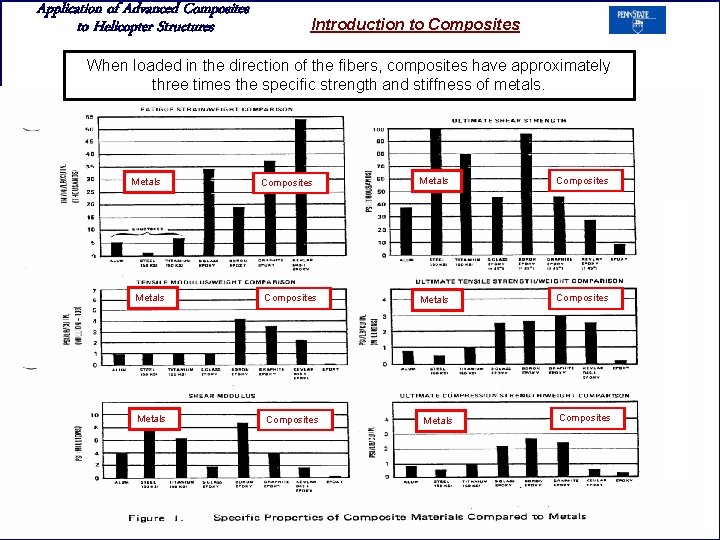
Application of Advanced Composites to Helicopter Structures Introduction to Composites When loaded in the direction of the fibers, composites have approximately three times the specific strength and stiffness of metals. Metals Composites Metals Composites 6
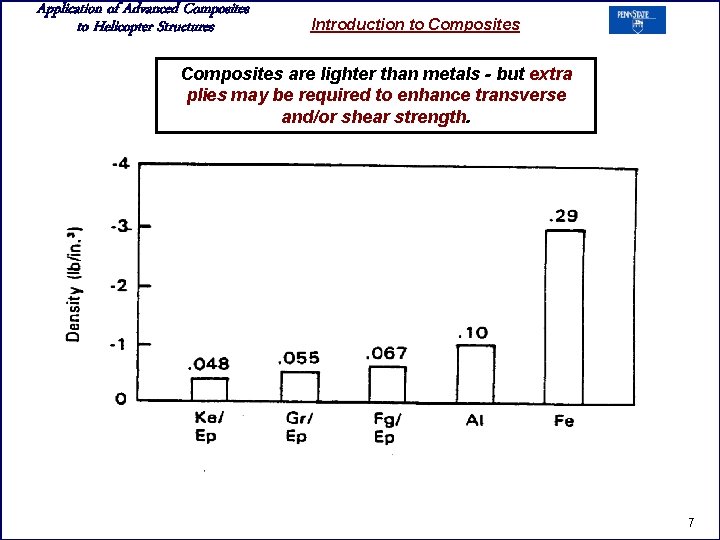
Application of Advanced Composites to Helicopter Structures Introduction to Composites are lighter than metals - but extra plies may be required to enhance transverse and/or shear strength. 7
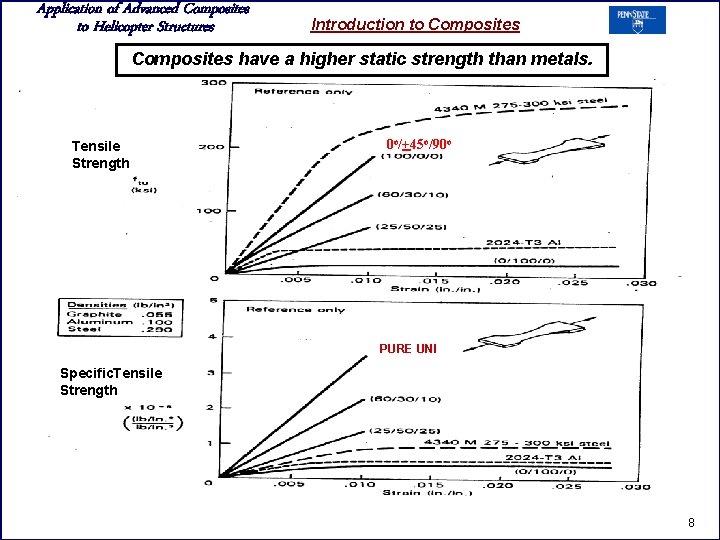
Application of Advanced Composites to Helicopter Structures Introduction to Composites have a higher static strength than metals. Tensile Strength 0 o/+45 o/90 o PURE UNI Specific. Tensile Strength 8
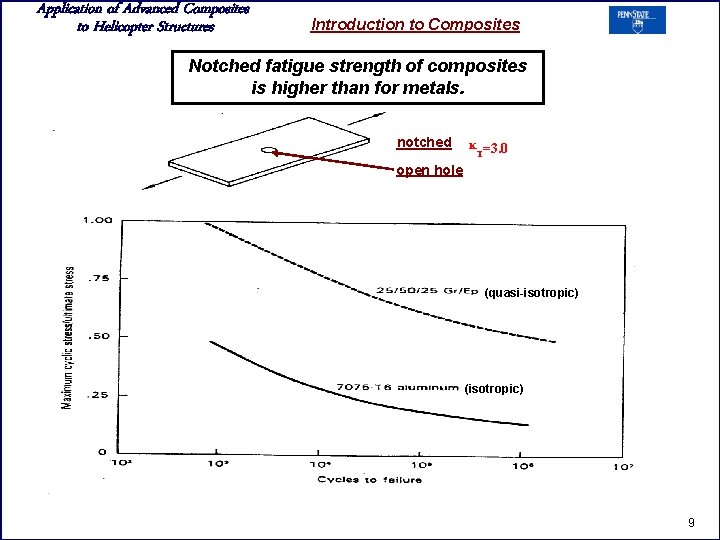
Application of Advanced Composites to Helicopter Structures Introduction to Composites Notched fatigue strength of composites is higher than for metals. notched K =3. 0 T open hole (quasi-isotropic) (isotropic) 9
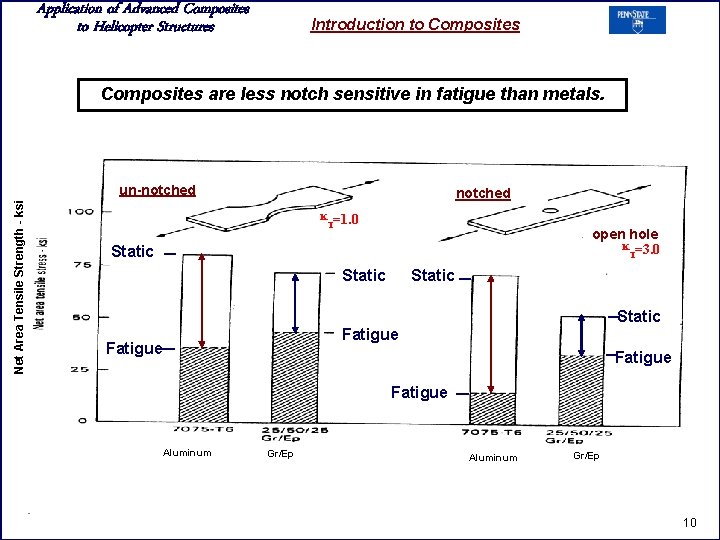
Application of Advanced Composites to Helicopter Structures Introduction to Composites are less notch sensitive in fatigue than metals. Net Area Tensile Strength - ksi un-notched K =1. 0 T open hole K =3. 0 T Static Fatigue Aluminum Gr/Ep 10
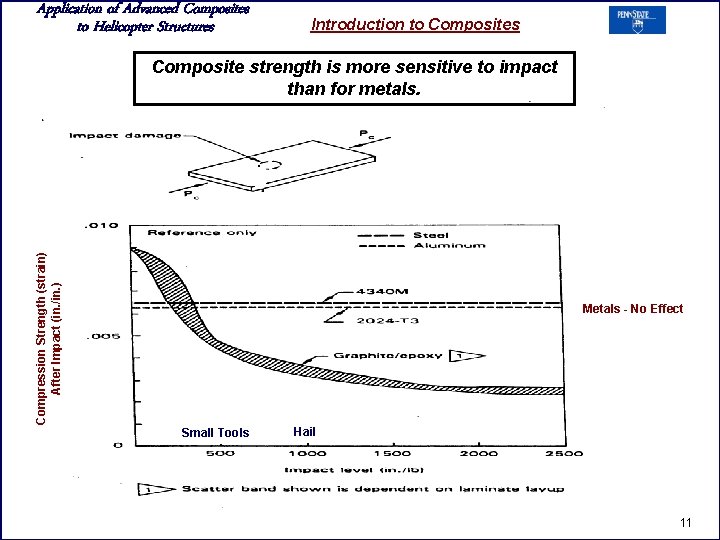
Application of Advanced Composites to Helicopter Structures Introduction to Composites Compression Strength (strain) After Impact (in. /in. ) Composite strength is more sensitive to impact than for metals. Metals - No Effect Small Tools Hail 11
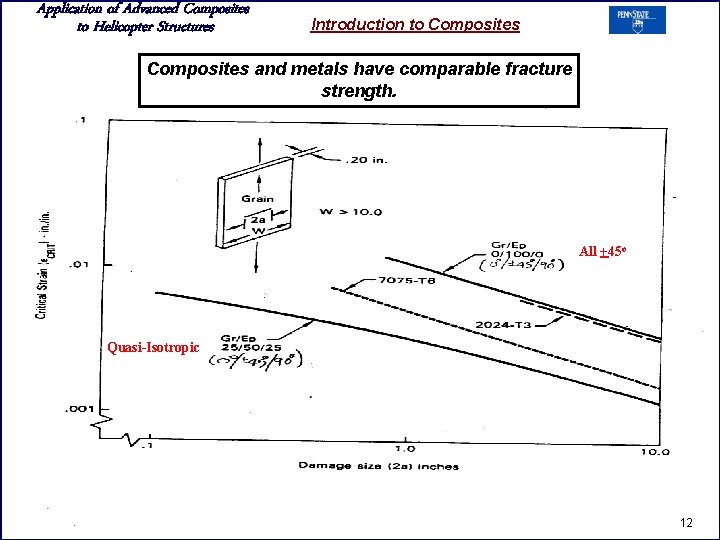
Application of Advanced Composites to Helicopter Structures Introduction to Composites and metals have comparable fracture strength. All +45 o Quasi-Isotropic 12
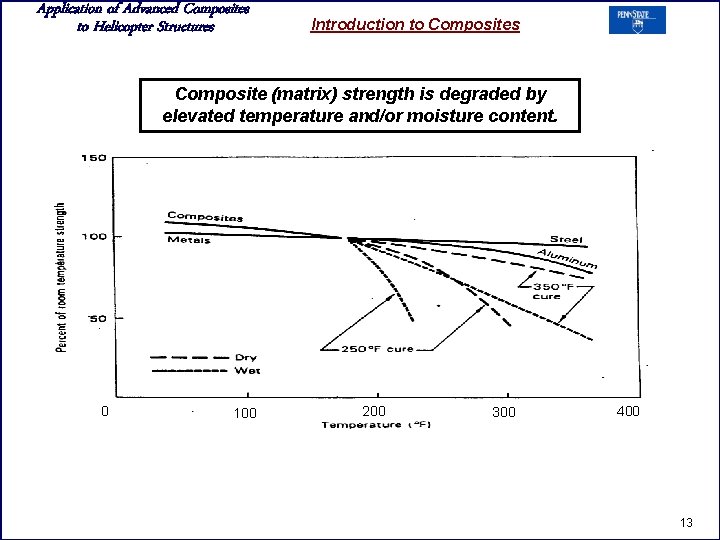
Application of Advanced Composites to Helicopter Structures Introduction to Composites Composite (matrix) strength is degraded by elevated temperature and/or moisture content. 0 100 200 300 400 13
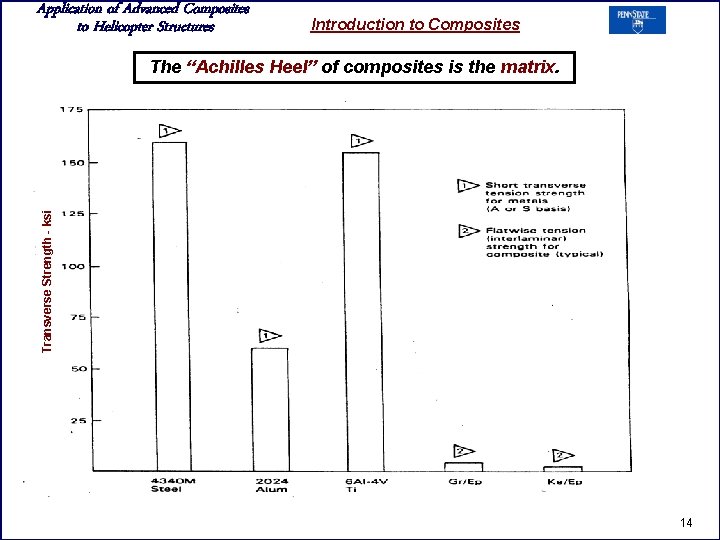
Application of Advanced Composites to Helicopter Structures Introduction to Composites Transverse Strength - ksi The “Achilles Heel” of composites is the matrix. 14
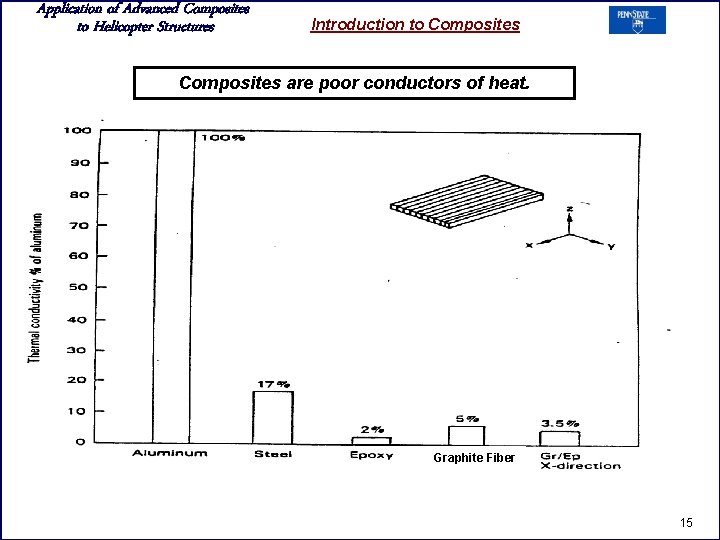
Application of Advanced Composites to Helicopter Structures Introduction to Composites are poor conductors of heat. Graphite Fiber 15
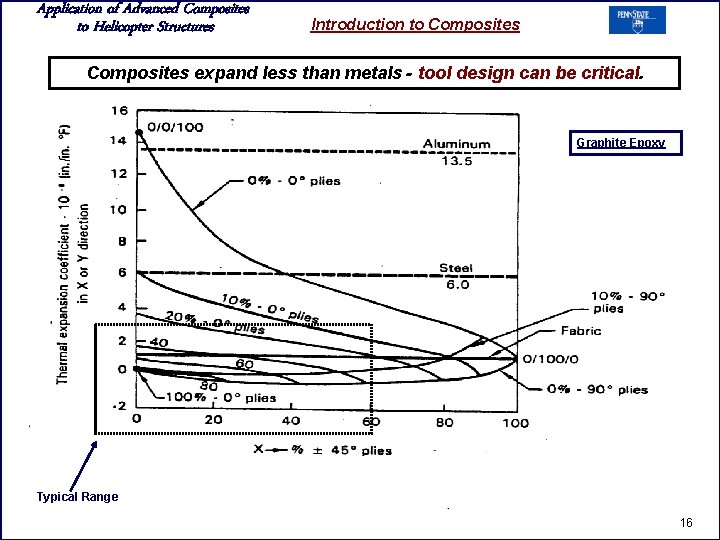
Application of Advanced Composites to Helicopter Structures Introduction to Composites expand less than metals - tool design can be critical. Graphite Epoxy Typical Range 16
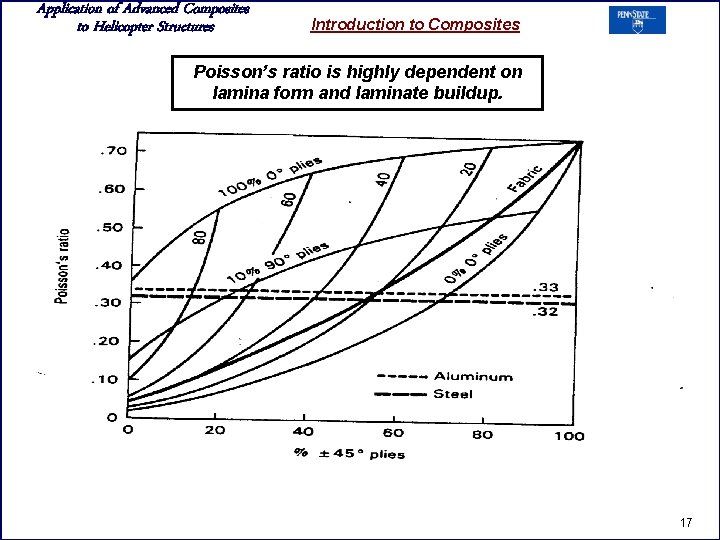
Application of Advanced Composites to Helicopter Structures Introduction to Composites Poisson’s ratio is highly dependent on lamina form and laminate buildup. 17
Application of Advanced Composites to Helicopter Structures Introduction to Composites 18